.webp)

After a decade advising museum audio engineers, I have watched the same frustration unfold in nearly every major institution: tour groups collide, audio bleeds across channels, and visitors strain to hear. The hardware is usually the problem. Multilingual tours in expansive venues demand high channel counts, extended battery life, and robust interference rejection. That is why I want to walk you through a practical, data-driven comparison between our Richitek RC series and the widely used Retekess TT105, TT109, and OKAYO WT-300D units — and, along the way, point you to a flexible museum wireless audio guide solution that fits daily operations.
RC9150: The Flagship for Large-Scale Museum and Convention Center Tours
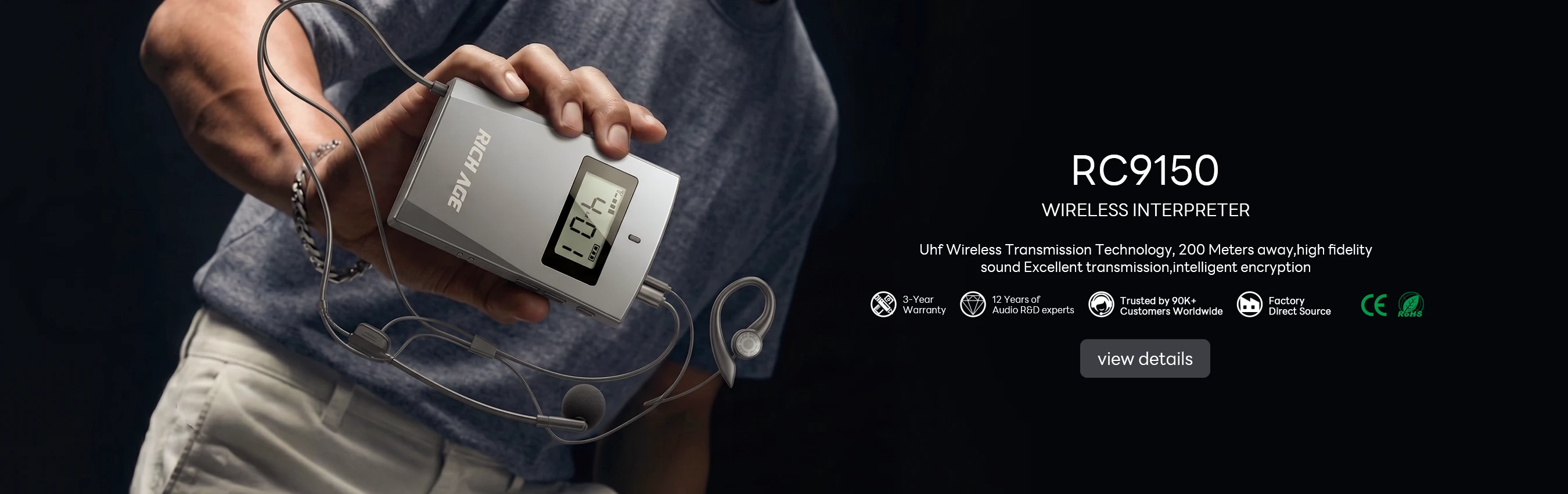
The RC9150 is the model I recommend when a venue runs multiple language groups simultaneously in expansive spaces. It operates on the 2403–2483 MHz band and delivers 100 selectable channels—double the capacity of the Retekess TT105 and TT109, both capped at 50. Output power is 20mW, double the typical 10mW in Retekess units, which means a more reliable signal through thick walls and across crowded halls. Battery performance is where the RC9150 truly separates itself: the transmitter runs for 12 hours and the receiver lasts an impressive 40 hours, versus roughly 18–20 hours on the Retekess TT109 receiver. If you are evaluating this against the RC9150 tour guide system, the takeaway is simple: this is the model built for flagship museums and expo halls.

RC2406: 80 Channels of Interference-Resistant Power for Multilingual Large Venues
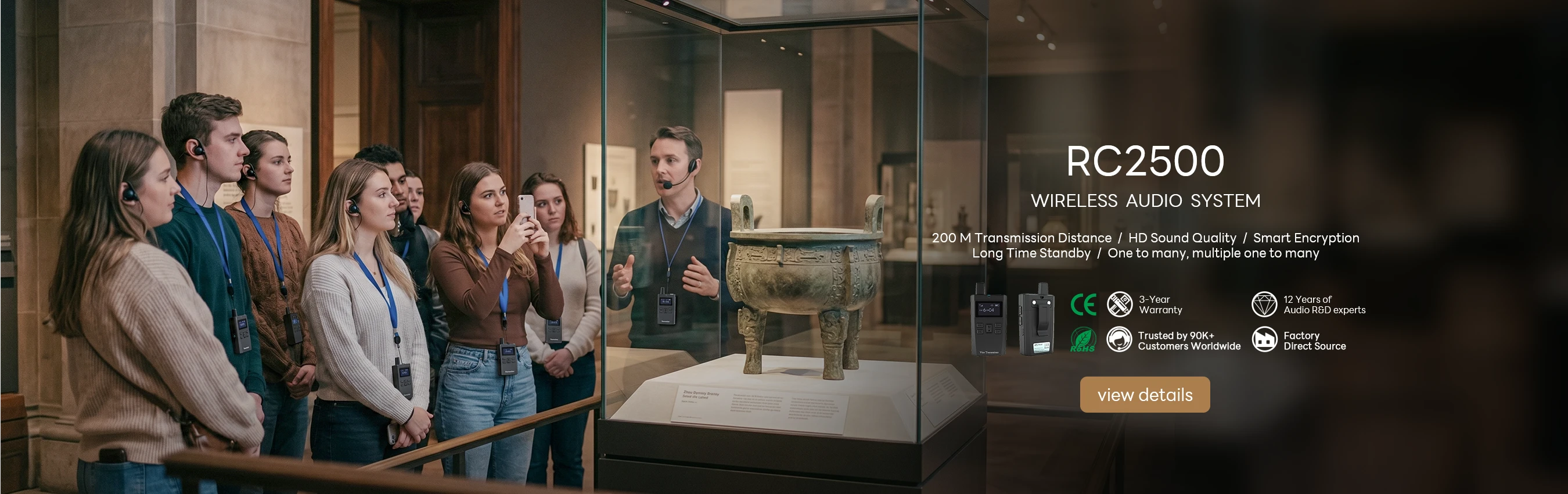
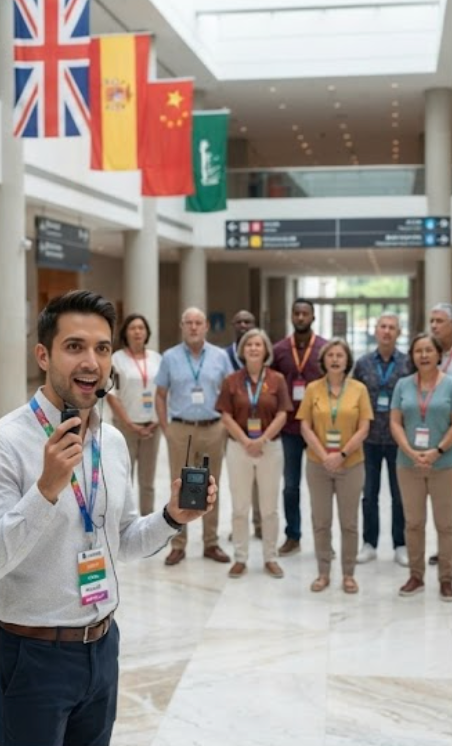
The RC2406 is our answer to a scenario increasingly common in modern museums: multiple tour groups operating in the same open atrium, each speaking a different language. It offers 80 channels in the 2403–2483 MHz band with a strong anti-interference design, a 10mW transmitter, 1–200m range, 10-hour transmitter battery, 20-hour receiver battery, and a 59g transmitter. Here is where the cross-brand comparison gets interesting: the OKAYO WT-300D operates on the 863–865 MHz band and offers only 25 channels—a significant limitation for large venues—and its 110m range is noticeably shorter than our 200m. The WT-300D does offer HAC compatibility and remote channel switching, but for institutions that need to future-proof their audio infrastructure, the RC2406 multilingual tour guide system is the strategic choice.
RC2402: The Cost-Effective Standard for Routine Museum Operations
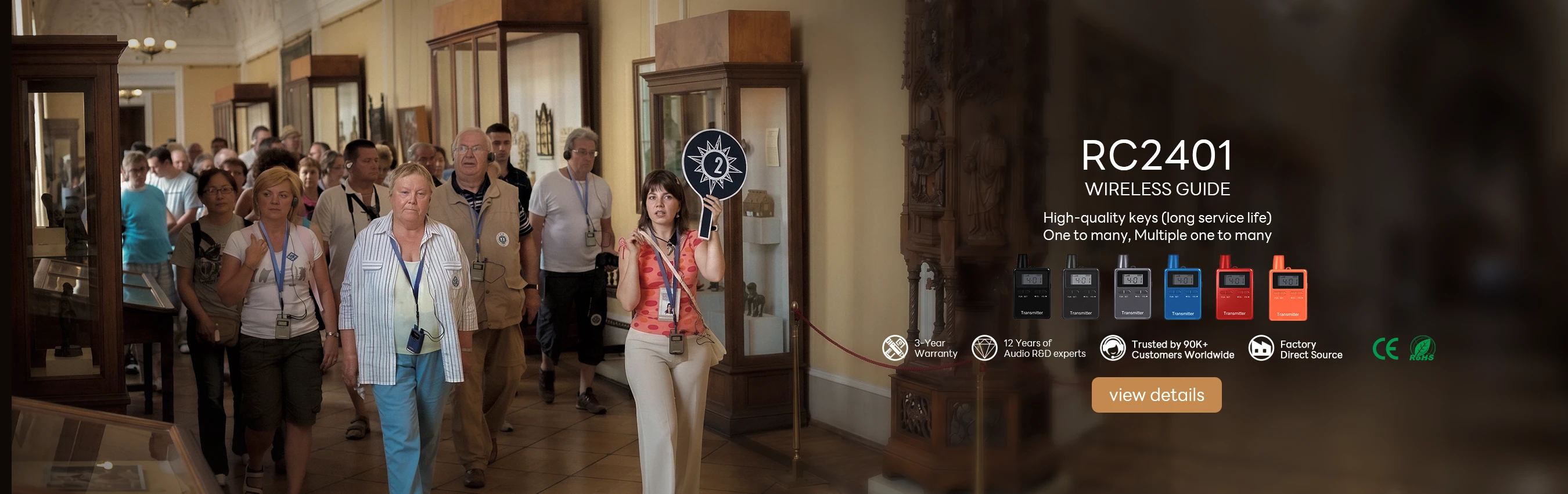
Not every museum needs 100 channels or a 40-hour receiver battery. For smaller galleries and historic homes, the RC2402 offers the sweet spot of performance and value: 50 channels in the 2.4G band, 10mW transmitter, 1–200m range, 10-hour transmitter battery, and 20-hour receiver battery. It is our direct competitor to the Retekess TT105 (about $45 transmitter, $25 receiver). The RC2402 matches the TT105 on channels and range but differentiates on receiver battery life and customization: 20 hours of receiver runtime plus Type-C charging, professional microphone options, and factory OEM/ODM customization—flexibility that off-the-shelf Retekess units generally lack. If your budget is constrained but you refuse to compromise on reliability, the RC2402 standard tour guide system is the pragmatic pick.
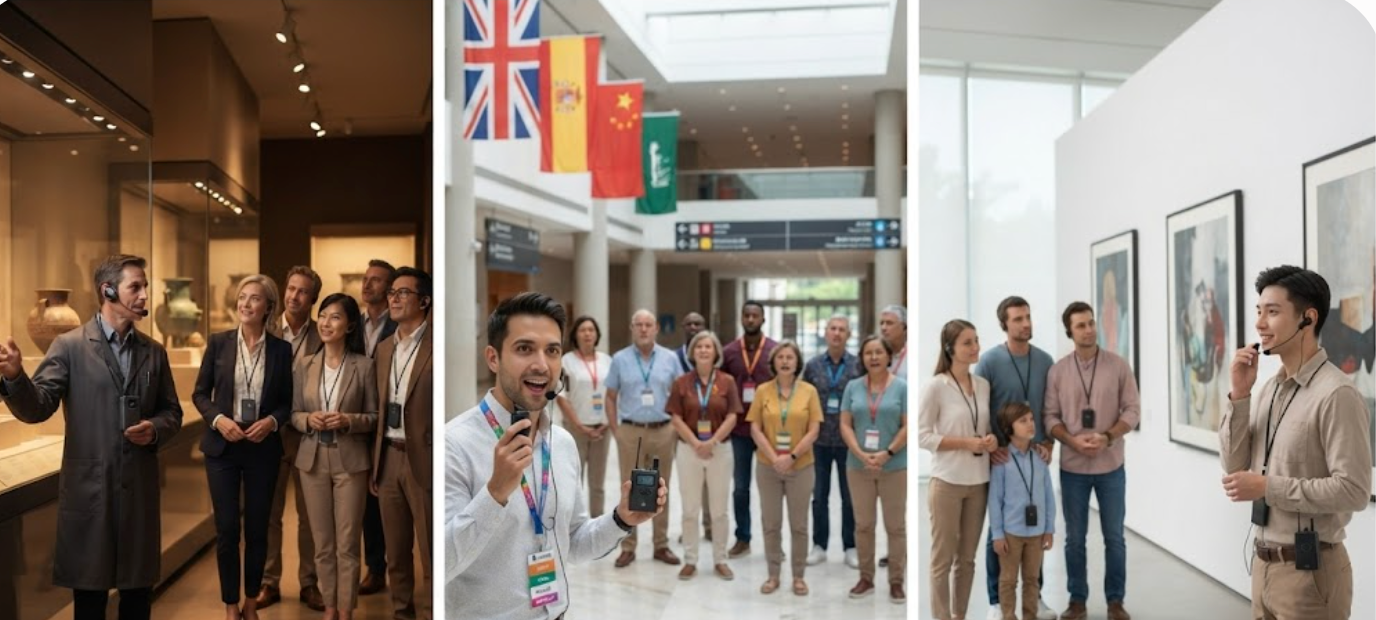
Side-by-Side Comparison: Richitek RC Series vs. Retekess and OKAYO
To make the decision process completely transparent, I have consolidated the core specifications into a single comparison table.
| Parameter | RC9150 (Richitek) | RC2406 (Richitek) | RC2402 (Richitek) | TT105 (Retekess) | TT109 (Retekess) | WT-300D (OKAYO) |
|---|---|---|---|---|---|---|
| Frequency Band | 2403–2483 MHz | 2403–2483 MHz | 2403–2483 MHz | 2.4G | 2.4G | 863–865 MHz |
| Channel Count | 100 | 80 | 50 | 50 | 50 | 25 |
| Transmission Range | 1–200m | 1–200m | 1–200m | 180m | 180m | 110m |
| Transmitter Output Power | 20mW | 10mW | 10mW | 10mW (approx.) | 10mW (approx.) | Not specified |
| Transmitter Battery Life | 12 hours | 10 hours | 10 hours | Not specified | Not specified | Not specified |
| Receiver Battery Life | 40 hours | 20 hours | 20 hours | Not specified | 18–20 hours | Not specified |
| Transmitter Weight | 104g | 59g | 59g | Not specified | 51g | Not specified |
| Special Features | High power, long battery, 100 channels | 80 channels, strong anti-interference | Type-C, pro MIC, customization | Mid-range value | 1000mAh receiver battery | HAC compatible, remote channel switch |
The second table below provides a scenario-based selection guide.
| Venue Type | Language Groups | Recommended Model | Key Rationale |
|---|---|---|---|
| Large convention center or flagship museum | 4+ simultaneous languages | RC9150 | 100 channels, 20mW power, 40h receiver battery |
| Large museum with multiple tours in one atrium | 3–4 simultaneous languages | RC2406 | 80 channels, strong interference rejection |
| Small to mid-size gallery or historic site | 2–3 languages | RC2402 | 50 channels, cost-effective, customizable |
| Budget-conscious venue with basic needs | 1–2 languages | RC2402 or TT105 | RC2402 offers better receiver battery and customization |
How to Choose Based on Your Venue, Language Count, and Budget
When I consult with museum directors, I ask three questions. First, how many language groups run simultaneously at peak? If three or more, you need at least 50 channels with strong anti-interference—narrowing the field to the RC2406 or RC9150; the OKAYO WT-300D's 25 channels feel cramped and the Retekess TT105/TT109's 50 leave no room for expansion. Second, what is your venue's layout? With multiple floors or thick walls, the 200m range of the RC series provides a safety margin the 110m WT-300D cannot match. Third, what is your operational schedule? For venues running tours from 9 AM to 6 PM with rental equipment, receiver battery life becomes critical: the RC9150's 40-hour receiver means charging once a week, while the RC2402's 20-hour battery covers the longest operational days.
Budget is always a factor, but I caution against making it the sole driver of your decision. The Retekess TT105 is indeed attractively priced, and the TT109's 51g transmitter weight is commendable. However, when you calculate the total cost of ownership—including staff time swapping batteries, the potential for audio dropout during a high-profile VIP tour, and the lack of OEM customization—the RC series often proves more economical in the long run. For institutions that plan to scale their tour programs, investing in a complete wireless tour guide system lineup from a single manufacturer ensures consistency in charging accessories, microphone connectors, and staff training.
Final Verdict and Next Steps
After comparing the RC9150, RC2406, and RC2402 against the Retekess TT105, TT109, and OKAYO WT-300D, the conclusion is straightforward. The Retekess units are solid entry-level options for small venues with modest requirements. The OKAYO WT-300D offers some niche features, but its 25-channel limit and 110m range make it a poor fit for large-scale multilingual operations. The RC series, by contrast, was engineered specifically for the demands of museums and large venues: higher channel counts, longer battery life, superior range, and the flexibility of OEM/ODM customization. Whether you need the flagship power of the RC9150 or the cost-effective reliability of the RC2402, you are investing in an audio infrastructure that grows with your institution.
If you are evaluating a wireless tour guide system for your museum, convention center, or heritage site, I invite you to contact our factory directly. We can provide sample units for on-site testing, discuss custom branding, and help you calculate the right channel count for your specific tour schedule. For a deeper dive into how our systems perform in real museum environments, explore our museum wireless audio guide solutions. And if you are still weighing multiple brands, our comparison resource page offers additional side-by-side analyses. The right tour guide system is out there—let us help you find it.