
.webp)
A museum gives a tour guide system an easy life: climate control, carpeted floors, walls that hold the signal where you want it. Take the same hardware to the places tours actually happen outside — a ranch where guests ride before breakfast, a mountain trail that starts at freezing and ends in afternoon sun, a kayak launch where the group scatters across open water — and the requirements change. Cold mornings kill batteries that were specified for indoor duty. Wide terrain stretches range assumptions until the tail of the group hears static. Multi-day programs mean the charging drawer becomes the bottleneck, not the radio. This comparison builds an outdoor kit from three Richitek units — the RC9150 as the flagship transmitter, the RC2500 as the cold-weather endurance unit, and the RC2408 as the eighty-channel headroom play — against two names that show up constantly in scenic-area tenders: YNGM, whose L8 earhook has become a fixture on Chinese scenic routes, and ANDERS, whose ATG line sells a single 2.4 GHz platform in three wearing styles.
The Cold-Morning Column Nobody Else Publishes
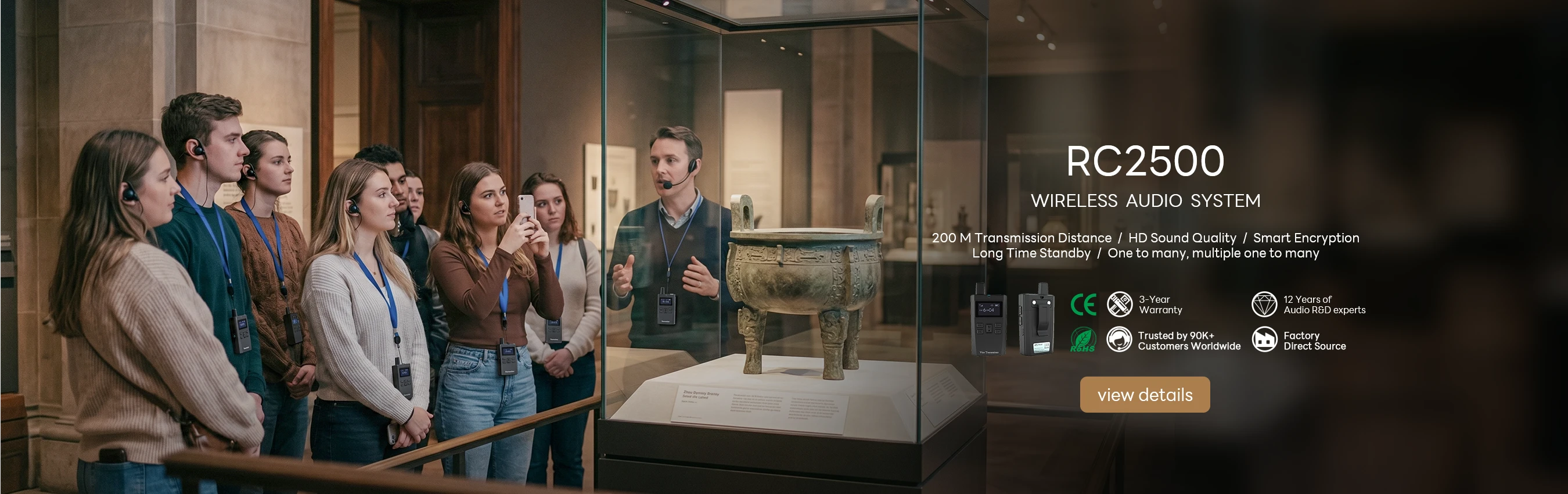
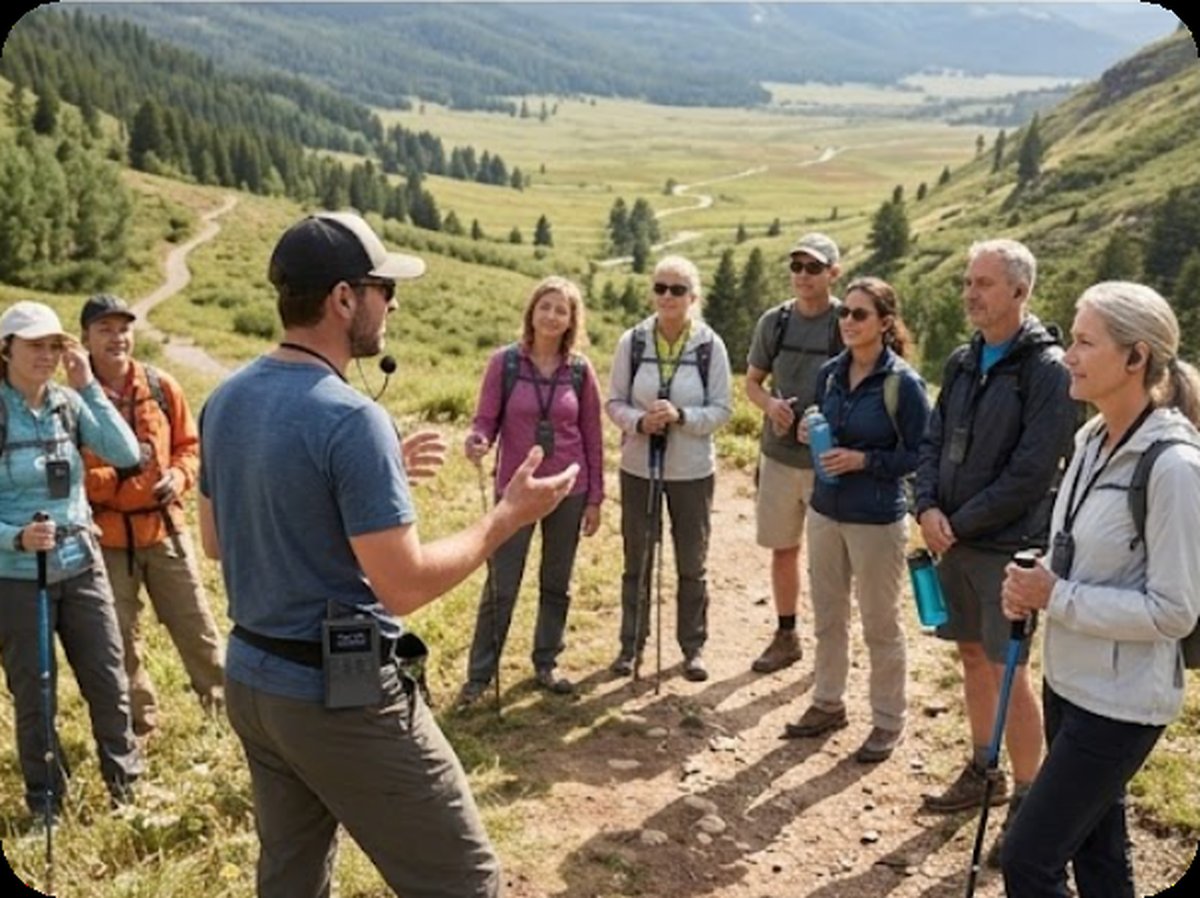
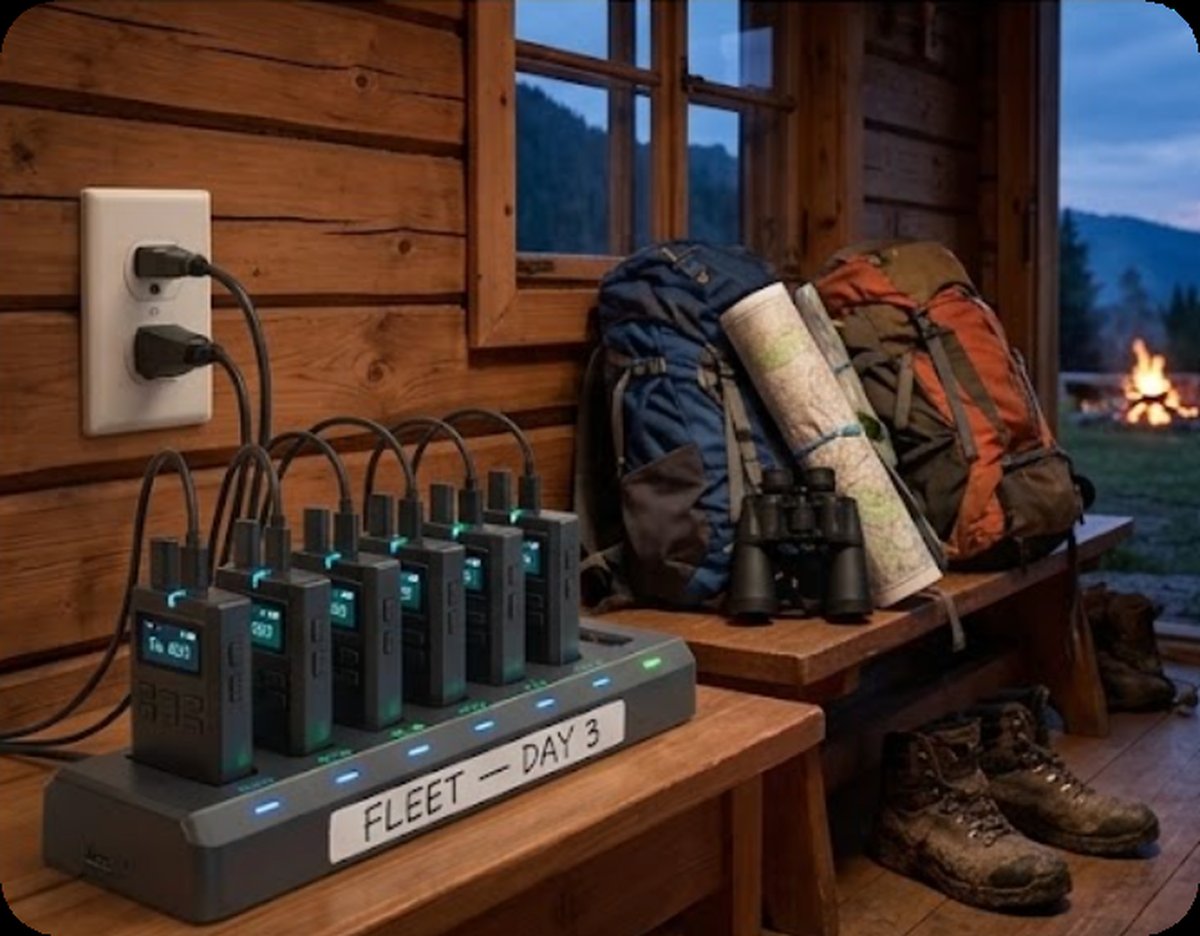
Start with the specification that only matters the first time a program runs in shoulder season. The RC2500 operates from -15 to 50 °C, a published range that covers sub-zero trailheads, desert afternoons and everything a shoulder-season ranch stay can throw at a battery. Most competing datasheets simply do not state an operating floor, which is not the same as having none — it means the operator discovers it in the field, usually as a receiver that boots slowly or drops pairs on a frosty morning. Battery arithmetic backs the temperature claim up: the RC2500 runs twelve hours on the transmitter and forty on the receiver, so a three-day trekking program charges once at the trailhead lodge and forgets about it. Its 20 mW output on the 2.4 GHz band is deliberately modest, which keeps the rig inside global license-free rules — the same radio is legal in the Alps, the Rockies and the Hokkaido backcountry without regional variants, something a UHF fleet cannot promise across borders. YNGM's L8 quotes a 150-meter-plus receiving radius and eight to ten hours of runtime, honest numbers for a park loop, but the datasheet is silent on cold, and a runtime measured at room temperature rarely survives a night on a mountain shelf.
| Item | Richitek RC9150 | Richitek RC2500 | Richitek RC2408 | YNGM L8 | ANDERS ATG series |
|---|---|---|---|---|---|
| Band | 2.4 GHz | 2.4 GHz, 20 mW | 2.4 GHz | 2.4 GHz | 2.4 GHz global |
| Channels | 100 | 50 | 80 | Multi-group, one-main-two-aux | Platform-dependent |
| Range | 200 m class | 200 m open field | 1-200 m | 150 m+ | Not stated |
| Battery | Tx 15 h / Rx 35 h+ | Tx 12 h / Rx 40 h | Tx 10 h / Rx 20 h | 8-10 h | Not stated |
| Operating temp | Indoor-rated | -15 to 50 °C | Indoor-rated | Not stated | Not stated |
| Wearing | Non-in-ear bud | 50 g receiver | 50 g receiver | 16 g earhook, LCD | Earhook / neck / chest |
Where the Flagship Earns Its Weight on the Trail
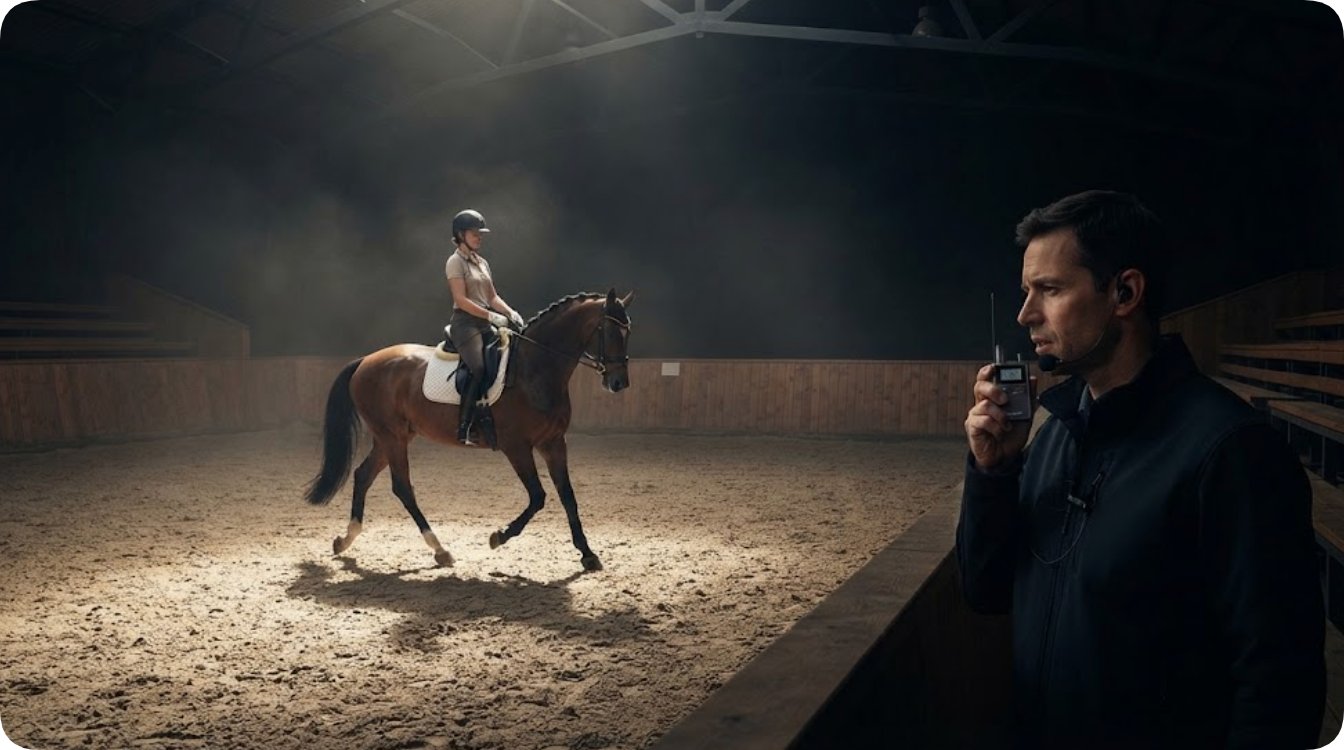
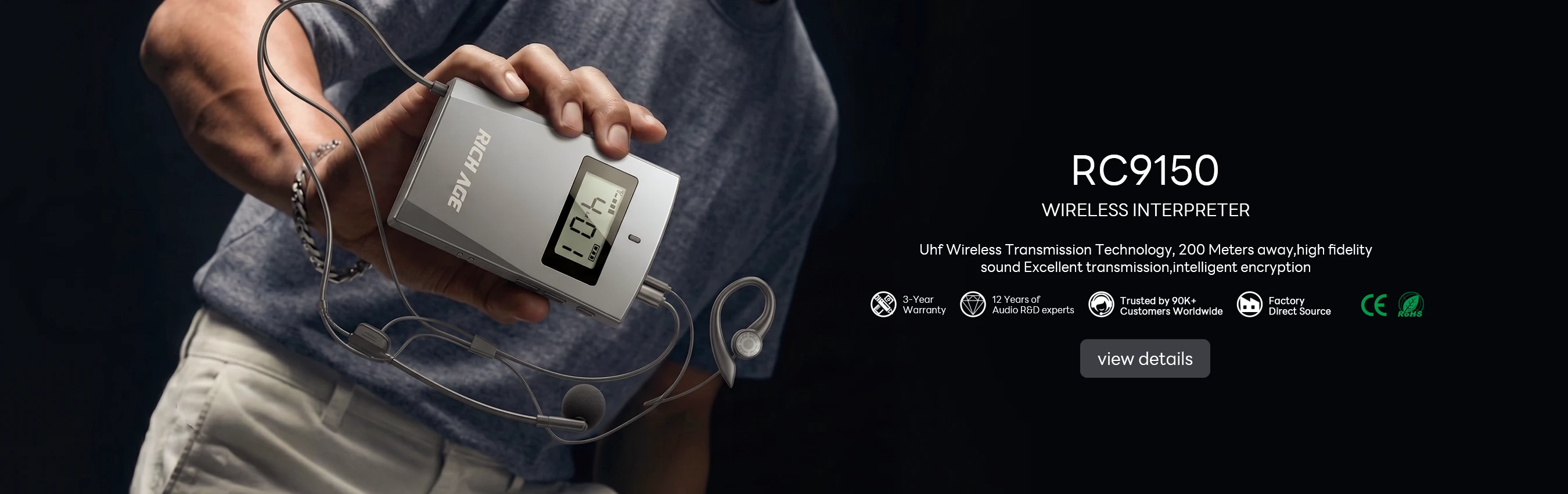
The RC9150 looks like the wrong choice outdoors until you read the numbers again. Its transmitter and receiver share identical pocketable dimensions at 97.5 grams, so a guide who hands the transmitter to a rotating presenter — a ranch owner at the corral, a park ranger at the overlook — hands over a unit the guest can pocket, not a lanyard rig they have to return. Fifteen hours of transmitter runtime covers the longest guide day in the business, and thirty-five-plus on the receiver side means the fleet survives a weekend program without a mid-trip charge. The hundred-channel count is what seals it for multi-group operations: a canyon operation running the morning trek, the kayaking clinic and the sunset ride simultaneously assigns each a channel and stops thinking about it, exactly the way a training department runs three cohorts on one floor. And the non-in-ear bud matters more outside than in — guests on horseback or wearing helmets cannot take a sealed earpiece, and a bud that rests against the ear rather than inside it plays far better with headgear than anything in-ear on the rival side.
Channel Headroom as an Outdoor Insurance Policy
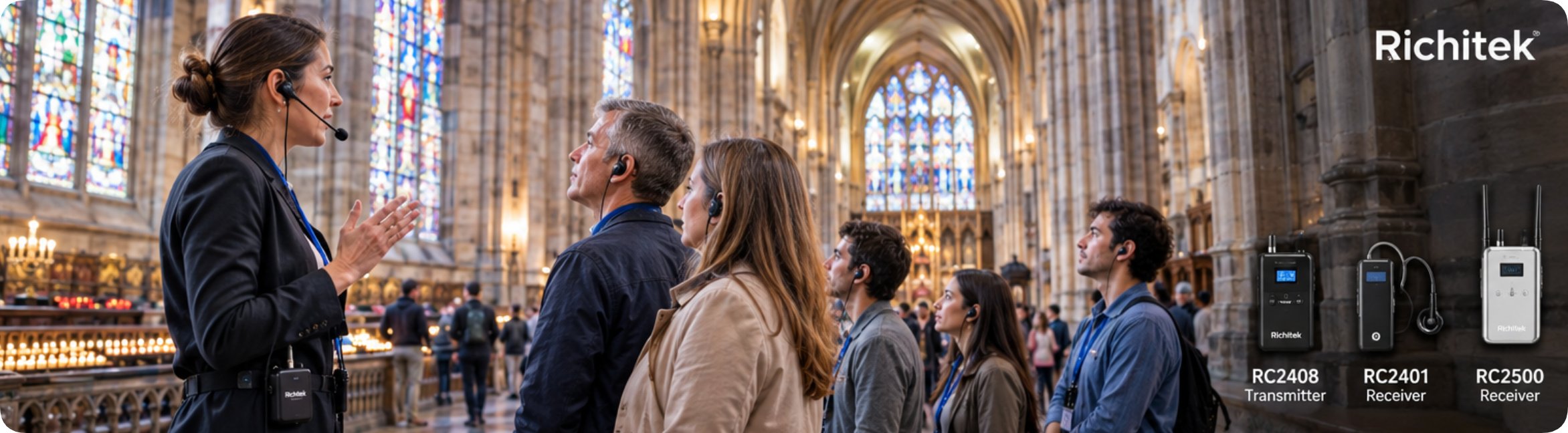
The RC2408's eighty channels read like indoor generosity until a scenic area fills up. Popular routes are shared airspace: two rival operators on the same switchback, a school group on the boardwalk, a government delegation threading through all of it. An eighty-channel unit absorbs collisions the way a big cathedral basement absorbs three languages at once — assign the trek group channel ten, the kayak clinic twenty, keep sixty free, and a neighboring operator landing on your frequency is an inconvenience rather than a canceled tour. Ten-hour transmitter and twenty-hour receiver runtime covers the standard excursion day twice over, and the fifty-gram receiver hangs on a lanyard without weighing down a life vest or climbing harness.
What the Rivals Genuinely Do Better
Both challengers earn real credit in this setting. YNGM's one-main-two-aux design lets a second guide or interpreter join the same channel without swapping hardware — on a split group that regroups at a viewpoint, the co-presenter walks ahead and speaks without a handoff, a workflow the Richitek trio approaches through channel management rather than built-in co-presenter pairing. The L8's full-function LCD screen also gives guides confidence about which channel they are on in bright sun, and at sixteen grams it is the lightest earhook in this comparison. ANDERS wins the wearing-style argument outright: the ATG platform ships as an earhook, a neck-worn pendant and a chest-mounted unit, and anyone who has tried to run a receiver clipped inside a riding vest or under a flotation vest knows why the chest option exists. Its 2.4 GHz platform is described as internationally usable, and at economy pricing it outfits a hundred-unit school program for the cost of a dozen flagships. The honest gap is elsewhere: datasheets that stop at "global 2.4 G" say nothing about operating temperature, runtime or range, so a buyer is choosing wearing flexibility over publishable performance numbers.
Building the Kit for Terrain You Do Not Control
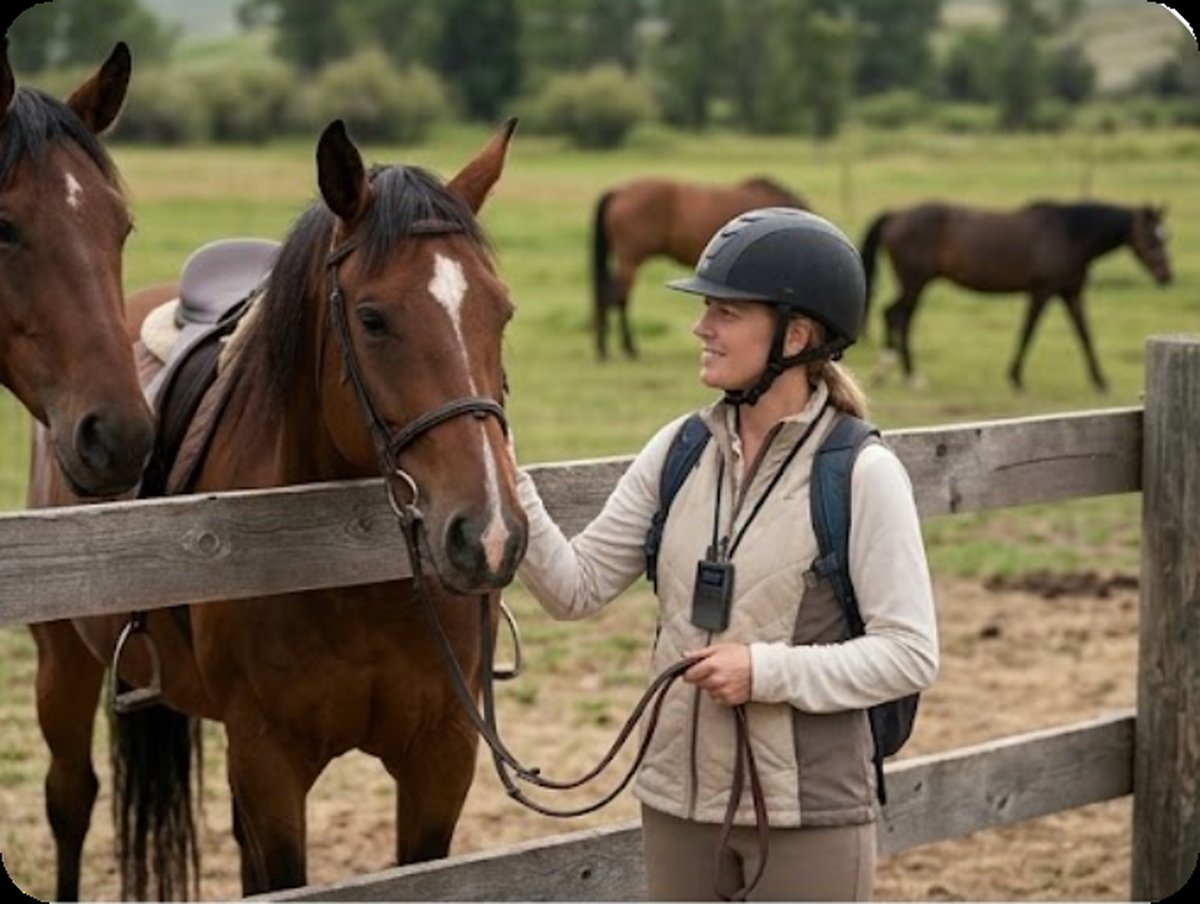
Non-typical outdoor work rewards systems whose specifications survive being printed on a poster at the trailhead: a temperature range the radio was actually tested to, runtimes measured in days rather than hours, and channel headroom that treats shared airspace as the default condition. The RC2500 carries the cold and the multi-day load, the RC9150 carries the rotating-presenter and hundred-channel load, and the RC2408 holds the frequency plan together when the valley gets crowded. The equestrian instruction kit extends the same 2.4 GHz fleet to mounted coaching, the full tour guide lineup lists every transmitter and receiver in the rack, and the comparison archive keeps the cross-brand receipts for buyers who want the numbers side by side before the tender goes out.