
.webp)
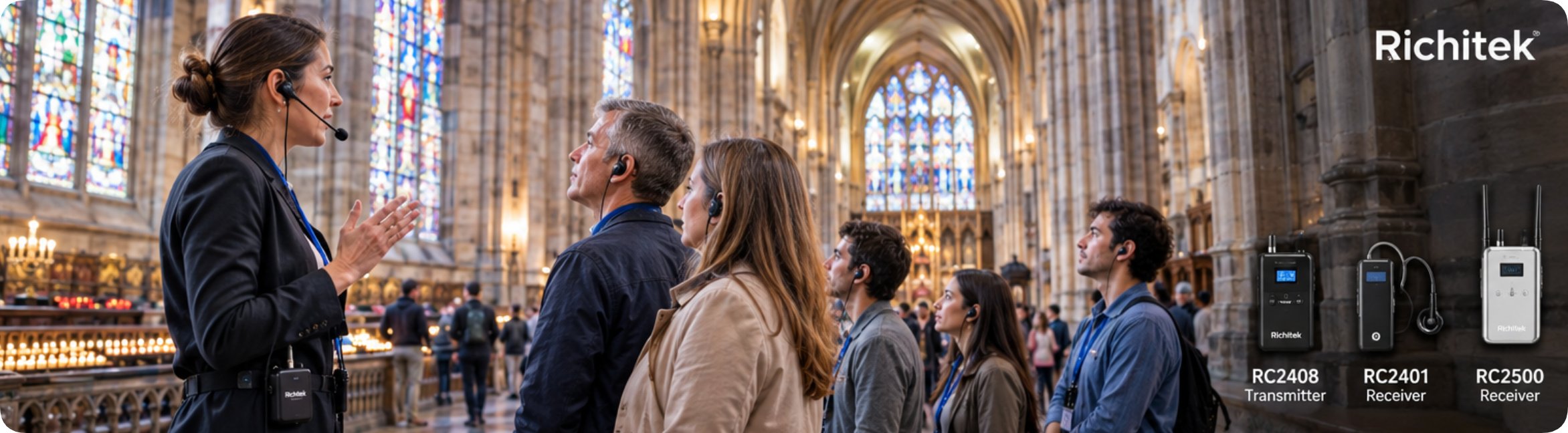
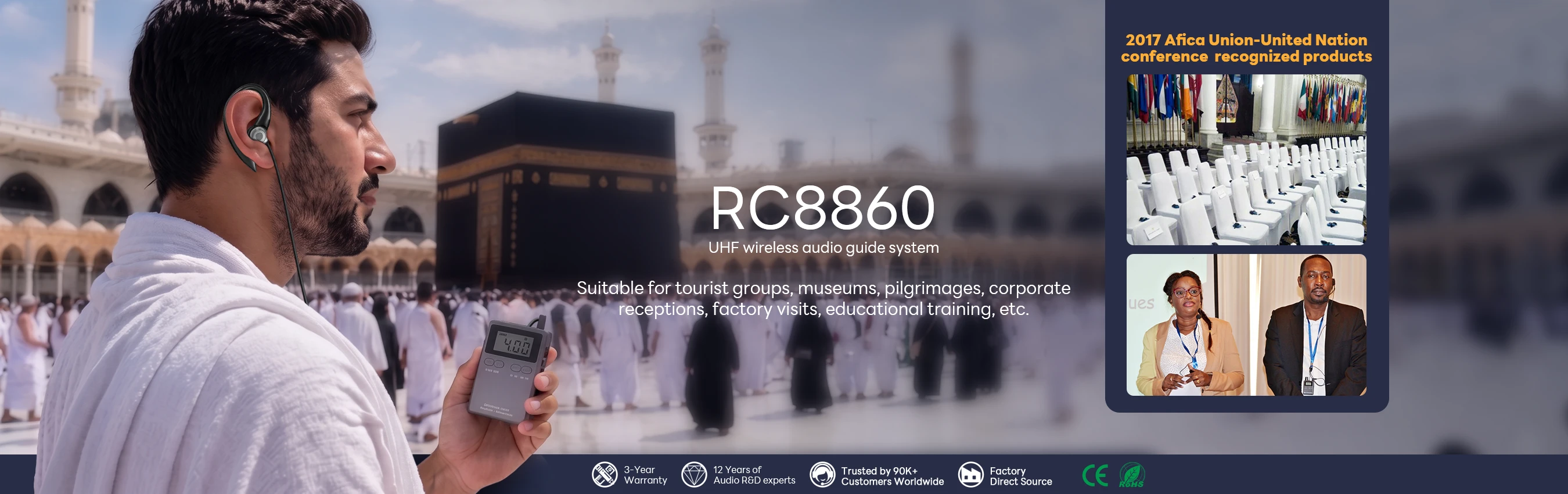
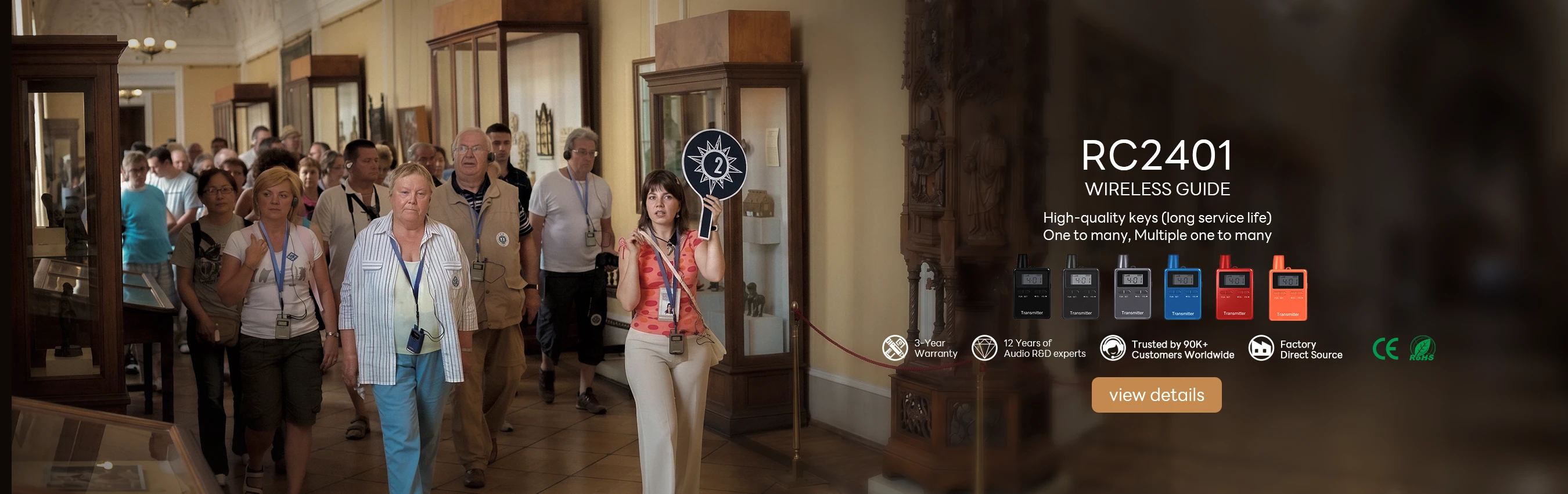
A conference centre that sells the same hall to three different clients in one week has a language problem that no single product family solves cleanly. Tuesday is a municipal hearing with six observer languages. Thursday is an industry association's annual meeting where the delegates debate in two floor languages. Saturday the hall is rented to a federation whose attendees wander in and out of breakout rooms all afternoon. The incumbent answer in most permanent installations is Bosch — the DICENTIS Wireless Conference System with its desktop discussion units, or the older wired DCN Next Generation with 31 interpretation channels plus floor. The alternative is a wireless tour guide kit that treats language distribution as a radio problem instead of a meeting-room furniture problem. This comparison lines up three Richitek units — the RC085 with its hundred-channel UHF dial, the RC8860 wideband transmitter, and the RC2408 two-way beltpack — against the Bosch stack, on the axis that actually decides tenders: who in the room gets to hear which language.
📊 Two Audiences, Two Philosophies
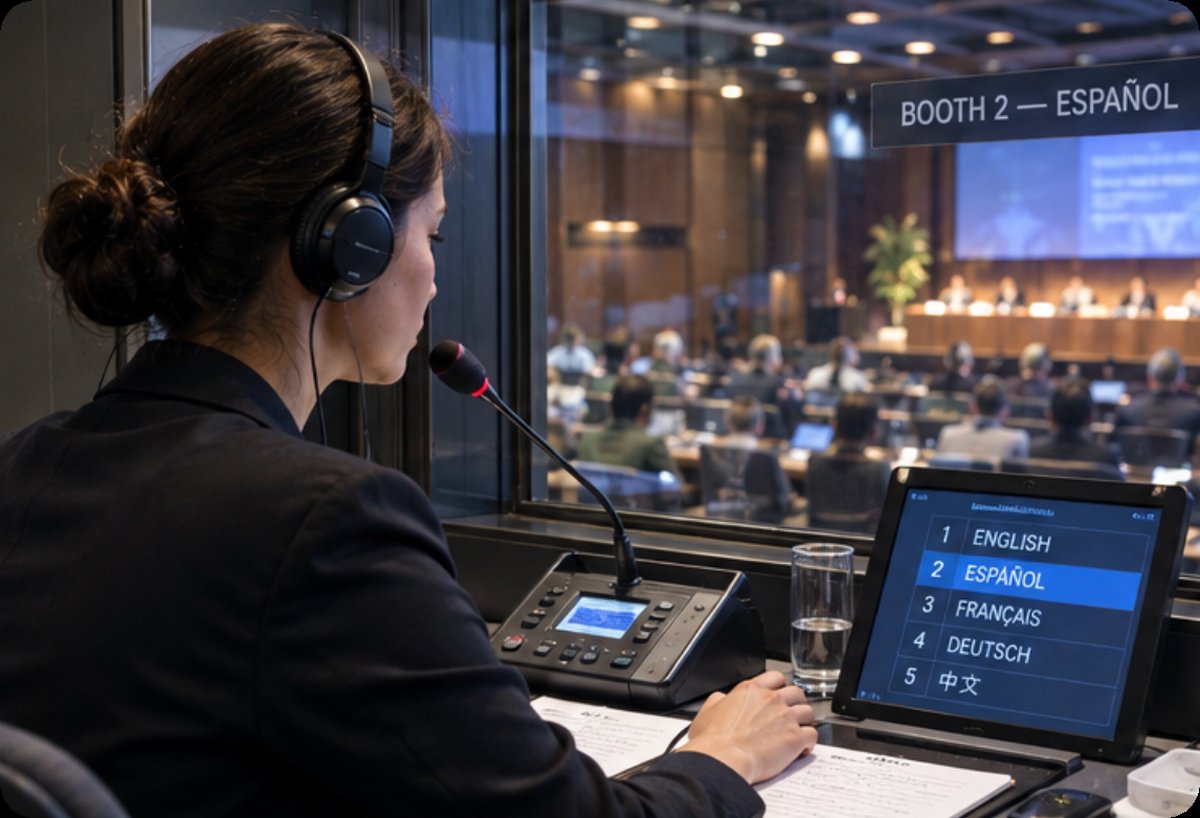
Bosch built DICENTIS Wireless for the people at the tables: touch-screen units with NFC sign-in, a request-to-speak queue the chair manages from a browser, WPA2 encryption so the press cannot sniff the floor feed, and swappable lithium packs that run about 24 hours on a 20/80 speak-listen duty cycle with a three-hour recharge. It is a discussion management system that also distributes interpretation; the wired DCN platform beside it offers 31 interpretation channels plus floor, and the INTEGRUS infrared network can push 32 language channels to fixed seats. Richitek built for the people who are not at the tables: observers, press rows, interpreters' output, late arrivals in the overflow seats. The spec contrast makes the split visible.
| Item | RC085 | RC8860 | RC2408 | DICENTIS Wireless |
|---|---|---|---|---|
| Band | UHF 470-510 MHz | UHF 860-870 MHz wideband | 2.4 GHz | Wi-Fi 2.4 + 5 GHz |
| Channels | 100 | 20 PLL | 80 | 44 Wi-Fi channels |
| Wearing form | 18 g earhook | beltpack + earphone | two-way beltpack | desktop discussion unit |
| Tx / Rx battery | 10 h / 20 h | 10 h / 20 h | 10 h / 20 h | 24 h pack, 3 h charge |
| Range, open field | 200 m class | 200 m | 1-200 m | access-point cell |
🏆 What Bosch Genuinely Does Better
Give the German engineering its due, because a fair comparison is the only kind that survives a site visit. A DICENTIS room knows who is allowed to talk: the chair mutes the over-eager delegate with a tap, voting happens on the same screen, and the NFC card means attendance takes itself. For a parliament, a court, or a standing committee that meets weekly in the same sealed room, this workflow integration is worth every euro of the integration budget, and no tour guide kit pretends to replicate it. The WPA2 security story is genuinely stronger than an analogue-style UHF link for sensitive proceedings, and the removable battery packs mean a dead unit is a ten-second swap rather than a charge-cycle wait. If your conference is a fixed room with fixed seats and a speaker list, Bosch's answer is the more complete product, and the DCN's 31 interpretation channels plus INTEGRUS infrared distribution remain the reference design for large permanent multilingual halls. The platform even extends beyond audio: the access point can drive up to six Bosch HD conference cameras for automatic speaker tracking, and the OMNEO media network means the installation grows by software licence rather than by pulling new cable — a real advantage in a building where the ceiling is heritage-protected and every cable run is an argument with the conservation officer.
👂 The Listener Who Never Speaks
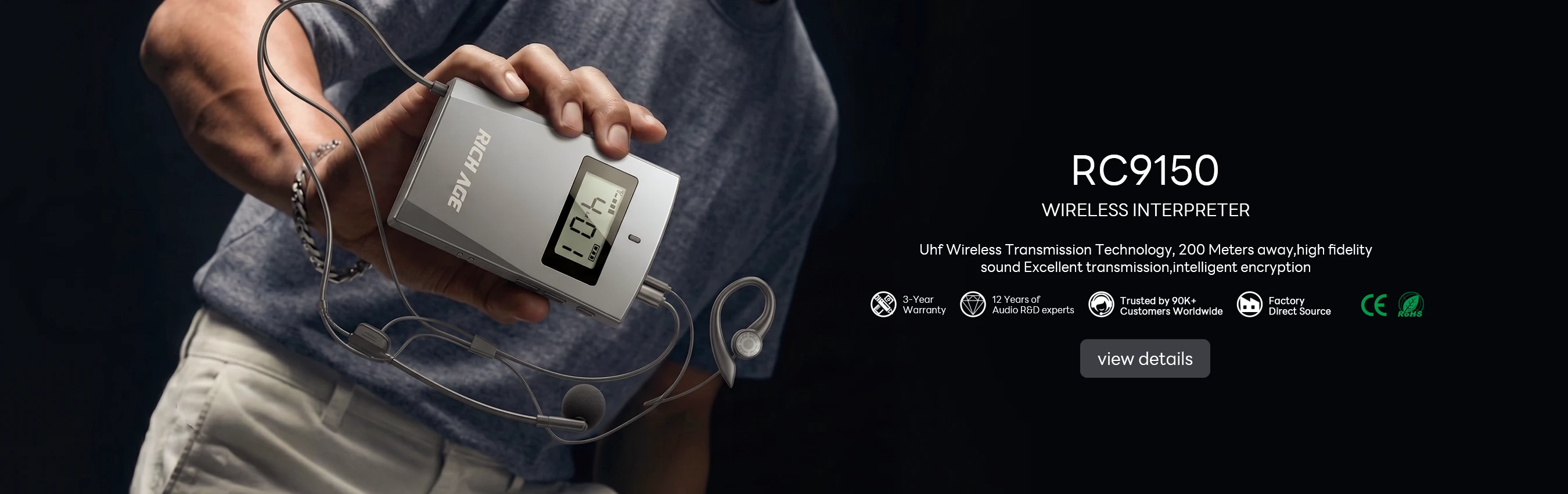
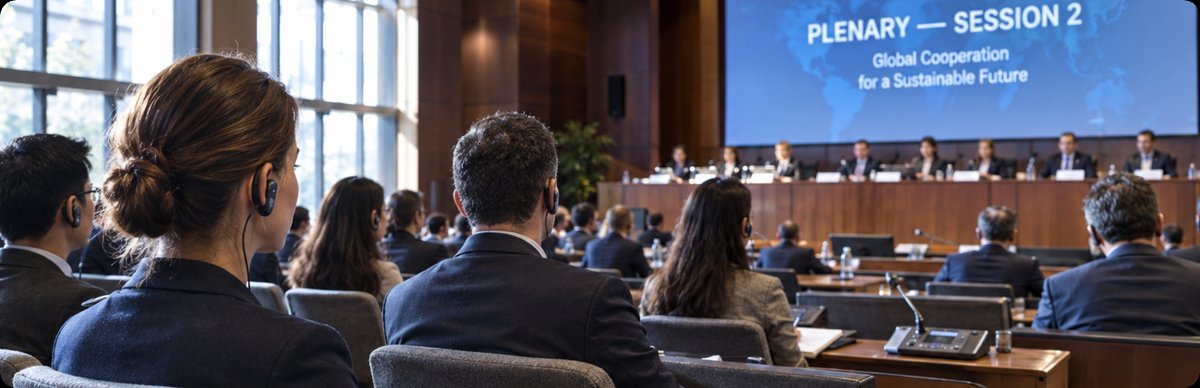
But look at the rear rows. Every municipal hearing and industry plenum carries an audience that will never touch a microphone: accredited observers, journalists on deadline, family members, the delegation's own junior staff. Bosch's desktop units assume a seat at a table — they are beautiful, expensive furniture, and a venue that has bought 60 of them does not hand them to a passing crowd of two hundred. The RC085 answers with a different industrial logic: an 18-gram earhook that weighs less than the visitor's own glasses, drawing from a hundred UHF channels at 470-510 MHz so the hearing runs on its own slot while the hall's Wi-Fi, the delegate units and the press booths all share the crowded 2.4/5 GHz sky above. When the interpretation is the product — a whispered half-second behind the floor language — the RC8860's wideband audio path on UHF 860-870 MHz carries the consonant detail that compressed discussion audio tends to flatten, which interpreters and hard-of-hearing delegates both notice within the first agenda item. The infrared alternative inside the same Bosch catalogue illustrates the constraint by comparison: INTEGRUS delivers its 32 channels beautifully inside a lit room, but infrared needs line of sight to the emitter and does not follow the audience out of the hall, so an observer who steps into the corridor or crosses the atrium loses the feed mid-sentence. A UHF carrier simply crosses the doorway with them, which is why visiting delegations end up wearing radio rather than sitting under an emitter.
🔁 Scheduling the Same Room Twice a Day
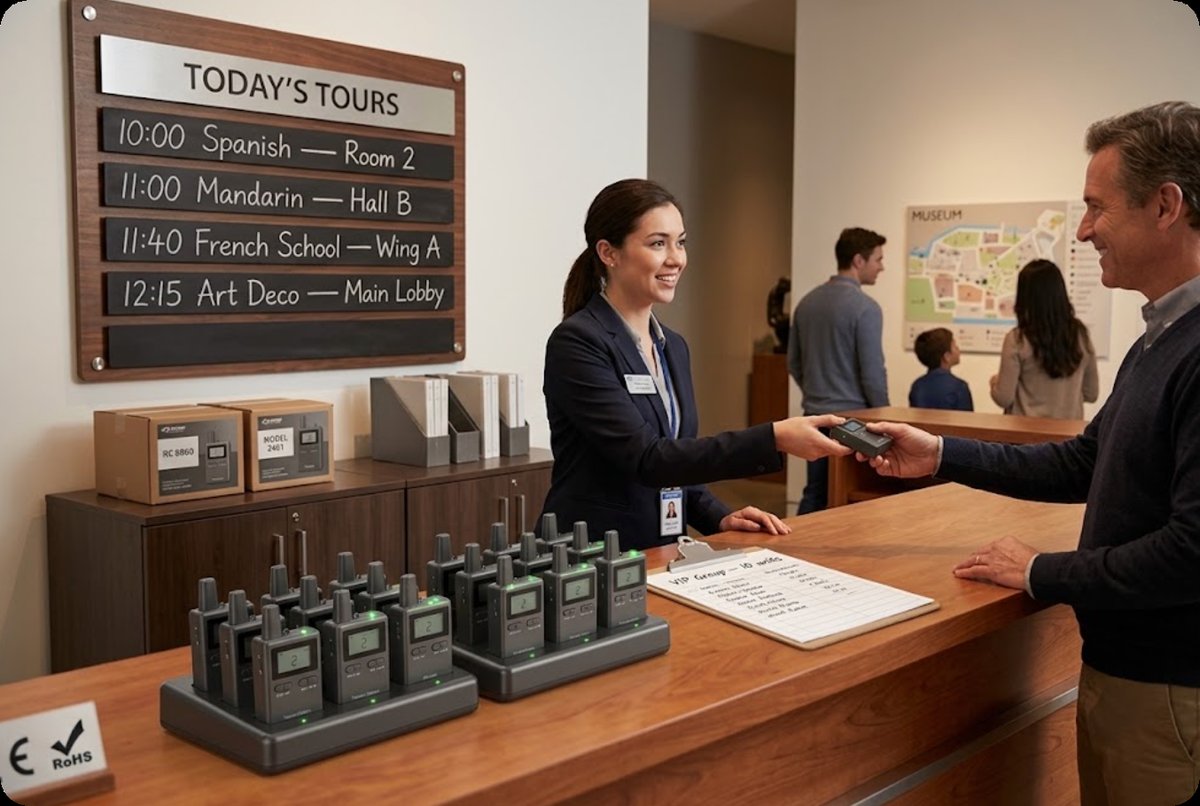
The rental market decides this axis, and it is the one where the desk units simply do not travel. A federation that books your hall on Saturday has no use for a permanent bench of discussion furniture, but it will happily take eighty channel slots: the RC2408 runs eighty usable channels on the 2.4 GHz band and works as a transmitter or a receiver, which means the morning workshop's group leaders can pass microphones among themselves and the afternoon plenum re-pairs the same fleet as plain receivers for the interpreted feed. One charge drawer, one instruction sheet, two meeting formats. The front desk learns one tray ritual instead of two, and the overnight crew plugs in a single set of chargers rather than maintaining a bench cradle and a rack of proprietary packs side by side. The morning hearing used six of the RC085's hundred channels for its observer languages; the evening's rented gala takes another five; nobody holds a coordination meeting because the dial simply absorbs both. That headroom is the quiet argument in every tender the fixed-install crowd cannot match at any price: a DICENTIS access point tops out at 120 paired units, which is generous for a committee and modest for a hall with overflow.
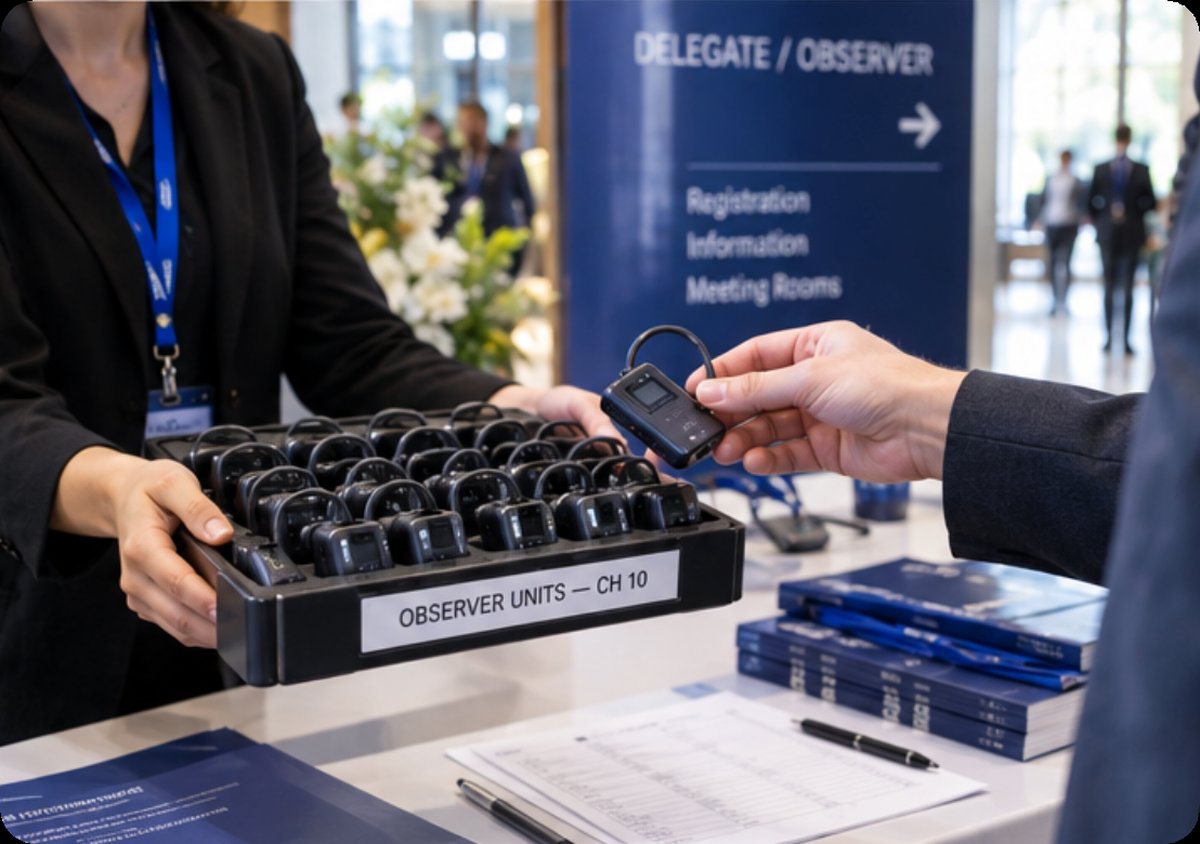
The honest reading is that these are complements wearing each other's clothes. A hall that hosts ministerial sessions keeps its Bosch bench for the delegates and adds a UHF fleet for everyone the bench cannot seat. A venue that lives on rented days buys the fleet and skips the bench entirely. Both paths cost less than discovering the gap during the first real event. For the product-level detail behind this stack, the conference solutions page collects the deployment patterns, the simultaneous interpretation hub explains the booth-to-ear chain, and the comparison archive keeps the full ledger of matchups.