.webp)
An airport terminal runs three separate audio jobs in the same hour, and no single vendor sells all three. The first is a public address system that speaks to everyone in a concourse at once. The second is assistive listening for passengers who cannot make out that address from a distance. The third is the working channel a ground crew uses when a bus door closes early or a delayed rotation has to reach sixteen staff spread across apron, ramp and baggage hall. The first two are sold by infrastructure builders — TOA has supplied public address and voice alarm hardware since 1934, and Humantechnik has built German assistive listening for over 25 years. Neither is designed for the third job, and that gap is where three smaller Richitek units land.
📢 The Two Systems Every Building Already Owns
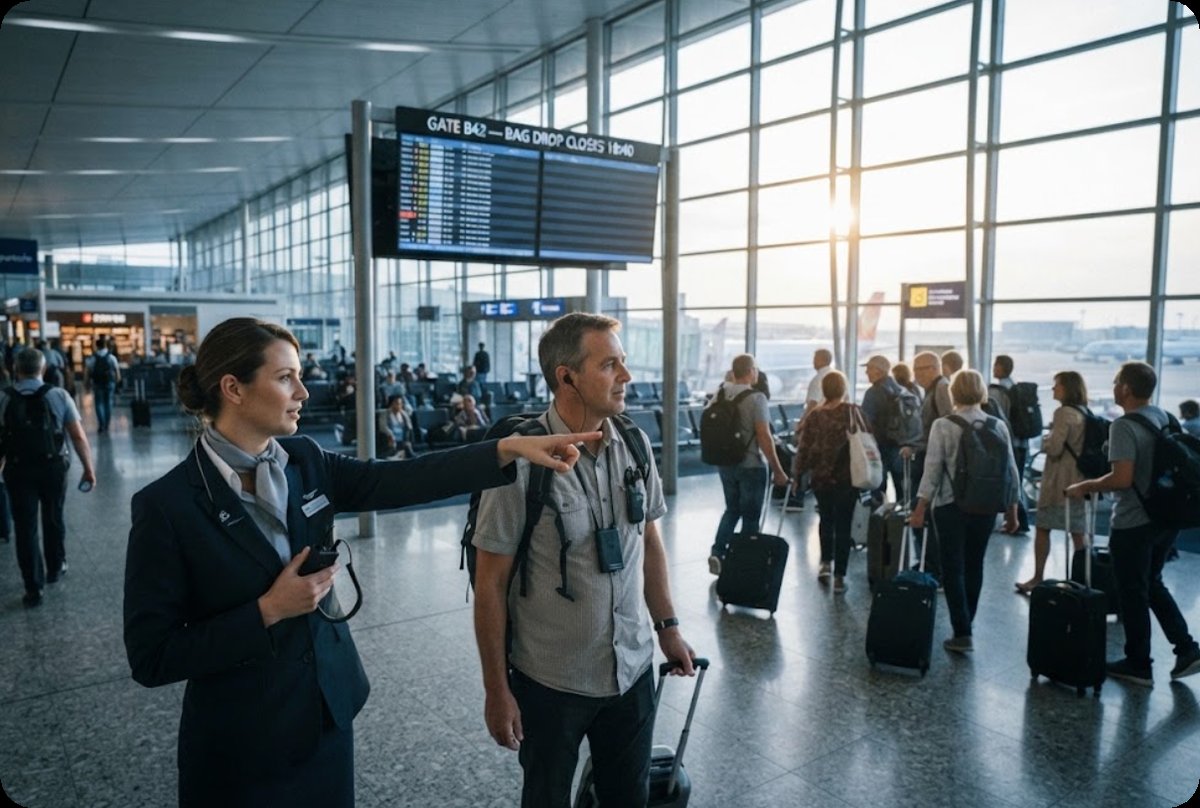
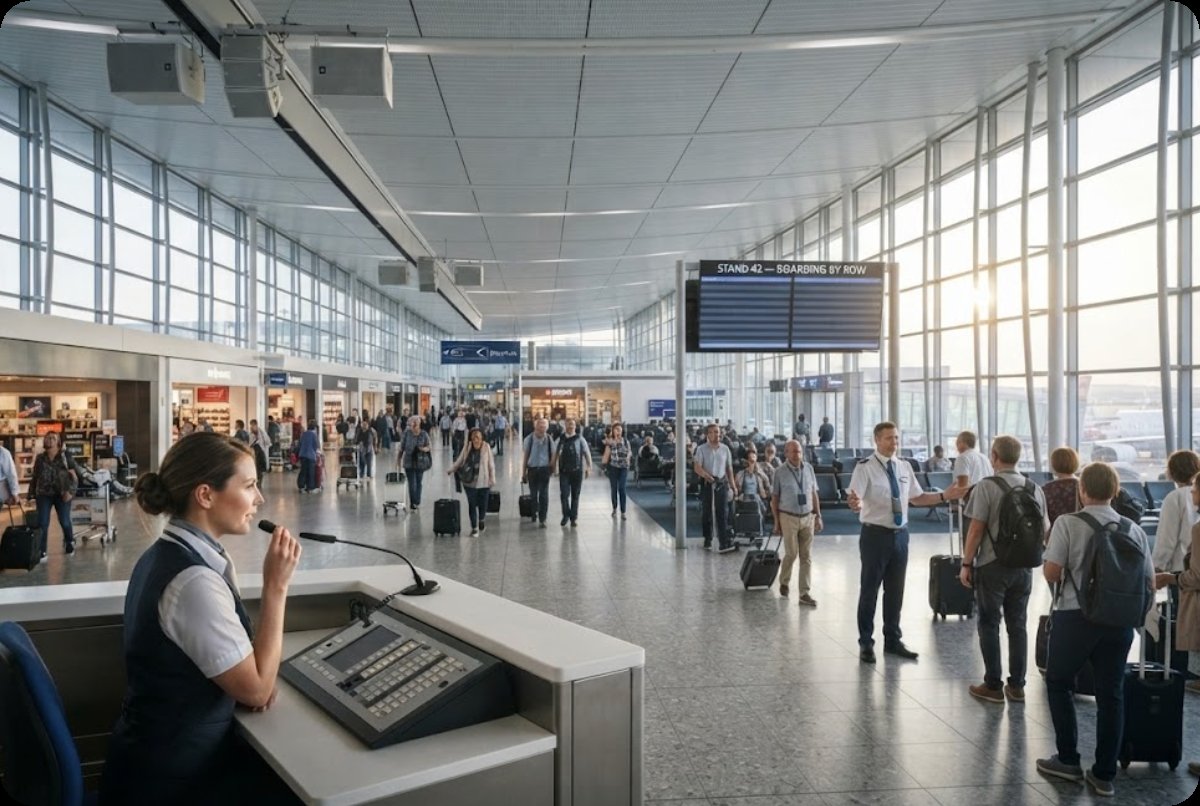
TOA's answer is infrastructure, and the Katowice Pyrzowice reference project shows what that means. Terminal B there is 17,200 square metres over three levels, and the VX-3000 voice alarm and public address system drives close to 700 speakers — 172 BS-680FC wall units and 486 PC-1865BS ceiling units — engineered to EN54 and CNBOP airport requirements, with LAN tie-in to an external flight information platform so gate and queue messages inherit their priority from the operational database. At Berenice International Airport in Egypt, partner TECO had to cut a 1 kHz reverberation time above seven seconds down to 2.03 seconds before the acoustic simulation would accept the speaker layout. That is a serious engineering standard, and a building-scale procurement with design, wiring and certification attached.
Humantechnik's answer is personal. The earis premium PR pocket receiver carries audio over a 2.4 GHz digital PCM link at 10 dBm RF, with a stated range above 70 metres, a 400 mAh lithium-polymer cell that runs about nine hours and recharges in two, and a 41-gram body that clips to a lapel. The volume wheel reaches 122 dB(A), a balance adjuster compensates one-sided hearing loss, and five Dynamic Sound HS profiles developed with the Fraunhofer Institute in Oldenburg retune the incoming audio for different programme material. It ships with an inductive neckloop that feeds straight into a T-coil hearing aid, and a built-in microphone flips the same unit into ambient conversation amplification. Devices arrive pre-paired. This is an excellent instrument for the passenger who needs it.
| Item | RC8860 | RC2500 | RC2401 | TOA VX-3000 | Humantechnik earis |
|---|---|---|---|---|---|
| Purpose | crew channel, distance | crew channel, endurance | crew channel, rapid deploy | building PA + voice alarm | personal assistive listening |
| Band | 860–870 MHz UHF | 2403–2483 MHz | 2403–2483 MHz | wired / IP distributed | 2.4–2.5 GHz digital |
| Channels | 20 PLL | 50 PLL | 50 PLL | zone-based | pre-paired single link |
| Range | 200 m, wall penetration | 200 m open area | 200 m open area | whole-building | >70 m |
| Battery | 10 h TX / 20 h RX | 12 h TX / 40 h RX | 10+ h TX / 20+ h RX | mains, no battery | 9 h, 2 h recharge |
| Temp. range | IPX4, outdoor-capable | −15 °C to 50 °C | IPX4 splash | indoor infrastructure | 0 °C to 45 °C |
| Regulation | CE, RoHS; licence varies | CE, EMC, LVD, RED, RoHS | CE, RoHS | EN54 / CNBOP | assistive-device standard |
🔇 A Building-Wide Address Is Not a Working Channel
The case against solving the working channel with public address is not that public address is weak. It is that everything it does is public. Every word a supervisor speaks reaches every listener on that zone, which is correct for a gate change and wrong for anything operational — a baggage jam, a medical escort, a security instruction that should not be broadcast to four hundred strangers. Zones are defined by the building, not by the team, so carving a private channel out of a VX-3000 network means engineering work the hardware was never asked to do. The cost profile follows: the Pyrzowice installation is a project with acoustic simulation, LAN integration and certification attached, not a box that arrives in a suitcase on a Friday.
The regulatory line should be stated plainly. EN54 voice alarm certification is a life-safety standard for evacuation, and no Richitek model carries it. These three units are communication tools; they do not replace a certified voice alarm system and any specification that treats them as an evacuation layer is asking for trouble. What they cover is the private, thirty-second instruction that keeps an operation moving without entering the public record.
🦻 Assistive Listening Solves a Different Problem Entirely
The earis premium PR is a precision instrument aimed at one passenger, and comparing it to a team system on range flatters it unfairly — a single passenger walking a concourse never needs 200 metres. The useful comparison is coverage of a task. Ramp crews and baggage teams work across areas where a 70-metre ceiling and a 0 °C to 45 °C window are the binding limits: a winter stand in a northern climate is outside that window before the audio is. An airport that owns assistive listening should keep it, and should note that the simultaneous interpretation line covers the neighbouring need — a passenger who needs the announcement in another language rather than at higher volume, which is the gap TOA fills at Berenice by feeding AviaVox automatic announcements in English and Arabic.
Two advantages belong to Humantechnik outright. The 122 dB(A) amplification with a left-right balance trim serves single-sided hearing loss in a way no tour guide receiver attempts, and the neckloop into a T-coil hearing aid suits a passenger who already owns the device. Neither is a gap on the Richitek side; a terminal needs both rather than either.
🔧 Three Roles on One Overnight Shift
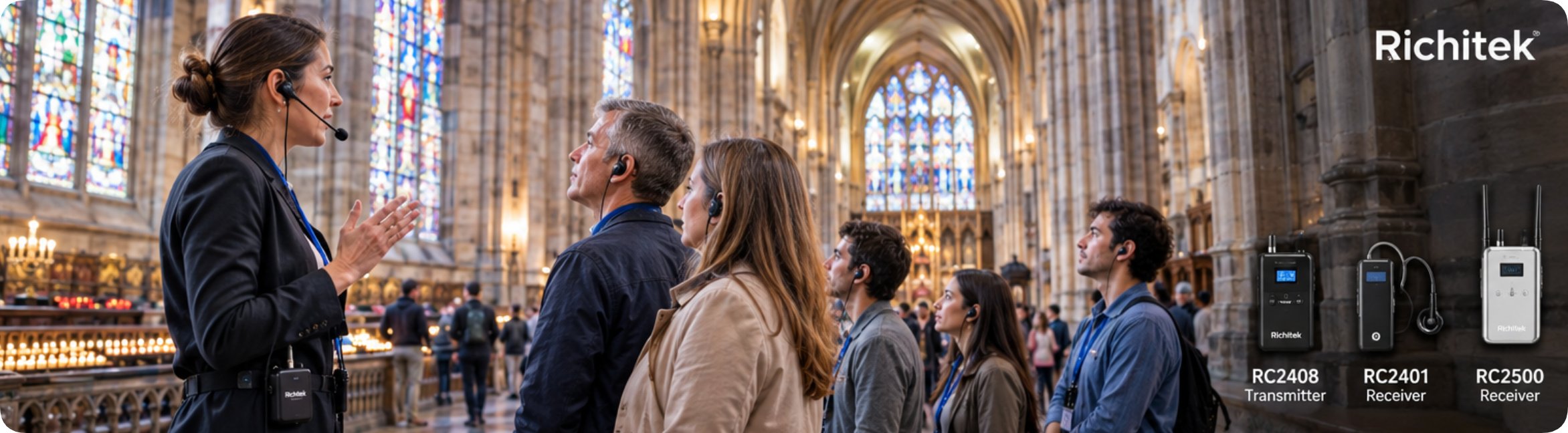
Splitting the working channel across three units is not a marketing structure; it follows the three physical jobs. The RC8860 is the distance unit. Its 860–870 MHz UHF band bends around concrete and punches through machinery where 2.4 GHz struggles, twenty PLL channels keep separate crews apart inside one building, and a 59-gram transmitter with a 50-gram receiver and 10-hour / 20-hour batteries cover a rotating shift inside an IPX4 body that shrugs off rain on an exposed apron. One honest caveat belongs here: the manufacturer specification describes that band as licence-free in most regions, which is true but not universal — United States operations license UHF under FCC rules and several European administrations register short-range devices. Confirm the local position before a fleet order, and start that conversation with the full system range.
The RC2500 is the endurance unit. Twenty milliwatts on 2403–2483 MHz with fifty PLL channels and a 200-metre open-area range is the specification for a long, loud day, and the numbers that matter at handover are the receiver's forty hours and the transmitter's twelve — five working days of listening without a charger, and no charging trolley to chase across an apron. It also runs to −15 °C, the lowest limit in this comparison, and its 20 Hz–20 kHz response carries more than a guide's voice when a headset is shared between groups.
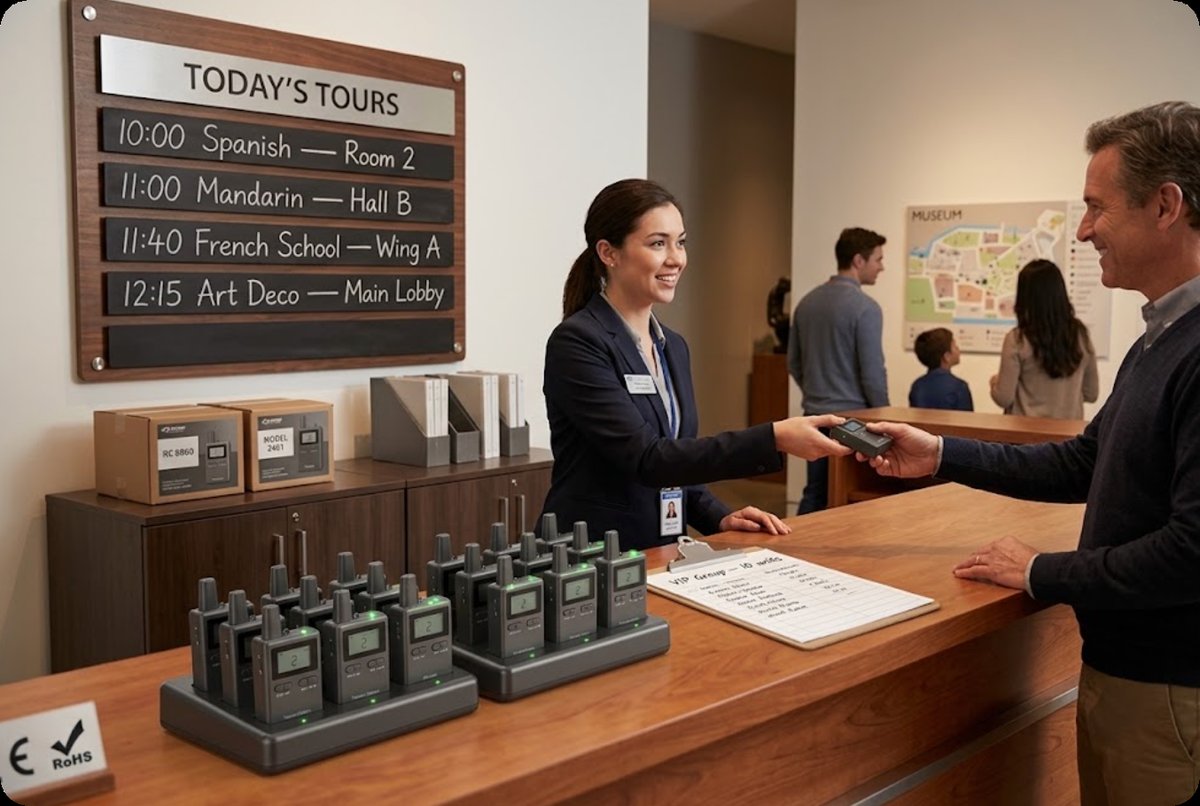
The RC2401 is the turnover unit. One-button pairing takes seconds and needs no training, which is what makes a system usable with seasonal or contracted crews, and fifty channels let one supervisor run six apron teams, two baggage halls and a duty desk without crosstalk. Its multi-device charging cradle matters more in an airside office than in a museum: sixteen receivers charge together overnight instead of going home individually. For the wider picture, the transmitter and receiver overview sets out how the three relate.
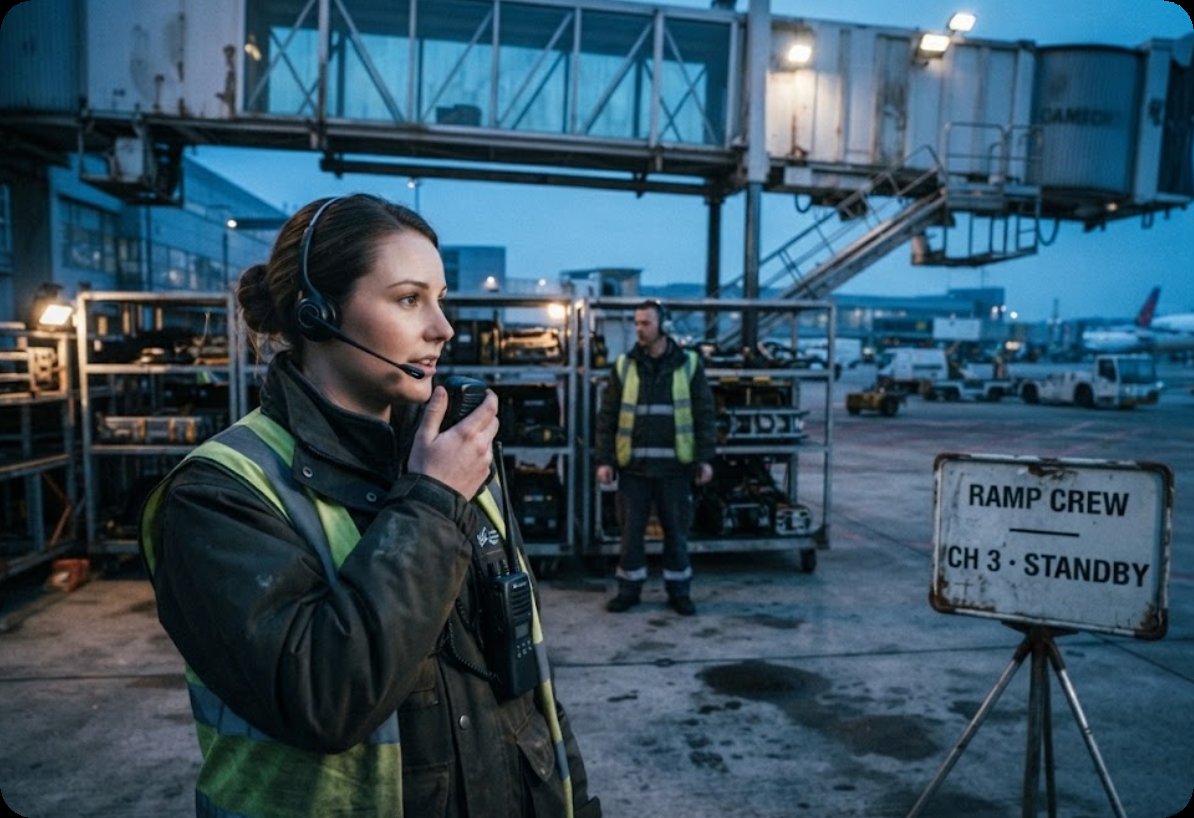
The recommendation follows from the split. Buy the voice alarm and public address layer from whoever holds the certification and the reference list — that is not a contest. Buy assistive listening as a separate line item for passengers who need personal amplification. Then cover the third job, the private working channel between crews spread across an apron, with equipment specified for exactly that: distance where distance matters, endurance where the shift is long, and one-button deployment where the crew changes every week.