
Beneath the Surface, Maps and Networks Fail
A mine tour is the one guided visit where the guide's phone is the least useful thing in the room. Surface operations sit in radio shadow behind pit walls and haul-truck routes; underground operations sit beneath metres of rock that swallow GPS and every cellular bar at the portal. Yet tour operators keep reaching for the same consumer playbook they use in a city centre — a phone-based audio guide, or a push-to-talk app — because those tools feel free and familiar. Two of the most downloaded names in that category, VoiceMap and Zello, are genuinely clever software. But both assume a connection that a working pit does not have, and the assumption breaks the moment a group steps past the hoist. The job is still one voice reaching many ears in hostile acoustics; the environment just removes the infrastructure those apps lean on.
Dust, Decibels, and Dead Zones
Mining environments punish consumer audio in three ways at once. First, the noise floor is brutal: a jaw crusher or a ventilator fan runs past 100 dB(A), and a phone speaker or a Bluetooth earbud fighting that wall of sound is inaudible ten paces from the guide. Second, the air carries abrasive dust that clogs unsealed consumer ports and microphones within a shift. Third, and most decisively, the site is a connectivity void — open pits lose line-of-sight to towers behind high walls, and any underground level has zero GPS and zero cellular by definition. A guided visit to a processing plant, a drift, or a haul-road overlook therefore has to work where a smartphone is effectively a paperweight. Operators who run these programmes for industrial tour groups learn this the hard way on the first rained-out day the app will not authenticate.
Where GPS-Guided Audio Goes Silent
VoiceMap is a polished self-guided audio platform — over 80 countries, 600-plus destinations, professionally narrated walks that autoplay by GPS and keep working offline once downloaded. For a city stroll it is excellent, and offline playback is a real strength. The weakness is structural: the trigger is a GPS fix. VoiceMap's own documentation states tours play automatically using GPS, with an offline map supplied after download. Move that logic underground or into a steel-framed workshop, and the receiver loses the sky it depends on; autoplay stops firing because there is no location event to fire it. A group standing at the crusher viewing gallery, or walking a labelled drift, gets silence where the commentary should start. The content is on the device, the map is on the device, but the one signal that unlocks them is the one signal the mine removes. No settings toggle restores a satellite you cannot see.
📡 The Push-to-Talk App That Dies With the Signal
Zello looks closer to a real radio: a push-to-talk app with channels, one-to-many broadcast, and a billion-plus installs built for exactly the ad-hoc group talk a tour needs. The catch is documented by the company itself and by reference sources alike — Zello requires a mobile network or Wi-Fi, and with no signal it simply does not function. Its paid ZelloWork tier adds private networks and history for a monthly fee, but the underlying transport is still data, not radio. At a pit rim where the nearest tower is behind the overburden, or anywhere below ground, the talk button returns nothing. A guide who planned the visit around a free app discovers the app is free right up until the moment it has nothing to carry the voice on. Cloud-dependent voice, by definition, cannot promise delivery where the cloud does not reach.
📡 A Radio That Owns Its Own Spectrum
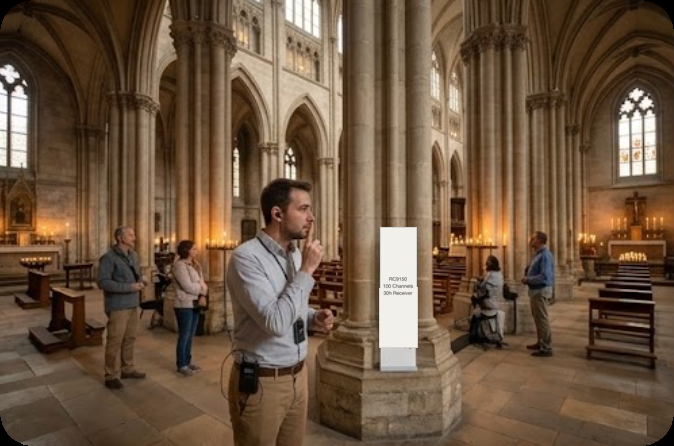
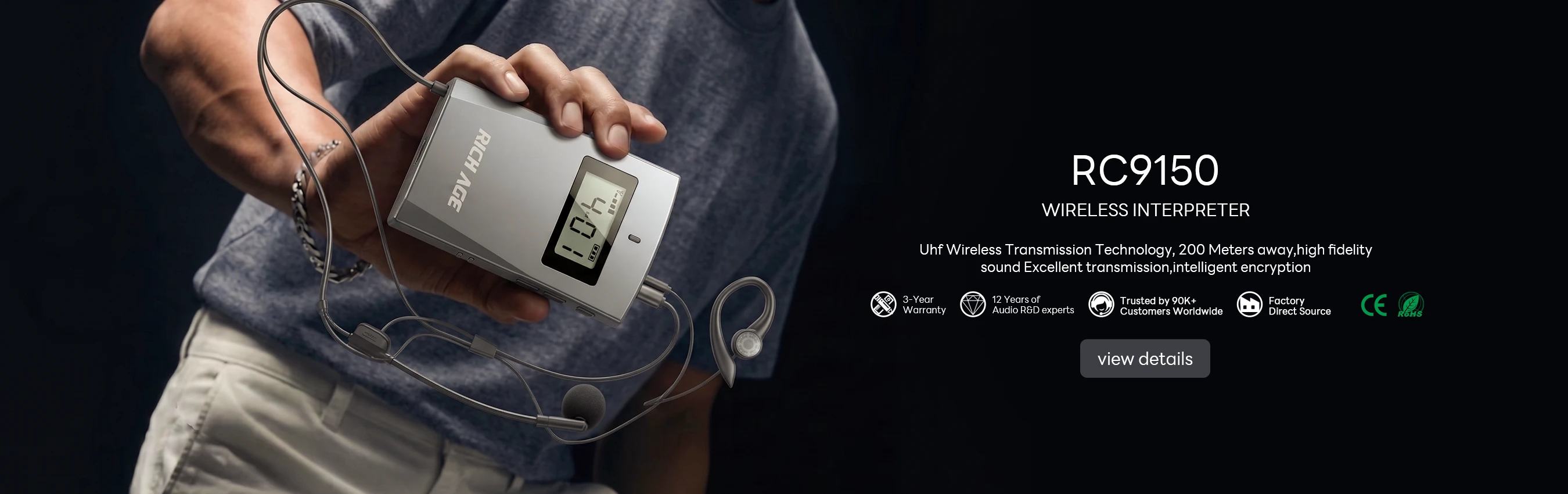
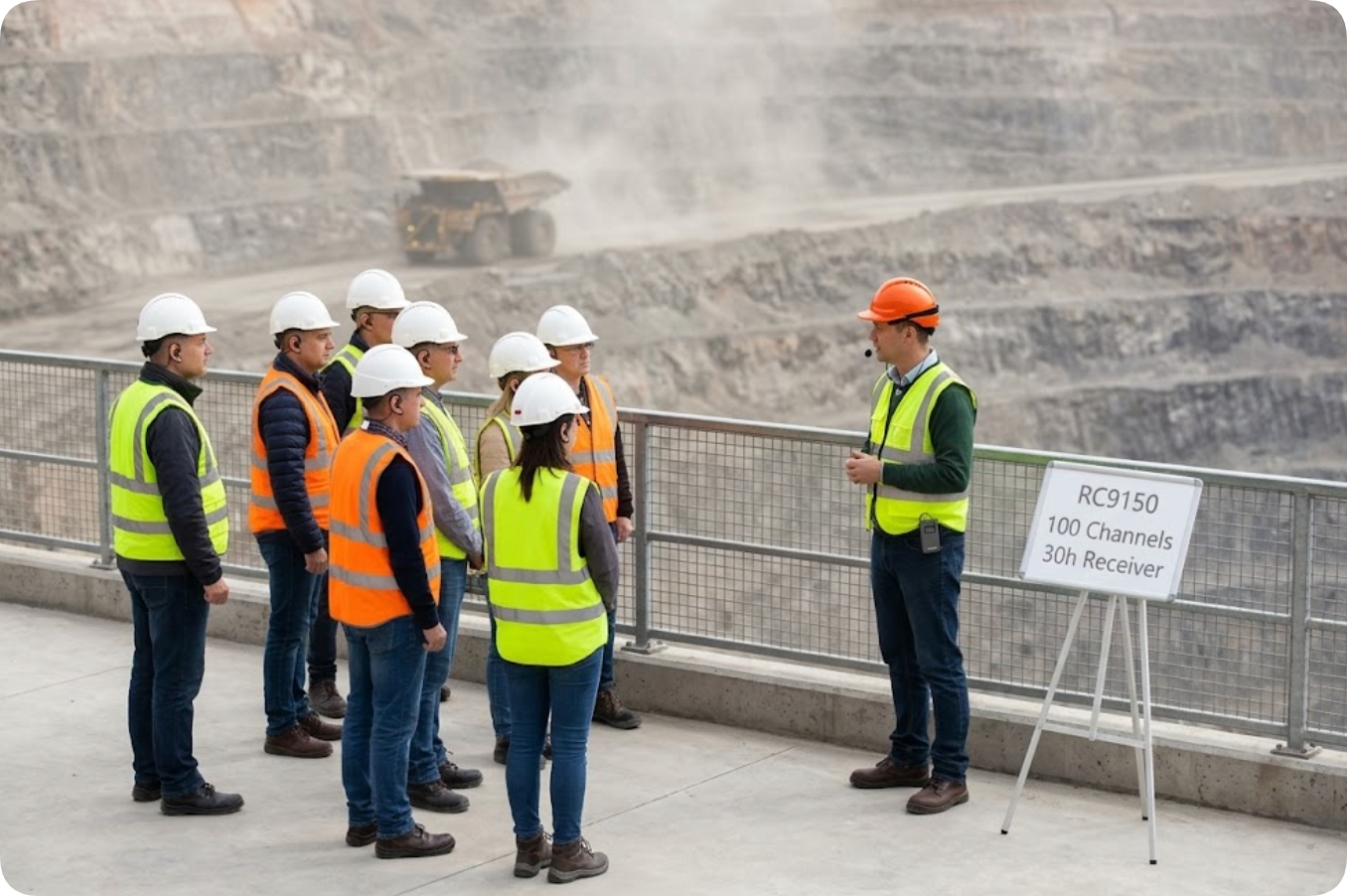
The fix is to stop borrowing someone else's network. The Richitek RC9150 transmits on the 2403-2483MHz 2.4GHz ISM band — licence-free worldwide, with no SIM, no Wi-Fi, no satellite. A guide speaks into a transmitter and every receiver in the group hears it directly, a closed radio path that the pit's dead zones cannot touch. With 100 independent channels, a site can run several language groups or several simultaneous tours through one workshop without crosstalk, and encrypted high-fidelity audio keeps the narration private against the next group's frequency. Endurance is the part that changes the kit-room routine: receivers run beyond 30 hours and the transmitter about 15, so a full day of back-to-back surface and underground circuits needs one overnight charge, not a wall of adapters. That is the difference between a tour that relies on the nearest tower and one that carries its own spectrum in the case.
📱 Lightweight Kits for Long Haul Routes
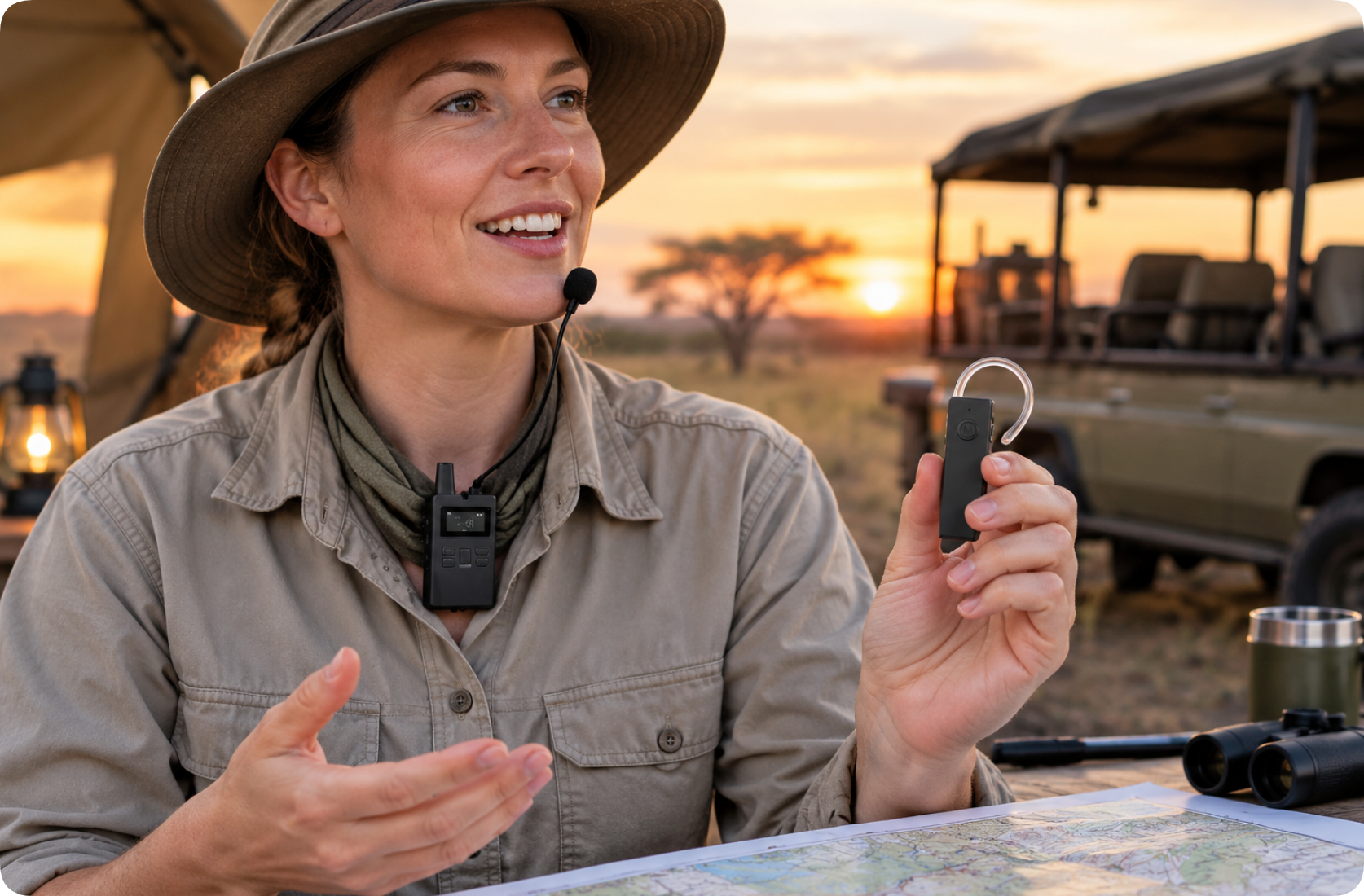
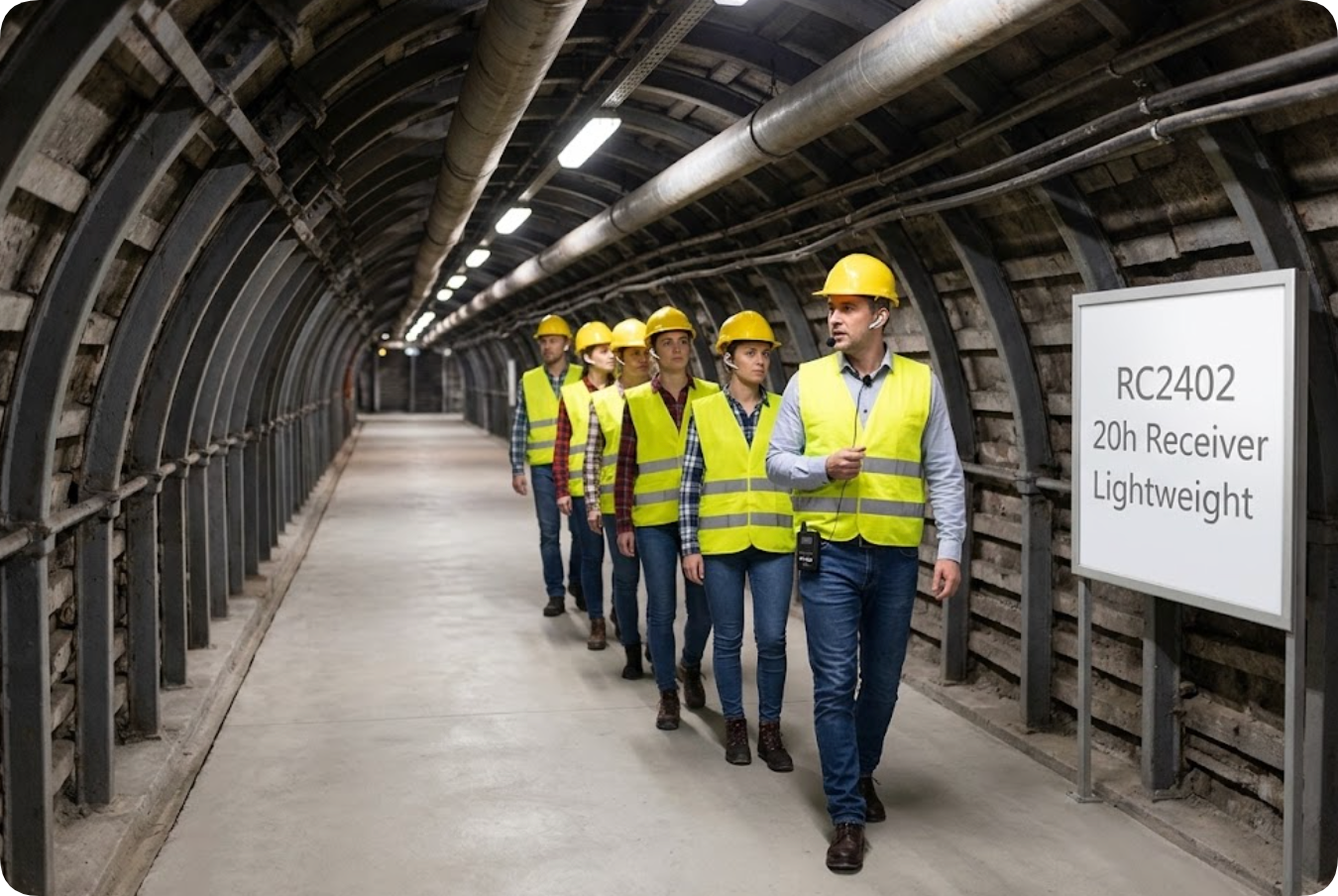
Underground circuits are long and the walk is the programme. Visitors clip in at the lamp room and may not surface for an hour, so the hardware on their ears cannot be a burden. The Richitek RC2402 is built around that constraint: a lightweight transmitter and receiver worn all day without fatigue, with one-click frequency synchronisation that a lamp-room volunteer can run in thirty seconds rather than an audio technician. Battery maths favours it too — a 10-hour transmitter and a 20-hour receiver cover the longest single-level route on one charge, and intelligent encryption keeps each language group's channel private as the group threads through shared galleries. It carries full CE, EMC, LVD, RED and RoHS marks for cross-border compliance, and one-click pairing means the morning kit-up stays a count-and-hand-out routine instead of a configuration chore that breaks by the second week.
Reaching the Far End of the Adit
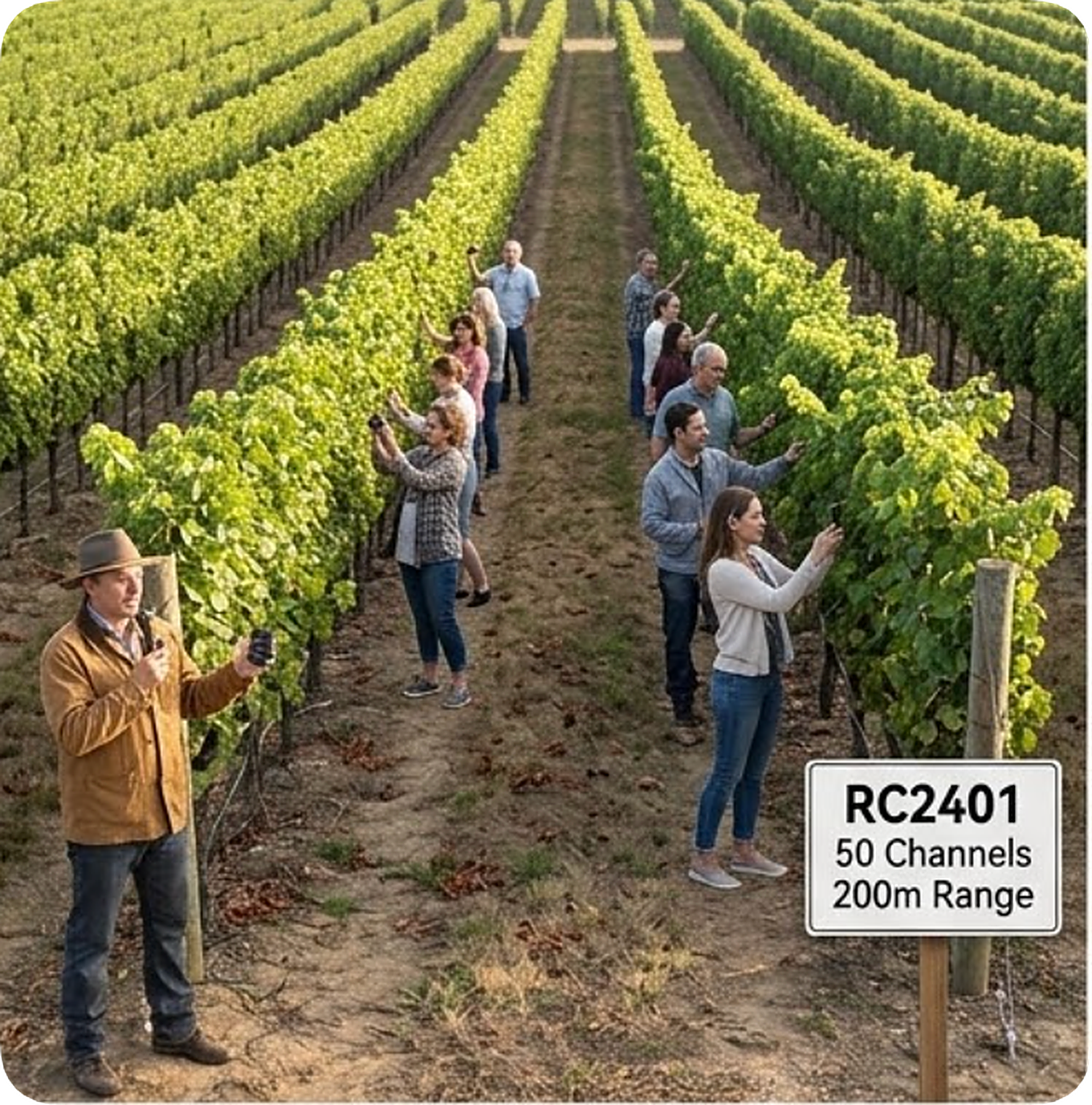
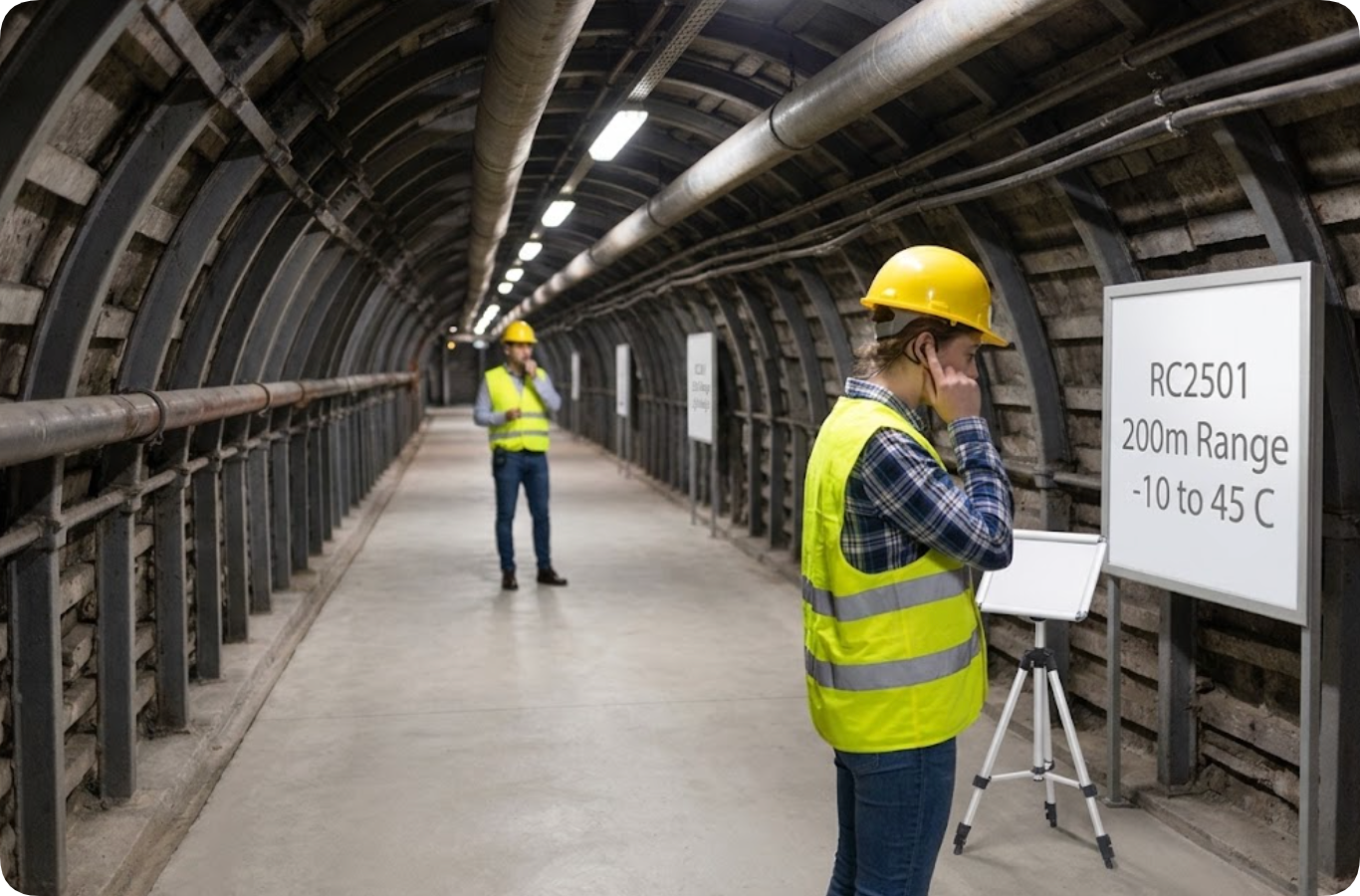
Drifts and declines stretch further than a city block, and a guide who leads from the front cannot ask the tail of the group to bunch up at every junction. The Richitek RC2501 is engineered for that reach: 200 metres of open-area transmission that holds steady while visitors spread along a level, with an operating window of -10°C to 45°C that covers a chilled underground intake as well as a sun-baked open pit. The mainboard is under warranty, with only the expected wear items — headset, microphone and battery — excluded, which is an honest durability posture for gear handled by hundreds of visitors a shift. A guide narrates continuously down the full length of an adit without ever losing the people reading a wall plaque fifty metres back, and the radio does not care whether the wall between them is shotcrete or open air.
Honest Limits of Hardware in a Live Pit
None of this means the radio is the answer to everything. Richitek's tour systems are sealed consumer-grade audio, not intrinsically safe hardware, and no model here carries an ATEX or IECEx explosion-protection rating — so in a zone where flammable gas or coal dust is present, none of these units belong, and a site's safety officer makes that call, not the tour operator. They are also not ingress-rated to a published IP67 figure, so a hose-down washdown is out; sealed earpieces and a wipe-down at the lamp room is the realistic maintenance ceiling. What the radio does promise, and what the apps cannot, is independence from infrastructure that the mine does not have: no tower, no GPS, no subscription, and a closed audio path that works in a 100 dB(A) drift as readily as in a quiet gallery. For plant tour headsets used in non-hazardous viewing areas, that independence is the whole point.
Briefings, Gas Tests, and the Idle Emergency Channel
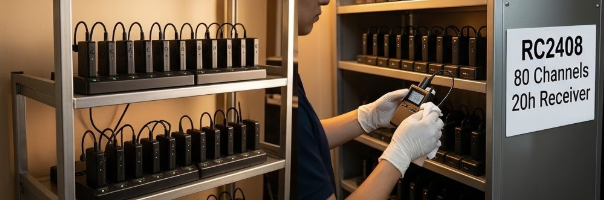
Before any group descends, a working mine runs a site induction that no app replaces: every visitor signs a waiver, is fitted with a cap lamp and a reflective vest, and walks the evacuation route to the muster point. Below ground, the portal guard runs a gas test — methane, carbon monoxide and oxygen readings have to sit inside safe limits before the level is declared clear to enter. These are physical, regulated steps, and they set the bar for any communication kit that rides along; a tour system earns its place only if it keeps working through the same conditions the induction prepares people for. Richitek's 100 channels let a site reserve one as a dedicated emergency channel, physically separate from the narration channel, so that when the evacuation alarm sounds a guide switches and reaches every receiver at once — no network, no cloud, no dependence on a signal that does not exist at depth. That is precisely the moment VoiceMap and Zello are least available, and exactly the moment a closed radio is most needed. Underground there is no public network anyway, and satellite phones frequently lose their lock between rock walls, so a self-contained 2.4GHz path that needs none of it is the only option that survives the brief. The same discipline closes the day at the lamp room: receivers counted out, counted back, earpieces wiped, racks charged overnight — a routine built on the assumption that hardware, not a signal, is what carries the voice.
Choosing Gear That Talks Without Towers
VoiceMap and Zello are the right tools for the environments they were built for, and a mine office can keep both on hand for above-ground visitor queries. But the moment a group steps past the portal, the visit stops being a connected experience and becomes a broadcast one — one voice carried clearly to every ear through rock, dust and machinery, in as many languages as the site sells tickets for. Gear the job for the job: the RC9150 where a site runs parallel language groups and needs all-day battery, the RC2402 on the long underground haul where weight and quick pairing decide adoption, the RC2501 on the stretches where 200 metres of reach keeps a spread-out group together. All three ride the same licence-free 2.4GHz band, need no network to function, and turn a connectivity void from a tour-killer into just another Tuesday at the tour guide system counter.