.webp)

Wireless Tour Guide System for Agricultural Field Day: A Real-World Case Study
I manage marketing operations for an international agricultural science company, which means I spend every growing season coordinating open-house field days for hundreds of growers, seed dealers, and extension specialists. These events take place on active research farms, where tour groups move between demonstration plots, open-sided tents, and machinery bays. The setting is genuinely beautiful, but the acoustics are brutal. Wind from the prairie, irrigation pumps running in the background, twin-engine spray rigs warming up—they all make normal conversation impossible. For years, we struggled with visitors cupping their ears and our agronomists losing their voices before lunch. That’s why, when we finally invested in a Wireless Tour Guide System, it transformed the entire experience.
Visitors constantly leaned in and asked, "What did she say?" Our agronomists were hoarse by ten a.m. We split groups into clusters of fifteen to twenty people, yet they still drifted apart whenever a new seed variety caught their eye. Shouting over the wind simply wasn’t a strategy. Each stop on the tour was twenty minutes long, and by the end, half the group had moved out of earshot. The frustration was visible, not only on the visitors’ faces but also on our speakers’ tired shoulders.
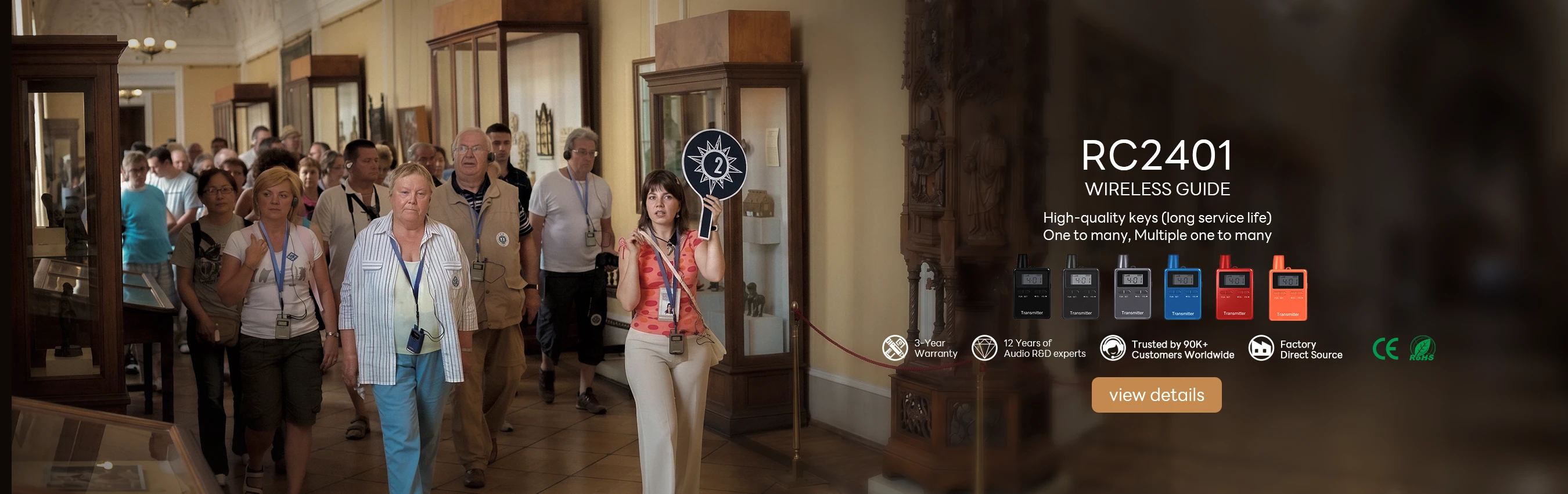
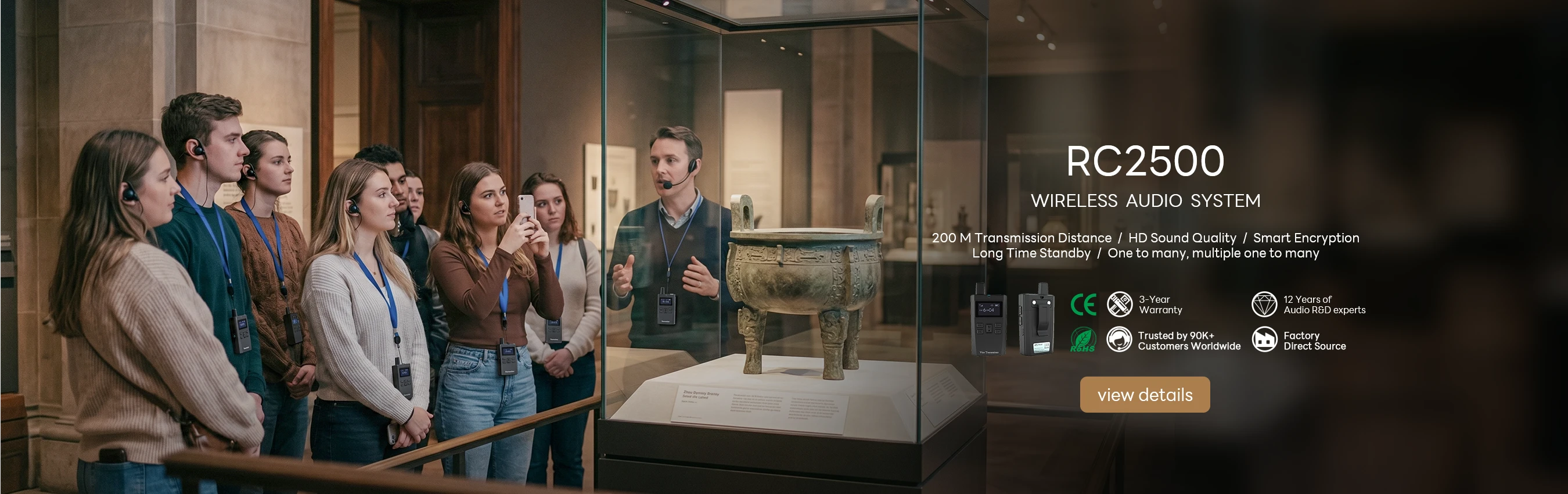
So we reached out to Richitek and began testing two specific units: the RC2402 receiver for guests and the RC8860 transmitter for guides. The combination turned out to be the outdoor wireless tour audio solution we had been missing. In one season, it turned chaotic, noisy field walks into focused, interactive learning sessions.
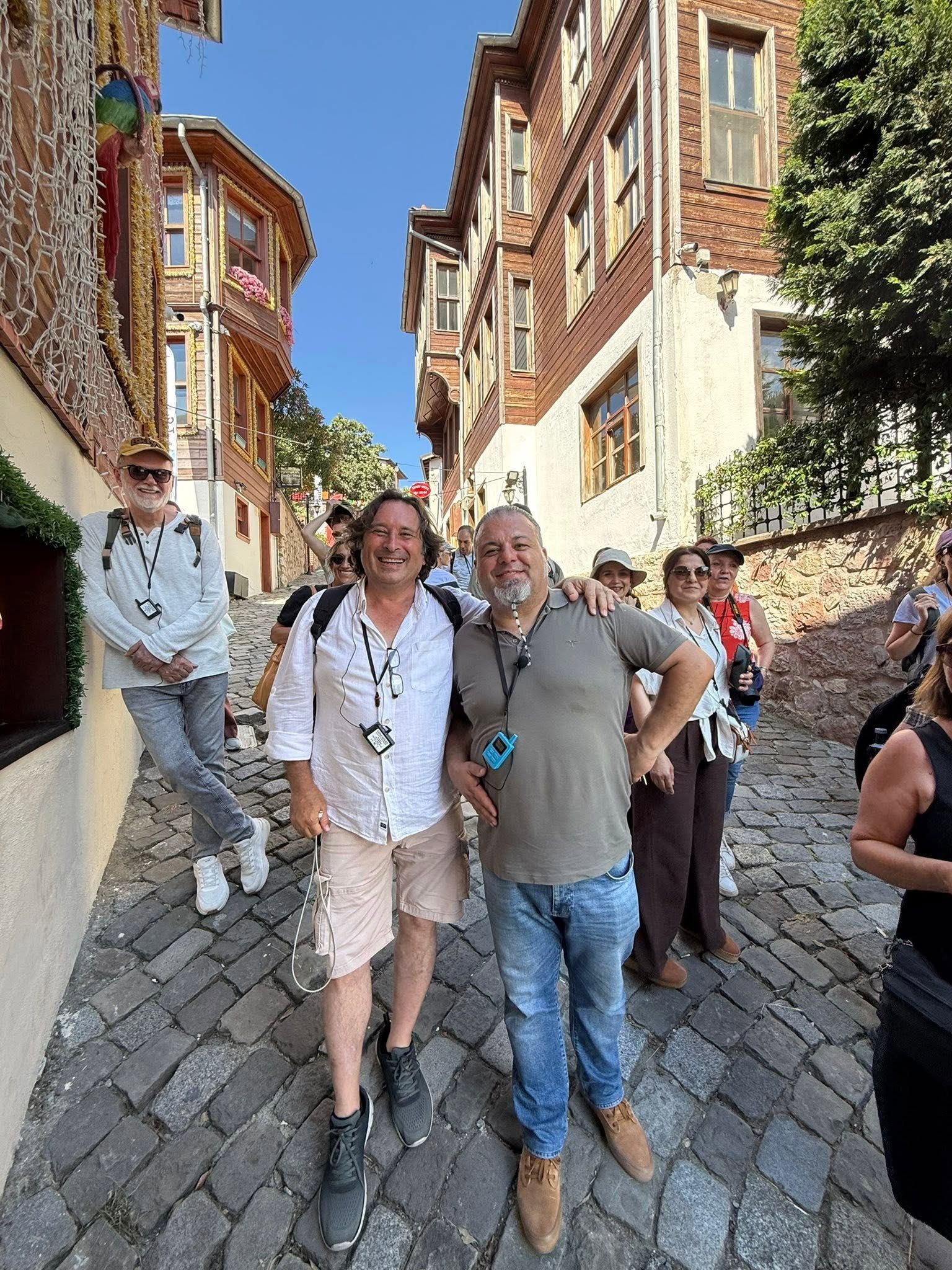
Look at the photo below from our event. The guide stands beside a trial-plot sign board under a white canopy, with a small group of dealers and growers around him. Both the guide and several visitors wear a small device on a neck strap. No microphones to fiddle with, no cupped hands around mouths—the guide speaks in a normal tone, and every visitor listens through a comfortable, lightweight earpiece. What strikes me most is the quiet. Everyone’s attention is on the speaker, not on the wind or the tractor engine idling in the background.
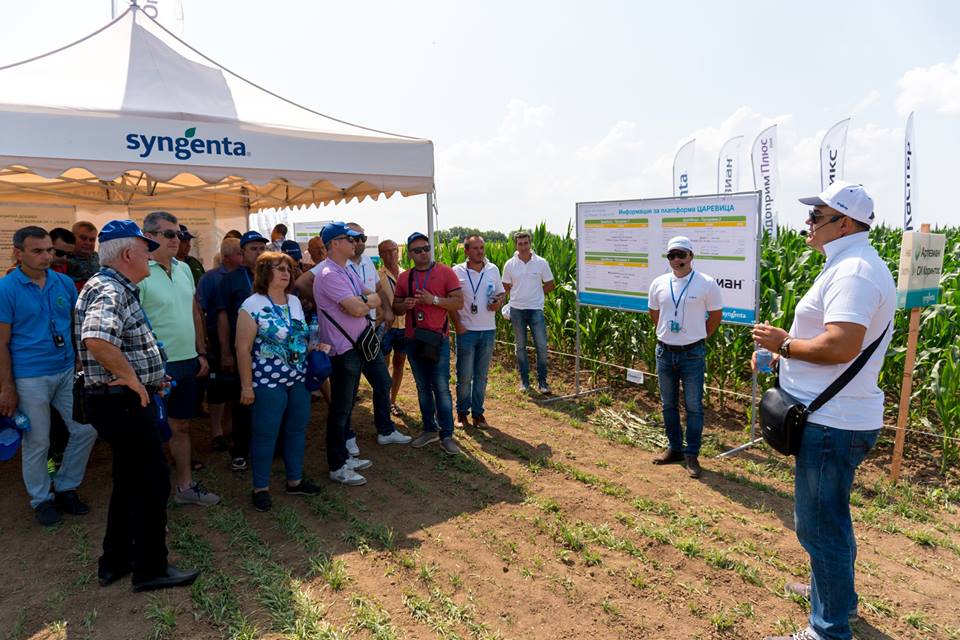
When I first saw this photo, I noticed something important: even the people on the edge of the group, half-turned toward the tent opening, were fully engaged in the presentation. That is the effect of a personal audio channel. The guide’s voice arrives directly at each visitor’s ear, so background noise loses the competition. Visitors no longer lean in or ask for repetition. They simply listen, nod, and ask better questions.
📱 RC2402: The Lightweight Receiver That Kept Visitors Tuned In
The device guests wore at our field day was the RC2402. At just 60 grams, it is light enough that most visitors forgot they were carrying it, even after a two-hour walking tour across multiple trial plots. The RC2402 is designed for medium-size tour groups of roughly fifteen to twenty people, which matches our standard field day group size perfectly. The neck strap is adjustable and the earpiece fits snugly without causing fatigue, even for visitors who wear glasses.
Battery life is another reason this receiver became a favorite on the farm. A full charge gives twelve hours of continuous operation, so we can run a morning tour, an afternoon rotation, and still have power for an impromptu twilight walk-through of the irrigation demonstration. We never had to swap batteries between sessions, even under the hot sun. In previous years, we relied on walkie-talkies and voice amplifiers, and those always gave up at the worst possible moment.
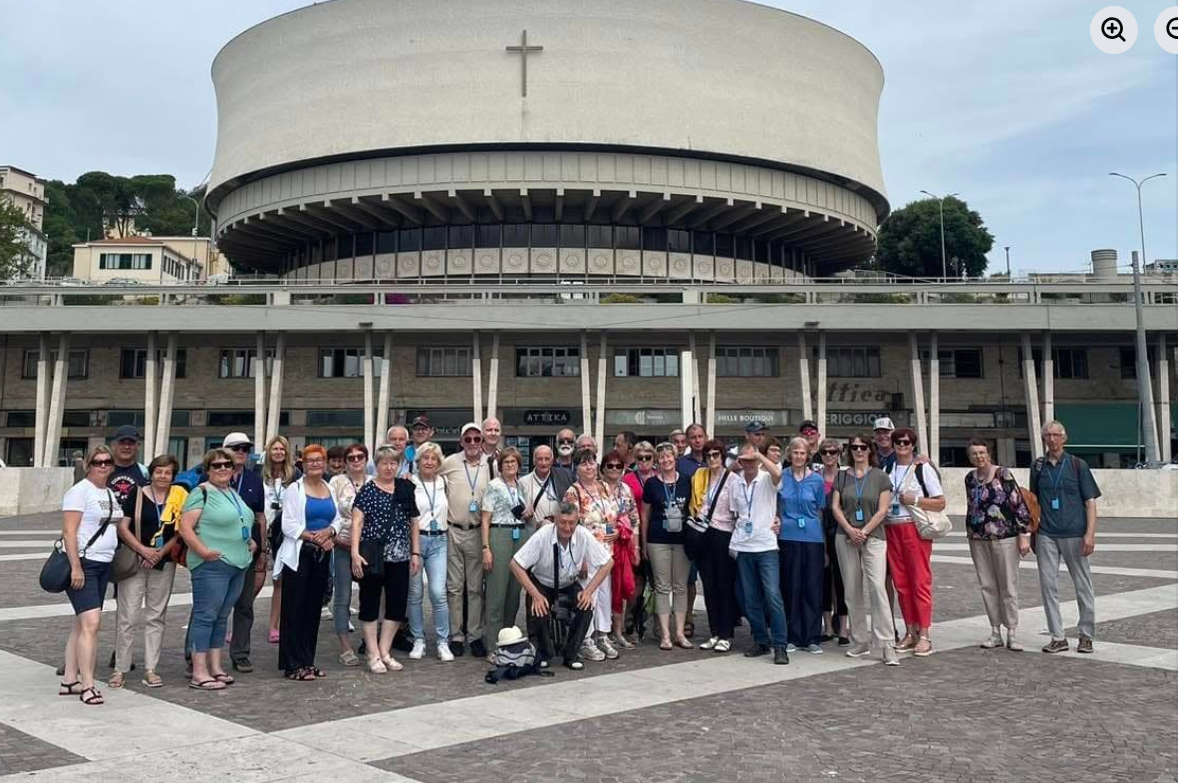
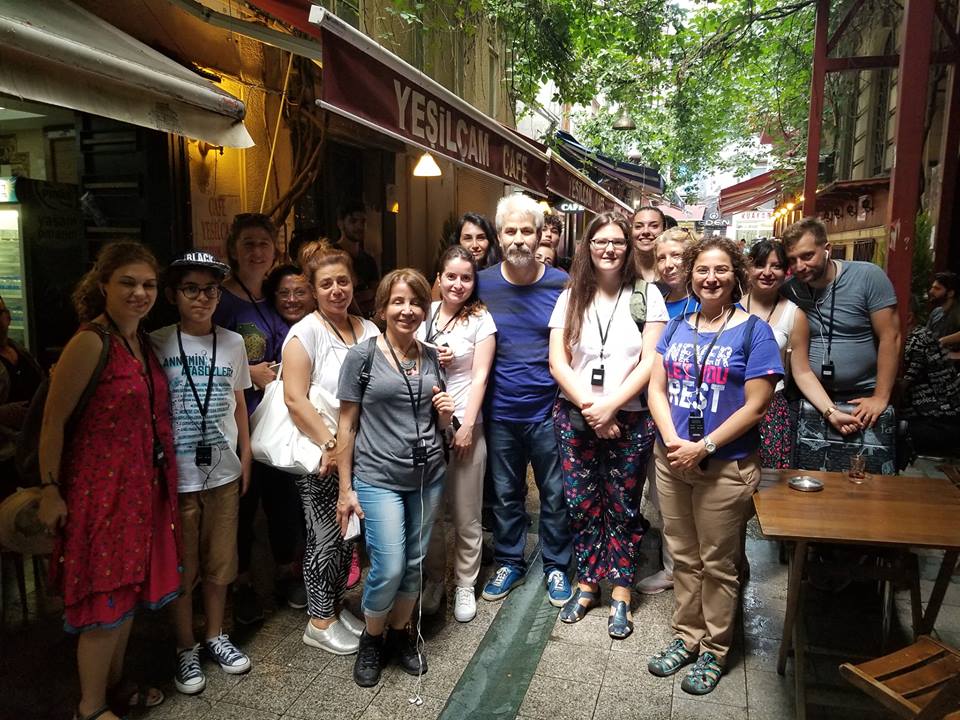
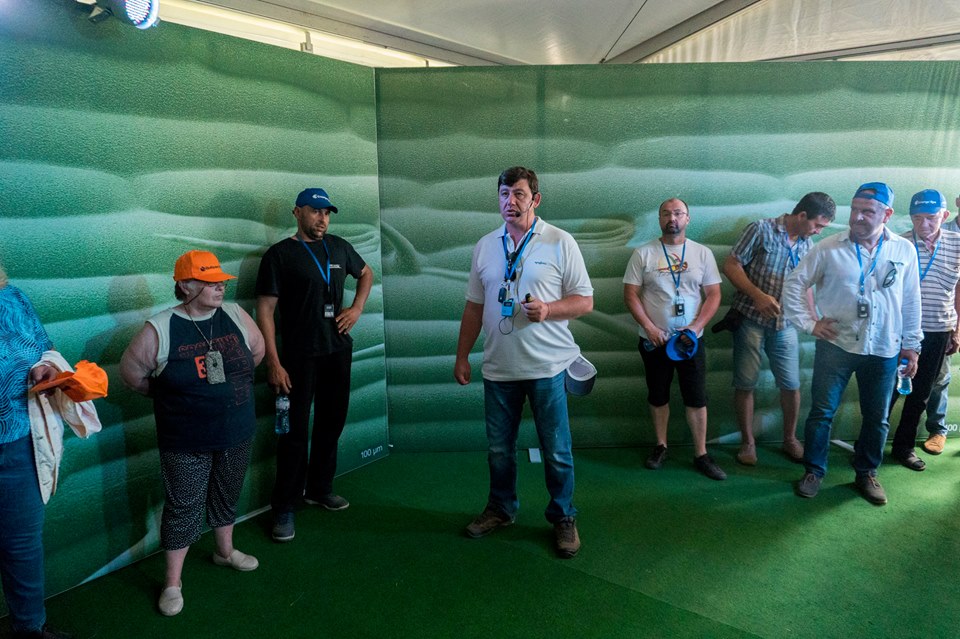
Visitors also appreciated how intuitive the device felt. We handed each person an RC2402 with a simple neck strap, a clear earpiece, and one volume button. Nobody needed help after the first minute. In the demonstration tent photo below, a small group of seven or eight visitors all wear the blue receiver around the neck. That uniform look also helped our marshals identify who belonged to which tour group and prevented stragglers from getting lost between plots.
If you are managing a similar open house layout, the RC2402 Wireless Tour Guide System is the receiver you hand to every guest who joins a guided walk. It is simple, reliable, and durable enough for a farm setting. We have since ordered additional units for other events because the visitors’ feedback convinced us that this small device makes a massive difference.
📡 RC8860: A Field-Ready Transmitter for Dynamic Outdoor Teaching
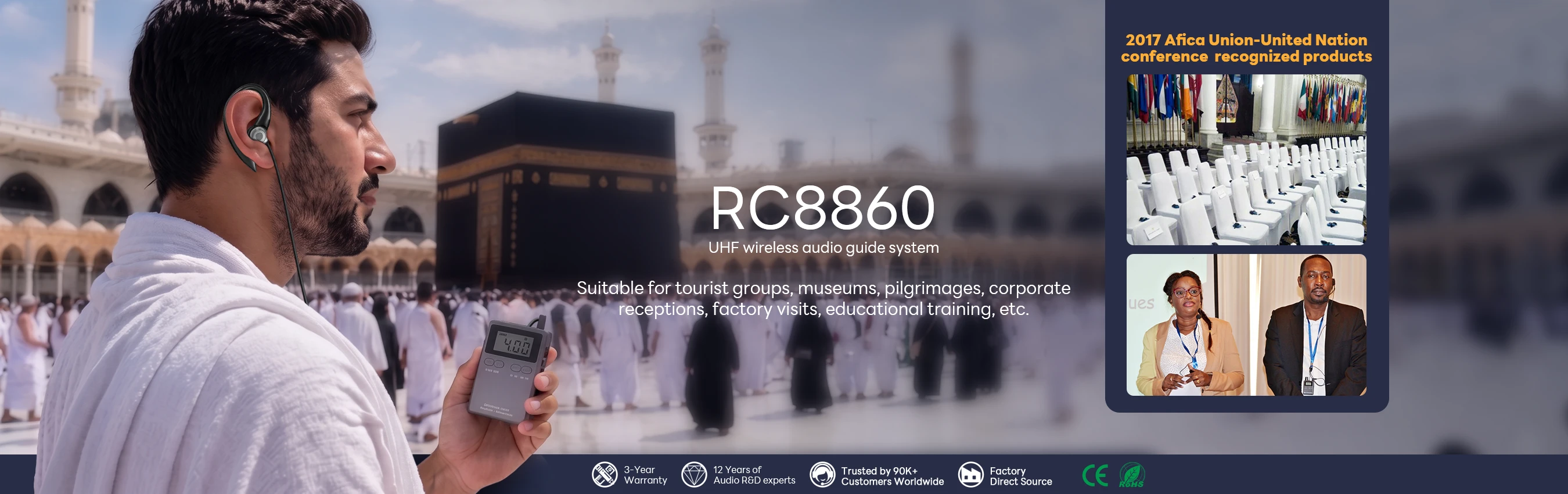
On the guide’s side, we used the RC8860 transmitter. This is the unit our agronomists wore around the neck with the included headset microphone, and it proved to be the most durable piece of audio equipment we have used on a farm. With an IP54 protection rating, the RC8860 shrugs off dust, pollen, light rain, and the fine soil particles that float around a dry field. It is built for teaching and outdoor coaching in demanding environments, not just for quiet museum galleries.
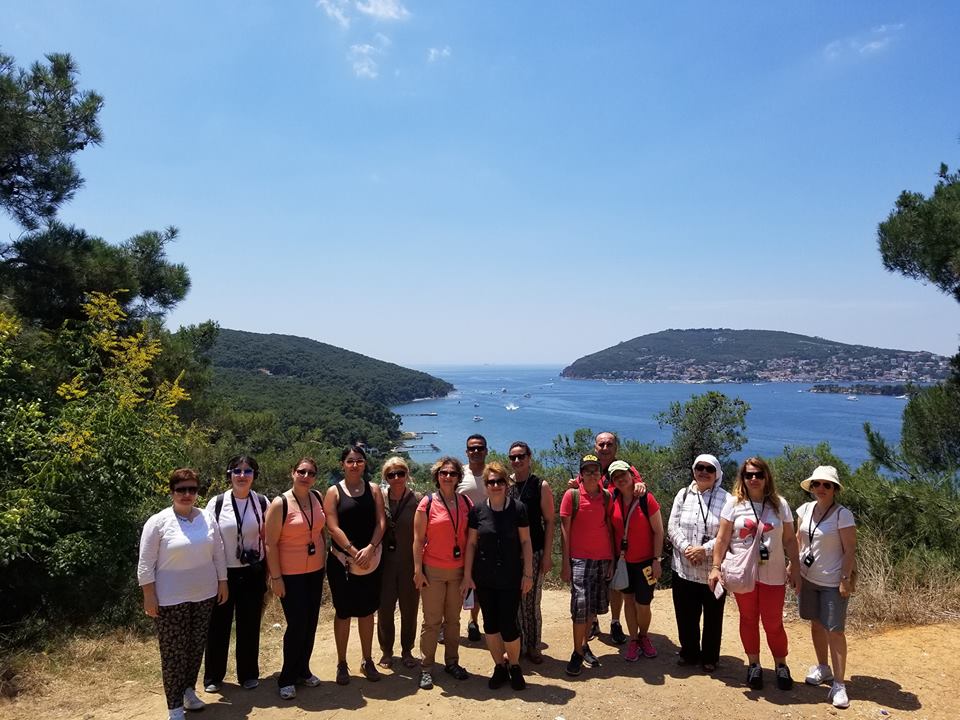
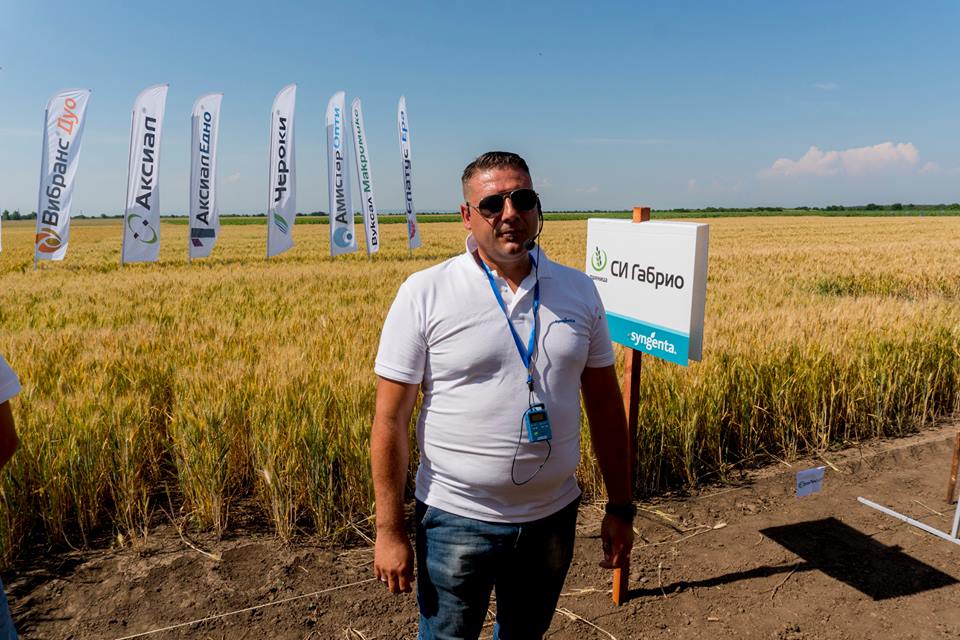
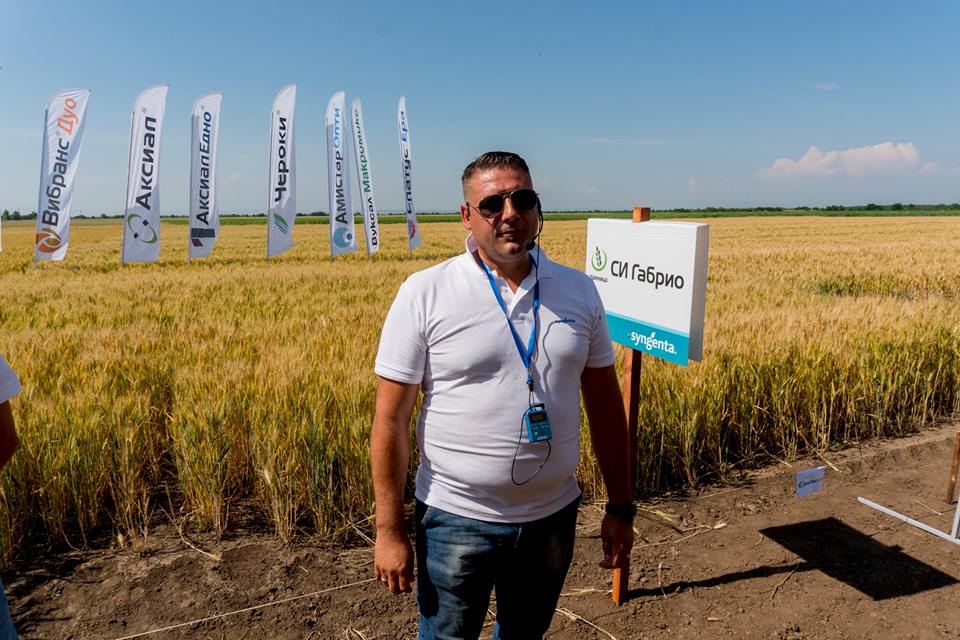
The photo of our lead agronomist tells the story. He is standing in a wheat plot, wearing a light-colored shirt, with the RC8860 around his chest and the headset on. He is mid-sentence, gesturing toward a trial row, without raising his voice. The RC8860 sends his voice to every visitor’s RC2402 receiver with no noticeable lag and no wind crackle. Even when he turns his head to point at a distant plot, the audio stays consistent—something we never achieved with handheld microphones.
At 59 grams, the RC8860 is almost identical in weight to the RC2402, so even guides who wore it for an entire day reported no neck strain. The twelve-hour battery life covers a full event day, from the early-morning registration talk to the final Q&A session under the big tent. The headset microphone is comfortable, and the audio quality remains natural even when the guide speaks quickly or gestures broadly. It also handles multiple speakers well; when a specialist takes over, they simply wear the same RC8860 and continue without any complicated setup.
For anyone who plans to spend hours walking through fields and speaking over ambient noise, the RC8860 Tour Guide Transmitter For Teaching is the transmitter we now recommend for outdoor coaching and agricultural education. We have used it in dusty plots, windy hillsides, and even inside a metal machinery barn, and it has never let us down.
⚖️ RC2402 vs RC8860: Side-by-Side Comparison for Field Use
Both devices share a similar footprint and battery performance, but they are built for different roles in the tour group. Here is the comparison table we use when someone asks about the difference.
| Model | Role | Weight | Battery Life | Protection Rating | Best Use Case |
|---|---|---|---|---|---|
| RC2402 | Visitor receiver for medium tour groups | 60 g | 12 hours | IP42 | Guests listening on walking field tours and demonstration tent visits |
| RC8860 | Guide transmitter for teaching and outdoor coaching | 59 g | 12 hours | IP54 | Agronomists and guides working in dusty or windy outdoor venues |
As you can see, the RC8860 carries a higher IP54 dust-and-weather rating because it is the device most often exposed to the open field. The RC2402, with its IP42 rating, is still perfectly safe for a day outdoors as long as visitors do not immerse it in a water trough. In practice, we have had dozens of RC2402 receivers used in light rain, and none has shown any issue. Both units are part of the wider family of wireless tour guide systems that Richitek offers, so you can mix and match components according to your group size.
⚙️ Choosing the Right Audio Setup for Different Field Day Zones
Not every zone at an agricultural field day has the same audio challenge. Here is how we select the right configuration for each part of the tour. The key is to match the equipment to the environment, not the other way around.
For the walking tour between trial plots, we use one guide with about fifteen to twenty guests, pairing the RC8860 transmitter with RC2402 receivers. The guide’s voice stays clear even when the group spreads out along a long row. Because each visitor has a direct audio link, the distance between the first and last person does not weaken the sound. This is particularly useful when a visitor stops to take a closer look at a new hybrid and briefly lags behind the rest of the group; they can still hear the guide perfectly.
For the demonstration tent and exhibit board area, the same system works beautifully. We often add a second RC8860 for a specialist who takes over for the high-tech segment. Since the receivers are channel-programmable, different tour groups can operate side by side without hearing one another. During our biggest field day, we had three tour groups running simultaneously in adjacent zones, and there was zero audio bleed. Visitors could focus entirely on their own speaker.
For a large plenary session in the main field tent, we still rely on a PA system. But for every small-group walk and technical demonstration, the wireless guide system is non-negotiable. The compact receivers also free visitors from crowding around the speaker, so they can move and inspect the crops. They can examine leaf structure, touch the soil, or compare two seed varieties while still listening to the agronomist. That freedom is a game-changer for hands-on agricultural education.
What Our Field Day Taught Us About Audio
Our experience with the RC2402 and the RC8860 taught us that a high-quality audio guide system is not only for museum tours or city sightseeing. If your team hosts an open event on a farm, a construction site, or any outdoor venue with unpredictable noise, a wireless tour guide system can be the difference between a frustrated audience and an engaged one. We have led field days for years, and this is the first year we did not have a single visitor ask, "Can you repeat that?"
We have since reviewed many of our global audio guide case studies to see how other organizations handle similar challenges. The pattern is clear: when visitors hear clearly, they ask better questions and remember the message longer. One case study from a vineyard tour highlighted the same issue we faced—ambient noise from wind and machinery—and their solution was essentially the same. It is comforting to know that other outdoor venues have found the same answer.
If you are planning an agricultural field day or a similar outdoor event and want to avoid the shouting-and-straining experience, I suggest you explore our solutions to see which team configuration fits your tour size. For our farm open house, the RC2402 and RC8860 solved the audio problem in one season. They can do the same for you. In fact, I have already shared our setup with colleagues at two other research stations, and they are now using the same equipment.
🔮 Bring the Same Clarity to Your Next Field Day
You do not need a huge stadium sound system or a portable speaker the size of a cooler to host a successful farm open house. You only need a clear audio channel from the guide’s mouth to every visitor’s ear. That is exactly what a wireless tour guide system delivers. It cuts through wind noise, pump noise, crowd noise, and the inevitable drone of a passing tractor. It gives every visitor the same listening experience, whether they are standing right next to the guide or at the back of a long row.
I have seen the change in our visitors. They stop leaning in. They stop asking others to repeat the agronomist’s words. They simply listen, nod, and ask great questions. Our guides are happy never to shout over a tractor again. Our marshals are happy because they can easily identify tour members. And I am happy because I no longer receive post-event surveys that mention "hard to hear" or "could not understand the speaker."
If your organization is ready to improve outdoor audio for dealers, growers, and guests, look at the RC2402 and RC8860. Bring clear audio to every row of crops, every demonstration tent, and every visitor at your next agricultural field day. It will be one of the simplest and most effective upgrades you make to your event experience.