
The RC003 came to us the ordinary way: a garden-group operator visited the showroom, walked past the charging cases, and stopped at a small display where two black units sat next to a card that promised a dry battery inside. No dock, no slots, no overnight routine taped to the lid. The question that opened the whole conversation was not about range or channels. It was about the evening — what does a fleet like this demand from a staff member at six o'clock, after the last group has gone through the gate?
That question is why this case reads differently from the charging-kit notes we have published before. Every other system in the range earns its keep on a charging schedule; the RC003 earns its keep by refusing to have one. Groups that run city walks, park circuits and open-air routes — the kind of itinerary covered under City Sightseeing Tour Audio Solutions — tend to plan around sockets. This article follows one operator who planned around a packet of cells instead, from the showroom question to a full garden day with more than forty visitors, and then to a reorder call three weeks later.
The Shelf Question That Ended the Charging Talk
The visitor managed seasonal walking tours through a botanical garden and its surrounding parkland. Summer groups of thirty to fifty people, mixed ages, a route that climbs a grass slope, crosses open lawn and ducks into shaded beds. Her previous kit was not another guide system — it was a stack of concerns: who charges which unit, which case comes back half-full, and what happens to the 09:30 departure when someone forgot the dock the night before.
At the demonstration shelf, the transmitter and receiver sat powered by ordinary cells. She picked the receiver up, turned it over, found the battery door, and asked whether the demo unit had been charged that morning. The answer — that nothing on that shelf had seen a cable in weeks, only fresh cells now and then — closed the conversation about charging logistics in about ten seconds. The rest of the meeting moved to coverage, group size and accessories, which is where the deal was actually shaped.
What Was Inside the Two Boxes
The RC003 AAA Battery Wireless Tour Guide System is deliberately plain. One table transmitter with a microphone input and a small display; one receiver with a lanyard, a display and three buttons a first-time visitor can learn in a moment. Channels are selectable between 50 and 100, which matters when several groups share one garden on a busy Saturday. The product page lists the frequency band as 860 MHz and the transmission distance as up to 200 metres in open areas — the two figures that shaped the route plan for the garden day described below.
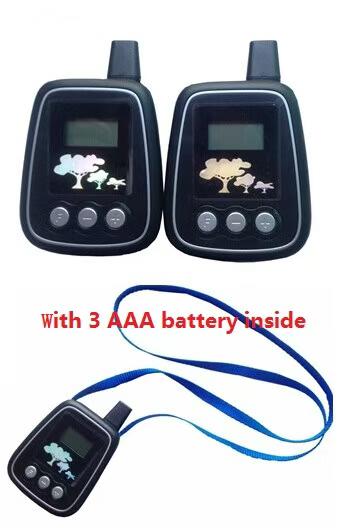
The card printed with the kit, visible in the photograph above, says three AAA cells sit inside. Both the quotation sheet and the official page agree on the essential line: a standard AAA dry battery powers the transmitter and the receiver alike. The photograph also shows the lanyard arrangement — the receiver hangs at chest height, where a visitor can reach the volume without pulling the unit out of a pocket, which turned out to matter on the slope leg of the route.
Midway Through the Grass Slope
The garden day ran with two departures, one at 09:30 and one after lunch. The morning group filled out at forty-plus visitors, the age mix skewing exactly toward the visitors who most often ask for a hearing assist. The guide wore the transmitter with a collar microphone; receivers went out on lanyards at the gate, counted back in at the exit. The route's hardest stretch is midway through the grass slope, where the path narrows and the group strings out over thirty metres or more.

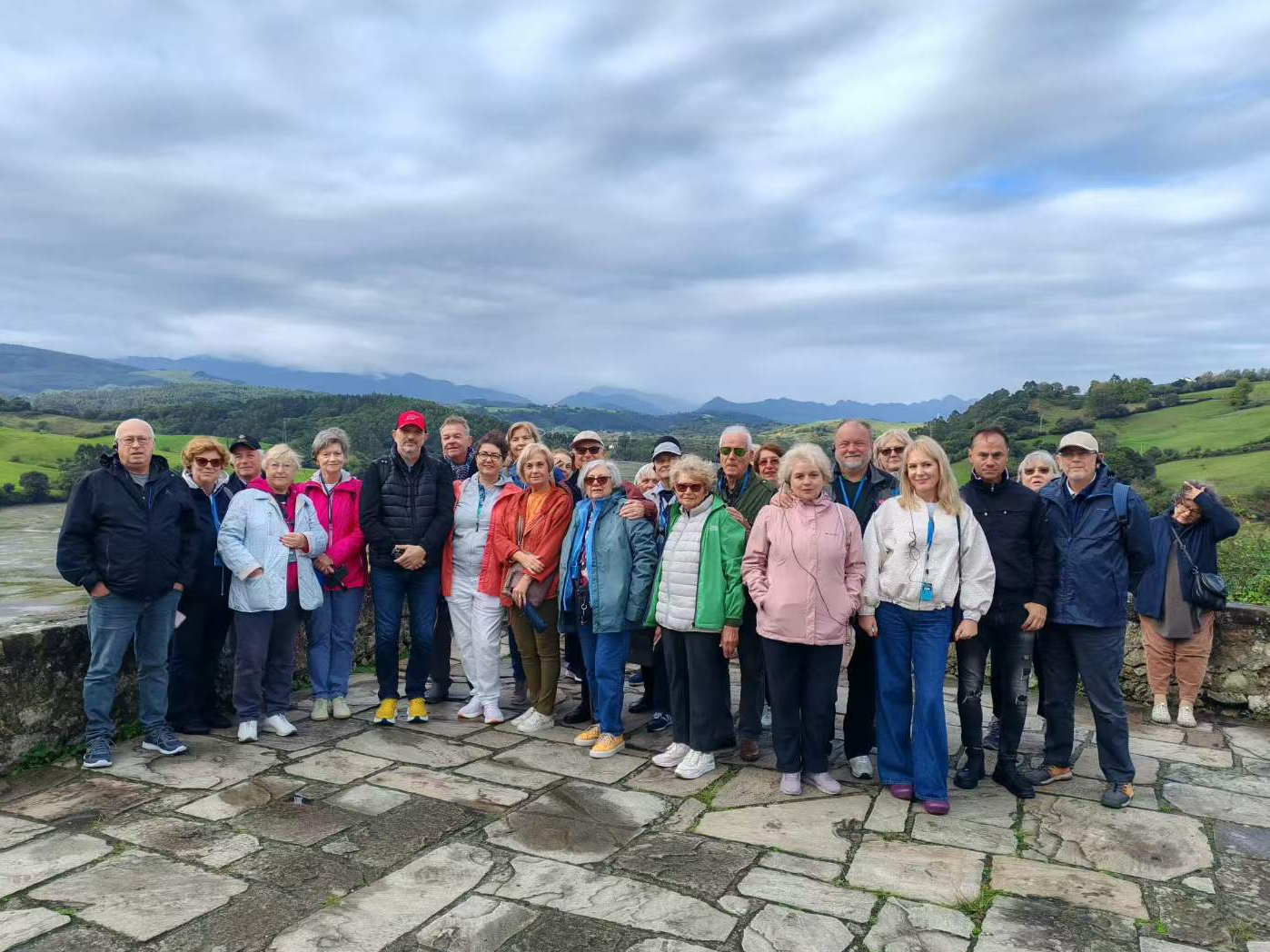
That stretch is where a dry-cell system quietly earns its claim. Nobody had to babysit a low-battery warning at the foot of the slope, because the departure checklist had one battery line instead of a charging log: cells went in fresh that morning, and the spares stayed in the guide's bag. The group photograph taken at the rest bench shows the lanyards doing their job — receivers at chest height, hands free for railings and photo stops. Open lawn is where the 200-metre figure matters; under tree cover the group compressed naturally, so distance was never the constraint.
A Battery Budget Anyone Can Buy
The economics of the day fit on a receipt. A packet of cells costs pocket change next to the staff hour that a charging rota consumes, and the operator's arithmetic is blunt: the RC003 converts a nightly charging task into a purchase anyone can make at a corner shop. The full Wireless Tour Guide System Manufacturer Direct range covers operators whose volume justifies charging cases and dock rosters; the dry-battery model exists for the other case — small fleets, seasonal peaks, depots without a dedicated overnight desk.
There is a second budget that rarely appears in comparisons: the failure budget. A charging fleet fails in a specific way — a unit left in the dock overnight reads empty at the gate. A dry-cell fleet fails differently: a cell drains mid-season. The second failure is cheaper in every dimension that matters to a garden operation. It is visible at hand-out, it is fixed in thirty seconds with a spare, and it never cascades, because the spare cells live in the same bag as the first-aid kit rather than in a charging room one floor down.
The Rows the Two Sources Agree On
The RC003 publishes fewer rows than the lithium kits in the range, and this case made peace with that early. The quotation sheet and the official product page agree on the rows below, and anything outside the table is simply not published — output power, battery life in hours, weights and frequency response are not claimed, so this article does not infer them.
| Row | Published figure |
|---|---|
| Model | RC003, transmitter and receiver set |
| Frequency range | 860 MHz |
| Channel capacity | 50 or 100 channels, optional |
| Transmission distance | Up to 200 m in open areas |
| Power supply | Standard AAA dry battery, transmitter and receiver |
| Warranty | 1 year |
Two of those rows carried the decision. The 50-or-100 channel option is what allows several groups to share one garden on a peak day without coordination calls; the 200-metre open-area figure covers the longest sight line on the lawn route with margin. Visitors who want to see how a dedicated indoor collection handles the same problem can look at the Museum Wireless Audio Guide System Wholesale line, which starts from a different power premise entirely.
Where a Dry Cell Changes the Routine
Dry-cell operation is not a niche answer; it is the established answer in the segment where charging infrastructure genuinely cannot follow the group. Multi-day pilgrimage routes and large open gatherings run on consumable cells for exactly this reason, which is why the Hajj & Umrah Tour Guide Headsets Direct line shares its power philosophy with the RC003. A garden operator faces a milder version of the same constraint: seasonal staff, no overnight technical desk, and a storeroom that doubles as an office.
The routine change showed up in three places during the trial month. Departure prep lost its charging line and kept a cell check. Seasonal onboarding lost the charger lecture — a two-minute lanyard and volume briefing replaced it. The closing checklist lost its dock count and gained a simpler question: are there enough cells in the tin for tomorrow? None of these is dramatic on its own; together they removed the one task that had historically been delegated to whoever closed the gate last.
What the Reorder Call Settled
Three weeks after the garden day, the operator called to expand the fleet. The conversation covered exactly two topics: how many extra receivers the autumn school groups would need, and which accessories were worth adding. The set already includes the essentials — a headset and collar microphone ship free with the transmitter, and a standard earphone ships free with each receiver. The optional list is where a fleet customises itself.
| Item | Status | Who it serves |
|---|---|---|
| Headset and collar microphone | Included with transmitter | Guide |
| Standard earphone | Included with receiver | Visitor |
| D-type earphone | Optional | Operators preferring an over-ear fit |
| Heavy-duty headphone | Optional | Noisy outdoor stretches |
| 20-slot and 52-slot waterproof carry bags | Optional | Storage and transport between sites |
The reorder settled on extra D-type earphones for returning visitors and one waterproof bag per departure group. Operators weighing the same move can compare notes from other deployments, such as the Slovenian pilgrimage case note that documented a dry-adjacent workflow on a multi-day route, or browse the full Wireless Audio Guide Application Solutions overview to see where a charging fleet still makes more sense. The honest summary of this case is narrow: for a garden group that owns no charging desk and does not want one, the RC003 turned the least-loved task in the fleet into a receipt in a drawer — and that was the whole argument.