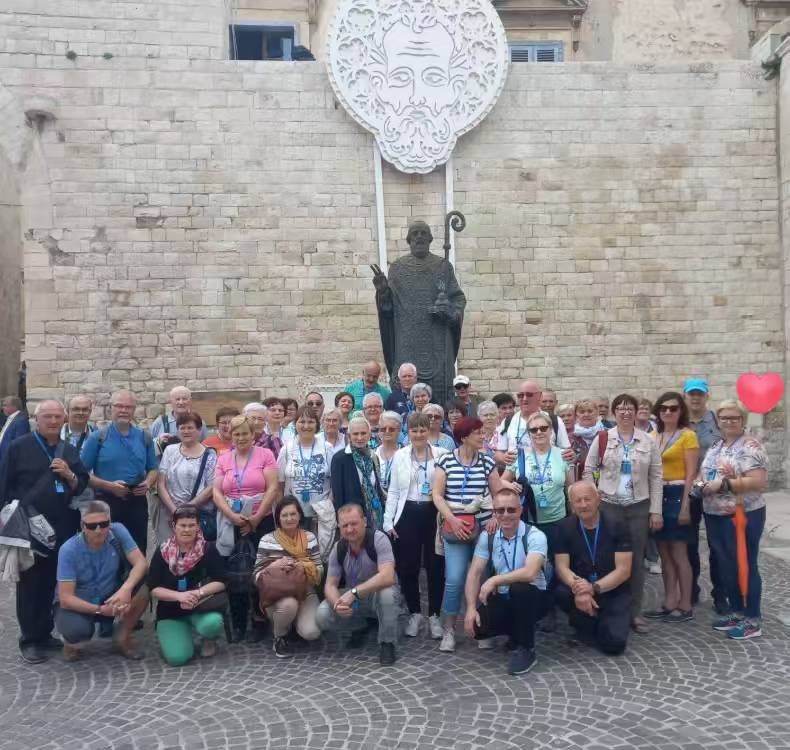
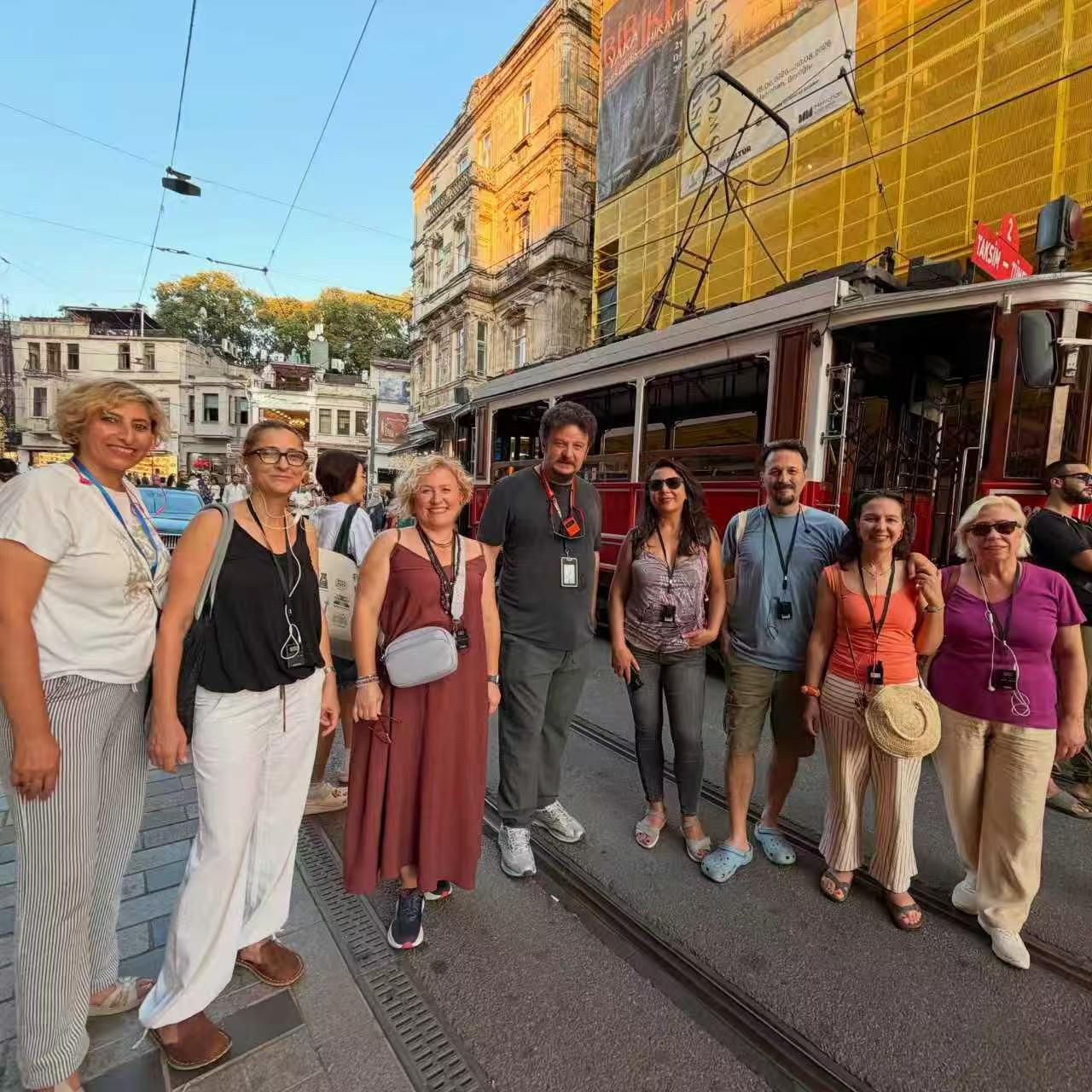
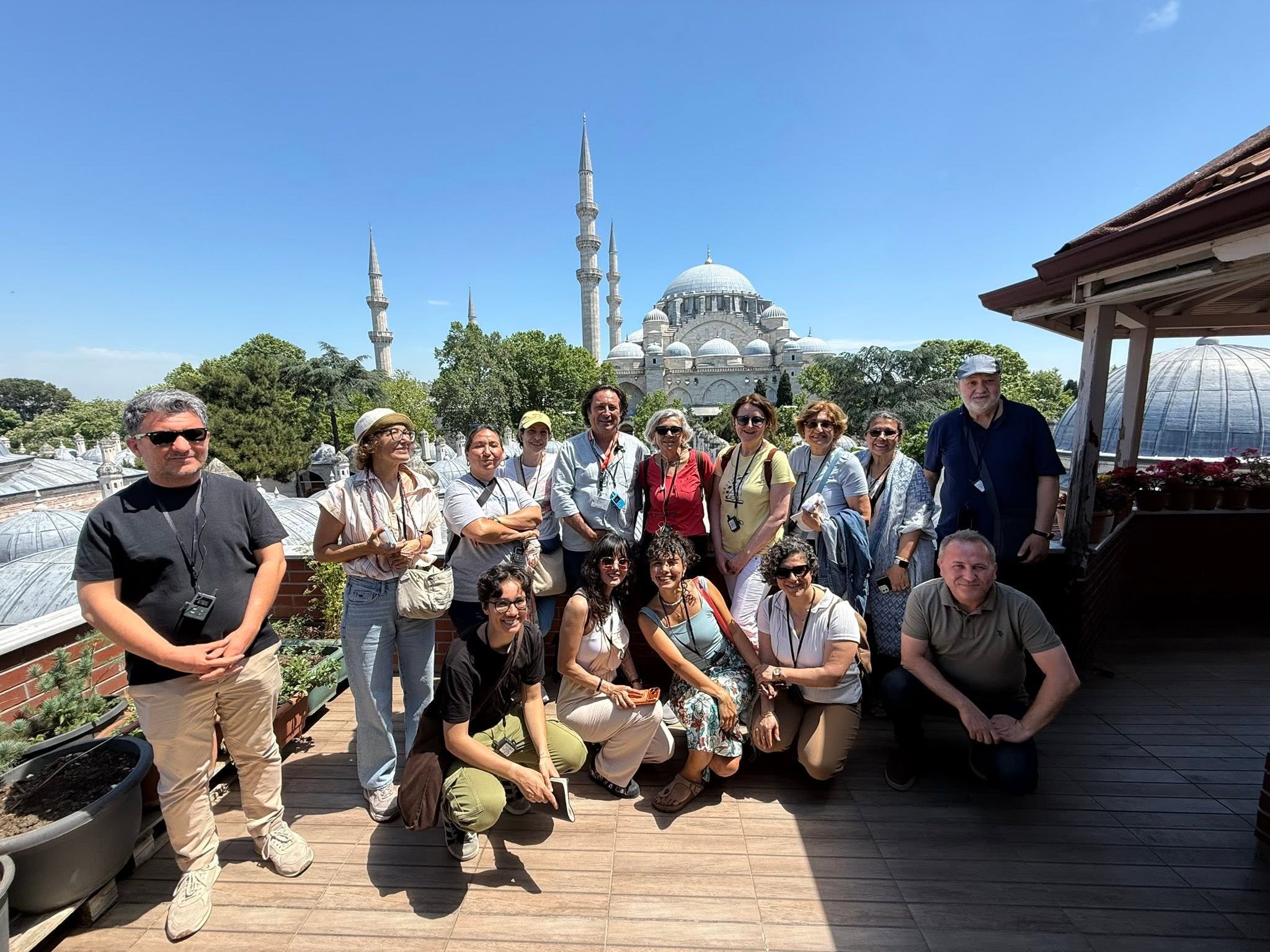
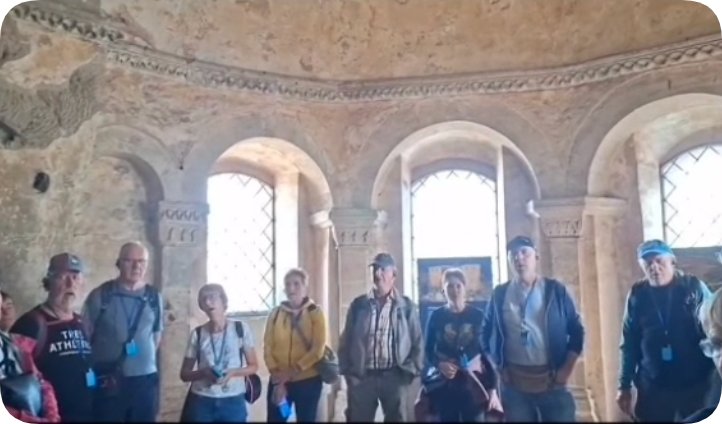
Every summer this operator runs a fixed circuit for walking pilgrims: a hilltop memorial with a bronze sculpture and a national flag, a rock grotto with a statue set into the stone, and a Romanesque facade where the day ends on the steps. Roughly eighty travellers, average age past sixty, one coach company, three stops, ten hours. This year the fleet split across three transmitter models — the RC9150 on the first coach, the RC085 on the second, the RC2501 carried by the guide who closes the day — with receivers pooled in one crate and handed out at the hotel door each morning.
The photographs in this article came back with the kit. They are the reason this case reads differently from a spec review: the operator keeps a small notebook, and the notes that survived the day are quoted below almost as they were written. What follows is the day as the fleet experienced it, stop by stop, with the equipment verdicts in the operator's own ordering.
💡 What the Group Booked and Why
The booking note was short. Eighty-plus walkers, three briefing points where a single voice has to reach everyone without shouting, and one long afternoon on stone. The operator had run the circuit the previous year with borrowed units and two complaints: batteries that died before the final stop, and a channel clash with a school group at the memorial. So the brief to us was specific — transmitters that last the full ten hours, receivers that survive being forgotten in a coat pocket, and enough separation from other groups that nobody inherits a stranger's commentary.
Three coaches left at seven. Each guide carried a transmitter suited to their segment, and the receivers — pooled, so any unit works with any transmitter on its band — were issued at the door with lanyards already attached. The pooling decision mattered later in the day, and the notebook says so twice.
Pooling receivers across three transmitter models forced one piece of paperwork the operator had never needed before: a channel plan taped inside the crate lid. The two 2.4 GHz coaches were assigned blocks far apart — the memorial coach low, the facade coach high — so a receiver tuned for one coach could never drift into the other's frequency, and the UHF coach sat on its own band entirely where nothing else in the region was transmitting. The plan took ten minutes to write at the hotel and, by the notebook's own tally, prevented every channel question a mixed fleet usually generates at a handover.
⛪ Memorial Terrace: Reading a Prayer Card in the Open
The first stop is the loudest. The terrace holds the whole group for a twenty-minute address, coaches idle below, other visitors crossing between the columns. The RC9150 carried this segment: one hundred channels on the 2.4 GHz band meant the school group three terraces down never collided, and the guide's note reads that the first address finished "without a single raised voice." The transmitter is 97.5 grams, grey, and disappeared into a jacket pocket between remarks; the receivers are the same weight in black, and the seniors handled them without a single demonstration — the notebook credits the single power button.
Battery was the booking's first worry, and the first stop is where it was proved. A full transmitter charge is rated at fifteen hours; the guide's note from the memorial records the unit had been on since six and read full at noon. The 35-hour-plus receiver standby figure turned out to be the operational number that mattered, because receivers go out at seven and come back at six with nobody charging anything at lunch.
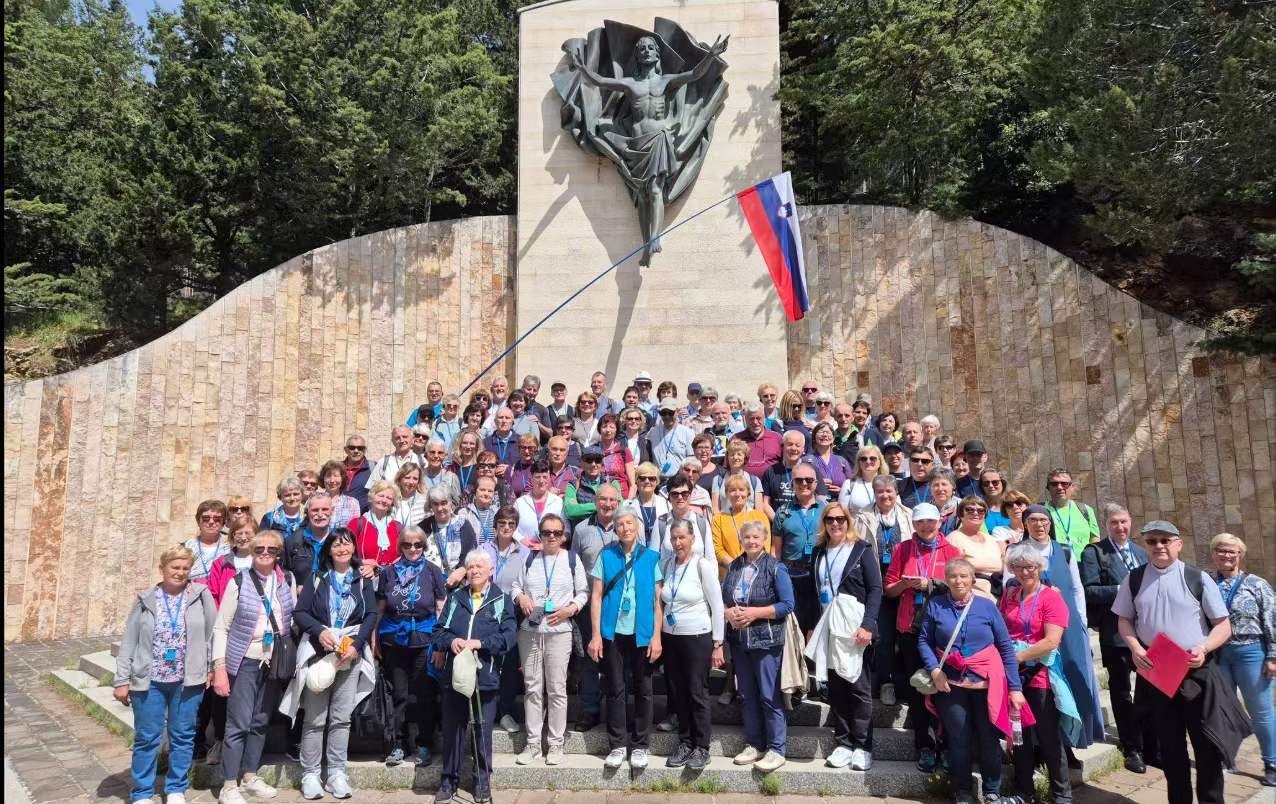
Inside the Grotto: Holding a Whisper Above the Water
The grotto is the opposite problem. Water runs behind the statue, the crowd packs tight under the rock, and the rule on site is that raised voices break the silence. The RC085 took this segment on the UHF band, 470 to 510 MHz, away from the 2.4 GHz noise that phones and coach Wi-Fi generate at tourist sites. Its receiver sensitivity is rated around -102 dBm, and the guide's note for this stop is one line: "everybody heard the water, then the voice, in that order."
The second note from the grotto concerns weight. The transmitter is 65 grams, the receiver 60, and the elderly walkers who had complained about heavier borrowed units the year before wore these for the full forty minutes without adjusting a strap. Output power sits between 8 and 10 milliwatts — deliberately modest for a confined site — and the guide kept the level low enough that the commentary felt like it was coming from the stone rather than a speaker.
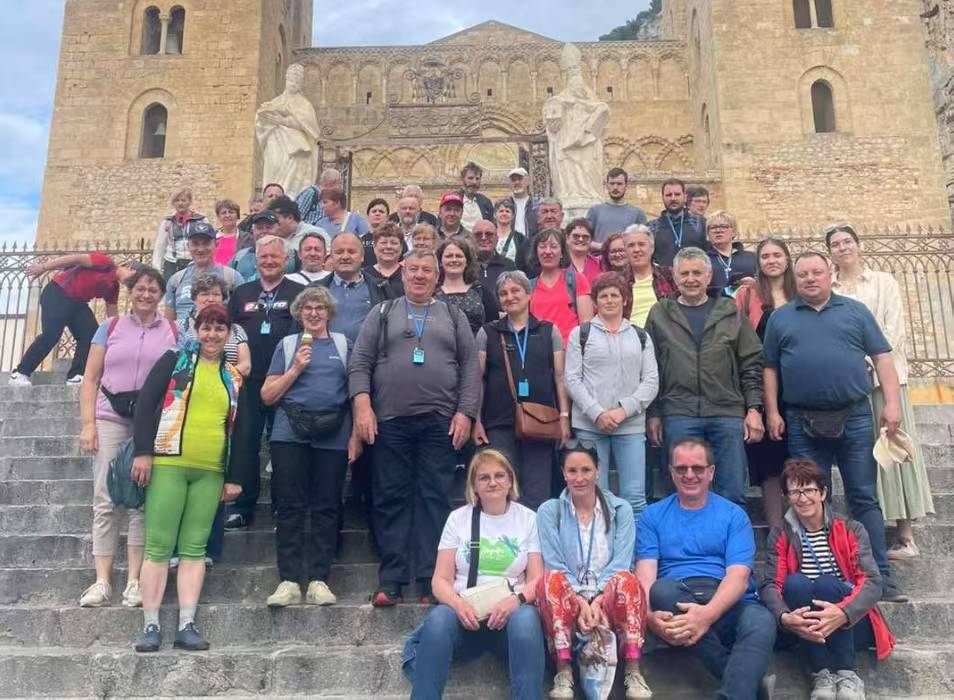
The Last Stop: Stairs, Statues and a Farewell Speech
The day closes on the facade, where the group photographs itself and one senior member gives the farewell address. This segment belonged to the RC2501, the lightest transmitter in the fleet at 47 grams, worn here with the optional lavalier microphone so the speaker could hold the banner with both hands. The transmitter output is 13 milliwatts, the strongest of the three, which the notebook notes was necessary at the base of the facade where the group spreads widest on the steps.
The farewell is also the longest single continuous use of the day — twenty-five minutes of address, then questions while the photographers work — and the note records that the transmitter had been live on and off since the cathedral interior visit at two and showed no sign of fading by the coach at five. Fifteen hours of transmitter runtime and the same 35-hour-plus receiver standby as the flagship carry this model, which is why the guide who speaks last carried it.

The Sheet the Operator Sent Back
Three transmitters, one pooled receiver crate, ten hours. The numbers below are the ones the operator circled, taken from the current specification table rather than memory.
| Dimension | RC9150 | RC085 | RC2501 |
|---|---|---|---|
| Band | 2403-2483 MHz | 470-510 MHz UHF | 2403-2483 MHz |
| Channels | 100 | 100 | 50 |
| Transmitter runtime | 15 h | 12 h | 15 h |
| Receiver standby | 35 h and up | 20 h | 35 h and up |
| Transmitter weight | 97.5 g | 65 g | 47 g |
| Receiver weight | 97.5 g | 60 g | 47 g |
| Output power | 10 mW | 8-10 mW | 13 mW |
| Microphone option | Handheld as supplied | Headset or lavalier | Headset or lavalier |
| Charging port | Type-C | USB | Type-C |
One row deserves its own sentence. The receiver standby row is why pooling worked: only the RC085 receivers came back at twenty hours, and because its units were fewest, the crate recharging logic stayed simple. Had the fleet been larger and mixed differently, the notebook admits, the single USB charging port on the RC085 versus Type-C on the other two would have needed labelled cables — which is exactly what the operator ordered for next season.
What the Crew Praised in Writing
The written feedback ran to four points, and three of them were about endurance rather than sound. First, no battery died on any segment, which the previous year's borrowed fleet had failed twice. Second, the channel separation held: at the memorial, the school group's equipment produced no audible collision on any of the one hundred channels available to the two 2.4 GHz transmitters. Third, the pooled receivers survived being passed between coaches, dropped onto gravel twice by the notebook's own count, and every unit came home.
The fourth point came from the guides themselves. This operator has run Catholic groups on longer circuits before — an earlier deployment is described in our pilgrimage case — and the standing complaint had always been microphone handling. The lavalier option on the closing transmitter retired it: the farewell speaker held the banner, and the guides' note ends with a request to fit the same microphone to the first coach next year.
The notebook also kept a repair page, which is the kind of detail a case like this should not hide. One receiver hit the gravel at the grotto exit when a strap slipped; the walker who picked it up handed it to the guide, who re-paired it against the transmitter in under a minute and logged the unit back into circulation before the group moved off. No screwdriver, no spare drawn from the depot ratio, no walker left without audio — the note marks the incident with a single tick rather than the cross that the same drop earned last year.
🔮 Charging, Spares and the Night Before the Next Coach
Back at the depot the fleet logic is unglamorous but it is what keeps a circuit like this repeatable. Receivers go into two crates by charging port, Type-C units in one, the USB units in the other, on a timer that finishes before midnight. Spares travel as a fixed ratio — one spare transmitter per model, five spare receivers — and the notebook records that none of the spares was opened on this departure. The full transmitter and receiver range stays on the depot wall chart, because the mixing decision changes with the route, not with the catalogue.
The operator's one efficiency note: pooled receivers mean pooled charging, and pooled charging means the crate with the slowest port sets the schedule. With receiver standby rated at 35 hours and up on the two 2.4 GHz models, the practical answer has been to charge overnight only twice a week on multi-day departures, and the notebook's arithmetic — ten hours of use against a 35-hour reserve — is the reason the drivers stopped fighting over sockets at the hotel.
Two changes, both already ordered. The lavalier microphone moves from the closing coach to the first, because the memorial address is the segment where hands are fullest. And the RC085 pair gets a second charging crate, not because the twenty-hour receiver reserve failed but because mixed ports in one crate produced the only organisational friction of the day. Everything else — the pooling, the channel plan, the per-segment transmitter choice — stays exactly as the notebook recorded it, and the city and heritage walking tour solutions page carries the current kit list for operators planning similar circuits.