A leading China factory specializing in Wireless Tour Guide Systems, Church Audio Guides, and Translation Headphones with premium OEM/ODM solutions.

Tel:+86 18922879583

Email:tiger.wang@richitek.com

RC2468, RC2402 and RC2501: A Use Case From a Multi-Country Coach Tour

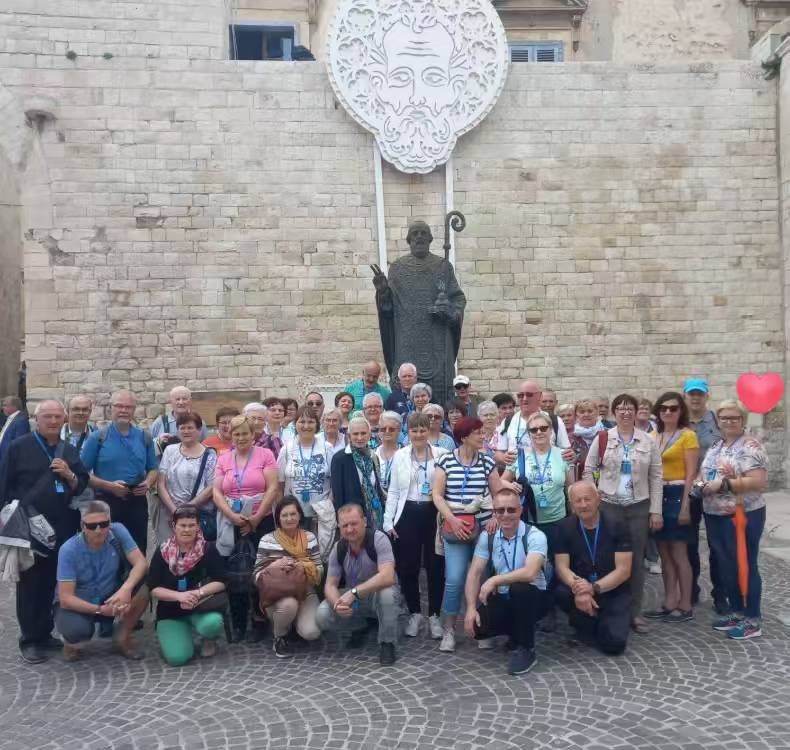
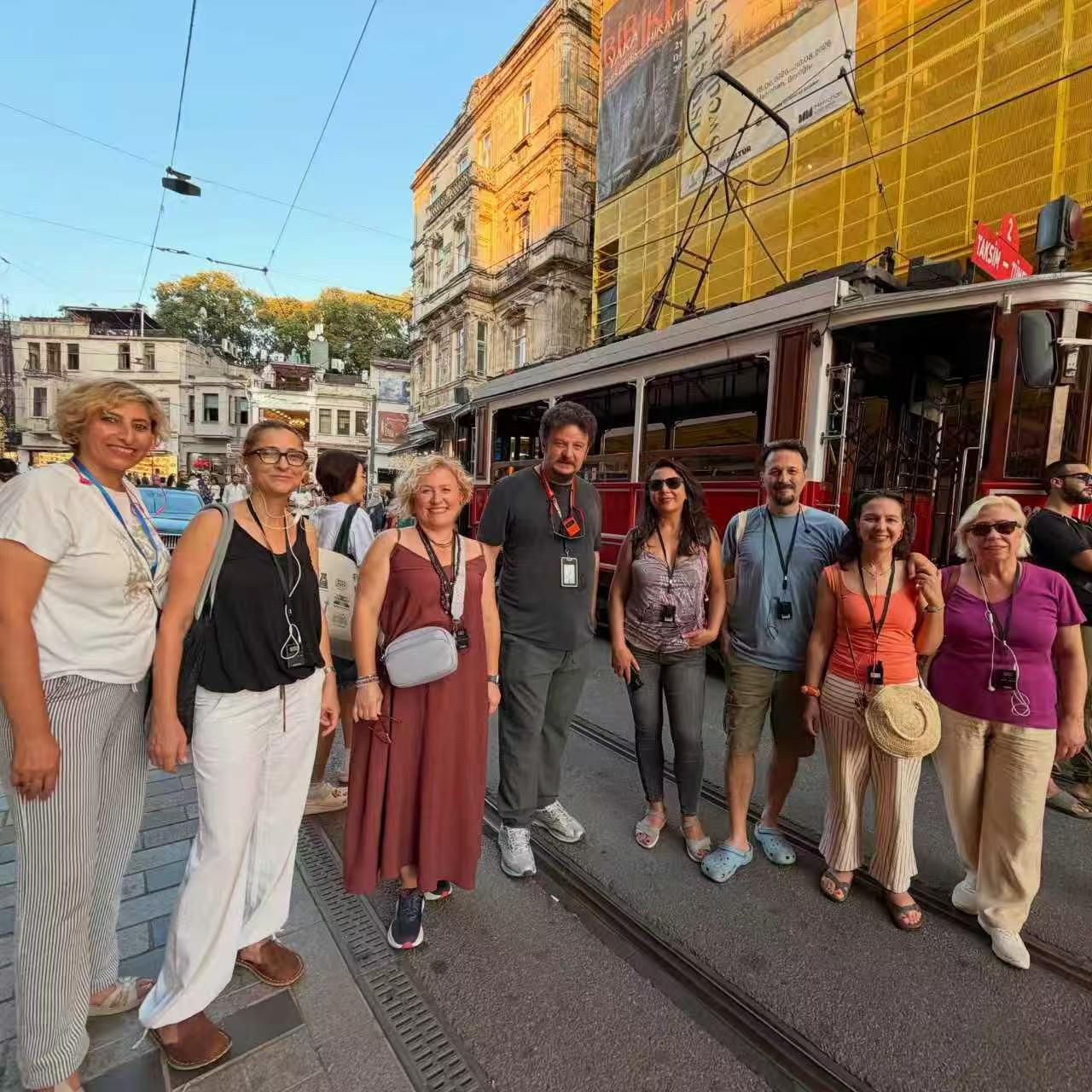
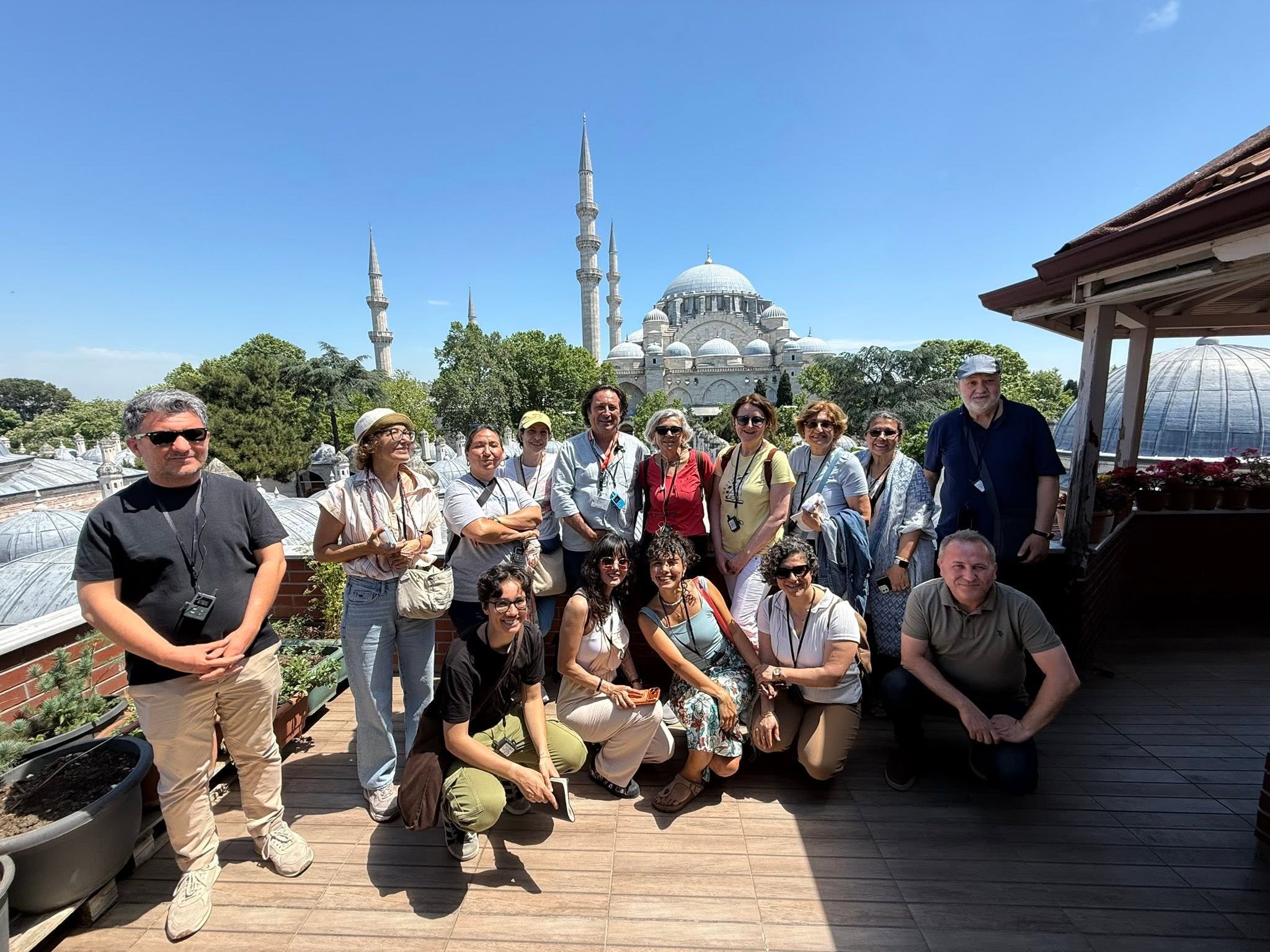
The three photos in this article come from a tour operator who runs long-haul coach holidays for travellers in their sixties and seventies. One season, one fleet, three borders: a monument square in Split where the group gathered beneath a stone wall, the Palace of the Parliament in Bucharest where the whole coach posed on the esplanade, and an Art Nouveau corner in Oradea where the walking pace slowed to match the facades. The equipment behind those photos is the subject of this use case: the RC2468, the RC2402 and the RC2501, each doing a job that matches its spec sheet.
Monument-square-group-briefing-heritage_sightseeing_tour

What the Photos Show About the Fleet

None of the receivers appear large in the photos, and that is the point. On a coach holiday the hardware has to disappear: travellers carry their own bags, climb on and off the vehicle several times a day, and refuse anything that feels like a burden. The operator's brief was specific. One ear-hook receiver light enough that a seventy-year-old forgets it is there. A standard unit for the middle of the fleet that the crew can hand out and collect without a manual. A long-endurance unit for the guides who transmit all day and cannot stop to recharge. Those three briefs map one to one onto the RC2468, the RC2402 and the RC2501.

RC2468: The 18-Gram Ear Hook That Seniors Keep Wearing

The RC2468 receiver weighs 18 grams in an ear-hook design, which makes it the unit that goes to the travellers first. On this tour it was issued at the morning briefing and collected after dinner, and the operator reported that nobody asked to swap it out. At 2403-2483 MHz on 50 channels with 10 mW output and a 1-200 metre working range, it carries a guide's voice across a square without competing with the city's radio noise. The 3.7V 300mAh receiver battery runs about 8 hours, which covers a sightseeing day, and the Micro USB 5V/1A port means the crew charges the crate overnight on the coach's inverter with a cable type the travellers already recognise.

The detail that matters at this age group is the hook itself. Over-ear fit survives hats, headscarves and glasses, and a receiver that stays in place means the guide never repeats a sentence for someone who lost the signal while adjusting a headset. This was the unit used at the Split briefing shown in the first photo, where the group stood for twenty minutes in one place and every receiver stayed on. Travellers in the back row heard the briefing as clearly as the front, which is the quiet test of a 200-metre link in an open square.
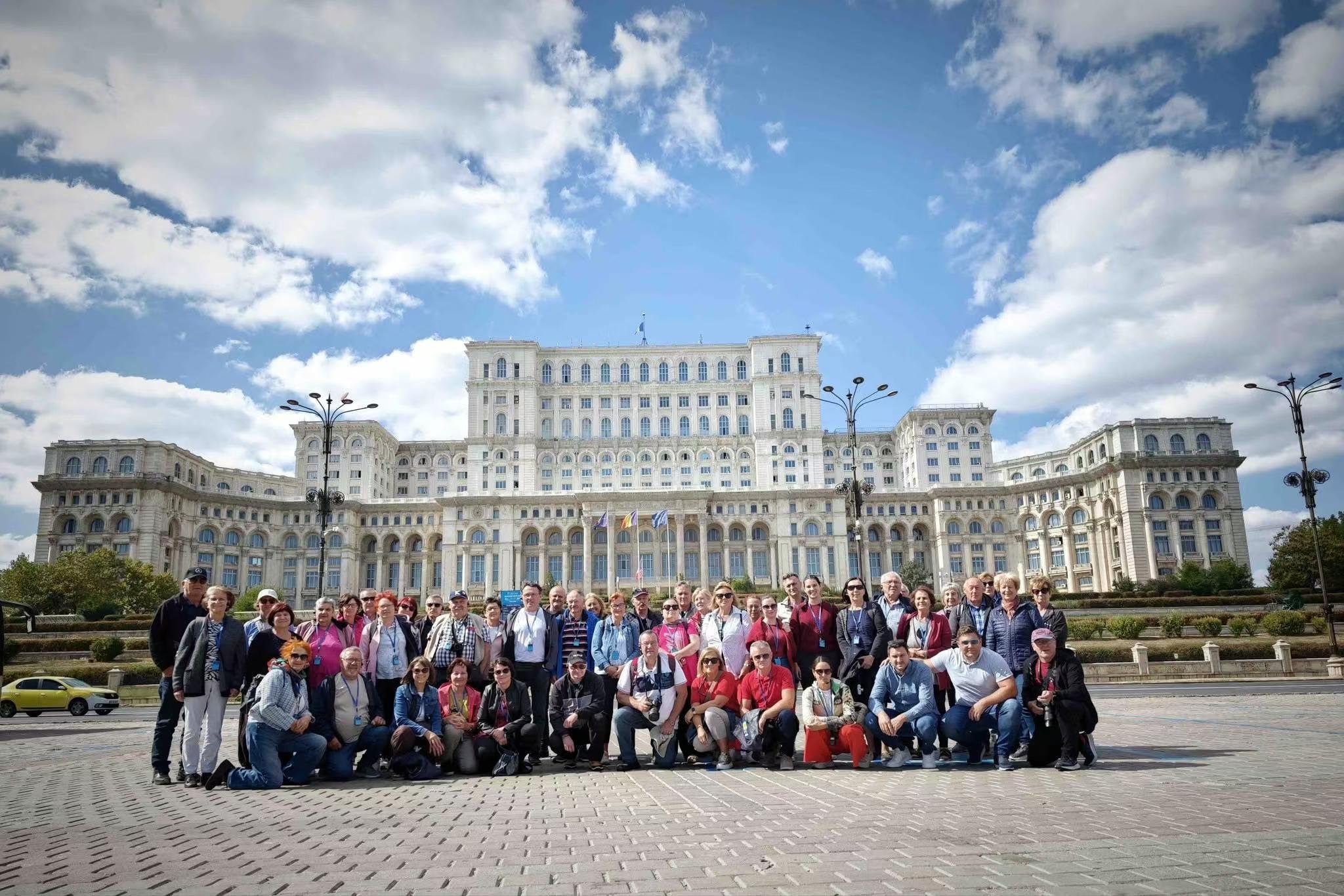
Parliament-palace-group-photo-heritage_sightseeing_tour

✅ RC2402: The Standard Unit That Runs the Middle of the Fleet

The RC2402 is the base 2.4G standard version, and its use case is volume discipline. Fifty channels, 10 mW, 20-hour receiver battery life, 59 grams on both transmitter and receiver, and a DC charging port: it is deliberately the unremarkable unit. On this tour the RC2402 receivers went to the travellers in the middle seating blocks, and the crew ran the fleet on a fixed channel plan so that any receiver could be replaced from the spare box without re-pairing.

That replacement routine is where the standard version earns its place. When a unit came back with a dead battery or a cracked clip, the crew swapped in a spare already set to the same channel, and the traveller noticed nothing except a fresh battery. Twenty hours of receiver life meant the swap box rarely opened. For an operator pricing a long season, the RC2402 is the unit that keeps the fleet's total cost predictable because nothing about it is special.

RC2501: The 13mW Unit That Outlasts the Itinerary

The guides carried the RC2501. It transmits at 13 mW with a 3.7V 1500mAh battery rated for 15 hours of transmission and more than 35 hours of receiver standby, charges over Type-C, and weighs 47 grams. It accepts an optional head-worn or lavalier microphone with a sensitivity of about -38 dBm, which is what the guide used in the palace esplanade wind. The reason it anchors this use case is the multi-day rhythm: a coach holiday never pauses long enough for careful charging, and a transmitter that starts the day at full charge and ends it with reserve removes the midday swap from the crew's checklist entirely.

Across borders the 2.4G band behaved identically in three countries, which is the quiet advantage of licence-free operation: no local licence applications, no frequency coordination between stops, one channel plan for the whole season.

Art-nouveau-street-walk-heritage_sightseeing_tour

The Three Roles Side by Side

Fleet roleUnitChannels and powerBattery and runtimeWeightCharging
Traveller comfort unitRC246850 channels, 10 mW, 1-200 mReceiver about 8 h on 3.7V 300mAh18 g ear-hook receiverMicro USB 5V/1A
Volume standard unitRC240250 channels, 10 mW, 1-200 mTX 10 h / RX 20 h on 3.7V 1500mAh59 g both endsDC port
Guide endurance unitRC250150 channels, 13 mW, 1-200 mTX 15 h / RX 35+h standby on 3.7V 1500mAh47 g both endsType-C

Read the table as three job descriptions rather than a ranking. Every unit on the tour ran the same licence-free 2403-2483 MHz band with PLL-synthesised channels, which is what let one channel plan span three countries. The differences that matter sit in the last three columns: what the unit weighs on a traveller's ear, how long it runs between charges, and what cable the night-time charging crate needs.

The Handout Routine That Kept Sixty Units Accounted

The operational habit behind the photos deserves its own section. Every morning the crate came off the hold with receivers in numbered slots, one row per seating block. Travellers took a receiver with their lanyard; the crew ticked the number against the seat list. At each stop the receivers stayed on, because the guide narrated the walk. At the evening collection the same list ran in reverse, and any missing number surfaced before the coach left the car park. Across the season the operator lost two units, both left in hotel rooms and recovered the next morning. The routine, not the hardware, is what made sixty units survivable for one crew member, but the hardware helped: an 18-gram ear hook and a 47-gram transmitter are light enough that nobody minded the process.

A Channel Plan That Survived Six Coaches in One Car Park

The tour occasionally met sister departures at the same landmark, which put up to six guides and their fleets in one car park. The operator's plan was fixed per departure: each coach held its own channel block inside the 50 channels the RC2402 and RC2468 share, spaced so adjacent coaches never sat next to each other in the plan. Because every unit on every coach used PLL-synthesised channels on the same 2403-2483 MHz band with the same 1-200 metre range, the spacing did the work and nobody touched a dial after the first morning. This is the least glamorous part of a use case and the part the operator praised most.

Two numbers from the season put the whole arrangement in perspective. The itinerary ran fourteen days and crossed three borders, which meant fourteen charging nights and exactly zero frequency re-plans. The group size sat between fifty-four and sixty-two travellers depending on the departure, and the crew member responsible for the fleet was one person, who also handled luggage tags. Any hardware decision that added a task to that person's evening would have been quietly abandoned by the second departure. The three-model fleet survived precisely because none of its routines did: one crate, one list, one channel plan, revised never.

What the Season Changed in the Operator's Reorder

The feedback that came back with the photos was practical. The RC2468 order grew, because the ear-hook fit solved complaints the operator had been absorbing for years. The RC2402 order stayed flat, which the operator described as the correct outcome for a unit whose job is to be predictable. The RC2501 order grew fastest of the three, because once a guide works a full season on a 15-hour transmitter with a 35-hour standby reserve, going back to a unit that needs a midday swap is a hard sell. For a fleet buying three roles at once, that reorder pattern is the use case in miniature: comfort units grow with the audience, standard units hold their ground, and endurance units grow with the itinerary.

FAQ: Questions the Operator Answered Directly

1. Why split the fleet across three models instead of buying one?

Because the three jobs pull in different directions. The 18-gram RC2468 ear hook is for travellers who wear a receiver all day, the RC2402 keeps the middle of the fleet cheap and predictable, and the RC2501 gives guides 15-hour transmission days with a Type-C charge at night. One model cannot be all three without paying flagship prices for every seat.

2. Did the 2.4G band cause problems at border crossings?

No. All three models operate licence-free on 2403-2483 MHz, so the same channel plan worked in every country on the route without applications or re-coordination between stops.

3. How did the crew handle a receiver failure mid-tour?

The spare box carried RC2402 units pre-set to the same channel plan. A swap took under a minute because nothing needed re-pairing, and the 20-hour receiver battery meant the replacement always outlasted the day.

4. Is the RC2468's 8-hour receiver life enough for a full sightseeing day?

It was on this tour. The unit is issued at the morning briefing and charged overnight in the crate, and the Micro USB 5V/1A port keeps the charging crate simple. For itineraries with evening walks the crew supplements with RC2402 units from the swap box.

A multi-country coach tour is the hardest routine test a tour guide system can take: new radio environments every few days, one crew member, and travellers who judge the hardware by how fast they forget it. The RC2468, the RC2402 and the RC2501 each covered one failure mode of that routine, and the season ended with a reorder instead of a complaint. See the full line on the tour guide system overview, compare the RC2468, RC2402 and RC2501 spec sheets directly, browse the city tour solutions page, or read more field deployments under solutions.


2026年10月20日 12:10
ꄘ click: 12
no data

RC2468, RC2402 and RC2501: A Use Case From a Multi-Country Coach Tour

time: 2026年10月20日 click:12

The three photos in this article come from a tour operator who runs long-haul coach holidays for travellers in their sixties and seventies. One season, one fleet, three borders: a monument square in Split where the group gathered beneath a stone wall, the Palace of the Parliament in Bucharest where the whole coach posed on the esplanade, and an Art Nouveau corner in Oradea where the walking pace slowed to match the facades. The equipment behind those photos is the subject of this use case: the RC2468, the RC2402 and the RC2501, each doing a job that matches its spec sheet.

Monument-square-group-briefing-heritage_sightseeing_tour

What the Photos Show About the Fleet

None of the receivers appear large in the photos, and that is the point. On a coach holiday the hardware has to disappear: travellers carry their own bags, climb on and off the vehicle several times a day, and refuse anything that feels like a burden. The operator's brief was specific. One ear-hook receiver light enough that a seventy-year-old forgets it is there. A standard unit for the middle of the fleet that the crew can hand out and collect without a manual. A long-endurance unit for the guides who transmit all day and cannot stop to recharge. Those three briefs map one to one onto the RC2468, the RC2402 and the RC2501.

RC2468: The 18-Gram Ear Hook That Seniors Keep Wearing

The RC2468 receiver weighs 18 grams in an ear-hook design, which makes it the unit that goes to the travellers first. On this tour it was issued at the morning briefing and collected after dinner, and the operator reported that nobody asked to swap it out. At 2403-2483 MHz on 50 channels with 10 mW output and a 1-200 metre working range, it carries a guide's voice across a square without competing with the city's radio noise. The 3.7V 300mAh receiver battery runs about 8 hours, which covers a sightseeing day, and the Micro USB 5V/1A port means the crew charges the crate overnight on the coach's inverter with a cable type the travellers already recognise.

The detail that matters at this age group is the hook itself. Over-ear fit survives hats, headscarves and glasses, and a receiver that stays in place means the guide never repeats a sentence for someone who lost the signal while adjusting a headset. This was the unit used at the Split briefing shown in the first photo, where the group stood for twenty minutes in one place and every receiver stayed on. Travellers in the back row heard the briefing as clearly as the front, which is the quiet test of a 200-metre link in an open square.

Parliament-palace-group-photo-heritage_sightseeing_tour

✅ RC2402: The Standard Unit That Runs the Middle of the Fleet

The RC2402 is the base 2.4G standard version, and its use case is volume discipline. Fifty channels, 10 mW, 20-hour receiver battery life, 59 grams on both transmitter and receiver, and a DC charging port: it is deliberately the unremarkable unit. On this tour the RC2402 receivers went to the travellers in the middle seating blocks, and the crew ran the fleet on a fixed channel plan so that any receiver could be replaced from the spare box without re-pairing.

That replacement routine is where the standard version earns its place. When a unit came back with a dead battery or a cracked clip, the crew swapped in a spare already set to the same channel, and the traveller noticed nothing except a fresh battery. Twenty hours of receiver life meant the swap box rarely opened. For an operator pricing a long season, the RC2402 is the unit that keeps the fleet's total cost predictable because nothing about it is special.

RC2501: The 13mW Unit That Outlasts the Itinerary

The guides carried the RC2501. It transmits at 13 mW with a 3.7V 1500mAh battery rated for 15 hours of transmission and more than 35 hours of receiver standby, charges over Type-C, and weighs 47 grams. It accepts an optional head-worn or lavalier microphone with a sensitivity of about -38 dBm, which is what the guide used in the palace esplanade wind. The reason it anchors this use case is the multi-day rhythm: a coach holiday never pauses long enough for careful charging, and a transmitter that starts the day at full charge and ends it with reserve removes the midday swap from the crew's checklist entirely.

Across borders the 2.4G band behaved identically in three countries, which is the quiet advantage of licence-free operation: no local licence applications, no frequency coordination between stops, one channel plan for the whole season.

Art-nouveau-street-walk-heritage_sightseeing_tour

The Three Roles Side by Side

Fleet roleUnitChannels and powerBattery and runtimeWeightCharging
Traveller comfort unitRC246850 channels, 10 mW, 1-200 mReceiver about 8 h on 3.7V 300mAh18 g ear-hook receiverMicro USB 5V/1A
Volume standard unitRC240250 channels, 10 mW, 1-200 mTX 10 h / RX 20 h on 3.7V 1500mAh59 g both endsDC port
Guide endurance unitRC250150 channels, 13 mW, 1-200 mTX 15 h / RX 35+h standby on 3.7V 1500mAh47 g both endsType-C

Read the table as three job descriptions rather than a ranking. Every unit on the tour ran the same licence-free 2403-2483 MHz band with PLL-synthesised channels, which is what let one channel plan span three countries. The differences that matter sit in the last three columns: what the unit weighs on a traveller's ear, how long it runs between charges, and what cable the night-time charging crate needs.

The Handout Routine That Kept Sixty Units Accounted

The operational habit behind the photos deserves its own section. Every morning the crate came off the hold with receivers in numbered slots, one row per seating block. Travellers took a receiver with their lanyard; the crew ticked the number against the seat list. At each stop the receivers stayed on, because the guide narrated the walk. At the evening collection the same list ran in reverse, and any missing number surfaced before the coach left the car park. Across the season the operator lost two units, both left in hotel rooms and recovered the next morning. The routine, not the hardware, is what made sixty units survivable for one crew member, but the hardware helped: an 18-gram ear hook and a 47-gram transmitter are light enough that nobody minded the process.

A Channel Plan That Survived Six Coaches in One Car Park

The tour occasionally met sister departures at the same landmark, which put up to six guides and their fleets in one car park. The operator's plan was fixed per departure: each coach held its own channel block inside the 50 channels the RC2402 and RC2468 share, spaced so adjacent coaches never sat next to each other in the plan. Because every unit on every coach used PLL-synthesised channels on the same 2403-2483 MHz band with the same 1-200 metre range, the spacing did the work and nobody touched a dial after the first morning. This is the least glamorous part of a use case and the part the operator praised most.

Two numbers from the season put the whole arrangement in perspective. The itinerary ran fourteen days and crossed three borders, which meant fourteen charging nights and exactly zero frequency re-plans. The group size sat between fifty-four and sixty-two travellers depending on the departure, and the crew member responsible for the fleet was one person, who also handled luggage tags. Any hardware decision that added a task to that person's evening would have been quietly abandoned by the second departure. The three-model fleet survived precisely because none of its routines did: one crate, one list, one channel plan, revised never.

What the Season Changed in the Operator's Reorder

The feedback that came back with the photos was practical. The RC2468 order grew, because the ear-hook fit solved complaints the operator had been absorbing for years. The RC2402 order stayed flat, which the operator described as the correct outcome for a unit whose job is to be predictable. The RC2501 order grew fastest of the three, because once a guide works a full season on a 15-hour transmitter with a 35-hour standby reserve, going back to a unit that needs a midday swap is a hard sell. For a fleet buying three roles at once, that reorder pattern is the use case in miniature: comfort units grow with the audience, standard units hold their ground, and endurance units grow with the itinerary.

FAQ: Questions the Operator Answered Directly

1. Why split the fleet across three models instead of buying one?

Because the three jobs pull in different directions. The 18-gram RC2468 ear hook is for travellers who wear a receiver all day, the RC2402 keeps the middle of the fleet cheap and predictable, and the RC2501 gives guides 15-hour transmission days with a Type-C charge at night. One model cannot be all three without paying flagship prices for every seat.

2. Did the 2.4G band cause problems at border crossings?

No. All three models operate licence-free on 2403-2483 MHz, so the same channel plan worked in every country on the route without applications or re-coordination between stops.

3. How did the crew handle a receiver failure mid-tour?

The spare box carried RC2402 units pre-set to the same channel plan. A swap took under a minute because nothing needed re-pairing, and the 20-hour receiver battery meant the replacement always outlasted the day.

4. Is the RC2468's 8-hour receiver life enough for a full sightseeing day?

It was on this tour. The unit is issued at the morning briefing and charged overnight in the crate, and the Micro USB 5V/1A port keeps the charging crate simple. For itineraries with evening walks the crew supplements with RC2402 units from the swap box.

A multi-country coach tour is the hardest routine test a tour guide system can take: new radio environments every few days, one crew member, and travellers who judge the hardware by how fast they forget it. The RC2468, the RC2402 and the RC2501 each covered one failure mode of that routine, and the season ended with a reorder instead of a complaint. See the full line on the tour guide system overview, compare the RC2468, RC2402 and RC2501 spec sheets directly, browse the city tour solutions page, or read more field deployments under solutions.


no data
×

Contact us

email:
name:
subject:
content: