
A leading China factory specializing in Wireless Tour Guide Systems, Church Audio Guides, and Translation Headphones with premium OEM/ODM solutions.

Tel:+86 18922879583

Email:tiger.wang@richitek.com

RC2401, RC2500 and RC2402: What an Istanbul City Walk Operator Told Us After the Season

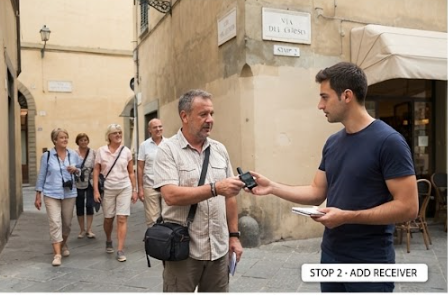
Customer feedback usually arrives as a short message with a photo attached. This season it arrived as a folder: pictures from tram stops, a waterfront briefing point and a literary museum entrance, all showing the same thing — visitors wearing lanyard receivers through a full day of walking. The operator runs guided walks through the historic quarter of Istanbul, from the tram lines of the main pedestrian street to the shoreline briefings and the small museums tucked between the two. Their fleet mixes three units: the RC2401 Wireless Audio Guide System as the daily workhorse, the RC2500 for the longest back-to-back days, and the RC2402 as the expandable spare pool. What follows is their feedback, organised the way they gave it to us: what arrived in the box, what the logs showed, what guests noticed, and what they asked us to change. We reproduce it here with their numbers intact, because a fleet running three related models across one route is the cleanest way to see which specification actually earns its place. For the wider hardware context behind this fleet, the city tour solutions page maps the same requirements at programme level.
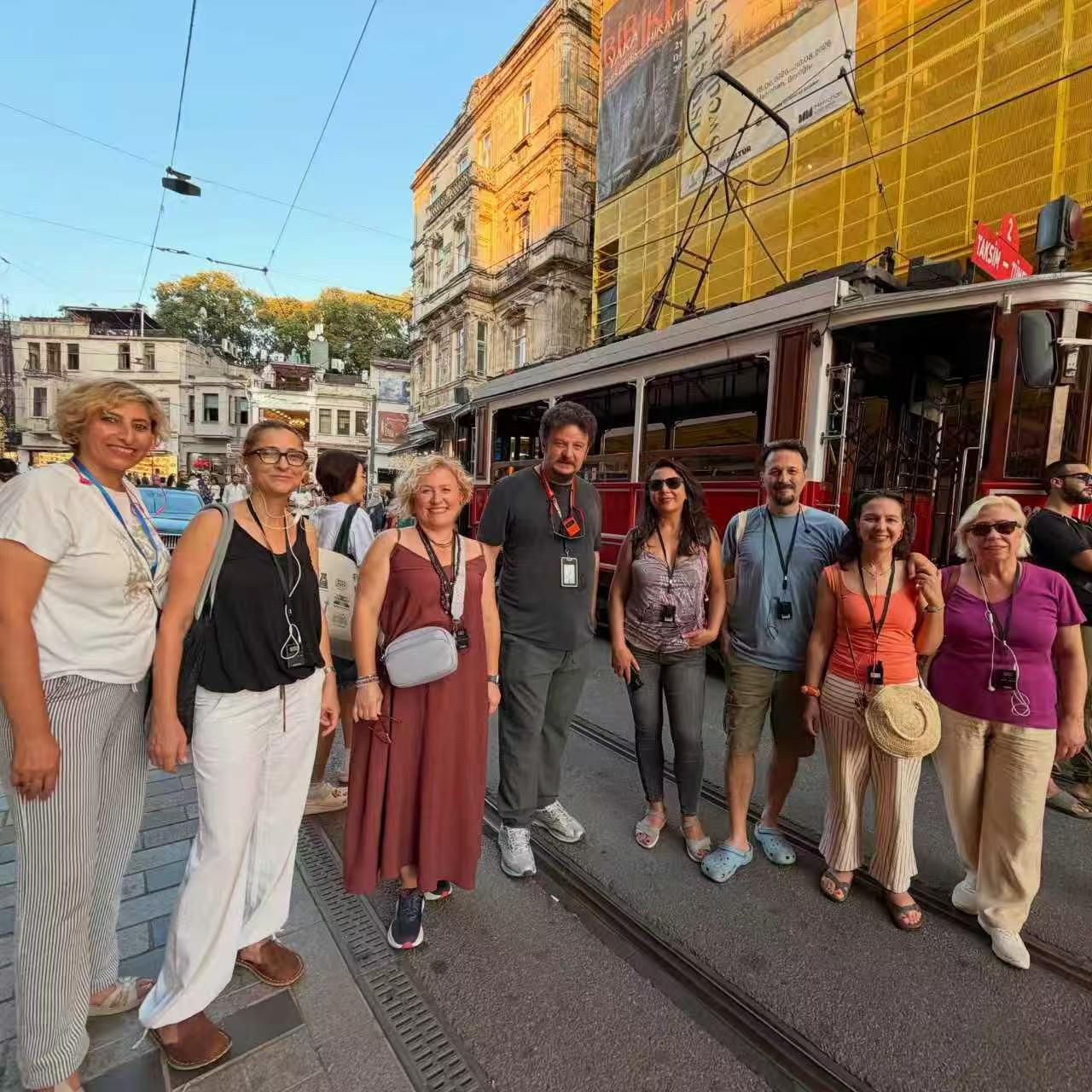
Tram-stop-group-photo-city_tourism

The Delivery That Started the Feedback

The folder begins with delivery day, because that is where most operators form their first impression. This one counted boxes rather than brochures: receivers bagged in pairs, transmitters with belt clips and lanyards, earpieces sealed separately, and a charging case that arrived already labelled by slot number. Nothing needed assembly before the first walk, which the operator marked down as the reason the fleet entered service the same week it landed. Their note on the packaging was specific enough to quote: bags opened flat, foam kept the units from rattling, and the channel sticker on each receiver matched the number written on the box. Small details, but they set the tone for how the rest of the season went. The delivery also included a spare-bag policy they did not expect: two sealed earpiece bags per ten receivers, sized so a lost or soiled earpiece never grounds a working unit. By their own accounting, the fleet has drawn on that spare bag twice since spring, both times during school-group weeks when handling was rougher than the adult tours.

Fifty Channels Across a Crowded Historic Quarter

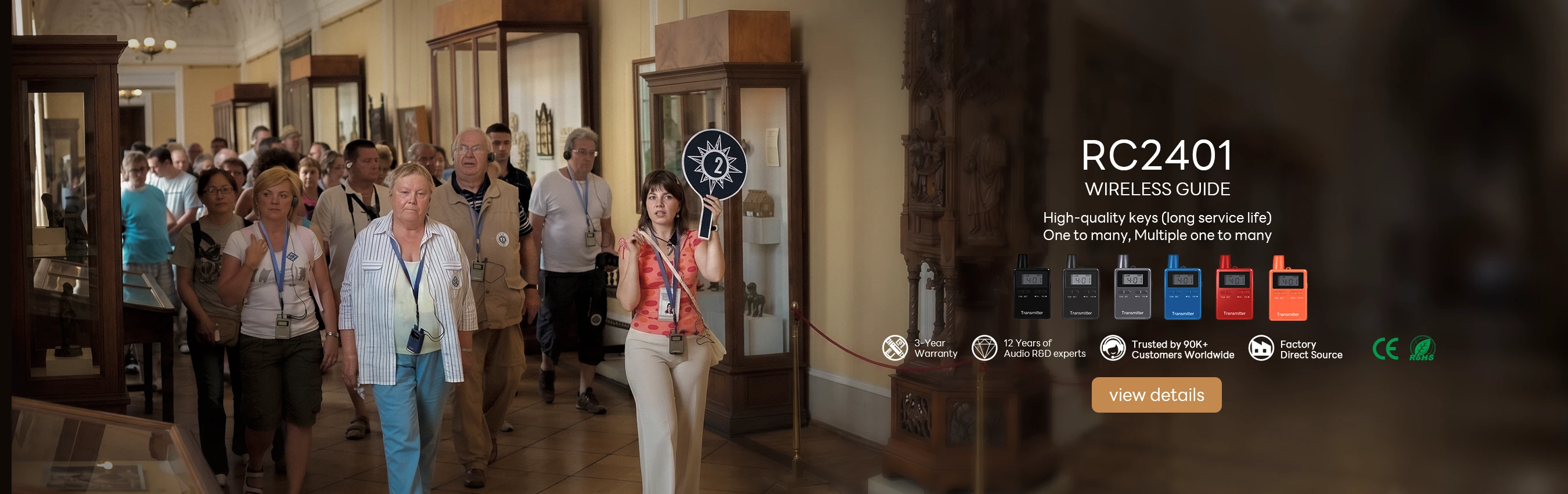
The historic quarter is shared territory: several operators run walks along the same tram street at the same hours, and cruise groups pour into the side streets mid-morning. Against that crowding the RC2401's fifty dedicated channels are the feature the operator praised first. Each guide locks a group to its own channel at the meeting point, and the PLL synthesis keeps adjacent groups from bleeding into each other even when two walks pause within a few metres of one another. The 200-metre open-area range matters less in narrow streets and more along the shoreline, where a guide can step ahead to buy tickets while the group lingers. Their channel plan is written on the laminated sheet we mentioned earlier: five working channels, two held in reserve, and a standing agreement that whichever guide arrives first at a shared pause point takes the lower number. Cruise-day mornings, when two or three ships dock at once, are the stress test, and their log records no cross-talk incident since the plan was fixed. The RC2500 Wireless Tour Guide System units run on the same 2.4GHz band, so spare units swap into any group without a channel renegotiation — a detail the operator discovered by accident and now relies on deliberately.

🔋 Battery Logs From a Full Walking Day

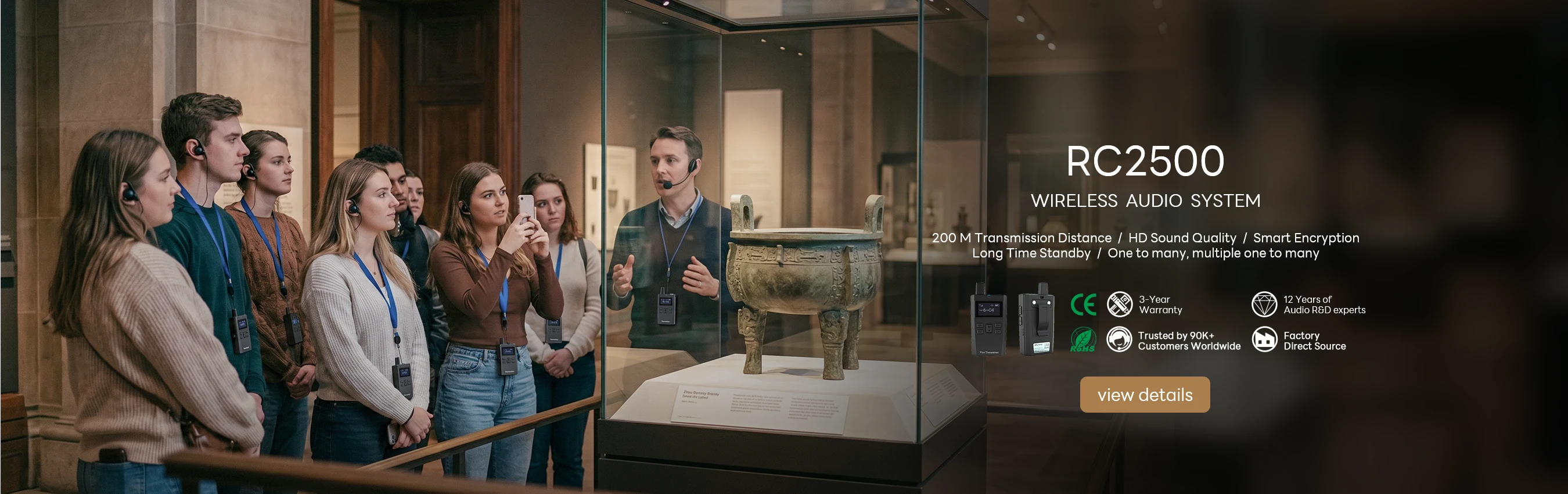
The operator's battery notes are the most concrete part of the folder. A full walking day runs about seven hours with the transmitter active almost continuously, and their log shows the RC2401 transmitter finishing at roughly 30 percent remaining — consistent with its ten-hour rating. Receivers come back with far more headroom, since guests power them at the meeting point and hand them in at the last stop. The RC2500 is the unit they reach for on double-deployment days: its forty-hour receiver battery and twelve-hour transmitter cover two full shifts without a midday charge, which is why the spares shelf keeps more RC2500 than the fleet ratio alone would suggest. The RC2402 rounds the pool out with the same twenty-hour receiver figure — the RC2402 Wireless Tour Guide System page lists the full endurance table — so any unit a guest picks up behaves identically from the visitor's point of view. The ninety-minute lunch window between departures does the rest: a receiver that returns at half charge sits back above ninety percent before the afternoon meet-up, which the operator treats as the real reason the fleet has never run a mid-route battery swap. Their oldest packs, now a full season old, have lost a noticeable but tolerable slice of runtime, and the rotation sheet keeps those on the shortest routes.

Unit in the fleetChannelsRated enduranceRole the operator gives it
RC240150 dedicatedTx 10h / Rx 20hDaily workhorse for standard walking routes
RC25002.4GHz PLLTx 12h / Rx 40hDouble-shift days and back-to-back departures
RC240250-channel ISM bandTx 10h / Rx 20hExpandable spare pool, one-click sync

Waterside-guide-briefing-city_tourism

Comfort Notes From Guides and Guests

The comfort feedback splits neatly by who wears what. Guides carry transmitters on a belt clip or lanyard and reported no fatigue over seven-hour days, but they asked for a second clip style after one guide lost a unit to a snagged strap. Guests wear the lanyard receivers around the neck, and the operator's note here was unusually precise: visitors over sixty found the pendant weight acceptable, parents of younger children asked for a shorter strap, and nobody complained about audio pressure at the standard volume setting. The earpieces wiped clean between tours, and the operator rotates them through the charging case with the receivers, which doubled as their hygiene routine. None of these notes required an engineering change; they went straight into the accessory plan for the next order. Weather drew its own comments: on the two humid weeks in July, several guests wore the receiver on a shoulder-bag strap instead of the neck, and the guide reported no reception complaints from that improvised carrying style. On rain days the lanyards went under jackets with the receiver clipped outside, and the operator's verdict was that the shell finish wiped clean without the paint lifting.

⚖️ Charging Case Routine Between Departures

Between the morning and afternoon departures the fleet sits in its charging case for roughly ninety minutes, and the operator built a rotation around that window. Receivers return to numbered slots, transmitters take the charging bays, and a laminated sheet tracks which units came back below half charge — the RC2402's one-click sync means the afternoon guide re-pairs a swapped unit in seconds rather than calling the office. The case itself travels in the support van, not with the walking guide, which the operator says keeps the load off the person talking all day. Their only request here was cosmetic: slot labels that survive summer heat, because two of theirs peeled by August. The routine has one more rule worth copying: whichever unit comes back with the lowest charge gets the first slot, so the next morning's departure order is decided the previous evening rather than at the meeting point. The support van carries a second case for the peak months, and the operator says the whole charging operation fits in the time it takes the guides to eat.

🔮 Three Requests That Shaped the Next Order

Feedback cuts both ways, and the folder closed with three requests. First, a shorter children's strap as a stocked accessory rather than a special order. Second, a printed channel map sized for the charging case lid, so a relief guide can see the whole fleet's assignments at a glance. Third, an option for receivers with a lanyard loop positioned higher on the shell, which the operator says would stop the pendant from swinging on stairs. All three are packaging and accessory matters, not circuit changes, and all three are already in the OEM/ODM options the product pages list. An operator who treats a supplier that way — logging, photographing and numbering every friction point — is the kind whose next order arrives with the whole fleet upgraded at once. Their photographs made each request unambiguous: the strap photo was taken next to a coin for scale, the label photo showed the peeled corner in daylight, and the loop-position photo compared the current shell against a marked-up sketch. Nothing in the set required a phone call to explain, which is exactly how a revision list should travel.

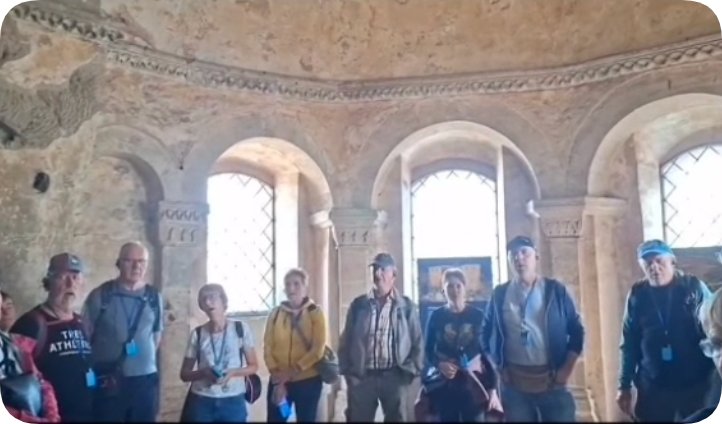
Museum-entrance-group-photo-city_tourism

🔮 Reading the Season Ahead of Next Order

Taken together, the folder reads less like a complaint list and more like a procurement document written by the people who actually wear the hardware. The channel density held up in the crowded quarter, the battery figures matched the printed ratings within the operator's own logs, and the comfort notes clustered around accessories rather than audio. That last point is the one worth repeating to any operator planning a similar city programme: when the hardware disappears from the feedback, the programme is working, and the remaining decisions are about straps, labels and spare-pool ratios. The next order, already quoted, keeps the fleet ratio but shifts a few units between roles: more RC2500 on the shelf for double-deployment weeks, a smaller share of RC2402 as dedicated spares, and the accessory bundle expanded along the three requests above. The route itself is unchanged, which the operator reads as the strongest endorsement a hardware pool can get. Teams comparing lanyard units for a mixed fleet can start from the tour guide system range and match channel counts to route density. For programme-level planning beyond hardware, our solution overviews collect the deployment patterns behind routes like this one.


Frequently Asked Questions

1. How many channels does a crowded historic quarter actually need?

The Istanbul operator ran five concurrent walks in shared territory on fifty channels without cross-talk, using one channel per active guide and two held in reserve. Fifty is comfortable; the practical floor is roughly twice the number of simultaneously active guides in the same compact area.

2. Which unit should anchor a mixed city-walk fleet?

The RC2401 anchors well because its ten-hour transmitter covers the longest single walking day with margin, and its twenty-hour receiver figure means guests never see a low-battery warning. Add RC2500 units in the ratio of one per double-deployment day on the calendar.

3. Do the three units mix in one charging case?

Yes. All three run on the same 2.4GHz band and share the charging ecosystem, so a swapped unit re-pairs with one click and the case rotation treats every receiver identically. The operator's only adjustment was labelling slots by unit age rather than model.


2026年10月19日 14:15
ꄘ click: 12
no data

RC2401, RC2500 and RC2402: What an Istanbul City Walk Operator Told Us After the Season

time: 2026年10月19日 click:12

Customer feedback usually arrives as a short message with a photo attached. This season it arrived as a folder: pictures from tram stops, a waterfront briefing point and a literary museum entrance, all showing the same thing — visitors wearing lanyard receivers through a full day of walking. The operator runs guided walks through the historic quarter of Istanbul, from the tram lines of the main pedestrian street to the shoreline briefings and the small museums tucked between the two. Their fleet mixes three units: the RC2401 Wireless Audio Guide System as the daily workhorse, the RC2500 for the longest back-to-back days, and the RC2402 as the expandable spare pool. What follows is their feedback, organised the way they gave it to us: what arrived in the box, what the logs showed, what guests noticed, and what they asked us to change. We reproduce it here with their numbers intact, because a fleet running three related models across one route is the cleanest way to see which specification actually earns its place. For the wider hardware context behind this fleet, the city tour solutions page maps the same requirements at programme level.

Tram-stop-group-photo-city_tourism

The Delivery That Started the Feedback

The folder begins with delivery day, because that is where most operators form their first impression. This one counted boxes rather than brochures: receivers bagged in pairs, transmitters with belt clips and lanyards, earpieces sealed separately, and a charging case that arrived already labelled by slot number. Nothing needed assembly before the first walk, which the operator marked down as the reason the fleet entered service the same week it landed. Their note on the packaging was specific enough to quote: bags opened flat, foam kept the units from rattling, and the channel sticker on each receiver matched the number written on the box. Small details, but they set the tone for how the rest of the season went. The delivery also included a spare-bag policy they did not expect: two sealed earpiece bags per ten receivers, sized so a lost or soiled earpiece never grounds a working unit. By their own accounting, the fleet has drawn on that spare bag twice since spring, both times during school-group weeks when handling was rougher than the adult tours.

Fifty Channels Across a Crowded Historic Quarter

The historic quarter is shared territory: several operators run walks along the same tram street at the same hours, and cruise groups pour into the side streets mid-morning. Against that crowding the RC2401's fifty dedicated channels are the feature the operator praised first. Each guide locks a group to its own channel at the meeting point, and the PLL synthesis keeps adjacent groups from bleeding into each other even when two walks pause within a few metres of one another. The 200-metre open-area range matters less in narrow streets and more along the shoreline, where a guide can step ahead to buy tickets while the group lingers. Their channel plan is written on the laminated sheet we mentioned earlier: five working channels, two held in reserve, and a standing agreement that whichever guide arrives first at a shared pause point takes the lower number. Cruise-day mornings, when two or three ships dock at once, are the stress test, and their log records no cross-talk incident since the plan was fixed. The RC2500 Wireless Tour Guide System units run on the same 2.4GHz band, so spare units swap into any group without a channel renegotiation — a detail the operator discovered by accident and now relies on deliberately.

🔋 Battery Logs From a Full Walking Day

The operator's battery notes are the most concrete part of the folder. A full walking day runs about seven hours with the transmitter active almost continuously, and their log shows the RC2401 transmitter finishing at roughly 30 percent remaining — consistent with its ten-hour rating. Receivers come back with far more headroom, since guests power them at the meeting point and hand them in at the last stop. The RC2500 is the unit they reach for on double-deployment days: its forty-hour receiver battery and twelve-hour transmitter cover two full shifts without a midday charge, which is why the spares shelf keeps more RC2500 than the fleet ratio alone would suggest. The RC2402 rounds the pool out with the same twenty-hour receiver figure — the RC2402 Wireless Tour Guide System page lists the full endurance table — so any unit a guest picks up behaves identically from the visitor's point of view. The ninety-minute lunch window between departures does the rest: a receiver that returns at half charge sits back above ninety percent before the afternoon meet-up, which the operator treats as the real reason the fleet has never run a mid-route battery swap. Their oldest packs, now a full season old, have lost a noticeable but tolerable slice of runtime, and the rotation sheet keeps those on the shortest routes.

Unit in the fleetChannelsRated enduranceRole the operator gives it
RC240150 dedicatedTx 10h / Rx 20hDaily workhorse for standard walking routes
RC25002.4GHz PLLTx 12h / Rx 40hDouble-shift days and back-to-back departures
RC240250-channel ISM bandTx 10h / Rx 20hExpandable spare pool, one-click sync

Waterside-guide-briefing-city_tourism

Comfort Notes From Guides and Guests

The comfort feedback splits neatly by who wears what. Guides carry transmitters on a belt clip or lanyard and reported no fatigue over seven-hour days, but they asked for a second clip style after one guide lost a unit to a snagged strap. Guests wear the lanyard receivers around the neck, and the operator's note here was unusually precise: visitors over sixty found the pendant weight acceptable, parents of younger children asked for a shorter strap, and nobody complained about audio pressure at the standard volume setting. The earpieces wiped clean between tours, and the operator rotates them through the charging case with the receivers, which doubled as their hygiene routine. None of these notes required an engineering change; they went straight into the accessory plan for the next order. Weather drew its own comments: on the two humid weeks in July, several guests wore the receiver on a shoulder-bag strap instead of the neck, and the guide reported no reception complaints from that improvised carrying style. On rain days the lanyards went under jackets with the receiver clipped outside, and the operator's verdict was that the shell finish wiped clean without the paint lifting.

⚖️ Charging Case Routine Between Departures

Between the morning and afternoon departures the fleet sits in its charging case for roughly ninety minutes, and the operator built a rotation around that window. Receivers return to numbered slots, transmitters take the charging bays, and a laminated sheet tracks which units came back below half charge — the RC2402's one-click sync means the afternoon guide re-pairs a swapped unit in seconds rather than calling the office. The case itself travels in the support van, not with the walking guide, which the operator says keeps the load off the person talking all day. Their only request here was cosmetic: slot labels that survive summer heat, because two of theirs peeled by August. The routine has one more rule worth copying: whichever unit comes back with the lowest charge gets the first slot, so the next morning's departure order is decided the previous evening rather than at the meeting point. The support van carries a second case for the peak months, and the operator says the whole charging operation fits in the time it takes the guides to eat.

🔮 Three Requests That Shaped the Next Order

Feedback cuts both ways, and the folder closed with three requests. First, a shorter children's strap as a stocked accessory rather than a special order. Second, a printed channel map sized for the charging case lid, so a relief guide can see the whole fleet's assignments at a glance. Third, an option for receivers with a lanyard loop positioned higher on the shell, which the operator says would stop the pendant from swinging on stairs. All three are packaging and accessory matters, not circuit changes, and all three are already in the OEM/ODM options the product pages list. An operator who treats a supplier that way — logging, photographing and numbering every friction point — is the kind whose next order arrives with the whole fleet upgraded at once. Their photographs made each request unambiguous: the strap photo was taken next to a coin for scale, the label photo showed the peeled corner in daylight, and the loop-position photo compared the current shell against a marked-up sketch. Nothing in the set required a phone call to explain, which is exactly how a revision list should travel.

Museum-entrance-group-photo-city_tourism

🔮 Reading the Season Ahead of Next Order

Taken together, the folder reads less like a complaint list and more like a procurement document written by the people who actually wear the hardware. The channel density held up in the crowded quarter, the battery figures matched the printed ratings within the operator's own logs, and the comfort notes clustered around accessories rather than audio. That last point is the one worth repeating to any operator planning a similar city programme: when the hardware disappears from the feedback, the programme is working, and the remaining decisions are about straps, labels and spare-pool ratios. The next order, already quoted, keeps the fleet ratio but shifts a few units between roles: more RC2500 on the shelf for double-deployment weeks, a smaller share of RC2402 as dedicated spares, and the accessory bundle expanded along the three requests above. The route itself is unchanged, which the operator reads as the strongest endorsement a hardware pool can get. Teams comparing lanyard units for a mixed fleet can start from the tour guide system range and match channel counts to route density. For programme-level planning beyond hardware, our solution overviews collect the deployment patterns behind routes like this one.
Frequently Asked Questions

1. How many channels does a crowded historic quarter actually need?

The Istanbul operator ran five concurrent walks in shared territory on fifty channels without cross-talk, using one channel per active guide and two held in reserve. Fifty is comfortable; the practical floor is roughly twice the number of simultaneously active guides in the same compact area.

2. Which unit should anchor a mixed city-walk fleet?

The RC2401 anchors well because its ten-hour transmitter covers the longest single walking day with margin, and its twenty-hour receiver figure means guests never see a low-battery warning. Add RC2500 units in the ratio of one per double-deployment day on the calendar.

3. Do the three units mix in one charging case?

Yes. All three run on the same 2.4GHz band and share the charging ecosystem, so a swapped unit re-pairs with one click and the case rotation treats every receiver identically. The operator's only adjustment was labelling slots by unit age rather than model.


no data
×

Contact us

email:
name:
subject:
content: