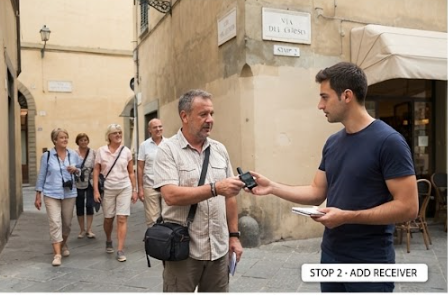
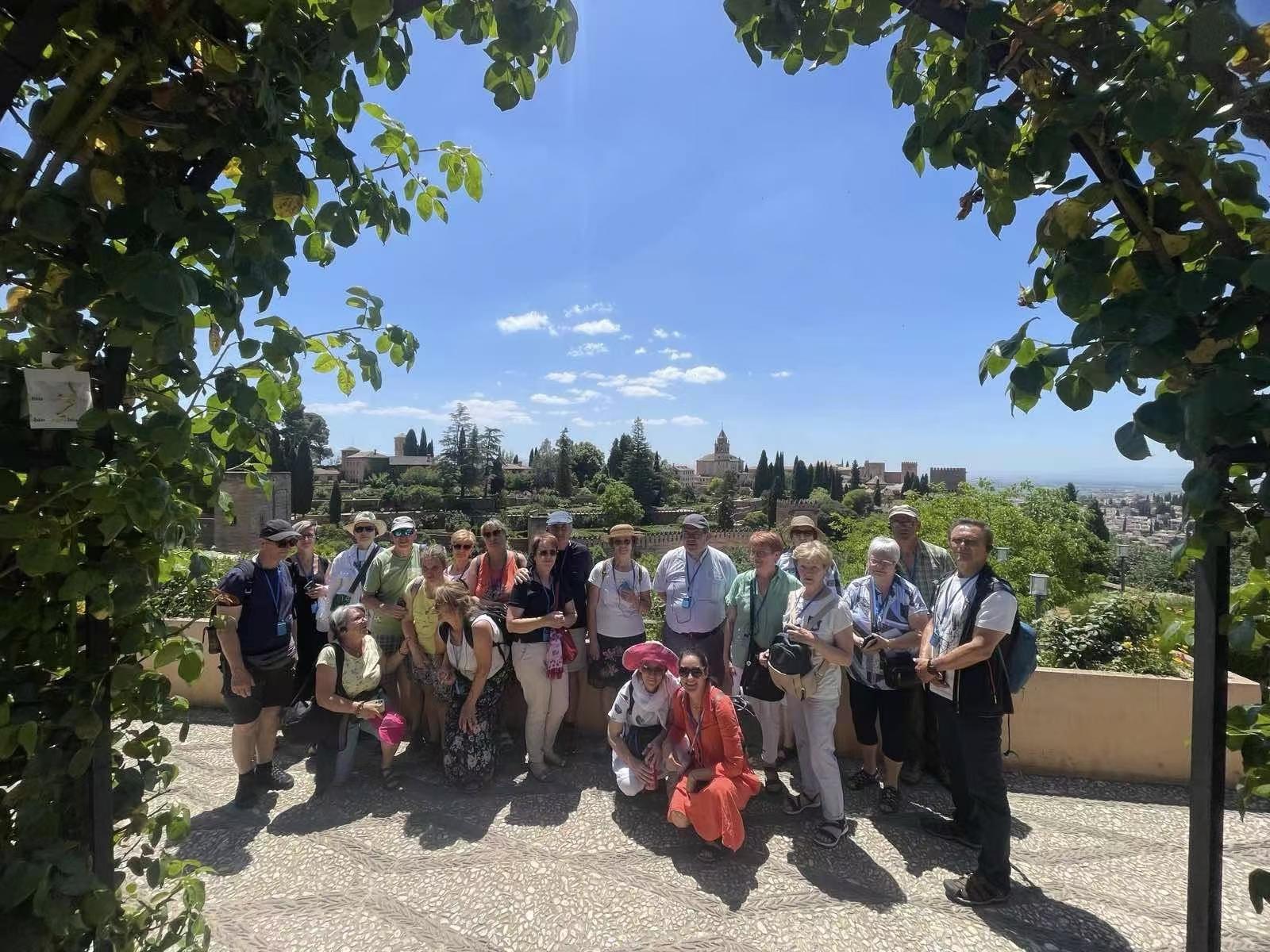
A mosque morning is one of the most constrained briefs a city guide can accept. The building asks visitors to lower their voices before they have heard a word of commentary, stone surfaces throw echo back at exactly the frequencies speech lives in, and a mixed-age group that has just climbed a hill does not want the tour to become a lecture about standing quietly. An Istanbul operator we have supplied for two seasons ran exactly this brief last month: forty travelers, a hilltop terrace, a working mosque, and a garden of reused columns to finish. The equipment list was deliberately unremarkable — two transmitters, thirty-eight neck-strap receivers, a handful of spares — and that is the point of writing it down. The day worked because four or five small decisions were made before anyone left the coach, and each of them traces back to a number on a specification sheet rather than to luck. This article walks the three stops in order and shows which decision carried which stop.
Who Walked and What the Kit Had to Survive
The group was a cultural association, thirty-eight travelers plus two guides, ages running from early thirties to mid-seventies. The route covered roughly three hours on foot: a terrace briefing in open air, time inside a working mosque where tour commentary has to drop to a whisper, and a finish among the broken columns of a garden where the group finally spreads out. Between stops there are stairs, a shoe-removal queue, and the usual fragmenting of a group into smaller clusters at every photo opportunity.
Three constraints shaped the equipment choice. First, the interior leg forbids raised voices, so the system has to carry a quiet speaking voice across reverberant stone without asking the guide to project. Second, the group splits and rejoins constantly, so receivers have to hand off cleanly between people who put them on and take them off several times a morning. Third, the operator runs other groups in the same districts on the same mornings, so channel discipline matters before the first transmitter is ever switched on. The daily fleet is the RC2402: a 2.4G system working across 2403–2483 MHz, with fifty PLL-controlled channels, a transmitter rated at ten hours and receivers at twenty, and units light enough — fifty grams on the receiver, fifty-nine on the transmitter — that a lanyard never becomes the topic of conversation. For days when several operators work the same square, the backup fleet steps up to a hundred channels, and for the spare pool the operator keeps a compact UHF set on a different band entirely. Routes of this shape are the reason the same hardware appears across our city tour wireless audio solutions, because a walking morning rarely stresses range or power; it stresses wearing comfort, channel planning and handover hygiene.
Stop One: the Terrace Briefing
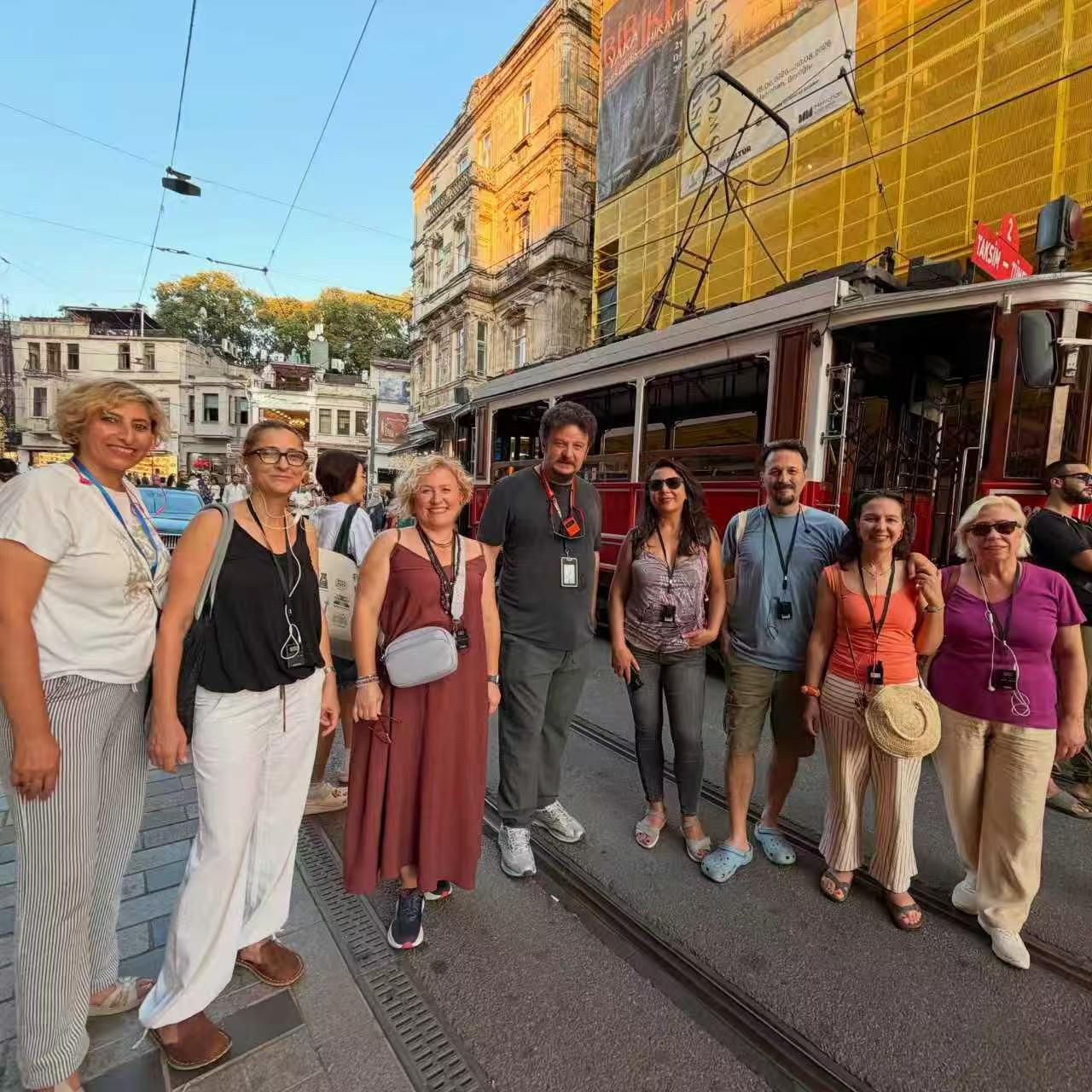
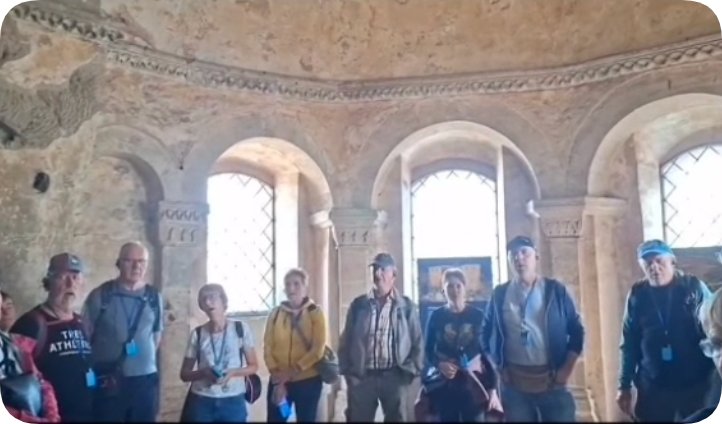
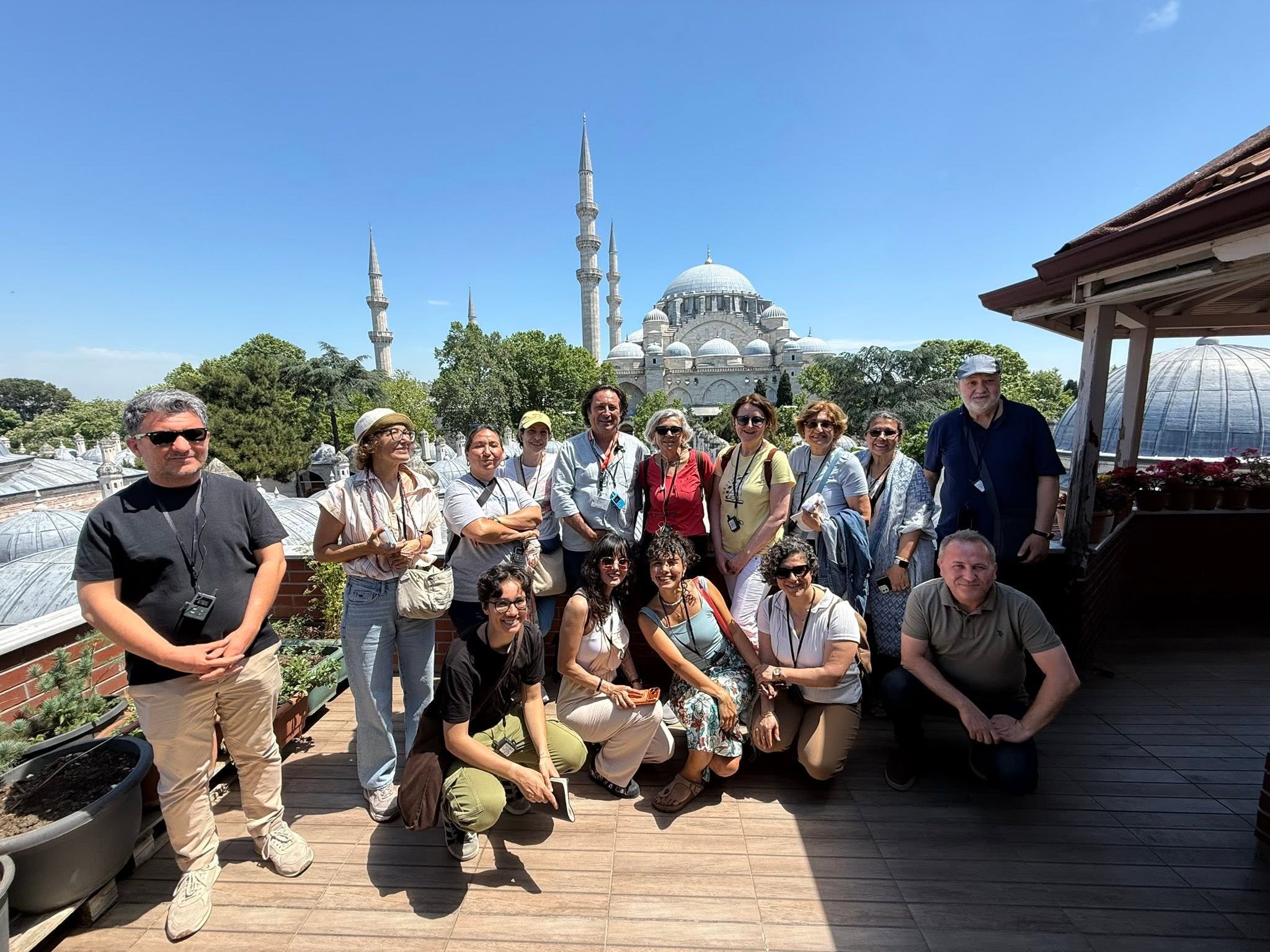
The morning starts on the terrace, and the terrace is where the first decision pays off: pairing and channel assignment happen on the coach, before the group is standing in wind with forty people waiting. By the time the photograph above was taken, every receiver was already locked to its channel and the guide had delivered the two-line etiquette brief — receivers stay on through the whole visit, volume is the guest's own business, questions wait for the terrace and the courtyard. The group in the picture is spread across perhaps twenty-five meters of open stone, which is well inside the system's one-to-two-hundred-meter working range but is exactly the distance at which a raised voice starts to carry to other visitors and spoil the atmosphere the operator is selling.
Wind is the terrace's real contribution to the risk register. A lapel microphone catches wind noise long before a listener notices a problem, so the guide wears a foam windscreen and keeps the transmitter clipped high, under the jacket's open edge rather than flapping outside it. The receivers themselves sit at sternum height on their neck straps — front of the chest, screen upright, earphone cable running under the collar. That placement keeps the antenna above the shoulder line of the crowd, keeps the display glanceable, and keeps the cable short enough that a scarf or camera strap never snags it. Two other groups were working the same hill that morning, which is the situation the channel plan exists for: fifty PLL channels give the operator a fixed assignment per route, so the groups cross each other's coverage without a single word of coordination. On heavier days the operator borrows from the hundred-channel fleet instead — the RC9150 doubles the channel count and stretches transmitter life to fifteen hours, which matters when the same transmitter has to cover a morning terrace and an afternoon museum without a lunchtime recharge.
🎯 Stop Two: the Guide's Kit, Up Close
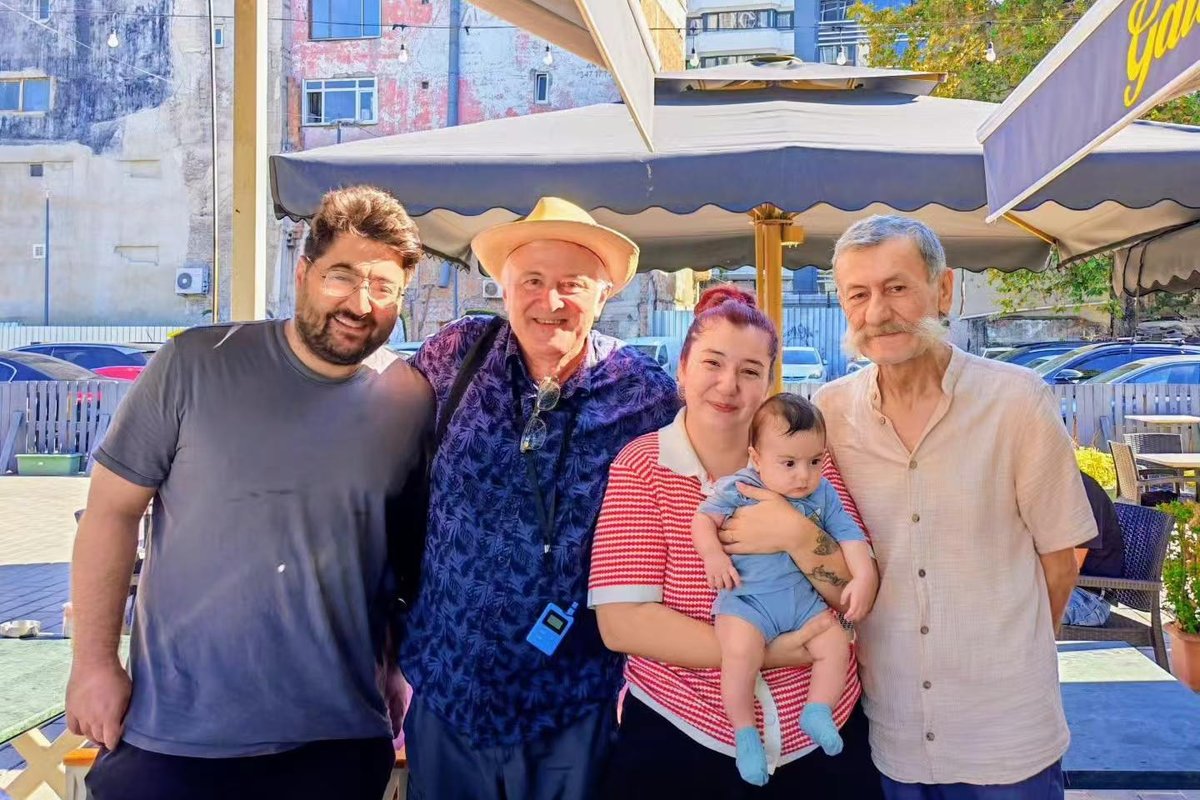
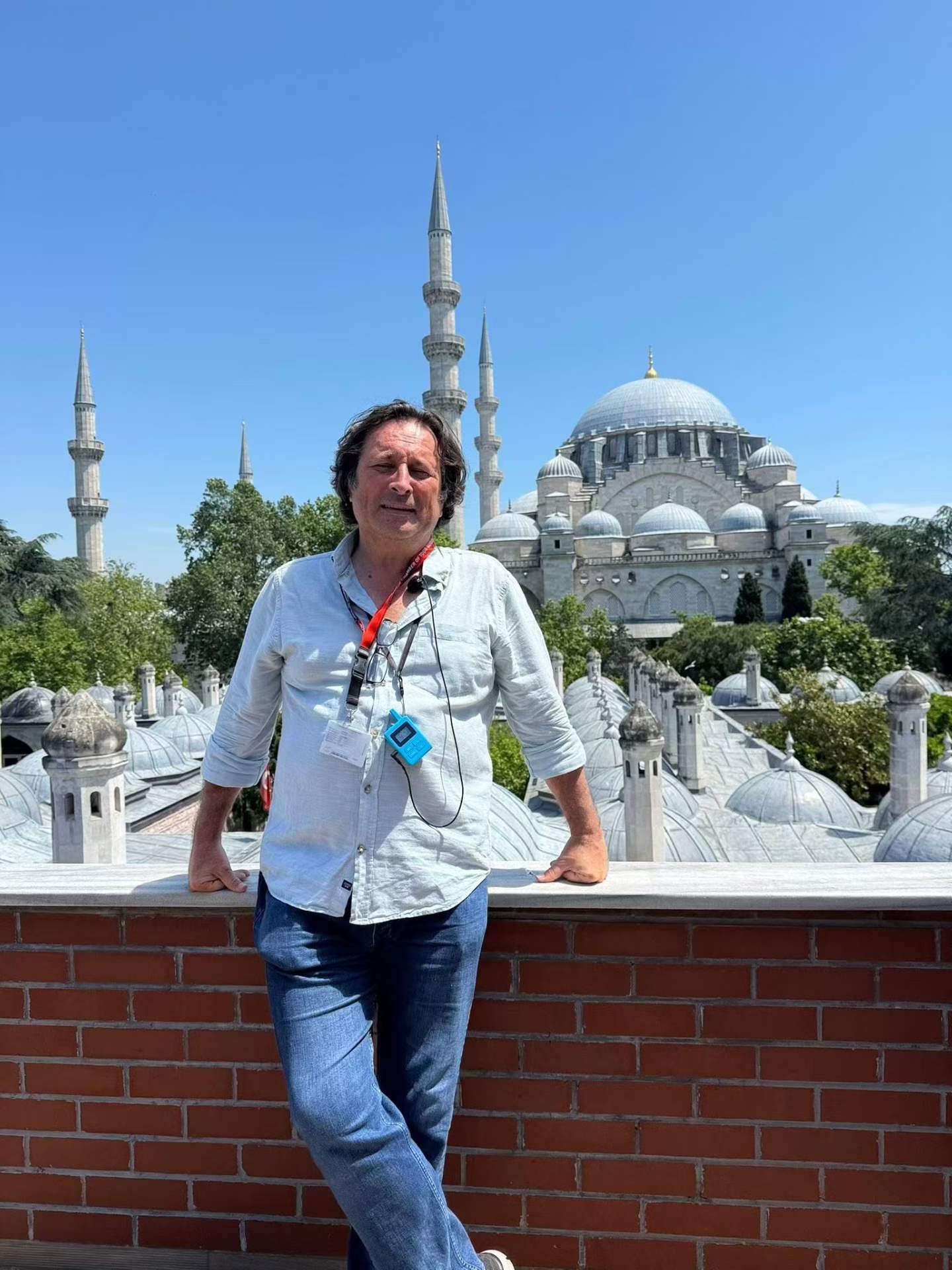
The second stop is not a place but a moment — the guide pauses at the top of the entrance stairs, and one of the travelers takes the picture above: transmitter in hand, neck strap over the shoulder, the small black unit that has been speaking for the last forty minutes. What the picture documents is how little the guide actually touches during a morning. The channel is set once, at the coach. The gain is set once, at the first stop, trimmed until a quiet speaking voice reads clearly at the back of the group. After that, the only control that moves is volume on individual receivers, and that is deliberately a guest-side control — the two-button row under the display can be caught by thumb without looking, which removes the classic bottleneck where a guide stops mid-sentence to fix somebody's listening level.
The kit's spare pool rides in the guide's bag, and its logic is worth spelling out. Four spare receivers travel with every booking, and the operator chose a compact UHF set for the role rather than more of the 2.4G daily fleet. The reasoning is band separation: if the historic quarter's 2.4G space ever degrades — three cruise ships in port, every operator in the square transmitting at once — a spare on 470–510 MHz is unaffected by that congestion. The spare units in the bag are RC085: one hundred channels on the UHF band, a twelve-hour transmitter battery, twenty hours on the receiver, and a USB charging port that draws from the same power banks the office already stocks. The traveler who loses a lanyard or drops a receiver on stone gets a replacement in under a minute, and the replacement is on a different band from any interference the day can produce. That is the kind of insurance a specification table makes look boring and a bad morning makes look brilliant.
Stop Three: the Garden of Columns
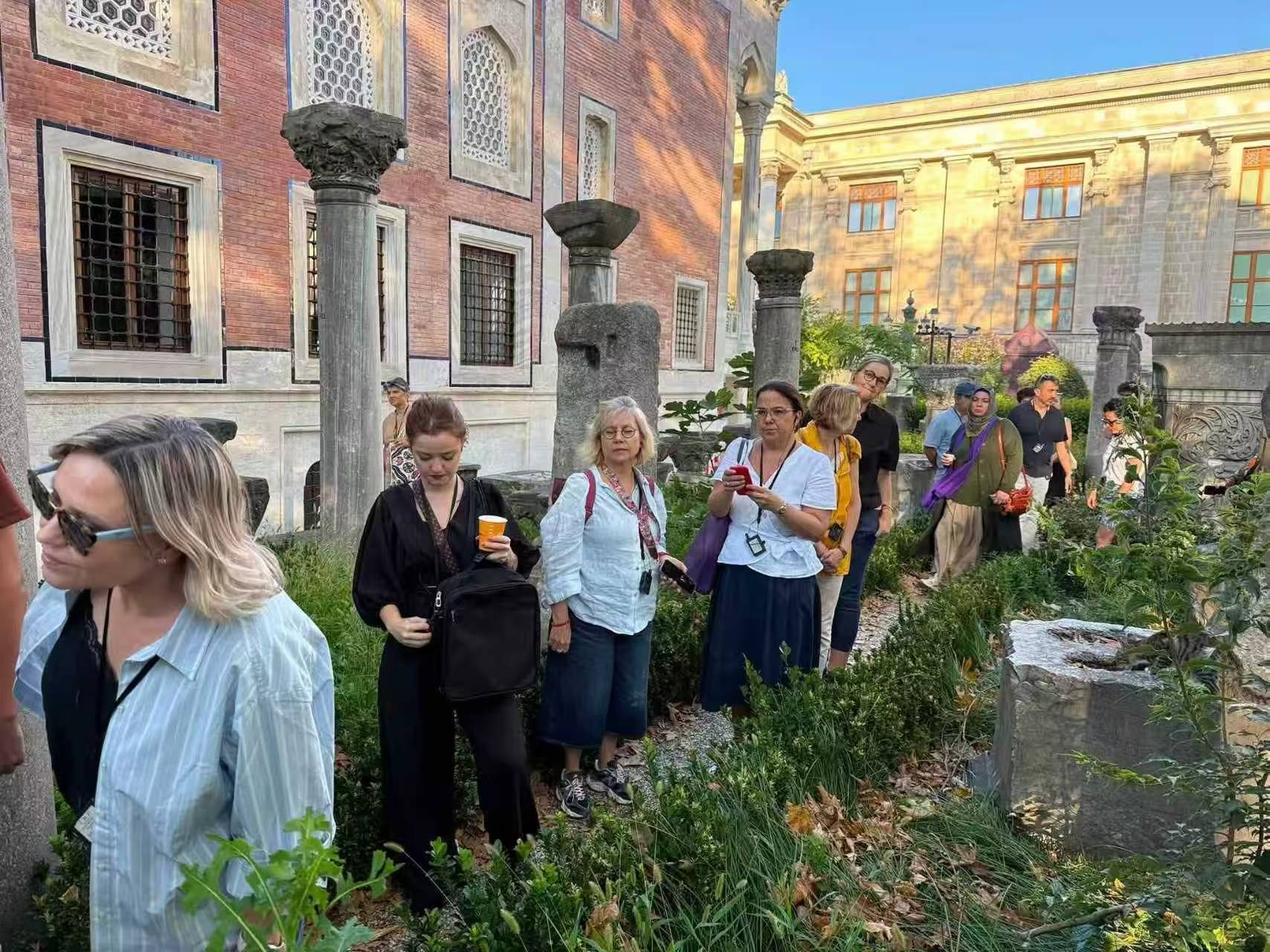
The route finishes below the terrace, in a garden where broken columns and reused stone blocks stand among planted beds — a place that asks no etiquette at all after the hush of the interior. Groups loosen here. The photograph above shows the shape of it: visitors drifting along the path in twos and threes, some ten meters from the guide, some thirty, nobody in formation. Outdoors, with line of sight mostly intact, this is the easiest radio terrain of the day, and the system's range figure stops being a specification and becomes a zone the group can spread inside. The guide drops her voice to conversational level, because thirty-eight receivers carrying a quiet voice across a loose arc sound better than one voice straining against distance.
The garden is also where the operator runs the end-of-morning habit that keeps the fleet alive: receivers come back at the coach, not at a desk hours later. Each traveler unclips the neck strap and drops the unit into the case slot it came from, which doubles as the headcount — thirty-eight slots filled means thirty-eight travelers accounted for, a count that has on more than one occasion caught a straggler still photographing a column before the coach door closed. Receivers rated at twenty hours per charge come back with battery to spare, so the afternoon group starts on the same units without a charging cycle, and the charging case only does real work overnight.
What the Organizer Logged Before Lunch
The operator's sheet for the morning fits on half a page, and that brevity is the result, not the cause, of the equipment plan.
| Item | Count | Role in the morning |
|---|---|---|
| RC2402 transmitters | 2 | Lead guide and shadow guide; ten-hour battery covers the day without recharge |
| Neck-strap receivers | 38 | One per traveler, paired to channel at the coach, twenty-hour receiver battery |
| RC085 spare receivers (UHF) | 4 | Band-separated insurance; USB charging from standard power banks |
| Lapel microphones with foam windscreens | 2 | One fitted, one in the bag; wind is the terrace's main audio risk |
| 40-slot charging case | 1 | Overnight charge and morning inventory in the same object |
The log for the day had three lines worth keeping: zero re-pairing events, receiver batteries above half at handback, and thirty-eight of thirty-eight units returned at the coach. None of those lines mentions audio quality, because there was nothing to log — the volume-down protocol and the sternum-height lanyard habit had already absorbed the complaints that otherwise fill an operator's inbox.
Seen from the supplier's side, a morning like this is the quiet argument for keeping a fleet coherent rather than mixed. A single line of wireless tour guide systems means one charging case layout, one lanyard spare pool, one briefing script that never changes between fleets, and a channel plan the office can redraw in a minute when a route changes.
🔮 What Transfers to the Next Mosque Booking
Four habits from this morning are portable to any operator running houses of worship on a fixed itinerary. Pair and brief on the coach, so the entrance queue is a wearing moment, not a setup moment. Treat indoor legs as a volume protocol rather than a technology problem — the system carries a whisper, and the guests' own volume wheels do the rest. Plan channels against the district, not the group, because the interference a mosque morning meets comes from other operators, not from the building. And keep the spare fleet on a different band from the daily fleet, so the worst-case morning degrades gracefully instead of taking both fleets down at once. The operator's own summary was shorter: the hardware never became a topic of conversation with the guests, which is the review that matters. Another Istanbul fleet we followed through a season of walking tours reached the same conclusion from the opposite direction, and that story is told in an earlier Istanbul deployment case.