A leading China factory specializing in Wireless Tour Guide Systems, Church Audio Guides, and Translation Headphones with premium OEM/ODM solutions.

Tel:+86 18922879583

Email:tiger.wang@richitek.com

RC085 and RC2500: A Coastal Pilgrimage Trail That Retired the Megaphone

The coastal pilgrimage path outside the provincial capital runs 12.6 kilometres between two shrines, and the parish groups that walk it each spring are not casual hikers. They are mixed-age congregations, forty to sixty walkers, led by a volunteer who has usually memorised the route but never broadcast a day outdoors in their life. Last April the diocese's pilgrimage office counted eleven complaints in a single month, and every one of them traced back to the same acoustic fact: a sea breeze running eighteen to twenty-five kilometres per hour erases an unaided voice at about twenty metres, and the walking column on the narrow sections stretches past one hundred and fifty. The office had been renting a megaphone. It was retired in April, replaced by a three-tier wireless kit that this case documents in full, including the numbers the office checked before signing and what two months of walk logs show. The reasoning transfers to any open-ground walking route; the city and outdoor tour audio solutions page lists the common variants.

💡 A Coast Road Where the Wind Outshouts Every Docent

Before the pilot, the office walked the route with a decibel app and a stopwatch, and the numbers explained the complaints precisely. On the exposed headland section, wind noise at ear level measured sixty-two decibels on a calm morning and seventy-one when the mistral picked up after noon. A volunteer guide shouting reaches roughly eighty-eight decibels at one metre, which decays to under fifty by the twentieth walker in the column. On the cliffside single-file sections the column stretched to one hundred and sixty metres, meaning the back half heard wind, footsteps and nothing else. Stops made it worse rather than better: the shrine cave at kilometre four amplified every voice with a stone reverb that turned speech into noise, so guides shouted less and visitors understood less. The photograph below is the group at that cave stop during the second pilot walk, taken after the new protocol went live.
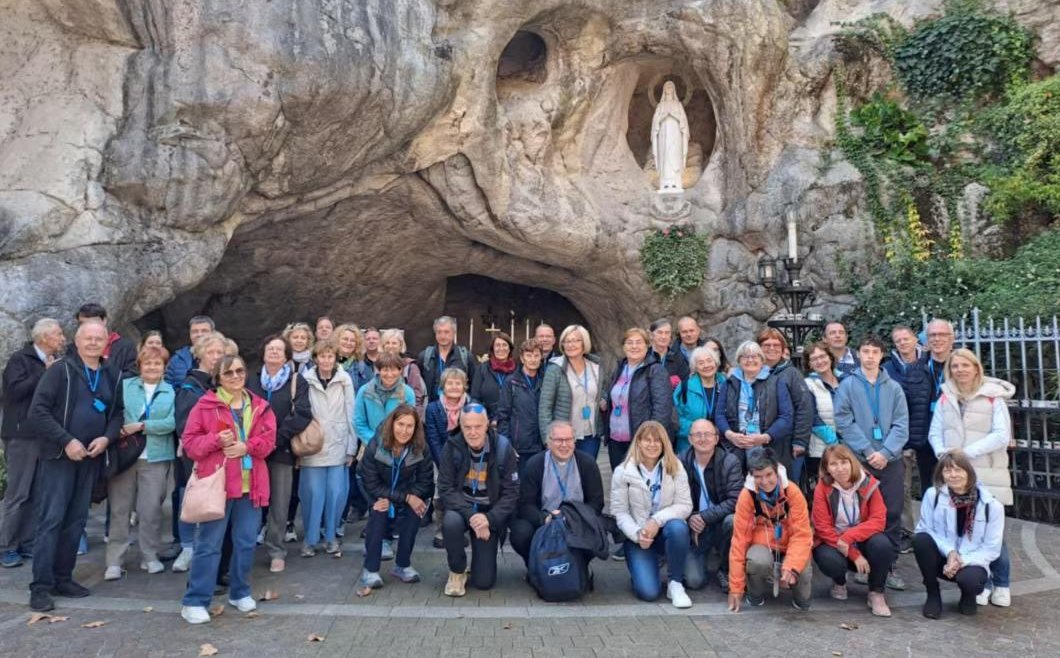
shrine-cave-group-photo-hiking_trail

🕳️ The Shrine Cave Stop That Broke the Megaphone

The cave shrine is the emotional centre of the walk, and it was the clearest argument for the change. Inside, the vault reflects sound for nearly a full second, and two hundred pilgrims' shuffling boots sit at fifty-four decibels of background. A megaphone inside that vault produced speech that survivors of the April walk described, in the office's own survey form, as "a bell with opinions." With body-worn transmitters and single-ear receivers, the celebrant leading the stop speaks at the same volume he would use across a pew, and the reflection that once smeared the words now simply gives them weight. The office timed it: the cave stop used to run fourteen minutes of repetition, three full repetitions of the prayer and reading; in May the same stop ran eight minutes, once through, with the walkers spread across the full cave floor instead of pressed into a semicircle near the entrance.

📡 📶 One Frequency That Holds Past the Headland

The backbone of the kit is the RC085 digital tour guide system, chosen for its frequency behaviour rather than its feature list. It transmits on 470 to 510 MHz UHF, and on this route that matters most along the headland, where the path bends around rock outcrops and the column loses line of sight for up to forty metres at a time. During the trial the UHF link held through every bend without a dropout, while a 2.4 GHz unit the office also tested stuttered twice on the same stretch. One hundred channels let three parish groups share the trail on a busy feast day without coordination calls, the 200-metre rating covers even the longest single-file stretch with margin, and the twelve-hour transmitter battery and twenty-hour receiver battery span the full walking day twice over. The office ordered the fleet with blue lanyards and dark shells so that marshals can spot their own walkers among visitors from the neighbouring parish, and the roughly sixty-gram receivers get handed out to walkers in their late seventies without hesitation.

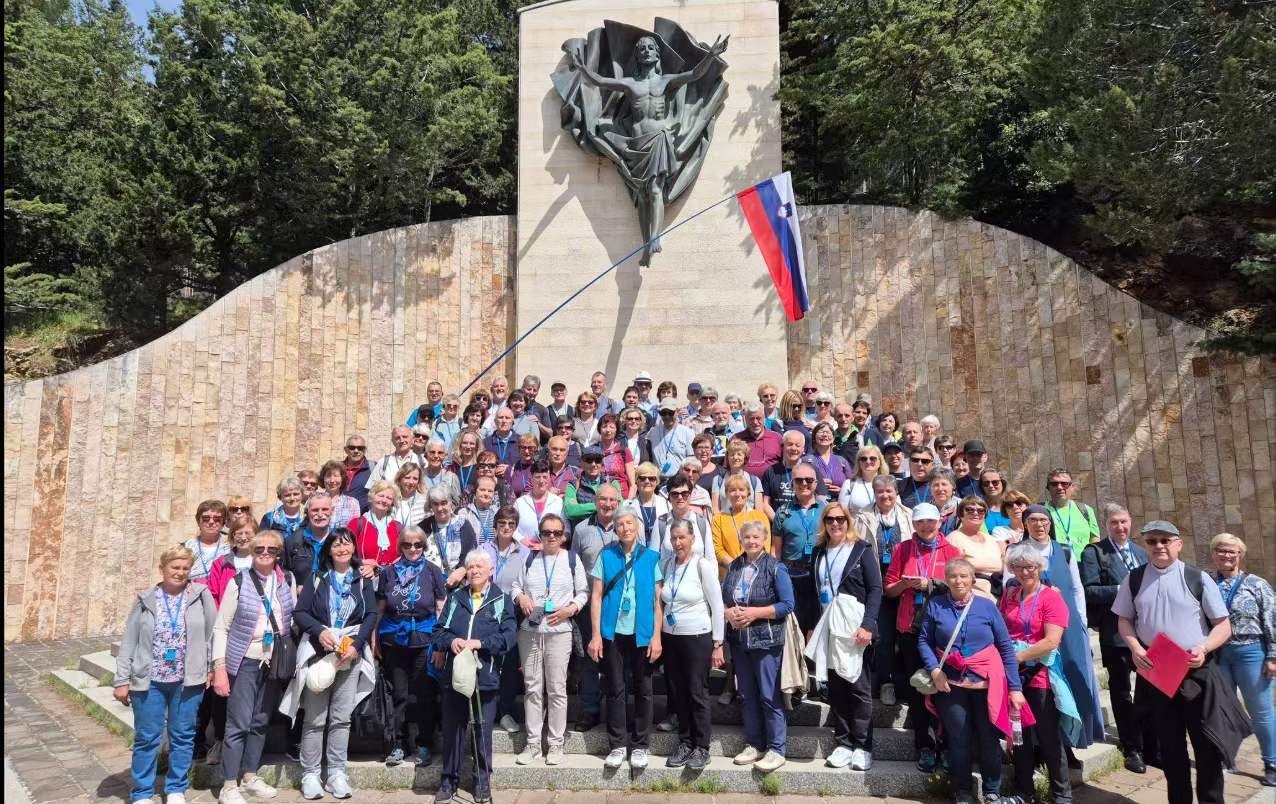
The coastal photo below is from the headland rest stop, the exact section where the megaphone used to fail. The column has regrouped at the rail, the guide is at the front on the transmitter, and the walkers at the tail are hearing the briefing at the same level as the marshals.
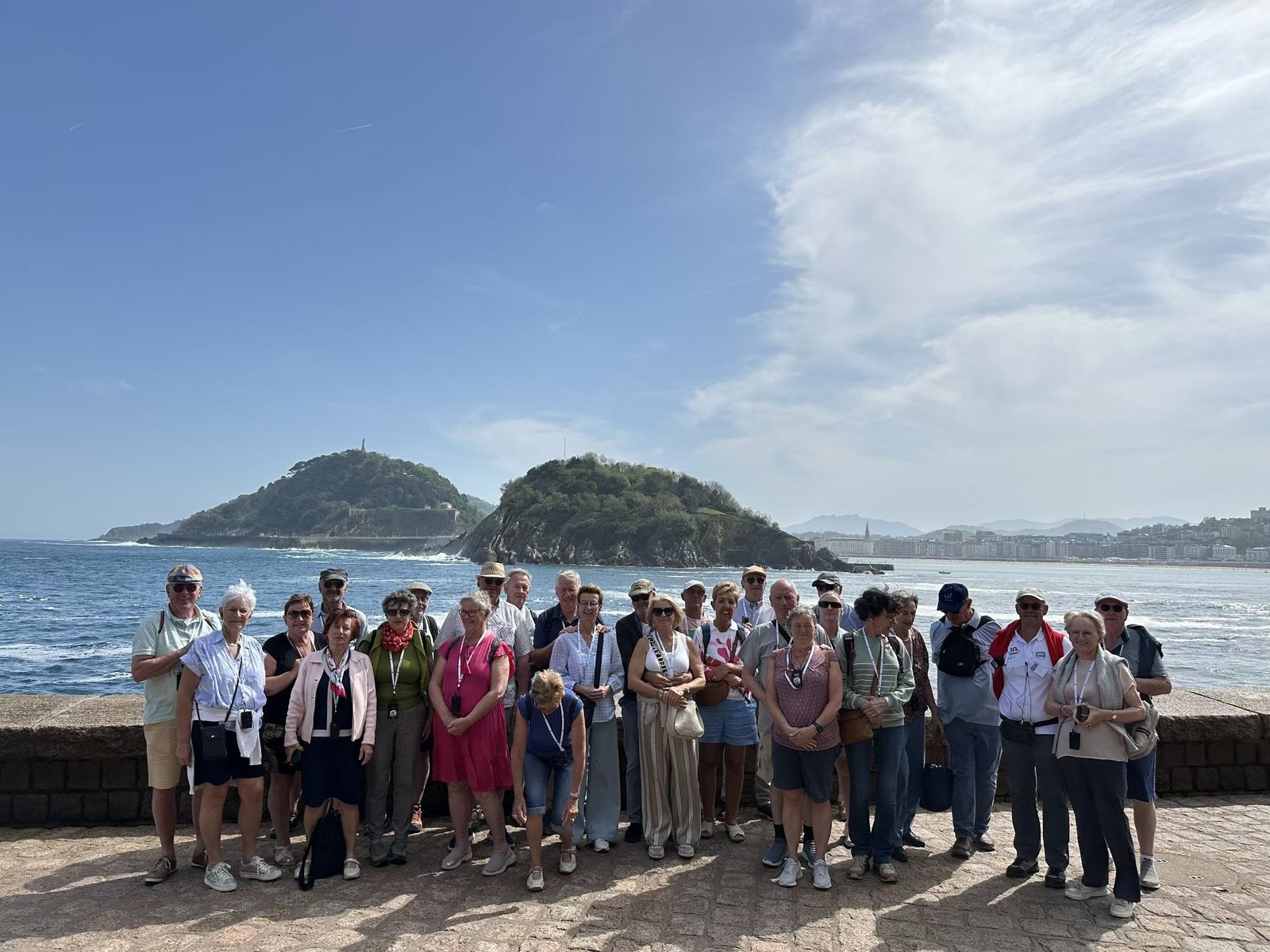
coastal-path-group-lineup-hiking_trail

🎚️ Three Parishes, Three Channels, One Morning

Feast days compress the calendar. On the May patronal walk, three parishes shared the route in the same morning window, sixty-one, fifty-four and forty-eight walkers respectively, and the old plan had been to stagger departures by an hour and hope. Under the new plan each parish runs its own channel: the pilgrimage office fixed the assignments on a laminated card taped inside the equipment case, channel 21 for the host parish, 33 and 47 for the visitors, and the second fleet handles the overlap. That fleet is built on the RC2408 wireless tour guide system, whose eighty anti-interference channels make three simultaneous groups a configuration rather than a negotiation. It runs on the global 2.4 GHz band with the same 200-metre link budget, and one-key channel synchronization means a parish borrowing the spare fleet is set up in one press rather than a menu session. Transmitters run ten hours and receivers twenty, enough for the longest walking day on the calendar, and at fifty-nine and fifty grams the units disappear into a jacket pocket between stops. The trays recharge over DC between the morning walk and any afternoon devotion.

🔋 Two Days on the Trail Without a Charger Stop

The third tier exists because the office also runs a two-day version of the pilgrimage, an overnight route that adds eight kilometres and a mountain refuge stop, and the kit travels with the guides rather than returning to a base. For that route the lead guide and the sweep marshal carry the RC2500 wireless tour guide system. Its transmitter holds a 1,800 mAh cell rated at fifteen hours, and the receivers stand by for thirty-five-plus hours, which means a kit charged on Friday evening is still live for the Sunday descent without visiting a power socket. Charging is Type-C, shared with the office's phones, and one-click synchronization pairs a replacement unit to the group in seconds when a walker's receiver fails mid-route, which happened exactly once in the two-month log. At 104 grams per end it is the heaviest hardware the office owns, and the guides who carry it say the weight is the price of never thinking about batteries on a mountain, which is a fair trade. The 50-channel PLL link keeps the lead and sweep in contact across the full column with zero crosstalk.

⚖️ 🎒 How the Kit Travels Between Trailheads

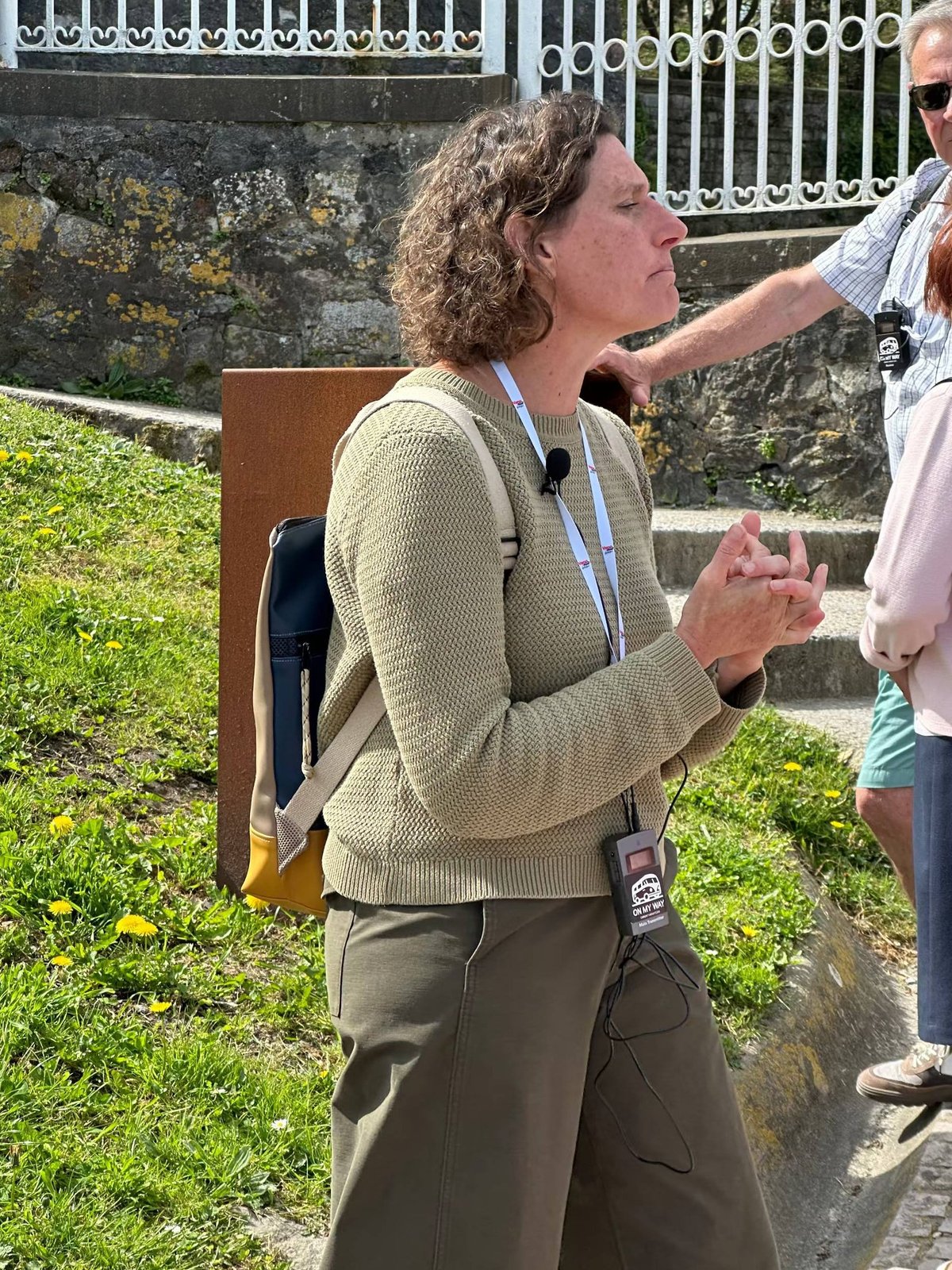
Hardware on a walking route lives or dies by its handover discipline, so the office wrote a two-page routine and laminated it into the case lid. Distribution happens at the coach before the walk: marshals issue receivers by lanyard colour, each walker confirms channel zero on the display, and the guide's transmitter is the last unit powered on. Collection happens at the destination shrine, not at the coach, because the office learned in the trial that walkers who board first hand in nothing until the doors open. Every case carries two spare receivers and one spare transmitter, and the log from May records one spare deployed, on day nine, for a receiver that took a fall on the stair section at kilometre seven. The photo below is the kit briefing at the second trailhead, transmitter on, lanyards out, route card pinned to the case lid.
guide-transmitter-briefing-hiking_trail

📊 What the Pilgrimage Office Logged in May

The office closed the two-month review with four numbers. Complaint mentions in the feedback slips fell from eleven in March to one in May, and that one concerned a hard-of-hearing walker who was moved onto a louder single-ear unit rather than the standard fleet. Cave stop duration fell from fourteen minutes to eight. The coach departure stagger shrank from sixty minutes to thirty, and the walk now finishes on schedule even with three parishes sharing the morning. And the megaphone, formally retired in April, was returned to the rental house in the second week of May with the office's compliments. The purchase order behind those numbers had exactly three lines.

Line ItemRole on the RouteNumbers the Office Verified
RC085 UHF fleet, blue lanyardsEvery regular walking day, headland and cave sections470–510 MHz UHF; 100 channels; 200 m; TX 12 h / RX 20 h; RX ~60 g; USB charging
RC2408 feast-day fleetThree parishes sharing one morning on the trail2.4 GHz; 80 anti-interference channels; one-key sync; TX 10 h / RX 20 h; 59 g / 50 g
RC2500 two-day kitOvernight route, lead and sweep marshals50 channels PLL; one-click sync; TX 15 h / RX 35+ h standby; Type-C; 104 g per end

A procurement footnote closes the ledger. All three fleets carry the same three-year warranty on the mainboard, with headsets, microphones and batteries excluded as wear parts, and the office budgeted its consumables against that exclusion instead of assuming blanket cover. One microphone foam refresh per fleet per season has matched reality so far, and the battery rotation runs off the charging log rather than the calendar, which is how the office caught the two half-rate chargers hiding in the loaner drawer before they became a trail-day failure.

🥾 The Autumn Walk Calendar, Rewritten

The autumn schedule now runs fifteen walking days between late September and the first week of November, and for the first time the office has opened the two-day overnight route to smaller parishes that could never field enough volunteers to shout a group across a headland. Two neighbouring dioceses have asked to borrow the protocol document rather than the hardware, which the office takes as the better compliment. The route itself has not changed: same twelve point six kilometres, same cave shrine, same sea breeze after noon. What changed is that the voice leading it now arrives at every ear in the column at the same level, whether that ear is at metre four or metre one hundred and sixty, and the office's advice to anyone planning a similar retrofit fits in one sentence: measure the wind before you pick the hardware, and buy for the worst section of the route rather than the average one. The wireless tour guide system range covers the three tiers in this case, and the full solutions overview is where the office itself started.


FAQ: Questions Pilgrimage Organisers Ask First

1. How many receivers does one walking group actually need?

One per walker, plus ten percent spares. The office issues forty-four units for a forty-walker parish group, and the two spare receivers in each case cover the only two failures the log recorded: a strap that broke on the stair section and one unit that took a fall at kilometre seven. Guides keep two spares regardless of group size, because the weight is trivial and the alternative is a walker following the group in silence.

2. Does the UHF link really hold through the cliffside bends?

On this route, yes, and that is why the RC085 fleet is the backbone. The 470 to 510 MHz band bent around every rock outcrop in the two-month log without a dropout, including the two stretches where the column loses sight of the guide for roughly forty metres. The 2.4 GHz unit the office trialled alongside it dropped twice on the same ground. Your terrain may differ, so the office's advice is to trial the worst section, not the average one.

3. What happens if a receiver fails halfway along the route?

The marshal swaps it for a spare and the walk continues; the failed unit goes back in the case for the charging log. On the two-day route a deeper failure is covered by one-click synchronization on the RC2500 kit, which pairs a replacement unit to the group in seconds. That happened once in the two-month log, on day nine, and the delay from failure to back in narration was under two minutes.

4. Who charges everything on the overnight route?

Nobody at the refuge, by design. The RC2500 transmitters run fifteen hours and the receivers stand by for thirty-five-plus hours, so a kit charged on Friday evening covers the Saturday walk, the night at the refuge and the Sunday descent. The Type-C chargers travel in the guide's case for emergencies only, and in the May log they were opened once, for a receiver whose walker had left it powered on overnight.

5. Can three parishes really share the trail on the same morning?

That is the coach-day configuration in this case: channel 21 for the host parish, 33 and 47 for the two visitors, fixed on a laminated card so that drivers, guides and the front desk learn the assignments once. The eighty-channel RC2408 fleet makes the arrangement a configuration rather than a negotiation, and the May patronal walk ran sixty-one, fifty-four and forty-eight walkers simultaneously with zero crosstalk complaints across the whole morning.


2026年10月23日 15:09
ꄘ click: 21

Get the spec sheet, MOQ and a factory-direct quote

Tell us the venue, the group size and how many languages you need. An engineer at our Shenzhen factory replies within one business day with the matching model, a written quote, lead time and the CE / RoHS / ISO 9001 documents.

Talk to an engineer WhatsApp +86 189 2287 9583

Prefer email? tiger.wang@richitek.com  |  OEM / ODM, custom tooling and neutral packaging available  |  send the enquiry through our contact page

Shenzhen Rich Age Electronics Co., Ltd. (Richitek) - manufacturing wireless tour guide systems, church translation headsets and museum audio guide equipment since 2007.

no data

RC085 and RC2500: A Coastal Pilgrimage Trail That Retired the Megaphone

time: 2026年10月23日 click:21

The coastal pilgrimage path outside the provincial capital runs 12.6 kilometres between two shrines, and the parish groups that walk it each spring are not casual hikers. They are mixed-age congregations, forty to sixty walkers, led by a volunteer who has usually memorised the route but never broadcast a day outdoors in their life. Last April the diocese's pilgrimage office counted eleven complaints in a single month, and every one of them traced back to the same acoustic fact: a sea breeze running eighteen to twenty-five kilometres per hour erases an unaided voice at about twenty metres, and the walking column on the narrow sections stretches past one hundred and fifty. The office had been renting a megaphone. It was retired in April, replaced by a three-tier wireless kit that this case documents in full, including the numbers the office checked before signing and what two months of walk logs show. The reasoning transfers to any open-ground walking route; the city and outdoor tour audio solutions page lists the common variants.

💡 A Coast Road Where the Wind Outshouts Every Docent

Before the pilot, the office walked the route with a decibel app and a stopwatch, and the numbers explained the complaints precisely. On the exposed headland section, wind noise at ear level measured sixty-two decibels on a calm morning and seventy-one when the mistral picked up after noon. A volunteer guide shouting reaches roughly eighty-eight decibels at one metre, which decays to under fifty by the twentieth walker in the column. On the cliffside single-file sections the column stretched to one hundred and sixty metres, meaning the back half heard wind, footsteps and nothing else. Stops made it worse rather than better: the shrine cave at kilometre four amplified every voice with a stone reverb that turned speech into noise, so guides shouted less and visitors understood less. The photograph below is the group at that cave stop during the second pilot walk, taken after the new protocol went live.

shrine-cave-group-photo-hiking_trail

🕳️ The Shrine Cave Stop That Broke the Megaphone

The cave shrine is the emotional centre of the walk, and it was the clearest argument for the change. Inside, the vault reflects sound for nearly a full second, and two hundred pilgrims' shuffling boots sit at fifty-four decibels of background. A megaphone inside that vault produced speech that survivors of the April walk described, in the office's own survey form, as "a bell with opinions." With body-worn transmitters and single-ear receivers, the celebrant leading the stop speaks at the same volume he would use across a pew, and the reflection that once smeared the words now simply gives them weight. The office timed it: the cave stop used to run fourteen minutes of repetition, three full repetitions of the prayer and reading; in May the same stop ran eight minutes, once through, with the walkers spread across the full cave floor instead of pressed into a semicircle near the entrance.

📡 📶 One Frequency That Holds Past the Headland

The backbone of the kit is the RC085 digital tour guide system, chosen for its frequency behaviour rather than its feature list. It transmits on 470 to 510 MHz UHF, and on this route that matters most along the headland, where the path bends around rock outcrops and the column loses line of sight for up to forty metres at a time. During the trial the UHF link held through every bend without a dropout, while a 2.4 GHz unit the office also tested stuttered twice on the same stretch. One hundred channels let three parish groups share the trail on a busy feast day without coordination calls, the 200-metre rating covers even the longest single-file stretch with margin, and the twelve-hour transmitter battery and twenty-hour receiver battery span the full walking day twice over. The office ordered the fleet with blue lanyards and dark shells so that marshals can spot their own walkers among visitors from the neighbouring parish, and the roughly sixty-gram receivers get handed out to walkers in their late seventies without hesitation.

The coastal photo below is from the headland rest stop, the exact section where the megaphone used to fail. The column has regrouped at the rail, the guide is at the front on the transmitter, and the walkers at the tail are hearing the briefing at the same level as the marshals.

coastal-path-group-lineup-hiking_trail

🎚️ Three Parishes, Three Channels, One Morning

Feast days compress the calendar. On the May patronal walk, three parishes shared the route in the same morning window, sixty-one, fifty-four and forty-eight walkers respectively, and the old plan had been to stagger departures by an hour and hope. Under the new plan each parish runs its own channel: the pilgrimage office fixed the assignments on a laminated card taped inside the equipment case, channel 21 for the host parish, 33 and 47 for the visitors, and the second fleet handles the overlap. That fleet is built on the RC2408 wireless tour guide system, whose eighty anti-interference channels make three simultaneous groups a configuration rather than a negotiation. It runs on the global 2.4 GHz band with the same 200-metre link budget, and one-key channel synchronization means a parish borrowing the spare fleet is set up in one press rather than a menu session. Transmitters run ten hours and receivers twenty, enough for the longest walking day on the calendar, and at fifty-nine and fifty grams the units disappear into a jacket pocket between stops. The trays recharge over DC between the morning walk and any afternoon devotion.

🔋 Two Days on the Trail Without a Charger Stop

The third tier exists because the office also runs a two-day version of the pilgrimage, an overnight route that adds eight kilometres and a mountain refuge stop, and the kit travels with the guides rather than returning to a base. For that route the lead guide and the sweep marshal carry the RC2500 wireless tour guide system. Its transmitter holds a 1,800 mAh cell rated at fifteen hours, and the receivers stand by for thirty-five-plus hours, which means a kit charged on Friday evening is still live for the Sunday descent without visiting a power socket. Charging is Type-C, shared with the office's phones, and one-click synchronization pairs a replacement unit to the group in seconds when a walker's receiver fails mid-route, which happened exactly once in the two-month log. At 104 grams per end it is the heaviest hardware the office owns, and the guides who carry it say the weight is the price of never thinking about batteries on a mountain, which is a fair trade. The 50-channel PLL link keeps the lead and sweep in contact across the full column with zero crosstalk.

⚖️ 🎒 How the Kit Travels Between Trailheads

Hardware on a walking route lives or dies by its handover discipline, so the office wrote a two-page routine and laminated it into the case lid. Distribution happens at the coach before the walk: marshals issue receivers by lanyard colour, each walker confirms channel zero on the display, and the guide's transmitter is the last unit powered on. Collection happens at the destination shrine, not at the coach, because the office learned in the trial that walkers who board first hand in nothing until the doors open. Every case carries two spare receivers and one spare transmitter, and the log from May records one spare deployed, on day nine, for a receiver that took a fall on the stair section at kilometre seven. The photo below is the kit briefing at the second trailhead, transmitter on, lanyards out, route card pinned to the case lid.

guide-transmitter-briefing-hiking_trail

📊 What the Pilgrimage Office Logged in May

The office closed the two-month review with four numbers. Complaint mentions in the feedback slips fell from eleven in March to one in May, and that one concerned a hard-of-hearing walker who was moved onto a louder single-ear unit rather than the standard fleet. Cave stop duration fell from fourteen minutes to eight. The coach departure stagger shrank from sixty minutes to thirty, and the walk now finishes on schedule even with three parishes sharing the morning. And the megaphone, formally retired in April, was returned to the rental house in the second week of May with the office's compliments. The purchase order behind those numbers had exactly three lines.

Line ItemRole on the RouteNumbers the Office Verified
RC085 UHF fleet, blue lanyardsEvery regular walking day, headland and cave sections470–510 MHz UHF; 100 channels; 200 m; TX 12 h / RX 20 h; RX ~60 g; USB charging
RC2408 feast-day fleetThree parishes sharing one morning on the trail2.4 GHz; 80 anti-interference channels; one-key sync; TX 10 h / RX 20 h; 59 g / 50 g
RC2500 two-day kitOvernight route, lead and sweep marshals50 channels PLL; one-click sync; TX 15 h / RX 35+ h standby; Type-C; 104 g per end

A procurement footnote closes the ledger. All three fleets carry the same three-year warranty on the mainboard, with headsets, microphones and batteries excluded as wear parts, and the office budgeted its consumables against that exclusion instead of assuming blanket cover. One microphone foam refresh per fleet per season has matched reality so far, and the battery rotation runs off the charging log rather than the calendar, which is how the office caught the two half-rate chargers hiding in the loaner drawer before they became a trail-day failure.

🥾 The Autumn Walk Calendar, Rewritten

The autumn schedule now runs fifteen walking days between late September and the first week of November, and for the first time the office has opened the two-day overnight route to smaller parishes that could never field enough volunteers to shout a group across a headland. Two neighbouring dioceses have asked to borrow the protocol document rather than the hardware, which the office takes as the better compliment. The route itself has not changed: same twelve point six kilometres, same cave shrine, same sea breeze after noon. What changed is that the voice leading it now arrives at every ear in the column at the same level, whether that ear is at metre four or metre one hundred and sixty, and the office's advice to anyone planning a similar retrofit fits in one sentence: measure the wind before you pick the hardware, and buy for the worst section of the route rather than the average one. The wireless tour guide system range covers the three tiers in this case, and the full solutions overview is where the office itself started.
FAQ: Questions Pilgrimage Organisers Ask First

1. How many receivers does one walking group actually need?

One per walker, plus ten percent spares. The office issues forty-four units for a forty-walker parish group, and the two spare receivers in each case cover the only two failures the log recorded: a strap that broke on the stair section and one unit that took a fall at kilometre seven. Guides keep two spares regardless of group size, because the weight is trivial and the alternative is a walker following the group in silence.

2. Does the UHF link really hold through the cliffside bends?

On this route, yes, and that is why the RC085 fleet is the backbone. The 470 to 510 MHz band bent around every rock outcrop in the two-month log without a dropout, including the two stretches where the column loses sight of the guide for roughly forty metres. The 2.4 GHz unit the office trialled alongside it dropped twice on the same ground. Your terrain may differ, so the office's advice is to trial the worst section, not the average one.

3. What happens if a receiver fails halfway along the route?

The marshal swaps it for a spare and the walk continues; the failed unit goes back in the case for the charging log. On the two-day route a deeper failure is covered by one-click synchronization on the RC2500 kit, which pairs a replacement unit to the group in seconds. That happened once in the two-month log, on day nine, and the delay from failure to back in narration was under two minutes.

4. Who charges everything on the overnight route?

Nobody at the refuge, by design. The RC2500 transmitters run fifteen hours and the receivers stand by for thirty-five-plus hours, so a kit charged on Friday evening covers the Saturday walk, the night at the refuge and the Sunday descent. The Type-C chargers travel in the guide's case for emergencies only, and in the May log they were opened once, for a receiver whose walker had left it powered on overnight.

5. Can three parishes really share the trail on the same morning?

That is the coach-day configuration in this case: channel 21 for the host parish, 33 and 47 for the two visitors, fixed on a laminated card so that drivers, guides and the front desk learn the assignments once. The eighty-channel RC2408 fleet makes the arrangement a configuration rather than a negotiation, and the May patronal walk ran sixty-one, fifty-four and forty-eight walkers simultaneously with zero crosstalk complaints across the whole morning.


Get the spec sheet, MOQ and a factory-direct quote

Tell us the venue, the group size and how many languages you need. An engineer at our Shenzhen factory replies within one business day with the matching model, a written quote, lead time and the CE / RoHS / ISO 9001 documents.

Talk to an engineer WhatsApp +86 189 2287 9583

Prefer email? tiger.wang@richitek.com  |  OEM / ODM, custom tooling and neutral packaging available  |  send the enquiry through our contact page

Shenzhen Rich Age Electronics Co., Ltd. (Richitek) - manufacturing wireless tour guide systems, church translation headsets and museum audio guide equipment since 2007.

no data
×

Contact us

email:
name:
subject:
content: