The operator who sent us these photographs runs heritage walking tours in a city where one afternoon can include a stone square, a mosque courtyard, and a public garden — three stops with three different acoustic rules and, on this day, three different visitor groups sharing the same route. The equipment was our Silent Disco Wireless Headphone System: foldable over-ear headsets whose LED ear cups glow in the colour of the channel they are tuned to, driven by a single metal-cased transmitter. What the photographs show is not a party. They show a touring product doing quiet work — splitting languages, holding groups together through a courtyard where loudspeakers are unwelcome, and keeping a family with two children listening long after the formal part of the walk ended.
📡 Three Stops, One Transmitter, Ten Channels
The operator's brief was narrow: one guide, one route, and groups that change size twice a day. The system's published ten-channel count, carried over FM stereo modulation on UHF, is what made the fleet plan simple — one transmitter per active language group, and ten possible groups before a second transmitter is even discussed. On the day in the photographs, three channels were live. Visitors joining late did not need a briefing on which device was theirs; they looked for the ear-cup colour their guide had announced at the meeting point, and the LED on the headset confirmed the channel the moment it was on. The published LED indicator set — red, green, blue, purple, and yellow — maps cleanly onto the way tour operators already think: one colour per language, or one per departure, decided at the desk and never explained twice. The transmitter side stayed just as dull, which is a compliment: the LCD on the metal case showed which channel was live, the guide carried it on a shoulder strap with the antenna upright, and at no point in the day did anyone touch a menu. The operator's note from the recce visit — that the old belt-pack racks would not fit the new coach's luggage bay — quietly disappeared as an issue, because sixty foldable headsets in two cases is a different loading problem than sixty belt-packs in charging trays.
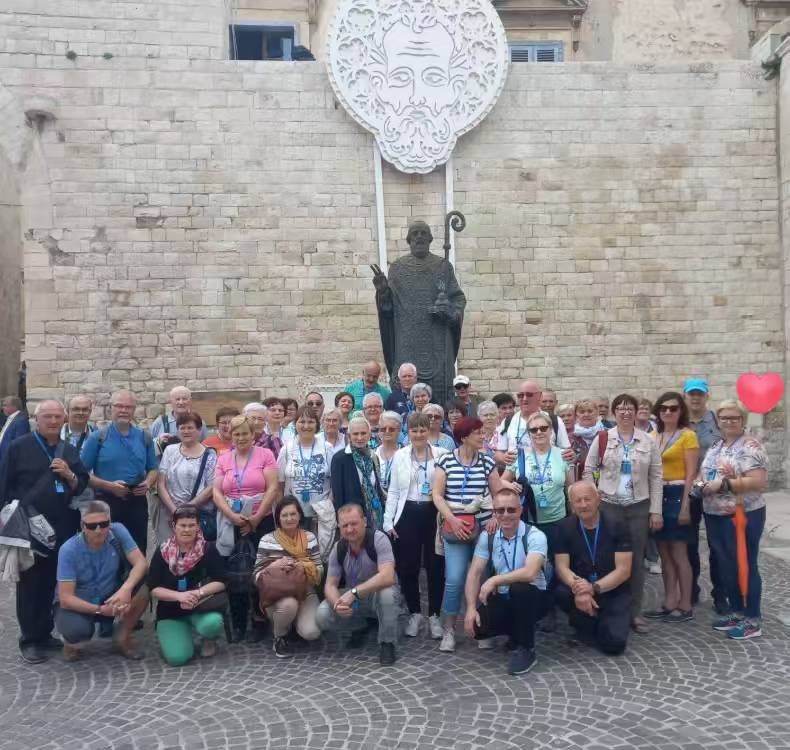
The Square Where Sixty Visitors Split into Three Languages
The first photograph is the stone square where the morning groups consolidated. Sixty visitors arrived on two coaches with guides speaking different languages, and the operator's previous system had required a physical handover of belt-pack receivers at every coach door — a queue with a clipboard attached. On this day, the visitors took a colour-coded headset each from the case, saw the ear cup light up in their group's colour, and self-sorted. The guide with the transmitter spoke; the square stayed at its normal ambient volume. Published audio figures — 40 mm Mylar drivers, signal-to-noise above 75 dB, total harmonic distortion under 1 percent across a 30–20000 Hz response — are the numbers behind what the visitors reported: intelligible speech at low volume, with none of the background hiss that makes a listener raise an ear cup off the ear to double-check. The regrouping that used to cost the guide ten minutes at this square — collecting belt-packs, reissuing them by language, finding the two that had been issued to the wrong coach — became a thirty-second pause, because a visitor wearing the wrong colour is visible from ten meters away, and a visitor holding a headset set to the wrong channel is not visible at all until he asks a question in the wrong language.
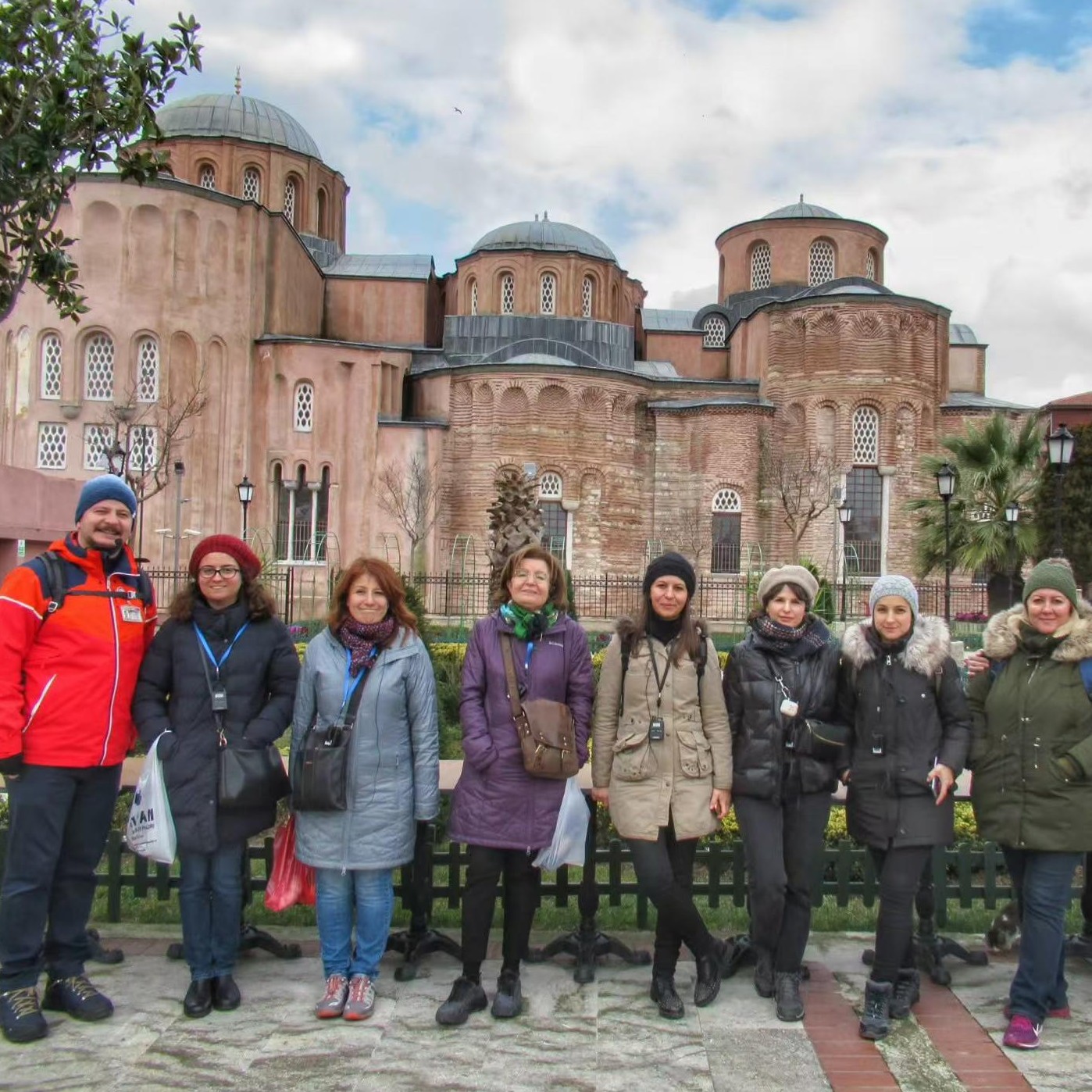
Courtyard Rules: Volume Without Noise
The second stop was the mosque courtyard, and it is the stop that decides whether a headset system is usable on a heritage route at all. Courtyards of working mosques are not venues; they are living spaces with an acoustic etiquette of their own, and a guide shouting over a loudspeaker ends the visit before it starts. The photograph shows the group moving through the colonnade with the guides' voices arriving only in the headsets — the courtyard's own sound left untouched. The system's range specification carries the load here: up to 200 meters in low-power mode and beyond 500 meters in high-power mode from the metal-cased transmitter with its LCD status display, which the operator kept at the group's rear rather than its head. Spread across a courtyard of that size, the visitors were never all within sight of the guide, and nobody asked anyone to repeat a sentence.
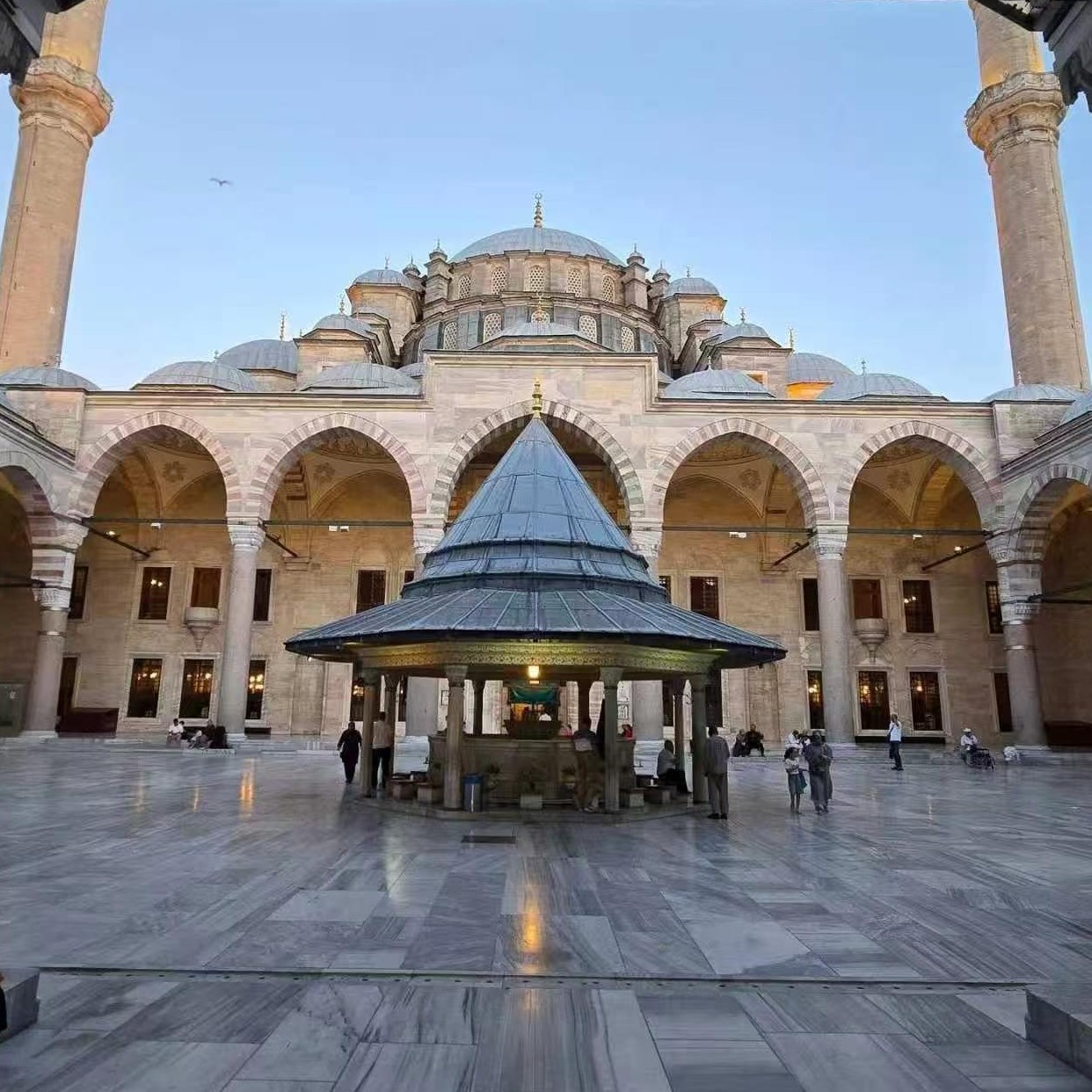
The Family Group That Stayed Past the Second Stop
The third photograph is the one the operator did not plan for. After the formal route ended at the garden gate, a family with two children kept their headsets on — the children had discovered the independent volume control on each ear cup, and the parents were content to let the recorded channel continue while the family wandered the lawn at its own pace. The published 500 mAh battery covers this without drama: ten hours of continuous operation from a full charge, with a three-hour recharge over Micro USB between the morning and afternoon departures. The foldable design — the reason a full sixty-headset fleet packs into two cases that fit a coach's luggage bay — also survived its hardest test of the day, which is a six-year-old folding a headset the wrong way and it taking no harm.

What the Published Spec Sheet Backs Up
Every claim the operator made about the day maps to a line in the product's published specification, reproduced here in full:
| Row | Published figure |
|---|---|
| System composition | RC-409 headphones + RC-50RF transmitter |
| Type | UHF/RF wireless stereo headphone system with LED channel indicators |
| Channels | 10-channel, FM stereo modulation |
| Channel indicator | 5 colours — red, green, blue, purple, yellow |
| Audio quality | 40 mm Mylar drivers, SNR >75 dB, THD<1%, 30–20000 Hz |
| Battery & charging | 500 mAh built-in Li-ion, 10 h operation, 3 h recharge (Micro USB) |
| Transmission range | Up to 200 m low-power / over 500 m high-power |
| Design | Foldable; dual PLL stability; independent volume control; metal-cased transmitter with LCD |
| Warranty | One year, accessories excluded; defective rate under 1% with individual pre-shipment testing |
Two published details deserve the operator's emphasis. The dual PLL stability is why three live channels on one square produced no crosstalk — the failure mode that makes cheaper multi-group systems unusable the moment a second transmitter switches on. And the OEM/ODM customization service — custom logo printing, packaging, and colour options — is how a fleet becomes visibly the operator's own, which matters when sixty headsets return to a case at the end of a season. Operators comparing headset classes for heritage routes can see how this system sits alongside the transmitter-led products in the wider tour guide system range.
💾 Charging, Storage and the End-of-Day Count
The unglamorous part of the case is the routine, and the operator's version takes eleven minutes. Headsets return to the case folded; each docks onto its charging position, and the three-hour Micro USB recharge completes long before the next morning's first departure. The count is visual: ten headset colours against a channel list, plus the LED check as each unit powers on — a colour that fails to light is a headset that goes to the bench before it goes to a visitor. The first week's bench log, which the operator shared, recorded three units out of sixty with a flaky hinge spring — inside the published sub-one-percent defective-rate promise once the pre-shipment testing is taken at its word — and all three were swapped under the one-year warranty without a diagnostic argument, because the LED check localises the fault to a unit the moment it happens. Storage needs no climate control beyond a dry cabinet, and the foldable hinge has now survived a full season of the public folding it. The operator's only standing instruction to new staff is about the transmitter: the metal case goes in the padded slot, because the LCD window is the one part of the kit that does not forgive a drop. Crews that want to compare this headset fleet against the transmitter-and-receiver products that share its band family — the RC2406 multi-channel group system and the RC2501 wireless tour guide system — will find those pages carry the same published-figure discipline.
What the Operator Said at Handover
The sentence the operator used at the end of the day was about behaviour, not hardware: the visitors stopped asking "which group am I in?" from the second stop onward. Colour had absorbed a question that used to cost the guide thirty seconds per answer and a queue at every regrouping point. The courtyard stop produced the second observation — that a heritage route does not have to choose between being heard and being quiet, provided the transmitter stays at the rear and the group spreads instead of bunching. And the family on the lawn produced the commercial one: headsets that visitors enjoy wearing get returned late, cheerfully, and in good condition, which is the opposite of what an operator expects from belt-pack hardware. Sites planning a multi-language heritage route can start from the deployment patterns collected under city tour solutions, and the full solution library — including museum and worship-site patterns that share this route's acoustic rules — sits under explore our solutions.