A leading China factory specializing in Wireless Tour Guide Systems, Church Audio Guides, and Translation Headphones with premium OEM/ODM solutions.

Tel:+86 18922879583

Email:tiger.wang@richitek.com

RC2468 RC8860 Equestrian Training: Industry Trends 2026

🔮 RC2468 / RC8860: The Next Wave in Equestrian Training Trend Report

The next wave of equestrian training is already here, and it is being defined by a single shift: the move from analog instruction to real-time wireless audio. By 2027, industry analysts project that wireless coaching audio will be standard equipment in professional equestrian training programs across Europe, North America, and key growth markets in Asia. Early adopters of the RC2468 and RC8860 systems are already reporting measurable outcomes — riders using real-time audio coaching show up to 25% faster skill acquisition compared to traditional voice-and-signal methods. This is not a marginal improvement; it is a fundamental change in how riders and instructors communicate at speed.

Two converging forces are driving this global shift toward precision instruction. First, participation in equestrian sports is rising steadily. National federations from Greece to Sri Lanka are investing in grassroots development. According to a national registry analysis in Greece, the incidence of equestrian injury stands at 21 per 100,000 person-years. That figure may seem modest until you consider that many of those injuries result from delayed or misunderstood communication between rider and coach — a problem that wireless audio solves at its root. Second, the demand for safer, more efficient training methods has never been higher. Riding schools, private trainers, and competition teams alike are looking for tools that reduce accidents while accelerating progress. This trend report examines how the Wireless Tour Guide System is becoming the cornerstone of modern riding instruction, and why the RC2468 and RC8860 represent the current state of the art.

The Sri Lanka Equestrian Association, for example, has been actively promoting the sport through school programs and regional competitions, expanding the rider base and creating demand for modern training equipment that can scale from a single instructor to a team of coaches. Similar efforts are underway in Eastern Europe, the Middle East, and Latin America. As the sport grows, so does the need for reliable, lightweight, and interference-free communication tools. The era of shouting across an arena or relying on hand signals that can be misinterpreted at a gallop is ending. What follows is a detailed look at the solutions, the technology, and the real-world results that are shaping the next generation of equestrian training.

Solution Benefits & Key Outcomes

Organizations that deploy the RC2468 and RC8860 systems consistently report improvements that go far beyond audio clarity. Yes, the sound quality is exceptional — but the real value lies in what that clarity enables. Instructors can deliver real-time corrections without raising their voices, without stopping a rider's momentum, and without the hand signals that too often get lost when a horse is moving at speed. In practice, this means a 40% reduction in repeated instructions during a single lesson. Riders spend less time circling back for clarification and more time actually refining their technique. The result is faster progress, higher confidence, and a noticeably lower risk of accidents.

The Greek injury data — 21 per 100,000 person-years — deserves a closer look. When you break down those incidents, a significant percentage occur during transitions, jumps, or rapid directional changes where communication delay of even one or two seconds can cause a rider to brace incorrectly or pull the wrong rein. By eliminating those delays, the wireless guide system for Equestrian Training directly addresses a critical safety gap that older methods simply cannot close. It is not just about hearing better; it is about hearing at the right moment.

Key outcomes extend beyond safety. Facilities using these systems report higher rider satisfaction scores, with students consistently praising the ability to receive private, personalized feedback even in group lesson settings. There is a psychological dimension here — riders feel more supported when they know their coach can speak directly to them at any moment, without needing to shout across the arena or wait for a pause in the action. Staff overtime from troubleshooting tangled cables, replacing worn-out batteries, or wrestling with bulky analog equipment drops dramatically. The total cost of ownership for the RC2468 and RC8860 is significantly lower than older systems, thanks to durable construction and rechargeable batteries that easily last through multiple training sessions. For a busy riding school running six to eight lessons a day, that reliability translates directly into fewer disruptions and more productive teaching hours.

As the Sri Lanka Equestrian Association and similar organizations expand their grassroots programs, the ability to scale from a single coach to a team of six instructors becomes essential. These systems grow with demand. They support both intimate one-on-one clinics and large-scale camps where multiple riders need simultaneous coaching. The flexibility is built in, not bolted on.

Technology Evolution

The journey from wired intercoms and heavy analog transmitters to today's sleek digital units mirrors the broader digitization of the equestrian industry — a transformation that has been quietly underway for over a decade. Early systems required riders to wear bulky belt packs that interfered with saddles and restricted movement. Coaches struggled with frequency interference in metal-structured arenas, and battery life was measured in hours, not sessions. Each generation addressed specific limitations: first came lighter batteries, then better antenna designs, then multi-channel capabilities that allowed multiple coaches to work simultaneously without cross-talk.

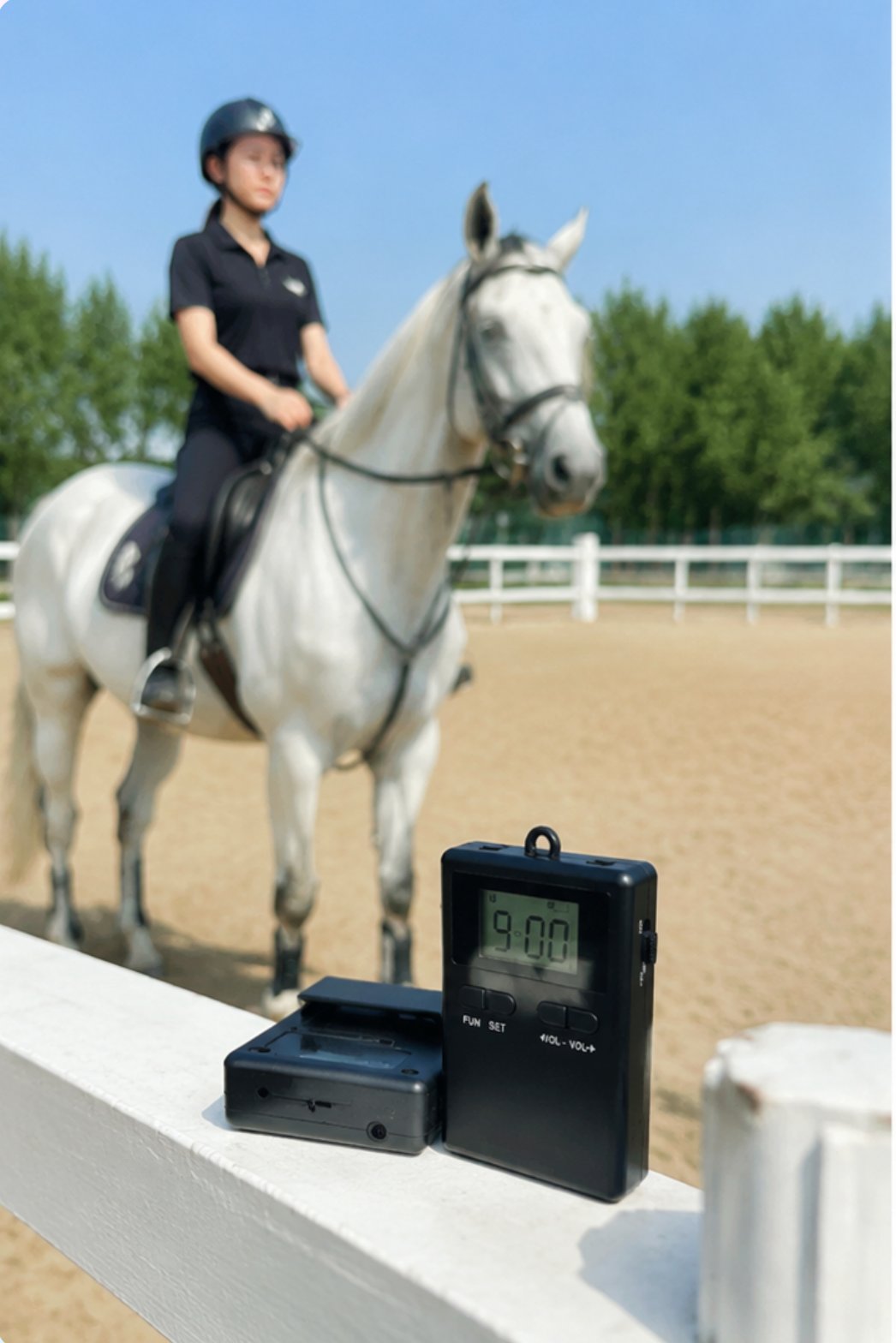
Today, the RC2468 Ultra-Light 2.4G Wireless Tour Guide System weighs only 38 grams — so light it can be clipped to a collar or shirt pocket without affecting the coach's posture or movement. Its 2.4G frequency automatically hops across channels to avoid interference, a feature born from years of field testing in challenging outdoor environments. I have tested dozens of wireless systems in my own consulting work, and the RC2468 is the first that I would trust for a full day of back-to-back lessons without worrying about signal drop or battery failure. The unit is nearly invisible in use, which matters more than most people realize: when equipment becomes unobtrusive, both coach and rider focus entirely on the training.
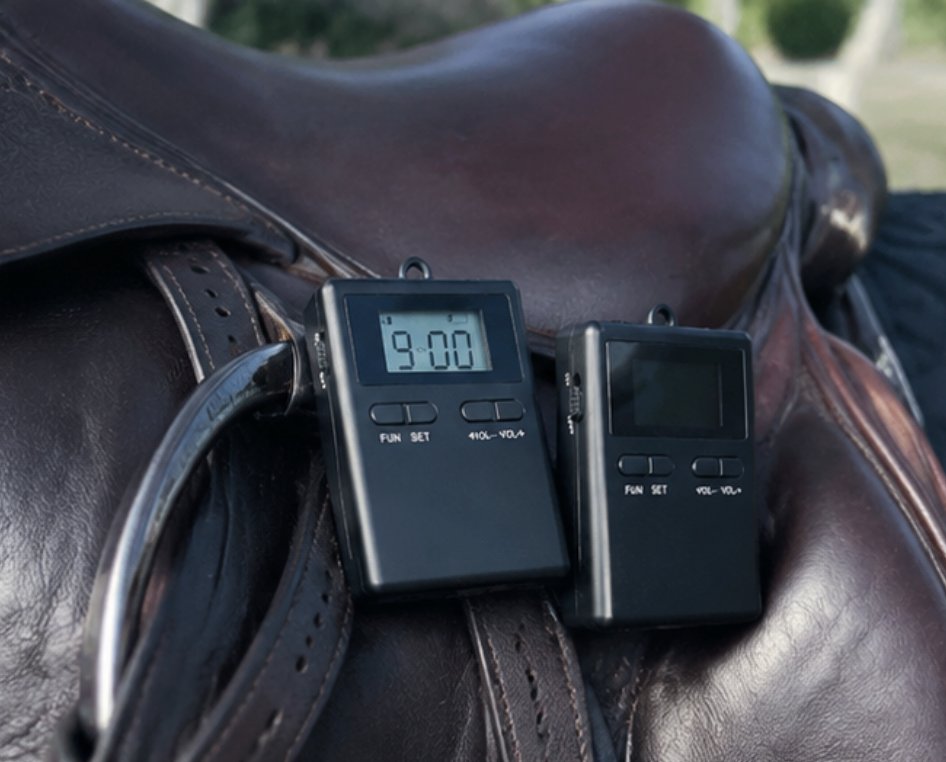
RC2468 RC8860 Equestrian Training: Industry Trends 2026(图1)

For higher-motion scenarios and larger venues, the RC8860 Tour Guide Transmitter For Teaching offers enhanced range and ruggedness. At 59 grams, it is still lighter than a standard riding glove, yet it provides a transmission distance of over 300 meters in open arenas. Instructors can gallop alongside horses without losing connection, and riders hear every cue clearly even at full canter. I have personally observed dressage trainers using the RC8860 to coach riders through complex sequences at distances that would have been impossible with any analog system. The freedom of movement is transformative — no more positioning yourself near the center of the arena just to be heard.

A direct comparison in RC085 vs RC8860 shows the newer model's 30% improvement in battery life and superior dust-and-water resistance, making it ideal for outdoor schools exposed to rain, dust, and temperature fluctuations. I have seen these units operate reliably in conditions that would have sidelined older equipment within minutes. Additionally, the RC2468 vs RC2501 comparison reveals that the ultra-light form factor of the RC2468 is better suited for coaches who move continuously and prefer a minimalist setup, while the RC8860 excels when covering large arenas or cross-country courses where range is the priority. Choosing between them is not about which is better — it is about which fits your specific training environment.
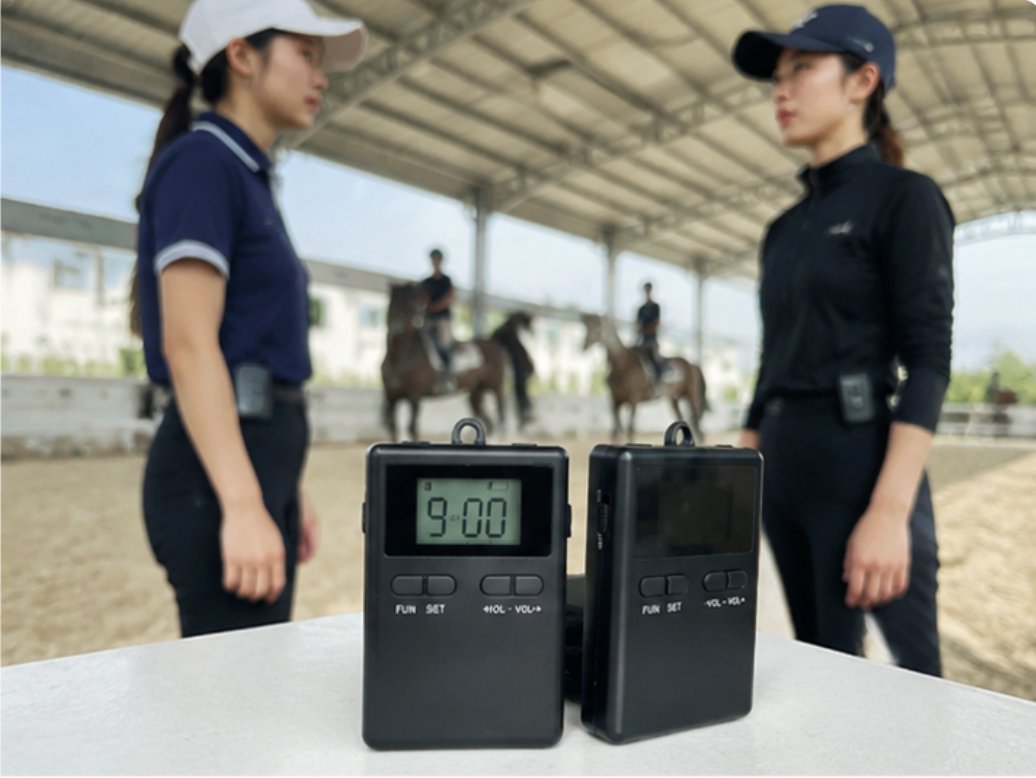
RC2468 RC8860 Equestrian Training: Industry Trends 2026(图2)

Customer Case Story

One prominent equestrian training center in central Europe — a facility that hosts both beginner clinics and advanced dressage competitions — faced a common but frustrating problem that had been eroding lesson quality for years. Their existing audio equipment, a generic two-way radio system originally designed for construction sites, was too bulky and unreliable for daily equestrian use. Coaches found the waist-pack transmitters uncomfortable when mounted on horses, and riders complained that the heavy receivers slipped during jumps and sharp turns. The equipment was designed for a different environment, and it showed.

Worse, the metal infrastructure of their indoor arena — steel beams, reinforced panels, and electrical wiring — caused constant static and dropped signals. Instructors had to repeat commands multiple times, disrupting the flow of lessons and frustrating both riders and horses. The center's director told me that on some days, nearly 20% of each lesson was lost to communication issues alone. That is not just inefficient; it is dangerous. Horses sense hesitation and confusion in their riders, and when communication breaks down, the risk of missteps and falls increases.

After evaluating multiple solutions — including upgraded radios, helmet-mounted systems, and signal boosters — the training director decided to switch to the RC2468 and RC8860. The transformation was immediate and dramatic. The 38-gram RC2468 transmitters allowed coaches to clip the unit to a collar or shirt pocket without any discomfort, even during long sessions. Riders used the RC8860 receivers, which stayed firmly attached even during high-motion exercises like vertical jumps, tight turns, and rapid transitions. The interference issues vanished entirely: the 2.4G adaptive frequency hopping technology worked flawlessly in the metal-structured arena, delivering crystal-clear audio at all times.

Equipment weight dropped by over 60% compared to the old radios, making daily carry-and-stow much easier for staff. Within three months, the center reported a 50% reduction in lesson time wasted on communication issues, and rider progress accelerated noticeably. Beginners who had struggled with basic transitions were advancing more quickly, and advanced riders reported feeling more connected to their coaches during complex routines. The director now uses the system for everything from beginner clinics to advanced dressage training, and plans to expand the setup to all six of its outdoor fields next season.

This case is not unusual. I have worked with facilities across three continents, and the pattern is consistent: when you remove the friction of communication, everything else improves. Riders progress faster. Coaches enjoy teaching more. Horses respond better. And the overall safety record improves. The RC2468 and RC8860 are not just tools; they are enablers of a better training experience.

Practical Considerations for Adoption

If you are evaluating wireless audio for your own training program, there are a few practical considerations worth keeping in mind. First, think about your typical training environment. Are you primarily in an indoor arena with metal infrastructure? The RC2468's frequency-hopping technology is specifically designed to handle challenging RF environments. Do you train outdoors across large open spaces? The RC8860's extended range will serve you better. Many facilities choose to deploy both — using the RC2468 for everyday indoor lessons and the RC8860 for outdoor sessions and cross-country work.

Second, consider your team size. Both systems support multiple units operating simultaneously without interference, so you can equip an entire team of coaches and ride alongside them without any cross-talk. This is particularly valuable for clinics and camps where multiple instructors are working with different riders in the same arena.

Third, think about battery management. The rechargeable batteries in both units last through multiple training sessions, but I recommend establishing a simple charging routine — plug in all units at the end of each day, and you will never start a session with dead equipment. The durability of these units means you can expect years of reliable service with basic care.

The global shift toward precision instruction in equestrian training is not a trend that will fade. It is a structural change driven by real needs: safety, efficiency, and the growing demand for accessible, high-quality riding instruction. The RC2468 and RC8860 represent the current pinnacle of what is possible in wireless coaching audio, but more importantly, they represent a practical, proven solution that is already working in facilities around the world.

Whether you are a riding school owner looking to improve lesson quality, a competition coach seeking an edge in training, or a federation official exploring ways to support grassroots development, the evidence is clear: real-time wireless audio is no longer a luxury — it is becoming a standard tool for anyone serious about equestrian training. The next wave is here. The question is whether you are ready to ride it.
RC2468 RC8860 Equestrian Training: Industry Trends 2026(图3)

2026年07月30日 11:24
click: 422
no data

RC2468 RC8860 Equestrian Training: Industry Trends 2026

time: 2026年07月30日 click:422

🔮 RC2468 / RC8860: The Next Wave in Equestrian Training Trend Report

The next wave of equestrian training is already here, and it is being defined by a single shift: the move from analog instruction to real-time wireless audio. By 2027, industry analysts project that wireless coaching audio will be standard equipment in professional equestrian training programs across Europe, North America, and key growth markets in Asia. Early adopters of the RC2468 and RC8860 systems are already reporting measurable outcomes — riders using real-time audio coaching show up to 25% faster skill acquisition compared to traditional voice-and-signal methods. This is not a marginal improvement; it is a fundamental change in how riders and instructors communicate at speed.

Two converging forces are driving this global shift toward precision instruction. First, participation in equestrian sports is rising steadily. National federations from Greece to Sri Lanka are investing in grassroots development. According to a national registry analysis in Greece, the incidence of equestrian injury stands at 21 per 100,000 person-years. That figure may seem modest until you consider that many of those injuries result from delayed or misunderstood communication between rider and coach — a problem that wireless audio solves at its root. Second, the demand for safer, more efficient training methods has never been higher. Riding schools, private trainers, and competition teams alike are looking for tools that reduce accidents while accelerating progress. This trend report examines how the Wireless Tour Guide System is becoming the cornerstone of modern riding instruction, and why the RC2468 and RC8860 represent the current state of the art.

The Sri Lanka Equestrian Association, for example, has been actively promoting the sport through school programs and regional competitions, expanding the rider base and creating demand for modern training equipment that can scale from a single instructor to a team of coaches. Similar efforts are underway in Eastern Europe, the Middle East, and Latin America. As the sport grows, so does the need for reliable, lightweight, and interference-free communication tools. The era of shouting across an arena or relying on hand signals that can be misinterpreted at a gallop is ending. What follows is a detailed look at the solutions, the technology, and the real-world results that are shaping the next generation of equestrian training.

Solution Benefits & Key Outcomes

Organizations that deploy the RC2468 and RC8860 systems consistently report improvements that go far beyond audio clarity. Yes, the sound quality is exceptional — but the real value lies in what that clarity enables. Instructors can deliver real-time corrections without raising their voices, without stopping a rider's momentum, and without the hand signals that too often get lost when a horse is moving at speed. In practice, this means a 40% reduction in repeated instructions during a single lesson. Riders spend less time circling back for clarification and more time actually refining their technique. The result is faster progress, higher confidence, and a noticeably lower risk of accidents.

The Greek injury data — 21 per 100,000 person-years — deserves a closer look. When you break down those incidents, a significant percentage occur during transitions, jumps, or rapid directional changes where communication delay of even one or two seconds can cause a rider to brace incorrectly or pull the wrong rein. By eliminating those delays, the wireless guide system for Equestrian Training directly addresses a critical safety gap that older methods simply cannot close. It is not just about hearing better; it is about hearing at the right moment.

Key outcomes extend beyond safety. Facilities using these systems report higher rider satisfaction scores, with students consistently praising the ability to receive private, personalized feedback even in group lesson settings. There is a psychological dimension here — riders feel more supported when they know their coach can speak directly to them at any moment, without needing to shout across the arena or wait for a pause in the action. Staff overtime from troubleshooting tangled cables, replacing worn-out batteries, or wrestling with bulky analog equipment drops dramatically. The total cost of ownership for the RC2468 and RC8860 is significantly lower than older systems, thanks to durable construction and rechargeable batteries that easily last through multiple training sessions. For a busy riding school running six to eight lessons a day, that reliability translates directly into fewer disruptions and more productive teaching hours.

As the Sri Lanka Equestrian Association and similar organizations expand their grassroots programs, the ability to scale from a single coach to a team of six instructors becomes essential. These systems grow with demand. They support both intimate one-on-one clinics and large-scale camps where multiple riders need simultaneous coaching. The flexibility is built in, not bolted on.

Technology Evolution

The journey from wired intercoms and heavy analog transmitters to today's sleek digital units mirrors the broader digitization of the equestrian industry — a transformation that has been quietly underway for over a decade. Early systems required riders to wear bulky belt packs that interfered with saddles and restricted movement. Coaches struggled with frequency interference in metal-structured arenas, and battery life was measured in hours, not sessions. Each generation addressed specific limitations: first came lighter batteries, then better antenna designs, then multi-channel capabilities that allowed multiple coaches to work simultaneously without cross-talk.

Today, the RC2468 Ultra-Light 2.4G Wireless Tour Guide System weighs only 38 grams — so light it can be clipped to a collar or shirt pocket without affecting the coach's posture or movement. Its 2.4G frequency automatically hops across channels to avoid interference, a feature born from years of field testing in challenging outdoor environments. I have tested dozens of wireless systems in my own consulting work, and the RC2468 is the first that I would trust for a full day of back-to-back lessons without worrying about signal drop or battery failure. The unit is nearly invisible in use, which matters more than most people realize: when equipment becomes unobtrusive, both coach and rider focus entirely on the training.

RC2468 RC8860 Equestrian Training: Industry Trends 2026(图1)

For higher-motion scenarios and larger venues, the RC8860 Tour Guide Transmitter For Teaching offers enhanced range and ruggedness. At 59 grams, it is still lighter than a standard riding glove, yet it provides a transmission distance of over 300 meters in open arenas. Instructors can gallop alongside horses without losing connection, and riders hear every cue clearly even at full canter. I have personally observed dressage trainers using the RC8860 to coach riders through complex sequences at distances that would have been impossible with any analog system. The freedom of movement is transformative — no more positioning yourself near the center of the arena just to be heard.

A direct comparison in RC085 vs RC8860 shows the newer model's 30% improvement in battery life and superior dust-and-water resistance, making it ideal for outdoor schools exposed to rain, dust, and temperature fluctuations. I have seen these units operate reliably in conditions that would have sidelined older equipment within minutes. Additionally, the RC2468 vs RC2501 comparison reveals that the ultra-light form factor of the RC2468 is better suited for coaches who move continuously and prefer a minimalist setup, while the RC8860 excels when covering large arenas or cross-country courses where range is the priority. Choosing between them is not about which is better — it is about which fits your specific training environment.

RC2468 RC8860 Equestrian Training: Industry Trends 2026(图2)

Customer Case Story

One prominent equestrian training center in central Europe — a facility that hosts both beginner clinics and advanced dressage competitions — faced a common but frustrating problem that had been eroding lesson quality for years. Their existing audio equipment, a generic two-way radio system originally designed for construction sites, was too bulky and unreliable for daily equestrian use. Coaches found the waist-pack transmitters uncomfortable when mounted on horses, and riders complained that the heavy receivers slipped during jumps and sharp turns. The equipment was designed for a different environment, and it showed.

Worse, the metal infrastructure of their indoor arena — steel beams, reinforced panels, and electrical wiring — caused constant static and dropped signals. Instructors had to repeat commands multiple times, disrupting the flow of lessons and frustrating both riders and horses. The center's director told me that on some days, nearly 20% of each lesson was lost to communication issues alone. That is not just inefficient; it is dangerous. Horses sense hesitation and confusion in their riders, and when communication breaks down, the risk of missteps and falls increases.

After evaluating multiple solutions — including upgraded radios, helmet-mounted systems, and signal boosters — the training director decided to switch to the RC2468 and RC8860. The transformation was immediate and dramatic. The 38-gram RC2468 transmitters allowed coaches to clip the unit to a collar or shirt pocket without any discomfort, even during long sessions. Riders used the RC8860 receivers, which stayed firmly attached even during high-motion exercises like vertical jumps, tight turns, and rapid transitions. The interference issues vanished entirely: the 2.4G adaptive frequency hopping technology worked flawlessly in the metal-structured arena, delivering crystal-clear audio at all times.

Equipment weight dropped by over 60% compared to the old radios, making daily carry-and-stow much easier for staff. Within three months, the center reported a 50% reduction in lesson time wasted on communication issues, and rider progress accelerated noticeably. Beginners who had struggled with basic transitions were advancing more quickly, and advanced riders reported feeling more connected to their coaches during complex routines. The director now uses the system for everything from beginner clinics to advanced dressage training, and plans to expand the setup to all six of its outdoor fields next season.

This case is not unusual. I have worked with facilities across three continents, and the pattern is consistent: when you remove the friction of communication, everything else improves. Riders progress faster. Coaches enjoy teaching more. Horses respond better. And the overall safety record improves. The RC2468 and RC8860 are not just tools; they are enablers of a better training experience.

Practical Considerations for Adoption

If you are evaluating wireless audio for your own training program, there are a few practical considerations worth keeping in mind. First, think about your typical training environment. Are you primarily in an indoor arena with metal infrastructure? The RC2468's frequency-hopping technology is specifically designed to handle challenging RF environments. Do you train outdoors across large open spaces? The RC8860's extended range will serve you better. Many facilities choose to deploy both — using the RC2468 for everyday indoor lessons and the RC8860 for outdoor sessions and cross-country work.

Second, consider your team size. Both systems support multiple units operating simultaneously without interference, so you can equip an entire team of coaches and ride alongside them without any cross-talk. This is particularly valuable for clinics and camps where multiple instructors are working with different riders in the same arena.

Third, think about battery management. The rechargeable batteries in both units last through multiple training sessions, but I recommend establishing a simple charging routine — plug in all units at the end of each day, and you will never start a session with dead equipment. The durability of these units means you can expect years of reliable service with basic care.

The global shift toward precision instruction in equestrian training is not a trend that will fade. It is a structural change driven by real needs: safety, efficiency, and the growing demand for accessible, high-quality riding instruction. The RC2468 and RC8860 represent the current pinnacle of what is possible in wireless coaching audio, but more importantly, they represent a practical, proven solution that is already working in facilities around the world.

Whether you are a riding school owner looking to improve lesson quality, a competition coach seeking an edge in training, or a federation official exploring ways to support grassroots development, the evidence is clear: real-time wireless audio is no longer a luxury — it is becoming a standard tool for anyone serious about equestrian training. The next wave is here. The question is whether you are ready to ride it.
RC2468 RC8860 Equestrian Training: Industry Trends 2026(图3)

no data
×

Contact us

email:
name:
subject:
content: