.webp)
📡 RC8860 / RC2408 Campus Tour Wireless Guide Technology Comparison
Every campus has a story to tell, but telling it effectively to moving groups of visitors has always presented unique challenges. The days when tour leaders had to project their voices over noisy crowds or rely on clunky, outdated audio gear are quickly fading. Modern campus visitor centers and admissions teams are now turning to sophisticated wireless communication tools that fundamentally change how campus narratives are delivered. These contemporary systems free guides from stationary positions, eliminate garbled audio, and provide unprecedented control over group dynamics. The leap from old-school analog transmitters to today's digital solutions has created exciting opportunities for institutions wanting to present their grounds, facilities, and student life in the most engaging and professional manner possible. With modern equipment, guides can navigate everything from echoing hallways to open-air amphitheaters while ensuring every word reaches each listener with clarity and precision.
The implementation of RC8860 and RC2408 units in campus touring operations yields tangible benefits across several operational areas. Tour participants consistently report superior sound quality and greater engagement with the content being presented. Staff members appreciate the streamlined setup and user-friendly interfaces that reduce preparation time between tours. Administrative teams gain valuable insights through system analytics, allowing for continuous refinement of tour routes and content delivery. This holistic enhancement creates a more polished and effective touring infrastructure. Different touring contexts demand different solutions – a first-year orientation tour has vastly different requirements than a VIP donor visit or a specialized departmental showcase. The RC8860 proves exceptionally capable in scenarios requiring constant guide movement, while the RC2408 demonstrates superior performance across sprawling campus expanses. Collectively, these two systems form a versatile toolkit capable of handling everything from small group sessions to massive recruitment events drawing hundreds of visitors.
Institutions relying on conventional touring methods frequently encounter recurring operational headaches that compromise both visitor satisfaction and staff effectiveness. Subpar audio reproduction, constrained transmission distances, and expensive upkeep of aging hardware represent the most common pain points. These systemic issues create direct negative impacts on how visitors perceive the institution and how efficiently staff can perform their duties. Picture a guide attempting to address a large group near a busy construction site or a campus thoroughfare with heavy foot traffic, only to have their message swallowed by surrounding noise. Or imagine the embarrassment of equipment malfunctioning halfway through a crucial tour for VIP guests, forcing improvisation and resulting in missed talking points about academic programs or campus amenities. Such scenarios remain commonplace at institutions clinging to outdated infrastructure. The financial implications are equally daunting, as legacy systems demand frequent battery purchases, costly technician visits, and premature replacement cycles that strain limited budgets. Additionally, older equipment simply cannot adapt to varying group sizes or diverse touring formats, compelling staff to modify their presentations around technological constraints instead of delivering optimal content.
Embracing contemporary wireless technology transcends mere hardware replacement; it represents a strategic statement about an institution's dedication to superior visitor engagement. Colleges and universities investing in premium touring equipment convey a level of polish and care that leaves lasting impressions on prospective students and their families. The wireless guide system for Campus Tour directly confronts long-standing operational frustrations, providing dependable functionality across diverse weather conditions while lightening the workload for touring personnel. Current-generation systems employ sophisticated digital encoding that resists interference from campus networks, cellular infrastructure, and various radio frequency sources that disrupt outdated analog units. Power technology has undergone remarkable progress as well, with modern lithium-ion batteries supporting full schedules without recharging, thus removing the need for guides to carry backup power or structure tours around charging availability. These technological strides translate directly into smoother, more polished touring experiences that enhance institutional standing.
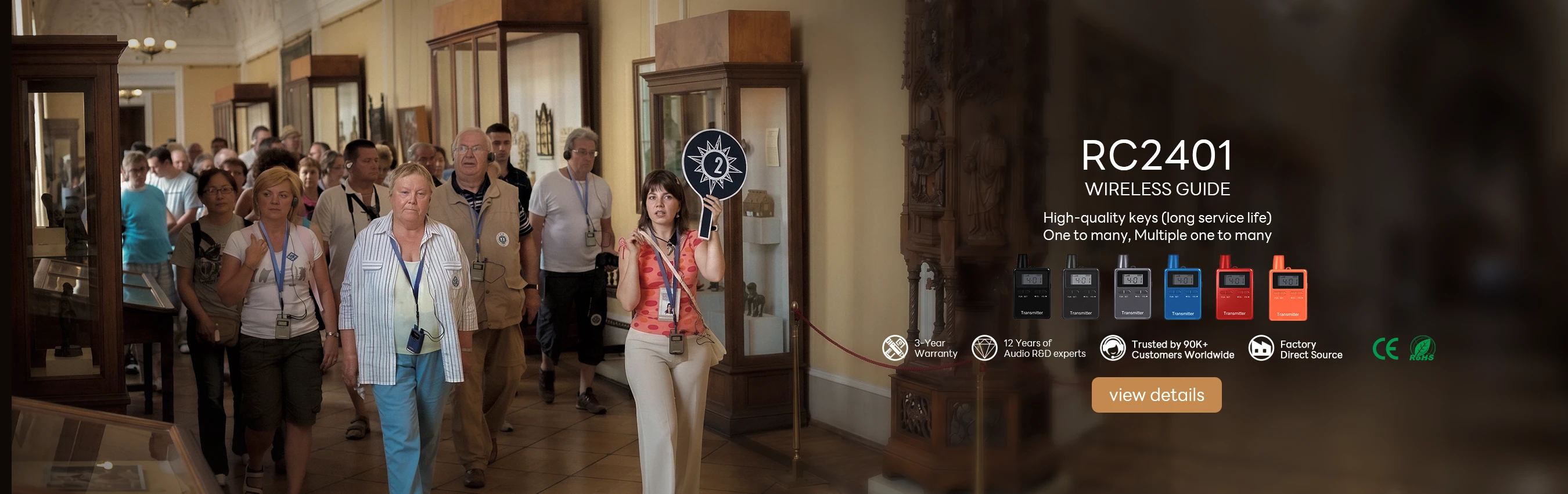
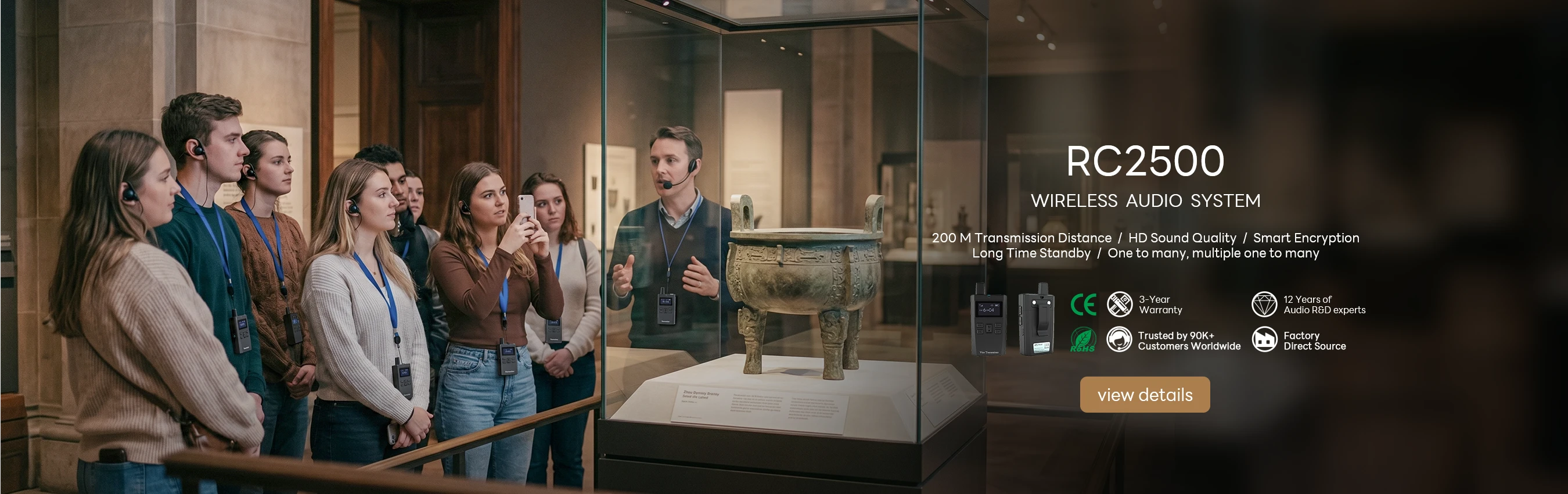
For campuses requiring comprehensive coverage of extensive grounds, the RC2408 Wireless Tour Guide System delivers outstanding performance across vast environments. This compact transmitter, weighing merely 70 grams, achieves remarkable transmission distances that comfortably encompass stadiums, research facilities, and surrounding neighborhoods. Tour leaders can conduct multi-mile walking routes with complete confidence in signal integrity and audio continuity. With support for numerous simultaneous channels, the system enables multiple touring groups to operate concurrently without cross-interference, a critical feature during large-scale admission events featuring parallel tours across different campus sections. The RC2408 incorporates user-friendly controls operable without visual confirmation, allowing guides to maintain eye contact and engagement with participants rather than focusing on device manipulation. Extended battery capacity supports demanding schedules typical of peak recruitment periods, ensuring uninterrupted service throughout the day.
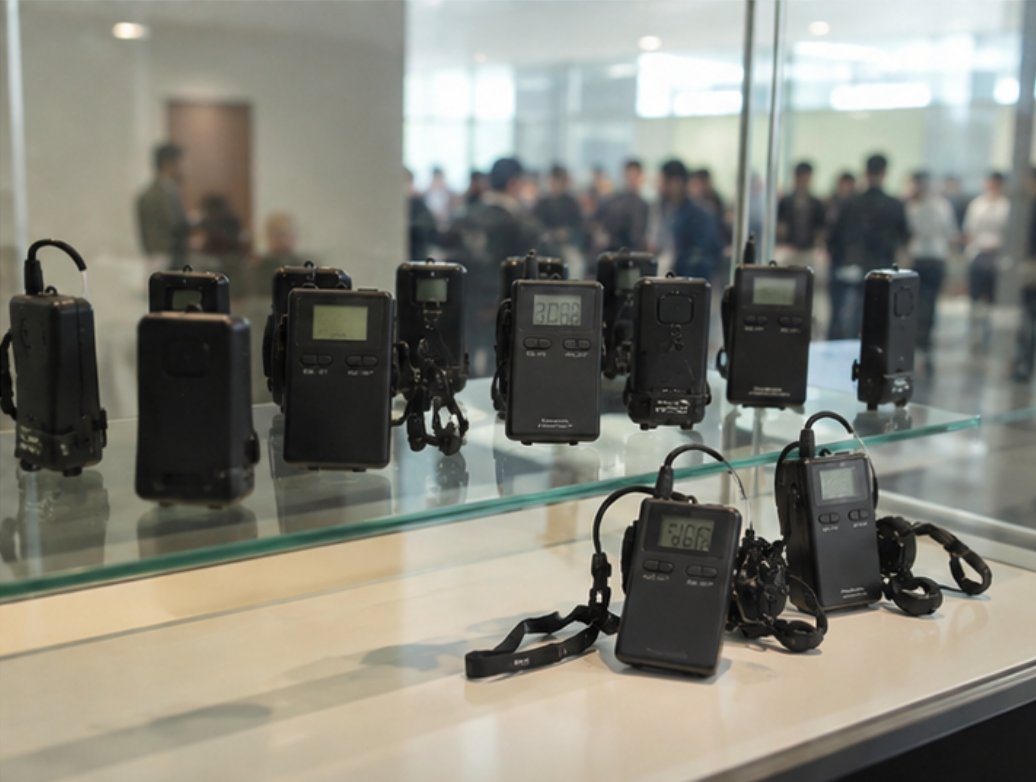
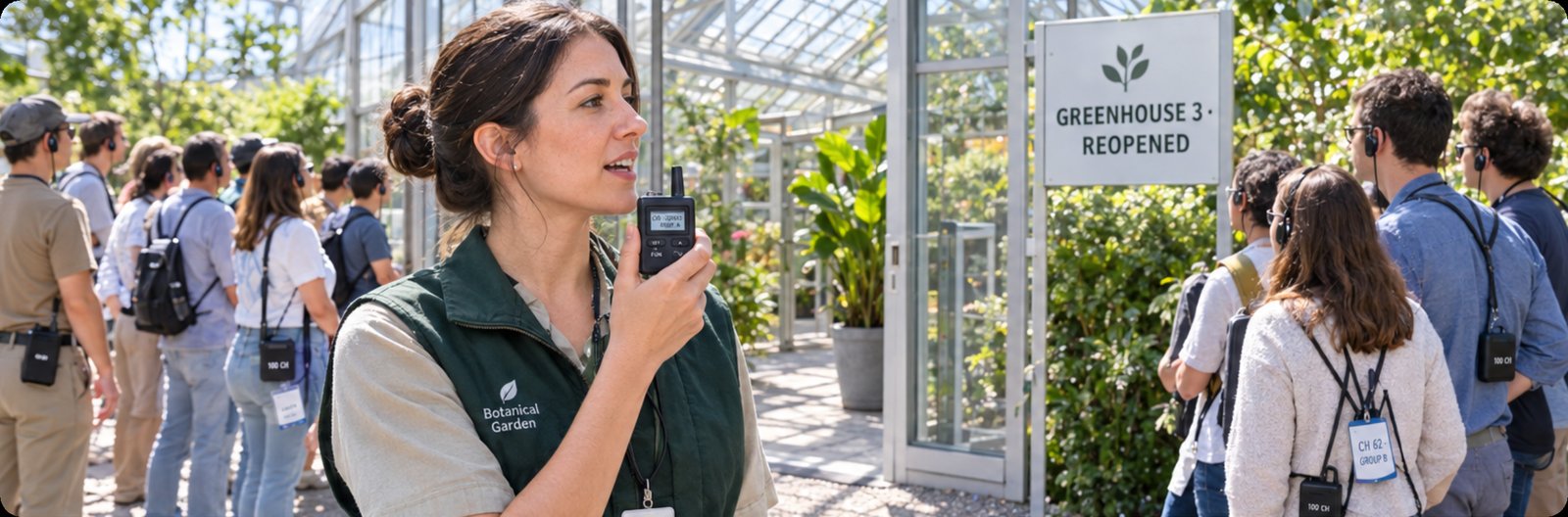
For situations demanding extensive physical activity, the RC8860 Tour Guide Transmitter For Teaching offers distinctive benefits for campus tours featuring athletic venues or outdoor recreational areas. At an incredibly light 59 grams, this compact transmitter, initially engineered for equestrian applications, has demonstrated outstanding effectiveness in campus touring contexts requiring unrestricted guide mobility. Whether demonstrating techniques at sports facilities, leading excursions through adventure courses, or escorting visitors around agricultural stations or botanical gardens, the RC8860 maintains dependable performance amidst constant motion. Its robust attachment mechanism ensures secure positioning on clothing during rigorous activities, while the thoughtfully designed form factor maintains comfort throughout prolonged wear. Audio output stays consistently distinct, featuring sophisticated ambient noise suppression that minimizes wind and background sounds, guaranteeing participants receive instructions without ambiguity or listening fatigue.
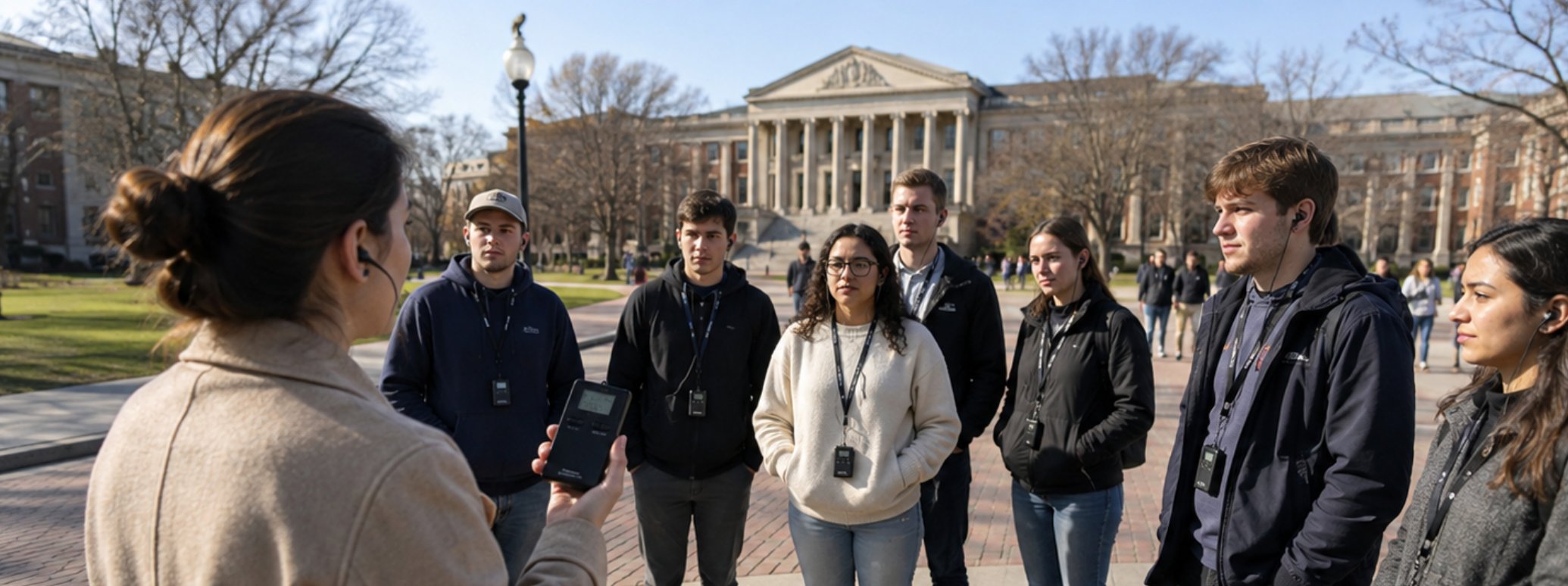
When evaluating these two options, institutions should carefully assess their typical tour patterns and environmental conditions. The RC2408 proves optimal for conventional walking tours traversing significant campus distances, whereas the RC8860 is particularly suited for specialized excursions involving athletic demonstrations, outdoor adventure areas, or any format requiring substantial guide movement. Numerous institutions successfully implement both units concurrently, deploying the RC2408 for standard tours and the RC8860 for specialized programming. This comprehensive strategy maximizes adaptability without burdening staff with different learning curves, given that both systems share consistent operational principles and receiver interoperability. For organizations assessing multiple alternatives, the RC2402 vs RC2408 comparison provides useful insights regarding feature variations in the extended-range category, while the RC085 vs RC8860 analysis aids in understanding distinctions among the high-mobility options.
The following table presents a direct specification comparison between RC8860 and RC2408, emphasizing the attributes most relevant to campus touring applications: transmission range, battery endurance, channel availability, and audio performance. Each unit demonstrates particular strengths, and recognizing these distinctions enables appropriate equipment selection for your unique operational context.
| Specification | RC8860 | RC2408 |
|---|---|---|
| Primary Use Case | Equestrian training & high-motion outdoor coaching | Long-range wireless tour guide system |
| Weight | 59 g | 70 g |
| Operating Range | Optimized for medium distances with high mobility | Extended range covering expansive campus areas |
| Battery Life | Full-day operation for intensive activity sessions | Extended operation for continuous touring schedules |
| Channel Capacity | Multiple channels for interference-free operation | Multiple channels for simultaneous group tours |
| Audio Quality | Advanced noise cancellation for windy environments | Clear digital transmission with minimal distortion |
| Best Suited For | Active tours with movement, athletic demonstrations | Traditional walking tours across large campus areas |
Looking beyond the technical attributes, organizations should factor in long-term operational expenses when assessing these systems. Both units feature robust construction engineered for demanding daily usage, incorporating strengthened connection points and shock-resistant casings that withstand accidental impacts and rigorous handling. Replacement components such as listening devices, attachment clips, and power cables are easily obtainable, reducing downtime when accessories eventually require replacement. These systems additionally interface with existing audio setups, allowing institutions to maximize prior investments in sound reinforcement or assistive listening technologies. Personnel training demands stay limited, since both units feature straightforward controls that most operators master rapidly. This straightforward adoption curve means seasonal employees, student assistants, and volunteers can achieve proficiency as tour leaders without comprehensive instructional programs.
The progression from conventional touring approaches to contemporary wireless systems marks a substantial leap forward in how academic institutions showcase themselves to various audiences. By removing obstacles posed by distance, ambient noise, and hardware constraints, these technologies allow guides to concentrate on their primary mission: conveying the distinctive qualities and opportunities available at their institution. Prospective students develop richer appreciation for academic offerings and campus atmosphere, while parents and guests absorb information effortlessly. Alumni returning for milestone celebrations and benefactors observing the results of their generosity experience more meaningful interactions with institutional representatives. The polished appearance of modern equipment additionally enhances institutional image, demonstrating a commitment to innovation and quality experiences. For educational institutions dedicated to excellence throughout campus operations, implementing professional wireless touring solutions represents a sensible, valuable investment yielding returns through enhanced visitor satisfaction, improved staff effectiveness, and strengthened institutional standing.