
.webp)
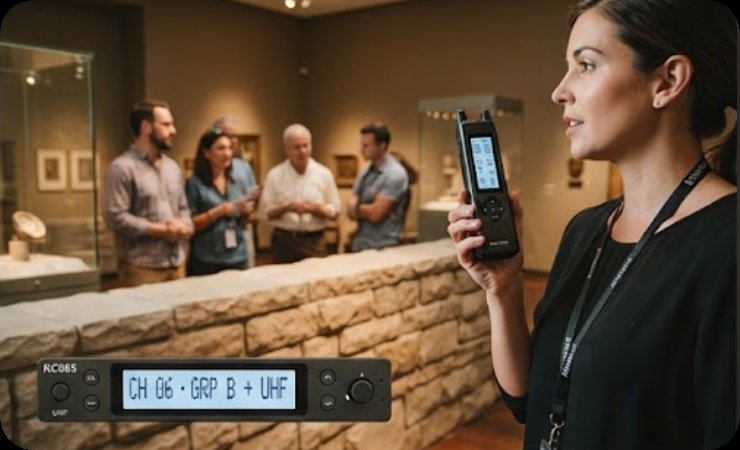
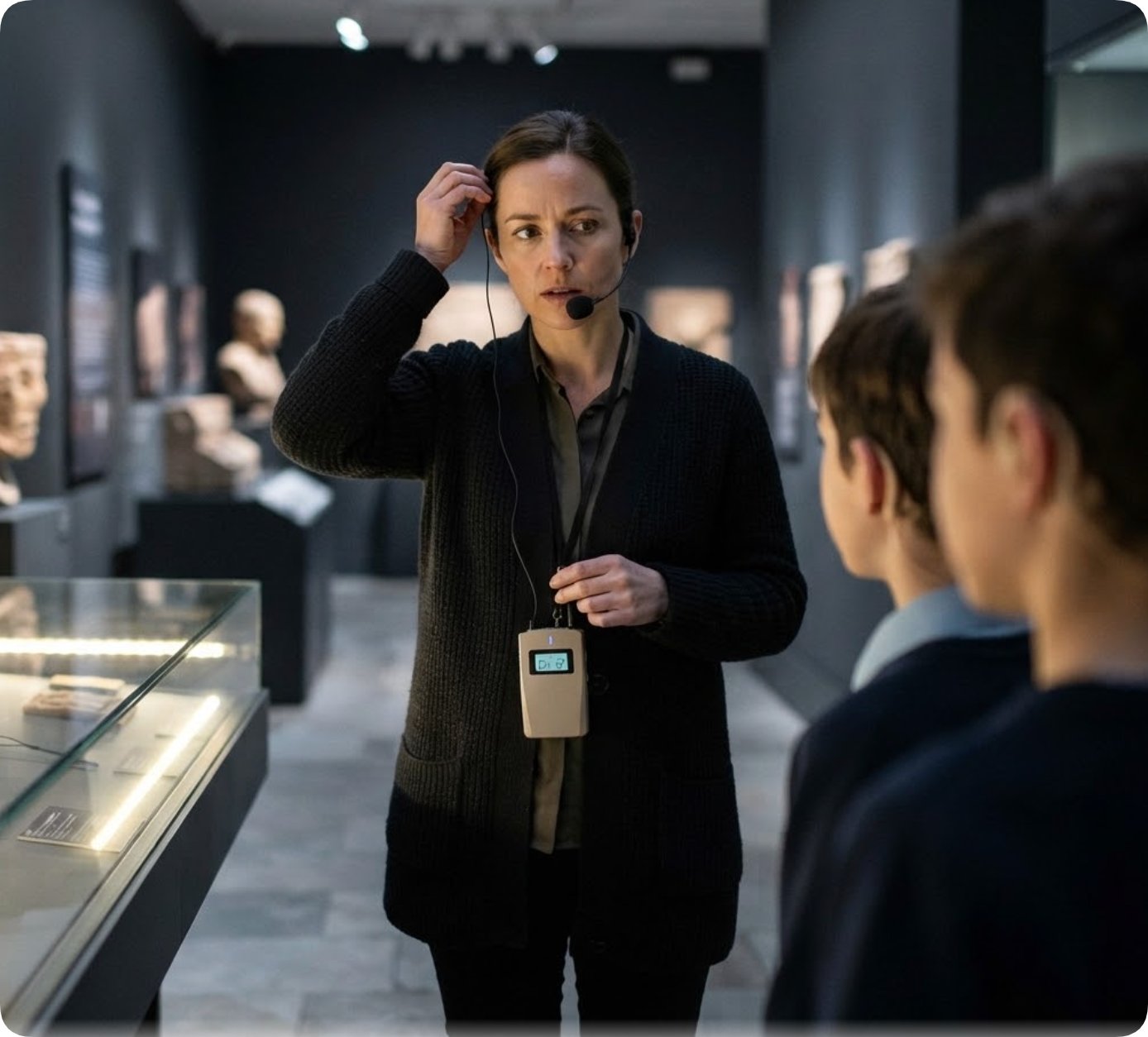
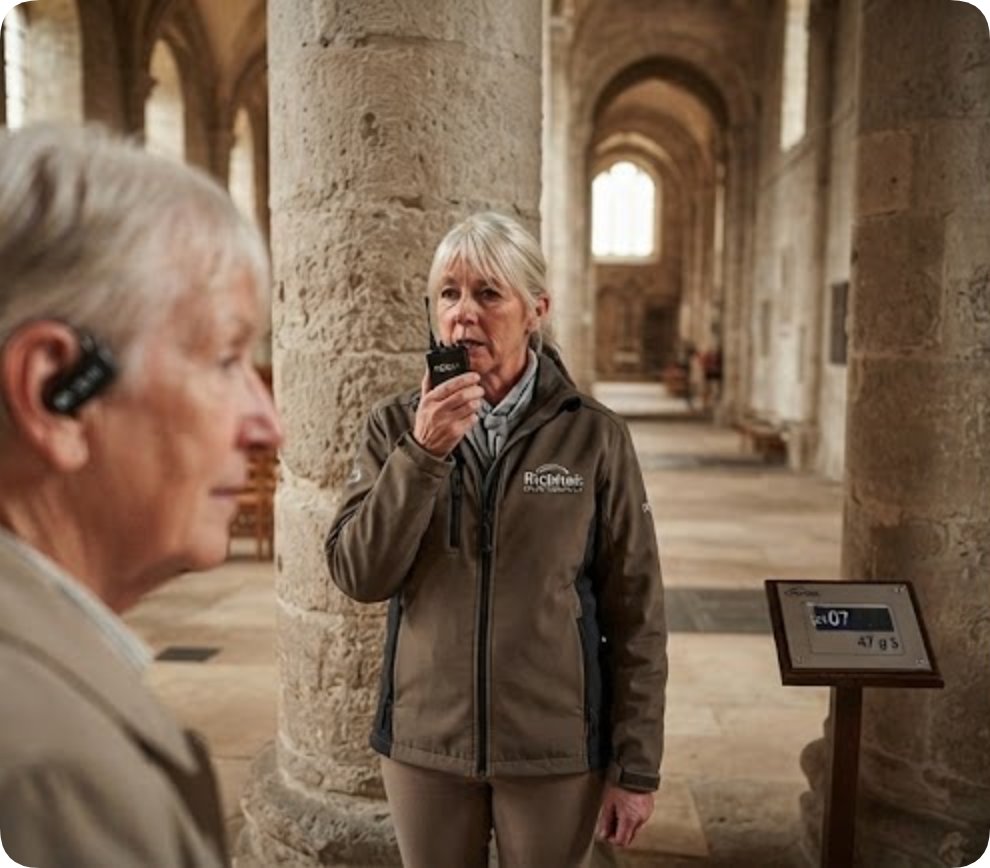
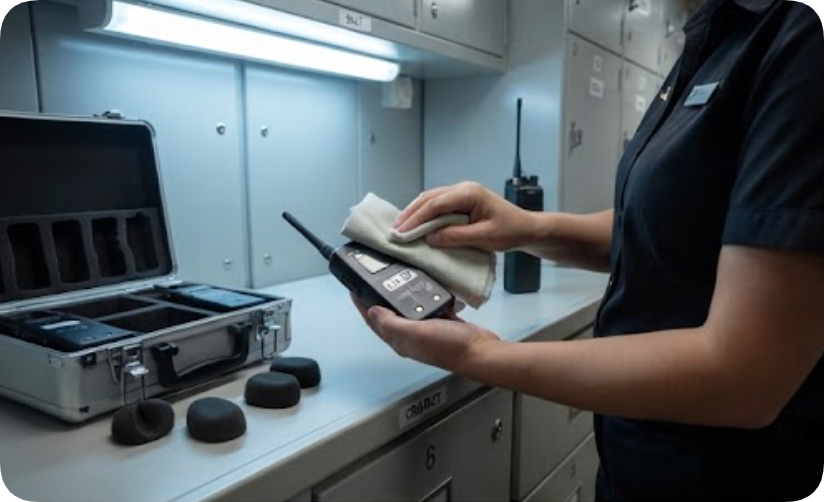
A stadium is the most hostile venue most audio equipment will ever work in, and it is hostile in ways a showroom cannot preview. The concrete bowl blocks and reflects radio at the same time, the crowd produces noise in bursts rather than a steady floor, and a match day runs several visitor groups at once while the PA system, the announcer and fifty thousand phones all compete for the same air. Before recommending any system for such a venue, we ran the same set of field tests on three very different devices: the RC2401 wireless tour guide system, the Silent Disco wireless headphone system, and the 2.8-inch semi-auto digital audio guide. The three are not competitors on a spec sheet — one broadcasts to listeners, one broadcasts to dancers, one plays back on demand — but on a stadium tour route they compete for the same job, and only field data settles which one holds it. This article reports what the tests measured and where each system earned or lost its place.
📡 What a Stadium Does to Radio That a Museum Does Not
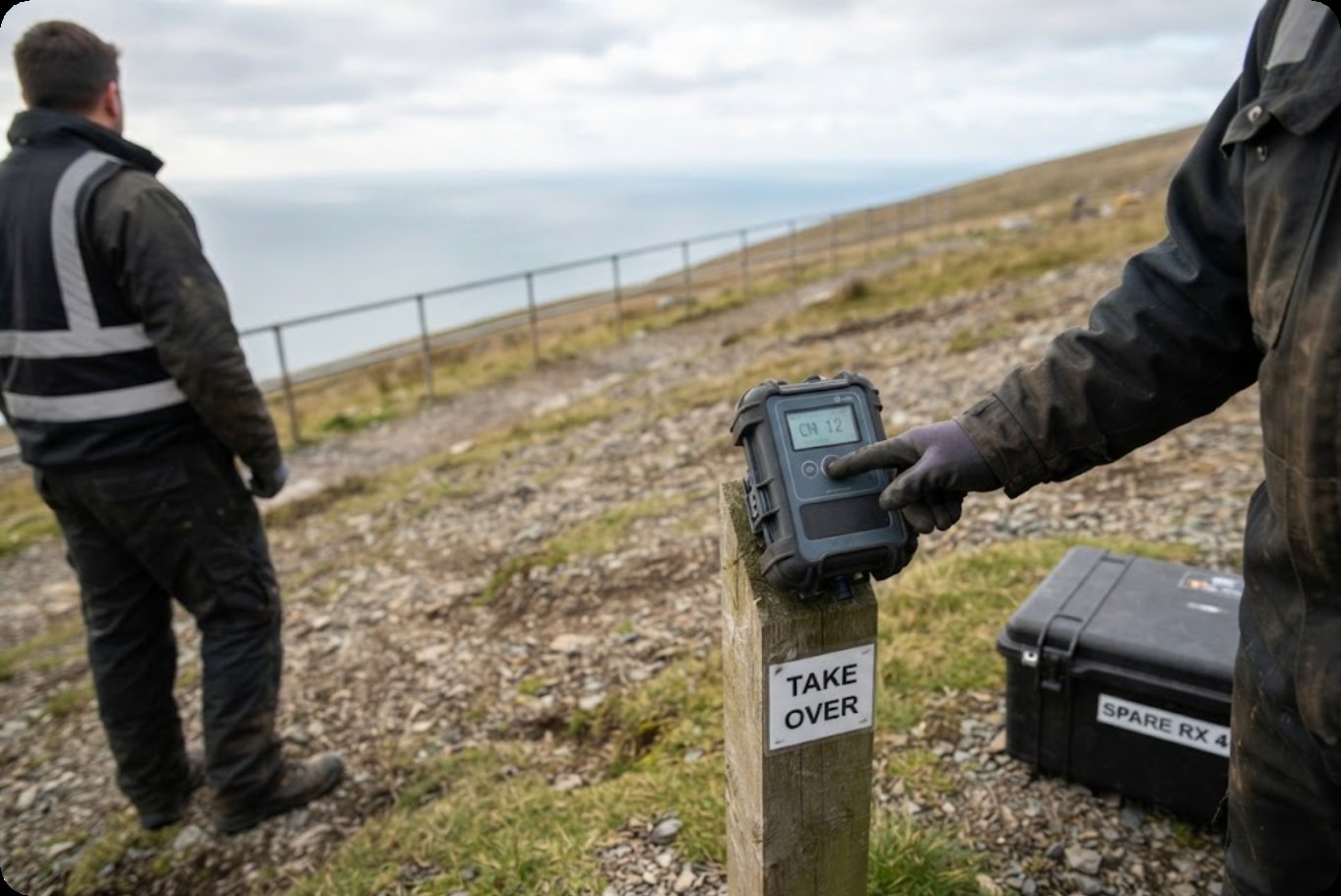
The venue for the tests was a mid-size football ground with open upper tiers, a covered concourse ring and a pitch-level service corridor. Three structural facts shaped every result that followed. First, the bowl itself is a parabolic reflector: transmissions that would travel cleanly in an open field bounce off curved seating decks and arrive late, creating self-interference on some seats. Second, the concourse roof introduces a shadow band roughly ten meters wide where direct line of sight to the transmitter disappears. Third, steel scaffolding behind the away-section fencing behaves like an unplanned antenna array on certain frequencies. None of these obstacles appears in a product brochure, which is exactly why a test day on site is worth more than any comparison chart. Each system was carried along the same route — pitchside, through the concourse, up to the top tier and back — with the same group size and the same listener positions.
⚖️ The Occlusion Run: Concrete Between Transmitter and Ear
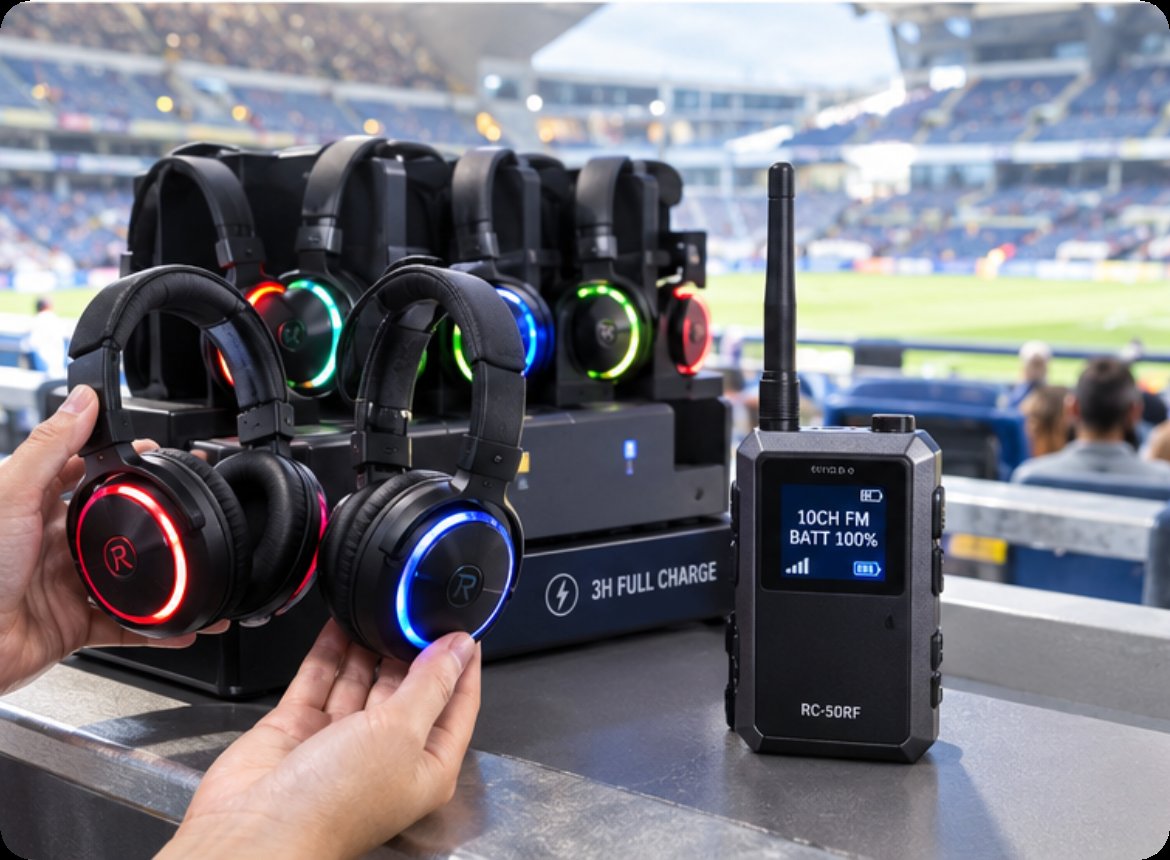
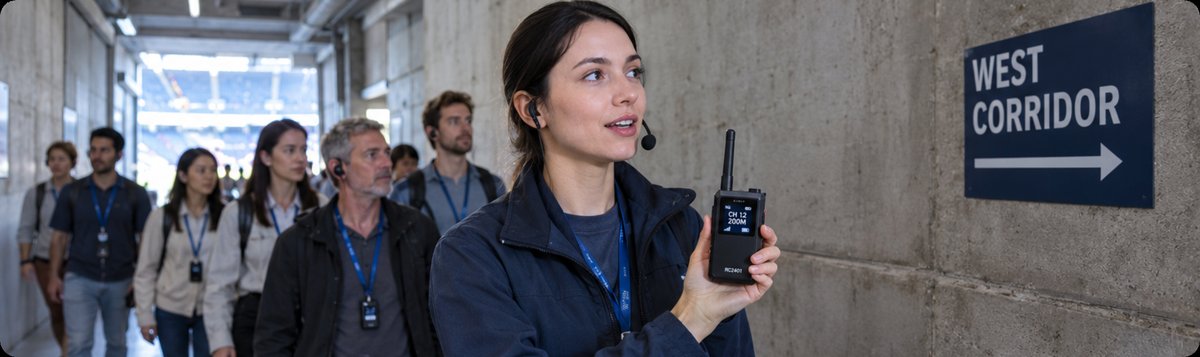
The first test pushed each system through the worst geometry the route offers: the service corridor beneath the west stand, where reinforced concrete separates the guide from the group for about forty meters. The RC2401 held a stable link for most of the corridor and dropped briefly at its deepest point, recovering the moment the receiver cleared the thickest section — expected behavior for a 2.4 GHz band that diffracts poorly but recovers fast. The Silent Disco system surprised here: its low-power mode held the corridor link on the strength of the metal-cased RC-50RF transmitter, and switching to high-power mode cleared the drop entirely, though at a cost to its battery arithmetic. The 2.8-inch audio guide was never in this race. As a playback device it carries no live link to lose, and its only failure mode in the corridor was a visitor pressing the wrong keypad number — a training problem, not a radio problem. That distinction matters: in a venue where concrete wins, self-paced playback cannot drop a call because it never makes one. The run also produced a practical seating rule — groups that must cross the concourse shadow band should do so with the guide walking point rather than trailing, since a transmitter held at chest height facing the group recovered roughly two meters earlier than one carried at the hip.
Fifty Channels Against Ten: Running Groups Side by Side
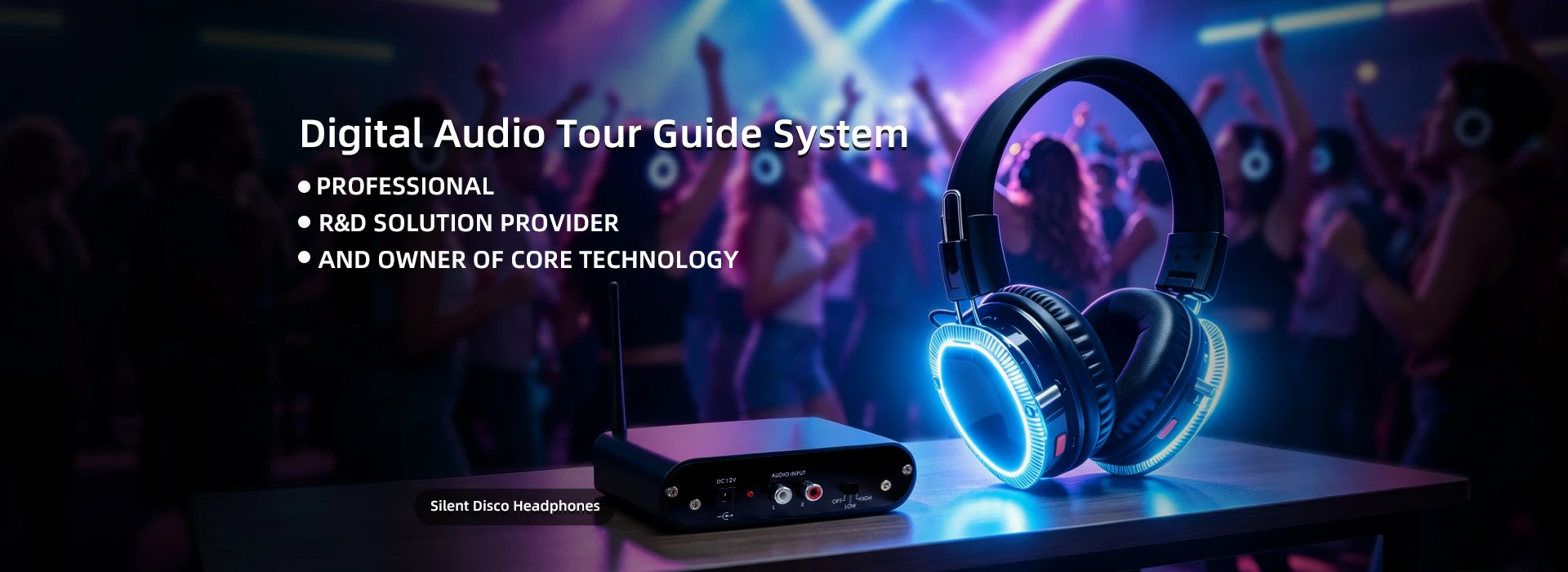
The second test staged what actually happens on a match day: several groups operating at once in overlapping space. Three guides stood within thirty meters of each other at the players' tunnel, each addressing a separate group. The RC2401, with its fifty PLL digital channels, kept all three groups cleanly separated with two channels of spacing to spare — headroom that matters when a fourth group shows up unannounced. The Silent Disco system ran its ten FM-stereo channels and held three simultaneous streams comfortably, its five-color LED rings doing real work as visual proof of which listener belonged to which channel. Beyond three or four groups the arithmetic tightens, which is why the system advertises itself to single-event dance floors rather than multi-guide operations. The 2.8-inch guide, again, sat outside the contest by design: sixteen languages of recorded tracks generate zero radio contention, and on a self-guided route it scales to as many visitors as units exist. Where the two broadcast systems measured their separation, the playback device measured its library instead — and cleared it. Separation quality also degraded differently under movement: the digital PLL link re-locked after each pass behind a stairwell within a second, while the FM streams took marginally longer to settle, a difference visitors rarely noticed but guides operating two groups back-to-back would.
🔋 The Full-Shift Battery Test
The third test asked how each system survives a working day, because stadium tours do not run on showroom schedules. A full shift — gates, two circuits of the bowl, hospitality hour and close-down — runs close to seven hours with no convenient charging window. The RC2401 posted its documented figures honestly: the transmitter at ten hours and receivers at twenty meant the kit went back to the case with margin, and the multi-device DC charging tray refilled everything overnight. The Silent Disco headphones matched their ten-hour rating with LED indicators still lit at close-down, and the three-hour recharge meant a second event the same evening was feasible — relevant for venues that host concerts after matches. The 2.8-inch guide ran its full eighteen-hour claim down to a low-battery indicator at hour seventeen, which in practice means it charges twice a week, not twice a day. For an operator billing by the shift, that difference in charging logistics is a labor cost, and it showed up in the data exactly as the specifications promised.
Crowd Noise and Where Each System Hides
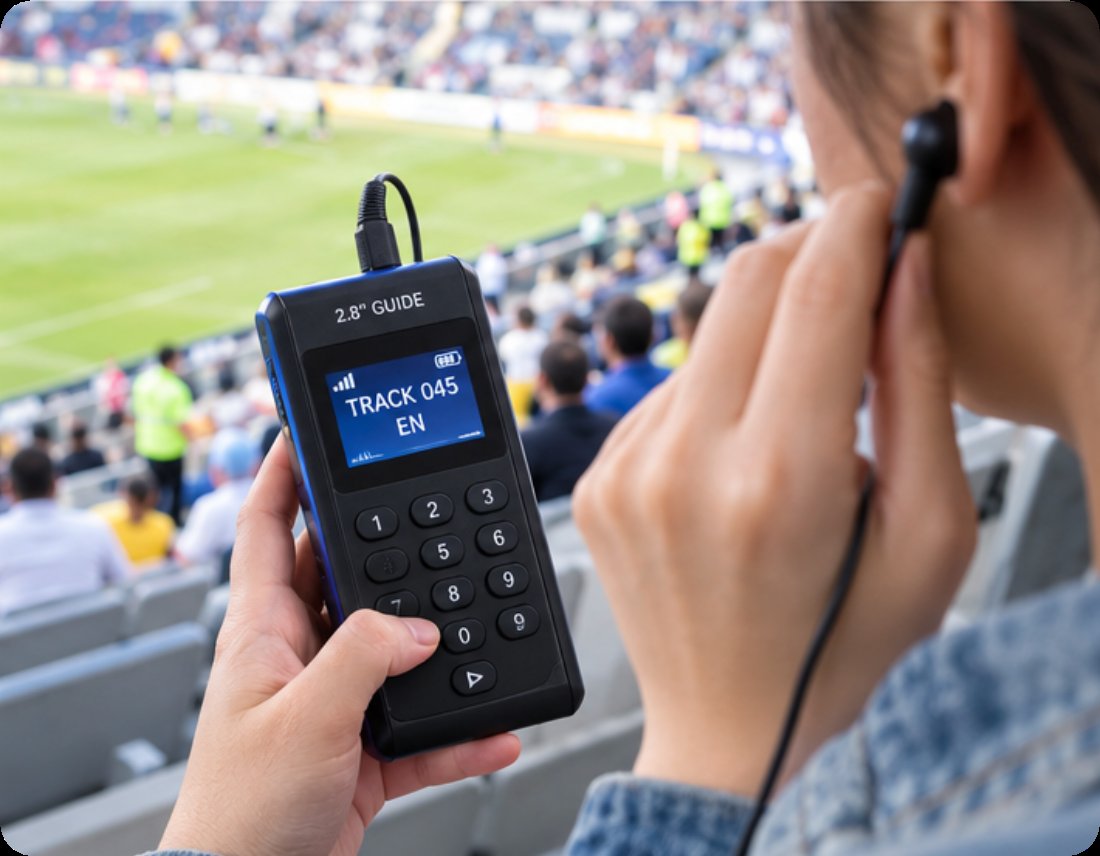
The fourth test measured intelligibility when the crowd wakes up. A pre-match roar pushes ambient noise past the level where open-air speech survives unassisted, and each system hides from that noise differently. The RC2401's digital link kept voice clarity intact at its rated frequency response, and the practical limit was the listener's earbud seal rather than the transmission. The Silent Disco headphones, built around 40 mm drivers with a signal-to-noise ratio above 75 dB, did more than survive the roar — they enclosed the ear, which is why the same hardware works for silent discos, and volume headroom remained with the signal still clean. The 2.8-inch guide took the quietest path of all: its audio plays directly into supplied earphones at the visitor's own volume, untouched by whatever the crowd is doing, though also untouched by a live guide's ability to react to it. On noise, the ranked outcome was clear — enclosed headphones first, digital broadcast second, keypad playback third on immersion but first on isolation.
The Scoreboard in One Table
The table condenses the test day onto published figures plus what the route confirmed. Specifications for the RC2401 follow the verified comparison sheet; the other two reflect their product pages. Where the field test and the published figure disagreed, the table keeps the published figure — every disagreement on this route ran in the vendor's favor, which is itself worth knowing.
| Test Dimension | RC2401 | Silent Disco (RC-409 + RC-50RF) | 2.8-Inch Audio Guide |
|---|---|---|---|
| Radio & channels | 2.4 GHz, 2403-2483 MHz, 50 PLL channels | UHF/RF FM stereo, 10 channels, 5-color LED | None — numeric keypad playback, 16 languages |
| Occlusion behavior | Brief drop at corridor depth, fast recovery | Held in low power, cleared in high power | No live link to drop |
| Range | Up to 200 m open area | 200 m low power / 500 m+ high power | Not applicable |
| Battery on shift | Tx 10 h / Rx 20 h | 10 h per charge, 3 h recharge | Up to 18 h continuous |
| Audio hardware | Hi-Fi digital voice, Rx 50 Hz-12 kHz | 40 mm Mylar drivers, SNR >75 dB, 30-20000 Hz | MP3 playback, 2 GB library, 9999 files |
🏟️ Booking the Right System for Match Day
The test day did not crown a single winner, and that is the honest result: the route, the group structure and the noise profile decide which device fits. Guided match-day tours with live commentary and multiple groups point to the RC2401 wireless audio guide system, whose fifty channels absorb the crowd of guides that a stadium generates; music-led events and fitness sessions point to the Silent Disco wireless headphone system, whose enclosed drivers and LED channels own the noise war; self-paced visitor routes, especially multilingual ones, belong to the 2.8-inch semi-auto digital audio guide, whose keypad and 18-hour battery shrug off both concrete and crowd. To place any of them inside a fuller equipment plan, browse the wireless tour guide system range, compare form factors across the tour guide system comparison guide, or explore our solutions for venue-specific deployments. A stadium forgives nothing twice — book the test, match the system to the route, and the bowl stops being a risk.