Theme parks regularly purchase audio equipment for two fundamentally different operational models, though purchase orders rarely distinguish between them. The first is live-guided audio: a tour guide speaks into a transmitter, an entire group hears the exact same sentence simultaneously, and no individual listener controls when commentary starts. The second is self-operated playback: visitors trigger pre-recorded audio by keying exhibit numbers into hand-held devices. Both systems share rental counters and are evaluated on guest comprehension. However, the core difference lies in operational control—specifically, who holds the authority to play, pause, and advance the commentary. Reframing this choice from a hardware spec comparison to a staffing and crowd-flow decision directly impacts queue management, parade logistics, and daily equipment reconciliation.
On a peak operational day, three device types typically sit in storage: 2.4GHz transmitter-receiver kits, UHF systems, and keypad-operated playback units. Live kits center around the speaker, while keypad devices center around independent listeners. Destinations operating fixed-route city tours often standardize on guided city tour audio solutions tied to rigid motorcoach itineraries. Inside a theme park, however, guest movement is fluid: visitors break off from groups, wait in ride lines, or drop off commentary entirely. Equipment decisions made solely on technical spec sheets often fail during peak morning hours when thousands of guests move independently across different zones.
Channel Assignment Protocols Before Park Opening
Daily audio management begins before gates open. Operations leads complete a channel assignment sheet for live kits prior to group arrivals: the RC2408 Wireless Tour Guide System operates on the 2403–2483 MHz band across 80 channels, assigning each guided group a dedicated slot. This setup enables separate tour groups operating twenty meters apart on the same plaza to proceed without cross-channel interference. The channel sheet serves as a critical operational document, ensuring seamless afternoon shift handovers and matching active transmitters directly to assigned group leads.
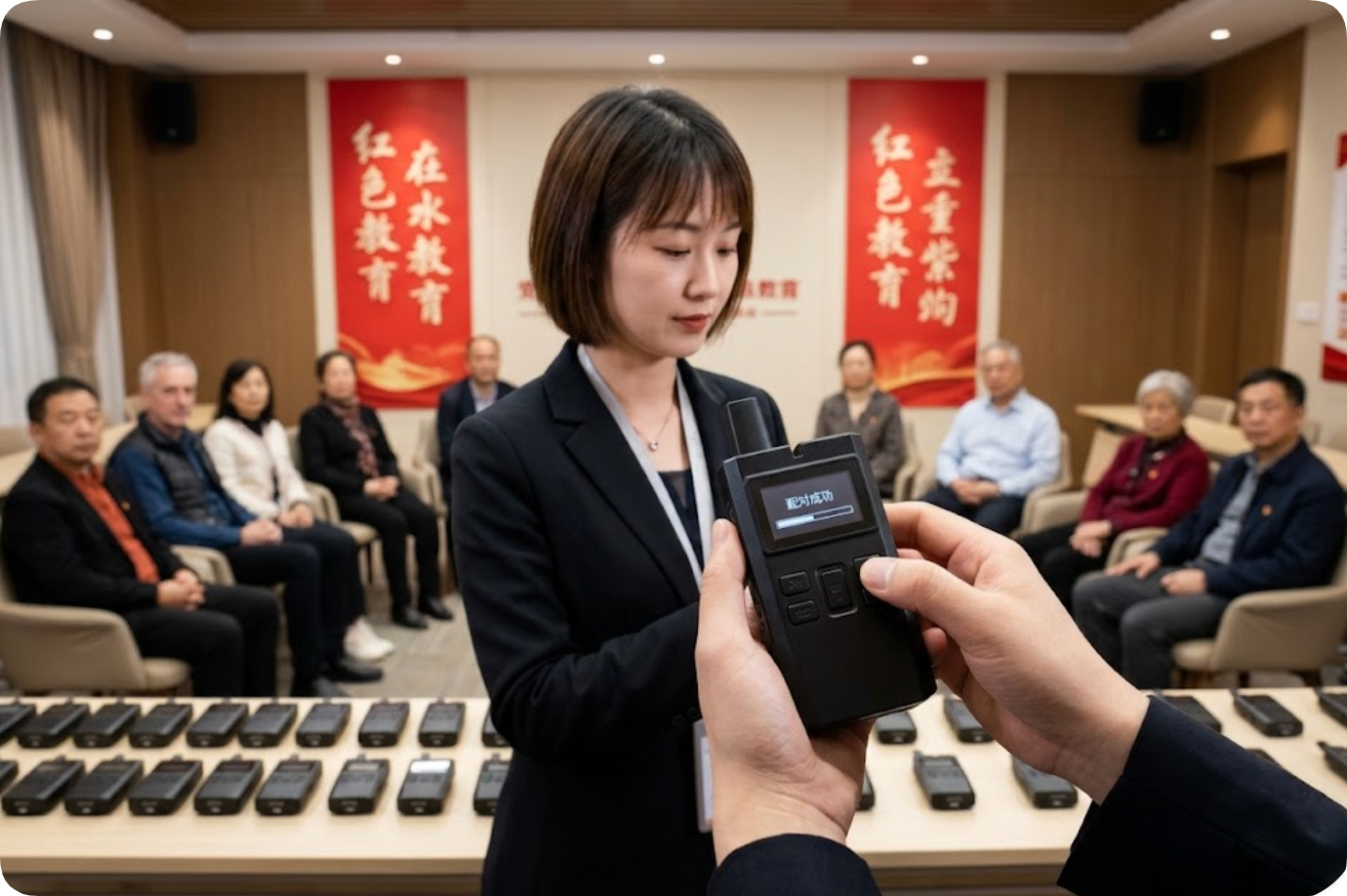
Keypad audio players do not use RF channel sheets, though dispatch staff frequently mistake track numbers for radio channels. Incorrectly logging exhibit numbers into channel columns often leads to rental desk errors, such as issuing a guest requesting track 14 a live receiver tuned to channel 14. Dispatch desks avoid this by maintaining three separate logs: 2.4GHz slots, UHF slots, and keypad serial numbers. Establishing clear tracking at opening prevents operational confusion at dispatch gates and keeps live guided groups distinct from self-paced visitors.
Managing Queue Lines and Dense Infrastructure with Live Speech
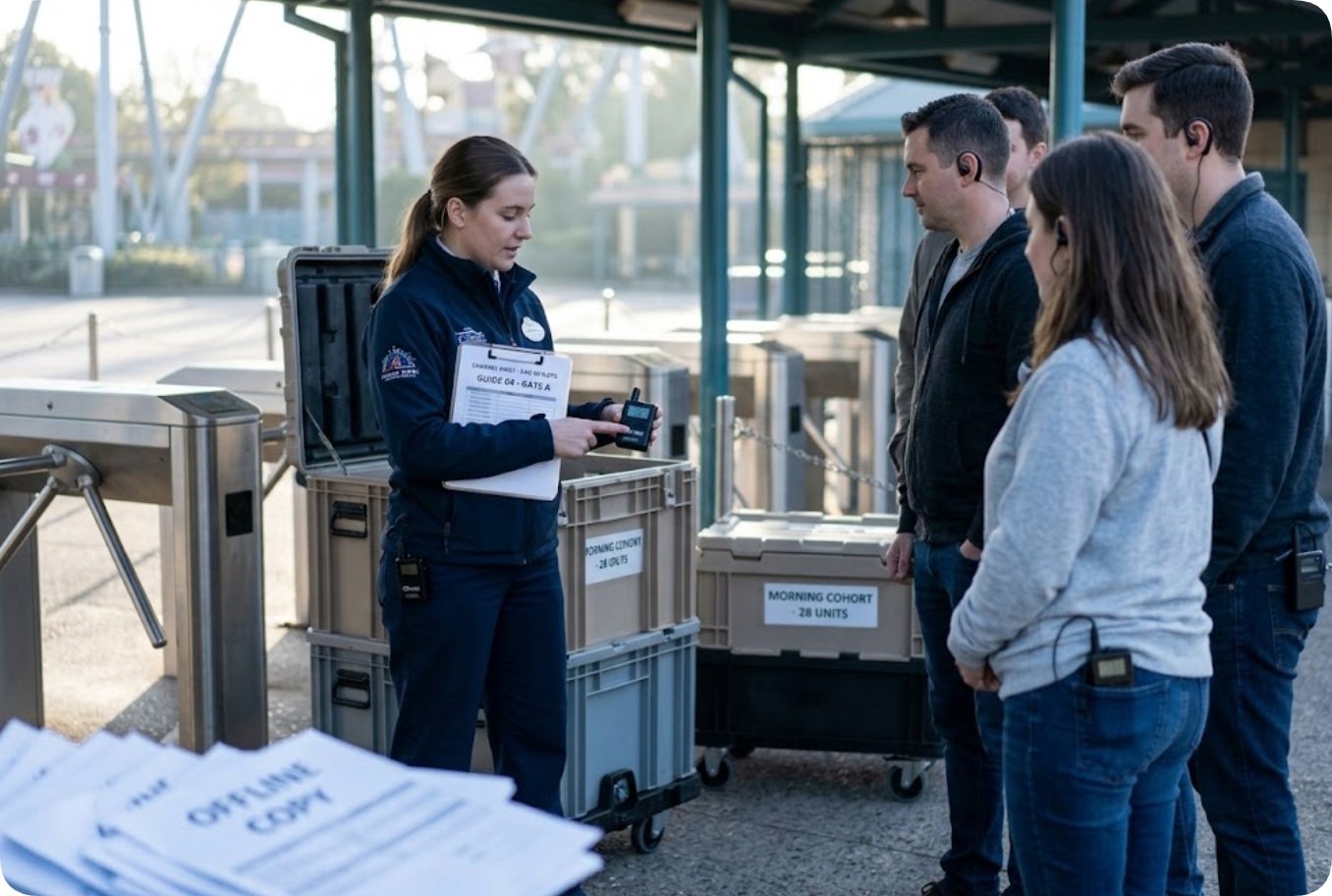
The RC085 Digital Tour Guide System operates on the 470–510 MHz UHF spectrum across 100 channels. UHF frequencies provide strong RF penetration around heavy steel structures, mechanical equipment rooms, and enclosed attraction queues where 2.4GHz bands face dense signal environments. Technical features include LCD displays, selectable one-way or two-way modes, auto sleep/wake functions, and a 3-year mainboard warranty. Regardless of hardware specs, operational control remains anchored to the guide's microphone, keeping audio delivery synchronized across the group.
Synchronized audio supports structured queue management. If an attraction queue pauses for twelve minutes, a guide can explain the delay, answer height requirement questions, and resume commentary without managing individual receivers. Conversely, because the guide controls timing, guests leaving the group miss subsequent details without rewind capability. Theme parks accept this operational trade-off to maintain unified group pacing and centralized communication.
🗺️ Self-Paced Navigation via Keypad Audio Players
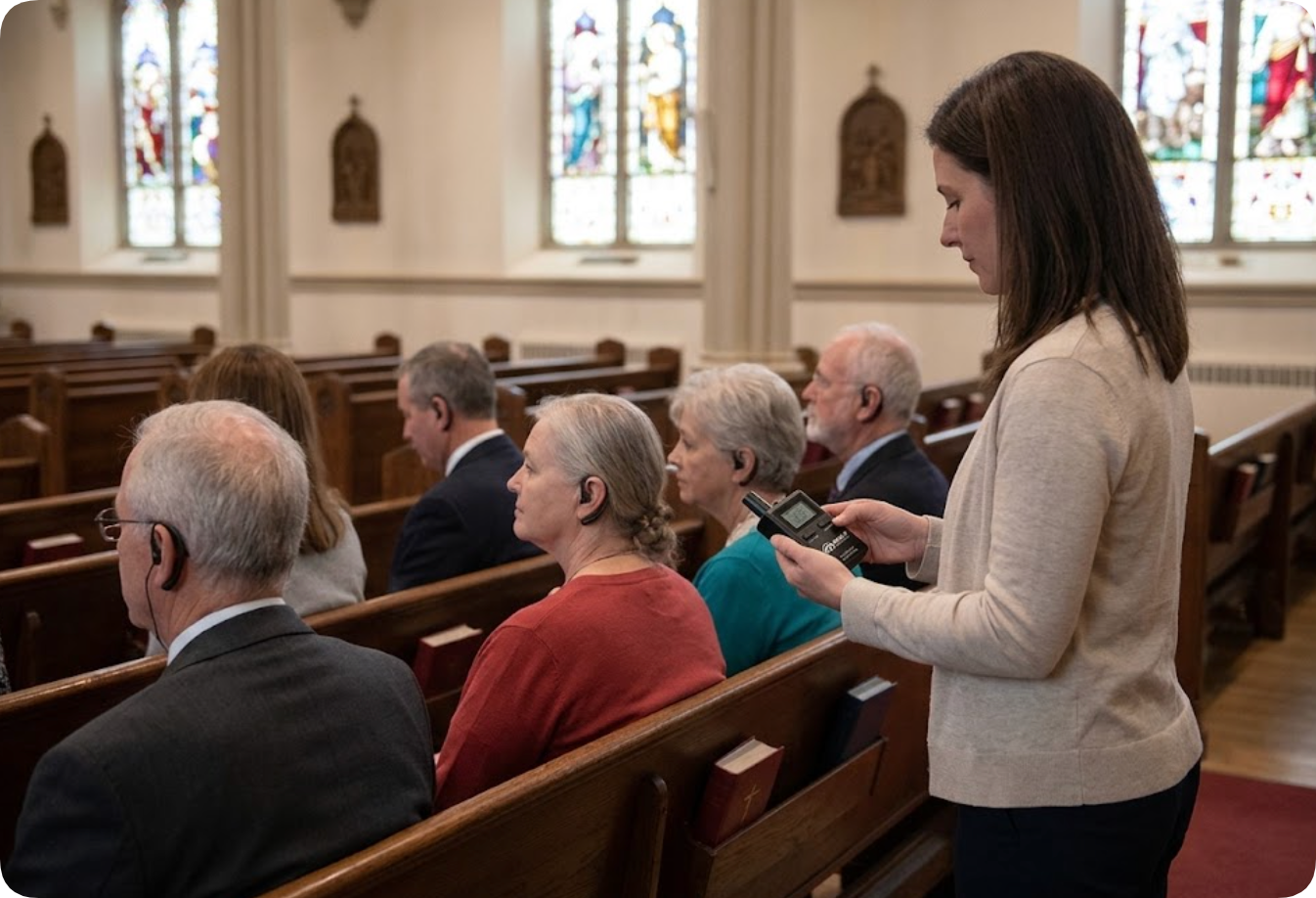
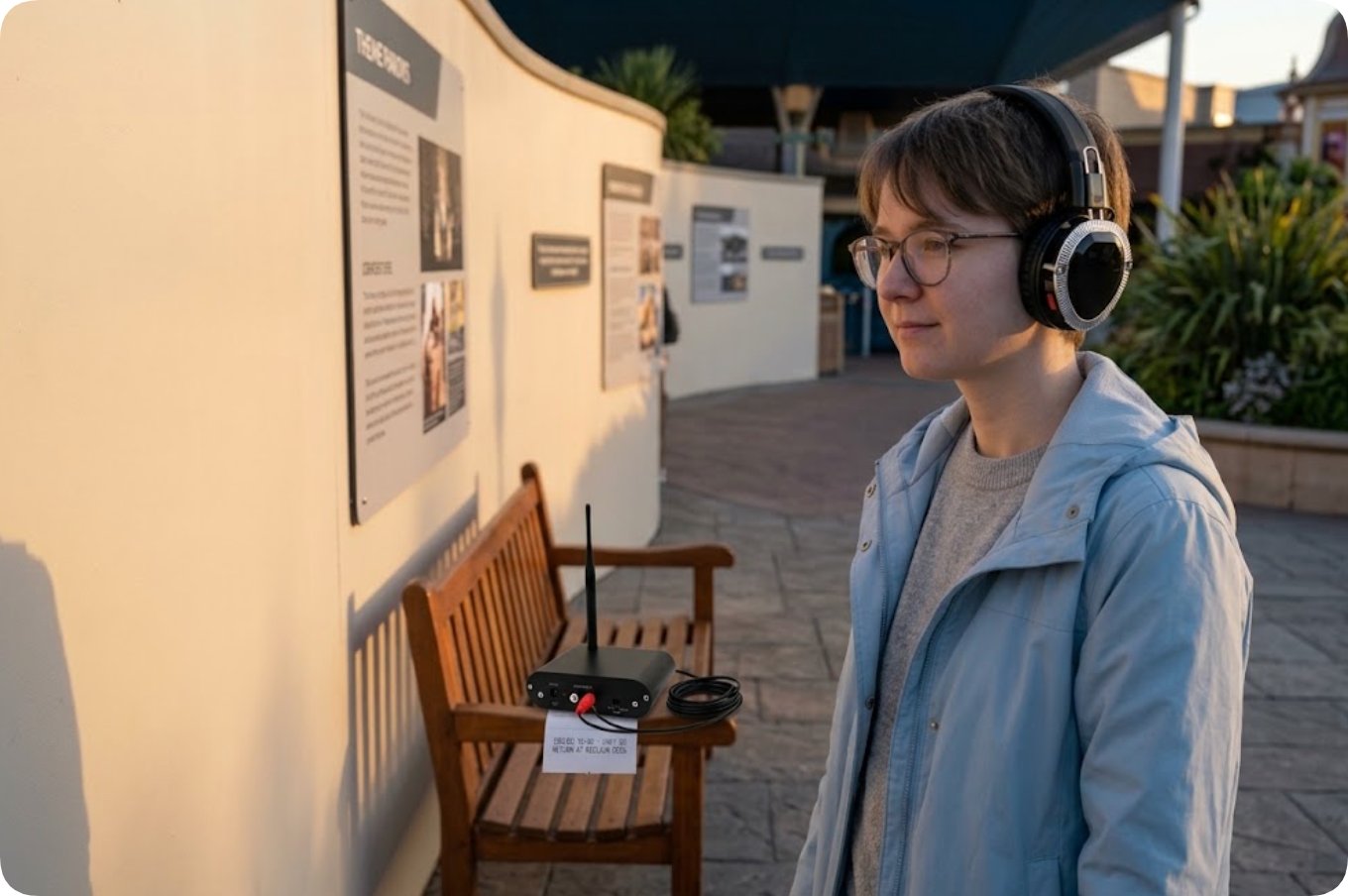
The 2.8-Inch Semi-Auto Digital Audio Guide shifts audio control directly to the visitor. Equipped with a 0–9 numeric keypad and dedicated play, pause, and volume controls, visitors manually enter exhibit numbers to trigger matching tracks. The device supports up to 16 languages and 9,999 audio files across 2GB of internal storage, delivering up to 18 hours of continuous Micro-USB powered playback. Because playback relies on manual key entry rather than automated RFID or beacon triggers, guests determine their own listening schedules.
Self-paced playback offers distinct operational benefits: guests can pause, rewind, or skip tracks independently, select preferred languages on demand, and explore exhibits at varying speeds. However, removing dedicated tour leads eliminates real-time guest assistance during route closures or temporary attraction downtime. Parks deploying keypad units rely on clear exhibit signage, numbered wayfinding markers, and dedicated customer support desks to maintain self-guided operations.
| Operating question | RC2408 live kit | RC085 live kit | Keypad player |
|---|---|---|---|
| What begins a commentary | Guide opens the microphone | Guide opens the microphone | Visitor enters a track number |
| Who holds the timing | Guide; the group follows | Guide; the group follows | Each visitor; the group does not matter |
| What a listener can change | Volume only; otherwise stays with the group | Volume only; otherwise stays with the group | Play; pause; volume; track order |
| Where the group must stay together | Within transmitter range of one guide | Within transmitter range of one guide | Nowhere; units are issued per person |
| What the desk records at closing | Which channel each guide used | Which UHF group each guide used | How many handsets were issued and returned |
This operational breakdown focuses strictly on playback control. Defining whether audio starts at the guide's discretion or the visitor's input establishes clear requirements for staffing ratios, wayfinding design, and rental management.
Managing Parade Closures and Timed Route Pauses
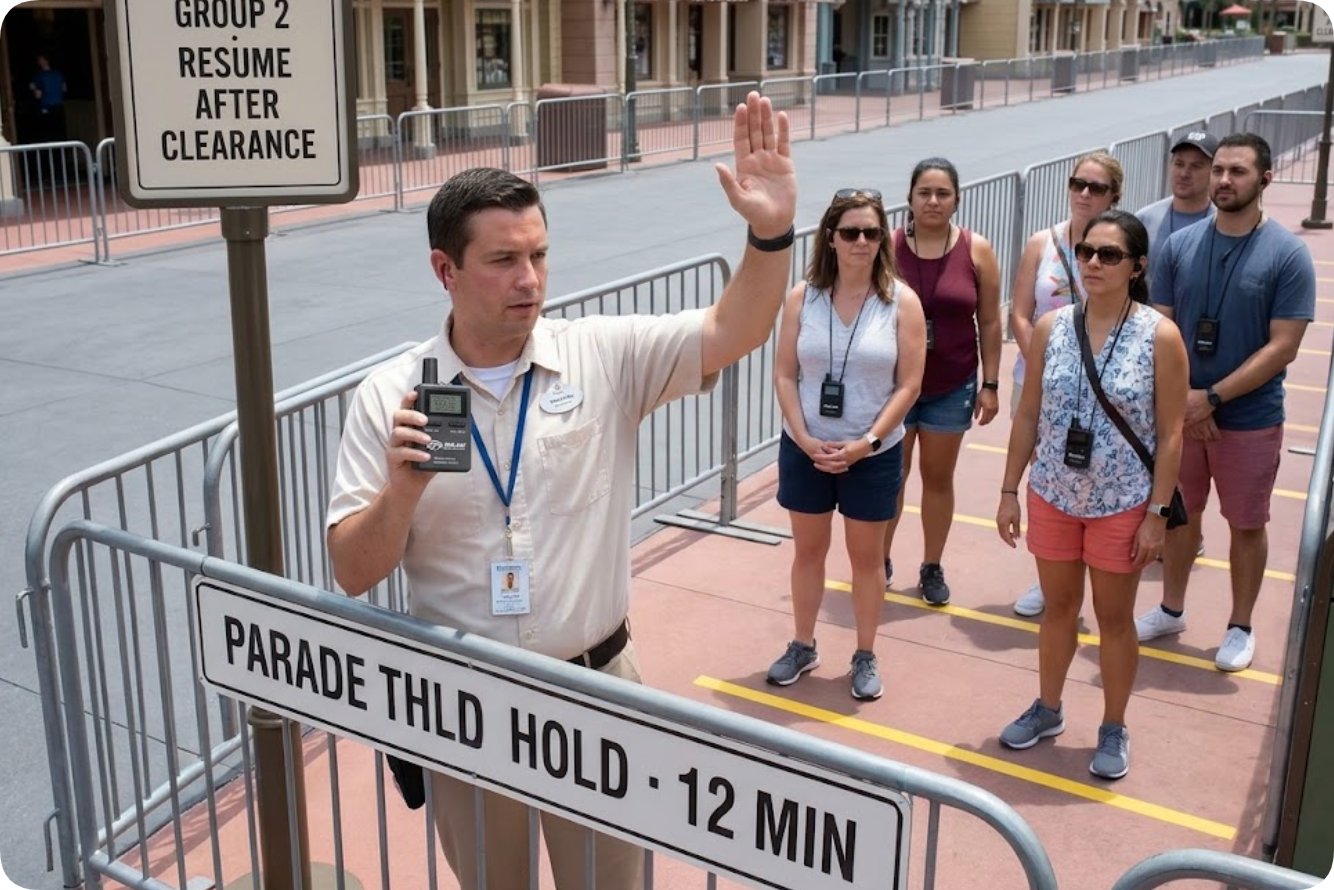
Parade closures highlight operational differences between system types. During 15-minute parade holds along main thoroughfares, live tour leads pause transmission, inform their group of the schedule, and resume once pathways clear, keeping group narratives synchronized. Keypad units lack centralized broadcast pauses, allowing guests to trigger audio tracks for exhibits located across closed parade boundaries.
Parks running hybrid deployments enforce specific protocols during parade windows. Standard procedures include pausing keypad rentals 20 minutes prior to parade events, incorporating brief advisory tracks into pre-recorded libraries, and positioning staff along boundary points. Live groups require minimal adjustments beyond direct lead briefings. Operational success relies on establishing clear parade protocols prior to seasonal launch.
Multilingual Audio Content vs. Live Staffing Scaling
Keypad audio players scale efficiently for international visitors. While live tours require dedicated multilingual staff to serve multiple language markets, pre-recorded devices support up to 16 language tracks on a single unit. Pre-loaded handsets can be reassigned between different language users instantly without counter re-configuration. A wireless tour guide system scales via additional live guides, whereas keypad units scale through pre-stored content assets.
Pre-recorded audio requires ongoing content maintenance. Static audio tracks do not automatically update during temporary exhibit closures or seasonal layout changes, whereas live guides adjust commentary immediately. For diverse guest demographics, hybrid deployments balancing live staff and self-guided units deliver flexible, comprehensive park coverage.
| Comparison row | RC2408 | RC085 |
|---|---|---|
| Core frequency band | 2403-2483 MHz | 470-510 MHz |
| Number of channels | 80 | 100 |
| Transmission distance | 1-200 m | 1-200 m |
| Transmitter battery life | 10 h | 12 h |
| Receiver battery life | 20 h | 20 h |
| Transmitter weight | 59 g | 65 g |
| Receiver weight | 50 g | 60 g |
| Charging port | DC Port | USB |
This technical comparison evaluates live RF systems operating under identical measurement metrics based on manufacturer specifications. Keypad audio units are categorized separately as standalone playback devices, featuring 18-hour battery runtimes, 16 language slots, 9,999 file capacity, 2GB internal storage, and Micro-USB charging ports.
Audio Muting Controls During Evening Shows
Managing audio pauses before major evening shows or fireworks displays requires clear protocols. On live systems, tour leads stop speaking into the transmitter to silence connected receivers across the group. Keypad units, however, remain active in guest hands. Parks manage this by enforcing rental return deadlines prior to main shows, setting up collection stations near viewing zones, or programming silent tracks into specific exhibit numbers.
Live tour leads adapt immediately to real-time park changes, crowd density, and schedule shifts. Venue operators can explore our solutions to review tailored deployments across various facility profiles, ensuring audio hardware matches operational workflow requirements.
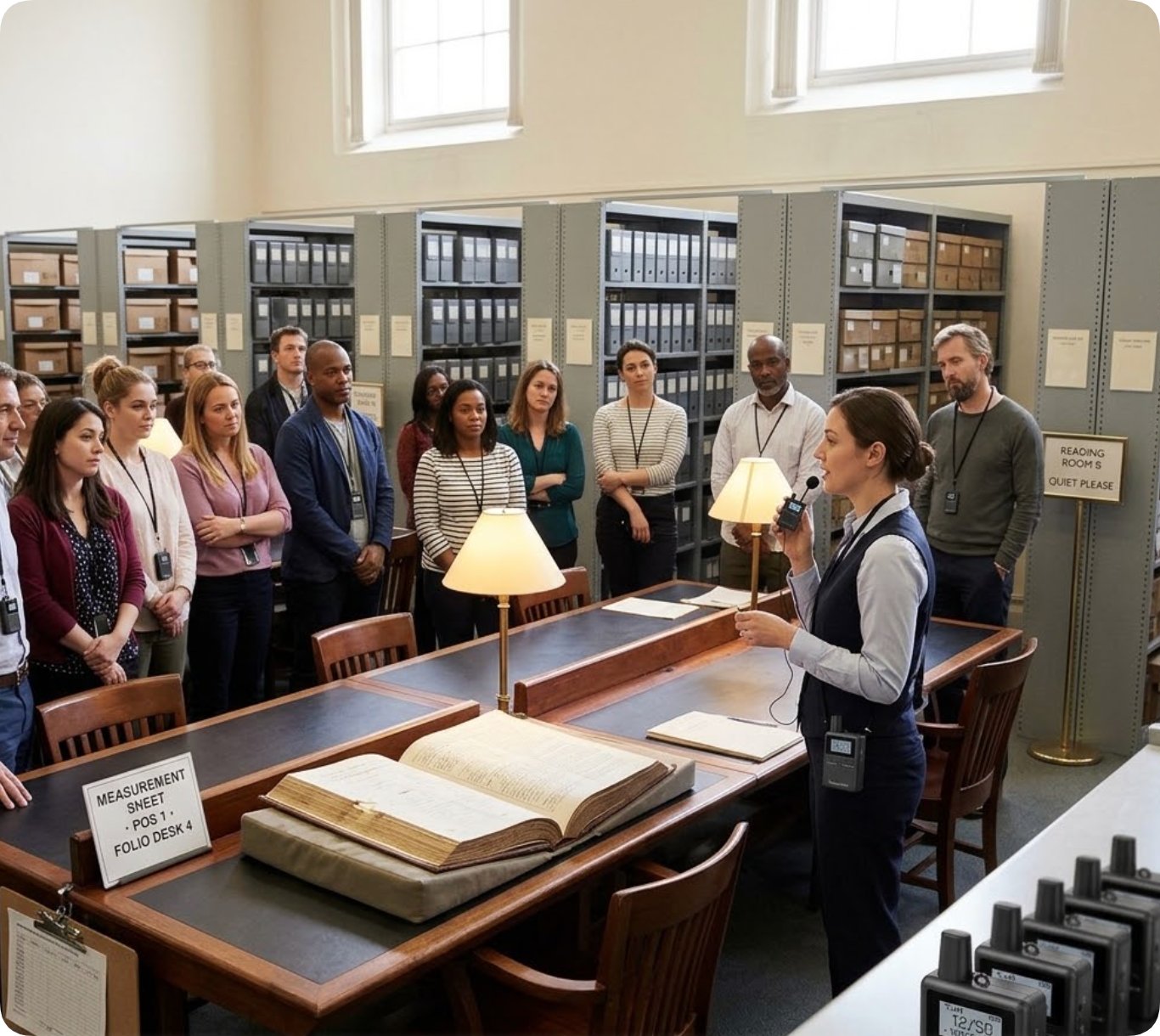
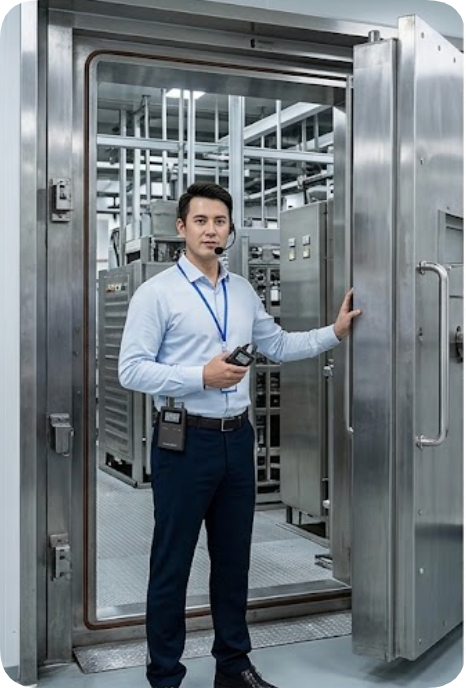
Similar operational divisions apply across multiple commercial settings. Museums deploy live systems for scheduled gallery tours while offering keypad units to independent visitors. Zoos use live systems during animal feeding demonstrations to manage crowd timing. Industrial facilities require live tour guide systems to guarantee safety instruction delivery in high-noise areas. Cruise shore excursions rely on live systems for coach travel and transition to self-guided units during free time.
Daily Operations Log and Asset Reconciliation
Daily return logs validate operational effectiveness. Live system fleets track active guides, assigned RF channels, returned receivers, and completed tour loops. Keypad fleet logs measure unit checkout rates, return counts, and track selection metrics, identifying high-traffic zones and wayfinding clarity across the park.
Analyzing operational data over a full season guides infrastructure refinements. High rental checkouts paired with low track playback often highlight unclear exhibit signage. Frequent group drop-offs during parade holds may indicate a need for adjusted tour routing or shorter commentary blocks. Equipment decisions grounded in daily operational logs ensure long-term site efficiency.
For detailed case studies on structured tour routing and fixed timing implementations, review the RC2401 and RC2468 documentation. Matching hardware control models to actual guest movement ensures reliable audio operations throughout peak attendance periods.