A leading China factory specializing in Wireless Tour Guide Systems, Church Audio Guides, and Translation Headphones with premium OEM/ODM solutions.

Tel:+86 18922879583

Email:tiger.wang@richitek.com

Richitek RC2401, RC8860 and RC2408 vs AudioFetch and SOOLAI SPL-32 for Zoo and Aquarium Tours

One Park, Forty Parallel Tours

A zoological park is the hardest mixed acoustic venue that runs every single day. One hour a guide is holding a group together outside the big cat enclosure with roadworks drilling two hundred metres away; the next hour the same group steps into the reptile house, where keepers ask visitors to whisper and a loudspeaker would send a snake back into its hide. In between, ten school classes, four travel groups and a birthday party are walking the same map in opposite directions. No operator can shout over that. The workable answer is a set of closed audio channels — one per group — with receivers comfortable enough that a nine-year-old keeps wearing them past the penguin pool. That is exactly the brief the Education Wireless Audio Systems platform was built around, and this comparison tests three Richitek models against two very different alternatives on zoo terms.

The Richitek trio here is chosen by role rather than by price. The RC2401 is the standard 2.4G kit a park hands out by the crate on a school morning. The RC8860 is the only UHF model in the line, built to cut through the radio congestion a crowd of ten thousand smartphones creates. The RC2408 is the congestion solver on the 2.4G side, carrying eighty channels for peak-season days. Against them sit AudioFetch, an American service that streams audio over venue WiFi to guests' own phones, and the SOOLAI SPL-32, a UHF kit publishing 1,599 selectable frequencies in a 40 MHz bandwidth. One side distributes to devices the park owns and charges; the other to devices the visitor already carries. Both models exist in real zoos, and the differences are worth a line-by-line look.

✅ RC2401: The Standard Kit Every Keeper Can Hand Out

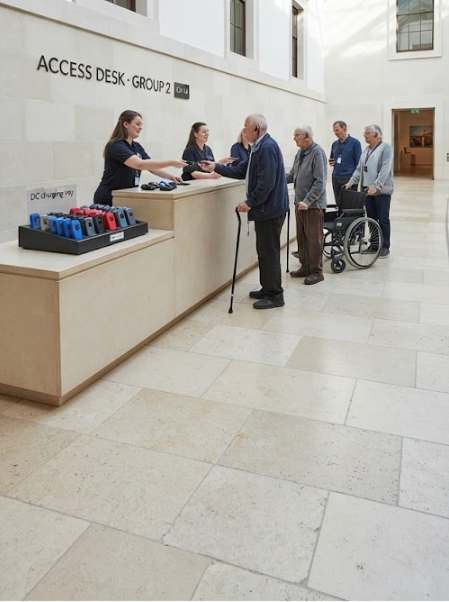
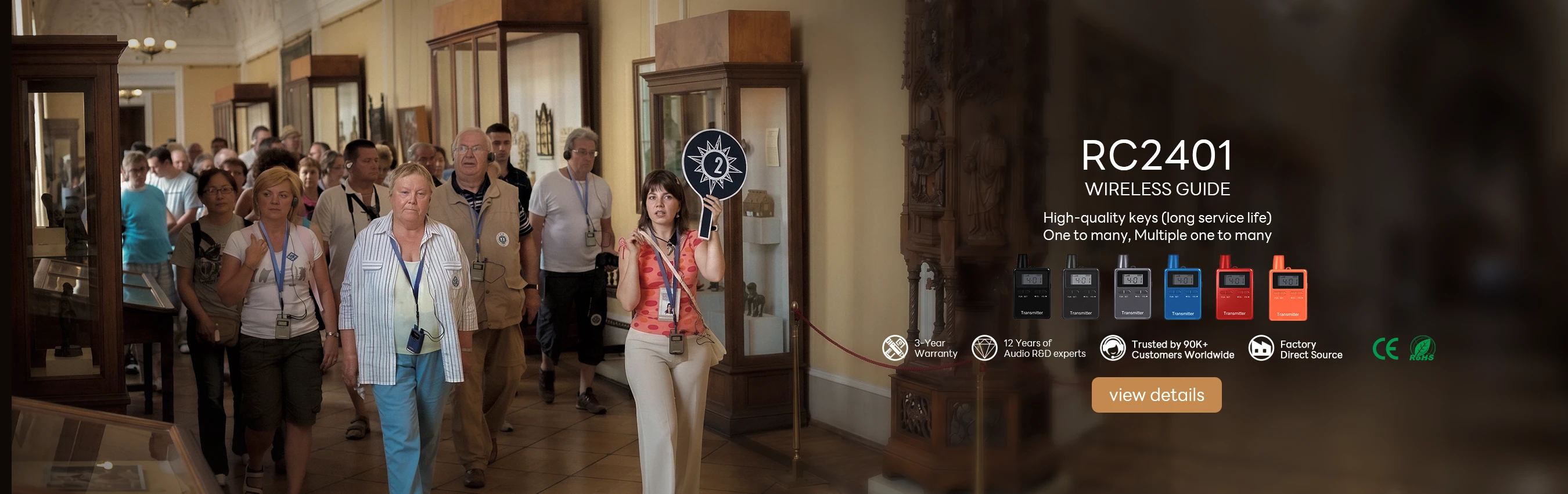
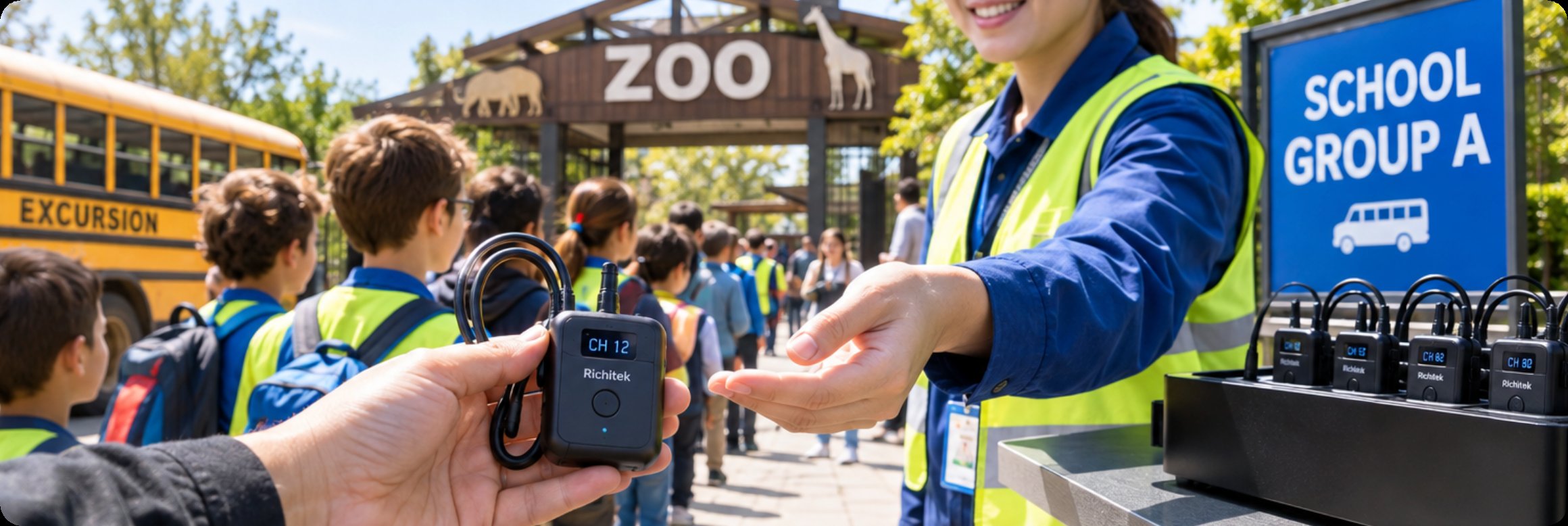
The RC2401 is deliberately unremarkable, and in a zoo that is a compliment. Fifty PLL-locked channels in the licence-free 2403-2483 MHz band let an education department run fifty simultaneous groups without frequency planning drama, and ten milliwatts of output keeps each signal confined to its own group instead of spilling into the next. The transmitter weighs 59 g and runs ten hours from a 1500 mAh cell — a keeper talk at the giraffe platform, a lunch break, and an afternoon loop all on one charge. Receivers hold twenty hours, so a kit issued at the gate comes back with margin to spare even on the longest summer day. At 50 g each, receivers are light enough for primary-school visitors and cheap enough that losing one to a wishing pool is an annoyance rather than a budget event. The RC2401 product page carries the channel chart and battery specifics for tender documents.
richitek zoo_aquarium vs audiofetch soolai 1

RC8860: The UHF Option for the Loudest Enclosures

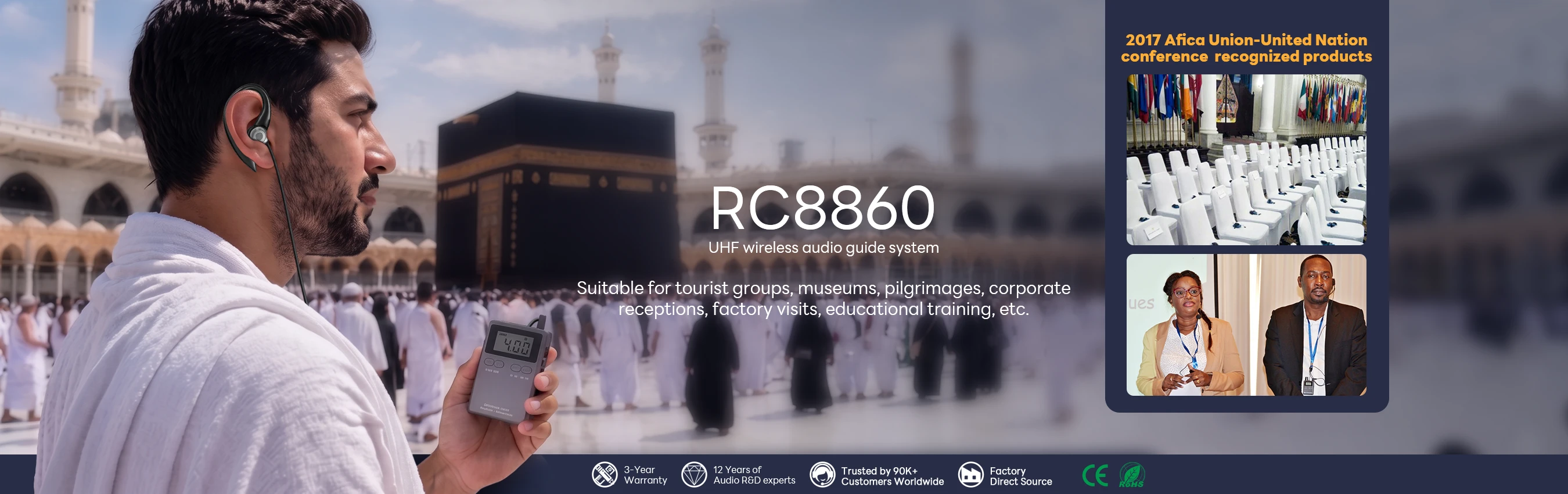
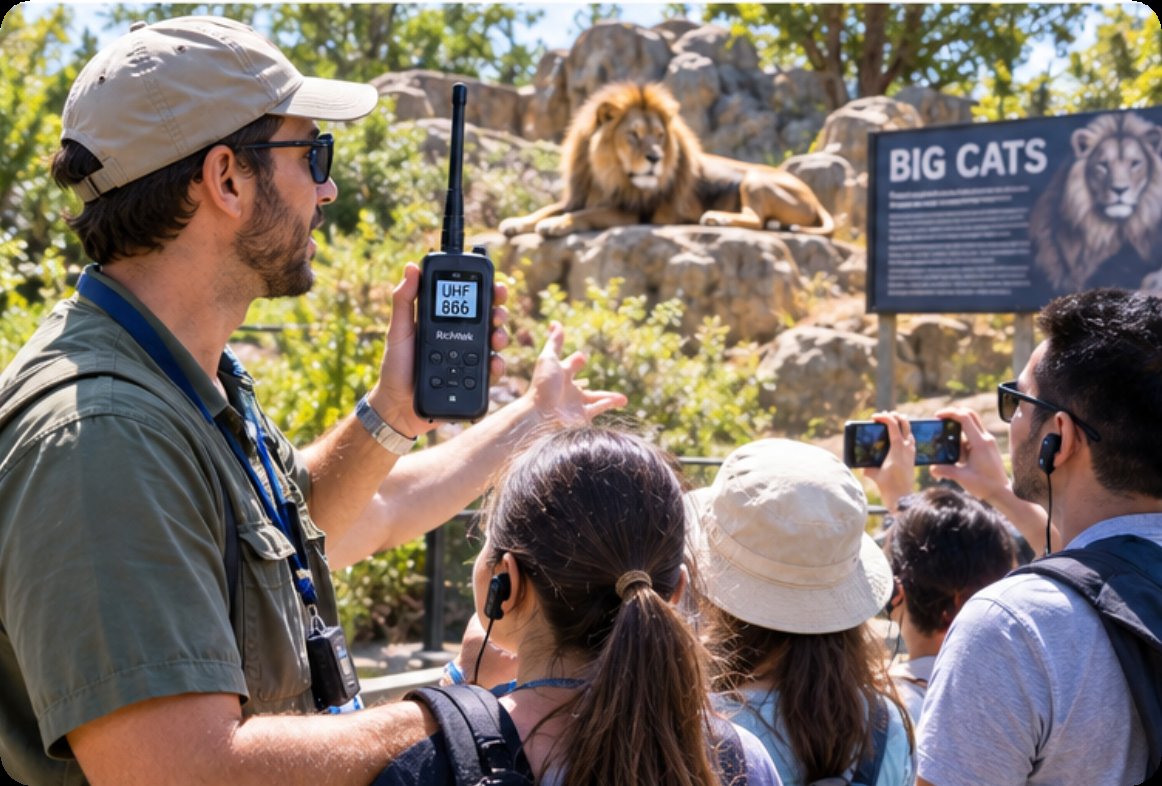
The RC8860 is the line's one UHF model, transmitting at 860-870 MHz. Its argument is physical: the 2.4 GHz band is where every phone, Bluetooth headset and venue WiFi network lives, and on a packed holiday weekend a zoo's crowds generate exactly that interference wall. UHF at 860-870 MHz sits far below that noise floor and, inside buildings with dense structure — the aquarium's tiled tunnels, the nocturnal house's concrete corridors — it tends to hold a steadier link with less multipath fuss. The cost is capacity and paperwork. Twenty channels is the smallest count in this comparison, enough for a single operator running four or five concurrent tours, not forty. And the band's licensing is region-dependent: Europe's licence-free UHF allocation is 863-865 MHz, and a kit shipped abroad must be checked against local rules before the first tour. The full RC8860 details, including its six standard colours, are on the product page.
richitek zoo_aquarium vs audiofetch soolai 2

RC2408: Eighty Channels for Peak-Season Congestion

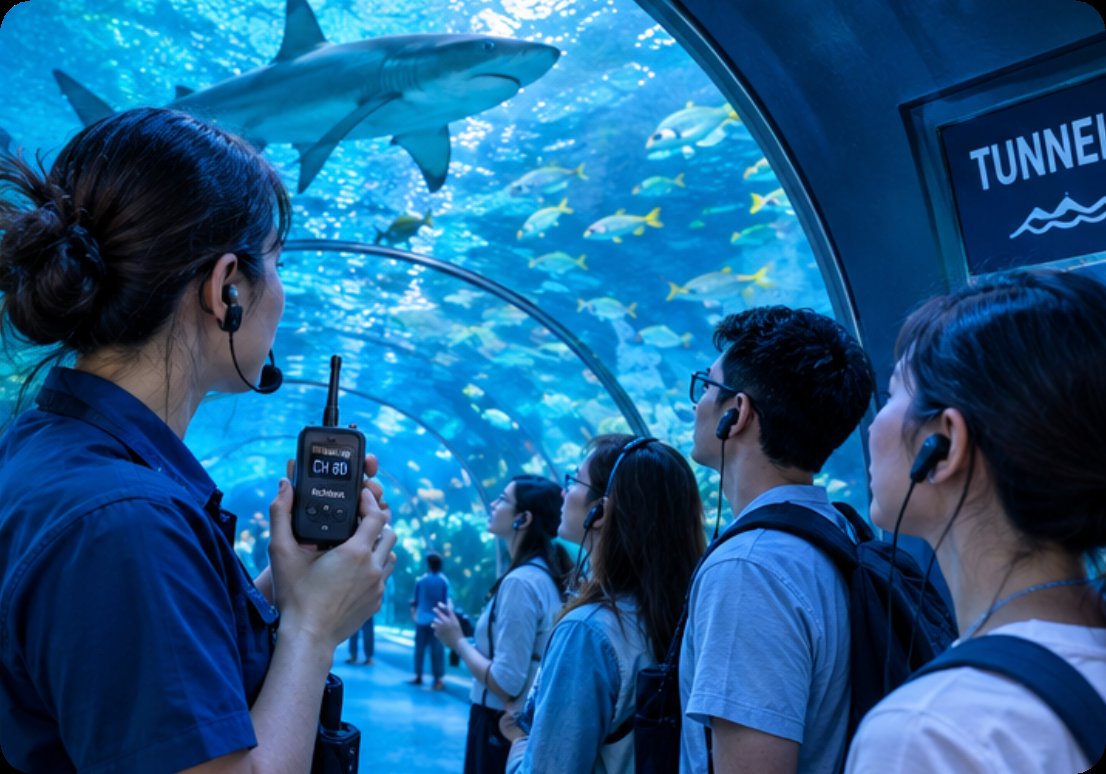
The RC2408 is the RC2401's argument taken further: same 2.4G band, same PLL discipline, but eighty channels instead of fifty. On an ordinary Tuesday the extra thirty channels are invisible. On the first Saturday of the school holidays, when a park runs dozens of parallel groups — scout troops, language-school cohorts, cruise shore excursions all entering within the same hour — those channels are the difference between a clean allocation and two groups sharing a frequency. Power and weight match the rest of the trio: a 59 g transmitter for ten hours, a 50 g receiver for twenty, 200 metres of working range across open lawns. For a park whose visitation is seasonal rather than steady, buying channel headroom is cheaper than buying a second frequency coordinator. The RC2408 product page lists the full eighty-channel plan.
richitek zoo_aquarium vs audiofetch soolai 3

⚡ How AudioFetch and SOOLAI Cover the Same Ground

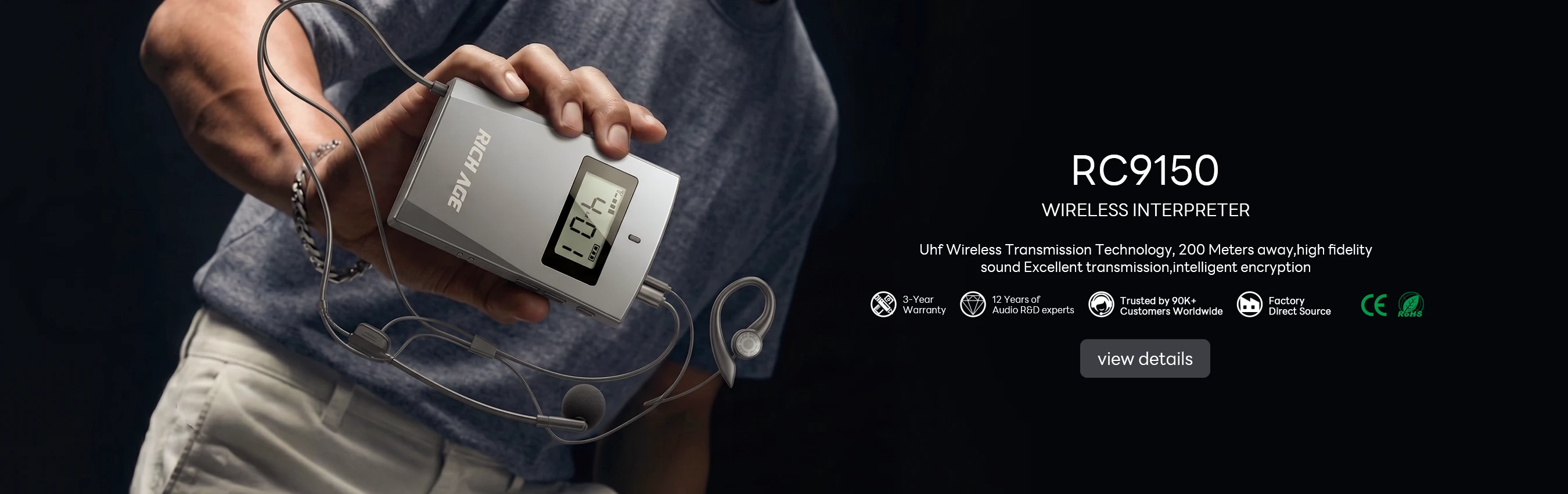
AudioFetch takes the opposite bet: instead of hardware the park owns, it streams over venue WiFi to the phones in visitors' pockets. The strengths are real. Concurrency is effectively unlimited — one more guest is one more phone, not one more receiver to buy — and there is no charging rack, no device counter and no lost-equipment line at the exit. For a botanical garden or an aquarium with strong WiFi already installed, it is a legitimate model. Its costs simply move: the venue underwrites the network, the visitor pays in battery and attention, and nobody hands a six-year-old a parent's phone as an earpiece for the nocturnal house. The SOOLAI SPL-32 is a conventional UHF kit — 40 MHz of bandwidth, 1,599 selectable frequencies organised into 32 channel groups, and a published range of 300-500 ft, roughly 90-150 metres. That range covers a smaller footprint than the 200-metre class below, and the frequency pool is deeper even if the group count is lower. Both are honest products; they just solve different fractions of the zoo problem.

The Numbers Behind the Route

Comparison DimensionRC2401RC8860RC2408AudioFetchSOOLAI SPL-32
Core band2403-2483 MHz860-870 MHz UHF2403-2483 MHzWiFi-streamed to phonesUHF, 40 MHz bandwidth
Channels / groups502080n.a. (app-based)32 groups, 1,599 frequencies
Working range1-200 m1-200 m1-200 mvenue WiFi coverageapprox. 90-150 m
Receiver weight50 g50 g50 gguest's own phonen.p.
Transmitter battery10 h (1500 mAh)10 h (1500 mAh)10 h (1500 mAh)n.a.n.p.

Read as a route plan, the table says something simple: the three Richitek models share one chassis and one 200-metre reach, and the real choice is channel capacity against band behaviour. Fifty channels is the fleet standard, eighty is peak-season insurance, and twenty UHF channels buy noise rejection at the price of headroom.

What the Trio Cannot Do Yet

Three limits deserve a sentence each. All three models charge through a DC port rather than USB-C, the oldest connector in this comparison, which keeps charging carts proprietary and spare-cable inventories awkward. None advertises an ingress-protection rating, and aquarium tunnels and misted aviary walkways are exactly where condensation gathers — wipe-down handling and dry storage are advised until a rated housing arrives. And the RC8860's twenty channels, the very feature that makes it cheap and focused, cap it out of the forty-parallel-tour scenario in the title; its licence story also changes by region. AudioFetch, to be fair, avoids all three problems by having no park-owned hardware at all — and takes on WiFi engineering and visitor friction in exchange.

Matching the Kit to the Habitat

Match the model to the park's shape. If education groups arrive by the busload and the operator wants one dependable kit for every occasion, the RC2401 is the crate-and-go answer. If the route lives indoors — tiled tunnels, steel railings, concrete service corridors — and weekend radio congestion is the enemy, the RC8860's UHF behaviour earns its slot. If the calendar peaks hard and parallel groups pile up by the dozen, the RC2408's eighty channels absorb what the season brings. Browse the wireless tour guide system range for the complete ten-model channel plan, or work through the head-to-head comparisons to see how each system behaves against a different rival. In this trade the quiet reptile house is the real testing bench: if a receiver disappears on a nine-year-old's ear for a full hour, the park buys the fleet.
2026年09月20日 18:00
click: 12
no data
Home > VS

Richitek RC2401, RC8860 and RC2408 vs AudioFetch and SOOLAI SPL-32 for Zoo and Aquarium Tours

time: 2026年09月20日 click:12

One Park, Forty Parallel Tours

A zoological park is the hardest mixed acoustic venue that runs every single day. One hour a guide is holding a group together outside the big cat enclosure with roadworks drilling two hundred metres away; the next hour the same group steps into the reptile house, where keepers ask visitors to whisper and a loudspeaker would send a snake back into its hide. In between, ten school classes, four travel groups and a birthday party are walking the same map in opposite directions. No operator can shout over that. The workable answer is a set of closed audio channels — one per group — with receivers comfortable enough that a nine-year-old keeps wearing them past the penguin pool. That is exactly the brief the Education Wireless Audio Systems platform was built around, and this comparison tests three Richitek models against two very different alternatives on zoo terms.

The Richitek trio here is chosen by role rather than by price. The RC2401 is the standard 2.4G kit a park hands out by the crate on a school morning. The RC8860 is the only UHF model in the line, built to cut through the radio congestion a crowd of ten thousand smartphones creates. The RC2408 is the congestion solver on the 2.4G side, carrying eighty channels for peak-season days. Against them sit AudioFetch, an American service that streams audio over venue WiFi to guests' own phones, and the SOOLAI SPL-32, a UHF kit publishing 1,599 selectable frequencies in a 40 MHz bandwidth. One side distributes to devices the park owns and charges; the other to devices the visitor already carries. Both models exist in real zoos, and the differences are worth a line-by-line look.

✅ RC2401: The Standard Kit Every Keeper Can Hand Out

The RC2401 is deliberately unremarkable, and in a zoo that is a compliment. Fifty PLL-locked channels in the licence-free 2403-2483 MHz band let an education department run fifty simultaneous groups without frequency planning drama, and ten milliwatts of output keeps each signal confined to its own group instead of spilling into the next. The transmitter weighs 59 g and runs ten hours from a 1500 mAh cell — a keeper talk at the giraffe platform, a lunch break, and an afternoon loop all on one charge. Receivers hold twenty hours, so a kit issued at the gate comes back with margin to spare even on the longest summer day. At 50 g each, receivers are light enough for primary-school visitors and cheap enough that losing one to a wishing pool is an annoyance rather than a budget event. The RC2401 product page carries the channel chart and battery specifics for tender documents.

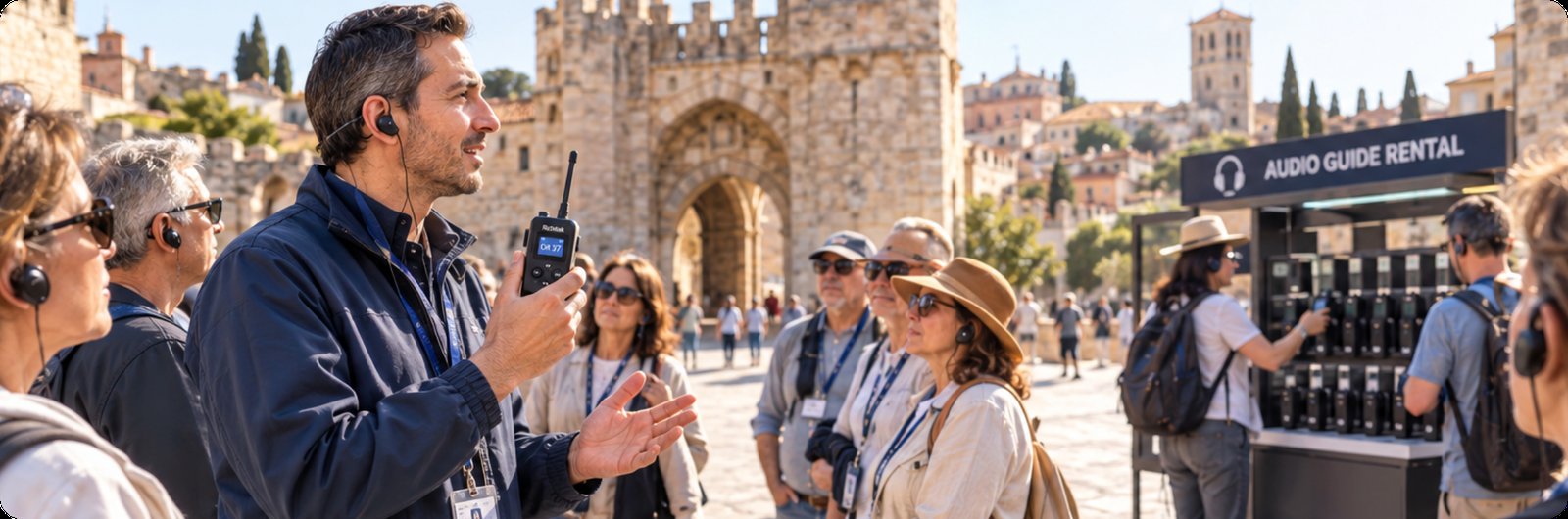
richitek zoo_aquarium vs audiofetch soolai 1

RC8860: The UHF Option for the Loudest Enclosures

The RC8860 is the line's one UHF model, transmitting at 860-870 MHz. Its argument is physical: the 2.4 GHz band is where every phone, Bluetooth headset and venue WiFi network lives, and on a packed holiday weekend a zoo's crowds generate exactly that interference wall. UHF at 860-870 MHz sits far below that noise floor and, inside buildings with dense structure — the aquarium's tiled tunnels, the nocturnal house's concrete corridors — it tends to hold a steadier link with less multipath fuss. The cost is capacity and paperwork. Twenty channels is the smallest count in this comparison, enough for a single operator running four or five concurrent tours, not forty. And the band's licensing is region-dependent: Europe's licence-free UHF allocation is 863-865 MHz, and a kit shipped abroad must be checked against local rules before the first tour. The full RC8860 details, including its six standard colours, are on the product page.

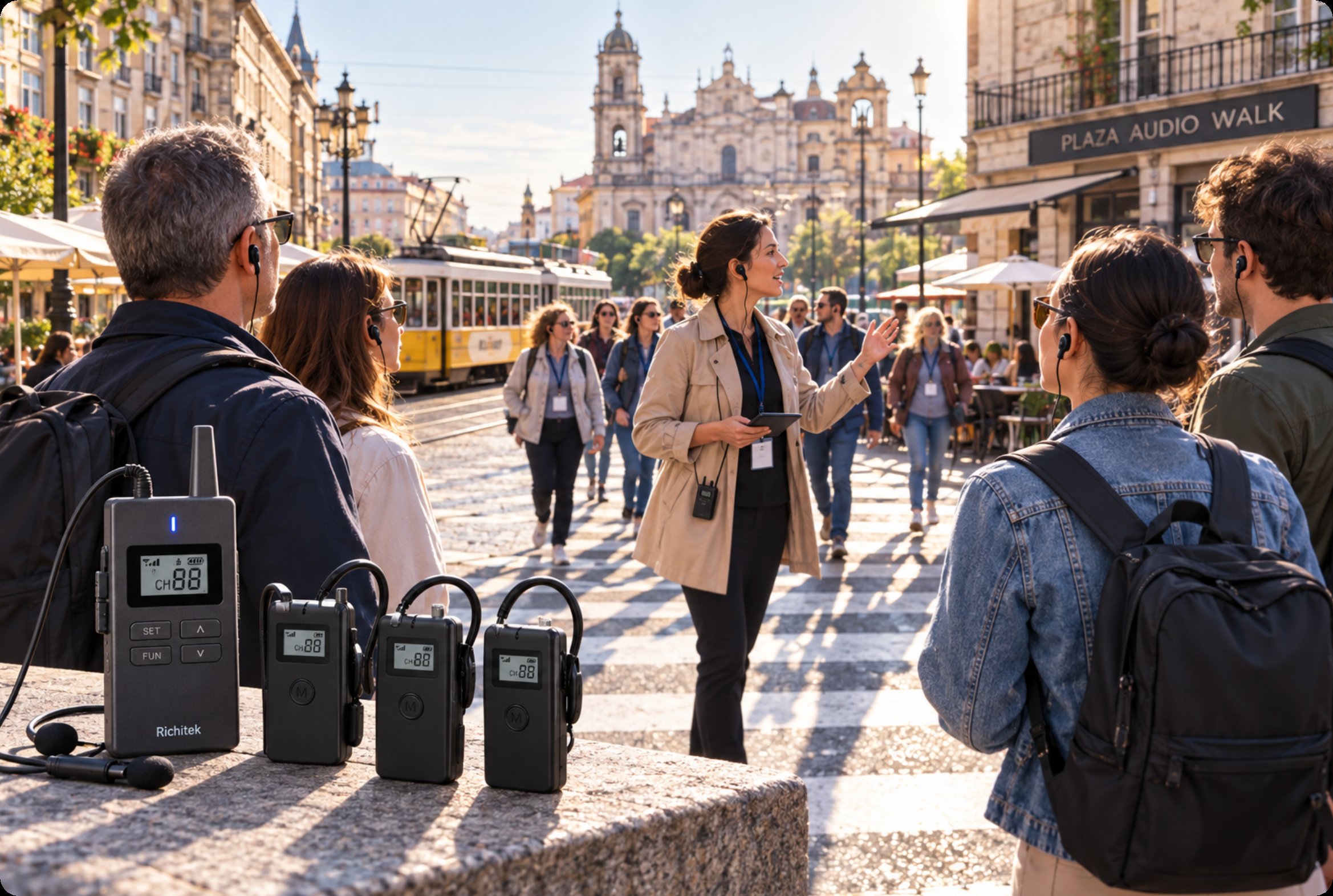
richitek zoo_aquarium vs audiofetch soolai 2

RC2408: Eighty Channels for Peak-Season Congestion

The RC2408 is the RC2401's argument taken further: same 2.4G band, same PLL discipline, but eighty channels instead of fifty. On an ordinary Tuesday the extra thirty channels are invisible. On the first Saturday of the school holidays, when a park runs dozens of parallel groups — scout troops, language-school cohorts, cruise shore excursions all entering within the same hour — those channels are the difference between a clean allocation and two groups sharing a frequency. Power and weight match the rest of the trio: a 59 g transmitter for ten hours, a 50 g receiver for twenty, 200 metres of working range across open lawns. For a park whose visitation is seasonal rather than steady, buying channel headroom is cheaper than buying a second frequency coordinator. The RC2408 product page lists the full eighty-channel plan.

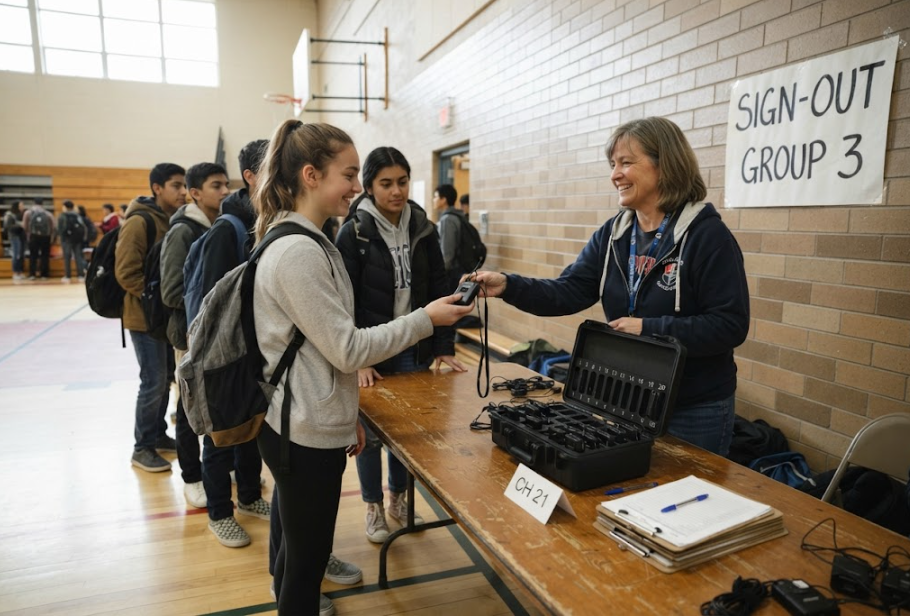
richitek zoo_aquarium vs audiofetch soolai 3

⚡ How AudioFetch and SOOLAI Cover the Same Ground

AudioFetch takes the opposite bet: instead of hardware the park owns, it streams over venue WiFi to the phones in visitors' pockets. The strengths are real. Concurrency is effectively unlimited — one more guest is one more phone, not one more receiver to buy — and there is no charging rack, no device counter and no lost-equipment line at the exit. For a botanical garden or an aquarium with strong WiFi already installed, it is a legitimate model. Its costs simply move: the venue underwrites the network, the visitor pays in battery and attention, and nobody hands a six-year-old a parent's phone as an earpiece for the nocturnal house. The SOOLAI SPL-32 is a conventional UHF kit — 40 MHz of bandwidth, 1,599 selectable frequencies organised into 32 channel groups, and a published range of 300-500 ft, roughly 90-150 metres. That range covers a smaller footprint than the 200-metre class below, and the frequency pool is deeper even if the group count is lower. Both are honest products; they just solve different fractions of the zoo problem.

The Numbers Behind the Route

Comparison DimensionRC2401RC8860RC2408AudioFetchSOOLAI SPL-32
Core band2403-2483 MHz860-870 MHz UHF2403-2483 MHzWiFi-streamed to phonesUHF, 40 MHz bandwidth
Channels / groups502080n.a. (app-based)32 groups, 1,599 frequencies
Working range1-200 m1-200 m1-200 mvenue WiFi coverageapprox. 90-150 m
Receiver weight50 g50 g50 gguest's own phonen.p.
Transmitter battery10 h (1500 mAh)10 h (1500 mAh)10 h (1500 mAh)n.a.n.p.

Read as a route plan, the table says something simple: the three Richitek models share one chassis and one 200-metre reach, and the real choice is channel capacity against band behaviour. Fifty channels is the fleet standard, eighty is peak-season insurance, and twenty UHF channels buy noise rejection at the price of headroom.

What the Trio Cannot Do Yet

Three limits deserve a sentence each. All three models charge through a DC port rather than USB-C, the oldest connector in this comparison, which keeps charging carts proprietary and spare-cable inventories awkward. None advertises an ingress-protection rating, and aquarium tunnels and misted aviary walkways are exactly where condensation gathers — wipe-down handling and dry storage are advised until a rated housing arrives. And the RC8860's twenty channels, the very feature that makes it cheap and focused, cap it out of the forty-parallel-tour scenario in the title; its licence story also changes by region. AudioFetch, to be fair, avoids all three problems by having no park-owned hardware at all — and takes on WiFi engineering and visitor friction in exchange.

Matching the Kit to the Habitat

Match the model to the park's shape. If education groups arrive by the busload and the operator wants one dependable kit for every occasion, the RC2401 is the crate-and-go answer. If the route lives indoors — tiled tunnels, steel railings, concrete service corridors — and weekend radio congestion is the enemy, the RC8860's UHF behaviour earns its slot. If the calendar peaks hard and parallel groups pile up by the dozen, the RC2408's eighty channels absorb what the season brings. Browse the wireless tour guide system range for the complete ten-model channel plan, or work through the head-to-head comparisons to see how each system behaves against a different rival. In this trade the quiet reptile house is the real testing bench: if a receiver disappears on a nine-year-old's ear for a full hour, the park buys the fleet.
no data
×

Contact us

email:
name:
subject:
content: