
A leading China factory specializing in Wireless Tour Guide Systems, Church Audio Guides, and Translation Headphones with premium OEM/ODM solutions.

Tel:+86 18922879583

Email:tiger.wang@richitek.com

Richitek RC9150, RC2401 and RC2500 vs Silent Sound System and KEYINDA for City Sightseeing Bus Tours

Every Seat Above the Engine

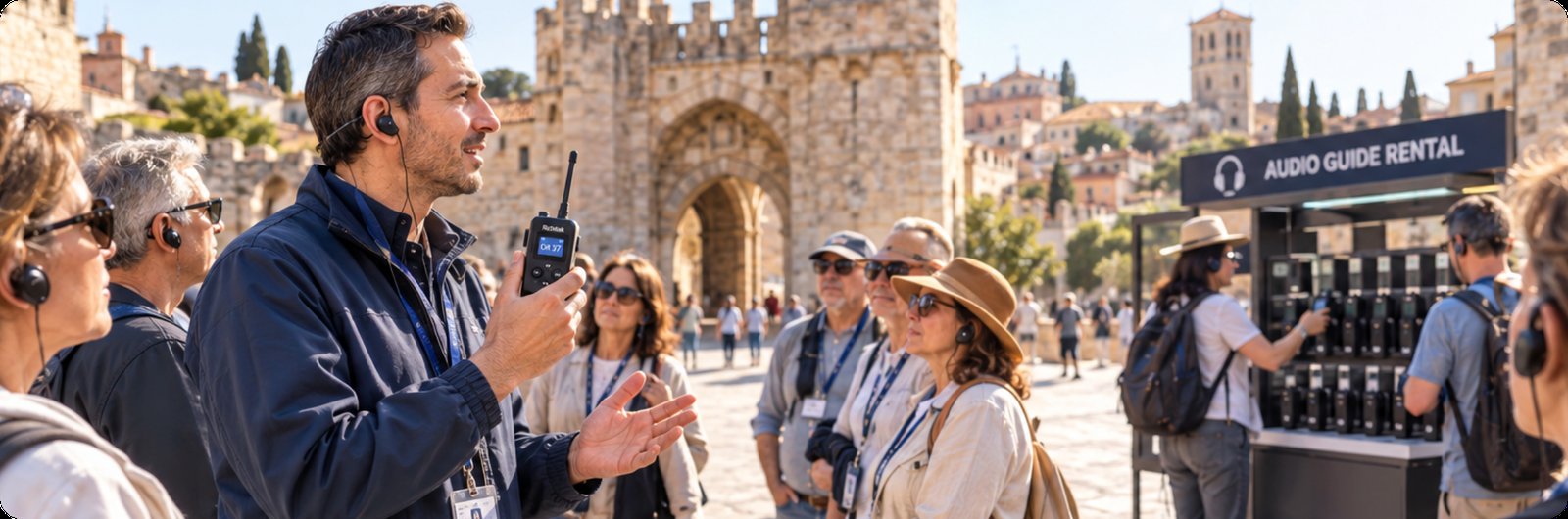
A city sightseeing bus is the hardest room in the tour business. The engine drones under the floor, the air handling roars over it, and the top deck adds wind at highway speed. Riders board and leave at every stop, so each unit gets handled a dozen times a day by strangers. Several buses from the same operator may run the same loop within a block of each other, each with its own live commentary. A wireless guide system for city tours has to solve all of that at once: enough channels that parallel buses never overlap, transmitter endurance for a full service day, and receivers that survive constant re-issuing. This comparison runs three Richitek models against two very different challengers: Silent Sound System, a silent-event specialist from the party side of the business, and KEYINDA, a Sichuan manufacturer that has pushed display intelligence into the transmitter.

The bus strips away what a walking tour forgives. A walking group keeps one transmitter all morning; a bus fleet re-pairs receivers every few stops as riders come and go. A campus runs three concurrent groups; a busy sightseeing corridor can run more buses than that from one depot, each wanting its own channel. So the questions that decide a bus deployment are channel headroom, battery arithmetic across a full service day, and how quickly a mixed-up receiver returns to service mid-route.

📡 RC9150: The Long-Haul Radio for the Longest Loop

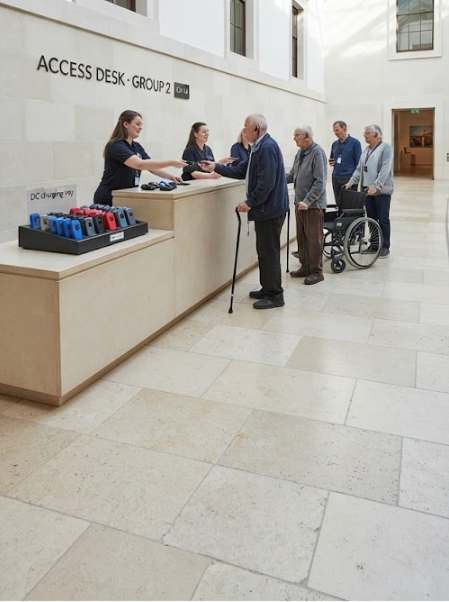
richitek bus_tour vs silentsound keyinda 1

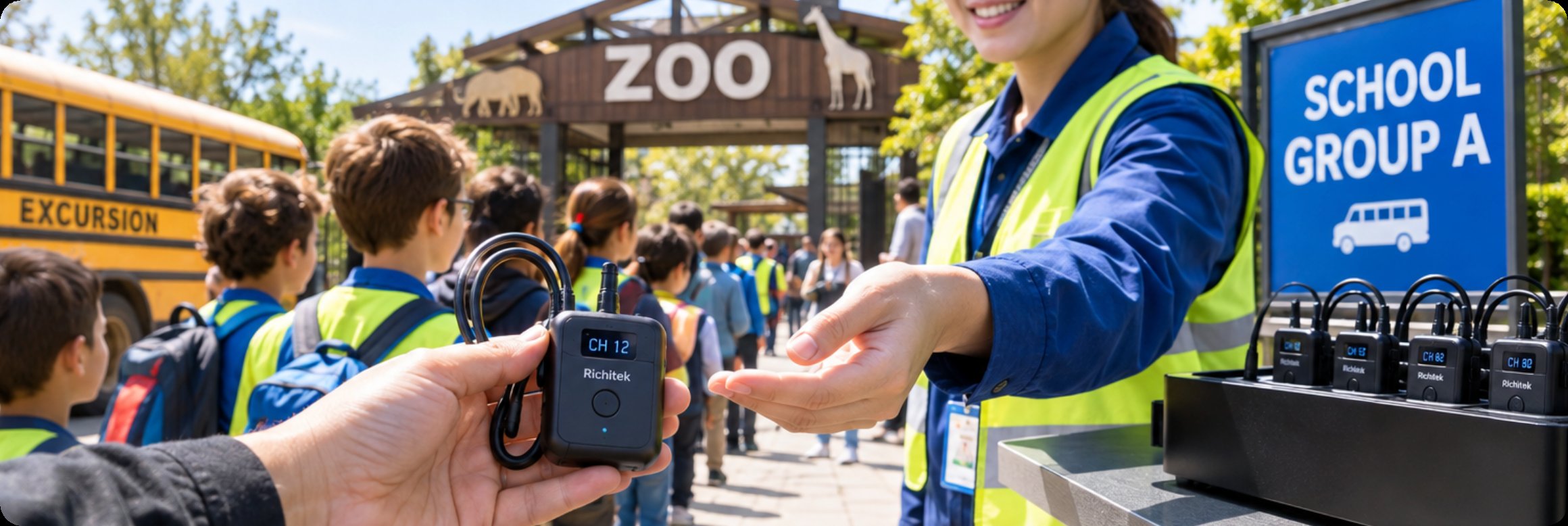
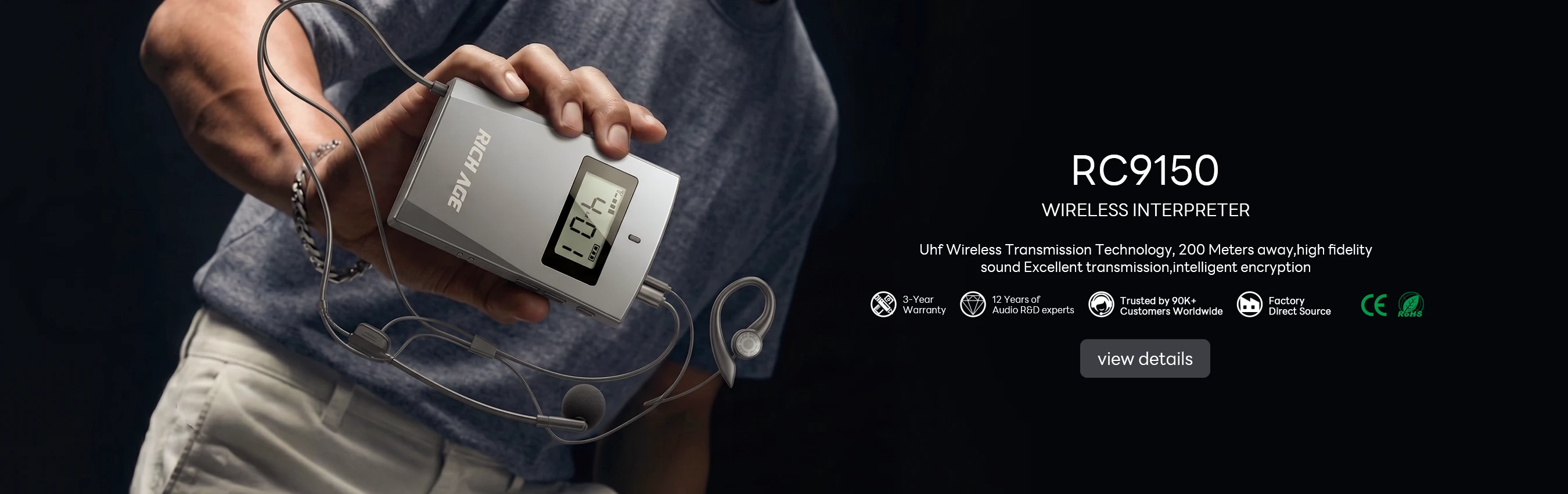
The RC9150 is the fleet's channel book and its fuel tank in one chassis. It PLL-locks across one hundred channels in the licence-free 2403-2483 MHz band, which means a corridor running ten simultaneous commentary buses still leaves ninety clean assignments for the day the route map grows. Its transmitter carries a 3.7V 1800 mAh cell rated at fifteen hours — comfortably a double shift — and the receiver matches it with a 35-hour-plus figure from the same capacity, so a unit issued at the depot gate finishes the evening loop without seeing a charger. At 10 mW output the signal stays boxed to one vehicle, and the 1-200 metre working range covers an articulated bus end to end. The Type-C charging port means depot night-charging uses the same cables as everything else in the office drawer. At 97.5 g the receiver sits on the heavier side of the line — the price of the big cell, easy to accept on a seated tour.

RC2401: The Volume Unit for a Growing Fleet

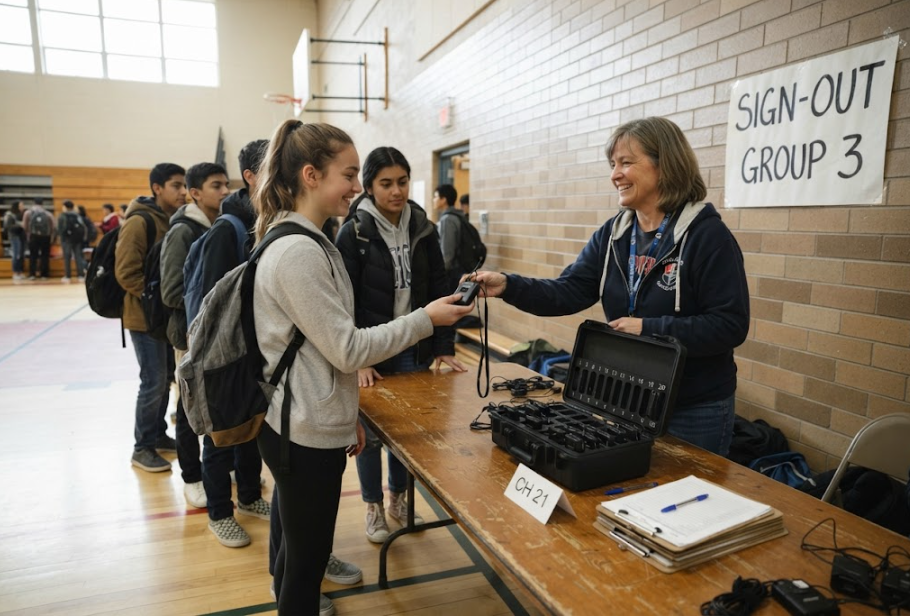
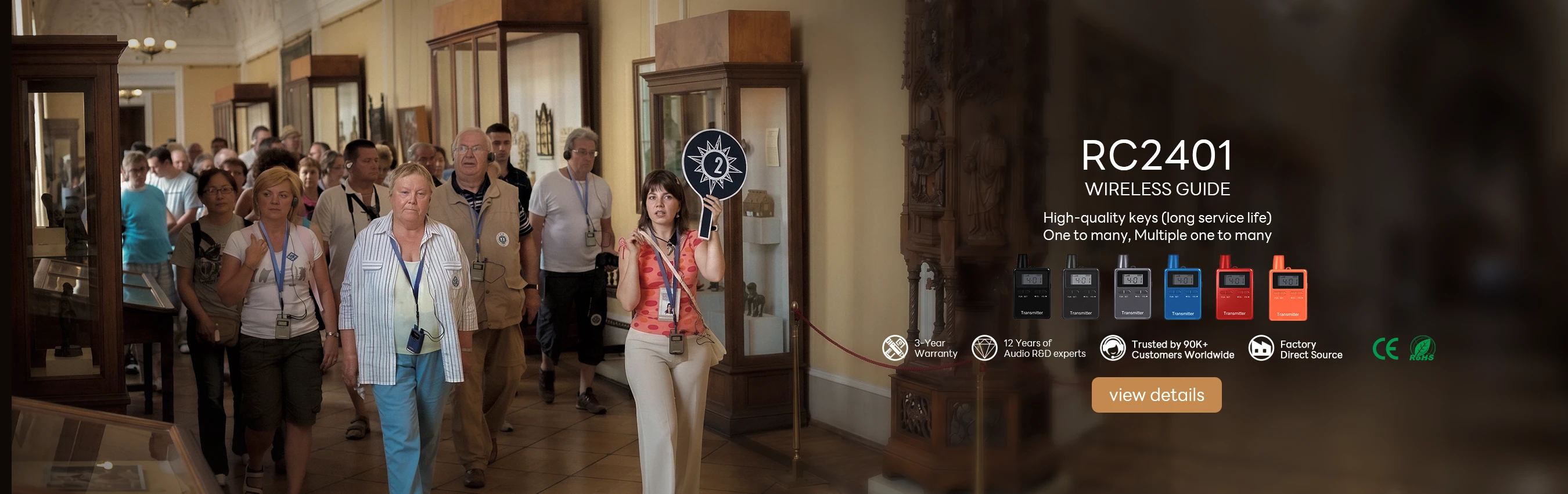
Every bus operator ends up buying in dozens, and the RC2401 is the unit you buy dozens of. It runs the standard fifty-channel, 10 mW, 1-200 metre platform with a 1500 mAh transmitter cell rated at ten hours — a full day of loops with the depot lunch break in between. Receivers hold twenty hours from 1000 mAh, which is generous for a device that only works while a rider is aboard. Nothing here is exotic, and that is the point: a fifty-channel plan is simple enough that a dispatcher can re-assign a bus by memory. Where the RC2401 earns its slot is total cost: a thirty-bus deployment spreads across this chassis without the flagship's per-unit premium, and the identical control layout means seasonal staff need one training session, not one per model.

RC2500: One-Button Control When the Clock Is Ticking
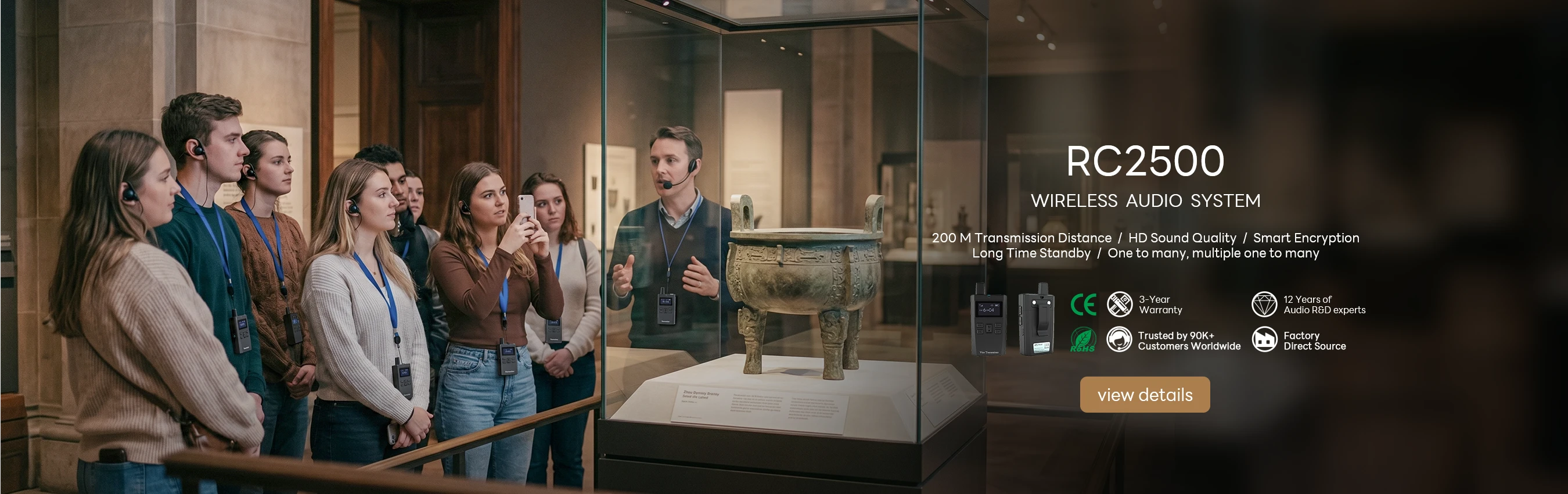
richitek bus_tour vs silentsound keyinda 2

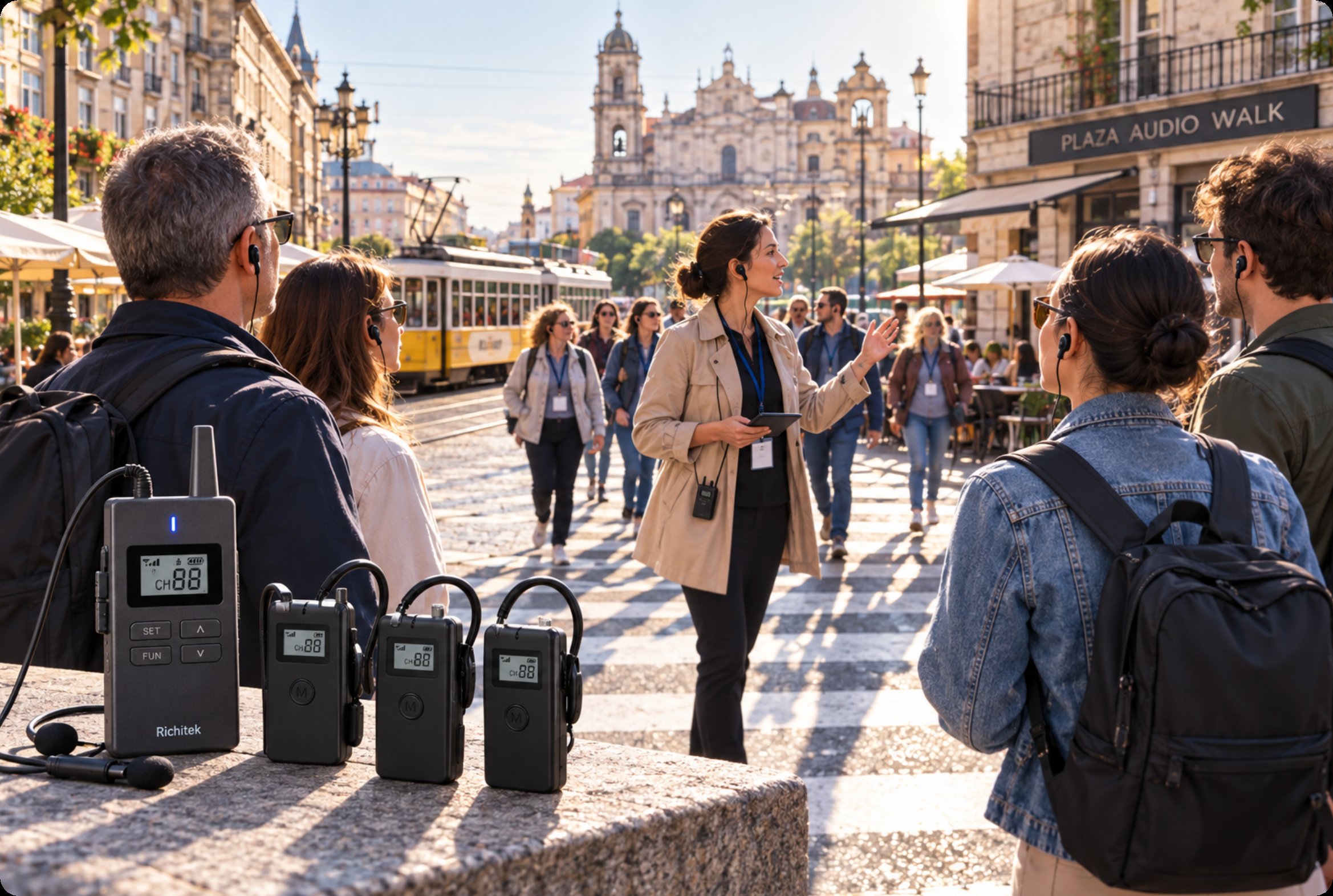
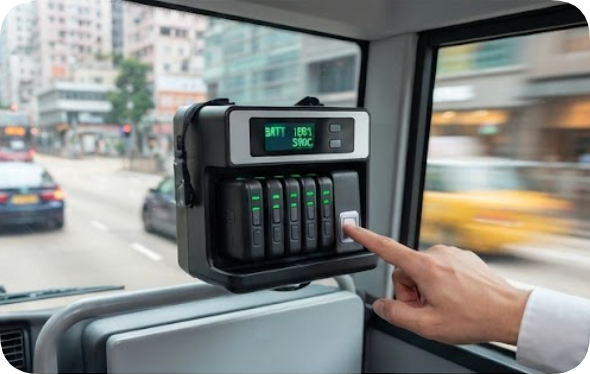
Between loops, the turnaround is four minutes, and the RC2500 is built for exactly that window. Its signature one-key operations — synchronise, power-off, mute — let a driver or turnaround host reset a whole rack of returned receivers without opening a menu. Underneath sit flagship internals: a 3.7V 1800 mAh transmitter cell rated at fifteen hours, receivers at 35 hours plus standby, both Type-C, both rated 10 mW across fifty PLL channels in the same 2403-2483 MHz band. The 50Hz-8kHz response keeps voice intelligible over road noise. For a hop-on hop-off operation the standby figure matters: units live in the charging rack between rotations, get grabbed, run three hours, come back, and nobody checks charge states — a 35-hour budget absorbs that sloppiness. The product page lists full channel allocations for depot planning.

🖥️ The Challengers: Party Genes and Display Intelligence

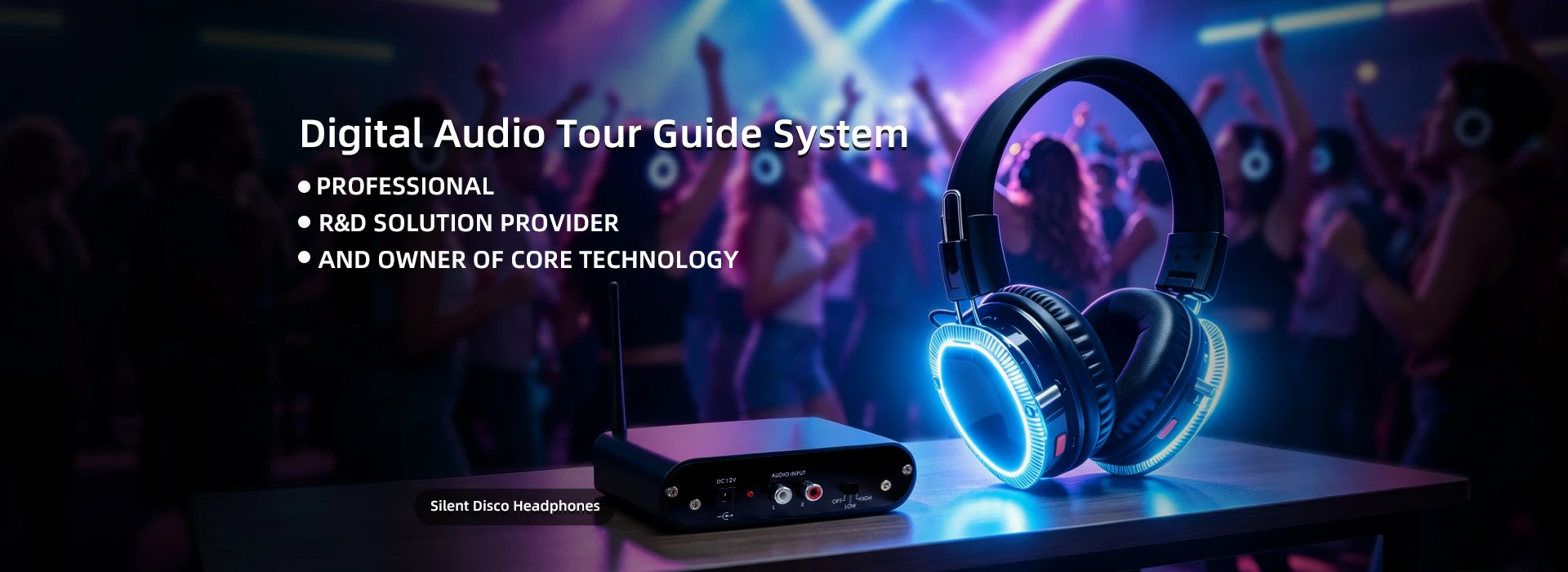
richitek bus_tour vs silentsound keyinda 3

Silent Sound System approaches the bus from the nightclub. Its standard headphone kits carry three selectable channels — the silent-disco convention where the listener chooses between DJs — plus a ten-channel Hi-Fi headphone for larger events. Its transmitters are the power story: a stated radius beyond a quarter of a mile, with mobile units reaching 900 feet, figures that dwarf every 200-metre rating here. The kit culture is rental-grade: every headphone is numbered against a loss-prevention binder, custom logo decals are included, and heavy-duty totes ship with each package. KEYINDA, from Sichuan Tengchen, attacks the other end: information management. The KYD-G316 Mini transmitter pairs a 2.4-inch colour screen that scrolls a stored script — up to 4 GB of local material — with 999 independent channels, a Bluetooth input with ducking for background music, and on-board recording. Its KYD-G313 Mini receiver warns a rider vocally when they stray out of range, holds the link through dead spots, and offers sixteen volume steps; the KYD-G28X case charges fifty-plus units while running ozone disinfection. Field figures run 120-150 metres in the open, and the company holds ISO 9001 certification.

Three Philosophies of Keeping a Bus Quiet

The deepest split is who controls the listening. Richitek locks each bus to one PLL channel: the guide speaks, every seat hears the guide, and separation between buses is a dispatch decision. Silent Sound System hands control to the rider, who flips between channels — natural for multi-DJ party formats, workable for a bilingual route where each channel carries a language, though it asks more of the passenger. KEYINDA centralises control in the transmitter, using its screen, script storage and 999-channel plan to let one device manage the whole vehicle. All three live lawfully in licence-free spectrum, and none needs a frequency licence on any continent. What each choice buys differs: channel discipline buys zero training for riders, rider choice buys flexibility, and display intelligence buys script support no other chassis here offers.

Honest Limits on All Three Sides

Three gaps deserve candour. KEYINDA's 999-channel display platform out-specs the RC9150's one hundred on paper, and its script-scrolling transmitter and stray-rider alert have no counterpart among the three review models. Silent Sound System's quarter-mile transmitter radius and numbered loss-prevention programme also stand alone. Against that, the Richitek trio holds real advantages: the RC9150 and RC2500 receiver budget of 35 hours plus more than doubles anything the challengers publish, and the 1000-1800 mAh cells across the trio are specified rather than estimated. Neither Richitek nor its challengers here publishes an ingress-protection rating for the review units, so top-deck rain exposure remains a shared unknown — KEYINDA cites IP54 only for its entry neck-strap line, not the Mini series.

Choosing by the Route Sheet

Choose by the shape of the schedule. If the corridor runs many buses at once and the depot plans to grow, the RC9150's hundred channels are the cheapest headroom money can buy, with fifteen-hour transmitters to match. If the budget is per-unit, the RC2401 fills racks at the lowest entry cost while keeping the dispatch plan simple. If turnarounds are chaotic and charge discipline is the weak link, the RC2500's one-button reset and 35-hour-plus reserve absorb the mess. Browse the full tour guide system catalogue for the complete ten-model plan, or compare more match-ups in our other cross-brand comparisons. The test is always the same: when the bus pulls away and the engine comes up, the commentary should be the only thing a rider hears from the top deck — whichever philosophy put it there.

SpecificationRC9150RC2401RC2500Silent Sound SystemKEYINDA KYD Mini
Band2403-2483 MHz2403-2483 MHz2403-2483 MHzn.p.2.4 GHz
Channels10050503 / 10999
Range1-200 m1-200 m1-200 m>400 m (mobile 274 m)120-150 m open field
TX battery15 h (1800 mAh)10 h (1500 mAh)15 h (1800 mAh)n.p.10 h
RX battery35+ h (1800 mAh)20 h (1000 mAh)35+ h (1800 mAh)n.p.n.p.
Weight (TX/RX)97.5 / 97.5 g59 / 50 g104 / 104 gn.p.n.p.
Distinct feature100 ch, Type-CBasic 2.4G valueOne-key sync/muteBASSpak, numbered anti-lossScreen teleprompter, ozone case
2026年09月22日 13:35
click: 0
no data
Home > VS

Richitek RC9150, RC2401 and RC2500 vs Silent Sound System and KEYINDA for City Sightseeing Bus Tours

time: 2026年09月22日 click:0

Every Seat Above the Engine

A city sightseeing bus is the hardest room in the tour business. The engine drones under the floor, the air handling roars over it, and the top deck adds wind at highway speed. Riders board and leave at every stop, so each unit gets handled a dozen times a day by strangers. Several buses from the same operator may run the same loop within a block of each other, each with its own live commentary. A wireless guide system for city tours has to solve all of that at once: enough channels that parallel buses never overlap, transmitter endurance for a full service day, and receivers that survive constant re-issuing. This comparison runs three Richitek models against two very different challengers: Silent Sound System, a silent-event specialist from the party side of the business, and KEYINDA, a Sichuan manufacturer that has pushed display intelligence into the transmitter.

The bus strips away what a walking tour forgives. A walking group keeps one transmitter all morning; a bus fleet re-pairs receivers every few stops as riders come and go. A campus runs three concurrent groups; a busy sightseeing corridor can run more buses than that from one depot, each wanting its own channel. So the questions that decide a bus deployment are channel headroom, battery arithmetic across a full service day, and how quickly a mixed-up receiver returns to service mid-route.

📡 RC9150: The Long-Haul Radio for the Longest Loop

richitek bus_tour vs silentsound keyinda 1

The RC9150 is the fleet's channel book and its fuel tank in one chassis. It PLL-locks across one hundred channels in the licence-free 2403-2483 MHz band, which means a corridor running ten simultaneous commentary buses still leaves ninety clean assignments for the day the route map grows. Its transmitter carries a 3.7V 1800 mAh cell rated at fifteen hours — comfortably a double shift — and the receiver matches it with a 35-hour-plus figure from the same capacity, so a unit issued at the depot gate finishes the evening loop without seeing a charger. At 10 mW output the signal stays boxed to one vehicle, and the 1-200 metre working range covers an articulated bus end to end. The Type-C charging port means depot night-charging uses the same cables as everything else in the office drawer. At 97.5 g the receiver sits on the heavier side of the line — the price of the big cell, easy to accept on a seated tour.

RC2401: The Volume Unit for a Growing Fleet

Every bus operator ends up buying in dozens, and the RC2401 is the unit you buy dozens of. It runs the standard fifty-channel, 10 mW, 1-200 metre platform with a 1500 mAh transmitter cell rated at ten hours — a full day of loops with the depot lunch break in between. Receivers hold twenty hours from 1000 mAh, which is generous for a device that only works while a rider is aboard. Nothing here is exotic, and that is the point: a fifty-channel plan is simple enough that a dispatcher can re-assign a bus by memory. Where the RC2401 earns its slot is total cost: a thirty-bus deployment spreads across this chassis without the flagship's per-unit premium, and the identical control layout means seasonal staff need one training session, not one per model.

RC2500: One-Button Control When the Clock Is Ticking

richitek bus_tour vs silentsound keyinda 2

Between loops, the turnaround is four minutes, and the RC2500 is built for exactly that window. Its signature one-key operations — synchronise, power-off, mute — let a driver or turnaround host reset a whole rack of returned receivers without opening a menu. Underneath sit flagship internals: a 3.7V 1800 mAh transmitter cell rated at fifteen hours, receivers at 35 hours plus standby, both Type-C, both rated 10 mW across fifty PLL channels in the same 2403-2483 MHz band. The 50Hz-8kHz response keeps voice intelligible over road noise. For a hop-on hop-off operation the standby figure matters: units live in the charging rack between rotations, get grabbed, run three hours, come back, and nobody checks charge states — a 35-hour budget absorbs that sloppiness. The product page lists full channel allocations for depot planning.

🖥️ The Challengers: Party Genes and Display Intelligence

richitek bus_tour vs silentsound keyinda 3

Silent Sound System approaches the bus from the nightclub. Its standard headphone kits carry three selectable channels — the silent-disco convention where the listener chooses between DJs — plus a ten-channel Hi-Fi headphone for larger events. Its transmitters are the power story: a stated radius beyond a quarter of a mile, with mobile units reaching 900 feet, figures that dwarf every 200-metre rating here. The kit culture is rental-grade: every headphone is numbered against a loss-prevention binder, custom logo decals are included, and heavy-duty totes ship with each package. KEYINDA, from Sichuan Tengchen, attacks the other end: information management. The KYD-G316 Mini transmitter pairs a 2.4-inch colour screen that scrolls a stored script — up to 4 GB of local material — with 999 independent channels, a Bluetooth input with ducking for background music, and on-board recording. Its KYD-G313 Mini receiver warns a rider vocally when they stray out of range, holds the link through dead spots, and offers sixteen volume steps; the KYD-G28X case charges fifty-plus units while running ozone disinfection. Field figures run 120-150 metres in the open, and the company holds ISO 9001 certification.

Three Philosophies of Keeping a Bus Quiet

The deepest split is who controls the listening. Richitek locks each bus to one PLL channel: the guide speaks, every seat hears the guide, and separation between buses is a dispatch decision. Silent Sound System hands control to the rider, who flips between channels — natural for multi-DJ party formats, workable for a bilingual route where each channel carries a language, though it asks more of the passenger. KEYINDA centralises control in the transmitter, using its screen, script storage and 999-channel plan to let one device manage the whole vehicle. All three live lawfully in licence-free spectrum, and none needs a frequency licence on any continent. What each choice buys differs: channel discipline buys zero training for riders, rider choice buys flexibility, and display intelligence buys script support no other chassis here offers.

Honest Limits on All Three Sides

Three gaps deserve candour. KEYINDA's 999-channel display platform out-specs the RC9150's one hundred on paper, and its script-scrolling transmitter and stray-rider alert have no counterpart among the three review models. Silent Sound System's quarter-mile transmitter radius and numbered loss-prevention programme also stand alone. Against that, the Richitek trio holds real advantages: the RC9150 and RC2500 receiver budget of 35 hours plus more than doubles anything the challengers publish, and the 1000-1800 mAh cells across the trio are specified rather than estimated. Neither Richitek nor its challengers here publishes an ingress-protection rating for the review units, so top-deck rain exposure remains a shared unknown — KEYINDA cites IP54 only for its entry neck-strap line, not the Mini series.

Choosing by the Route Sheet

Choose by the shape of the schedule. If the corridor runs many buses at once and the depot plans to grow, the RC9150's hundred channels are the cheapest headroom money can buy, with fifteen-hour transmitters to match. If the budget is per-unit, the RC2401 fills racks at the lowest entry cost while keeping the dispatch plan simple. If turnarounds are chaotic and charge discipline is the weak link, the RC2500's one-button reset and 35-hour-plus reserve absorb the mess. Browse the full tour guide system catalogue for the complete ten-model plan, or compare more match-ups in our other cross-brand comparisons. The test is always the same: when the bus pulls away and the engine comes up, the commentary should be the only thing a rider hears from the top deck — whichever philosophy put it there.

SpecificationRC9150RC2401RC2500Silent Sound SystemKEYINDA KYD Mini
Band2403-2483 MHz2403-2483 MHz2403-2483 MHzn.p.2.4 GHz
Channels10050503 / 10999
Range1-200 m1-200 m1-200 m>400 m (mobile 274 m)120-150 m open field
TX battery15 h (1800 mAh)10 h (1500 mAh)15 h (1800 mAh)n.p.10 h
RX battery35+ h (1800 mAh)20 h (1000 mAh)35+ h (1800 mAh)n.p.n.p.
Weight (TX/RX)97.5 / 97.5 g59 / 50 g104 / 104 gn.p.n.p.
Distinct feature100 ch, Type-CBasic 2.4G valueOne-key sync/muteBASSpak, numbered anti-lossScreen teleprompter, ozone case
no data
×

Contact us

email:
name:
subject:
content: