
A leading China factory specializing in Wireless Tour Guide Systems, Church Audio Guides, and Translation Headphones with premium OEM/ODM solutions.

Tel:+86 18922879583

Email:tiger.wang@richitek.com

Richitek RC2406, RC2501 and RC8860 vs Beyerdynamic Synexis and Bosch Integrus for Factory Tours

Which Band Survives the Factory Floor?

A factory tour puts a radio link through tests that no conference room or museum gallery can imitate. Steel racking and running machinery reflect and block signals, production lines never stop humming, and two or three shifts may walk the same route on the same day. Choosing a tour guide system for factory visits therefore starts with physics and regulation, not with the longest feature list. This comparison runs the Richitek RC2406, RC2501 and RC8860 against two established European challengers: the Beyerdynamic Synexis ecosystem with its studio-audio pedigree, and the Bosch Integrus infrared platform that dominates interpretation booths. The question is simple: which carrier and which band keep a group connected when the walls are metal and the noise floor never drops.

Most tour environments forgive a weak link. A walking group in the open air can spread out and still hear; a museum room has soft surfaces and short sight lines. A production hall does the opposite. Metal cabinets create multipath echoes that smear a digital signal, moving forklifts and crane bridges cut across the transmission path mid-sentence, and ambient noise near presses or CNC lines sits well above the level of normal speech, so the receiver and earphone must overcome it without distortion. Shift patterns add the final constraint: a two-shift plant needs batteries that recharge inside the lunch window, or enough spare units to rotate.

RC2406: Eighty Channels for Parallel Lines

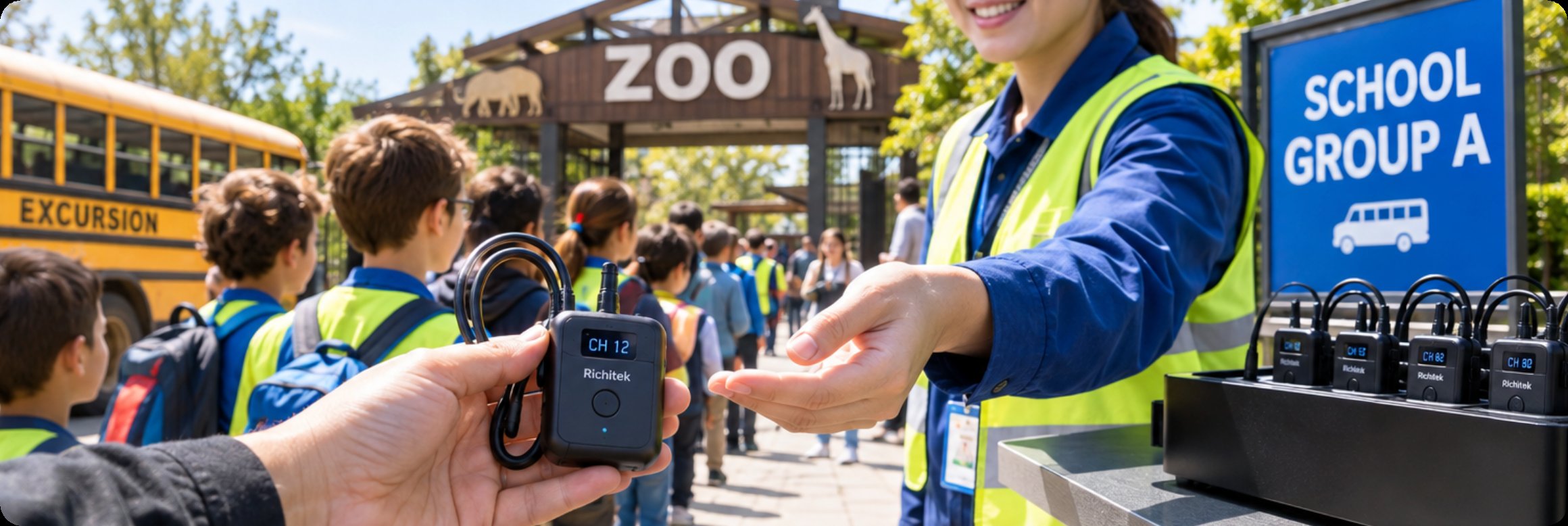
richitek factory_tour vs beyerdynamic bosch 1

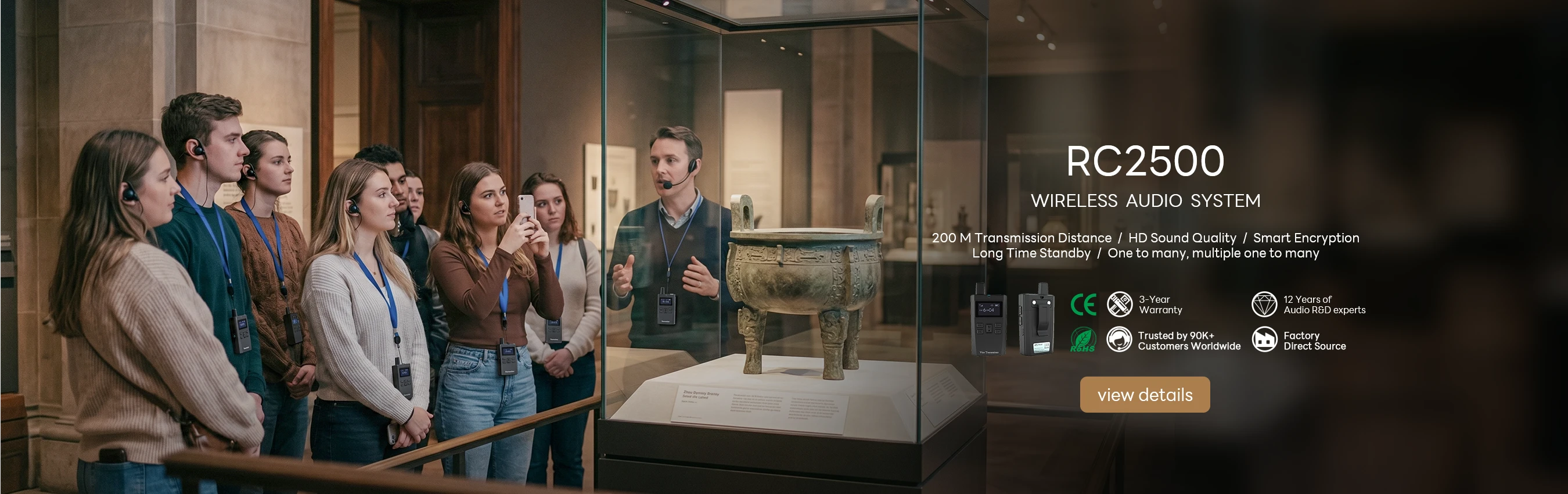
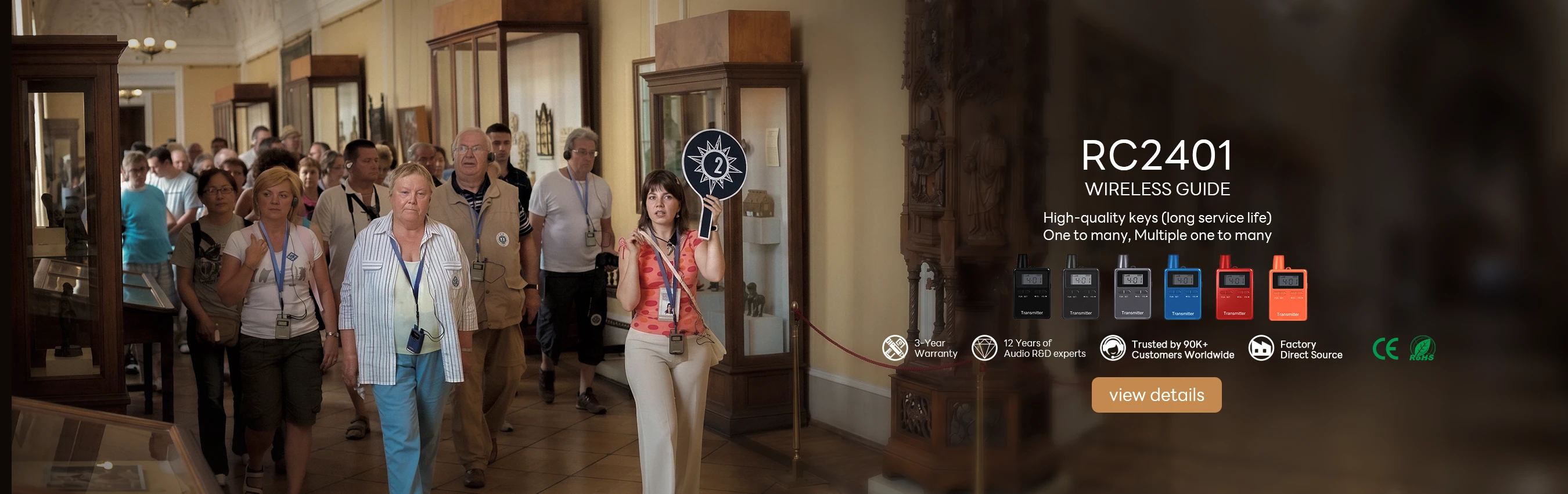
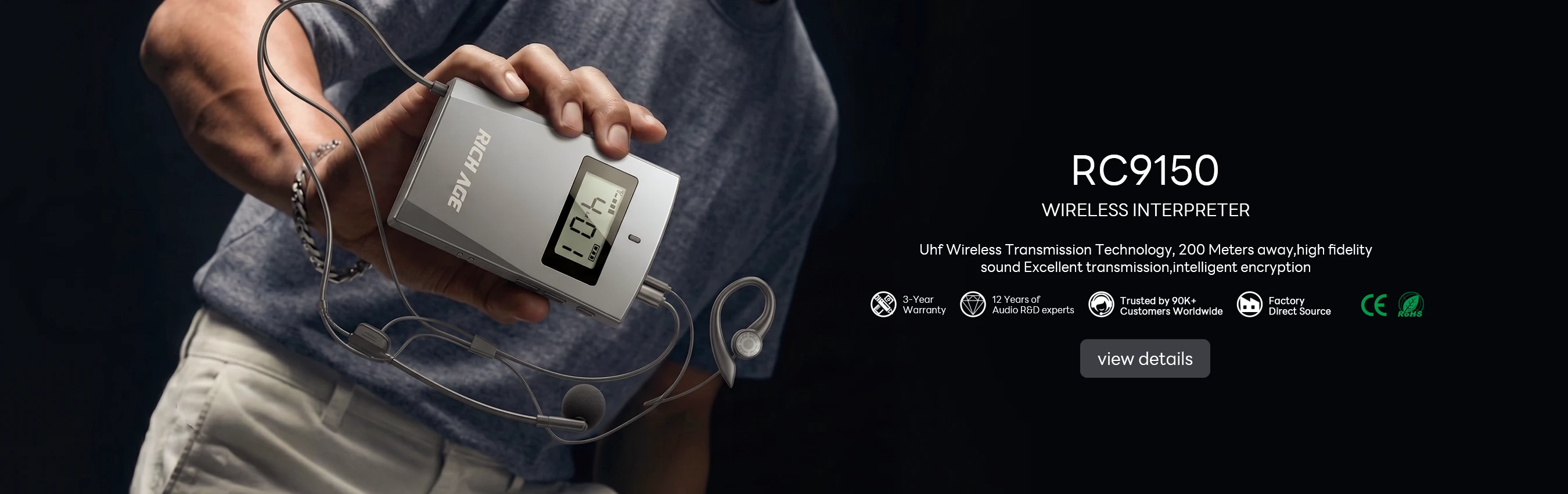
The RC2406 is the channel planner of the trio. It works in the licence-free 2403-2483 MHz band and offers eighty channels, so a plant running several tours at once — a customer group on the assembly line, a supplier audit in the warehouse, a training class in the test bay — can assign each party its own frequency and never meet on air. The transmitter runs ten hours from a 1500 mAh cell at 10 mW, and the receiver holds twenty hours from 1000 mAh, which covers the longest single-shift schedule with margin. At 59 g for the transmitter and 50 g for the ear-hook receiver, neither unit burdens a visitor wearing a hairnet and a hi-vis vest. The frequency response spans 50 Hz to 12 kHz on reception, clean enough for commentary over moderate line noise.

🗺️ RC2501: The 47-Gram Receiver for Visitor Groups

Where headcount is the challenge, the RC2501 answers with weight. Transmitter and receiver both weigh 47 g — the lightest pair in the current line — which matters when a unit hangs on a lanyard for ninety minutes beside a warm collar. Its transmitter carries the largest output in the trio at 13 mW, a small but real cushion in a metal-heavy hall, and the endurance figures are the pair to beat: fifteen hours of transmitter runtime from a 1500 mAh cell and thirty-five-plus hours of receiver life. That arithmetic suits two-shift plants, because a unit issued for the morning walk-in can serve the afternoon group before it ever sees a charger. Fifty channels keep the deployment simple, and the receiver can be re-issued between visitor groups all day without a recharge pause.

RC8860: The UHF Route and Its Fine Print
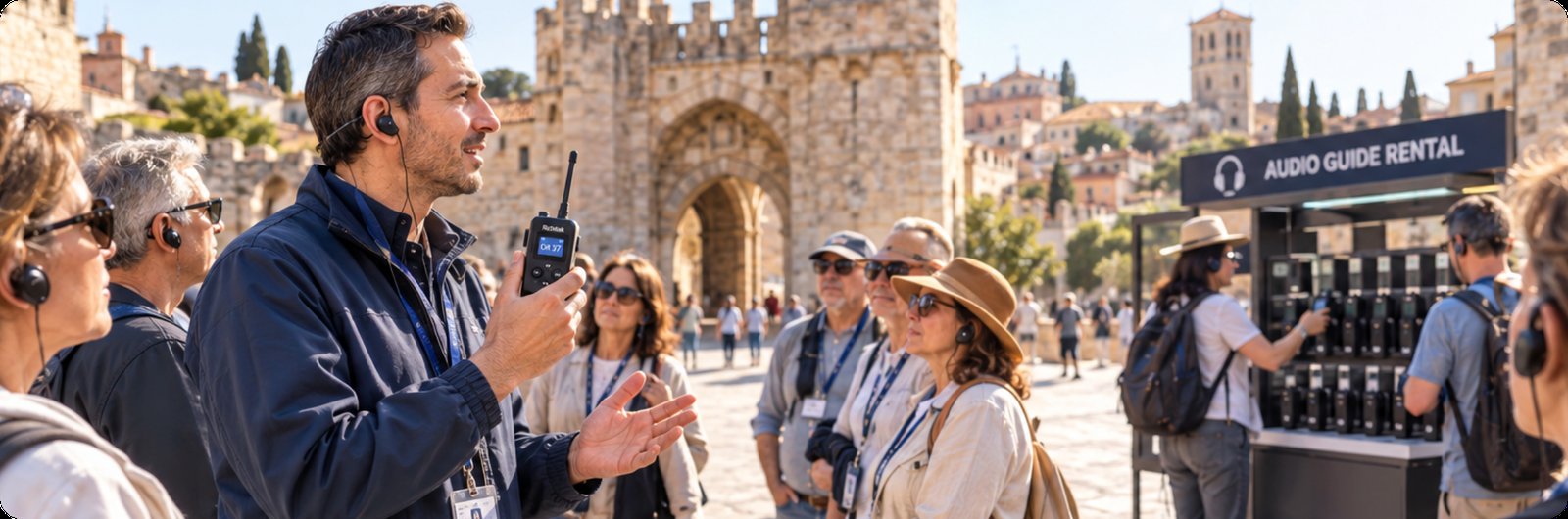
richitek factory_tour vs beyerdynamic bosch 2

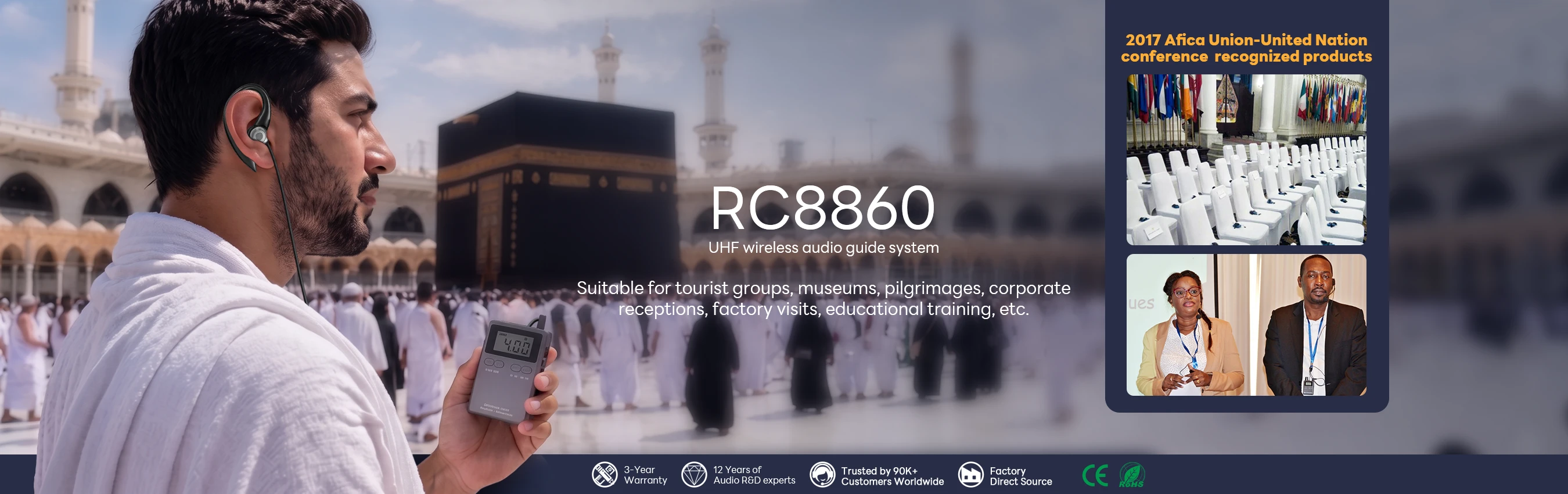
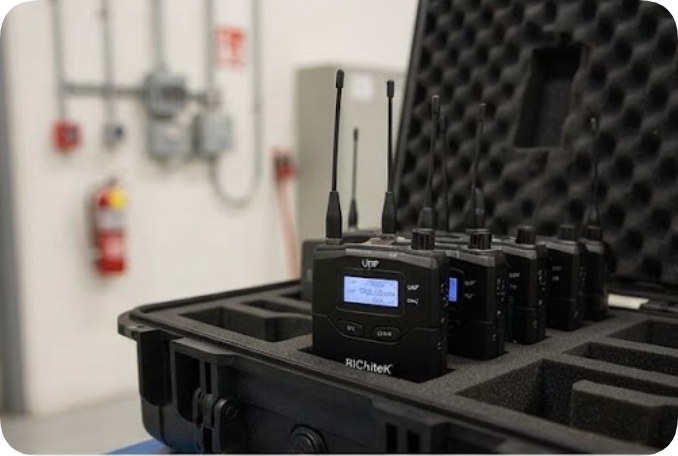
The RC8860 takes the road less travelled: UHF operation in the 860-870 MHz band with twenty channels, 10 mW output, a ten-hour transmitter and a twenty-hour receiver from 1000 mAh cells. Here honesty about our own line matters. The RC8860 product page describes the band as requiring no licence, which is true in the European framework where 863-870 MHz is set aside for licence-free audio; the FAQ on the RC2406 page, meanwhile, notes that UHF equipment may require regional frequency licenses — also true, because several countries outside Europe auction or register those frequencies. Both statements are correct, and the difference is exactly the homework a factory buyer should do before choosing UHF. The 2.4 GHz ISM band that the RC2406 and RC2501 use is licence-free nearly everywhere, which is why it remains the default for cross-border suppliers.

🔊 The Challengers: Infrared Physics and Studio Pedigree

The two challengers fail the factory in opposite ways. The Bosch Integrus is an infrared simultaneous-interpretation platform, superb in a booth-equipped conference room where light bounces off ceilings and nothing stands between emitter and receiver. Infrared, however, needs line of sight: a steel column, a moving crane bridge or even a dense crowd between the emitter and a visitor cuts the link, and dust attenuates it further. On a shop floor that physics is disqualifying. The Beyerdynamic Synexis, from the Heilbronn professional-audio house, is a serious digital tour ecosystem — its RP8 receivers paired with DT 2 headphones rated at 104 dB sound pressure and 49 g can push commentary above real line noise, a hard spec worth respecting. What it costs is position: Synexis sells at high-end professional pricing through a pro-audio channel, a difficult budget line for a plant that needs sixty receivers for occasional customer days.

Specification Comparison

The table gathers the figures that decide a plant deployment. Entries marked n.p. are not published by the vendor.

ModelCarrierChannelsTX batteryRX batteryWeight TX/RXFactory fit
RC24062.4 GHz8010 h (1500 mAh)20 h (1000 mAh)59 / 50 gMulti-line channel plan
RC25012.4 GHz5015 h (1500 mAh)35+ h47 g eachTwo-shift endurance
RC8860UHF 860-870 MHz2010 h (1500 mAh)20 h (1000 mAh)59 / 50 gRegion-licensed UHF
SynexisDigital wirelessn.p.n.p.n.p.RP8 + DT 2, 49 gStudio-grade audio
IntegrusInfraredn.p.n.p.n.p.n.p.Line-of-sight only

Where Each System Runs Out of Answers

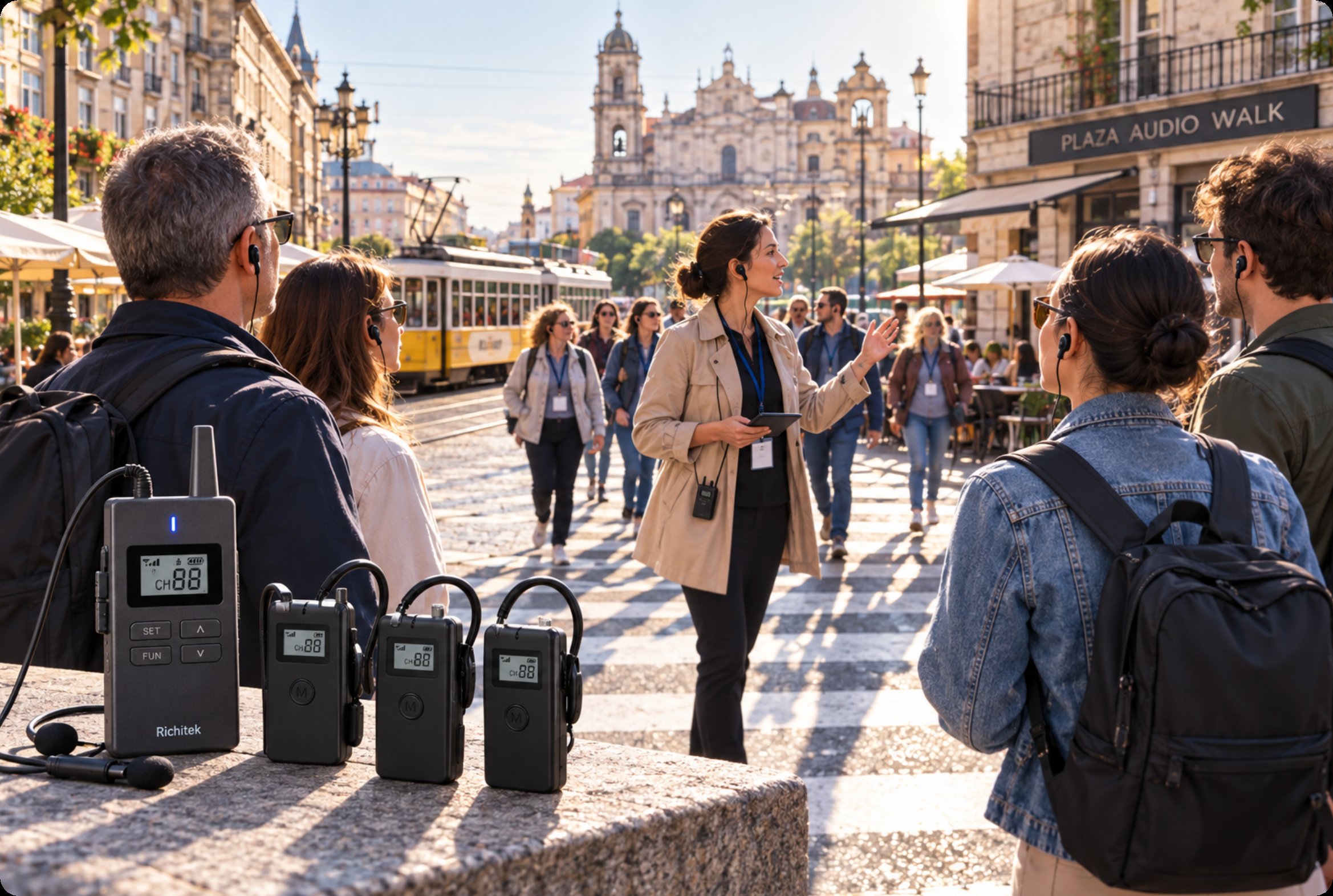
richitek factory_tour vs beyerdynamic bosch 3

Fairness runs in both directions. The RC8860's twenty channels are the smallest pool in the trio, so a plant that genuinely needs UHF must plan its frequencies rather than improvise. The two 2.4 GHz models quote a 1-200 metre range that assumes open air; inside dense racking the practical radius shrinks, and transmitter positioning along the route becomes part of the installation work. None of the three publishes an ingress-protection rating, so near washdown areas the units belong in protective pouches. On the challenger side, the Integrus cannot leave the conference hall for reasons of physics, and Beyerdynamic publishes no channel count or battery figures that we could verify, so a buyer must request them directly.

Matching the Model to the Shift

Start the decision with the shift schedule, because batteries before bandwidth. A two-shift operation that re-issues receivers between visitor groups fits the RC2501's fifteen-and-thirty-five-hour endurance and 47 g carry weight. A plant running several concurrent lines and groups needs the RC2406's eighty-channel headroom. Reserve the RC8860 for deployments where a regional UHF allocation is genuinely the right answer, and confirm the local licence position first — the fine print is real. The full wireless tour guide system lineup sits behind all three models, and more scenario comparisons are collected in the vs comparison library, each built on the same published-figures discipline.


2026年09月23日 14:16
click: 14
Home > VS

Richitek RC2406, RC2501 and RC8860 vs Beyerdynamic Synexis and Bosch Integrus for Factory Tours

time: 2026年09月23日 click:14

Which Band Survives the Factory Floor?

A factory tour puts a radio link through tests that no conference room or museum gallery can imitate. Steel racking and running machinery reflect and block signals, production lines never stop humming, and two or three shifts may walk the same route on the same day. Choosing a tour guide system for factory visits therefore starts with physics and regulation, not with the longest feature list. This comparison runs the Richitek RC2406, RC2501 and RC8860 against two established European challengers: the Beyerdynamic Synexis ecosystem with its studio-audio pedigree, and the Bosch Integrus infrared platform that dominates interpretation booths. The question is simple: which carrier and which band keep a group connected when the walls are metal and the noise floor never drops.

Most tour environments forgive a weak link. A walking group in the open air can spread out and still hear; a museum room has soft surfaces and short sight lines. A production hall does the opposite. Metal cabinets create multipath echoes that smear a digital signal, moving forklifts and crane bridges cut across the transmission path mid-sentence, and ambient noise near presses or CNC lines sits well above the level of normal speech, so the receiver and earphone must overcome it without distortion. Shift patterns add the final constraint: a two-shift plant needs batteries that recharge inside the lunch window, or enough spare units to rotate.

RC2406: Eighty Channels for Parallel Lines

richitek factory_tour vs beyerdynamic bosch 1

The RC2406 is the channel planner of the trio. It works in the licence-free 2403-2483 MHz band and offers eighty channels, so a plant running several tours at once — a customer group on the assembly line, a supplier audit in the warehouse, a training class in the test bay — can assign each party its own frequency and never meet on air. The transmitter runs ten hours from a 1500 mAh cell at 10 mW, and the receiver holds twenty hours from 1000 mAh, which covers the longest single-shift schedule with margin. At 59 g for the transmitter and 50 g for the ear-hook receiver, neither unit burdens a visitor wearing a hairnet and a hi-vis vest. The frequency response spans 50 Hz to 12 kHz on reception, clean enough for commentary over moderate line noise.

🗺️ RC2501: The 47-Gram Receiver for Visitor Groups

Where headcount is the challenge, the RC2501 answers with weight. Transmitter and receiver both weigh 47 g — the lightest pair in the current line — which matters when a unit hangs on a lanyard for ninety minutes beside a warm collar. Its transmitter carries the largest output in the trio at 13 mW, a small but real cushion in a metal-heavy hall, and the endurance figures are the pair to beat: fifteen hours of transmitter runtime from a 1500 mAh cell and thirty-five-plus hours of receiver life. That arithmetic suits two-shift plants, because a unit issued for the morning walk-in can serve the afternoon group before it ever sees a charger. Fifty channels keep the deployment simple, and the receiver can be re-issued between visitor groups all day without a recharge pause.

RC8860: The UHF Route and Its Fine Print

richitek factory_tour vs beyerdynamic bosch 2

The RC8860 takes the road less travelled: UHF operation in the 860-870 MHz band with twenty channels, 10 mW output, a ten-hour transmitter and a twenty-hour receiver from 1000 mAh cells. Here honesty about our own line matters. The RC8860 product page describes the band as requiring no licence, which is true in the European framework where 863-870 MHz is set aside for licence-free audio; the FAQ on the RC2406 page, meanwhile, notes that UHF equipment may require regional frequency licenses — also true, because several countries outside Europe auction or register those frequencies. Both statements are correct, and the difference is exactly the homework a factory buyer should do before choosing UHF. The 2.4 GHz ISM band that the RC2406 and RC2501 use is licence-free nearly everywhere, which is why it remains the default for cross-border suppliers.

🔊 The Challengers: Infrared Physics and Studio Pedigree

The two challengers fail the factory in opposite ways. The Bosch Integrus is an infrared simultaneous-interpretation platform, superb in a booth-equipped conference room where light bounces off ceilings and nothing stands between emitter and receiver. Infrared, however, needs line of sight: a steel column, a moving crane bridge or even a dense crowd between the emitter and a visitor cuts the link, and dust attenuates it further. On a shop floor that physics is disqualifying. The Beyerdynamic Synexis, from the Heilbronn professional-audio house, is a serious digital tour ecosystem — its RP8 receivers paired with DT 2 headphones rated at 104 dB sound pressure and 49 g can push commentary above real line noise, a hard spec worth respecting. What it costs is position: Synexis sells at high-end professional pricing through a pro-audio channel, a difficult budget line for a plant that needs sixty receivers for occasional customer days.

Specification Comparison

The table gathers the figures that decide a plant deployment. Entries marked n.p. are not published by the vendor.

ModelCarrierChannelsTX batteryRX batteryWeight TX/RXFactory fit
RC24062.4 GHz8010 h (1500 mAh)20 h (1000 mAh)59 / 50 gMulti-line channel plan
RC25012.4 GHz5015 h (1500 mAh)35+ h47 g eachTwo-shift endurance
RC8860UHF 860-870 MHz2010 h (1500 mAh)20 h (1000 mAh)59 / 50 gRegion-licensed UHF
SynexisDigital wirelessn.p.n.p.n.p.RP8 + DT 2, 49 gStudio-grade audio
IntegrusInfraredn.p.n.p.n.p.n.p.Line-of-sight only

Where Each System Runs Out of Answers

richitek factory_tour vs beyerdynamic bosch 3

Fairness runs in both directions. The RC8860's twenty channels are the smallest pool in the trio, so a plant that genuinely needs UHF must plan its frequencies rather than improvise. The two 2.4 GHz models quote a 1-200 metre range that assumes open air; inside dense racking the practical radius shrinks, and transmitter positioning along the route becomes part of the installation work. None of the three publishes an ingress-protection rating, so near washdown areas the units belong in protective pouches. On the challenger side, the Integrus cannot leave the conference hall for reasons of physics, and Beyerdynamic publishes no channel count or battery figures that we could verify, so a buyer must request them directly.

Matching the Model to the Shift

Start the decision with the shift schedule, because batteries before bandwidth. A two-shift operation that re-issues receivers between visitor groups fits the RC2501's fifteen-and-thirty-five-hour endurance and 47 g carry weight. A plant running several concurrent lines and groups needs the RC2406's eighty-channel headroom. Reserve the RC8860 for deployments where a regional UHF allocation is genuinely the right answer, and confirm the local licence position first — the fine print is real. The full wireless tour guide system lineup sits behind all three models, and more scenario comparisons are collected in the vs comparison library, each built on the same published-figures discipline.

×

Contact us

email:
name:
subject:
content: