
.webp)
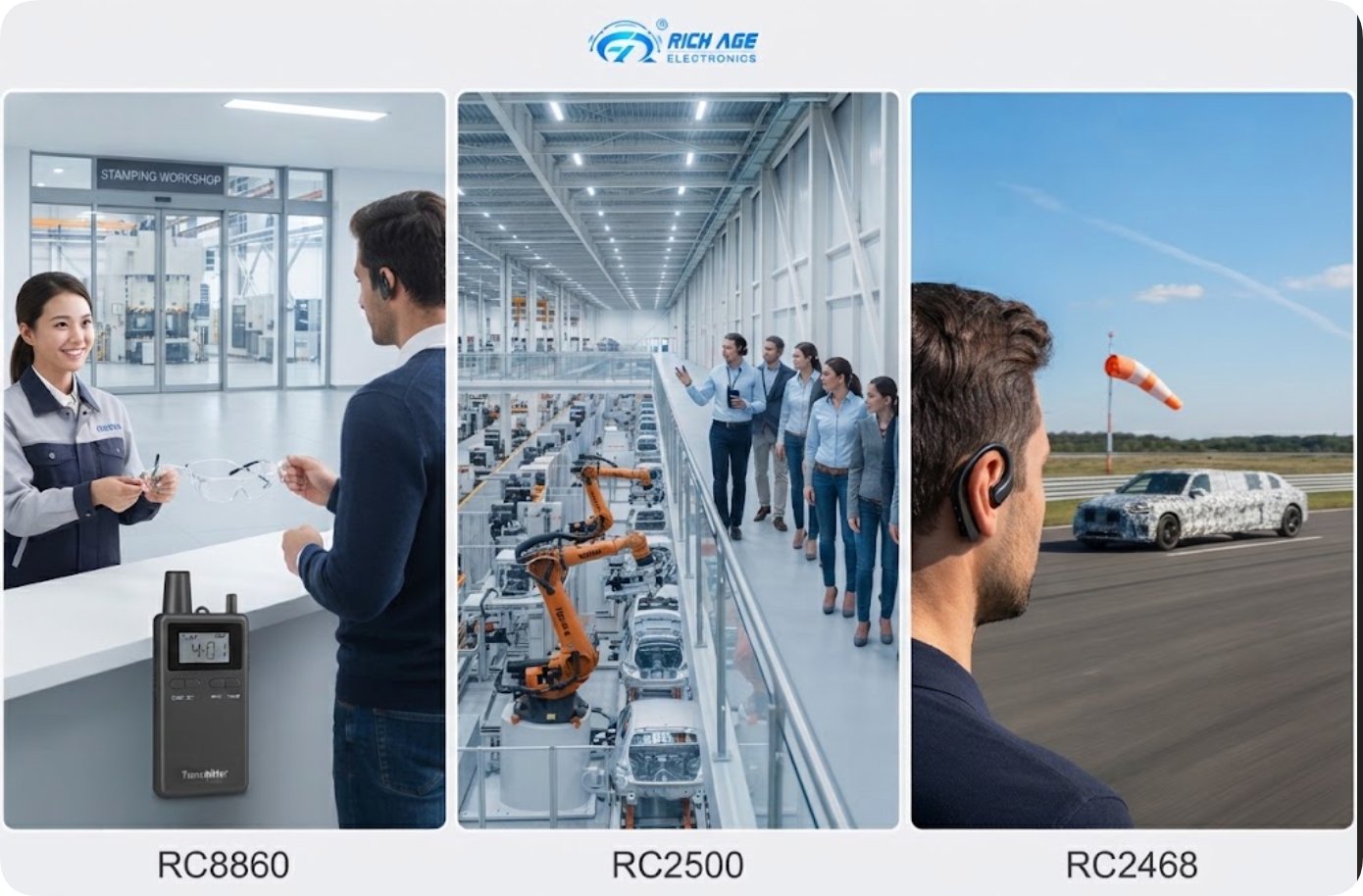
A car plant is not one listening environment. The stamping hall hits visitors with short impact bursts near 95 dB, the body shop surrounds them with welded steel that reflects radio the way glass bends light, the final assembly hall is a wide open space where several tour groups run at once, and the test track adds wind and engine noise with no walls at all. A visitor fleet that sounds clear in one zone can fail in the next, which is why choosing a wireless tour guide system for factory visits is really a decision about physics. This comparison walks one visitor route through an automotive plant with the Richitek RC8860, RC2500 and RC2468, then checks them against two challengers priced for the same budgets: the Z-Sound UHF ear-hook line and the Yinzida kit, the latter published with an IP54 rating.
RC8860: UHF Where the Bodies Are Steel
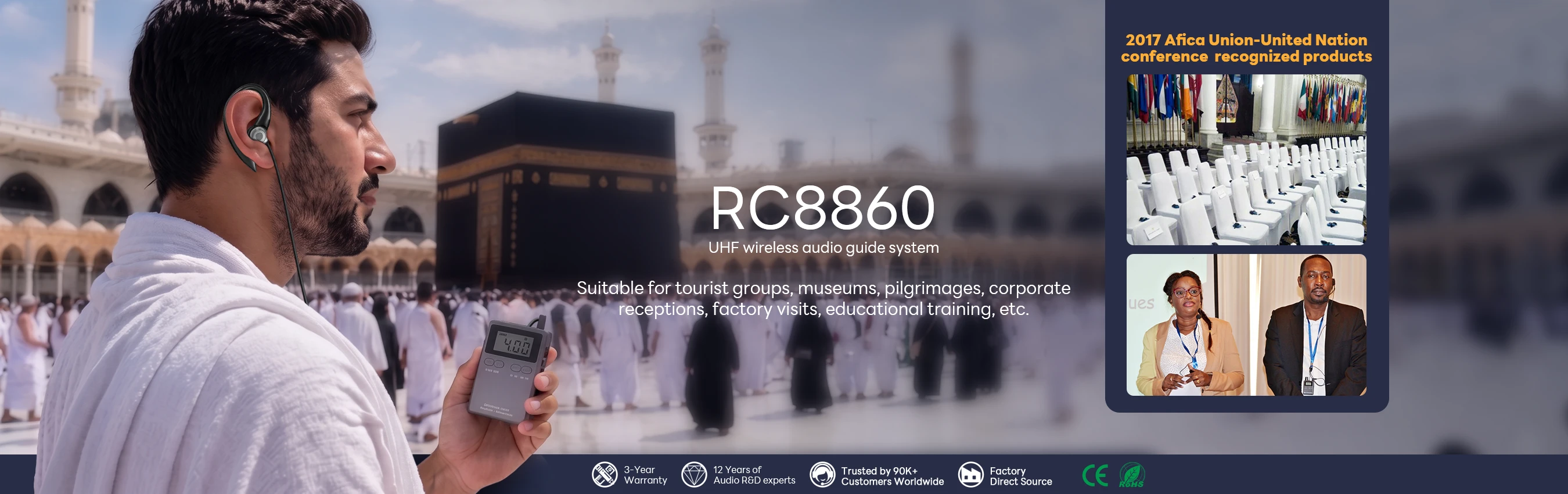
The body shop is the hardest radio room on the site. Hundreds of welded shells, steel columns and overhead carriers scatter 2.4 GHz signals, and a group that threads between cells cannot tolerate dropouts. The RC8860 UHF tour guide system answers with 860-870 MHz, a band that sits far below the crowded 2.4 GHz range and behaves more predictably among dense metal. Twenty channels keep two visiting parties apart when the schedule stacks them, and the twenty-hour receiver outlasts any single shift. The honest costs are mechanical: the transmitter charges over a DC port rather than the Type-C standard used elsewhere in the range, and its fifty-gram receiver is heavier on the collar than an ear-hook. In a zone defined by steel, those trade-offs are the price of a stable band.
📡 RC2500: Fifty Rotations Without a Frequency Fight
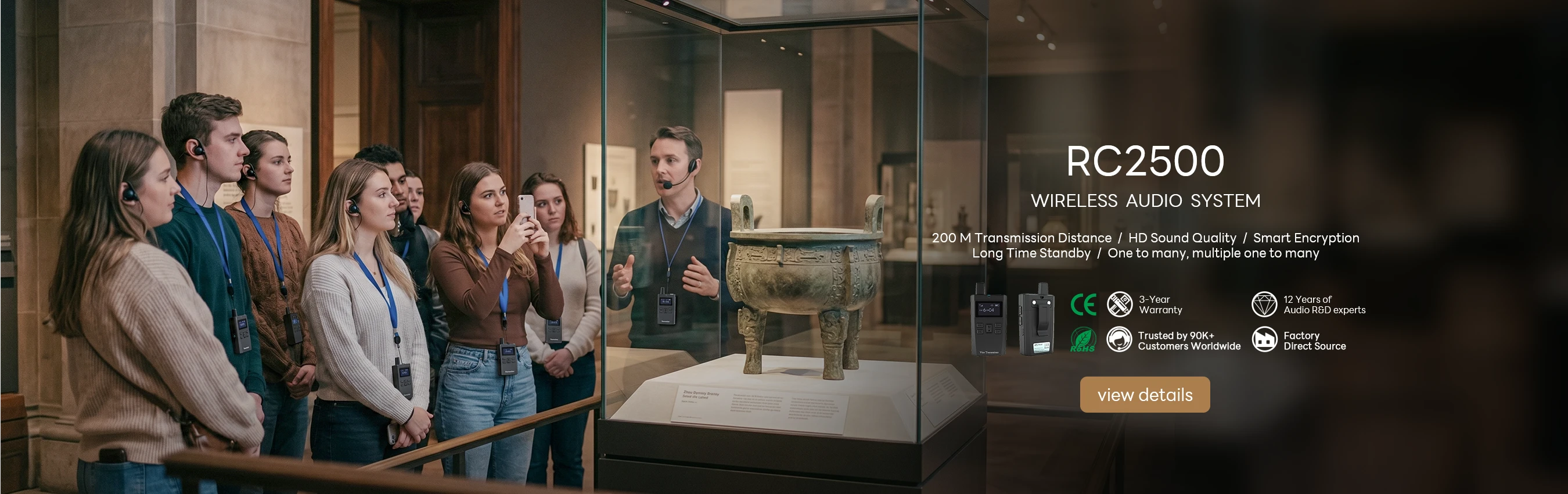
The final assembly hall is where an automotive plant earns its visitor numbers, and it is also where the schedule gets tight. School parties, supplier delegations and press groups rotate through the same walkway, often in overlapping slots. The RC2500 flagship tour guide system carries fifty channels on 2403-2483 MHz, so three concurrent guides sit on separated frequencies instead of negotiating, and synchronise, mute and power-off are each a single press at the end of a rotation. The fifteen-hour transmitter and thirty-five-hour-plus receiver standbys survive a double shift, and the Type-C port lets the charging shelf share cables with the office drawer. At 104 grams for transmitter and receiver alike it is the heaviest unit here, which is why it lives on the check-in desk rather than in a guide's hand all day.
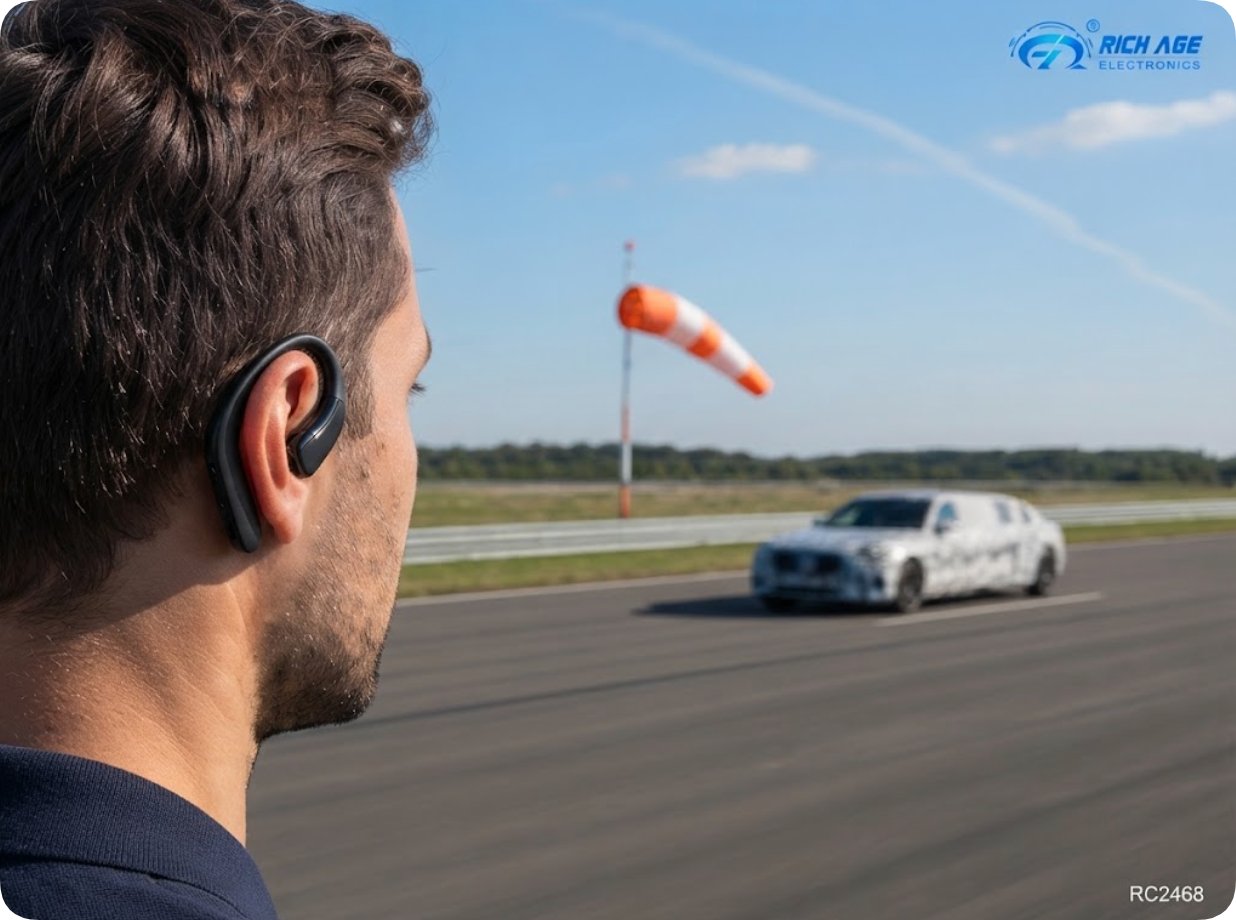
RC2468: Eighteen Grams Under the Bump Cap
Every zone before the test track demands personal protective equipment, and a visitor wearing safety glasses and a bump cap will reject anything bulky on the head. The RC2468 lightweight ear-hook tour guide system puts just eighteen grams on the ear, light enough to forget while a guide narrates the trim line. Its fifty channels match the RC2500, so a visitor who starts in the hall can continue onto the track on the same unit. The trade-offs are the battery and the port: receiver endurance is approximately eight hours, the shortest here, so a full-day itinerary needs a lunchtime swap, and charging runs over USB. For routes that last two hours, none of that matters; for all-day programmes, plan the swap. A final lap of the outdoor test track adds wind rush and tyre noise, and the 200-metre link keeps the guide audible at full separation from the group.

The Challengers: One Claimed Band and One IP54 Label
Z-Sound sells its UHF line on three claims: an independent UHF channel plan, strong signal penetration and an eighteen-gram ergonomic ear-hook that matches the RC2468 gram for gram, with 200-metre transmission advertised across a tiered range from a standard edition to a government-and-enterprise VIP edition. Those are real numbers, but the listing stops there — no band endpoints, no channel count, no battery ratings and no charging port are published, which makes it hard to predict how two Z-Sound groups behave when a stamping press cycles mid-sentence. Yinzida attacks from the practical side: UHF kits serving one transmitter with thirty to fifty receivers, a dual-speaker business edition, budget pricing and — unlike any of the three Richitek units here — a published IP54 rating covering dust and splashes. That rating matters near wash areas and paint-shop mist, and it is the most concrete engineering claim either challenger makes.
Specification Comparison
| Item | RC8860 | RC2500 | RC2468 | Z-Sound | Yinzida |
|---|---|---|---|---|---|
| Band | 860-870 MHz | 2403-2483 MHz | 2403-2483 MHz | UHF, endpoints unpublished | UHF, endpoints unpublished |
| Channels | 20 | 50 | 50 | Not published | Not published |
| Range | 1-200 m | 1-200 m | 1-200 m | 200 m claimed | Not published |
| TX / RX battery | 10 h / 20 h | 15 h / 35+ h | 10 h / ~8 h | Not published | Not published |
| RX weight | 50 g | 104 g | 18 g ear-hook | 18 g ear-hook claimed | Not published |
| Ingress rating | None published | None published | None published | None published | IP54 |
| Charging | DC port | Type-C | USB | Not published | Not published |
What Stays Unpublished
Two gaps deserve plain language. First, none of the three Richitek units here carries a published ingress rating — within the range only the RC9150 states IP54 — so a route that crosses wash bays or mist should either demand the figure in writing or spec the RC9150 instead; Yinzida's IP54 is a genuine differentiator on paper. Second, the band question runs through Richitek's own catalogue: the RC2500 page presents 2.4 GHz as the factory answer while the RC8860 page leads with license-free UHF, and this comparison is that disagreement made useful — 2.4 GHz for channel-dense open halls, UHF for welded steel. What neither challenger publishes — band endpoints, channel counts, battery ratings — is exactly what a plant engineer needs to predict behaviour when a press cycles or two groups overlap.
Matching the Three Units to the Line Walk
Route the fleet the way the plant is built. If the visit spends most of its time around welding cells and painted bodies, the RC8860's lower band is the more predictable guest. If the hall hosts overlapping rotations and the bottleneck is reset between groups, the RC2500 buys schedule with one-press control and a shared Type-C shelf. If visitors arrive in bump caps and glasses and the route runs all day across every zone, the RC2468 earns its place with eighteen grams, at the cost of a planned lunchtime receiver swap. Buyers who want a stated IP rating have exactly one honest option in this set, Yinzida; buyers who need a second voice or a deeper channel plan should price both challengers' unpublished specifications into the risk. For the rest, compare the full wireless tour guide systems line to match the fleet, or read more deployments in our cross-brand comparison guides.