
A leading China factory specializing in Wireless Tour Guide Systems, Church Audio Guides, and Translation Headphones with premium OEM/ODM solutions.

Tel:+86 18922879583

Email:tiger.wang@richitek.com

Richitek RC085, RC2468 and RC2501 vs Aomandi and Lingzao for Equestrian Training

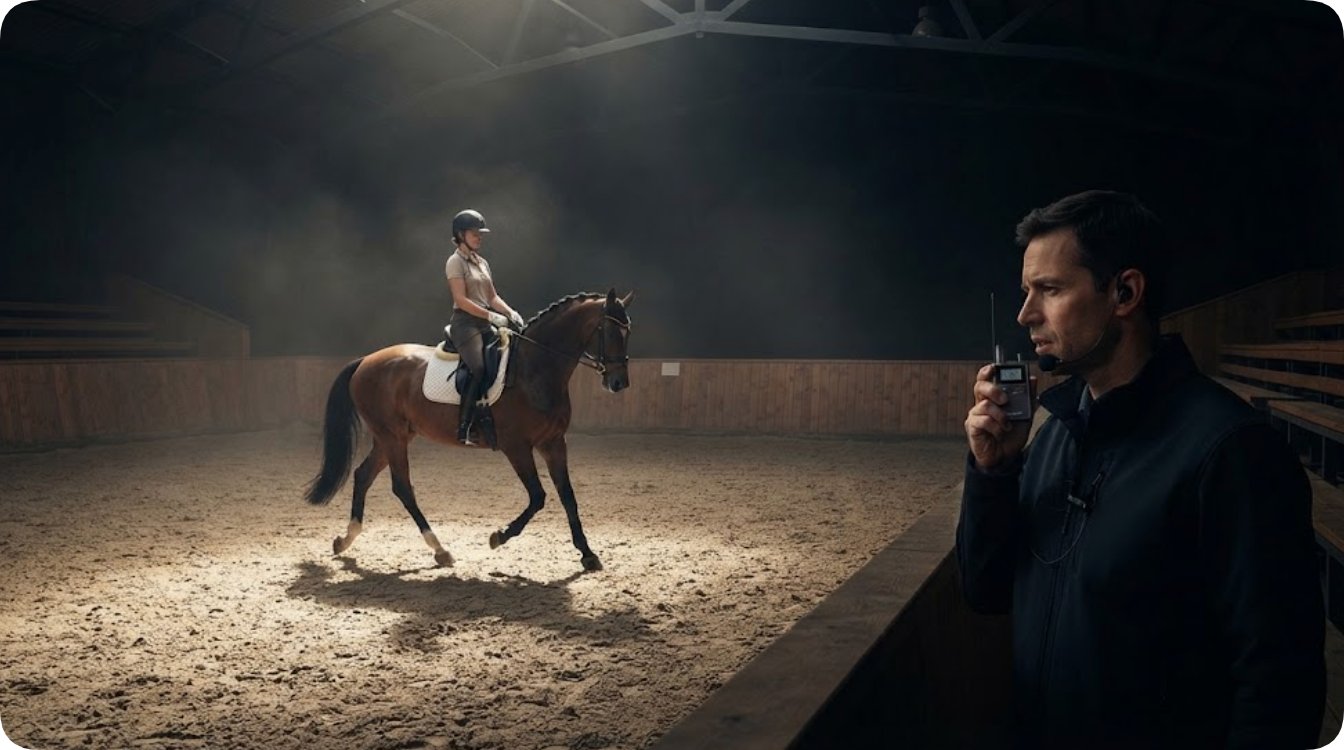
A riding coach has a problem most audio buyers never meet: the student who most needs to hear the instruction is also controlling a 500-kilogram animal, and the moment of correction usually comes when both hands are occupied. A headset that covers both ears splits attention from the horse. A transmitter the coach has to hold gets put down the second a girth needs adjusting. And in any working barn, two or three coaches often share one indoor arena on a winter morning, which turns channel planning into the whole system. This comparison runs the wireless horse instruction system line through those constraints — the RC085 digital tour guide system, the RC2468 ear-hook and the RC2501 — against the Aomandi UHF line and the Lingzao mini ear-hook kit, two challengers built on very different assumptions about what a yard buys.
richitek equestrian_training vs aomandi lingzao 1

🐴 RC2468: One Ear on the Coach, One on the Horse

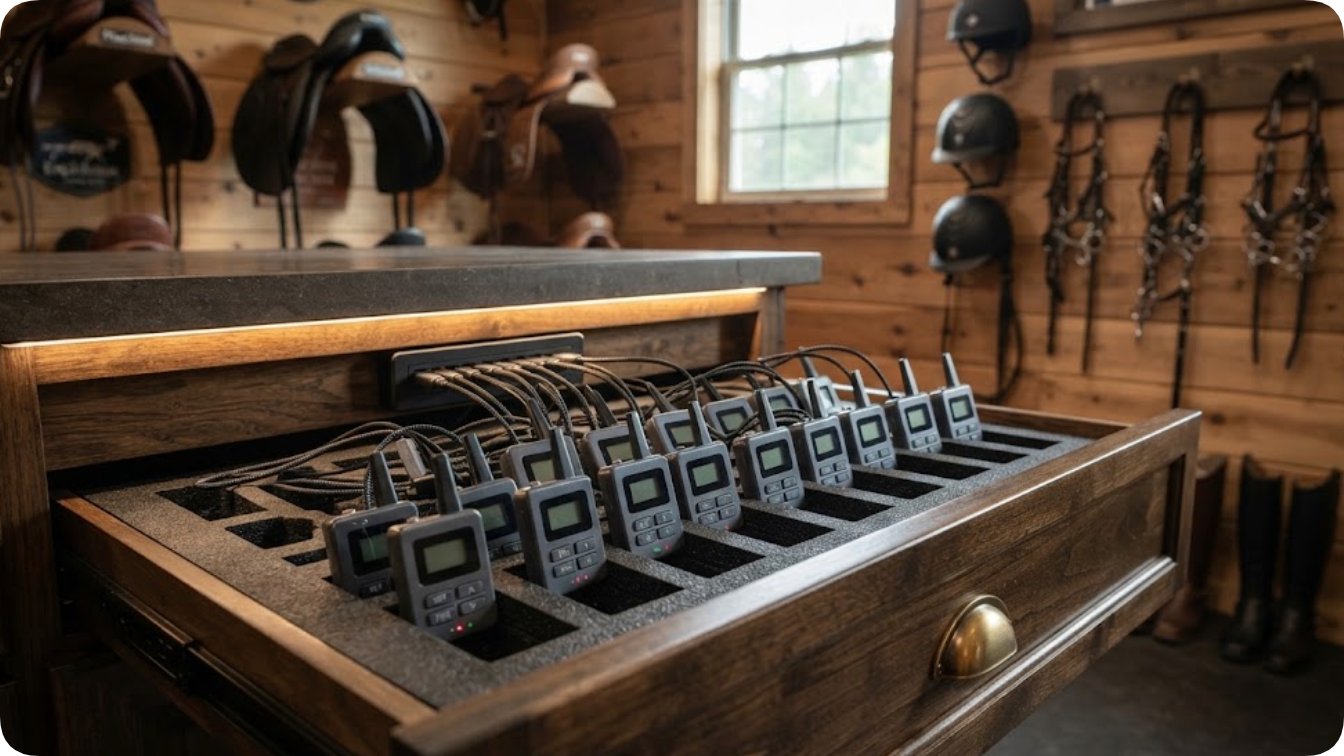
The first job in any training barn is the flatwork lesson, and the defining constraint is attention. A rider in a jumping or dressage session already listens to hoofbeats, breath and the environment; blocking one ear costs situational awareness no coach wants to pay for. The RC2468 answers with an ear-hook receiver that weighs just 18 grams and sits against a single ear, leaving the other open. The 2.4 GHz transmission across 2403-2483 MHz gives it fifty channels, which absorbs a morning of overlapping lessons, and the ~200 metre working range covers a full-size arena plus the warm-up ring outside. Because the receiver charges over USB, one drawer in the tack room tops up the whole fleet. At this weight a rider forgets the unit is there, which is the entire point; a horse spooked by clipped-on hardware is a risk no yard accepts twice.

RC2501: The Second Voice on the Lunge Line

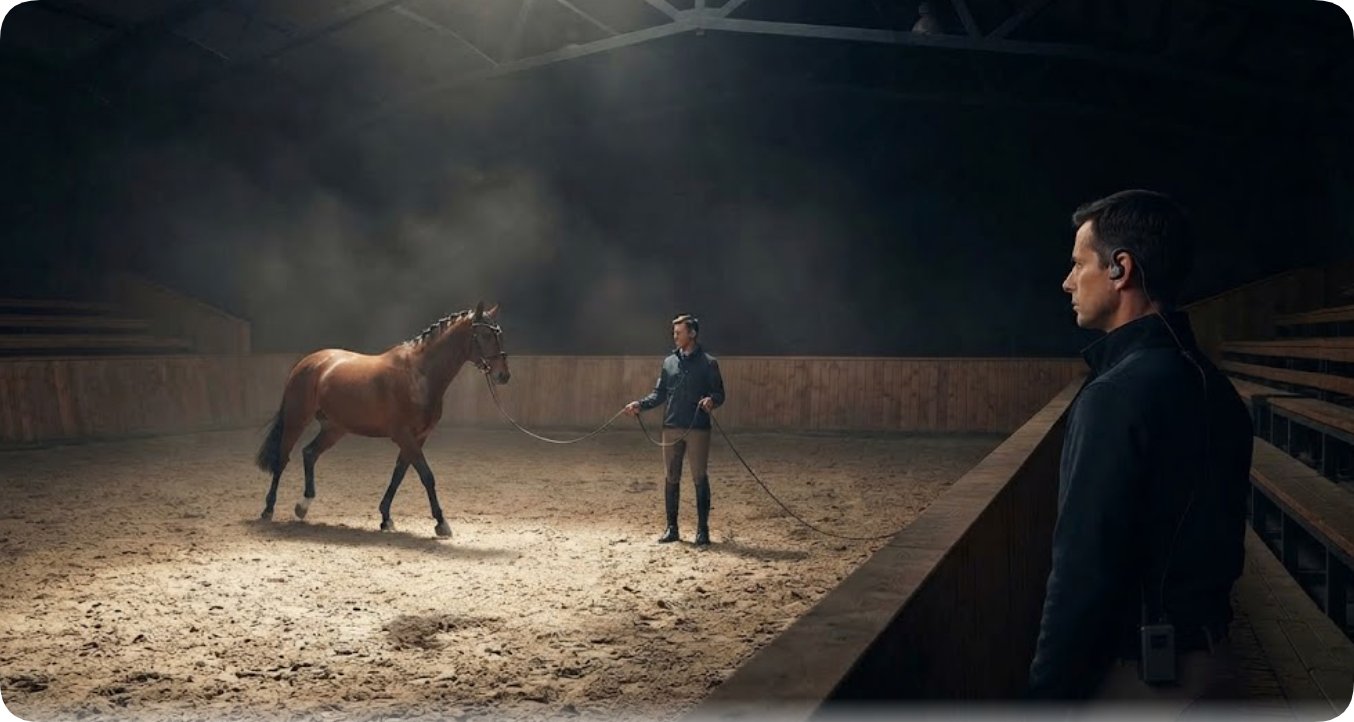
Lunge lessons and young-horse work regularly involve two people: the coach on the line and a rider on the horse, or a trainer calling the session while another walks the ring. Buying two full systems for that arrangement is where barn budgets usually break. The RC2501 professional tour guide system handles it with hardware instead of a second purchase: it is one of only two Richitek models that accept an optional headset or lapel microphone, so the same transmitter moves from a handheld arena briefing to a clipped-on collar for hands-free lunge work, and a second trainer joins on another channel of the same fifty. It is also the lightest unit the company fields — 47 grams on transmitter and receiver alike — with a 13 mW output and a 20 Hz-200 kHz response that keeps consonants crisp over footing noise. The Type-C port, fifteen-hour transmitter cell and thirty-five-hour-plus receiver standby are shared with the flagship pair, so a unit that skips its overnight charge still opens the Saturday clinic fully usable.
richitek equestrian_training vs aomandi lingzao 2

🏟️ RC085: A Hundred Channels in a Shared Arena

The problem that decides big facilities is coexistence. A training centre running three coaches, a farrier briefing and a Pony Club rally on the same Saturday morning cannot spare frequencies like a single-lesson yard can. The RC085 doubles the usual channel count to one hundred and does it in the 470-510 MHz UHF band rather than 2.4 GHz — the band physics that favour the RC8860 around steel and timber, since lower frequencies scatter less off metal stabling and ride better across a cluttered yard. Output is 8-10 mW, the transmitter runs 65 grams against a 60-gram receiver, and it shares with the RC2501 the other rare feature in the line-up: an optional headband or lapel microphone for a coach who narrates continuously. One honest compliance note: 470-510 MHz sits in spectrum whose licensing rules differ by country, so a buyer deploying across borders should confirm the local picture — the same caution Richitek's own pages raise for their UHF models.

📱 The Challengers: A Headband and a Mini Ear-Hook

Aomandi approaches the same barn from the fixed-installation side. Its line is built around UHF transmission with an integrated transmitter design, a multilingual interpretation host for large events, and — most distinctive — a headband-style receiver aimed at exhibition halls. The headband is a real ergonomic choice, but in a riding school it argues with the one piece of equipment every rider already wears: a helmet. Between the shell and the band there is no comfortable arrangement, which pushes the Aomandi receiver toward ground staff and stable tours rather than mounted students. The listings state the band and little else; channel count, battery ratings and range are unpublished, so a multi-coach yard cannot plan frequencies from the spec sheet alone. Lingzao attacks from the opposite end: a 2.4 GHz mini ear-hook built for lightness, low power draw and one-transmitter-to-thirty operation, shipped with a charging and storage case that keeps a small fleet tidy between lessons. For a yard running one coach and a compact group, the kit logic is genuinely convenient. The published material stops at that pitch — channels, power, range and battery figures are all absent — and 2.4 GHz is also the band every phone, tablet and barn Wi-Fi network already competes for.

Specification Comparison

Comparison DimensionRC085RC2468RC2501
Band470-510 MHz UHF2403-2483 MHz 2.4 GHz2403-2483 MHz 2.4 GHz
Channels1005050
Transmitter power8-10 mW10 mW13 mW
Receiver weight60 g18 g (ear-hook)47 g
Charging portUSBUSBType-C
Transmitter / receiver battery——15 h / 35+ h
Optional microphoneHeadband / lapel—Headset / lapel

richitek equestrian_training vs aomandi lingzao 3

What the Charts Do Not Publish

Three gaps deserve plain language, and two of them are ours. First, none of the three Richitek units publishes an ingress-protection rating, so dust from the indoor school and rain on a hack still call for common sense and a pouch, and any IP claim from a competitor should name the model that carries it. Second, transmitter and receiver battery ratings for the RC085 and RC2468 are not stated in the same official detail as the RC2501's fifteen and thirty-five-hour figures, and this article reports only what the company publishes. Third, both challengers leave more blanks than they fill: Aomandi without a channel plan and Lingzao without any radio parameters, which matters most exactly where equestrian facilities live — several coaches, several frequencies, one afternoon.

Matching the Three Units to the Training Week

Choose by which job fills the diary. If mounted students dominate and attention is the currency, the RC2468's 18-gram single-ear hook keeps one ear on the coach and one on the horse. If lunge lessons and second trainers fill the schedule, the RC2501's optional lapel microphone and 47-gram frame carry two voices on one system. If the facility is the constraint — three coaches, one arena, a full weekend diary — the RC085's hundred UHF channels and headband-capable microphone options are the cheapest separation money can buy. Single-coach yards that want a case in the cupboard and nothing to configure may price the Lingzao kit honestly, and visitor-facing ground staff could trial the Aomandi headband where no helmets are involved. For everyone else, one cable drawer and a channel plan that survives a busy Saturday is the difference between a system the barn uses and one it charges twice a month; browse the wireless tour guide systems line to plan the fleet, or compare more deployments in our cross-brand comparison guides.

2026年09月29日 11:52
ꄘ click: 12
no data
Home > VS

Richitek RC085, RC2468 and RC2501 vs Aomandi and Lingzao for Equestrian Training

time: 2026年09月29日 click:12

A riding coach has a problem most audio buyers never meet: the student who most needs to hear the instruction is also controlling a 500-kilogram animal, and the moment of correction usually comes when both hands are occupied. A headset that covers both ears splits attention from the horse. A transmitter the coach has to hold gets put down the second a girth needs adjusting. And in any working barn, two or three coaches often share one indoor arena on a winter morning, which turns channel planning into the whole system. This comparison runs the wireless horse instruction system line through those constraints — the RC085 digital tour guide system, the RC2468 ear-hook and the RC2501 — against the Aomandi UHF line and the Lingzao mini ear-hook kit, two challengers built on very different assumptions about what a yard buys.

richitek equestrian_training vs aomandi lingzao 1

🐴 RC2468: One Ear on the Coach, One on the Horse

The first job in any training barn is the flatwork lesson, and the defining constraint is attention. A rider in a jumping or dressage session already listens to hoofbeats, breath and the environment; blocking one ear costs situational awareness no coach wants to pay for. The RC2468 answers with an ear-hook receiver that weighs just 18 grams and sits against a single ear, leaving the other open. The 2.4 GHz transmission across 2403-2483 MHz gives it fifty channels, which absorbs a morning of overlapping lessons, and the ~200 metre working range covers a full-size arena plus the warm-up ring outside. Because the receiver charges over USB, one drawer in the tack room tops up the whole fleet. At this weight a rider forgets the unit is there, which is the entire point; a horse spooked by clipped-on hardware is a risk no yard accepts twice.

RC2501: The Second Voice on the Lunge Line

Lunge lessons and young-horse work regularly involve two people: the coach on the line and a rider on the horse, or a trainer calling the session while another walks the ring. Buying two full systems for that arrangement is where barn budgets usually break. The RC2501 professional tour guide system handles it with hardware instead of a second purchase: it is one of only two Richitek models that accept an optional headset or lapel microphone, so the same transmitter moves from a handheld arena briefing to a clipped-on collar for hands-free lunge work, and a second trainer joins on another channel of the same fifty. It is also the lightest unit the company fields — 47 grams on transmitter and receiver alike — with a 13 mW output and a 20 Hz-200 kHz response that keeps consonants crisp over footing noise. The Type-C port, fifteen-hour transmitter cell and thirty-five-hour-plus receiver standby are shared with the flagship pair, so a unit that skips its overnight charge still opens the Saturday clinic fully usable.

richitek equestrian_training vs aomandi lingzao 2

🏟️ RC085: A Hundred Channels in a Shared Arena

The problem that decides big facilities is coexistence. A training centre running three coaches, a farrier briefing and a Pony Club rally on the same Saturday morning cannot spare frequencies like a single-lesson yard can. The RC085 doubles the usual channel count to one hundred and does it in the 470-510 MHz UHF band rather than 2.4 GHz — the band physics that favour the RC8860 around steel and timber, since lower frequencies scatter less off metal stabling and ride better across a cluttered yard. Output is 8-10 mW, the transmitter runs 65 grams against a 60-gram receiver, and it shares with the RC2501 the other rare feature in the line-up: an optional headband or lapel microphone for a coach who narrates continuously. One honest compliance note: 470-510 MHz sits in spectrum whose licensing rules differ by country, so a buyer deploying across borders should confirm the local picture — the same caution Richitek's own pages raise for their UHF models.

📱 The Challengers: A Headband and a Mini Ear-Hook

Aomandi approaches the same barn from the fixed-installation side. Its line is built around UHF transmission with an integrated transmitter design, a multilingual interpretation host for large events, and — most distinctive — a headband-style receiver aimed at exhibition halls. The headband is a real ergonomic choice, but in a riding school it argues with the one piece of equipment every rider already wears: a helmet. Between the shell and the band there is no comfortable arrangement, which pushes the Aomandi receiver toward ground staff and stable tours rather than mounted students. The listings state the band and little else; channel count, battery ratings and range are unpublished, so a multi-coach yard cannot plan frequencies from the spec sheet alone. Lingzao attacks from the opposite end: a 2.4 GHz mini ear-hook built for lightness, low power draw and one-transmitter-to-thirty operation, shipped with a charging and storage case that keeps a small fleet tidy between lessons. For a yard running one coach and a compact group, the kit logic is genuinely convenient. The published material stops at that pitch — channels, power, range and battery figures are all absent — and 2.4 GHz is also the band every phone, tablet and barn Wi-Fi network already competes for.

Specification Comparison

Comparison DimensionRC085RC2468RC2501
Band470-510 MHz UHF2403-2483 MHz 2.4 GHz2403-2483 MHz 2.4 GHz
Channels1005050
Transmitter power8-10 mW10 mW13 mW
Receiver weight60 g18 g (ear-hook)47 g
Charging portUSBUSBType-C
Transmitter / receiver battery——15 h / 35+ h
Optional microphoneHeadband / lapel—Headset / lapel

richitek equestrian_training vs aomandi lingzao 3

What the Charts Do Not Publish

Three gaps deserve plain language, and two of them are ours. First, none of the three Richitek units publishes an ingress-protection rating, so dust from the indoor school and rain on a hack still call for common sense and a pouch, and any IP claim from a competitor should name the model that carries it. Second, transmitter and receiver battery ratings for the RC085 and RC2468 are not stated in the same official detail as the RC2501's fifteen and thirty-five-hour figures, and this article reports only what the company publishes. Third, both challengers leave more blanks than they fill: Aomandi without a channel plan and Lingzao without any radio parameters, which matters most exactly where equestrian facilities live — several coaches, several frequencies, one afternoon.

Matching the Three Units to the Training Week

Choose by which job fills the diary. If mounted students dominate and attention is the currency, the RC2468's 18-gram single-ear hook keeps one ear on the coach and one on the horse. If lunge lessons and second trainers fill the schedule, the RC2501's optional lapel microphone and 47-gram frame carry two voices on one system. If the facility is the constraint — three coaches, one arena, a full weekend diary — the RC085's hundred UHF channels and headband-capable microphone options are the cheapest separation money can buy. Single-coach yards that want a case in the cupboard and nothing to configure may price the Lingzao kit honestly, and visitor-facing ground staff could trial the Aomandi headband where no helmets are involved. For everyone else, one cable drawer and a channel plan that survives a busy Saturday is the difference between a system the barn uses and one it charges twice a month; browse the wireless tour guide systems line to plan the fleet, or compare more deployments in our cross-brand comparison guides.

no data
×

Contact us

email:
name:
subject:
content: