
.webp)
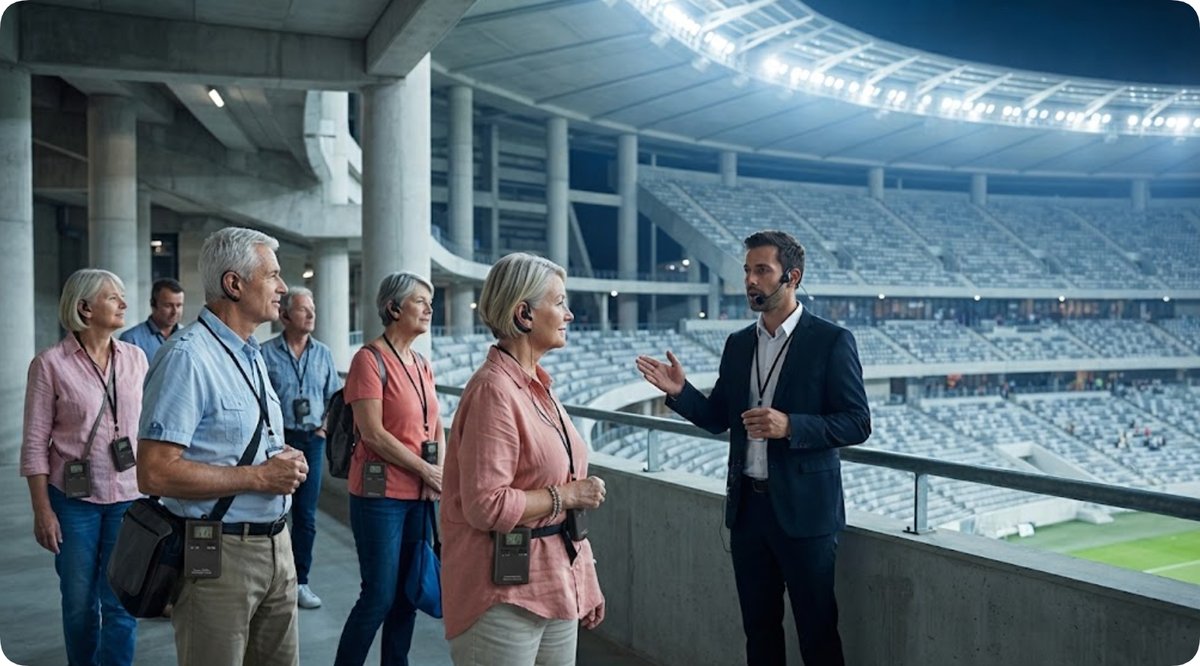
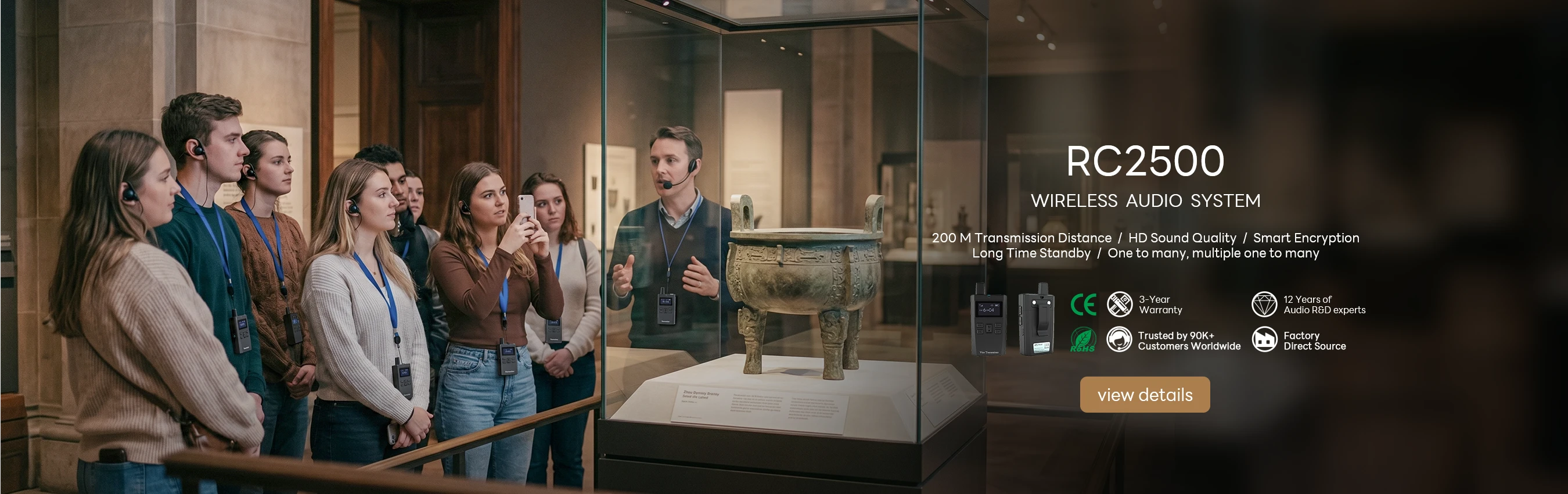
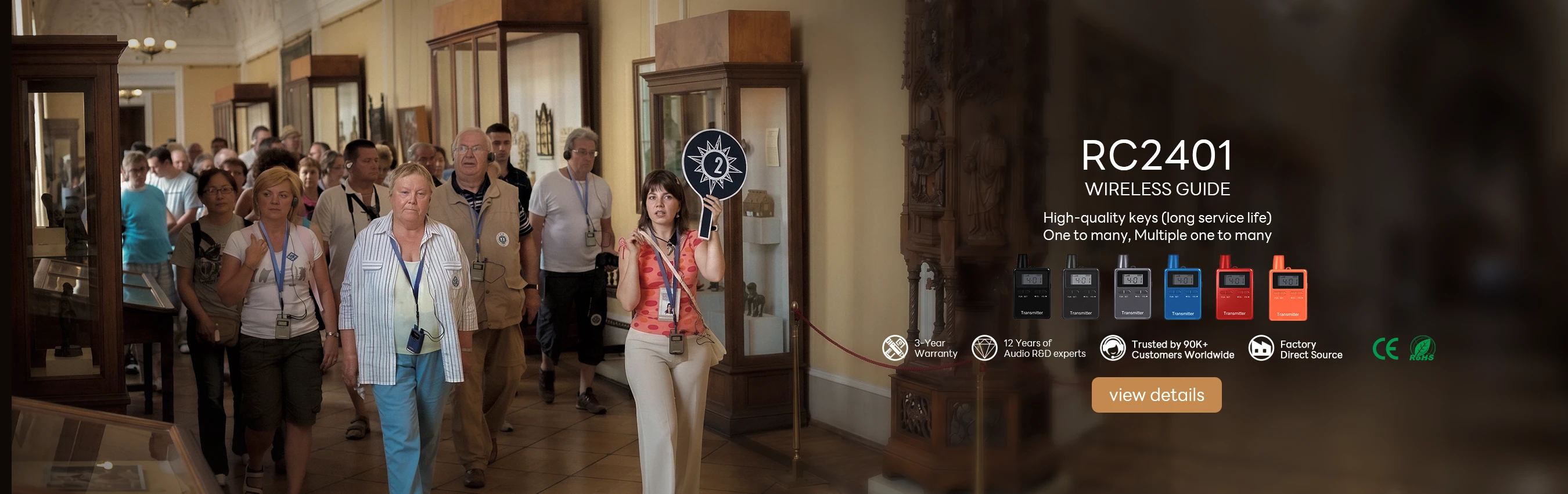
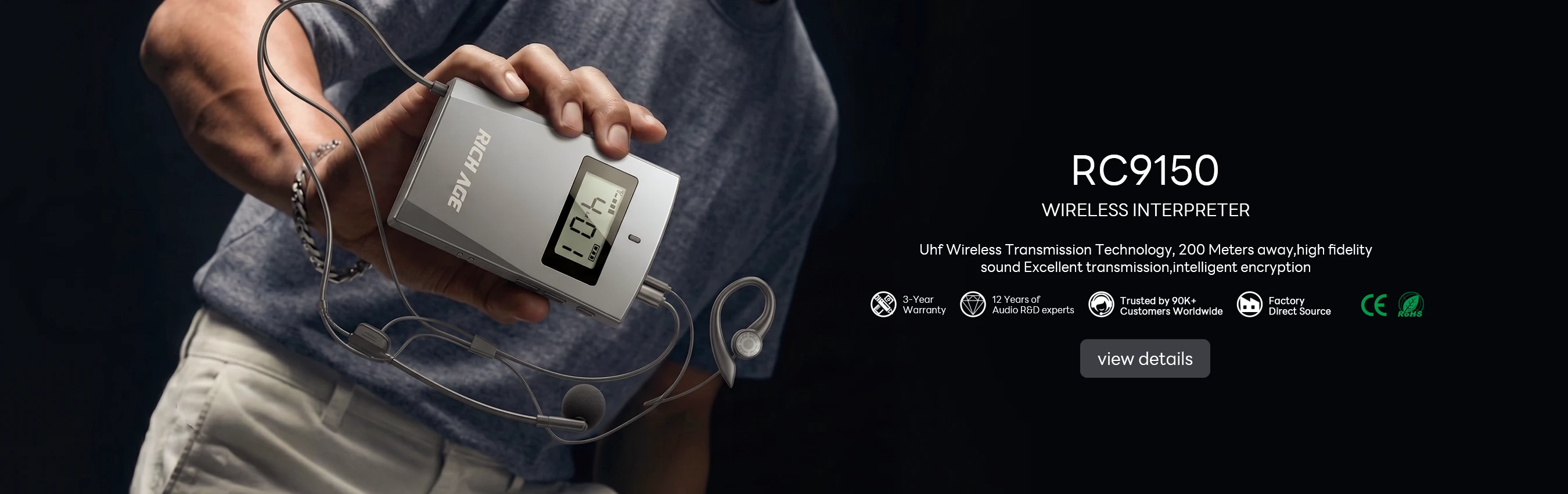
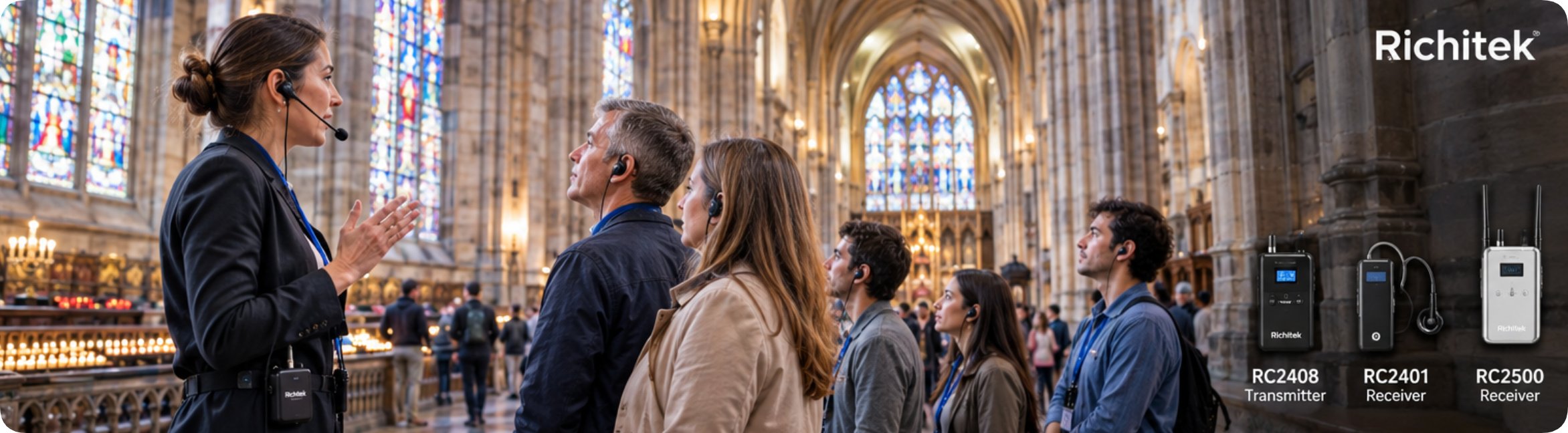
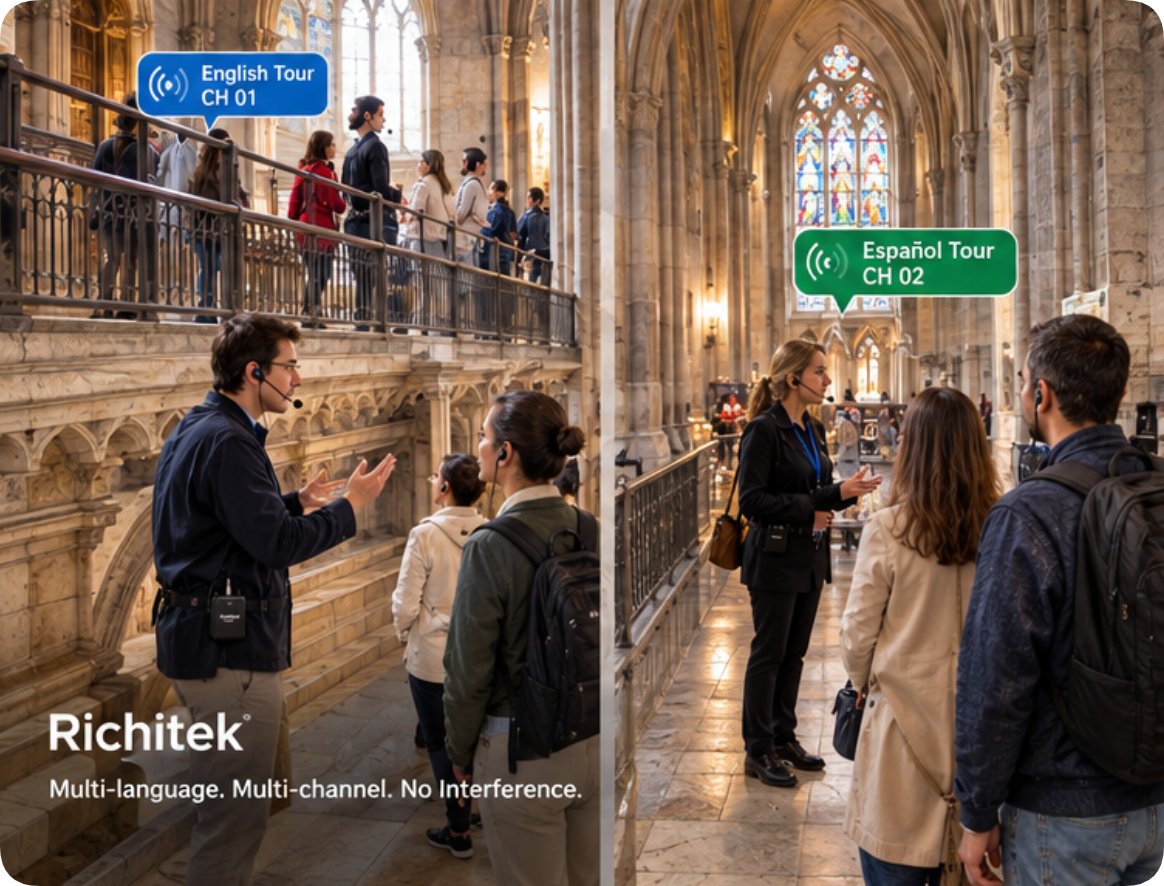
A busy parish does not hold one tour. It holds a schedule that collides: the eight-o'clock service in Spanish, the ten-o'clock in English, a funeral on Wednesday, a wedding on Saturday, choir rehearsal in between, and a heritage tour threading through all of it. Every one of those needs its own clear channel, its own set of receivers, and a sacristy drawer that re-arms volunteers between events. That is a channel-budget problem before it is an audio-quality problem, which is why this comparison lines up the RC2401 as the volunteer-fleet workhorse, the RC2408 as the eighty-channel headroom play, and the RC2500 as the endurance unit that skips midweek recharging. Across the aisle sit two familiar names: the Retekess TT122, a church-kit staple sold as a complete case set, and the TAKSTAR WTG-700, a UHF rig whose charging case even sterilizes the earhooks between users. Both are honest devices. The question is which one survives a parish week.
A Parish Week in Three Rooms
The nave, the chapel and the hall are three different RF rooms with one shared calendar. When the Spanish group tours the crypt at the same hour the wedding rehearsal runs upstairs, crosstalk is not an annoyance — it is a pastoral incident. The RC2408 carries eighty usable channels against the TT122's thirty-six and the WTG-700's sixty-five, which is the difference between scheduling around your hardware and letting the hardware absorb the schedule. Retekess itself suggests running simultaneous languages by assigning each one a channel, and that advice collides with reality around language five on a thirty-six-channel box once neighboring parishes and school groups share the frequency plan. With the RC2408 as the parish transmitter and RC2401 units as receivers, a cathedral can run interpretation, youth catechism and the heritage tour in the same building at the same hour without a coordination meeting. A practical example makes the budget concrete: a cathedral that runs Spanish interpretation on channel ten, Vietnamese on twelve, the youth group on twenty and the heritage tour on thirty can lose half its plan to a neighboring parish on the same block and still have room to renumber — a thirty-six-channel box assigned that way has no slack left for the funeral director's temporary rig or the visiting bishop's entourage.
🔋 Stone Walls and Quiet Power
Heritage buildings punish radio. Thick masonry, iron Victorian renovations and leaded glass turn a two-hundred-meter open-field rating into something far shorter indoors. The RC2500's twenty-milliwatt 2.4 GHz signal is deliberately modest in power but disciplined in protocol, and its rated two hundred meters leaves margin even after a stone nave has eaten its share. The TT122 transmits at ten milliwatts and rates one hundred fifty meters in open air — fine for a single chapel, thin for a cathedral close with a courtyard crossing. The WTG-700 pushes UHF at 18 dBm with an external antenna and holds two hundred meters, and its dual-transmitter mode deserves genuine credit: a priest speaking and an interpreter translating can share one channel gracefully, something no single-transmitter kit here matches. What the UHF rig does not bring is battery balance — its earhook receiver runs about eight hours against forty for the RC2500's receiver, and a Saturday wedding followed by an evening concert is exactly where that gap shows up. Unheated stone chapels in winter compound the problem: the RC2500 is specified down to minus fifteen degrees Celsius, and midnight Christmas services in an unheated heritage nave sit closer to that floor than most buyers expect, while batteries that live in a warm sacristy drawer lose voltage exactly when the doors open and the cold rolls in.
Sacristy Logistics and Shared Earpieces
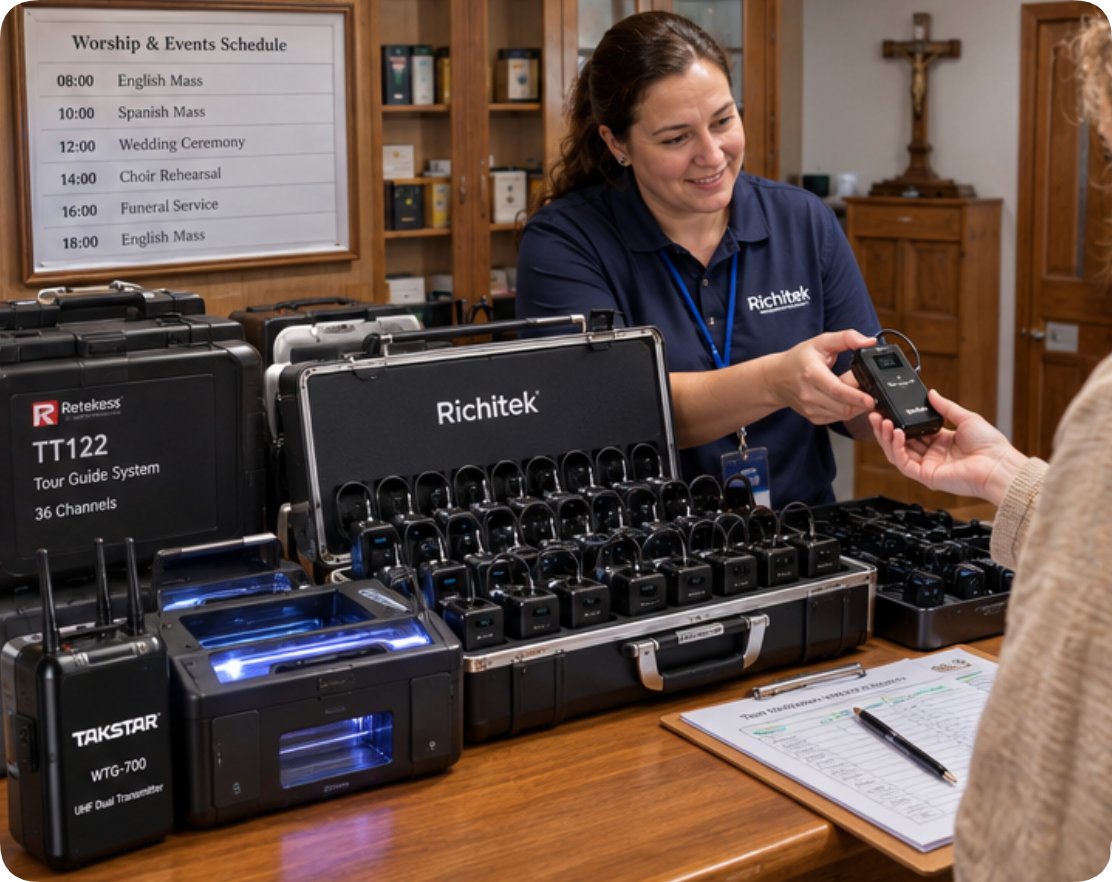
Church gear is community gear. Dozens of strangers wear the same receivers every week, and the volunteer who unlocks the sacristy needs the fleet charged, paired and counted in minutes. The TT122 ships as a case set with thirty-two charging slots and one-key pairing, mute and shutdown — a genuinely thoughtful kit for exactly this workflow. The WTG-700 goes further on hygiene: its fifty-four-plus-two case charges and UV-sterilizes every earhook, and for shared equipment in a place of worship that is a real advantage we do not currently offer in hardware, and we say so plainly. Where the RC2401 answers back is wear budget on the parish side: its fifty-gram receiver runs twenty hours on a 1000 mAh cell, so a charger cycle covers the whole week's calendar rather than one event, and its transmitter matches at ten hours. There is also a wearability division of labor worth naming. An eighteen-gram earhook disappears on an elderly parishioner and never snags a lace stole, which is why the WTG-700 choice is comfortable; a belt-clip body like the RC2401 or RC2500 puts the speaker against the collarbone, keeps both hands free for a hymnal or a railing on a narrow crypt stair, and survives being passed to a thousandth visitor without a snapped hook. Parishes that serve many elderly listeners often standardize on earhooks; parishes that run tours through cloisters and towers tend to prefer the body unit's durability. Counting, pairing and re-dispensing fifty units between a funeral and a wedding is drawer work either way — the difference is whether Wednesday's kit is still charged on Sunday.
Where the Budget Kits Fight Back
Credit where due, because a parish procurement committee will ask. The TT122 is sold as a complete one-transmitter, ten-receiver set with case for roughly the price of a few individual units elsewhere, which makes it the lowest-friction first purchase a small congregation can make. Its FCC certification paperwork is in order, its AUX input accepts a mixer feed for recorded content, and Retekess's one-key shutdown that powers down every receiver at once is a small mercy at the end of a long day. The WTG-700 fights back with range and audio width: UHF at 18 dBm through an external antenna, a 70 dB signal-to-noise ratio and a 20 Hz to 16 kHz response that flatters organ music and spoken word alike, plus the dual-transmitter mode already mentioned. If a parish's whole world is one chapel, one language and one volunteer, either budget kit will serve faithfully for years.
Choosing by Service, Not by Feature List
The honest decision rule is the calendar, not the brochure. One weekly service in one language: the TT122's kit economics win, and nobody should apologize for buying it. Regular dual-speaker events where priest and interpreter alternate: the WTG-700's dual-transmitter mode and UV-charged earhooks earn their place. Stacked multilingual schedules, heritage tours through stone walls, and fleets that must survive a weekend without a charging rota: that is the parish the RC2401, RC2408 and RC2500 were numbered for — eighty channels of headroom, forty hours of receiver patience, and a 2.4 GHz signal that coexists with the building's hearing loop instead of fighting it. The table below puts the five systems side by side.
| Item | Richitek RC2401 | Richitek RC2408 | Richitek RC2500 | Retekess TT122 | TAKSTAR WTG-700 |
|---|---|---|---|---|---|
| Band | 2.4 GHz | 2.4 GHz | 2.4 GHz, 20 mW | 2.4 GHz, 10 mW | UHF 800-1000 MHz |
| Channels | 50 | 80 | 50 | 36 | 65 |
| Range | open-field 200 m class | 1-200 m | 200 m class | 150 m open air | 200 m |
| TX / RX battery | 10 h / 20 h | 10 h / 20 h | 12 h / 40 h | 12 h / 18 h | 10 h / 8 h |
| Receiver weight | 50 g | 50 g | 50 g class | 70 g | 18 g earhook |
| Charging | USB | USB | USB | 32-slot case | 54+2 case, UV |
| Standout | fleet workhorse | channel headroom | weekend endurance | kit economics | dual-TX, hygiene |
Whichever way the committee leans, walk the building first: count the languages that genuinely overlap, the stone a signal must cross, and the hours between events when gear sits in a drawer. Then let the spec sheet follow the schedule. To dig deeper, the dedicated church translation guide walks through assistive-listening placement, the full wireless tour guide system line lists every model in the range, and the cross-brand comparison library holds the rest of this series.