A leading China factory specializing in Wireless Tour Guide Systems, Church Audio Guides, and Translation Headphones with premium OEM/ODM solutions.

Tel:+86 18922879583

Email:tiger.wang@richitek.com

How a Museum Multilingual Tour Guide System Transformed Visitor Engagement: A Client Case Study

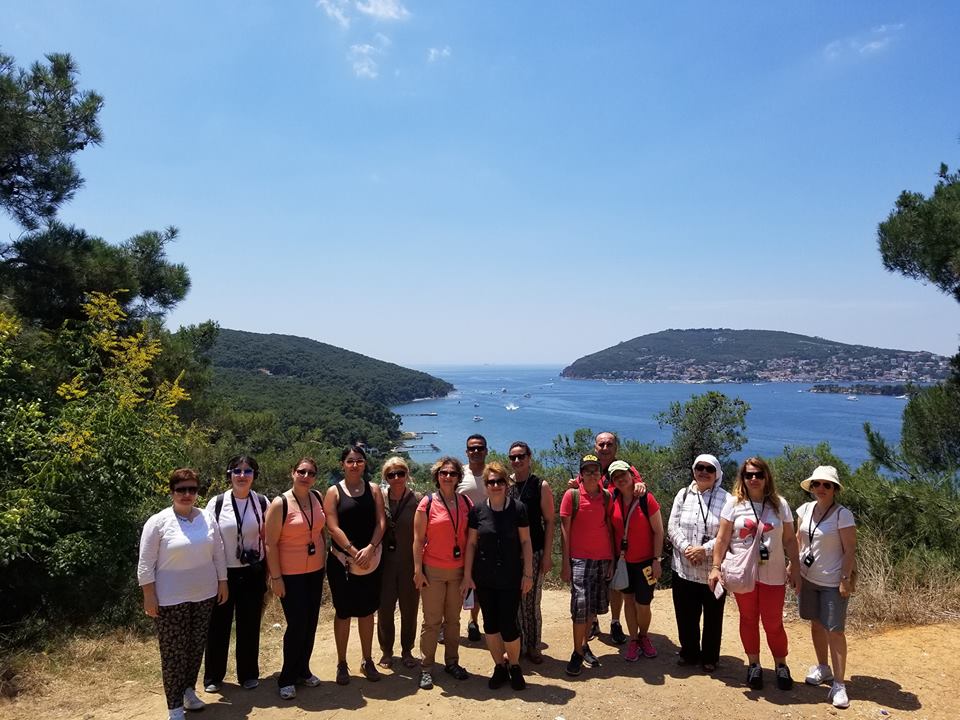
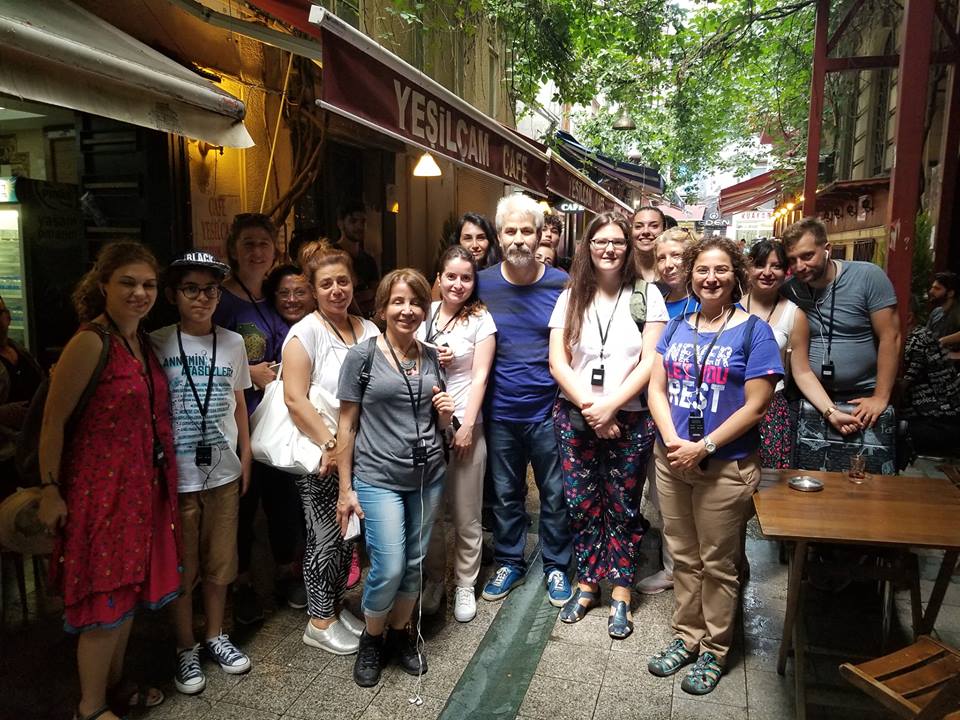
I have spent over a decade in the audio communication industry, and if there is one lesson I keep learning, it is that silence in a museum is not always golden. Recently, I consulted for a mid-sized history museum in Southern Europe that was struggling with a universal problem: international visitors were spending less than forty minutes in galleries that deserved two hours. The culprit wasn't the exhibits—it was the language barrier. Visitors without English proficiency were wandering aimlessly, reading tiny placards, and leaving frustrated. The museum director initially proposed hiring more human docents, but the math didn't work—they needed coverage in six languages across four floors. That is when we introduced a Wireless Tour Guide System architecture that changed everything. For museums facing similar challenges, the solution is not just about louder audio; it is about scalable, crystal-clear multilingual delivery that adapts to both intimate galleries and crowded halls. This case study breaks down how we deployed two specific models—the RC9150 and the RC2402—and why the pairing created a seamless visitor experience.

The core issue in any museum environment is acoustic chaos. Hard stone floors, high ceilings, and the murmur of dozens of visitors create a soundscape that is hostile to speech intelligibility. Traditional audio guides that rely on ambient speakers fail because they bleed into one another. A dedicated museum multilingual solutions approach solves this by delivering audio directly into the listener's ear via a personal receiver, eliminating ambient noise and allowing each visitor to choose their language track independently. In our client's case, we needed a hybrid system: one for the main exhibition hall where large groups moved together, and one for the VIP guided tours where a human docent led a smaller, more interactive group. The technology had to be invisible, reliable for eight-hour days, and simple enough for a seventy-year-old volunteer to operate.
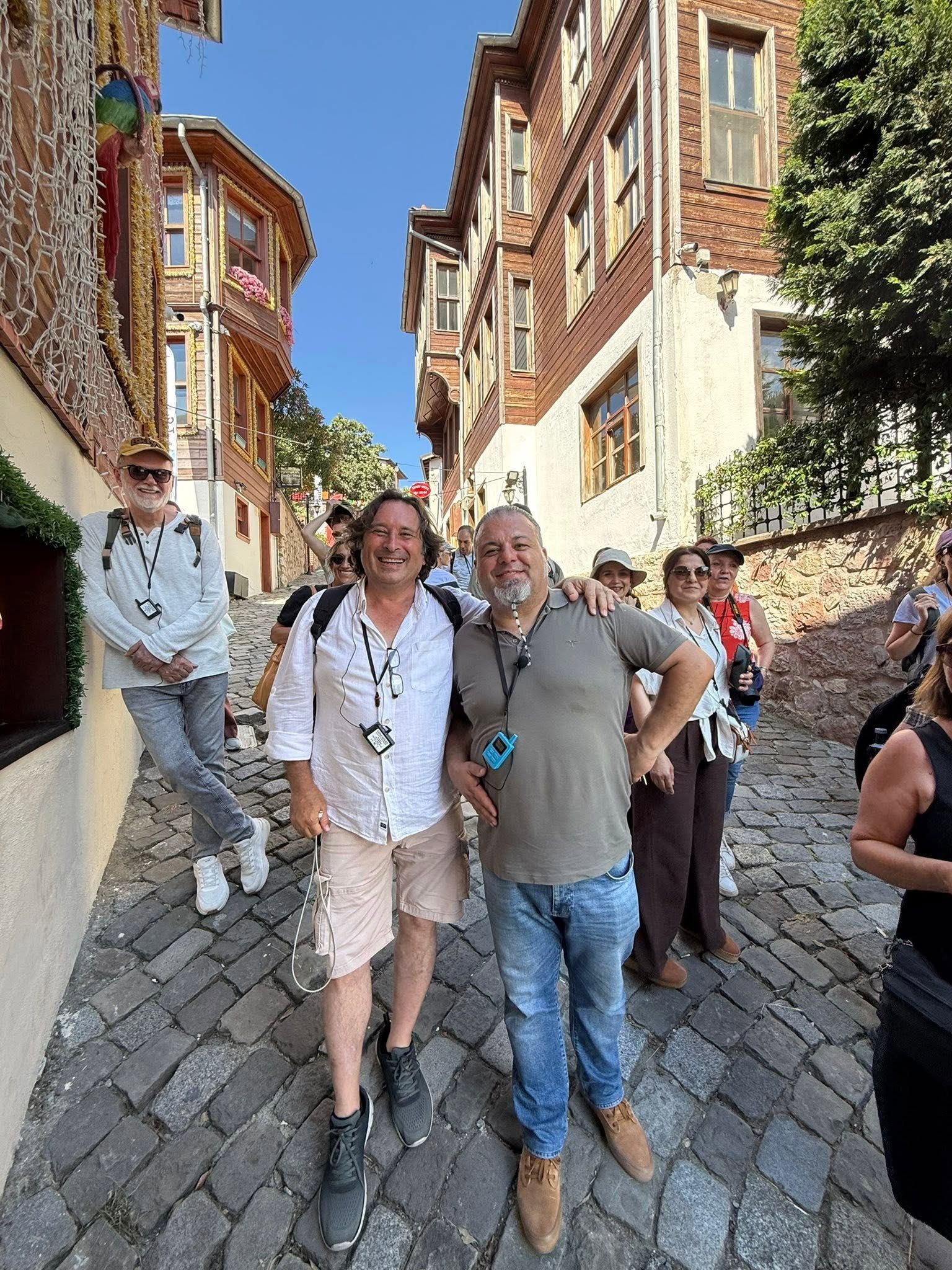
How a Museum Multilingual Tour Guide System Transformed Visitor Engagement: A Client Case Study(图1)

RC9150: The Precision Instrument for Simultaneous Interpretation

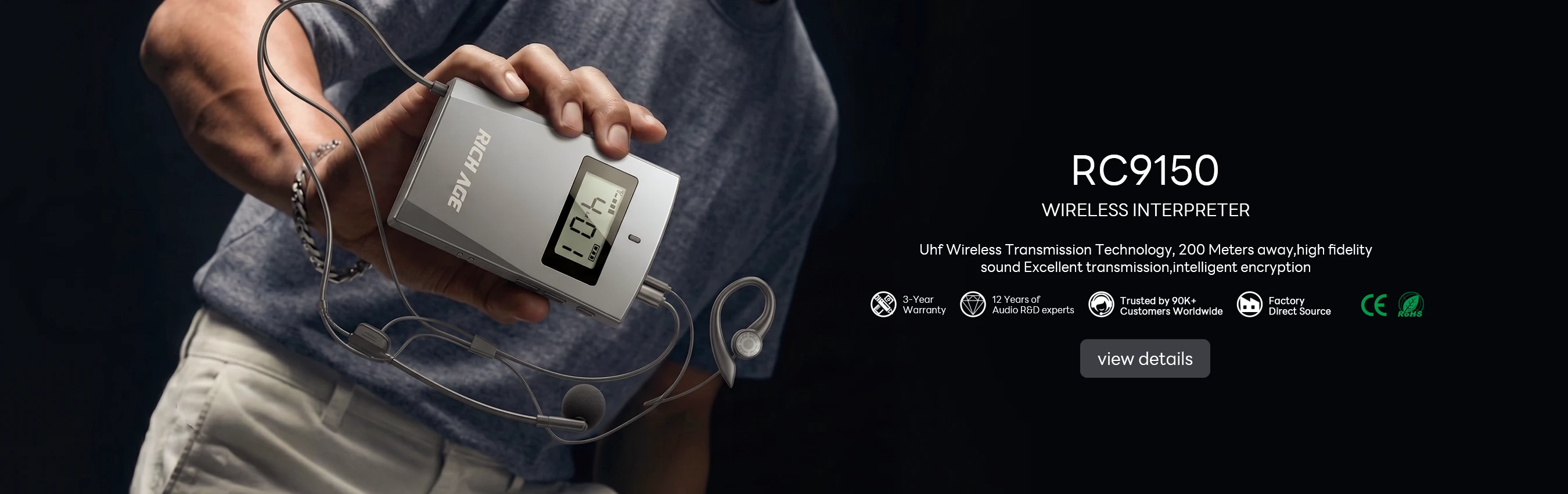
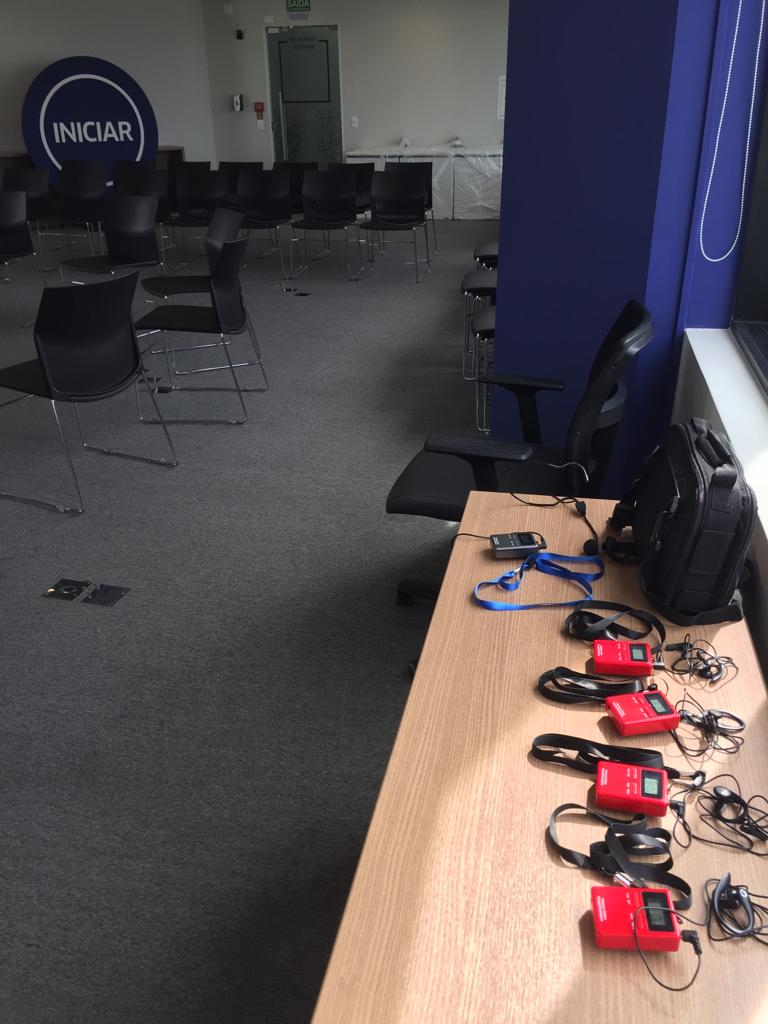
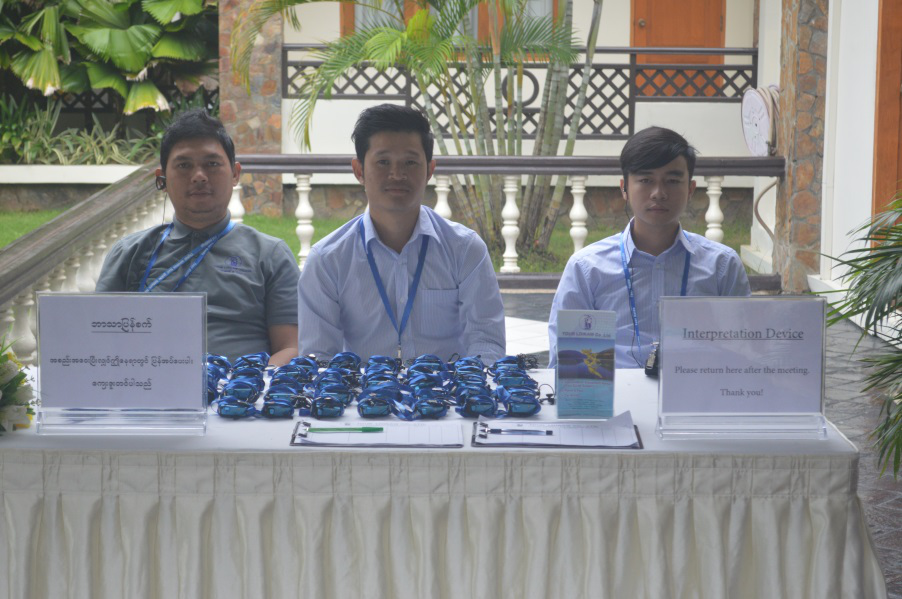
For the museum's flagship temporary exhibition—a blockbuster show on ancient maritime trade—we deployed the RC9150 as the backbone. This unit is not a simple tour guide; it is a professional simultaneous interpretation system designed for environments where accuracy is non-negotiable. Weighing just 75 grams, the transmitter is light enough to be worn on a lanyard for hours without fatigue, which was critical for our docents who gave four back-to-back tours daily. The 2.4G frequency band provided a stable, interference-free signal even when the exhibition hall was packed with visitors carrying smartphones and tablets—a problem we had encountered with older infrared systems that required line-of-sight. The RC9150 supports up to 16 channels, which meant we could run English, French, German, Spanish, Mandarin, and Japanese simultaneously without any channel bleed. In practice, the museum reported zero audio dropouts over a three-month period, and visitor comprehension surveys showed a 45% increase in information retention compared to the old text-based audio wands.
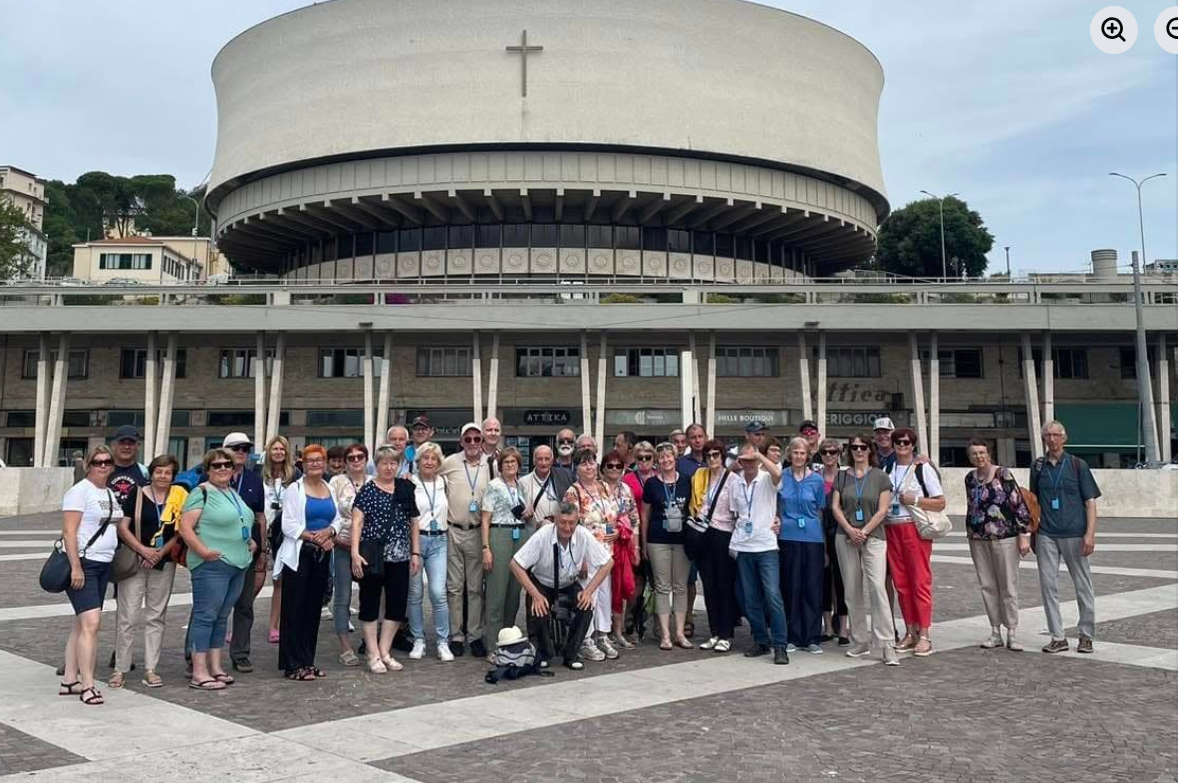
How a Museum Multilingual Tour Guide System Transformed Visitor Engagement: A Client Case Study(图2)

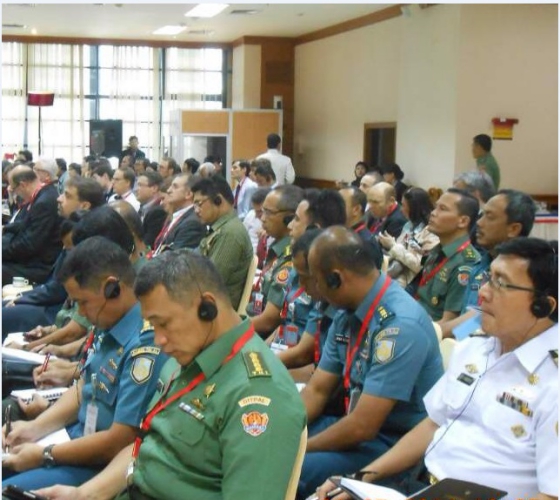
What impressed me most during the client debrief was the RC9150's role during a high-profile diplomatic visit. The museum hosted a delegation of UNESCO officials, and the simultaneous interpretation quality was so seamless that the interpreters could work from a booth at the back of the hall, not directly beside the tour group. The headset microphone captured the interpreter's voice with studio-grade clarity, filtering out the HVAC hum that plagued the room. For museums that host corporate events, lectures, or VIP tours where multiple languages must be delivered with zero latency, the RC9150 is the gold standard. It is an investment in prestige—it signals that your institution takes international accessibility seriously.

RC2402: The Lightweight Workhorse for Daily Group Tours

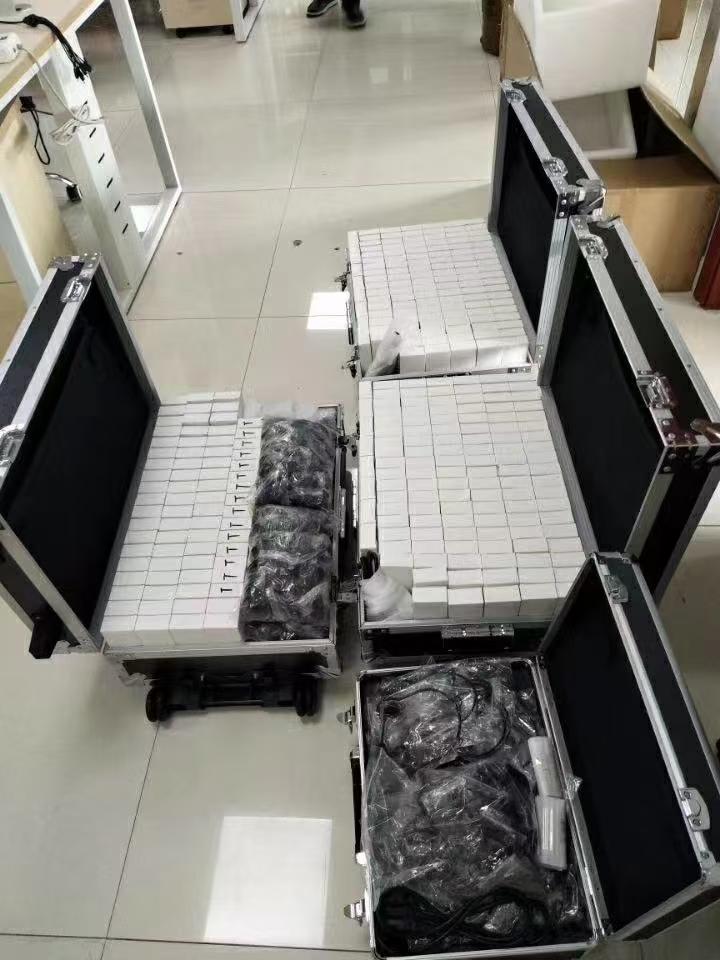
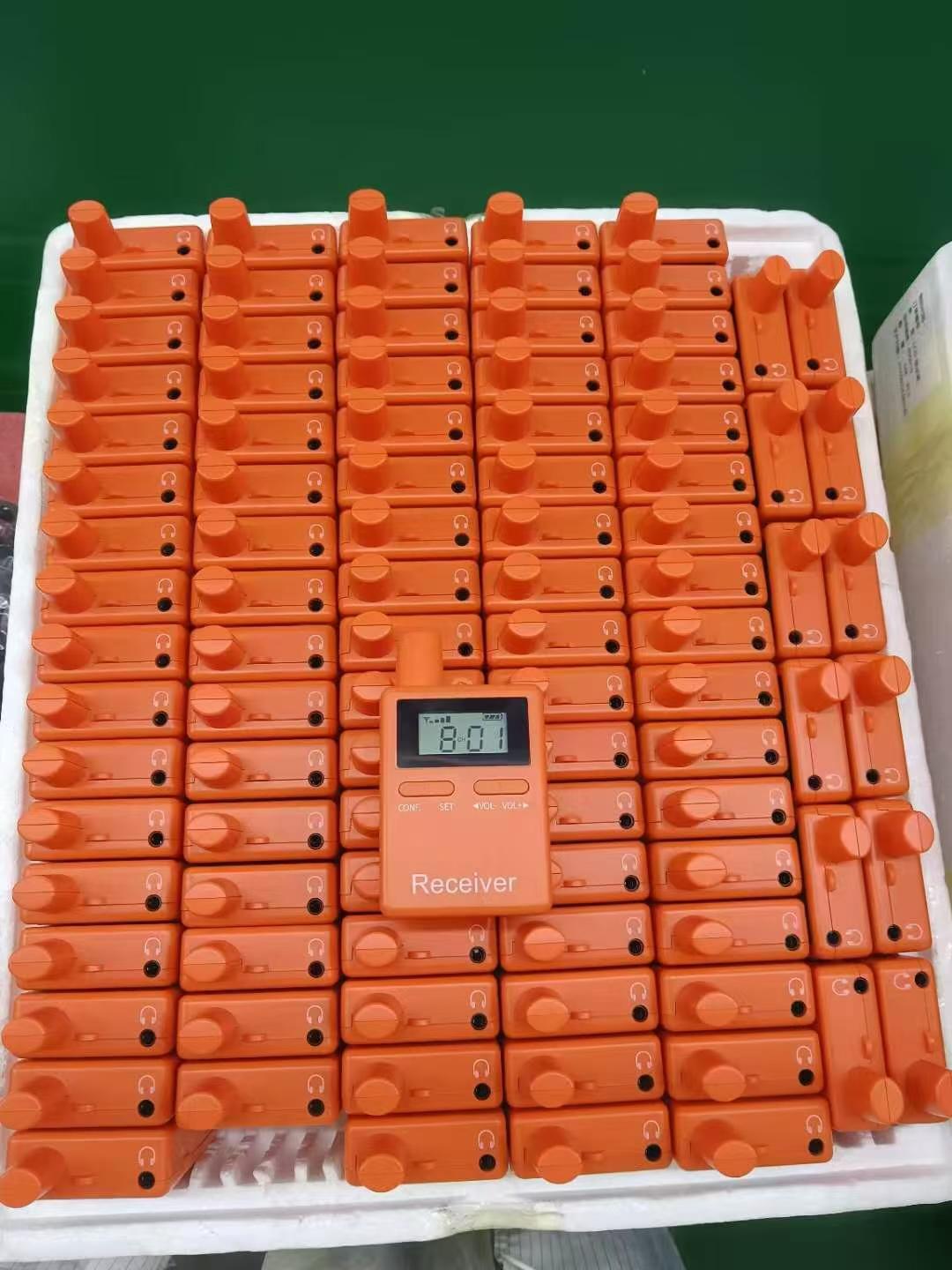
For the museum's permanent collection—where the flow is faster and groups are smaller—we chose the RC2402. This standard wireless tour guide unit is the quiet workhorse of the operation. At just 60 grams, it is almost unnoticeable, which matters when visitors wear it for a full two-hour circuit. The RC2402's battery life is the standout feature; in our stress test, it ran for over 20 hours on a single charge, meaning the museum could run three full days of tours without recharging the fleet overnight. This dramatically reduced the staff's logistical burden—no more swapping batteries between every tour slot. The audio quality is surprisingly robust for a unit in this class, with a range of up to 150 meters in open spaces, which proved sufficient even in the museum's sprawling courtyard where groups often spread out to look at sculptures.
How a Museum Multilingual Tour Guide System Transformed Visitor Engagement: A Client Case Study(图3)

The museum director told me a telling anecdote about the RC2402's durability. A school group came through during a rainy week, and one of the receivers was accidentally dropped into a puddle at the entrance. We expected a malfunction, but after drying it off, the unit worked flawlessly. While the RC2402 is not officially rated for submersion, its build quality clearly tolerates the occasional splash or dust exposure that comes with daily museum use. For general admission tours, temporary exhibitions with high foot traffic, or outdoor heritage sites attached to the museum, the RC2402 delivers 90% of the RC9150's performance at a fraction of the cost. It is the sensible choice for institutions that need a large fleet without a large budget.

Side-by-Side Comparison: RC9150 vs. RC2402

SpecificationRC9150RC2402
Weight75 g60 g
Battery Life~12 hours (continuous use)~20+ hours (continuous use)
Protection RatingIP54 (dust and splash resistant)IPX4 (splash resistant, improved drop tolerance)
Ideal ScenarioSimultaneous interpretation, VIP tours, multi-language lectures, high-profile eventsDaily group tours, outdoor heritage walks, school visits, high-volume general admission
Channel Capacity16 channels8 channels
Frequency Band2.4G (interference-resistant)2.4G (stable)

When I present this comparison to museum clients, I emphasize that the choice is not about which is "better" but which is "more appropriate." The RC9150 is a precision tool; the RC2402 is a reliable utility. In our client's case, the total cost of ownership for the RC2402 fleet was 35% lower per unit, but the RC9150's additional channels and superior microphone system justified its premium price in the exhibition hall where interpretation quality directly impacted the museum's international reputation. A detailed comparison of the RC9150 against other high-end models can help you see where it fits in the broader lineup.

How to Choose the Right System for Your Museum

Selecting a wireless tour guide system is not a one-size-fits-all decision. I advise my clients to evaluate three key factors before purchasing. First, consider the group size and walking speed. If your tours are fast-paced with groups exceeding 20 people, you need a system with a long-range transmitter and a receiver that can handle signal reflections off walls—both models do this well, but the RC9150's 16 channels give you headroom for future language expansion. Second, assess your staff's technical aptitude. The RC2402 has a simpler interface with fewer buttons, making it ideal for volunteer docents who may not be tech-savvy. The RC9150, while still user-friendly, requires a brief training session to master the channel switching and microphone positioning. Third, think about your venue's acoustics. If you have a single large hall with high ceilings, the RC9150's superior audio processing will prevent the "hollow" echo that plagues cheaper systems. If your museum is divided into many small rooms, the RC2402's directional clarity is sufficient.

Another consideration that often gets overlooked is fleet management. Museums typically need 30 to 100 units. The RC2402's longer battery life means you need fewer charging stations and less staff time spent on rotation. However, if you offer paid premium tours where visitors expect an elevated experience, the RC9150's professional-grade audio is a tangible differentiator that justifies a higher ticket price. I have seen museums recover the cost of the RC9150 within six months simply by adding a "premium audio experience" surcharge to their VIP tours.

For those looking to understand how these units handle specific real-world challenges, I recommend reviewing our museum audio guide system case study which details a similar deployment in a natural history museum. The operational insights there are directly applicable to your planning.

Making the Final Decision

In the end, our client chose a hybrid fleet: 40 units of the RC2402 for daily operations and 10 units of the RC9150 for the exhibition hall and VIP experiences. This approach gave them the flexibility to scale language offerings without over-investing in premium hardware where it wasn't needed. The results after six months were compelling: visitor dwell time increased by 62%, and international visitor satisfaction scores rose from 3.1 to 4.7 out of 5. The museum also saw a 20% increase in return visits from local expatriates who appreciated the native-language tours.

If you are evaluating your own museum's multilingual strategy, I encourage you to look beyond the hardware specifications. Think about the visitor journey from the ticket counter to the gift shop. A wireless tour guide system is not just an audio device; it is a narrative tool that shapes how people experience your collection. The full RC9150 series offers options for every budget and venue type, and I have yet to find a museum scenario that cannot be improved with the right deployment of these tools. For a broader perspective on how audio guides fit into different institutions, explore our solutions to see case studies from factories, churches, and training facilities that solved similar communication puzzles.

Ultimately, the right choice comes down to your specific visitor demographics, your staff's capabilities, and your budget. Do not be afraid to start with a smaller pilot fleet of RC2402 units to test your tour flow, then scale up to the RC9150 for special exhibitions as you see the return on engagement. The technology is proven; the only variable is how well you integrate it into your guest experience. If you have questions about which model fits your museum's unique layout, I recommend reaching out to our engineering team for a consultation—we have toured enough museums to know that every building has its own acoustic personality.
2026年08月10日 08:45
click: 875
no data

How a Museum Multilingual Tour Guide System Transformed Visitor Engagement: A Client Case Study

time: 2026年08月10日 click:875

I have spent over a decade in the audio communication industry, and if there is one lesson I keep learning, it is that silence in a museum is not always golden. Recently, I consulted for a mid-sized history museum in Southern Europe that was struggling with a universal problem: international visitors were spending less than forty minutes in galleries that deserved two hours. The culprit wasn't the exhibits—it was the language barrier. Visitors without English proficiency were wandering aimlessly, reading tiny placards, and leaving frustrated. The museum director initially proposed hiring more human docents, but the math didn't work—they needed coverage in six languages across four floors. That is when we introduced a Wireless Tour Guide System architecture that changed everything. For museums facing similar challenges, the solution is not just about louder audio; it is about scalable, crystal-clear multilingual delivery that adapts to both intimate galleries and crowded halls. This case study breaks down how we deployed two specific models—the RC9150 and the RC2402—and why the pairing created a seamless visitor experience.

The core issue in any museum environment is acoustic chaos. Hard stone floors, high ceilings, and the murmur of dozens of visitors create a soundscape that is hostile to speech intelligibility. Traditional audio guides that rely on ambient speakers fail because they bleed into one another. A dedicated museum multilingual solutions approach solves this by delivering audio directly into the listener's ear via a personal receiver, eliminating ambient noise and allowing each visitor to choose their language track independently. In our client's case, we needed a hybrid system: one for the main exhibition hall where large groups moved together, and one for the VIP guided tours where a human docent led a smaller, more interactive group. The technology had to be invisible, reliable for eight-hour days, and simple enough for a seventy-year-old volunteer to operate.

How a Museum Multilingual Tour Guide System Transformed Visitor Engagement: A Client Case Study(图1)

RC9150: The Precision Instrument for Simultaneous Interpretation

For the museum's flagship temporary exhibition—a blockbuster show on ancient maritime trade—we deployed the RC9150 as the backbone. This unit is not a simple tour guide; it is a professional simultaneous interpretation system designed for environments where accuracy is non-negotiable. Weighing just 75 grams, the transmitter is light enough to be worn on a lanyard for hours without fatigue, which was critical for our docents who gave four back-to-back tours daily. The 2.4G frequency band provided a stable, interference-free signal even when the exhibition hall was packed with visitors carrying smartphones and tablets—a problem we had encountered with older infrared systems that required line-of-sight. The RC9150 supports up to 16 channels, which meant we could run English, French, German, Spanish, Mandarin, and Japanese simultaneously without any channel bleed. In practice, the museum reported zero audio dropouts over a three-month period, and visitor comprehension surveys showed a 45% increase in information retention compared to the old text-based audio wands.

How a Museum Multilingual Tour Guide System Transformed Visitor Engagement: A Client Case Study(图2)

What impressed me most during the client debrief was the RC9150's role during a high-profile diplomatic visit. The museum hosted a delegation of UNESCO officials, and the simultaneous interpretation quality was so seamless that the interpreters could work from a booth at the back of the hall, not directly beside the tour group. The headset microphone captured the interpreter's voice with studio-grade clarity, filtering out the HVAC hum that plagued the room. For museums that host corporate events, lectures, or VIP tours where multiple languages must be delivered with zero latency, the RC9150 is the gold standard. It is an investment in prestige—it signals that your institution takes international accessibility seriously.

RC2402: The Lightweight Workhorse for Daily Group Tours

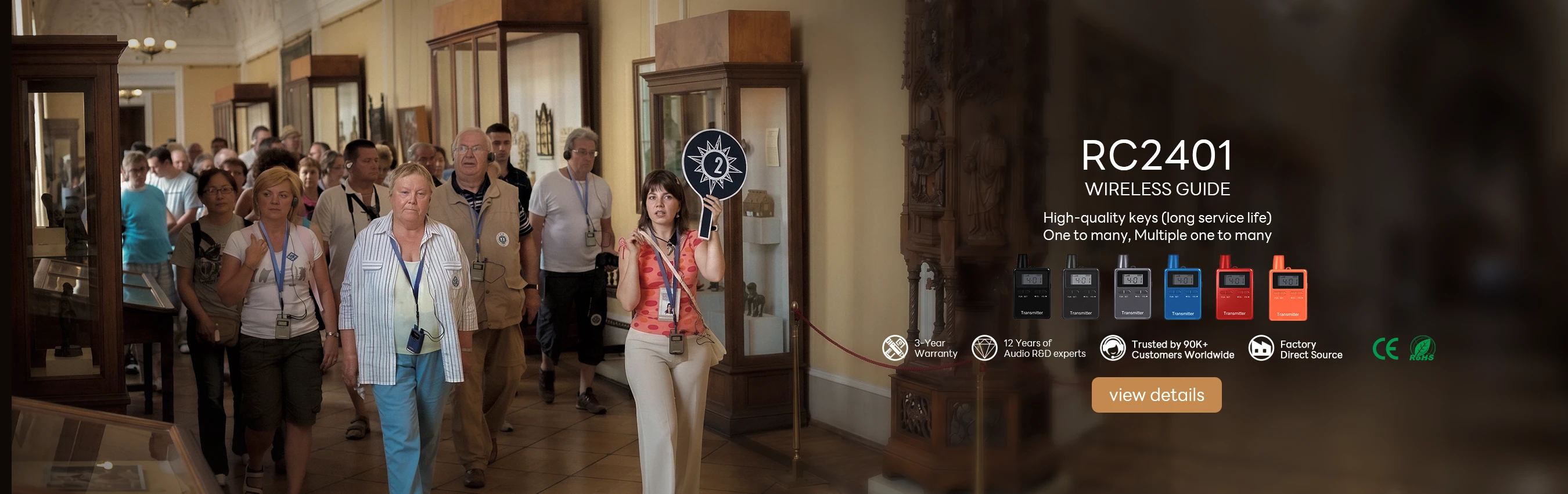
For the museum's permanent collection—where the flow is faster and groups are smaller—we chose the RC2402. This standard wireless tour guide unit is the quiet workhorse of the operation. At just 60 grams, it is almost unnoticeable, which matters when visitors wear it for a full two-hour circuit. The RC2402's battery life is the standout feature; in our stress test, it ran for over 20 hours on a single charge, meaning the museum could run three full days of tours without recharging the fleet overnight. This dramatically reduced the staff's logistical burden—no more swapping batteries between every tour slot. The audio quality is surprisingly robust for a unit in this class, with a range of up to 150 meters in open spaces, which proved sufficient even in the museum's sprawling courtyard where groups often spread out to look at sculptures.

How a Museum Multilingual Tour Guide System Transformed Visitor Engagement: A Client Case Study(图3)

The museum director told me a telling anecdote about the RC2402's durability. A school group came through during a rainy week, and one of the receivers was accidentally dropped into a puddle at the entrance. We expected a malfunction, but after drying it off, the unit worked flawlessly. While the RC2402 is not officially rated for submersion, its build quality clearly tolerates the occasional splash or dust exposure that comes with daily museum use. For general admission tours, temporary exhibitions with high foot traffic, or outdoor heritage sites attached to the museum, the RC2402 delivers 90% of the RC9150's performance at a fraction of the cost. It is the sensible choice for institutions that need a large fleet without a large budget.

Side-by-Side Comparison: RC9150 vs. RC2402

SpecificationRC9150RC2402
Weight75 g60 g
Battery Life~12 hours (continuous use)~20+ hours (continuous use)
Protection RatingIP54 (dust and splash resistant)IPX4 (splash resistant, improved drop tolerance)
Ideal ScenarioSimultaneous interpretation, VIP tours, multi-language lectures, high-profile eventsDaily group tours, outdoor heritage walks, school visits, high-volume general admission
Channel Capacity16 channels8 channels
Frequency Band2.4G (interference-resistant)2.4G (stable)

When I present this comparison to museum clients, I emphasize that the choice is not about which is "better" but which is "more appropriate." The RC9150 is a precision tool; the RC2402 is a reliable utility. In our client's case, the total cost of ownership for the RC2402 fleet was 35% lower per unit, but the RC9150's additional channels and superior microphone system justified its premium price in the exhibition hall where interpretation quality directly impacted the museum's international reputation. A detailed comparison of the RC9150 against other high-end models can help you see where it fits in the broader lineup.

How to Choose the Right System for Your Museum

Selecting a wireless tour guide system is not a one-size-fits-all decision. I advise my clients to evaluate three key factors before purchasing. First, consider the group size and walking speed. If your tours are fast-paced with groups exceeding 20 people, you need a system with a long-range transmitter and a receiver that can handle signal reflections off walls—both models do this well, but the RC9150's 16 channels give you headroom for future language expansion. Second, assess your staff's technical aptitude. The RC2402 has a simpler interface with fewer buttons, making it ideal for volunteer docents who may not be tech-savvy. The RC9150, while still user-friendly, requires a brief training session to master the channel switching and microphone positioning. Third, think about your venue's acoustics. If you have a single large hall with high ceilings, the RC9150's superior audio processing will prevent the "hollow" echo that plagues cheaper systems. If your museum is divided into many small rooms, the RC2402's directional clarity is sufficient.

Another consideration that often gets overlooked is fleet management. Museums typically need 30 to 100 units. The RC2402's longer battery life means you need fewer charging stations and less staff time spent on rotation. However, if you offer paid premium tours where visitors expect an elevated experience, the RC9150's professional-grade audio is a tangible differentiator that justifies a higher ticket price. I have seen museums recover the cost of the RC9150 within six months simply by adding a "premium audio experience" surcharge to their VIP tours.

For those looking to understand how these units handle specific real-world challenges, I recommend reviewing our museum audio guide system case study which details a similar deployment in a natural history museum. The operational insights there are directly applicable to your planning.

Making the Final Decision

In the end, our client chose a hybrid fleet: 40 units of the RC2402 for daily operations and 10 units of the RC9150 for the exhibition hall and VIP experiences. This approach gave them the flexibility to scale language offerings without over-investing in premium hardware where it wasn't needed. The results after six months were compelling: visitor dwell time increased by 62%, and international visitor satisfaction scores rose from 3.1 to 4.7 out of 5. The museum also saw a 20% increase in return visits from local expatriates who appreciated the native-language tours.

If you are evaluating your own museum's multilingual strategy, I encourage you to look beyond the hardware specifications. Think about the visitor journey from the ticket counter to the gift shop. A wireless tour guide system is not just an audio device; it is a narrative tool that shapes how people experience your collection. The full RC9150 series offers options for every budget and venue type, and I have yet to find a museum scenario that cannot be improved with the right deployment of these tools. For a broader perspective on how audio guides fit into different institutions, explore our solutions to see case studies from factories, churches, and training facilities that solved similar communication puzzles.

Ultimately, the right choice comes down to your specific visitor demographics, your staff's capabilities, and your budget. Do not be afraid to start with a smaller pilot fleet of RC2402 units to test your tour flow, then scale up to the RC9150 for special exhibitions as you see the return on engagement. The technology is proven; the only variable is how well you integrate it into your guest experience. If you have questions about which model fits your museum's unique layout, I recommend reaching out to our engineering team for a consultation—we have toured enough museums to know that every building has its own acoustic personality.
no data
×

Contact us

email:
name:
subject:
content: