A leading China factory specializing in Wireless Tour Guide Systems, Church Audio Guides, and Translation Headphones with premium OEM/ODM solutions.

Tel:+86 18922879583

Email:tiger.wang@richitek.com

RC9150, RC2401 and RC2500: Two Photographs From an Old-Town Family Walk, and the Three Checks Behind Them

A family walking tour rarely fails on audio. It fails on counting. A group that splits around a corner in a narrow old-town lane comes back as two numbers instead of one, a child hands a receiver to a grandparent who has not put it on yet, and the guide spends the next ten minutes walking the lane twice instead of continuing the tour. The two photographs that come back from such a day are rarely of the equipment. They are of a terrace where everyone regrouped and a lane that took the group round a building twice. What they document is whether the count held and whether the audio reached the back of the line.

Three products sit behind those two checks. The RC9150 High-end 2.4G Wireless Audio Guide System is the unit a guide wears for a long day. The RICH AGE RC2401 Wireless Audio Guide System is the general-purpose kit a small operator rents out. The RC2500 Wireless Tour Guide System is the high-power set a family-run agency keeps for the days when the lane is long and the group is spread out. This is what each one is asked to do in an old town, and how the two photographs from a customer's day map onto three specific checks.

📷 First Photograph: The Terrace Where the Count Held

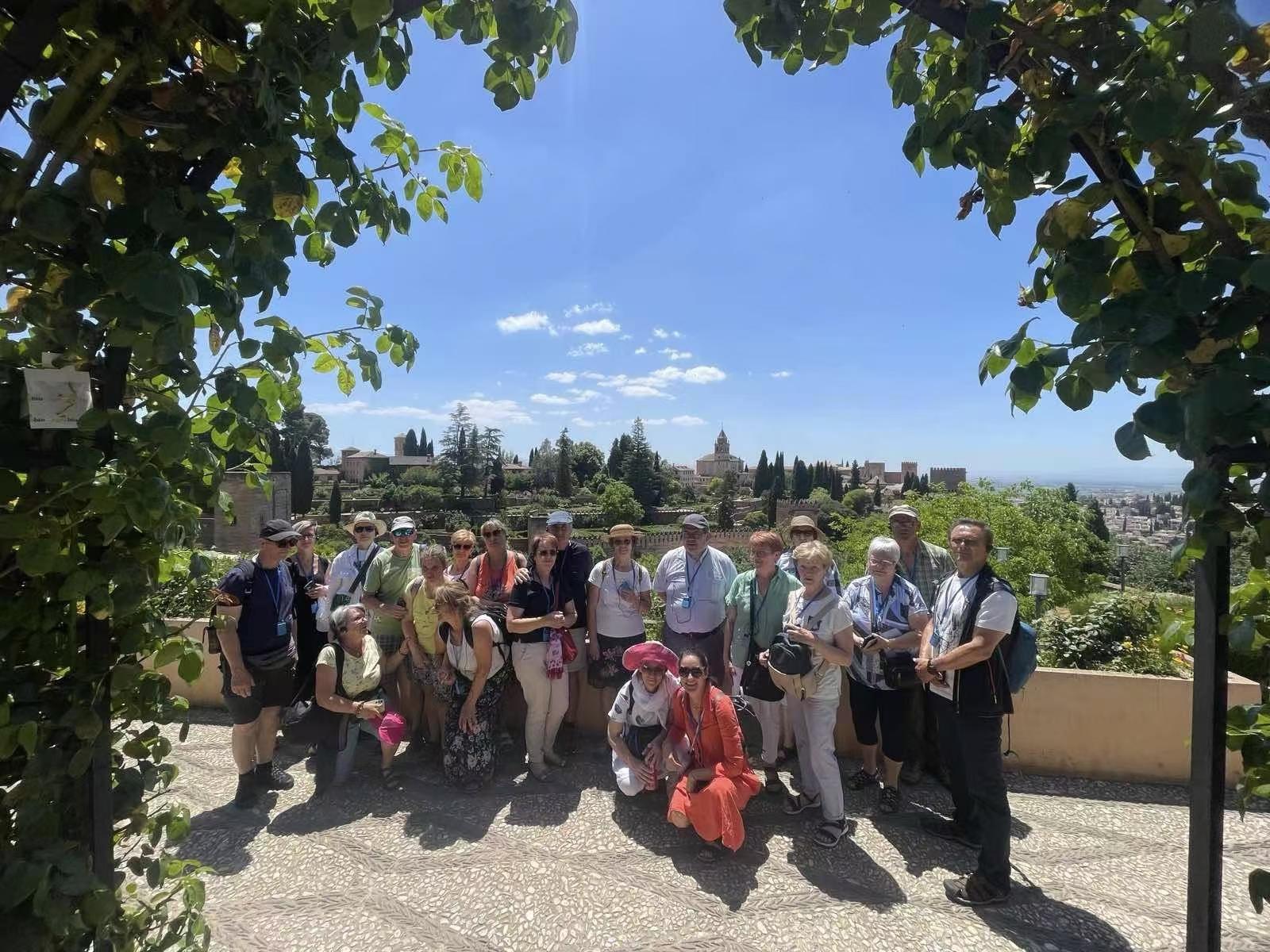
The first image from this walk is a terrace with awnings and patio tables, and the useful part of the frame is not the group in it. What matters is that everyone in it is standing still. On a narrow-lane walk, a group that has found its assembly point and is waiting is a group whose count is intact. Operators who have run these walks describe the same pattern: the terrace or square is where the number gets confirmed, usually before the tour starts, and it is also where the count fails first when a receiver has been handed to someone who walked off with it.

That makes the terrace an equipment test rather than a photograph. The RC2401 is the kit most often put on a short rental for exactly this kind of day, and its specification block is modest in a useful way. It lists fifty PLL digital channels, a 2403 to 2483 megahertz ISM band with no licence and no regional registration, transmission up to two hundred meters in an open area, a transmitter cell rated for more than ten hours of continuous operation and a receiver with more than twenty hours of standby and playback, DC charging with multi-device charging supported, and an IPX4 splash-resistant enclosure.
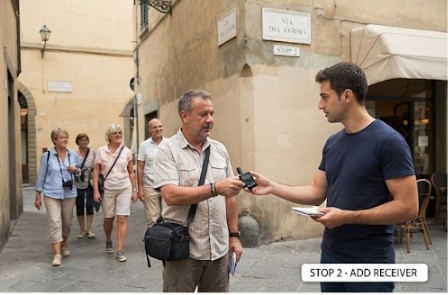

RC2401-ancient_town_customer_feedback_case

The splash rating is what a terrace in summer actually tests. An IPX4 line is not a submersion rating; it is a statement about drizzle, condensation and a table that gets wet. On a terrace walk where the group eats before the second half of the route, that is the correct rating and no more is needed.
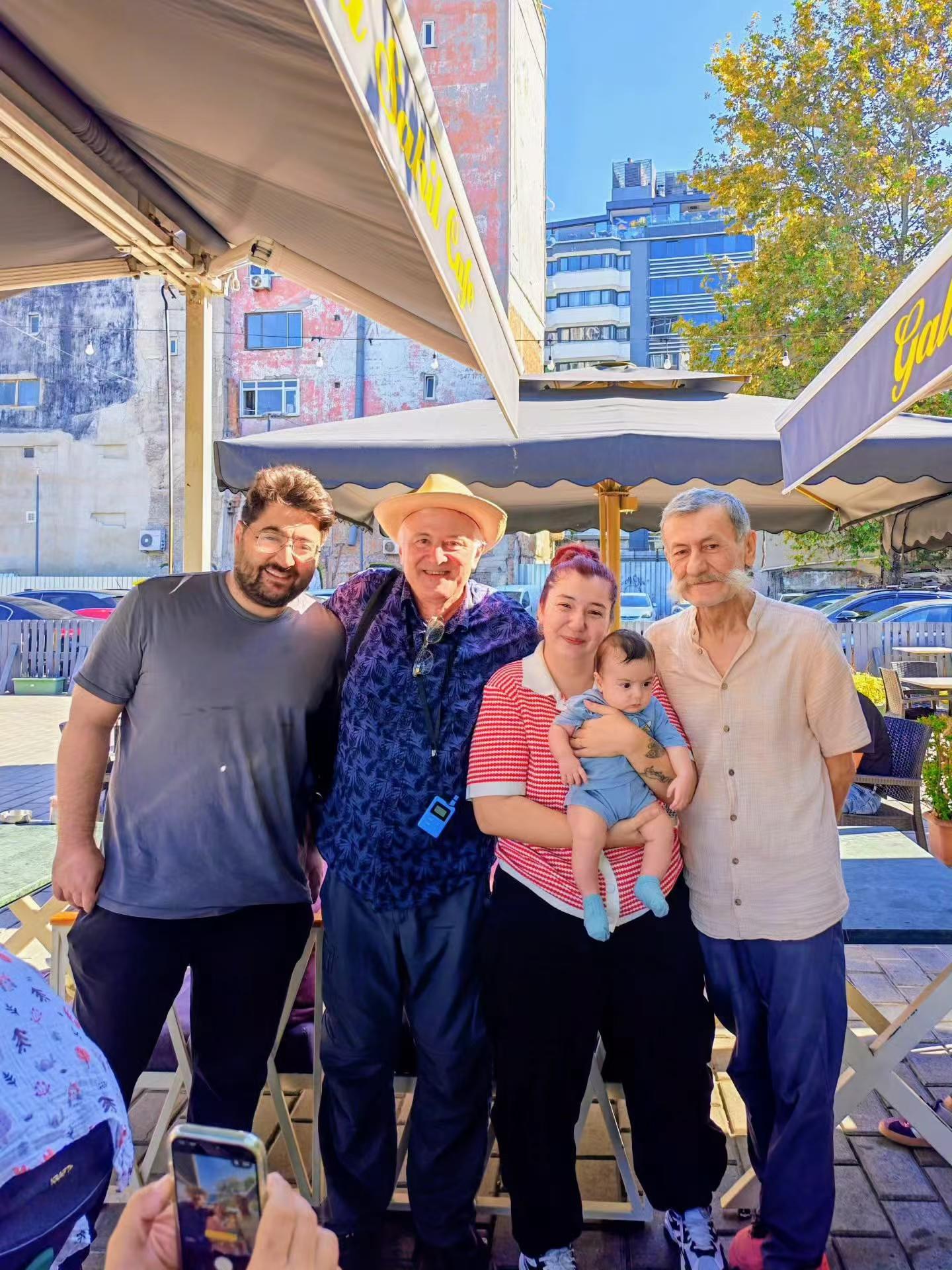

RC9150-ancient_town_customer_feedback_case

👵 The Part of a Family Walk That Audio Does Not Solve

The same frame shows something equipment cannot fix: a group containing a wide spread of ages, standing close enough to talk without an earpiece. On a terrace the guide can raise their voice and answer a question in the same sentence. Two hundred metres later, on a narrow lane, that option does not exist, and the receiver stops being a convenience and becomes the only channel between the guide and the slowest person in the group.

That is why the hire sheet is written before the walk rather than after it. Knowing who is hard of hearing, who walks with a stick, and who will stop at a shopfront tells the guide where to slow down. A wireless system makes the message audible at the back of the line; it does not tell the guide where the line has already broken.

📷 Second Photograph: The Lane That Took the Group Round Twice

The second image is the lane itself: a narrow paved street between tall stone and rendered buildings, with a heavily ornamented masonry structure on one side and overhead cables crossing above. It is a good architectural photograph and a better operational one, because it shows the two conditions that decide whether an unamplified voice reaches the back of a group. The first is that buildings on both sides absorb and reflect. The second is that the lane is long enough that a group walking at different speeds spreads out along it.

This is where transmission power becomes a real specification rather than a number on a page. The RC2500 publishes twenty milliwatts of high-power 2.4 gigahertz output, up to two hundred metres in an open area, and describes reliable signal penetration in complex environments. Its frequency response runs twenty hertz to twenty kilohertz, it runs fifty independent PLL channels for multi-group use, and its operating temperature is listed from minus fifteen to fifty degrees. For a walk that starts at ten in the morning and ends after sunset, that last line matters as much as the power figure.

Battery figures matter for the same walk for a different reason. The RC2500 lists twelve hours on the transmitter and forty hours on the receiver, which covers a day and then some. Forty hours is what allows one charging case to serve a whole day of rotations without a guide carrying a spare cell.
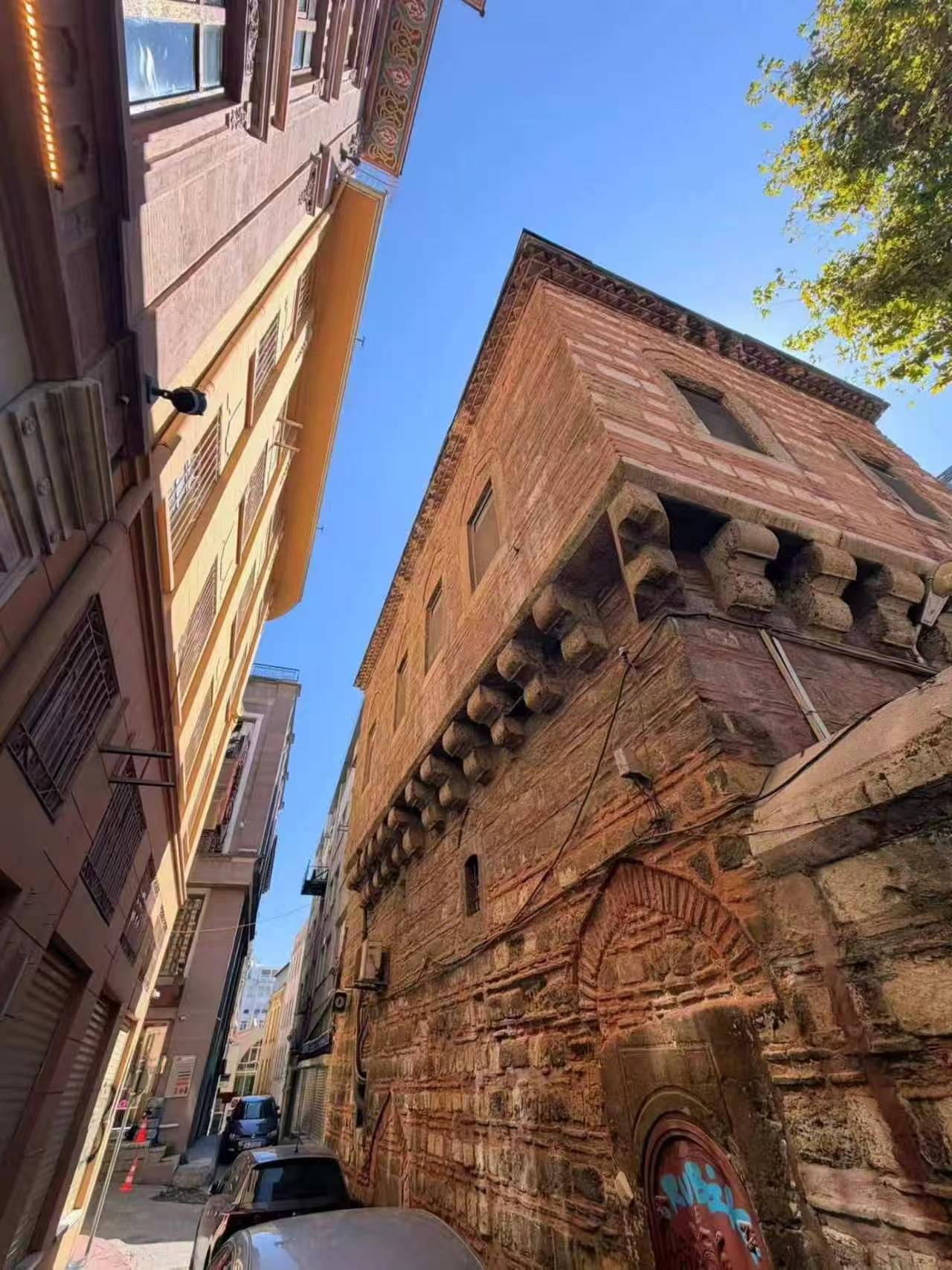

RC2500-ancient_town_customer_feedback_case

🔋 🔋 Why Runtime Decides a Street Walk Before Power Does

On a terrace walk the guide turns battery life into a scheduling question. A kit that survives forty hours on the receiver can be handed out for a full day of rotations from one charging case, and the next morning the desk does not count how many sets came back. A kit with ten hours on the transmitter puts the transmitter on the morning checklist, which is one more thing to remember before the first group arrives.

The same arithmetic applies to receivers handed back late. More than twenty hours of standby means an operator can accept a set returned the following evening without having failed anyone, because it was never close to flat. That is a staffing advantage more than a technical one, and it is why the cheaper kit is often the right kit for a short street route.

What the Two Photographs Do Not Show

A customer photograph set rarely shows the equipment, and that is fine. The two things it does show are the two that were at risk on the day: whether the count held at the assembly point, and whether the voice carried down the lane. Everything else is verifiable from the specification block beforehand, and afterwards from the headcount.

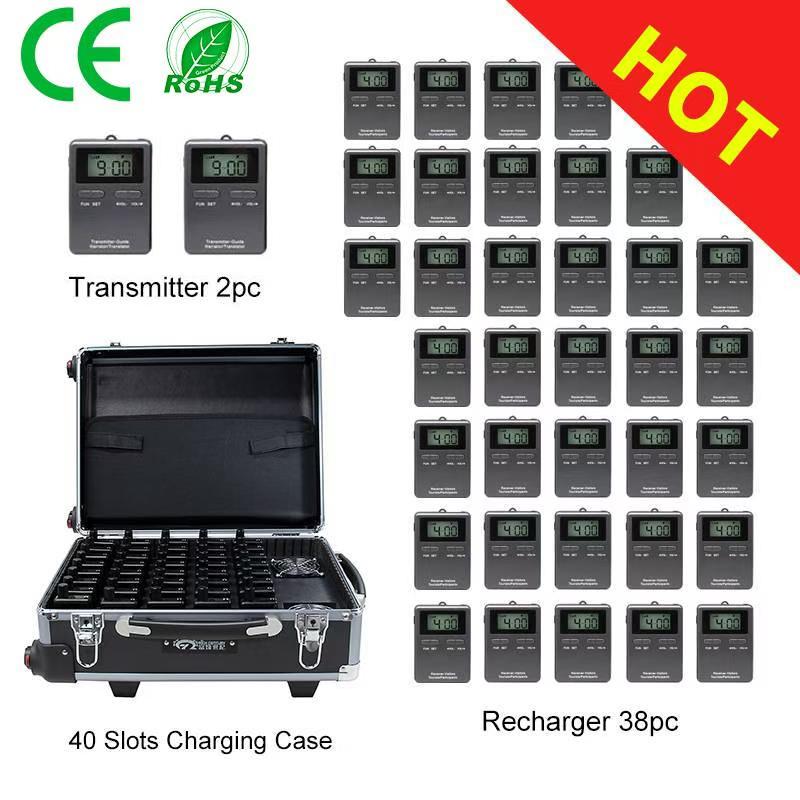
The third check is the one no photograph captures at all, and it is why the guide's own unit matters. The RC9150 is specified as a high-end system with one transmitter and unlimited receivers, one hundred independent channels for high-density environments, up to two hundred metres in an open area, a transmitter rated at fifteen hours and a receiver at more than thirty hours, intelligent encryption, and CE, EMC, LVD, RED and RoHS certification with a three-year warranty on the mainboard.

One hundred channels is the figure that matters in a town where several operators share the same square. Each group locks onto an independent frequency to keep crosstalk out, which means a family tour can run in the same street as a coach group and a school group without sharing a channel. Thirty hours on the receiver is what lets a rental desk hand one set out for a whole walking week without charging it nightly.

The third check has a written counterpart that costs nothing. The operator writes the headcount on the hire sheet, next to the channel number and the receiver serial range issued. That line answers the three questions an old-town route raises: how many people should answer at the terrace, which channel the group is on, and which serials left the desk.

All three systems sit inside the same licence-free 2.4 gigahertz band from 2403 to 2483 megahertz, so an old-town operator needs no separate frequency licensing for any of them. What differs is the channel count, the power figure and the hours on the receiver, and the table below sets those side by side.

Check the day turned onUnit that carries itFigure that decides it
Count holds at the assembly pointRC2401Fifty PLL channels, IPX4 splash-resistant enclosure
Voice carries down a narrow laneRC2500Twenty milliwatts output, minus fifteen to fifty degrees
Coexists with other groups in the same streetRC9150One hundred independent channels, thirty-plus hours on the receiver
Survives a full walking day on one chargeRC2500Forty hours receiver, twelve hours transmitter
Covers a street rented out once a weekRC2401Twenty-plus hours standby, multi-device charging
Holds encryption on a public tour channelRC9150Intelligent encryption technology

🎯 📶 What the Guide Counts Before the First Step

Before the walk, the guide checks three numbers and writes them on the hire sheet: how many receivers went out, which channel the group is on, and what time the terrace assembly is. None of these require the equipment, and all three determine whether the photographs at the end of the day show a completed route or a search.

After that, the walk is largely a matter of pace rather than equipment. The systems here cover the range an old-town route needs, and the figures that decide the purchase are channel count, transmission power and receiver hours, in that order of how often they matter on foot.

Running a Similar Walk in Your Own Town

None of this requires a specific make of street. It requires the count confirmed before the second corner, and a system rated for a day that starts early and ends after dark. Browse our solutions for heritage and old-town deployments, step through our wireless tour guide system range when a route needs more channels, and compare architectures in the tour guide system comparison guide before the season starts.

An old-town family walk is decided by two numbers: how many people answered at the assembly point, and whether the last person heard the guide. Both are checkable on the day.
2026年10月12日 14:11
ꄘ click: 23
no data

RC9150, RC2401 and RC2500: Two Photographs From an Old-Town Family Walk, and the Three Checks Behind Them

time: 2026年10月12日 click:23

A family walking tour rarely fails on audio. It fails on counting. A group that splits around a corner in a narrow old-town lane comes back as two numbers instead of one, a child hands a receiver to a grandparent who has not put it on yet, and the guide spends the next ten minutes walking the lane twice instead of continuing the tour. The two photographs that come back from such a day are rarely of the equipment. They are of a terrace where everyone regrouped and a lane that took the group round a building twice. What they document is whether the count held and whether the audio reached the back of the line.

Three products sit behind those two checks. The RC9150 High-end 2.4G Wireless Audio Guide System is the unit a guide wears for a long day. The RICH AGE RC2401 Wireless Audio Guide System is the general-purpose kit a small operator rents out. The RC2500 Wireless Tour Guide System is the high-power set a family-run agency keeps for the days when the lane is long and the group is spread out. This is what each one is asked to do in an old town, and how the two photographs from a customer's day map onto three specific checks.

📷 First Photograph: The Terrace Where the Count Held

The first image from this walk is a terrace with awnings and patio tables, and the useful part of the frame is not the group in it. What matters is that everyone in it is standing still. On a narrow-lane walk, a group that has found its assembly point and is waiting is a group whose count is intact. Operators who have run these walks describe the same pattern: the terrace or square is where the number gets confirmed, usually before the tour starts, and it is also where the count fails first when a receiver has been handed to someone who walked off with it.

That makes the terrace an equipment test rather than a photograph. The RC2401 is the kit most often put on a short rental for exactly this kind of day, and its specification block is modest in a useful way. It lists fifty PLL digital channels, a 2403 to 2483 megahertz ISM band with no licence and no regional registration, transmission up to two hundred meters in an open area, a transmitter cell rated for more than ten hours of continuous operation and a receiver with more than twenty hours of standby and playback, DC charging with multi-device charging supported, and an IPX4 splash-resistant enclosure.


RC2401-ancient_town_customer_feedback_case

The splash rating is what a terrace in summer actually tests. An IPX4 line is not a submersion rating; it is a statement about drizzle, condensation and a table that gets wet. On a terrace walk where the group eats before the second half of the route, that is the correct rating and no more is needed.


RC9150-ancient_town_customer_feedback_case

👵 The Part of a Family Walk That Audio Does Not Solve

The same frame shows something equipment cannot fix: a group containing a wide spread of ages, standing close enough to talk without an earpiece. On a terrace the guide can raise their voice and answer a question in the same sentence. Two hundred metres later, on a narrow lane, that option does not exist, and the receiver stops being a convenience and becomes the only channel between the guide and the slowest person in the group.

That is why the hire sheet is written before the walk rather than after it. Knowing who is hard of hearing, who walks with a stick, and who will stop at a shopfront tells the guide where to slow down. A wireless system makes the message audible at the back of the line; it does not tell the guide where the line has already broken.

📷 Second Photograph: The Lane That Took the Group Round Twice

The second image is the lane itself: a narrow paved street between tall stone and rendered buildings, with a heavily ornamented masonry structure on one side and overhead cables crossing above. It is a good architectural photograph and a better operational one, because it shows the two conditions that decide whether an unamplified voice reaches the back of a group. The first is that buildings on both sides absorb and reflect. The second is that the lane is long enough that a group walking at different speeds spreads out along it.

This is where transmission power becomes a real specification rather than a number on a page. The RC2500 publishes twenty milliwatts of high-power 2.4 gigahertz output, up to two hundred metres in an open area, and describes reliable signal penetration in complex environments. Its frequency response runs twenty hertz to twenty kilohertz, it runs fifty independent PLL channels for multi-group use, and its operating temperature is listed from minus fifteen to fifty degrees. For a walk that starts at ten in the morning and ends after sunset, that last line matters as much as the power figure.

Battery figures matter for the same walk for a different reason. The RC2500 lists twelve hours on the transmitter and forty hours on the receiver, which covers a day and then some. Forty hours is what allows one charging case to serve a whole day of rotations without a guide carrying a spare cell.


RC2500-ancient_town_customer_feedback_case

🔋 🔋 Why Runtime Decides a Street Walk Before Power Does

On a terrace walk the guide turns battery life into a scheduling question. A kit that survives forty hours on the receiver can be handed out for a full day of rotations from one charging case, and the next morning the desk does not count how many sets came back. A kit with ten hours on the transmitter puts the transmitter on the morning checklist, which is one more thing to remember before the first group arrives.

The same arithmetic applies to receivers handed back late. More than twenty hours of standby means an operator can accept a set returned the following evening without having failed anyone, because it was never close to flat. That is a staffing advantage more than a technical one, and it is why the cheaper kit is often the right kit for a short street route.

What the Two Photographs Do Not Show

A customer photograph set rarely shows the equipment, and that is fine. The two things it does show are the two that were at risk on the day: whether the count held at the assembly point, and whether the voice carried down the lane. Everything else is verifiable from the specification block beforehand, and afterwards from the headcount.

The third check is the one no photograph captures at all, and it is why the guide's own unit matters. The RC9150 is specified as a high-end system with one transmitter and unlimited receivers, one hundred independent channels for high-density environments, up to two hundred metres in an open area, a transmitter rated at fifteen hours and a receiver at more than thirty hours, intelligent encryption, and CE, EMC, LVD, RED and RoHS certification with a three-year warranty on the mainboard.

One hundred channels is the figure that matters in a town where several operators share the same square. Each group locks onto an independent frequency to keep crosstalk out, which means a family tour can run in the same street as a coach group and a school group without sharing a channel. Thirty hours on the receiver is what lets a rental desk hand one set out for a whole walking week without charging it nightly.

The third check has a written counterpart that costs nothing. The operator writes the headcount on the hire sheet, next to the channel number and the receiver serial range issued. That line answers the three questions an old-town route raises: how many people should answer at the terrace, which channel the group is on, and which serials left the desk.

All three systems sit inside the same licence-free 2.4 gigahertz band from 2403 to 2483 megahertz, so an old-town operator needs no separate frequency licensing for any of them. What differs is the channel count, the power figure and the hours on the receiver, and the table below sets those side by side.

Check the day turned onUnit that carries itFigure that decides it
Count holds at the assembly pointRC2401Fifty PLL channels, IPX4 splash-resistant enclosure
Voice carries down a narrow laneRC2500Twenty milliwatts output, minus fifteen to fifty degrees
Coexists with other groups in the same streetRC9150One hundred independent channels, thirty-plus hours on the receiver
Survives a full walking day on one chargeRC2500Forty hours receiver, twelve hours transmitter
Covers a street rented out once a weekRC2401Twenty-plus hours standby, multi-device charging
Holds encryption on a public tour channelRC9150Intelligent encryption technology

🎯 📶 What the Guide Counts Before the First Step

Before the walk, the guide checks three numbers and writes them on the hire sheet: how many receivers went out, which channel the group is on, and what time the terrace assembly is. None of these require the equipment, and all three determine whether the photographs at the end of the day show a completed route or a search.

After that, the walk is largely a matter of pace rather than equipment. The systems here cover the range an old-town route needs, and the figures that decide the purchase are channel count, transmission power and receiver hours, in that order of how often they matter on foot.

Running a Similar Walk in Your Own Town

None of this requires a specific make of street. It requires the count confirmed before the second corner, and a system rated for a day that starts early and ends after dark. Browse our solutions for heritage and old-town deployments, step through our wireless tour guide system range when a route needs more channels, and compare architectures in the tour guide system comparison guide before the season starts.

An old-town family walk is decided by two numbers: how many people answered at the assembly point, and whether the last person heard the guide. Both are checkable on the day.
no data
×

Contact us

email:
name:
subject:
content: