
.webp)
The tour operators who buy the most hardware are rarely the ones with the longest routes. They are the ones who run the same fleet twice or three times a day. A museum group at ten, a cobblestone loop through the old town at two, a floodlit wall walk after dark: the boxes leave the depot in the morning and come back once, long after the office has closed. This is a case from a walking-tour operator who runs exactly that schedule, and whose fleet of RC2500, RC2406 and RC2401 units has to survive the turnover rather than any single tour. The pattern will be familiar to anyone browsing city tour solutions for a multi-departure season.
⚖️ Why a Fleet Wears Out Between Tours, Not On Them
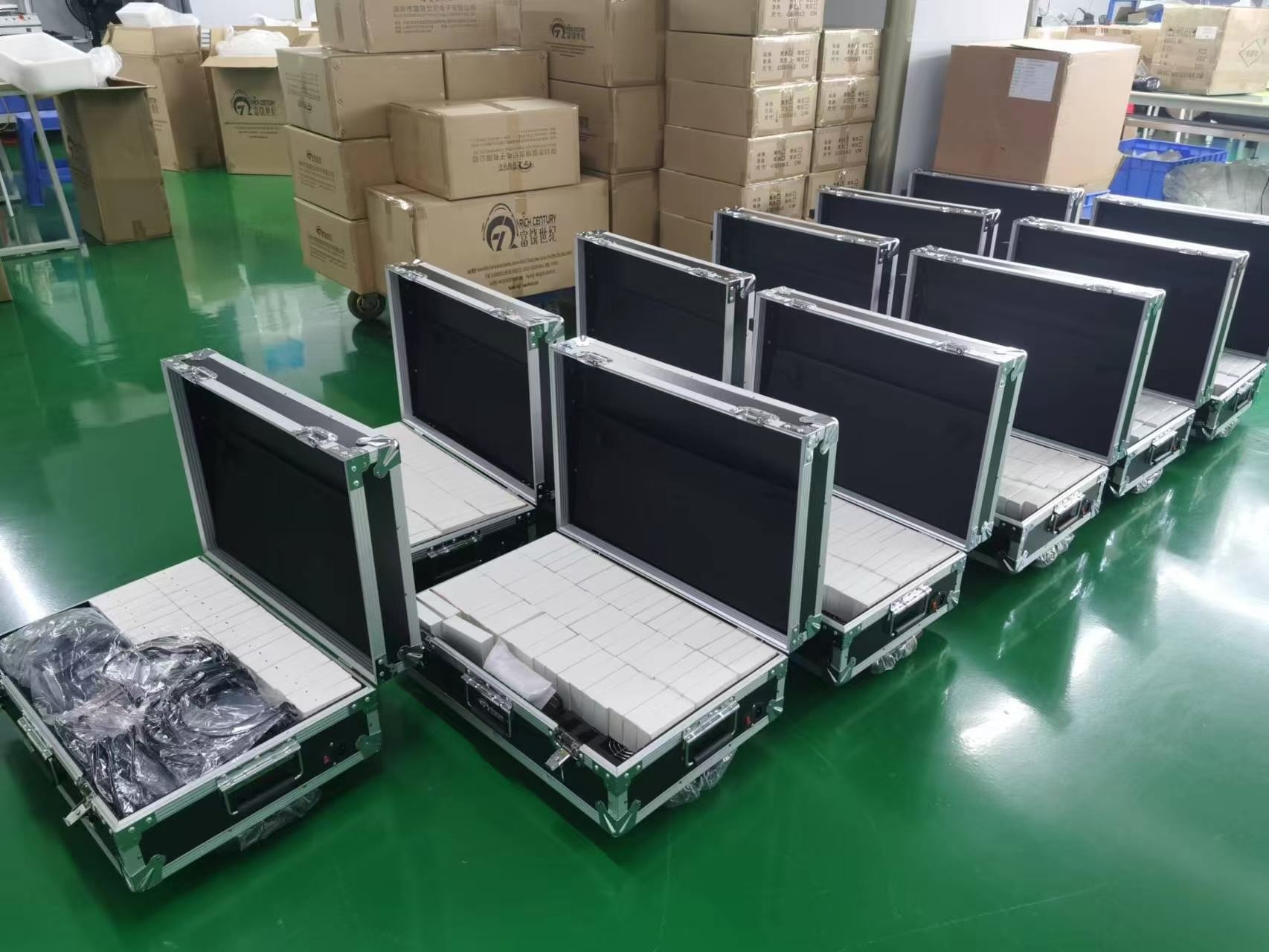
Radio range rarely decides whether a walking-tour season works. What decides it is the half hour between groups. Receivers come back in pockets and cupholders, a few stay behind on benches, and the unit that worked perfectly at ten may be missing its earpiece by two. The operator in this case runs up to four departures a day in high season, and the depot shelf — not the guide — is where most of the small failures are caught. Every system bought for the fleet was chosen with that shelf in mind: how fast a batch can be counted, wiped, recharged, and reprogrammed before the next group arrives. A fleet that only has to impress once can hide a slow handover; a fleet that turns over three times a day cannot.
The Three Units and What Each One Covers
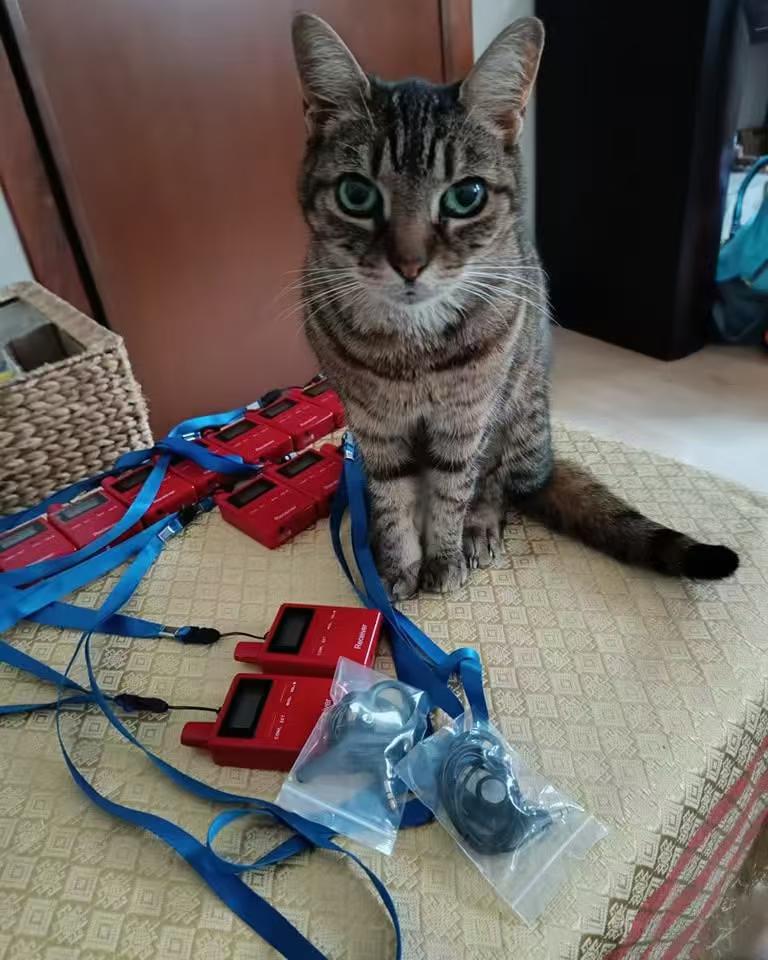
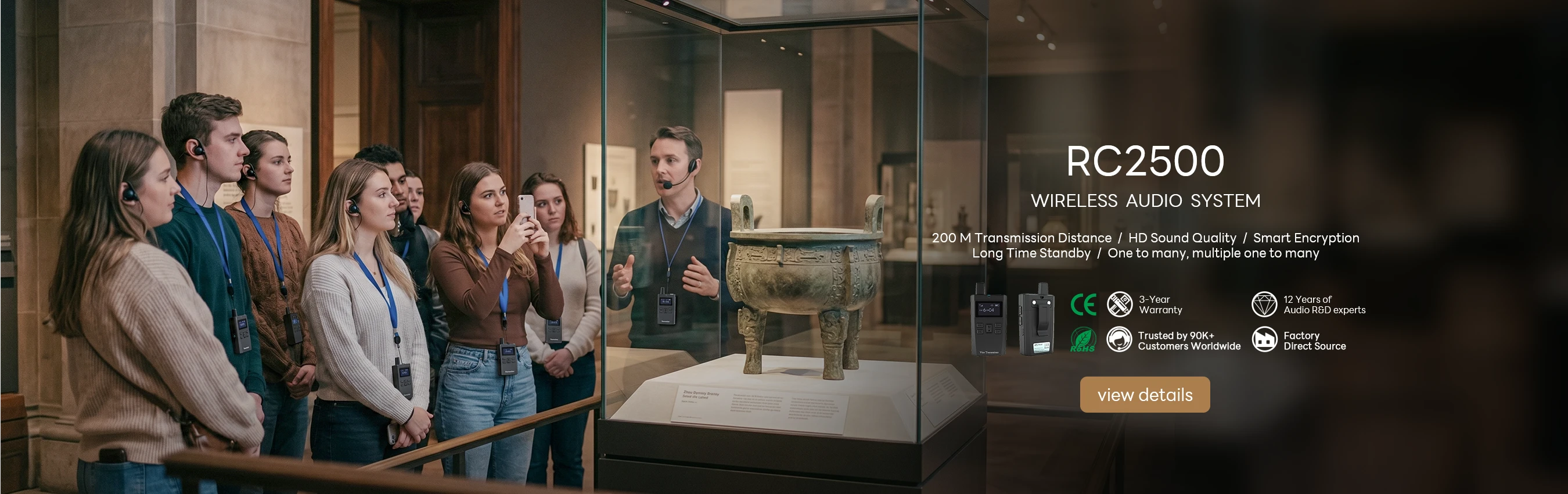
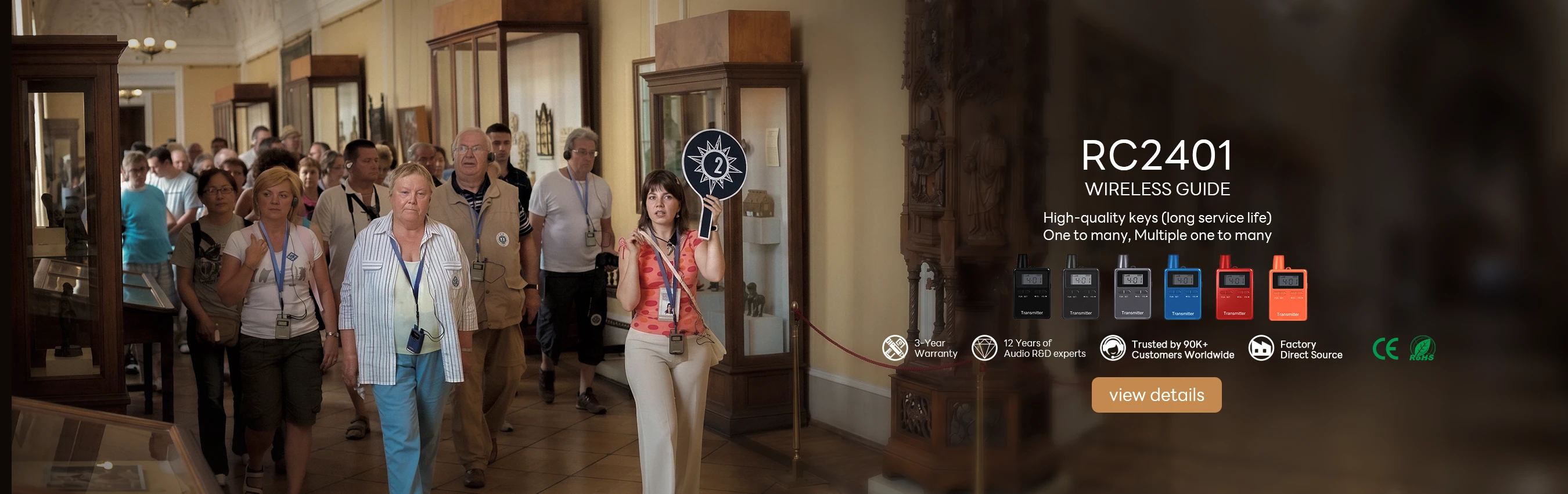
The fleet mixes three systems, and the split is deliberate. The RC2500 wireless tour guide system works as the guide-side anchor for the longest days: its transmitter runs about 15 hours on a 3.7V 1800mAh cell and the receiver about 35 hours on standby, both charging over Type-C, with one-key sync and shutdown that lets a guide reset a whole group in seconds. The RC2406 80-channel 2.4G tour guide system is the workhorse receiver set — 80 channels on the 2403-2483 MHz band, about 20 hours of receiver life from a 3.7V 1000mAh cell, at 50 grams per unit — and it absorbs the crowded departures where nearby operators run their own equipment. The RC2401 wireless audio guide system is the starter kit for new guides: the same 2.4G band at 10mW with a 200-meter window, 50 channels, and a price that makes losing one painful but not catastrophic. All three listen on the same band, which matters more than any brochure line, and the differences are laid out plainly on the RC2401 vs RC2406 comparison the operator used before ordering.
| Turnover Dimension | RC2500 | RC2406 | RC2401 |
|---|---|---|---|
| Channels | 50 | 80 | 50 |
| Transmitter battery life | 15h | 10h | 10h |
| Receiver battery life | 35h+ standby | 20h | 20h |
| Charging port | Type-C | DC port | DC port |
| Receiver weight | 104g | 50g | 50g |
| Fleet role in this case | Guide anchor, all shifts | Crowded departures | New-guide starter kits |
🎨 Morning Shift: The Museum Rooms
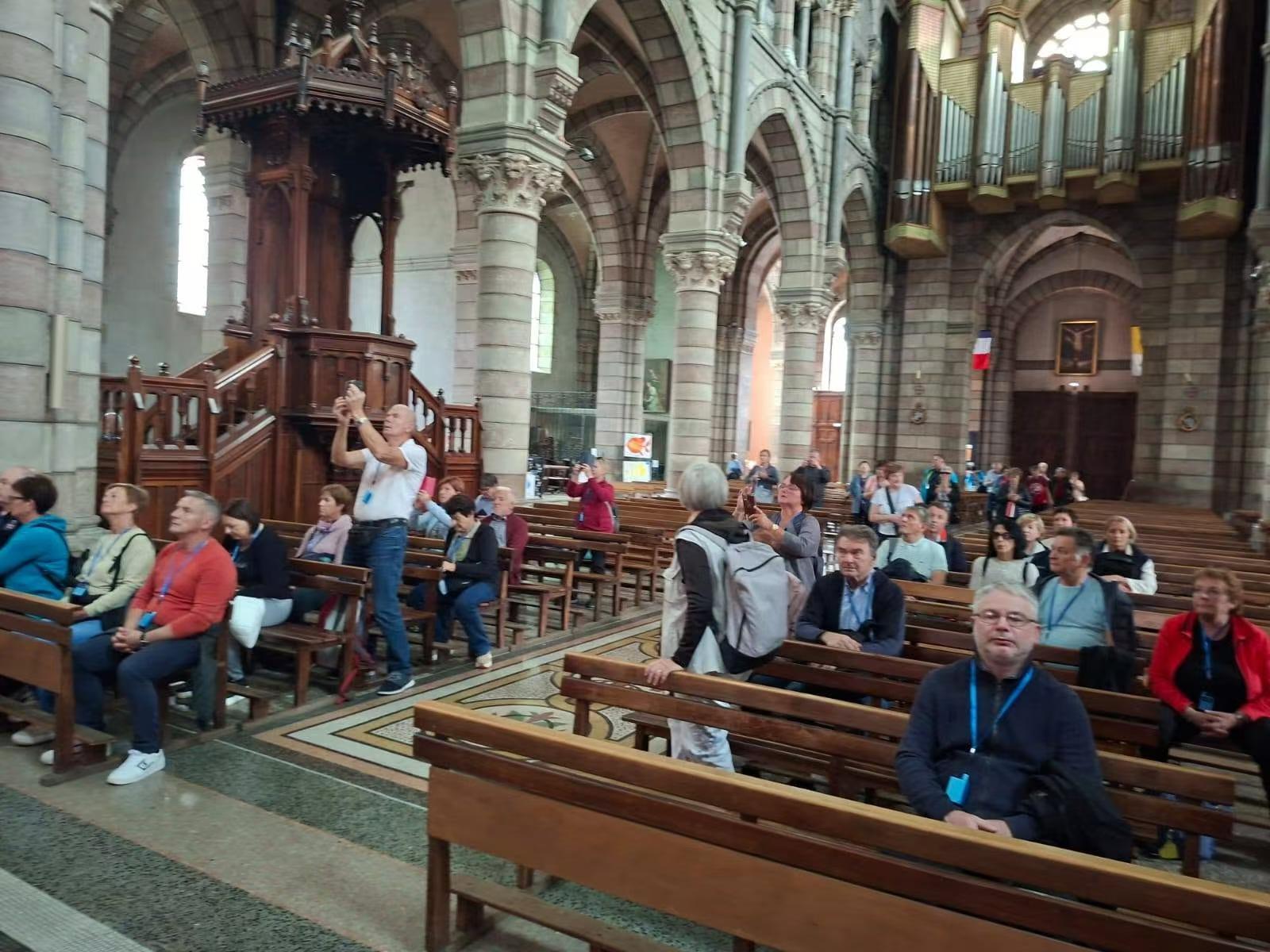
The day starts indoors, where shouting is banned and the competition is a whisper. Groups of twenty move through galleries in a single file, and the guide's voice has to stay level and close, which is why the RC2500 transmitter sits on a lapel rather than in hand. Nothing about the radio environment is difficult; the difficulty is discipline. Guests handle receivers with white gloves offered at the door, earpieces are wiped between uses, and the count leaves the depot at 22 units and must return at 22. The RC2406's 80 channels stay mostly idle here, because the room belongs to the group. What the morning really tests is the return ritual: units logged back in, cases relatched, failures flagged before the next van leaves.
Midday Handover: Thirty Minutes on the Shelf
The shelf is where this fleet earns its keep. Between the museum return and the two o'clock departure, the depot staff have roughly half an hour. Units are not fully recharged in that window and do not need to be; a 20-hour receiver that started the day full finishes the day full, so the shelf work is counting, cleaning, and channel work instead. The mixed fleet creates one small friction the operator solved with labeling: Type-C leads for the RC2500 anchors live in one tray, DC-tip leads for the RC2406 and RC2401 sets in another, because a shelf that mixes two plugs loses five minutes to trial and error every single day. Channels are reassigned here too — the afternoon loop runs on a different channel than the morning rooms, so a receiver that slept through the reassignment is caught at the gate, not in front of the guests.

Afternoon Shift: The Cobblestone Loop
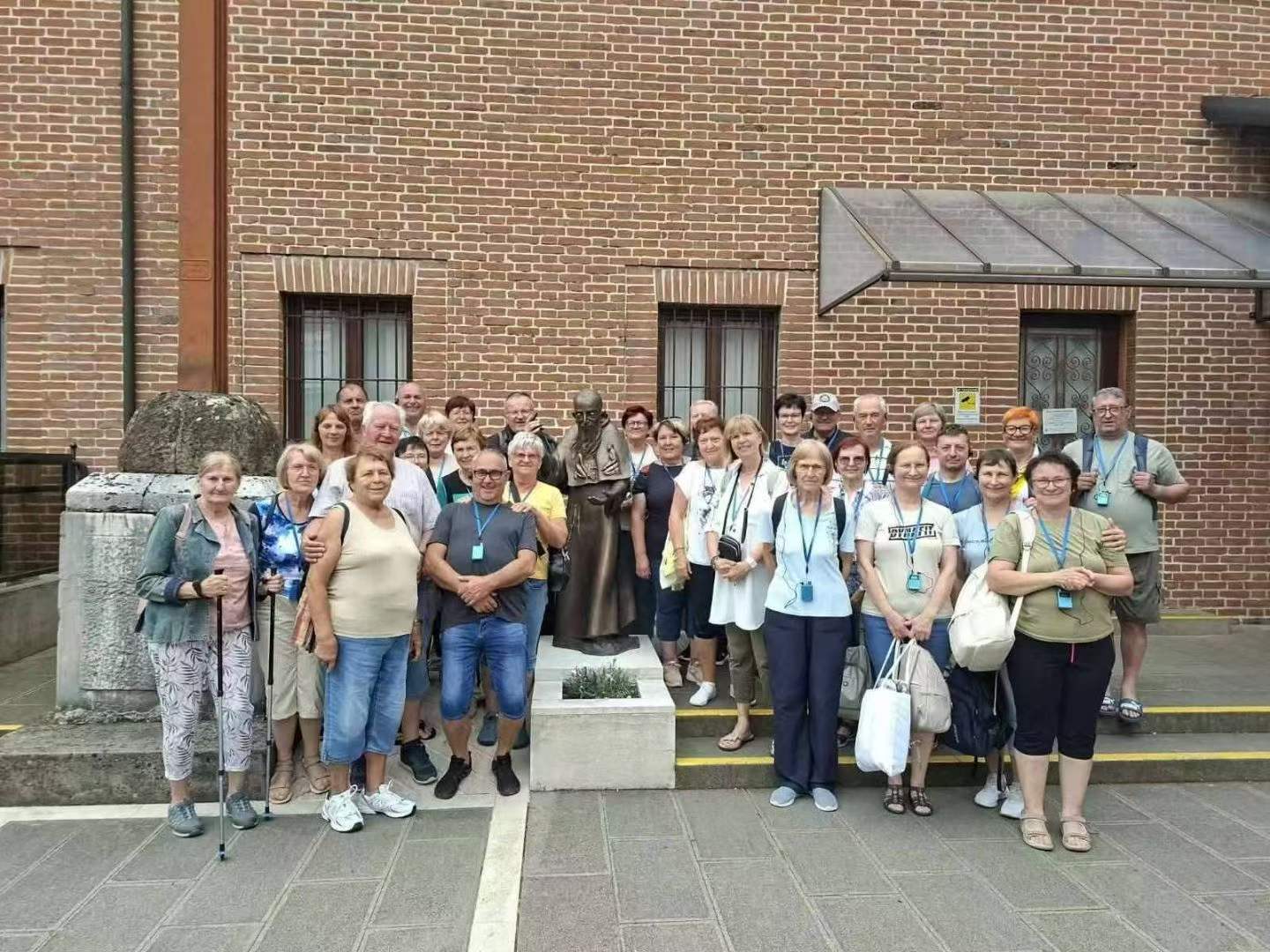
The two o'clock departure is the noisy one. The route runs through wooden-house streets where delivery vans idle, street vendors call out, and the group spreads across a road barely wide enough for six abreast. This is where the RC2406's 80 channels stop being a spec-sheet number: two other operators work the same square at the same hour, and finding a clean channel in the 2.4G band is a daily negotiation, not a one-time setup. The guide carries the RC2500 anchor while guests wear the lighter 50-gram receivers on neck straps, and the 200-meter window absorbs the stretch where the group bunches at a crossing and the tail drifts back past a corner. The loop ends at a waterfront terrace, and the count there is the third of the day.
Evening Shift: The Wall After Dark
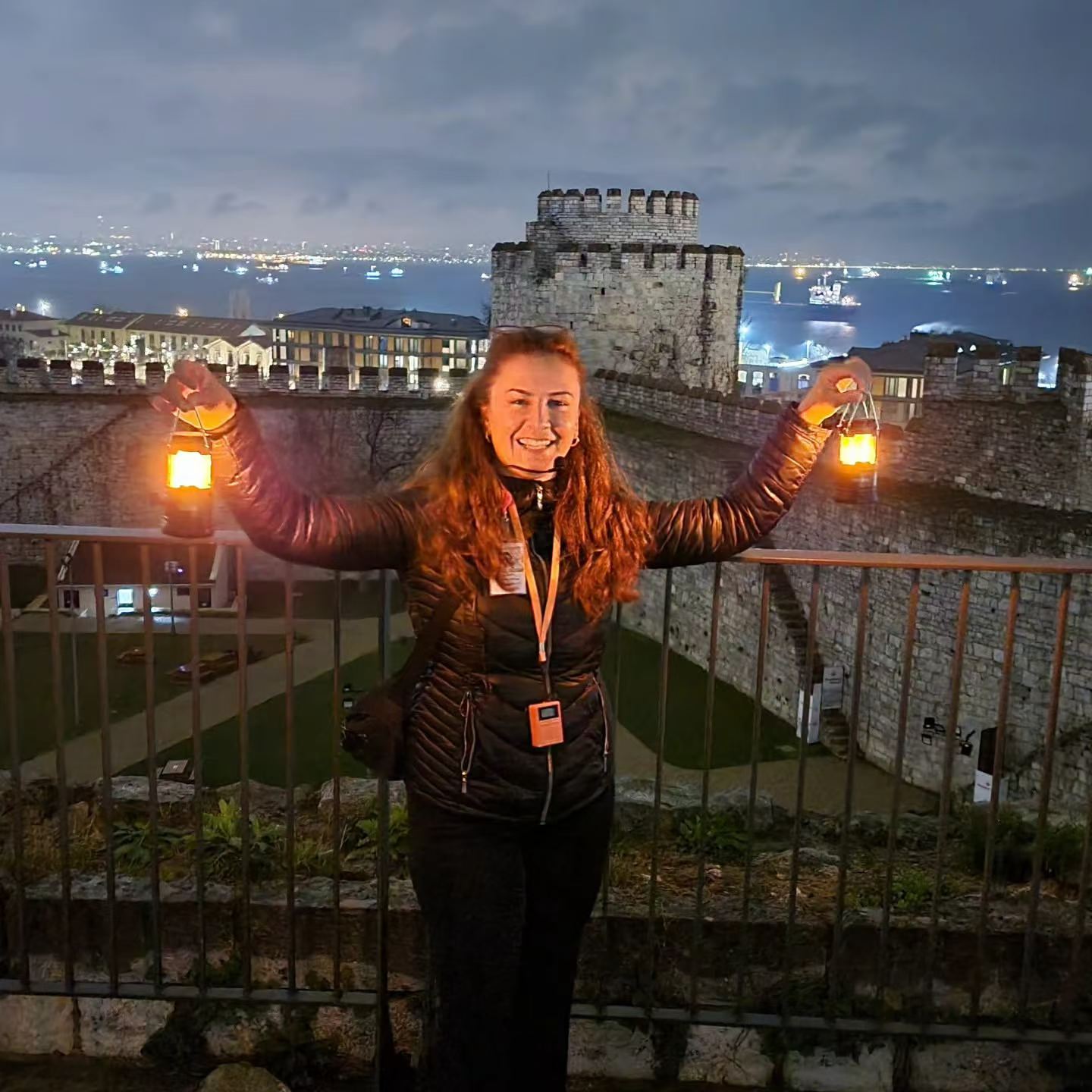
The last departure starts an hour before sunset and ends under floodlights. Cold air off the water, stone parapets, and a guide who cannot raise her voice without an echo make this the most demanding room of the day, though it has no roof. The evening kit is a smaller batch — the RC2500 anchor plus twelve RC2406 receivers — chosen because the anchor's 15-hour transmitter cell started at eight in the morning and still carries the night walk without a swap. Guests hold paper lanterns along one parapet stretch, which the operator now builds into the script rather than fights: hands stay free because the receivers hang, and nobody trades a lantern for an earpiece. The fleet returns after ten, and the shelf runs its last count of the day, this time under the depot's night light rather than against a departure clock.
What the Numbers Say After a Full Season
The operator tracks three figures, and none of them is range. The first is units returned per departure, which sits at 99 percent or better since the shelf checklist moved from memory to paper. The second is charging-window usage: because the RC2406 and RC2401 receivers hold about 20 hours and the RC2500 receiver set holds 35 or more on standby, most units complete two or three shifts without touching a cable, and the shelf workload drops accordingly. The third is channel conflicts, logged whenever a guide reports bleed from a neighboring group — rare on the morning rooms, a real factor on the afternoon square, and the reason the fleet leans on 80-channel hardware for the crowded hours. Operators comparing hardware for similar duty can shortlist from the wireless tour guide system range and match channel counts to their own city's crowding.
Running the Same Day in Your Own City
Nothing in this case required exotic hardware or a custom build. It required honest accounting of what happens between tours, a shelf with two plug trays instead of one, channel discipline set at the depot rather than on the street, and a fleet split so that the most expensive units carry the shifts that need them. An operator running one departure a day can buy almost anything and succeed; the fleet that runs three shifts learns its lessons at the handover table. For a walking-tour business weighing a second daily departure, the useful question is not which transmitter is loudest, but which kit comes back fastest, counts cleanest, and leaves the shelf ready before the van doors close — and the answer, in this case, was the one that never needed the charger at all.