
.webp)
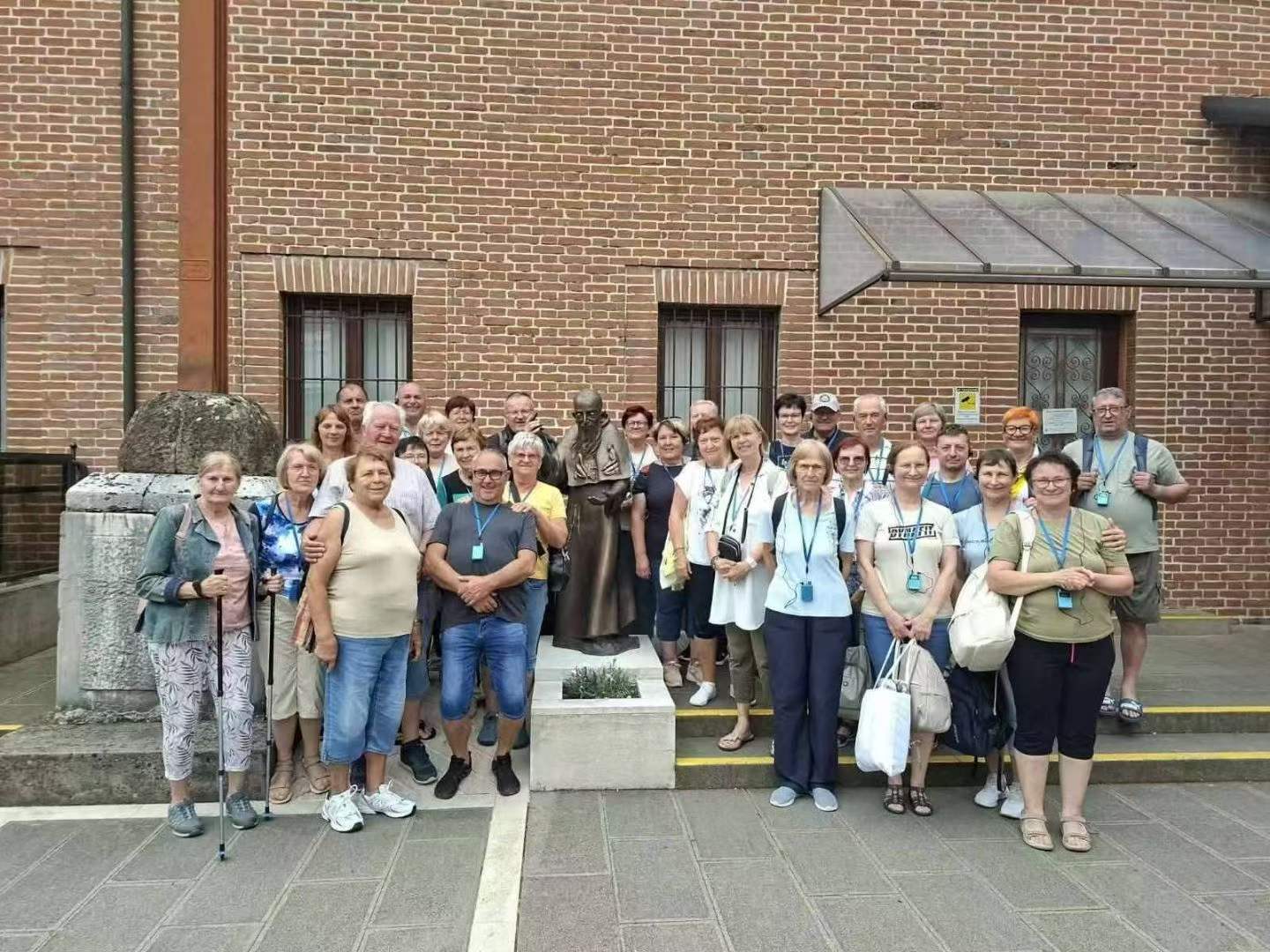
Every so often a customer photo says more than a spec sheet. The one we keep coming back to shows a parish group of roughly forty pilgrims arranged on the wide stone steps outside a white cathedral, arms raised, half of them wearing blue lanyards with a slim receiver hanging at chest height. A priest stands near the center of the group. The trip was a multi-day parish pilgrimage with several church visits, and the equipment that carried it was the standard rental kit this operator has used for years: two transmitters, thirty-eight receivers, and one 40-slot charging case. This article walks through that configuration piece by piece, because the arithmetic behind it is the reason the kit keeps getting reordered, and because operators who are assembling their first church fleet usually ask the same three questions: why two transmitters, why thirty-eight receivers, and what the big case actually does.
What Arrives in the Case
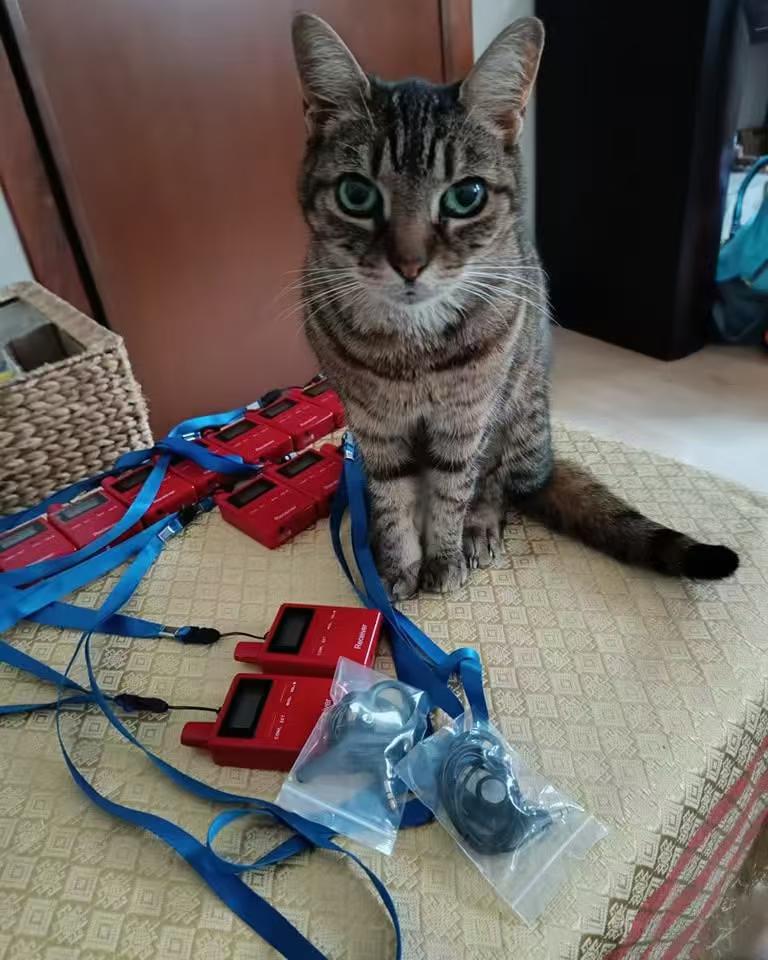
Open the lid and the kit explains itself. On the left, two handheld transmitters sit in a fitted pouch, each with an LCD showing channel and battery, a belt clip, and a small lavalier microphone coiled beside it. On the right, thirty-eight pocket receivers stack in rows, each with its own display, volume rocker, and earphone jack. The bottom half of the case is the part that matters most in daily operation: forty charging slots cut into a foam deck, wired to one power inlet, so a full fleet recharges overnight from a single wall socket. There are no loose cables to lose and no separate chargers to check in. For a parish volunteer who is not an audio technician, that single design decision removes most of the failure modes that plague borrowed equipment: dead batteries discovered at the church door, mismatched chargers left behind at a hotel, and receivers that drift onto the wrong shelf and come back uncharged.

💡 Why Two Transmitters Instead of One
The second transmitter is not a spare; it is a second speaking role. On a parish pilgrimage the day has two voices that almost never overlap: the priest or guide who narrates the church itself, and the tour manager who handles logistics at the edges of the day, meeting times, warnings about pickpockets, where lunch will be. Two transmitters let the organizer split those roles without handing a single unit back and forth. Each transmitter broadcasts on its own channel, and listeners switch with one press if the group ever splits into an inside tour and a courtyard briefing. The second unit also covers the realistic failure case: a transmitter dropped on stone steps, or a battery that dies mid-afternoon. One voice stays on air while the other problem is fixed. Operators who buy single-transmitter kits for church work almost always add the second unit within a year, usually after the first incident where a group of forty stood silent in a nave waiting for a reboot.
The Thirty-Eight Receiver Question
Thirty-eight receivers for a group that photographs at about forty heads looks like an accounting error, and it is not. The arithmetic has three parts. First, not every pilgrim wants a receiver on every day; some sit out the interior visits, and a few share with a companion at quieter stops. Second, receivers get dropped, and a unit that falls on cobblestone may work until it does not, so the kit carries slack rather than waiting for a replacement to ship. Third, and this is the part organizers underestimate, the fleet outlives any single trip. The same kit serves the parish pilgrimage in spring, a diocesan youth route in summer, and a choir exchange in autumn, and no two of those groups have the same headcount. Thirty-eight receivers with two transmitters is the configuration that survives contact with real calendars, which is why it has become the standard church package rather than a strict match to one event. Visitors comparing current fleet options usually start with the RC2406 80-channel 2.4G system for its channel headroom, then cross-check the RC2402 and the RC085 digital system against the frequencies their country allows.
Charging Night Is the Whole Job
Ask the operator what happens at 21:00 on a pilgrimage night and the answer is unglamorous: the case opens, forty slots take the fleet back, one plug goes into the wall, and the lid stays shut until morning. Every receiver sits in a numbered bay, so the morning headcount doubles as an inventory check, and a slot left empty is visible at a glance instead of being discovered at the first church door. The case's internal power supply means the whole fleet can charge from a hotel room or a parish hall without hunting for power strips, and the lid locks for transport, which matters when the case rides in a luggage bay under a coach. This is the least discussed part of a tour guide system purchase and the one that decides whether the equipment is still in service two years later. Fleets that charge in loose boxes lose units; fleets that charge in a slotted case know where every unit is, every night.
💰 The Group Photo as a Deployment Record
The photo on the cathedral steps is worth reading closely. The lanyards are uniform, which means receivers were distributed to individuals rather than shared informally, and the straps are long enough that the units hang at chest height where displays stay visible. Nobody is holding a receiver up in the air to catch signal, and nobody is clustered around a single phone speaker, which is what happens when a guide's megaphone approach fails. In the middle distance, the priest stands with the group rather than apart from it, consistent with a narration setup where he speaks normally and the fleet follows his voice at a conversational volume. That last detail is the one parish groups mention most after a trip: nobody had to strain to hear, and nobody had to shush anyone else. Choir moments inside the churches stayed intact because the ambient noise of forty people trying to listen had disappeared.

What the Organizer Would Change
Pressed for criticisms, the organizer offered two, and neither was about the radios. First, the kit's foam cutout is sized for the standard earphones, and the operator now packs a separate pouch of spare foam tips because a forty-person fleet consumes them; second, one receiver came back with a cracked belt clip after the coach bay incident, and the operator has learned to order clips with the annual service kit instead of waiting for failures. The units themselves needed no attention beyond charging. That track record is why the reorder conversation this year was about adding a second case rather than replacing hardware: the parish pilgrimage now runs two groups on the same day in high season, and a second identical kit, configured the same 2-plus-38-plus-40 way, was cheaper than any alternative the operator priced, including renting from a local AV house whose stock arrives uncharged.
The Reorder Math, Written Down
For operators assembling their first church fleet, the summary fits on an index card. Two transmitters cover the two speaking roles a church day actually produces, plus one unit of redundancy. Thirty-eight receivers cover a forty-head group with realistic slack for drops, opt-outs, and a fleet that serves several groups a year. One 40-slot charging case converts overnight charging from a chore into a ten-second ritual and doubles as the inventory sheet. Everything else, channels, range, earphone style, is a configuration detail that the current product lines handle within the standard kit price. The full equipment picture, including the newer 2.4 GHz fleet options and how they pair with existing cases, is collected on the operator-facing page for wireless tour guide systems, and parishes that also run weekday services can compare the same receivers against dedicated church translation headphones before committing to a configuration. The kit on the cathedral steps has done its job for three seasons now; the arithmetic is why it will do it for three more.
| Kit item | Quantity | Role on the pilgrimage |
|---|---|---|
| Handheld transmitter | 2 | Priest narration and tour-manager logistics, one channel each |
| Pocket receiver with lanyard | 38 | One per pilgrim with slack for drops and opt-outs |
| 40-slot charging case | 1 | Overnight charging from one inlet, numbered bays as inventory |
| Spare foam ear tips | Pouch | Consumable replaced seasonally, packed separately |