
.webp)
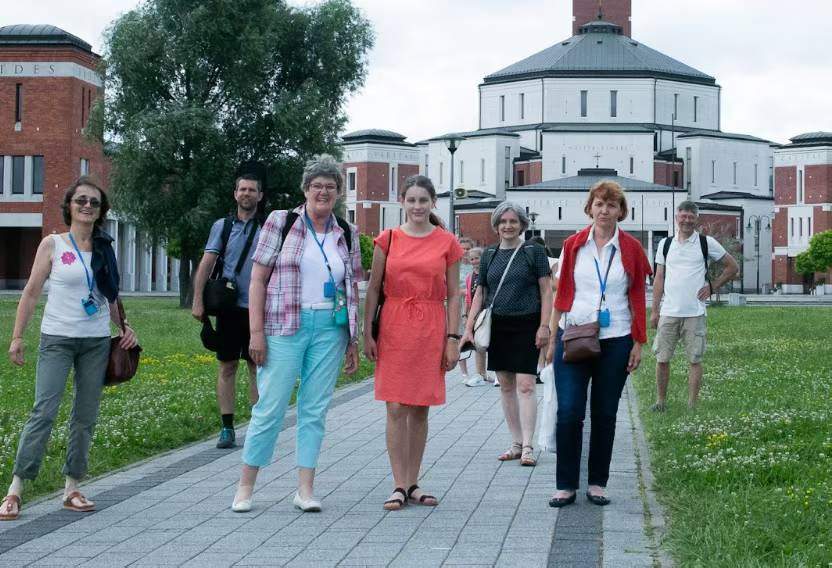
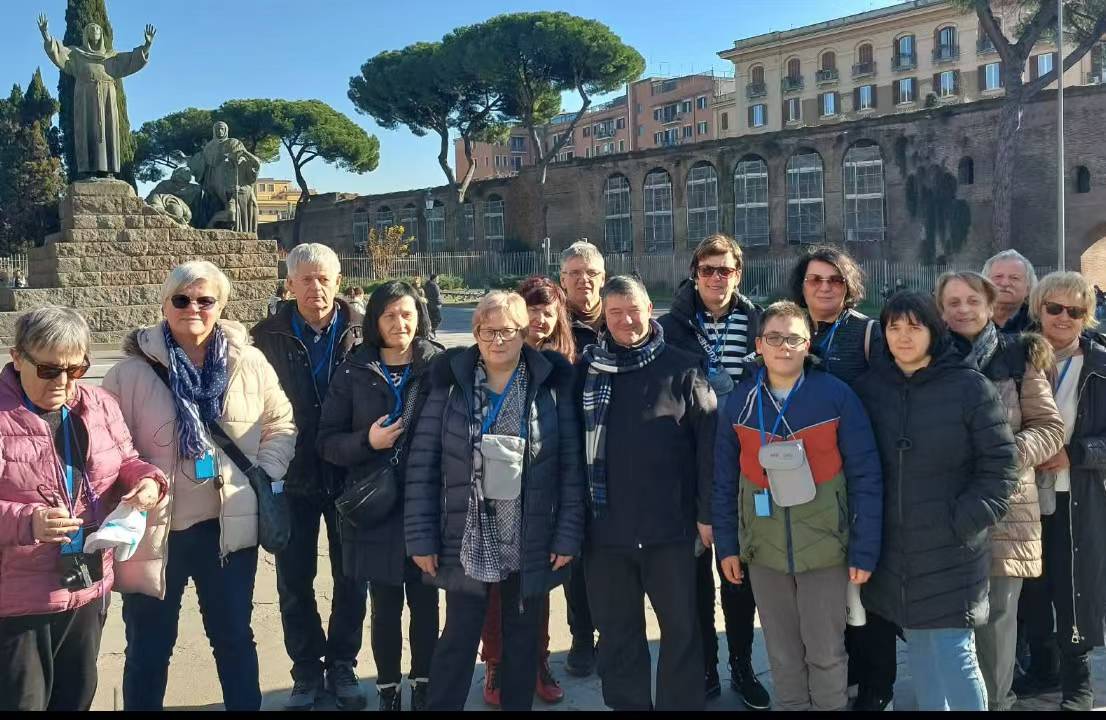
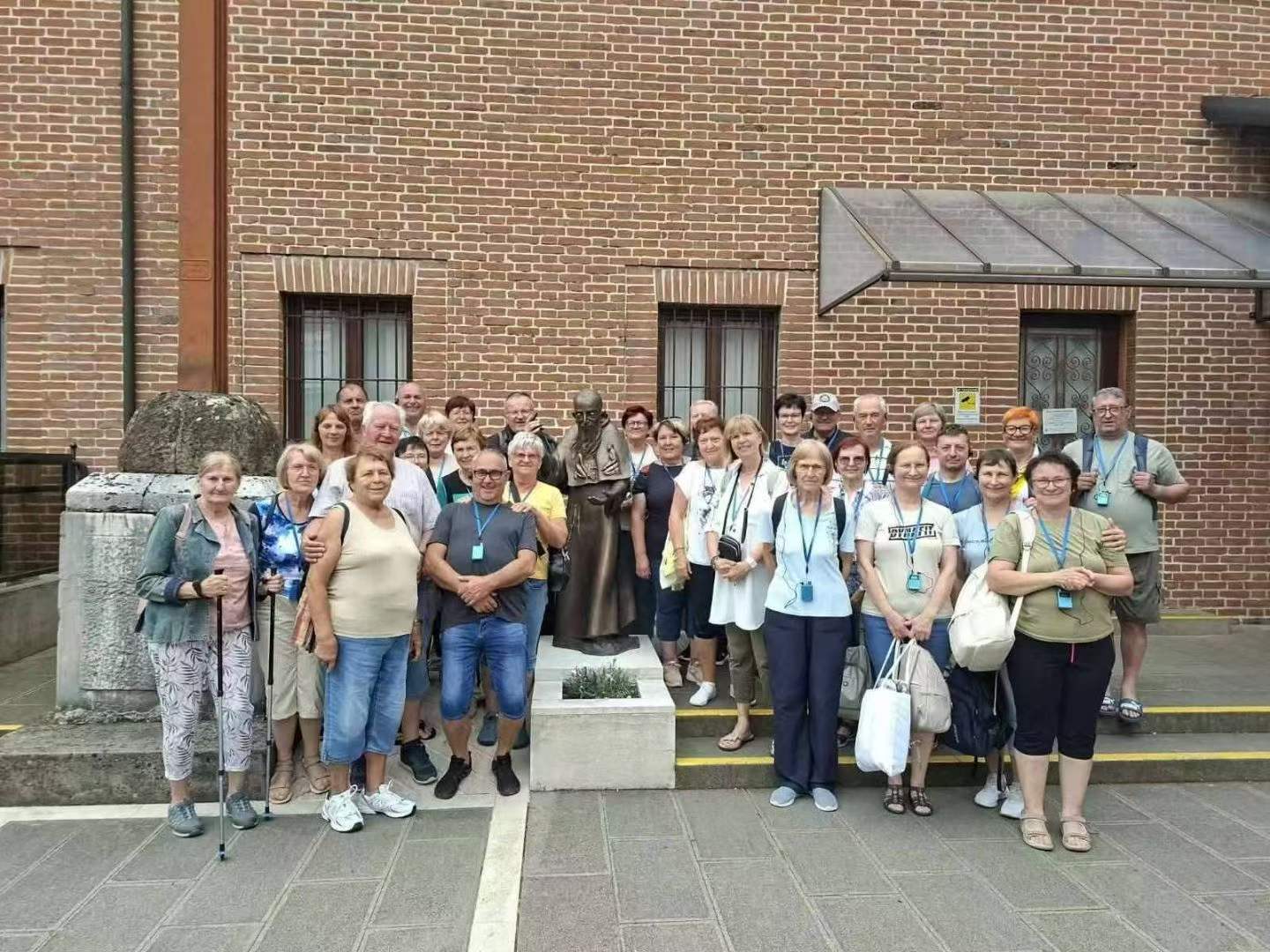
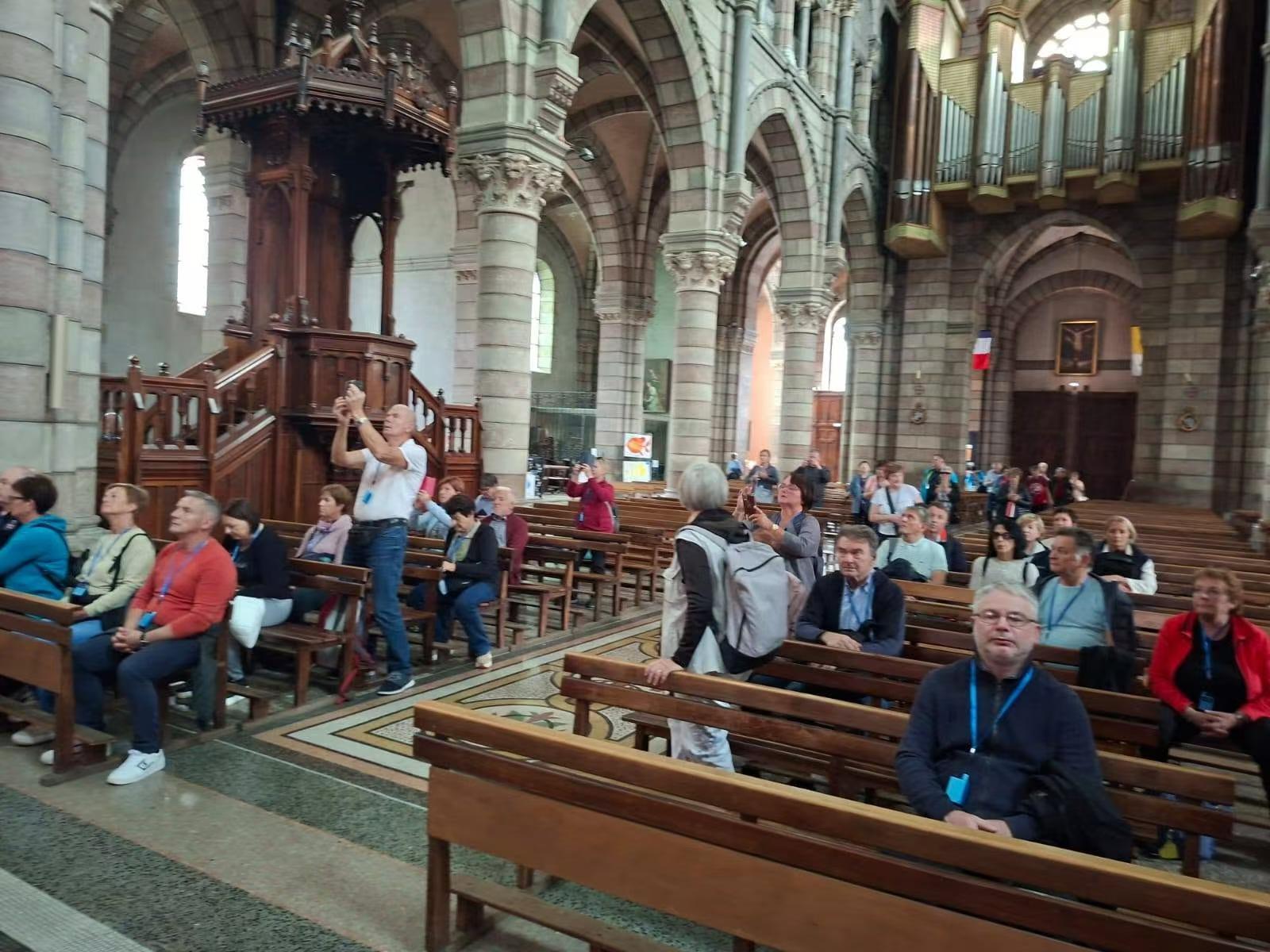
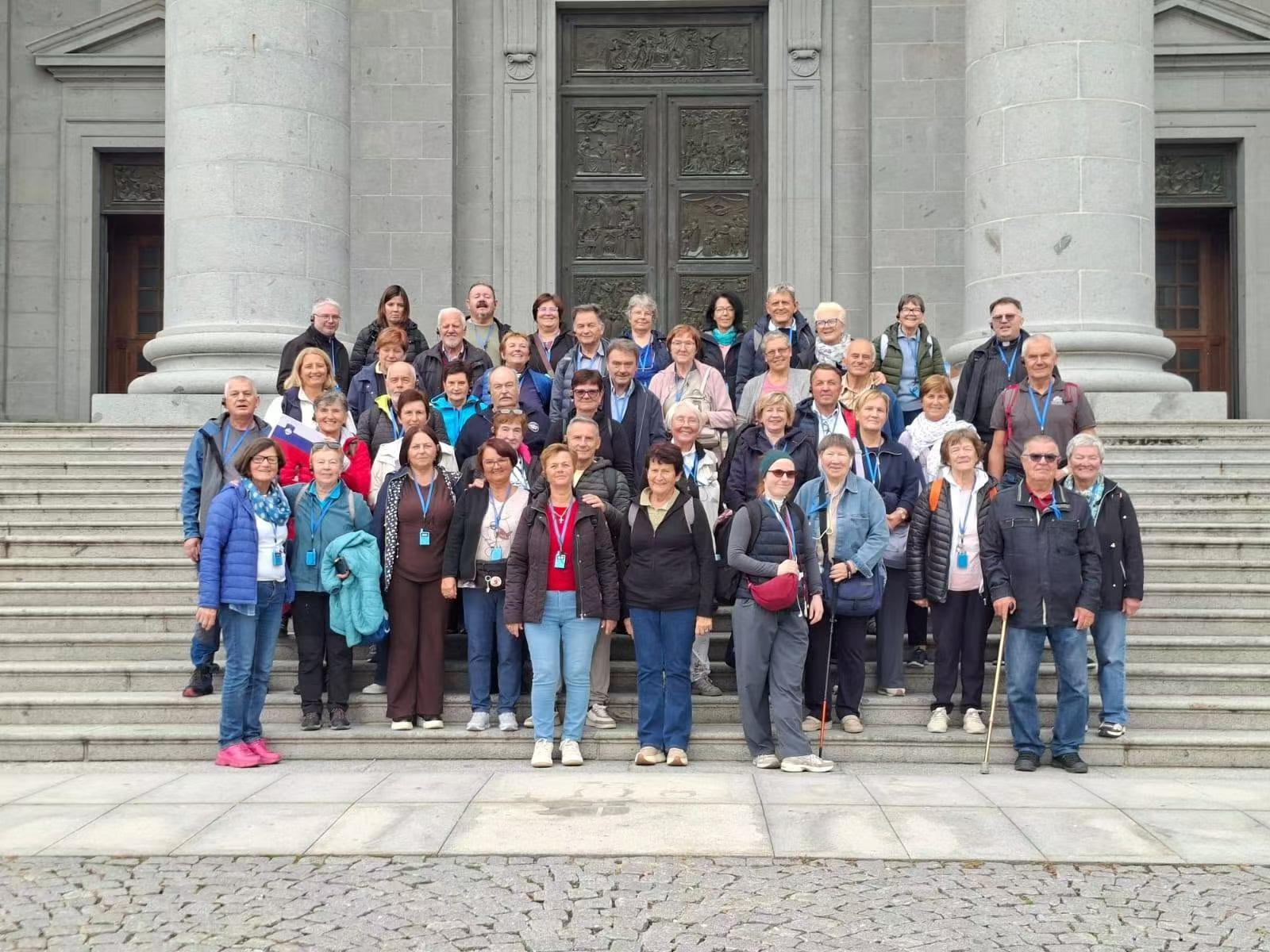
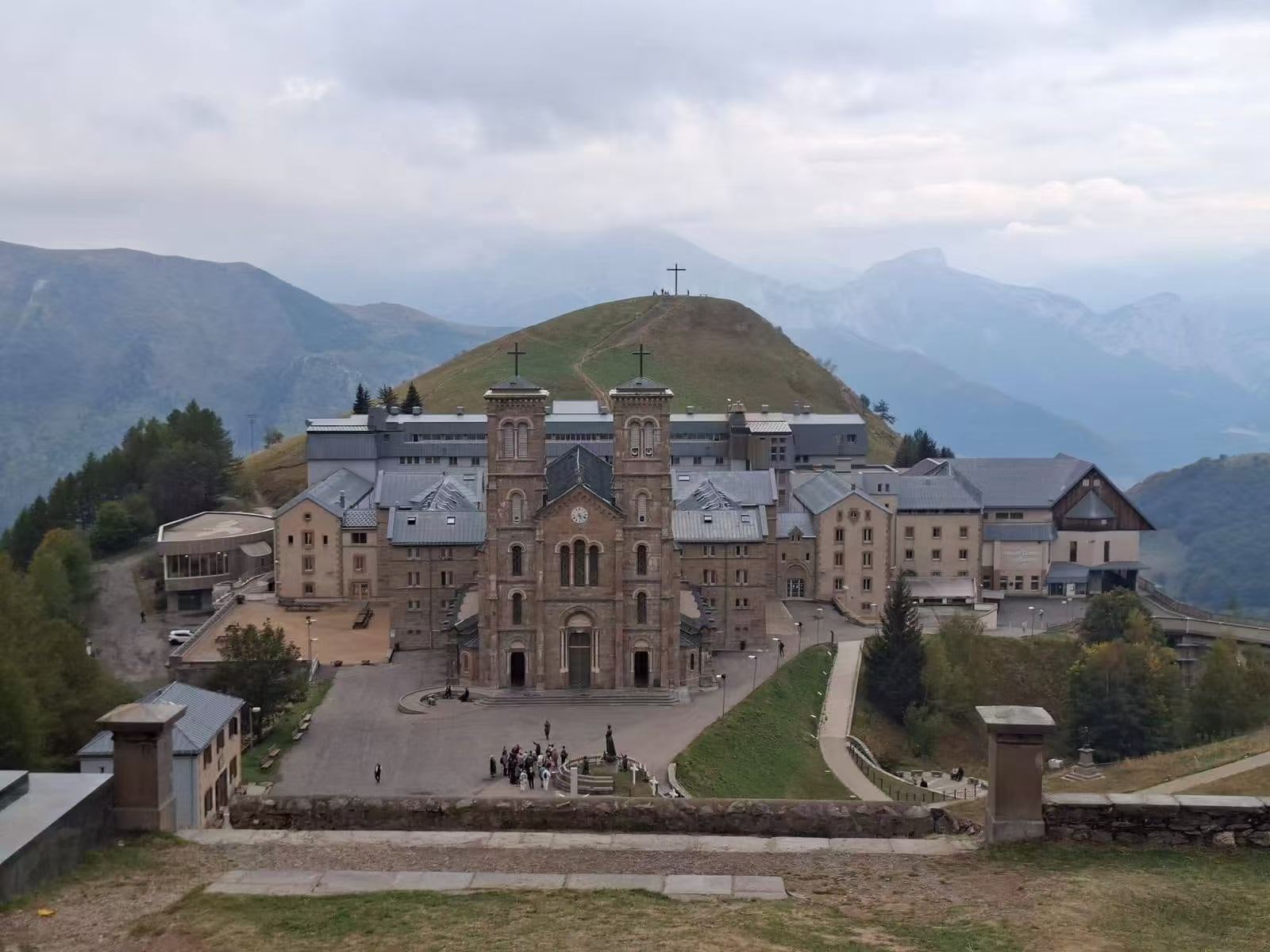
Every season, coach groups climb the mountain road to a hilltop sanctuary in the French Alps, where a basilica, a broad square and a spring have drawn visitors for nearly two centuries. The site is steep, the weather turns quickly, and the congregations that arrive are rarely young. When one group organizer shared photos from a September visit, they showed exactly what a house of worship soundscape demands from a wireless kit: rows of seated listeners inside the nave, a plaza gathering under a summit cross, and a crowd on the basilica steps wearing blue-lanyard receivers.
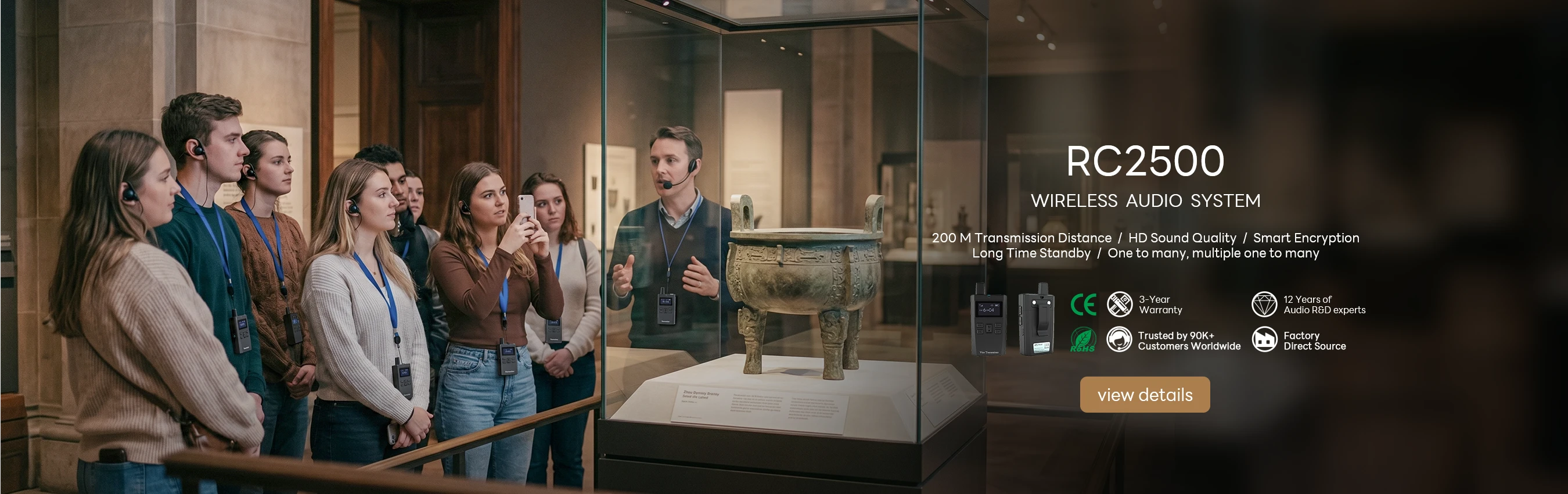
The group that day numbered around fifty, most of them past retirement age, several carrying canes. That single fact reshapes every equipment decision. A kit tuned for a student cohort fails this audience in quiet ways: a receiver that hooks a belt, a menu that needs a manual, a battery sized for a half-day. The organizer settled on three models, each answering one of three questions an older group always raises. The photos also settle a debate that keeps resurfacing in church equipment discussions: whether a hilltop sanctuary needs audio support at all, given that the building is quiet and the guide can project. On the evidence of this visit, the answer is yes — but not for the reason most people assume. The problem is not distance. The problem is that an older listener who misses one sentence does not lean in to recover it; they conclude the tour is not for them and stop listening entirely. Clear delivery into every ear is what keeps fifty people with the same sentence at the same time.
🗺️ Three Things Age Changes on a Tour
Age does not change where a group goes; it changes what the equipment must absorb. Hearing loses its tolerance for compressed, thin audio, so clarity matters more than loudness. Hands fill up with walking sticks, rail grasps and folded maps, so nothing can require a grip. And the day stretches — a long seated service, a slow climb, a long pause for photographs — so the battery has to outlast the liturgy, not the walk. Each of the three units in this kit was picked against one of those realities rather than against a spec sheet.
The Ear That Needs More Than Volume
Inside the basilica the group sits in wooden pews while a guide speaks from the crossing, and stone vaults throw every sound back twice. Older listeners feel this harshness before younger ones do, which is why the guide carries an RC2408. Its 80-channel architecture keeps the group isolated when a second parish party shares the building, and the audio arrives without the hiss that makes older listeners twist a volume wheel they should never have to touch.
The quiet feature is the two-way capability. A pilgrim seated three rows back can answer, and the guide can confirm a name or a question without anyone standing up. In a seated hour, that small return path is what keeps the session a conversation instead of a broadcast that people give up on. The transmitter stayed with the guide through the entire service and still had charge to spare for the esplanade afterwards, and the smart noise-canceling microphone kept the guide's voice separate from the shuffle of people settling into pews. Ten hours of talk time covers a sanctuary day twice over, so the same transmitter that opened the visit closed it without a swap.
Hands Full of Walking Sticks
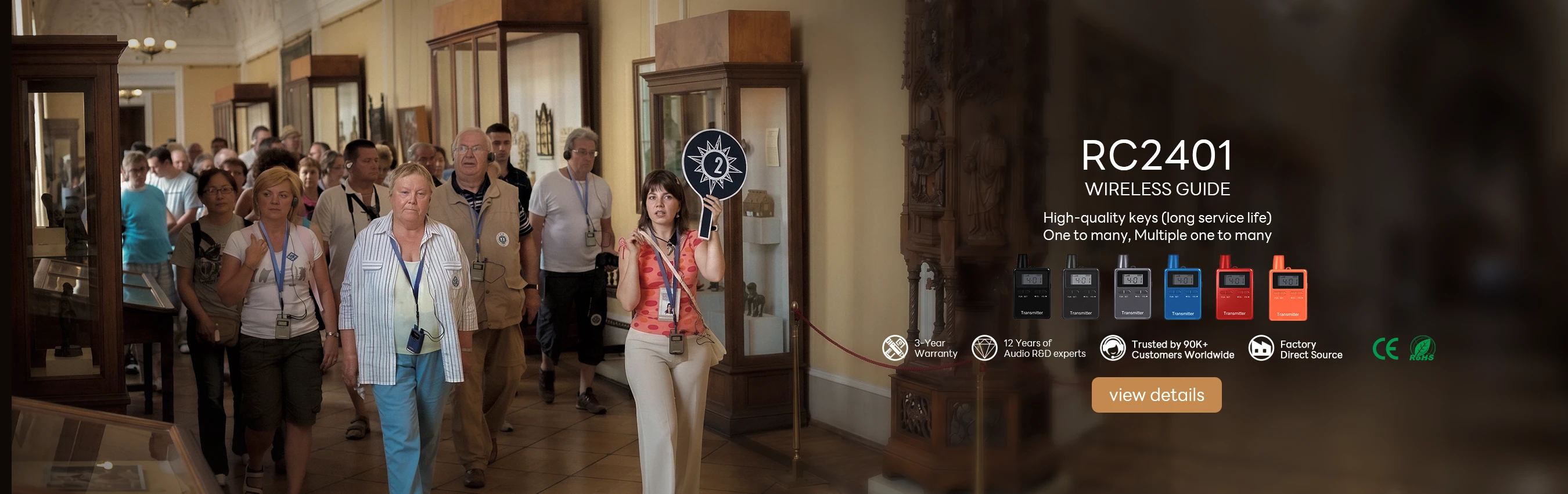
Watch the group move between the square and the basilica doors and the second question answers itself: nothing can ask for a hand. The receiver that went around most necks on the climb was the RC2468, whose 18-gram receiver is the lightest in the fleet. On a lanyard it simply disappears; there is no belt clip to fumble, no pocket to search, and no weight pulling on a neck that already carries a decade or two of caution.
Its 50 PLL-synthesized channels held clean separation from the other group on site, and the 10mW output kept voices steady across the open square where wind does its worst. For listeners who grip a cane on the uphill stretch, an earphone that never asks for a hand is not a convenience. It is the reason they hear the guide at all. The Micro USB charging matters here too, because the parish guesthouse already stocks that cable for other devices and nobody had to pack a proprietary charger. Twelve hours on the transmitter carried the climb, the service and the descent, and the receiver's ten hours meant every unit handed out at the coach stayed live until the last photograph was taken.
A Distribution Desk Without a Manual
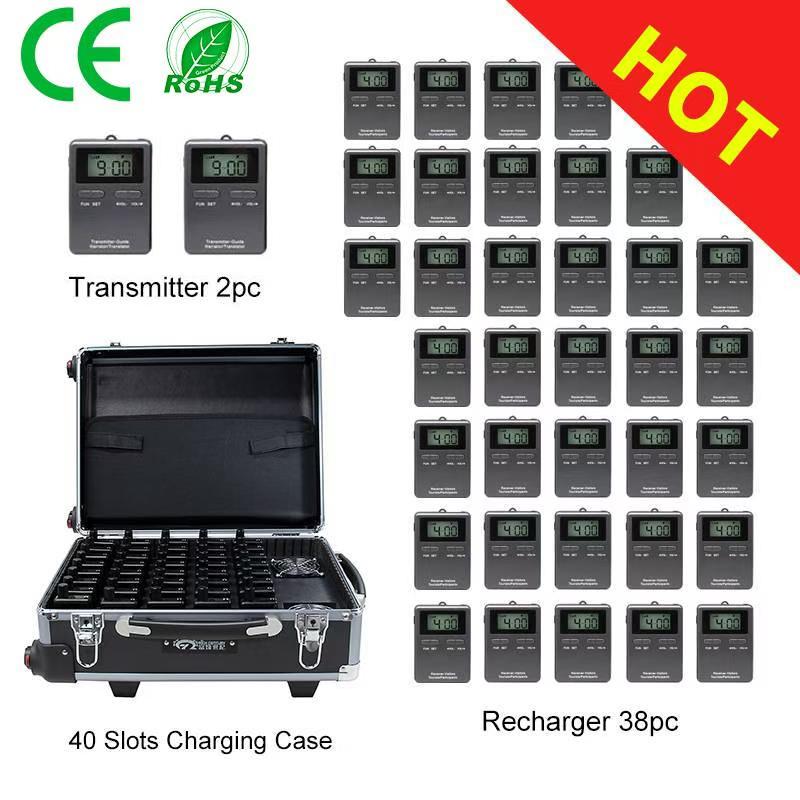
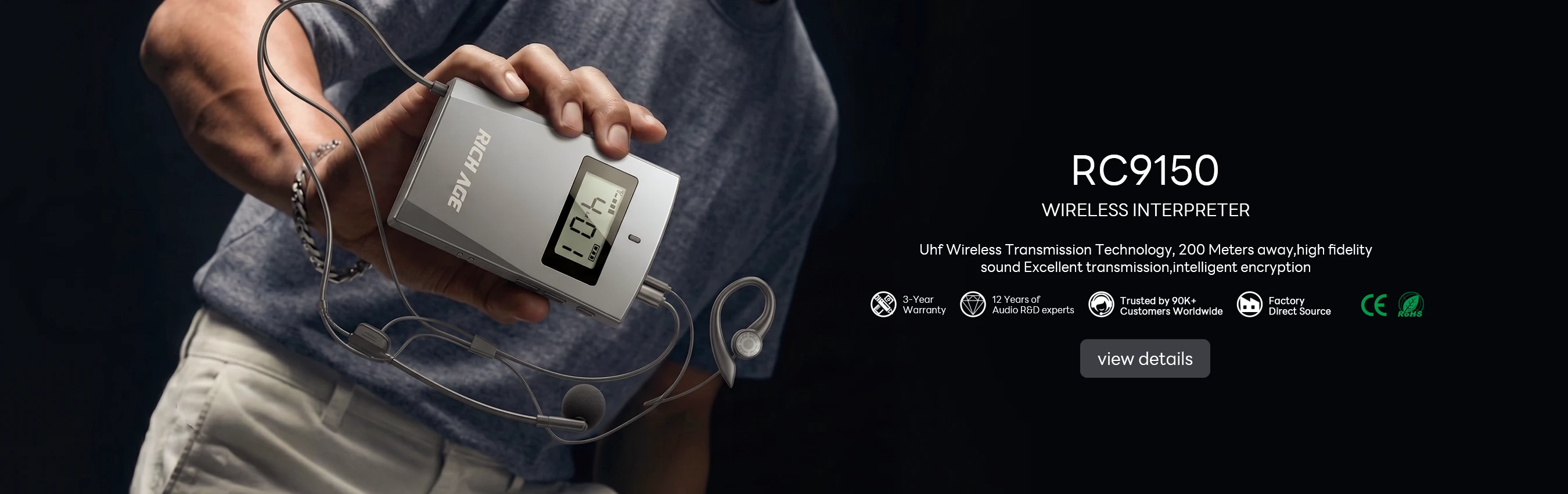
Before the coaches open their doors, a handful of volunteers run the distribution, and volunteers change every trip. The third unit, the RC2501, was chosen for them rather than for the listeners. One-click pairing means a first-time helper can hand out fifty receivers and have every one locked to the right channel without a printed instruction, and the pocket-sized body makes the crates easy to carry up the steps.
The organizer's note after the trip said the round of hand-out and collection took less time than the coffee stop, which is the practical test that matters. When the helpers are pensioners themselves, gear that assumes training quietly guarantees a delay; gear that assumes nothing gets the group moving while the morning is still cool.
A Day Shaped by the Mass Times
A sanctuary visit bends around the liturgy, not around a sightseeing clock. The group listened to a full service seated, walked the esplanade slowly, and gathered on the steps for the photograph only after the last hymn. Equipment for this rhythm gets judged on stamina through idle stretches as much as on talk time: receivers stay on through a long silence and must still work when the guide resumes. Both the RC2408 and the RC2468 held the whole visit on one charge, which meant no charging station in the luggage and no mid-day swap behind the bookshop. The pacing also changed how the guide spoke. With a group that rests often, a guide learns to resume mid-sentence rather than restart, and a wireless link that stays paired through every pause lets that natural rhythm carry. Nobody re-paired, nobody re-tuned a channel after a rest stop, and the group that wandered off to the spring came back to a voice already waiting in their ears.
The Numbers Behind the Roles
The product pages put figures behind the division of labor, and the pattern across the three sheets is easy to see.
| Unit | Role on the Visit | Published Figures |
|---|---|---|
| RC2408 | Guide's transmitter for the seated hour | 80 channels, two-way support, TX 10h / RX 20h |
| RC2468 | Listener receiver on the climb | 50 channels PLL, RX 18g, RX 10h |
| RC2501 | Volunteer distribution and collection | 86x50x19mm, one-click pairing, -10 to 45 C |
No single unit wins every column, and that is the point. The kit works because each weakness in one model is covered by the next one in the crate.
Weather on the Hill and the Ride Home
Mountain weather tested the range claim by itself: a cloud sat on the ridge for part of the afternoon, and the audio held from the square to the lower gate. Collection was a single crate per coach seat row, and every unit came back accounted for — the kind of audit that only happens when the gear is light enough for people to return it without resentment.
What the Organizer Took Away
The lesson the organizer wrote down was short: match the kit to the congregation, not the cathedral. The full tour guide lineup covers groups of every age and pace, and the same three questions — ears, hands, endurance — transfer to any gathering that skews older. More field reports like this one are collected in the solutions library, including other worship and heritage visits where the audience, not the architecture, set the requirements.