
A leading China factory specializing in Wireless Tour Guide Systems, Church Audio Guides, and Translation Headphones with premium OEM/ODM solutions.

Tel:+86 18922879583

Email:tiger.wang@richitek.com

RC085, RC2402 and RC2406: Three Requests a Parish Group Brought to the Cathedral Morning

When a parish group from the coast booked a morning that combined a walk through the old lanes, a stop in a walled courtyard, and a service visit at the cathedral front, the organizer sent over three requests before anyone packed a single bag. Keep the groups moving through the narrow lanes without stopping the walk to repeat a sentence. Let the first group hear the guide plainly inside the courtyard while a second group was still two turns away. And finish the whole route in time for the midday bells, with no battery swap and no receiver handed out twice. The plan that answered all three put an RC2406, an RC085 and an RC2402 in the same kit bag, one per group.

Nothing about the morning was exotic. The lanes were public, the courtyard was open to visitors, and the cathedral steps belong to everyone. What made the day work was that each request pointed at a different weakness a single-model kit would have shown, and the three units in this set happened to answer them on three separate fronts.

Sort the Receivers by Color Before the Lanes

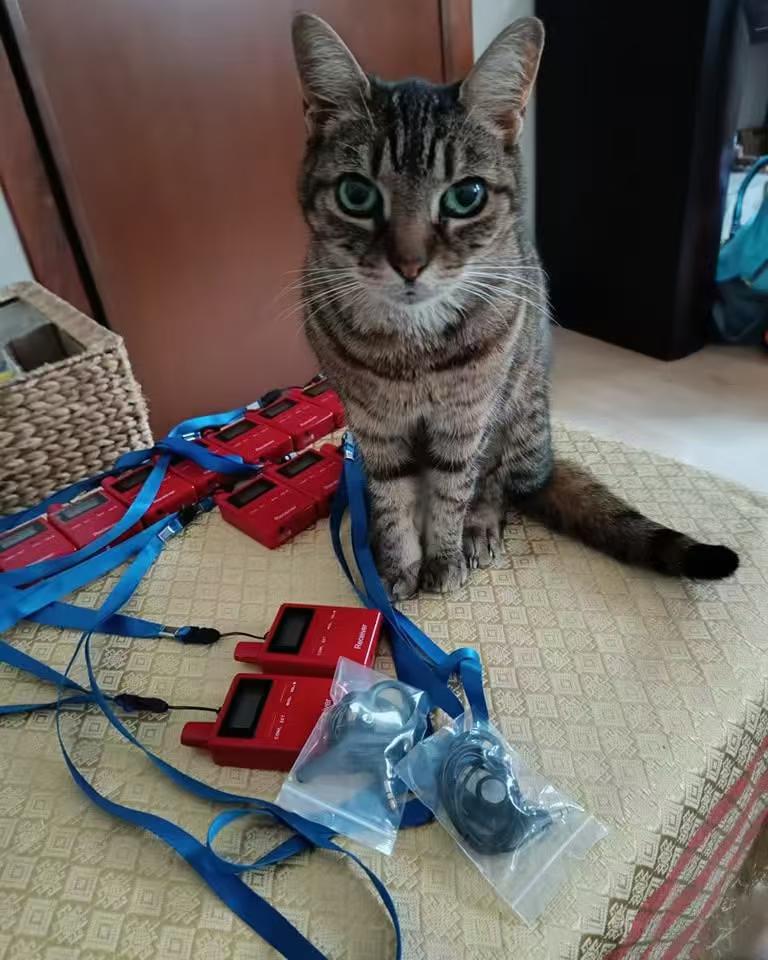
Three groups moving on three channel plans still need a way to stay sorted at street level, and the answer was settled at the assembly square before anyone entered the lanes. The RC085 kits run in black, iron gray and blue, so the lane group's receivers were already visually distinct; the other two groups were told apart by lanyard color, which the parish had ordered along with the units. Every channel was locked before the first batch stepped off, the guide's own screen on the RC085 confirming the number at a glance. Distribution took about eight minutes, which is roughly the time the second batch would otherwise have spent waiting.

The Lane That Fixes the Order of March

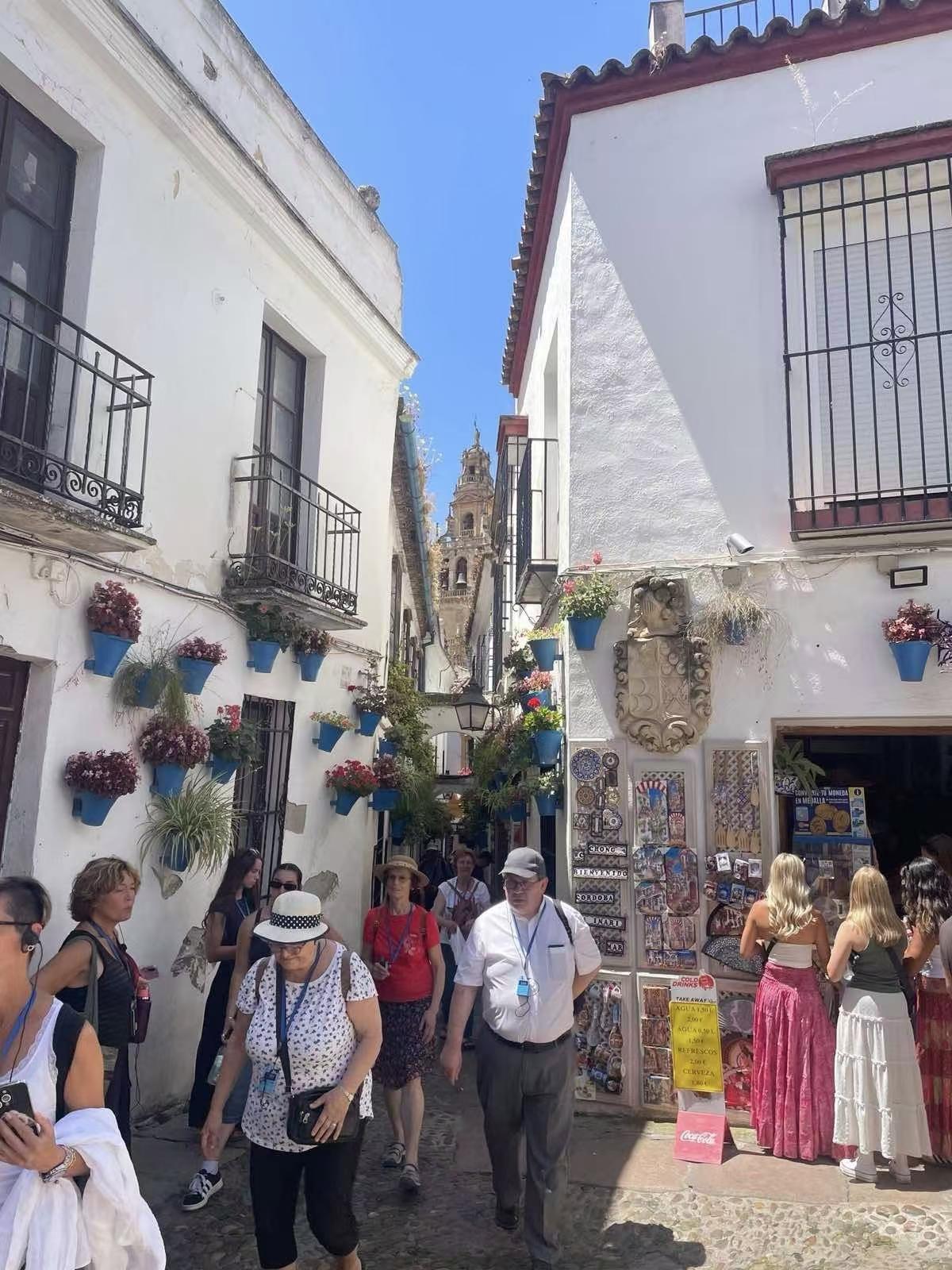
The oldest part of the route is a lane barely wider than a doorway in places, whitewashed on both sides and busy even on a quiet weekday. A party of forty does not pass through it as one body; it becomes a moving queue, and any guide who stops to repeat a line blocks the lane for everyone behind. That single fact shaped the first request. The walk had to keep moving, with the guide speaking once and every listener catching the words at their own place in the line. The image below is the second batch mid-lane, the guide's voice already a full turn ahead of them.
Walking-the-lane-in-order-church_cathedral

📡 Frequency Before Footwork

Lanes this old sit between stone walls high enough to reflect a signal, and the parish's own schedule meant other licensed guides were working the same quarter that morning. A band already crowded with consumer traffic was a poor bet for the group that would spend the longest stretch inside the tightest passage. That is where the RC085 drew the assignment. It runs on the UHF band at 470-510 MHz, a range that simply does not share air with the crowd on 2.4 GHz, and it carries 100 channels, so the channel plan could be set far from anything the neighboring guides were likely to pick. Output power sits at 8-10 mW, and the transmission distance spec, 1-200 m, covers the lane end to end with room to spare.

The choice was not about power. It was about standing apart from a band the morning traffic had already filled, and the RC085 page's LCD screen with its F1 and F2 shortcut keys let the guide lock the channel before the first batch stepped off.

A Courtyard Talk Without a Second Voice

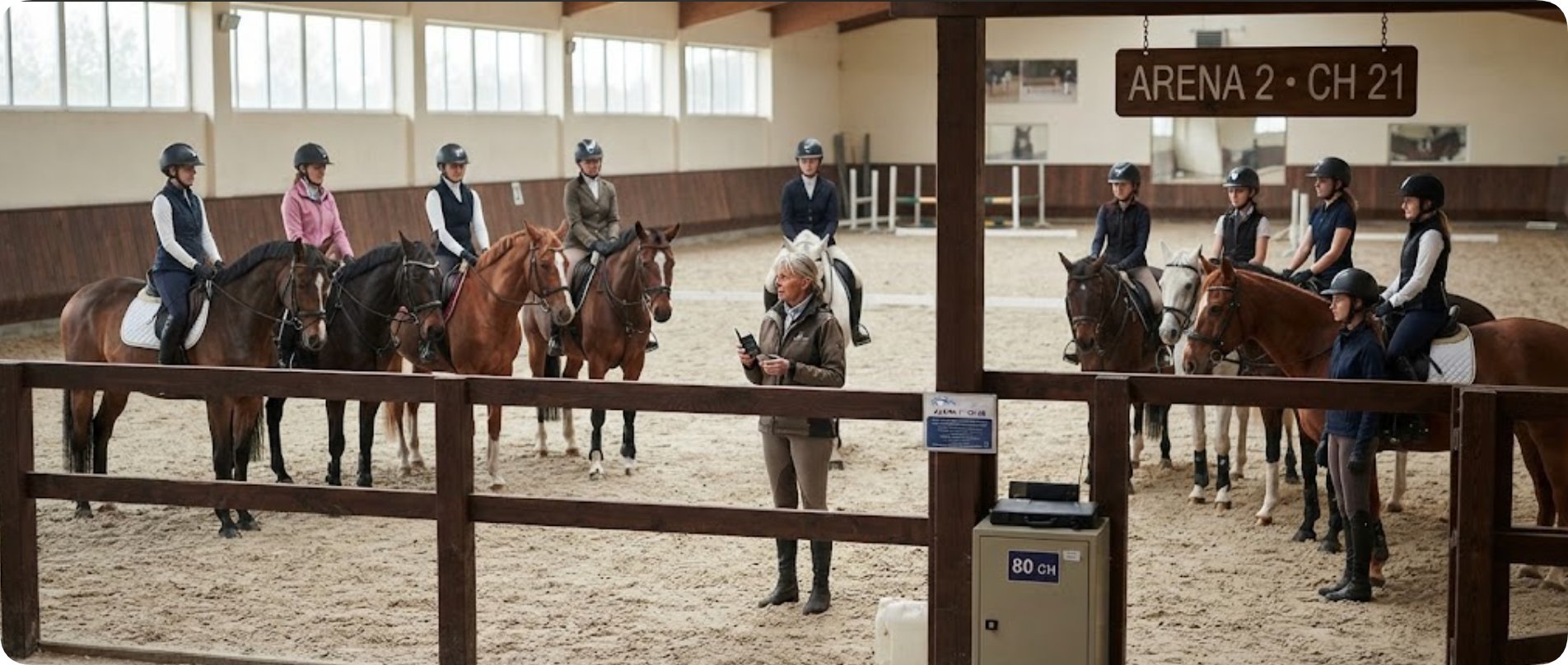
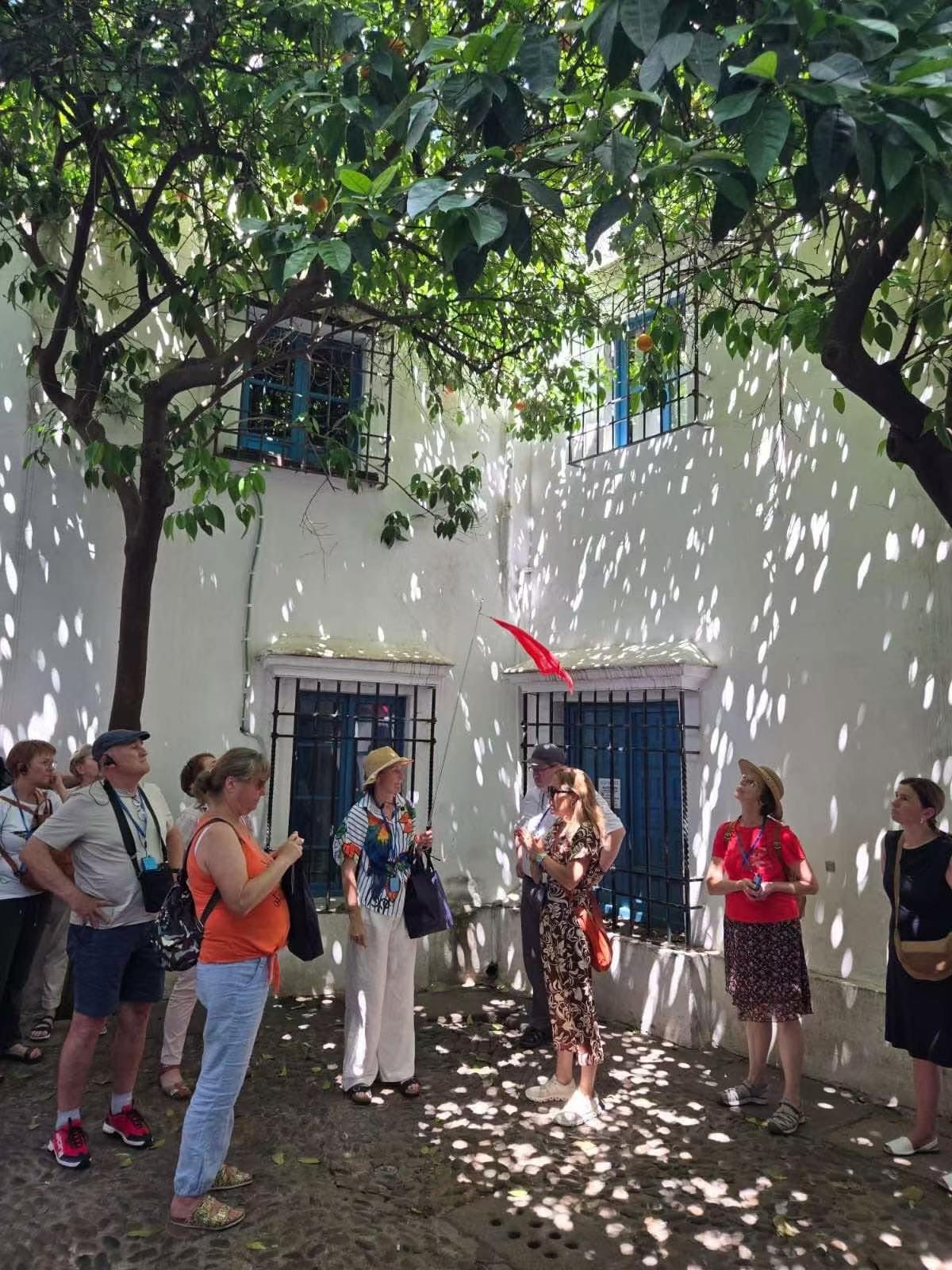
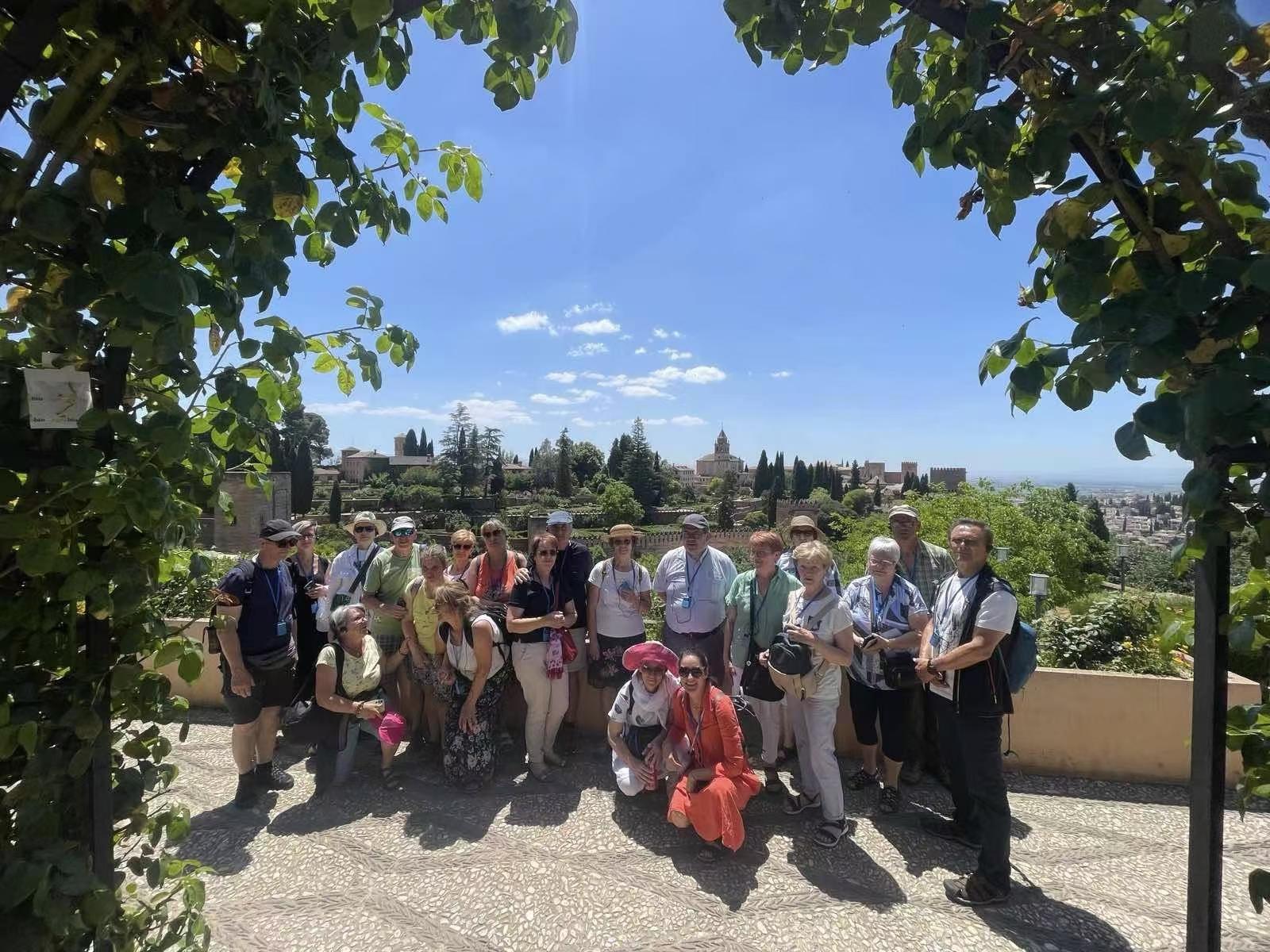
Halfway along, the route opens into a walled courtyard with orange trees and a shaded bench line, and this is where the first group stopped for the longest talk of the morning. Standing listeners face a different problem than walking ones: nobody is moving to escape a reflection, so a hard wall opposite the guide can put an echo over a voice that the lane never showed. The second request pointed here. The group in the courtyard had to hear one clean voice for a twenty-minute talk while the second batch was still finishing the lane outside.
Courtyard-stop-first-group-church_cathedral

The RC2406 carried this group. Its 80 channels are built for exactly this kind of interference pressure, filtering against crowding on the 2.4 GHz band it shares with everything else in a modern quarter, and its PLL synthesizer holds the channel without drift for the length of a talk. With the second group still two turns away on a different channel, neither audience heard more than its own guide.

⛪ The Cathedral Front Closes the Morning

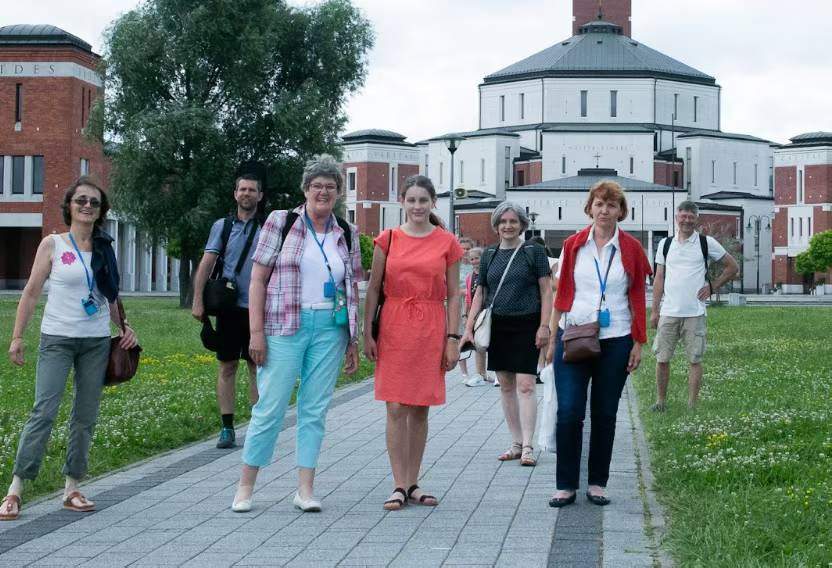
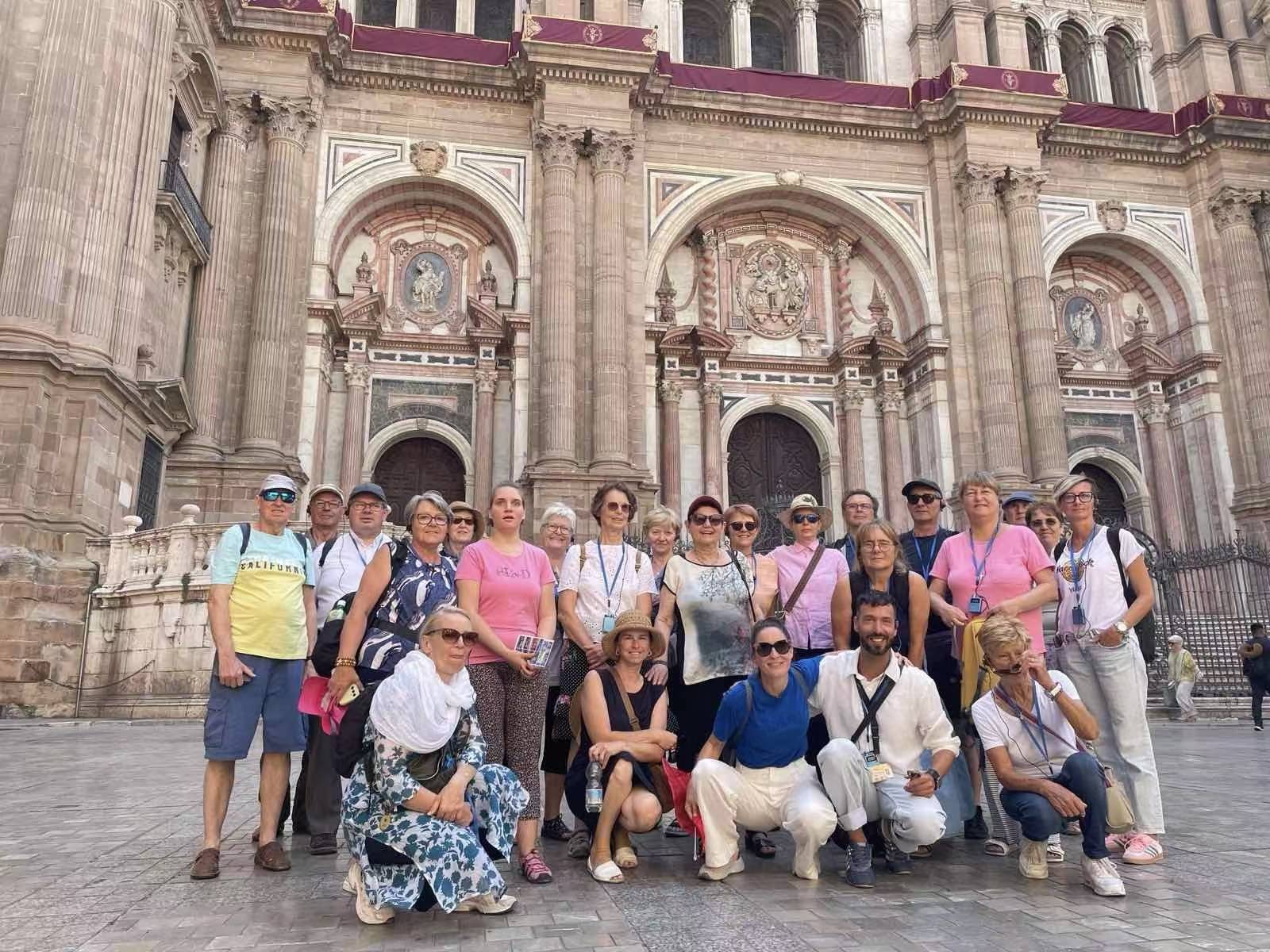
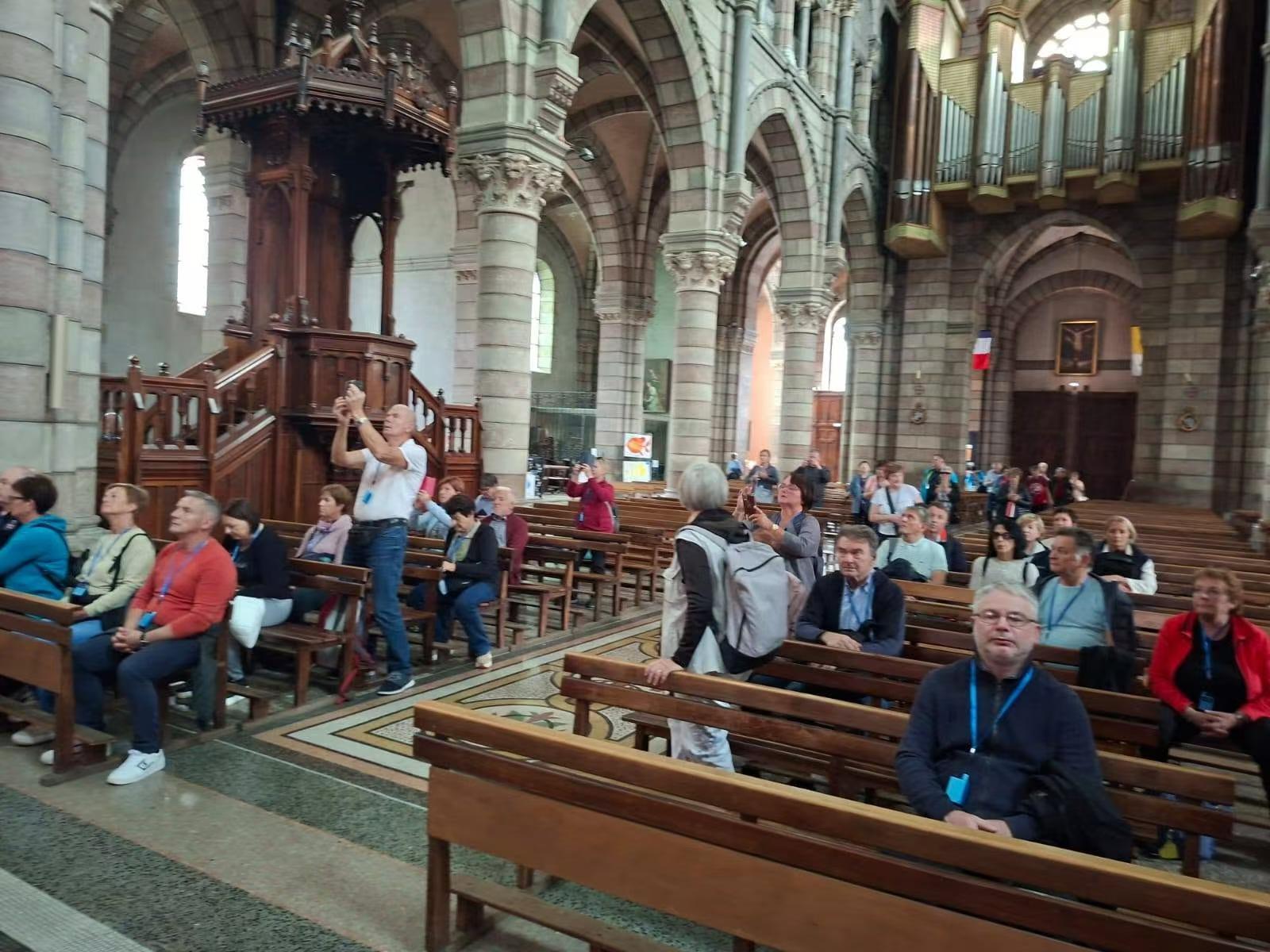
The last leg brings all three batches back together on the open ground before the cathedral front, a facade of carved stone that swallows sound in a different way: open air, no near wall, and a low wind off the square that morning. The third request was really a sequence. Regroup, collect every receiver into the case, and clear the ground before the bells, all inside a single quarter hour. A handback that tight only works when the units themselves give nothing to fumble, and the photo below is the moment the three groups became one crowd again.
Regrouping-at-the-cathedral-front-church_cathedral

The RC2402 served the third batch, and on a morning built around handoffs its plainness was the point: a basic 2.4 GHz standard unit with 50 channels, no menu depth, and nothing on it a first-time visitor could set wrong. Collection at the steps was a count, not a sort.

Weight and Runtime as the Bags Felt Them

Kit positionBandChannelsBattery life, TX to RXWeight, TX to RX
RC2406, courtyard group2403-2483 MHz8010h to 20h59g and 50g
RC085, lane group470-510 MHz10012h to 20h65g and 60g
RC2402, cathedral group2403-2483 MHz5010h to 20h59g and 50g

Every figure above comes from the manufacturer's current comparison sheet, and the two receivers' weights are listed separately because the units differ. The receiver battery at 3.7V 1000mAh covers the full morning on one charge for all three models, which is what let the handback happen without a charging stop in the middle. None of the three units needed a mid-route swap, and the organizer counted that as its own kind of result.

Where the Morning Would Have Broken With One Kit

It is worth stating plainly what a single-model kit would have risked on this route. One band for all three groups means the lane group's channel and the courtyard group's channel sit close enough that a stone reflection can carry one voice into the other talk. One channel plan leaves no room to move when a neighboring guide's system lands on your frequency mid-morning. And one battery profile means a swap somewhere in the lanes, with forty visitors standing around watching it happen. The three requests were not three preferences; they were three separate failure points, and each unit in the bag addressed a different one.

🎯 The Line the Guide Will Repeat in September

The organizer's note after the morning kept three points. The lane worked because the voice stayed one turn ahead and nobody stopped walking. The courtyard talk stayed clean even with the second batch audible outside the wall, which the guide credited to the channel gap rather than luck. And the handback at the cathedral front finished with four minutes to spare, which matters more to a parish schedule than any figure on a spec sheet. The same three units are booked again for the September group, and the channel plan from this morning travels with them.

For parishes and heritage groups weighing a similar route, the practical summary is short: match the band to the crowding, match the channel count to the interference, and keep one unit in the set simple enough that a first-time visitor cannot misconfigure it. The full range and current specifications are on our wireless tour guide system pages, and the case notes behind this morning are part of our church and religious translation system case record. The route template itself, from lanes to courtyard to cathedral front, maps cleanly onto our church wireless audio solutions.

2026年10月09日 13:29
ꄘ click: 12
no data

RC085, RC2402 and RC2406: Three Requests a Parish Group Brought to the Cathedral Morning

time: 2026年10月09日 click:12

When a parish group from the coast booked a morning that combined a walk through the old lanes, a stop in a walled courtyard, and a service visit at the cathedral front, the organizer sent over three requests before anyone packed a single bag. Keep the groups moving through the narrow lanes without stopping the walk to repeat a sentence. Let the first group hear the guide plainly inside the courtyard while a second group was still two turns away. And finish the whole route in time for the midday bells, with no battery swap and no receiver handed out twice. The plan that answered all three put an RC2406, an RC085 and an RC2402 in the same kit bag, one per group.

Nothing about the morning was exotic. The lanes were public, the courtyard was open to visitors, and the cathedral steps belong to everyone. What made the day work was that each request pointed at a different weakness a single-model kit would have shown, and the three units in this set happened to answer them on three separate fronts.

Sort the Receivers by Color Before the Lanes

Three groups moving on three channel plans still need a way to stay sorted at street level, and the answer was settled at the assembly square before anyone entered the lanes. The RC085 kits run in black, iron gray and blue, so the lane group's receivers were already visually distinct; the other two groups were told apart by lanyard color, which the parish had ordered along with the units. Every channel was locked before the first batch stepped off, the guide's own screen on the RC085 confirming the number at a glance. Distribution took about eight minutes, which is roughly the time the second batch would otherwise have spent waiting.

The Lane That Fixes the Order of March

The oldest part of the route is a lane barely wider than a doorway in places, whitewashed on both sides and busy even on a quiet weekday. A party of forty does not pass through it as one body; it becomes a moving queue, and any guide who stops to repeat a line blocks the lane for everyone behind. That single fact shaped the first request. The walk had to keep moving, with the guide speaking once and every listener catching the words at their own place in the line. The image below is the second batch mid-lane, the guide's voice already a full turn ahead of them.

Walking-the-lane-in-order-church_cathedral

📡 Frequency Before Footwork

Lanes this old sit between stone walls high enough to reflect a signal, and the parish's own schedule meant other licensed guides were working the same quarter that morning. A band already crowded with consumer traffic was a poor bet for the group that would spend the longest stretch inside the tightest passage. That is where the RC085 drew the assignment. It runs on the UHF band at 470-510 MHz, a range that simply does not share air with the crowd on 2.4 GHz, and it carries 100 channels, so the channel plan could be set far from anything the neighboring guides were likely to pick. Output power sits at 8-10 mW, and the transmission distance spec, 1-200 m, covers the lane end to end with room to spare.

The choice was not about power. It was about standing apart from a band the morning traffic had already filled, and the RC085 page's LCD screen with its F1 and F2 shortcut keys let the guide lock the channel before the first batch stepped off.

A Courtyard Talk Without a Second Voice

Halfway along, the route opens into a walled courtyard with orange trees and a shaded bench line, and this is where the first group stopped for the longest talk of the morning. Standing listeners face a different problem than walking ones: nobody is moving to escape a reflection, so a hard wall opposite the guide can put an echo over a voice that the lane never showed. The second request pointed here. The group in the courtyard had to hear one clean voice for a twenty-minute talk while the second batch was still finishing the lane outside.

Courtyard-stop-first-group-church_cathedral

The RC2406 carried this group. Its 80 channels are built for exactly this kind of interference pressure, filtering against crowding on the 2.4 GHz band it shares with everything else in a modern quarter, and its PLL synthesizer holds the channel without drift for the length of a talk. With the second group still two turns away on a different channel, neither audience heard more than its own guide.

⛪ The Cathedral Front Closes the Morning

The last leg brings all three batches back together on the open ground before the cathedral front, a facade of carved stone that swallows sound in a different way: open air, no near wall, and a low wind off the square that morning. The third request was really a sequence. Regroup, collect every receiver into the case, and clear the ground before the bells, all inside a single quarter hour. A handback that tight only works when the units themselves give nothing to fumble, and the photo below is the moment the three groups became one crowd again.

Regrouping-at-the-cathedral-front-church_cathedral

The RC2402 served the third batch, and on a morning built around handoffs its plainness was the point: a basic 2.4 GHz standard unit with 50 channels, no menu depth, and nothing on it a first-time visitor could set wrong. Collection at the steps was a count, not a sort.

Weight and Runtime as the Bags Felt Them

Kit positionBandChannelsBattery life, TX to RXWeight, TX to RX
RC2406, courtyard group2403-2483 MHz8010h to 20h59g and 50g
RC085, lane group470-510 MHz10012h to 20h65g and 60g
RC2402, cathedral group2403-2483 MHz5010h to 20h59g and 50g

Every figure above comes from the manufacturer's current comparison sheet, and the two receivers' weights are listed separately because the units differ. The receiver battery at 3.7V 1000mAh covers the full morning on one charge for all three models, which is what let the handback happen without a charging stop in the middle. None of the three units needed a mid-route swap, and the organizer counted that as its own kind of result.

Where the Morning Would Have Broken With One Kit

It is worth stating plainly what a single-model kit would have risked on this route. One band for all three groups means the lane group's channel and the courtyard group's channel sit close enough that a stone reflection can carry one voice into the other talk. One channel plan leaves no room to move when a neighboring guide's system lands on your frequency mid-morning. And one battery profile means a swap somewhere in the lanes, with forty visitors standing around watching it happen. The three requests were not three preferences; they were three separate failure points, and each unit in the bag addressed a different one.

🎯 The Line the Guide Will Repeat in September

The organizer's note after the morning kept three points. The lane worked because the voice stayed one turn ahead and nobody stopped walking. The courtyard talk stayed clean even with the second batch audible outside the wall, which the guide credited to the channel gap rather than luck. And the handback at the cathedral front finished with four minutes to spare, which matters more to a parish schedule than any figure on a spec sheet. The same three units are booked again for the September group, and the channel plan from this morning travels with them.

For parishes and heritage groups weighing a similar route, the practical summary is short: match the band to the crowding, match the channel count to the interference, and keep one unit in the set simple enough that a first-time visitor cannot misconfigure it. The full range and current specifications are on our wireless tour guide system pages, and the case notes behind this morning are part of our church and religious translation system case record. The route template itself, from lanes to courtyard to cathedral front, maps cleanly onto our church wireless audio solutions.
no data
×

Contact us

email:
name:
subject:
content: