
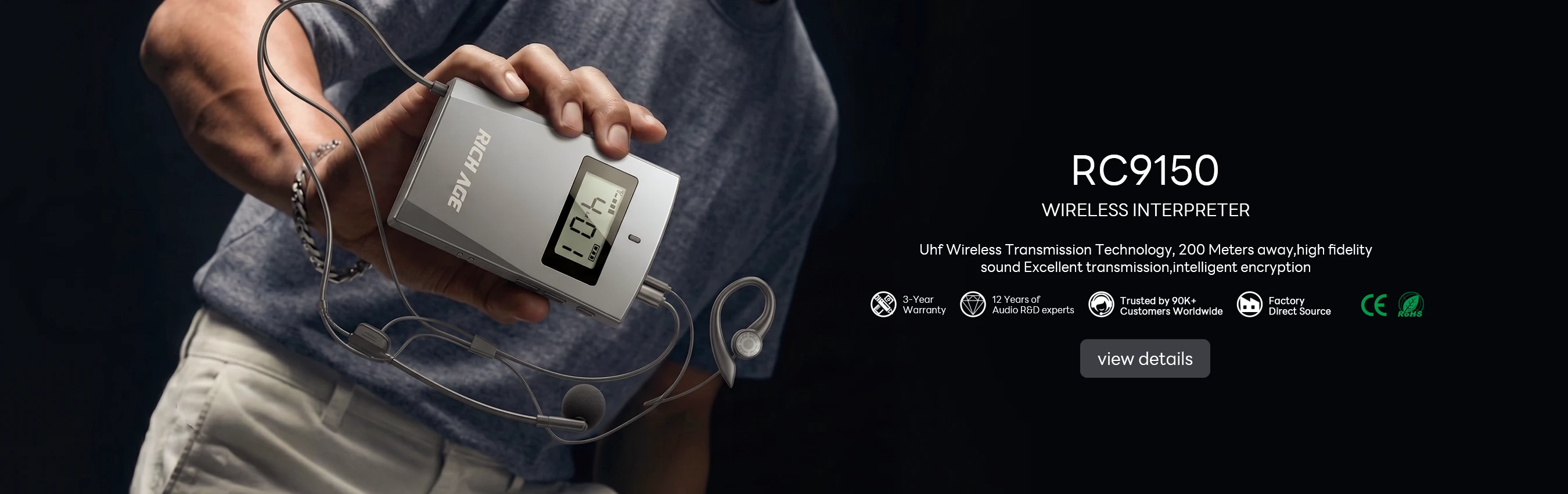
A leading China factory specializing in Wireless Tour Guide Systems, Church Audio Guides, and Translation Headphones with premium OEM/ODM solutions.

Tel:+86 18922879583

Email:tiger.wang@richitek.com

RC9150, RC2468 and RC2500: A Multilingual Museum Day, in the Photographs That Came Back

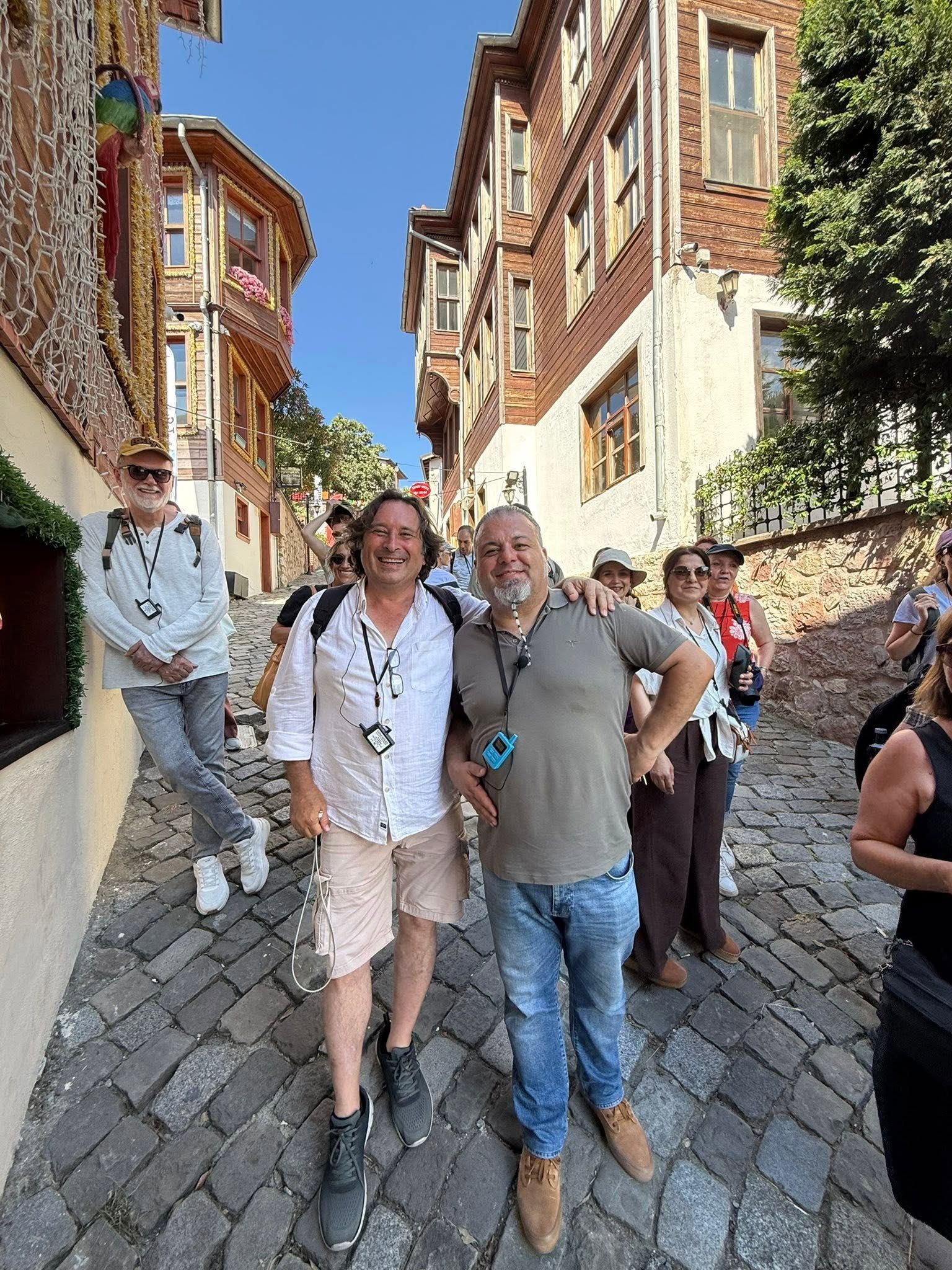
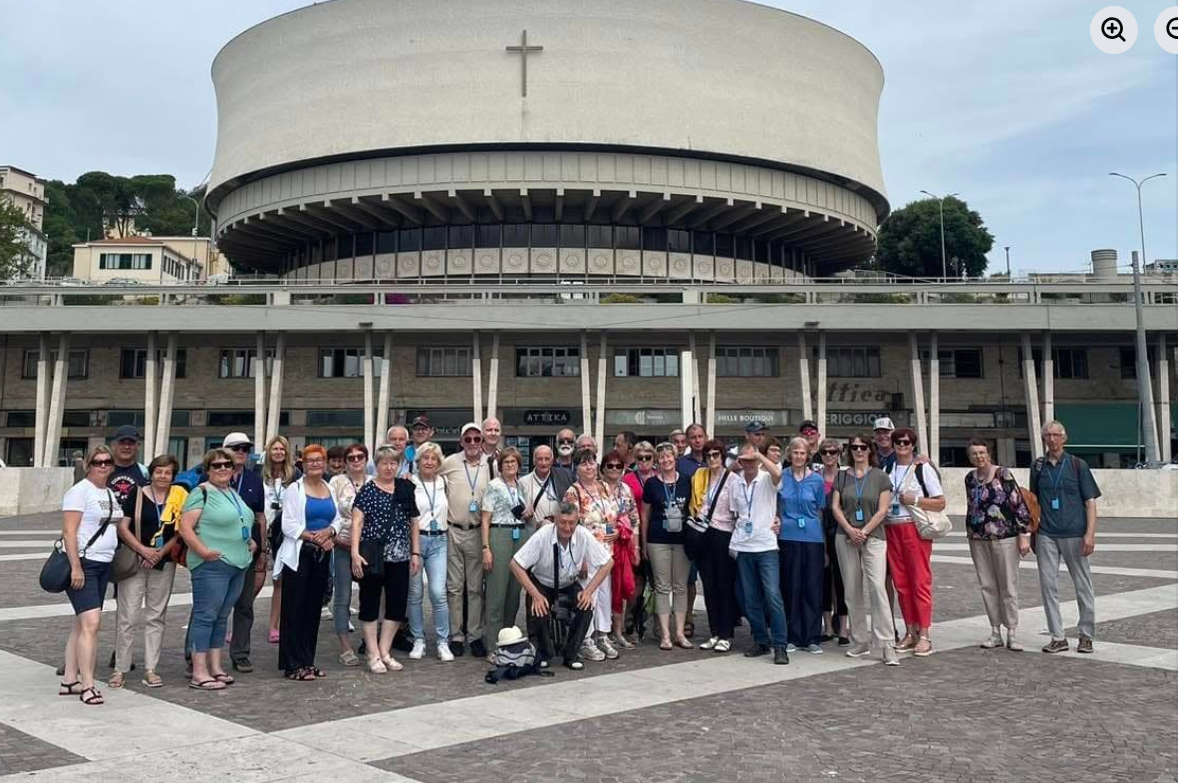
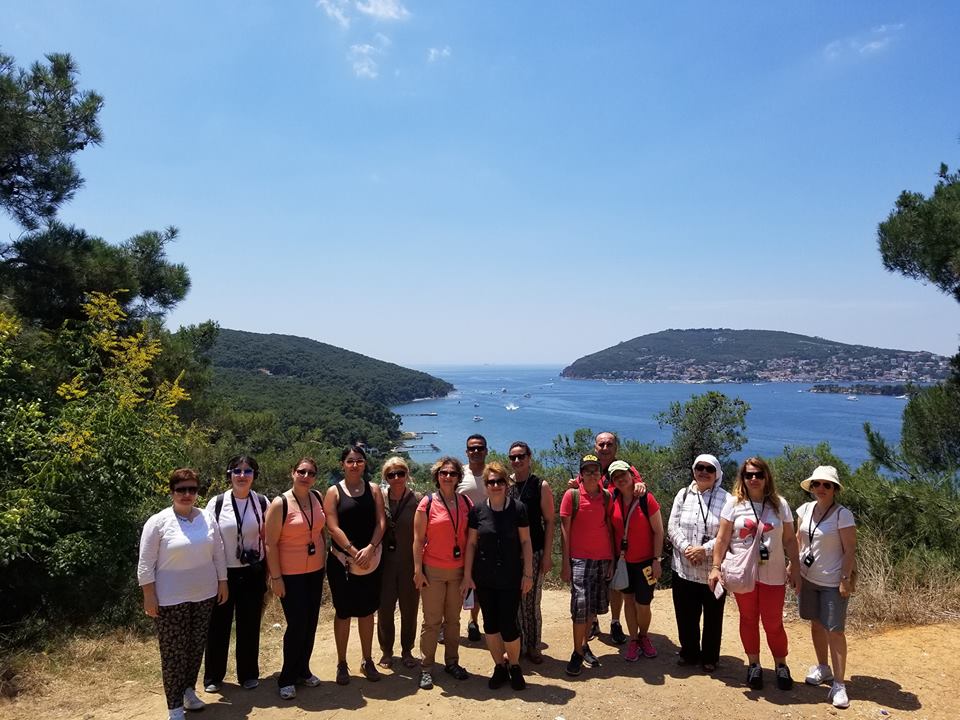
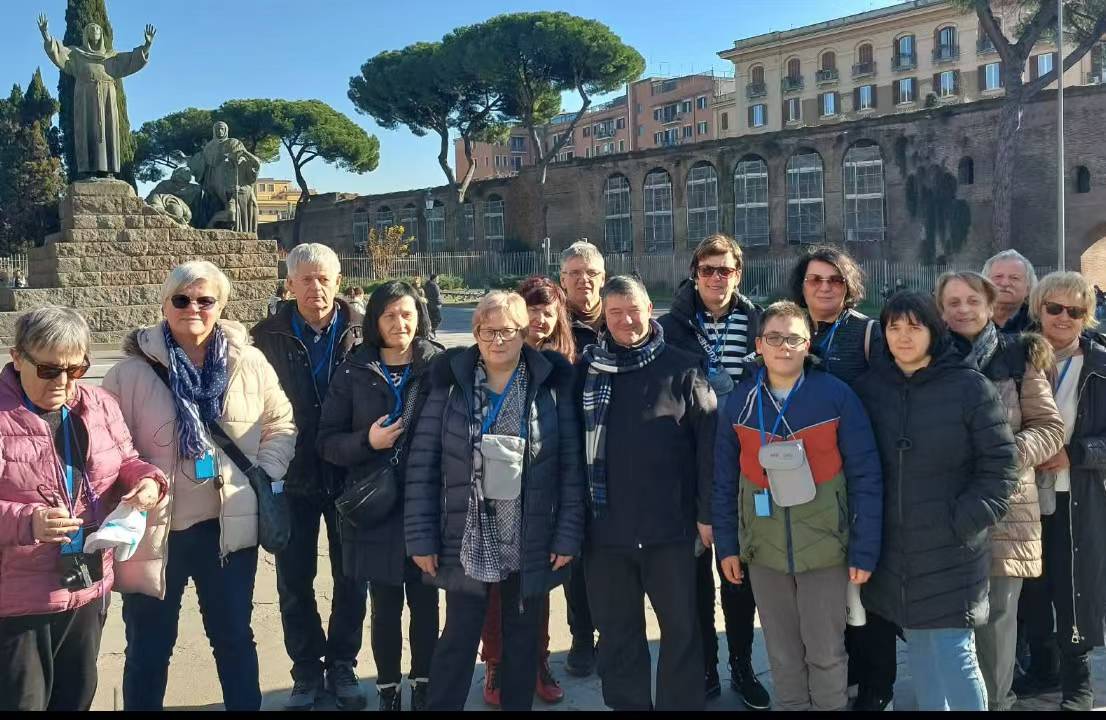
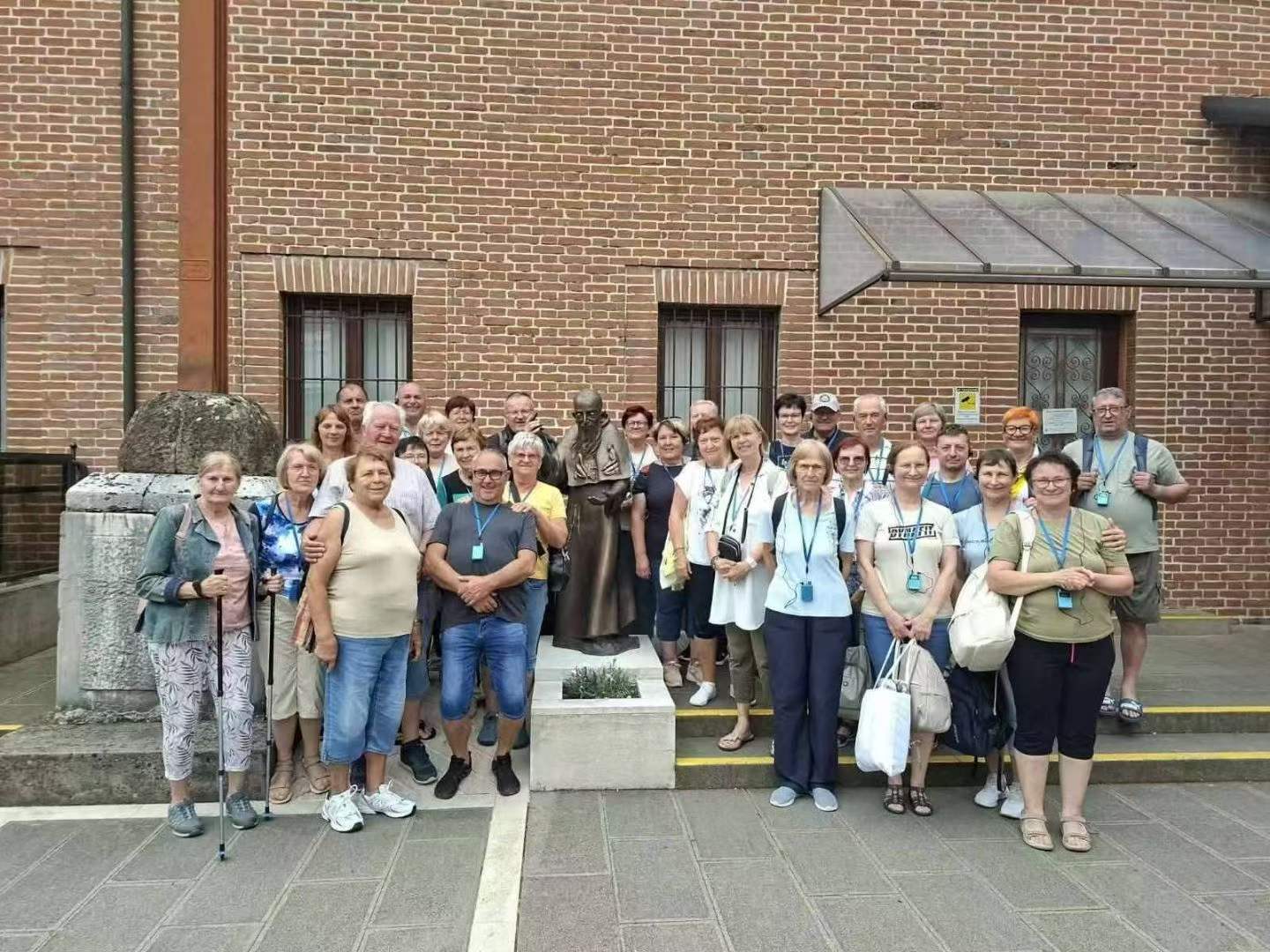
A museum does not usually photograph its own working day. When one does, what arrives is not a brochure. It is a doorway with half the group still outside, a staircase with thirty people strung along it, and a strip of lawn where a guide is already talking to the first six who caught up. Those frames are the nearest thing a supplier ever gets to an honest record of how the equipment behaved once the building filled up.

The frames came back with a short covering list. They also carried something a specification sheet cannot show: the length of a single visit, the distance the person speaking drifts from the people listening, and the moment a second language has to be ready. For anyone assembling wireless commentary for museum visitors, that is the useful material. What follows is what three kits from one range were each doing on the very same day, and why the venue ended up wanting all three rather than the single system it originally ordered. None of the three was picked out by the number printed largest on its page, and none of them was ever bought on its own.

What the Returned Frames Confirm First

Before a venue writes anything down, its own photographs have already answered three questions. The first is duration. A clock cannot show how long a receiver stays clipped to a visitor who is also holding a coat and a bag, but a run of frames across one afternoon can, and the answer is rarely the number anybody expected at the planning stage. The second is reach: how far the person speaking is allowed to drift from the people listening, and whether that distance grows after the second staircase. The third is turnaround, which is whether a language change happens in a quiet corner or in front of a queue. None of those three appears on a datasheet, and all three of them decide which unit is worth buying. A venue that skips that reading tends to buy on weight alone, and then meets the rest of it in the second week.

The Channel Headroom a Mixed Group Needs

The first kit in the photographs is the one carried by whoever is speaking. The RC9150 runs on 2403-2483 MHz, holds a hundred channels, and puts out 10mW across a working range of one to two hundred metres. That is fifteen hours on the transmitter and thirty-five or more on the receiver, with both packs rated 3.7V 1800mAh and charged over Type-C, at 97.5g in the hand at either end. On the day itself the figure that mattered was the channel count. A single building can be running one live commentary, a recorded loop in the hall behind it, and a school group that arrived early, and with a hundred channels none of those three has to wait for the others to finish.

RC9150-museum_multilingual

🗺️ The Light Ear-Hook a Visitor Forgets

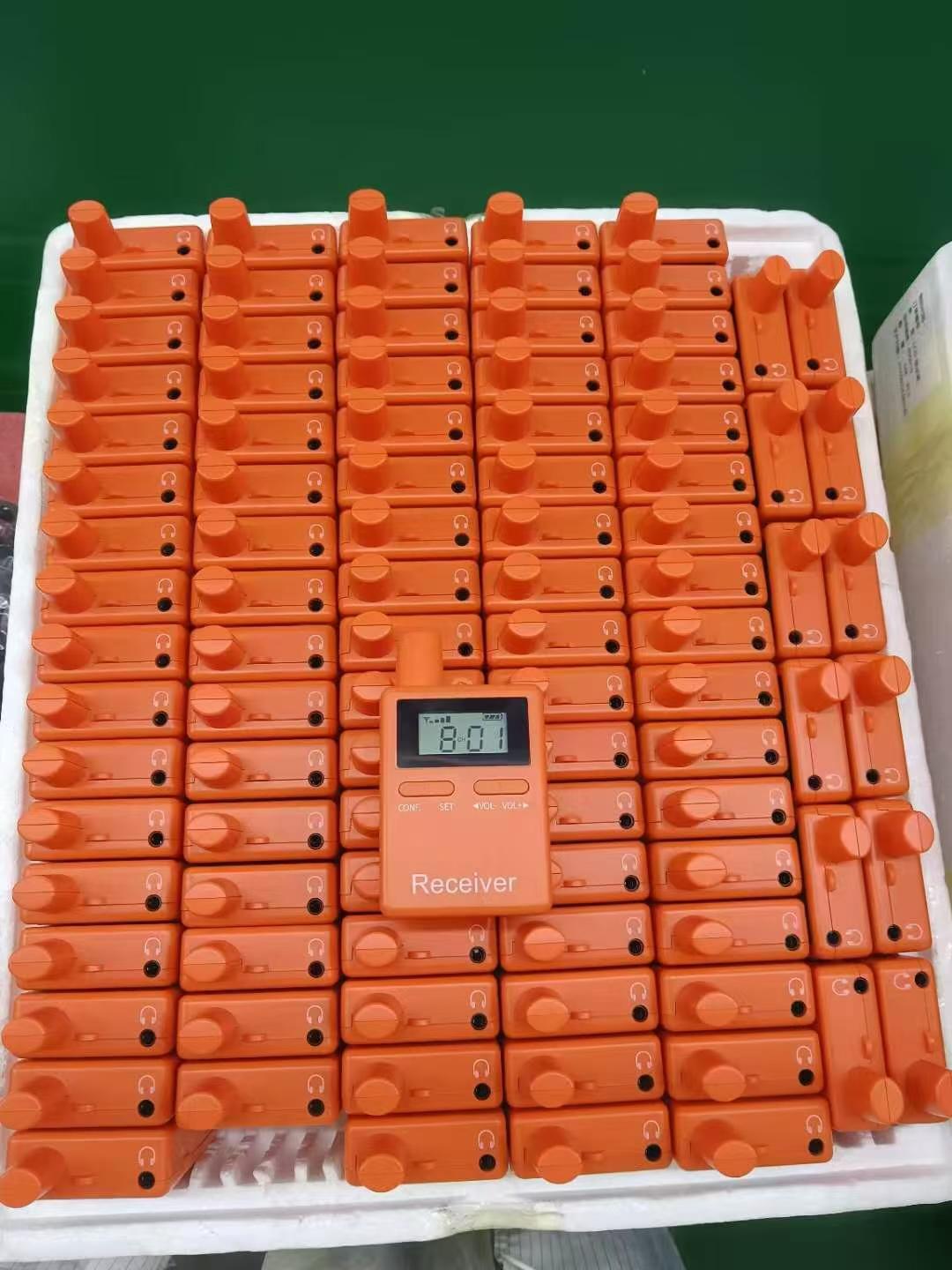
The second kit answers a different question, and it is the one a visitor notices least. The RC2468 keeps the same 2403-2483 MHz band, the same 10mW and the same one-to-two-hundred-metre range, on fifty channels, and it is built around an eighteen-gram ear-hook receiver instead of a box on a lanyard. The transmitter runs ten hours and weighs 59g. The receiver's 300mAh pack is rated at roughly eight hours, and that is the honest limit of the lightest option in the set. It shows in the photographs, too. An ear-hook genuinely disappears on somebody who is also carrying a camera and a folded umbrella, and by the middle of a long day those same receivers are the first ones to ask for a charger.
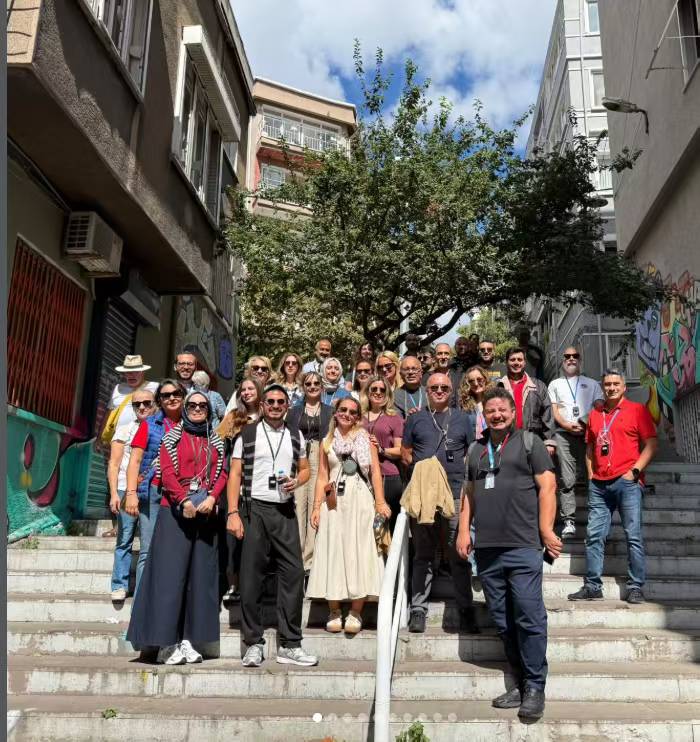
RC2468-museum_multilingual

A Second Language in One Press

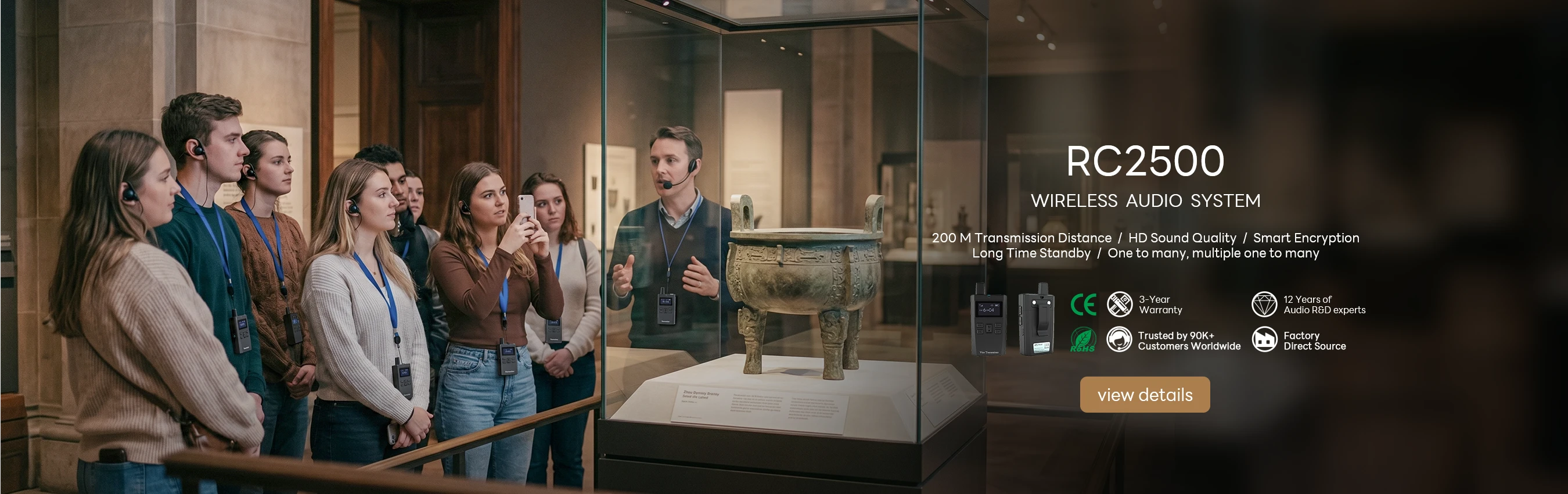
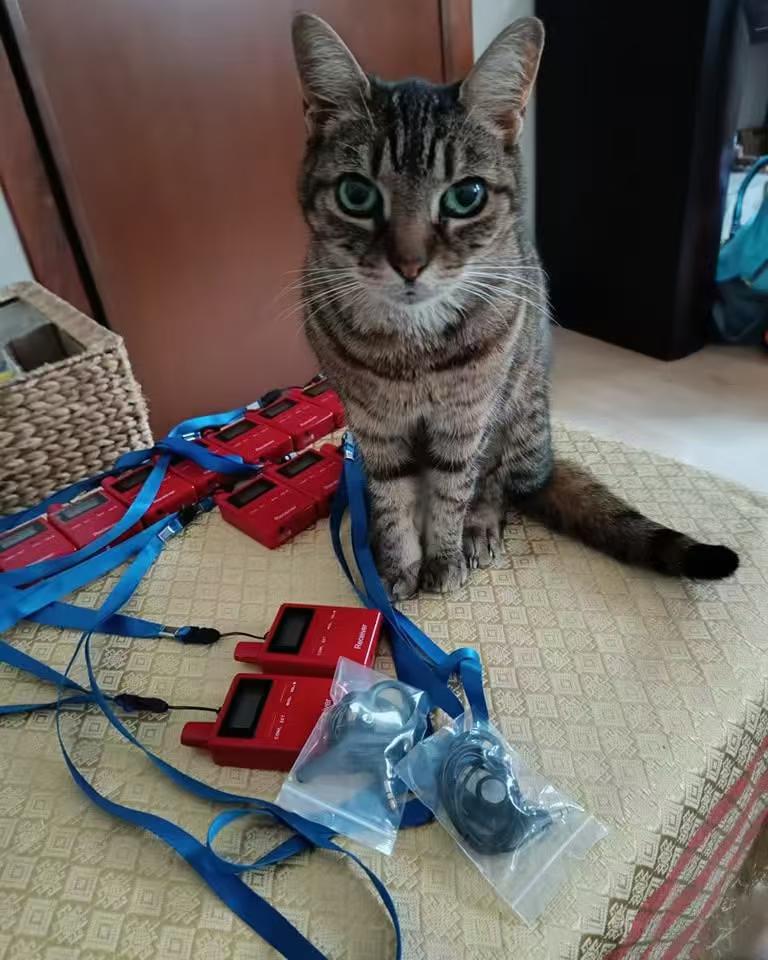
The third kit is the one that made a late language change look as though it had been planned all along. The RC2500 sits on the same band with fifty channels, 10mW and the same one-to-two-hundred-metre range, but it carries fifteen hours on the transmitter and thirty-five or more on the receiver, with both packs at 3.7V 1800mAh and Type-C charging, at 104g at each end. The feature the client kept coming back to is the one-key synchronise. Press once and the whole set moves together, transmitter and receivers at the same time. That is what turns an extra language from a briefing into a minute of work: the packs go out, the channel matches itself, and the group walks.
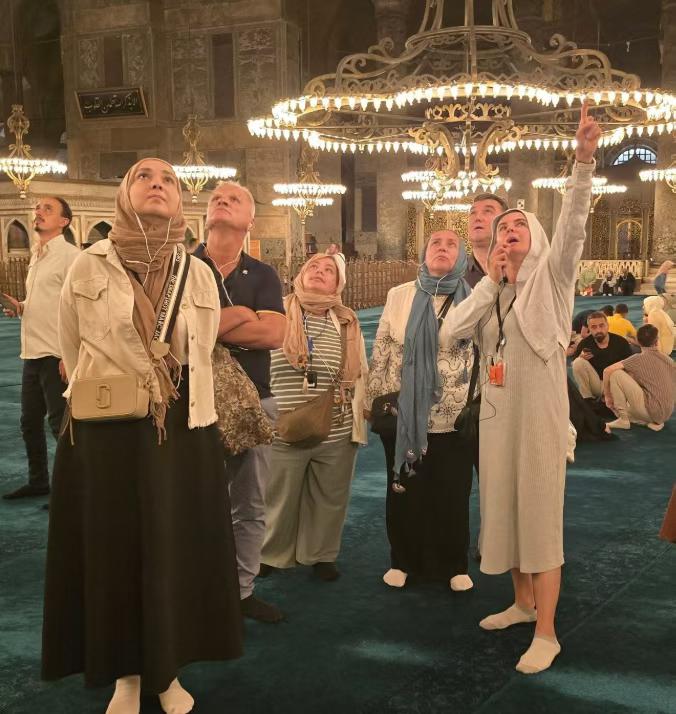
RC2500-museum_multilingual

Where the Three Kits Diverge

Set side by side, the three units share more than they differ on. The band is the same, the output power is the same, and so is the working range. The split is in how long each one lasts and how much it weighs.

What differsRC9150RC2468RC2500
Channel count100 channels50 channels50 channels
Transmitter life15h10h15h
Receiver life35+h8h approx.35+h
Transmitter pack1800mAh1500mAh1800mAh
Receiver pack1800mAh300mAh1800mAh
Transmitter weight97.5g59g104g
Receiver weight97.5g18g104g
Charging portType-CUSBType-C

Read down the last two rows and the trade is plain. The lightest receiver is the shortest-lived one, and the heaviest set is the one that finishes a full day without going back for a spare. For a venue running museum audio guide equipment across a morning indoors and a walk afterwards, that is the whole decision in one line: carry weight, or carry spare batteries.

The Midday Changeover Nobody Saw

The photographs show no obvious break, which is why the changeover appears in them only as a detail. Somewhere after lunch the ear-hooks come off and the lanyard packs go on. Nothing on the outside changed. It was the same group, the same route and the same voice. What changed was the arithmetic. Eight hours, rated approximately on the lighter receiver, had been plenty for a morning that began at ten and ended by one. It was not enough for the afternoon the museum actually ran, which stretched past four with a stop for photographs in the middle. The heavier pack, with thirty-five or more hours on the receiver, went out instead, and the visitors never heard a difference at all, which is precisely the point of owning two options rather than one. The frames do not record the changeover anywhere, because there was nothing to record beyond a hand taking a lanyard off a rail.

🏆 What the Client Added Later

The list that came back with the frames was short and practical. A spare receiver pool sized to the longest day rather than to the average one, so that a single swap never empties a shelf. A charging rack beside the staff door, so that packs go back on the rail the moment a group leaves rather than at the end of the week. A printed cue card for whoever is speaking, showing the channel numbers for the languages the venue runs today and the two it expects next. And one request that had nothing to do with hardware: that the earlier museum day in Istanbul be written up the same way, so that the next venue could read what a real one actually looked like from the inside.

None of it required a different system. It required knowing which of the three to hand out, and when. The photographs settled that faster than any comparison table would have, because they showed a day rather than a product. A venue that keeps both a light ear-hook pool and a long-life pack is not hedging its order. It is matching the equipment to the hour it will really be worn, and keeping one of each on the shelf so that the choice never has to be made twice in the same afternoon.
2026年09月29日 11:18
ꄘ click: 12
no data

RC9150, RC2468 and RC2500: A Multilingual Museum Day, in the Photographs That Came Back

time: 2026年09月29日 click:12

A museum does not usually photograph its own working day. When one does, what arrives is not a brochure. It is a doorway with half the group still outside, a staircase with thirty people strung along it, and a strip of lawn where a guide is already talking to the first six who caught up. Those frames are the nearest thing a supplier ever gets to an honest record of how the equipment behaved once the building filled up.

The frames came back with a short covering list. They also carried something a specification sheet cannot show: the length of a single visit, the distance the person speaking drifts from the people listening, and the moment a second language has to be ready. For anyone assembling wireless commentary for museum visitors, that is the useful material. What follows is what three kits from one range were each doing on the very same day, and why the venue ended up wanting all three rather than the single system it originally ordered. None of the three was picked out by the number printed largest on its page, and none of them was ever bought on its own.

What the Returned Frames Confirm First

Before a venue writes anything down, its own photographs have already answered three questions. The first is duration. A clock cannot show how long a receiver stays clipped to a visitor who is also holding a coat and a bag, but a run of frames across one afternoon can, and the answer is rarely the number anybody expected at the planning stage. The second is reach: how far the person speaking is allowed to drift from the people listening, and whether that distance grows after the second staircase. The third is turnaround, which is whether a language change happens in a quiet corner or in front of a queue. None of those three appears on a datasheet, and all three of them decide which unit is worth buying. A venue that skips that reading tends to buy on weight alone, and then meets the rest of it in the second week.

The Channel Headroom a Mixed Group Needs

The first kit in the photographs is the one carried by whoever is speaking. The RC9150 runs on 2403-2483 MHz, holds a hundred channels, and puts out 10mW across a working range of one to two hundred metres. That is fifteen hours on the transmitter and thirty-five or more on the receiver, with both packs rated 3.7V 1800mAh and charged over Type-C, at 97.5g in the hand at either end. On the day itself the figure that mattered was the channel count. A single building can be running one live commentary, a recorded loop in the hall behind it, and a school group that arrived early, and with a hundred channels none of those three has to wait for the others to finish.

RC9150-museum_multilingual

🗺️ The Light Ear-Hook a Visitor Forgets

The second kit answers a different question, and it is the one a visitor notices least. The RC2468 keeps the same 2403-2483 MHz band, the same 10mW and the same one-to-two-hundred-metre range, on fifty channels, and it is built around an eighteen-gram ear-hook receiver instead of a box on a lanyard. The transmitter runs ten hours and weighs 59g. The receiver's 300mAh pack is rated at roughly eight hours, and that is the honest limit of the lightest option in the set. It shows in the photographs, too. An ear-hook genuinely disappears on somebody who is also carrying a camera and a folded umbrella, and by the middle of a long day those same receivers are the first ones to ask for a charger.

RC2468-museum_multilingual

A Second Language in One Press

The third kit is the one that made a late language change look as though it had been planned all along. The RC2500 sits on the same band with fifty channels, 10mW and the same one-to-two-hundred-metre range, but it carries fifteen hours on the transmitter and thirty-five or more on the receiver, with both packs at 3.7V 1800mAh and Type-C charging, at 104g at each end. The feature the client kept coming back to is the one-key synchronise. Press once and the whole set moves together, transmitter and receivers at the same time. That is what turns an extra language from a briefing into a minute of work: the packs go out, the channel matches itself, and the group walks.

RC2500-museum_multilingual

Where the Three Kits Diverge

Set side by side, the three units share more than they differ on. The band is the same, the output power is the same, and so is the working range. The split is in how long each one lasts and how much it weighs.

What differsRC9150RC2468RC2500
Channel count100 channels50 channels50 channels
Transmitter life15h10h15h
Receiver life35+h8h approx.35+h
Transmitter pack1800mAh1500mAh1800mAh
Receiver pack1800mAh300mAh1800mAh
Transmitter weight97.5g59g104g
Receiver weight97.5g18g104g
Charging portType-CUSBType-C

Read down the last two rows and the trade is plain. The lightest receiver is the shortest-lived one, and the heaviest set is the one that finishes a full day without going back for a spare. For a venue running museum audio guide equipment across a morning indoors and a walk afterwards, that is the whole decision in one line: carry weight, or carry spare batteries.

The Midday Changeover Nobody Saw

The photographs show no obvious break, which is why the changeover appears in them only as a detail. Somewhere after lunch the ear-hooks come off and the lanyard packs go on. Nothing on the outside changed. It was the same group, the same route and the same voice. What changed was the arithmetic. Eight hours, rated approximately on the lighter receiver, had been plenty for a morning that began at ten and ended by one. It was not enough for the afternoon the museum actually ran, which stretched past four with a stop for photographs in the middle. The heavier pack, with thirty-five or more hours on the receiver, went out instead, and the visitors never heard a difference at all, which is precisely the point of owning two options rather than one. The frames do not record the changeover anywhere, because there was nothing to record beyond a hand taking a lanyard off a rail.

🏆 What the Client Added Later

The list that came back with the frames was short and practical. A spare receiver pool sized to the longest day rather than to the average one, so that a single swap never empties a shelf. A charging rack beside the staff door, so that packs go back on the rail the moment a group leaves rather than at the end of the week. A printed cue card for whoever is speaking, showing the channel numbers for the languages the venue runs today and the two it expects next. And one request that had nothing to do with hardware: that the earlier museum day in Istanbul be written up the same way, so that the next venue could read what a real one actually looked like from the inside.

None of it required a different system. It required knowing which of the three to hand out, and when. The photographs settled that faster than any comparison table would have, because they showed a day rather than a product. A venue that keeps both a light ear-hook pool and a long-life pack is not hedging its order. It is matching the equipment to the hour it will really be worn, and keeping one of each on the shelf so that the choice never has to be made twice in the same afternoon.
no data
×

Contact us

email:
name:
subject:
content: