
.webp)
Wireless Tour Guide System for Pharma Factory Tours: A Practical Installation & Deployment Guide
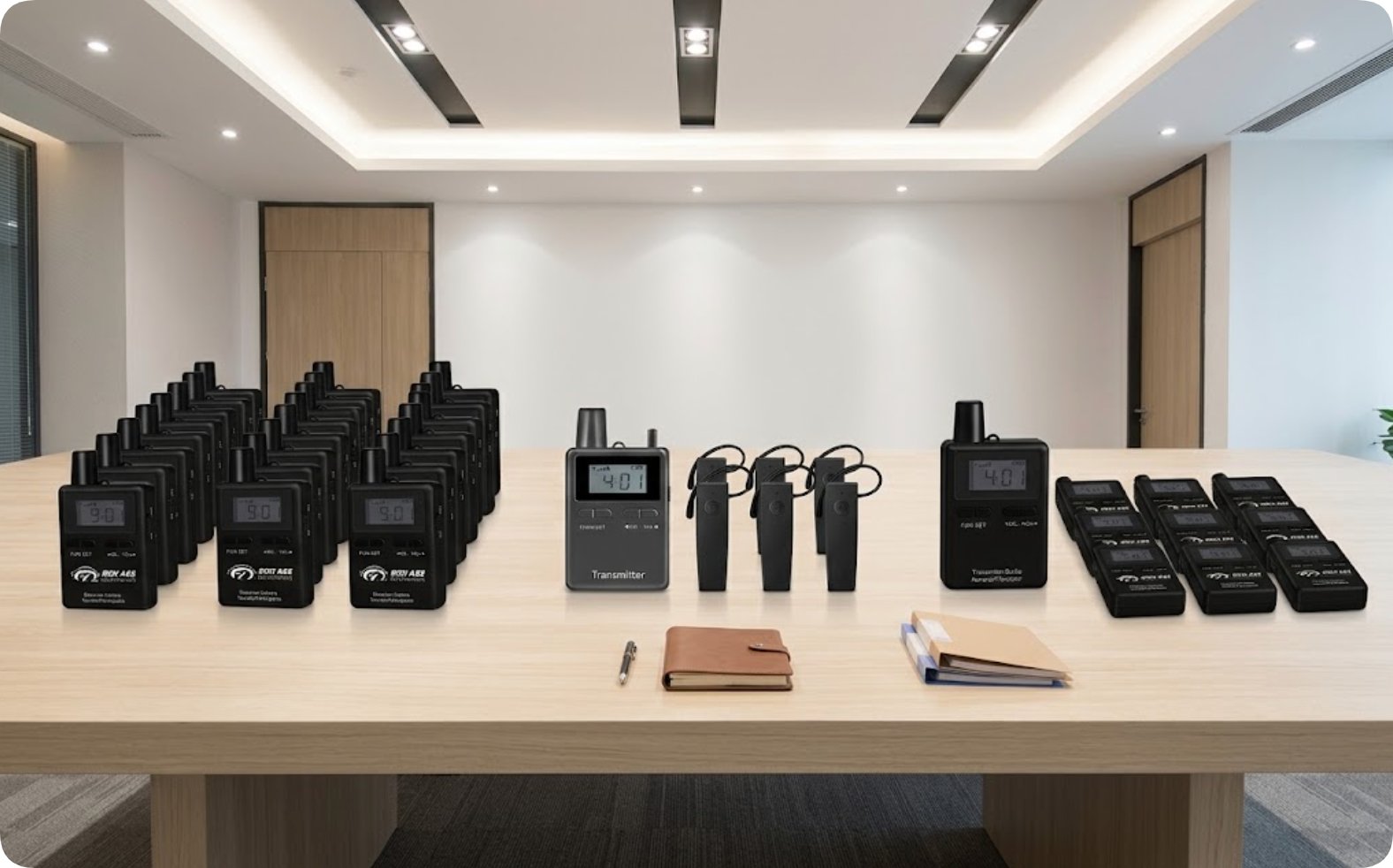
Over the past decade, I’ve worked directly with dozens of pharmaceutical manufacturers to solve one persistent problem: how to run clear, compliant, and genuinely engaging factory tours in environments where noise, distance, and strict hygiene protocols collide. A standard PA system or shouting over machinery simply doesn’t cut it—especially when visitors need to catch every safety instruction and technical detail. That’s exactly where a wireless tour guide system becomes indispensable. It lets the guide speak at a normal conversational volume while visitors hear crisp, uninterrupted audio through lightweight receivers, even in loud production halls or across sprawling outdoor areas. For pharma facilities, this isn’t just about convenience—it’s about making sure critical information reaches every participant without disruption. I’ve seen firsthand how the right installation approach transforms a chaotic, hard-to-follow tour into a seamless, professional experience. Today, I’ll walk you through deploying three specific models for this exact scenario, drawing from our dedicated pharma factory tour solutions.
RC2501: The Silent Communicator for Indoor Pharma Tours
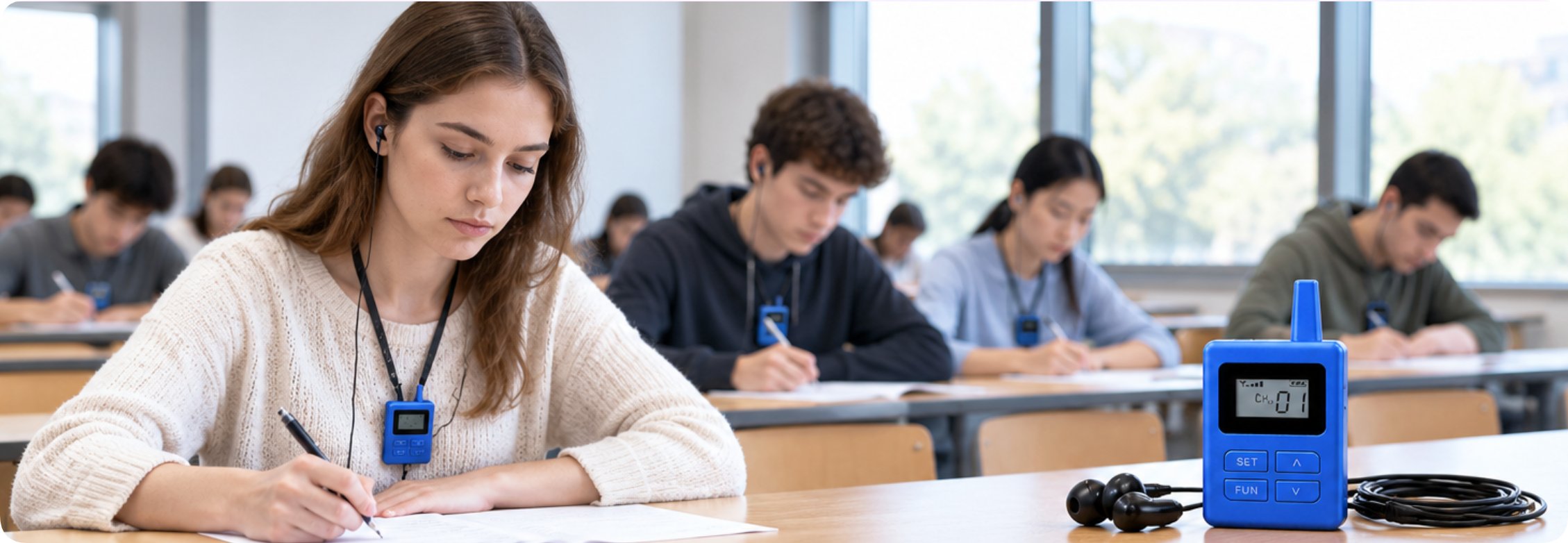
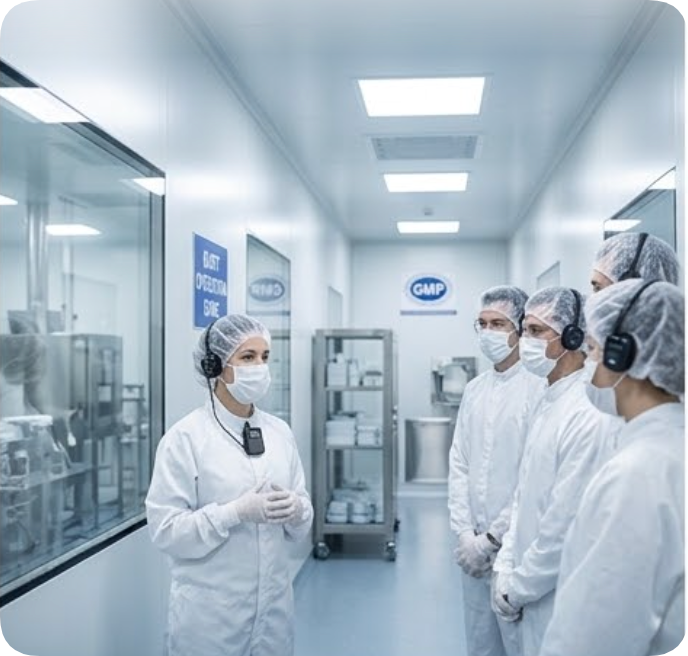
The RC2501 is my top recommendation for indoor pharma factory tours where silence and discretion are non-negotiable. Think cleanroom corridors, lab observation windows, or quality control zones where any loud noise could disturb sensitive processes or compromise sterile conditions. This model functions primarily as a translation headphone system, but it doubles perfectly as a silent tour guide unit. The transmitter is integrated directly into the headphone itself, so the guide simply speaks into the built-in microphone while visitors wear the receiving units. At just 48 grams per unit, it’s comfortable for extended wear, and the 2.4G frequency ensures stable transmission even through thick glass or concrete walls. The ideal scenario for the RC2501 is a guided walk through a sterile environment where you need to maintain absolute quiet. For installation, simply charge all units overnight, assign one unit as the transmitter (guide) and the rest as receivers (visitors), and pair them via the auto-sync button. No complex setup is required—just power on and go. I’ve used this model in actual cleanroom tours, and the difference in visitor comprehension is night and day.
RC2468: Ultra-Light for Outdoor and Mixed Terrain Tours
When your pharma factory tour extends outdoors—say, to a solar panel field, a water treatment pond, or a campus walkway between buildings—the RC2468 is the ideal companion. Weighing just 38 grams, it’s the lightest model in the lineup, and the clip-on transmitter design lets the guide attach it to a collar or lapel without any bulky equipment. The 2.4G technology provides a range of up to 200 meters in open areas, so visitors can spread out without losing audio quality. I often recommend the RC2468 for large pharma campuses where the tour moves from indoor labs to outdoor facilities. The installation process is straightforward: charge the transmitter and receivers, then press the pairing button on both sides. The units automatically connect, and you can test the range by having a visitor walk to the farthest point while the guide speaks. For mixed terrain, I suggest carrying a few spare receivers in a small pouch, as the battery lasts up to 8 hours on a full charge—enough for a full day of tours. This model has proven especially reliable in humid or dusty outdoor conditions.

RC2402: Standard Workhorse for Medium to Large Groups
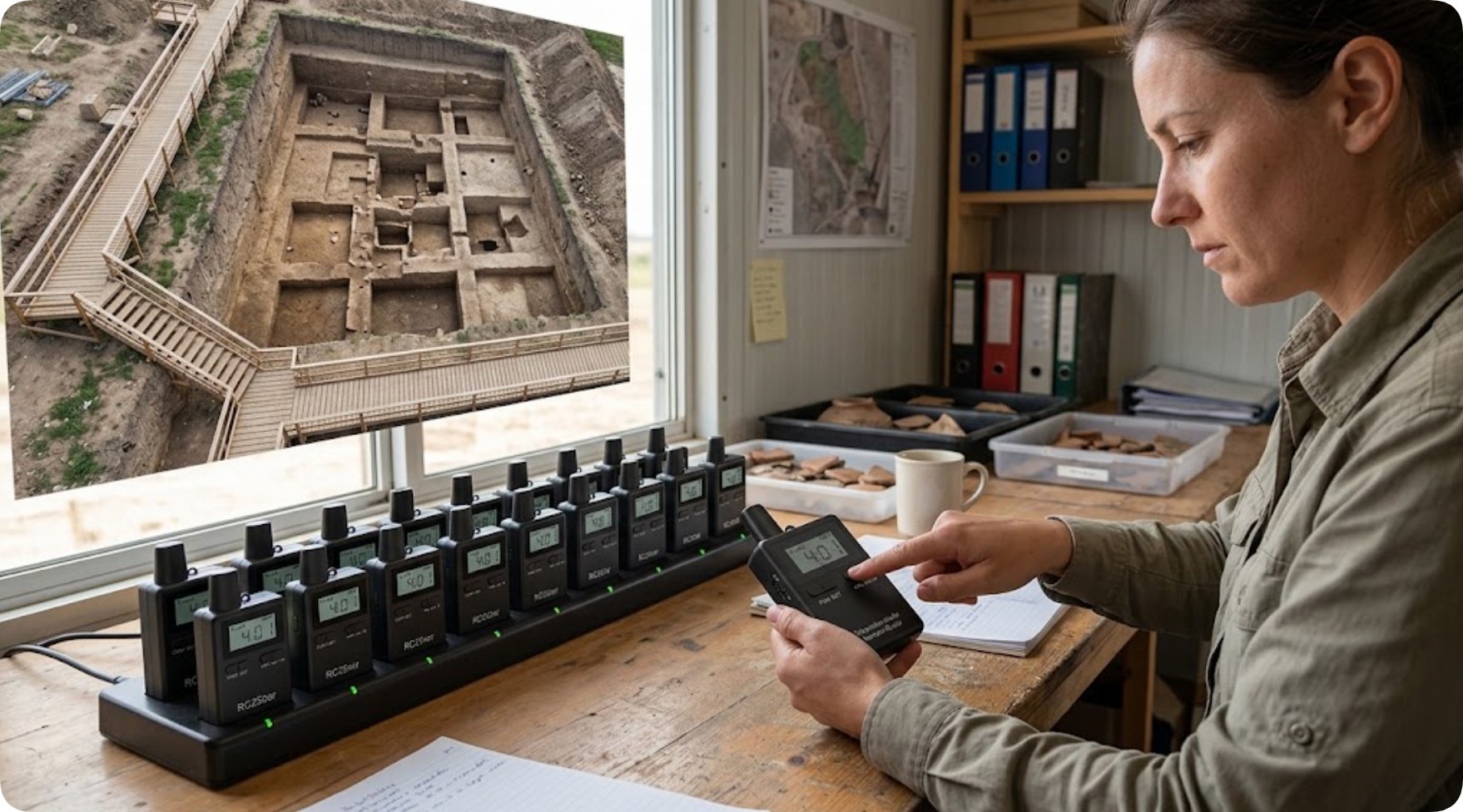
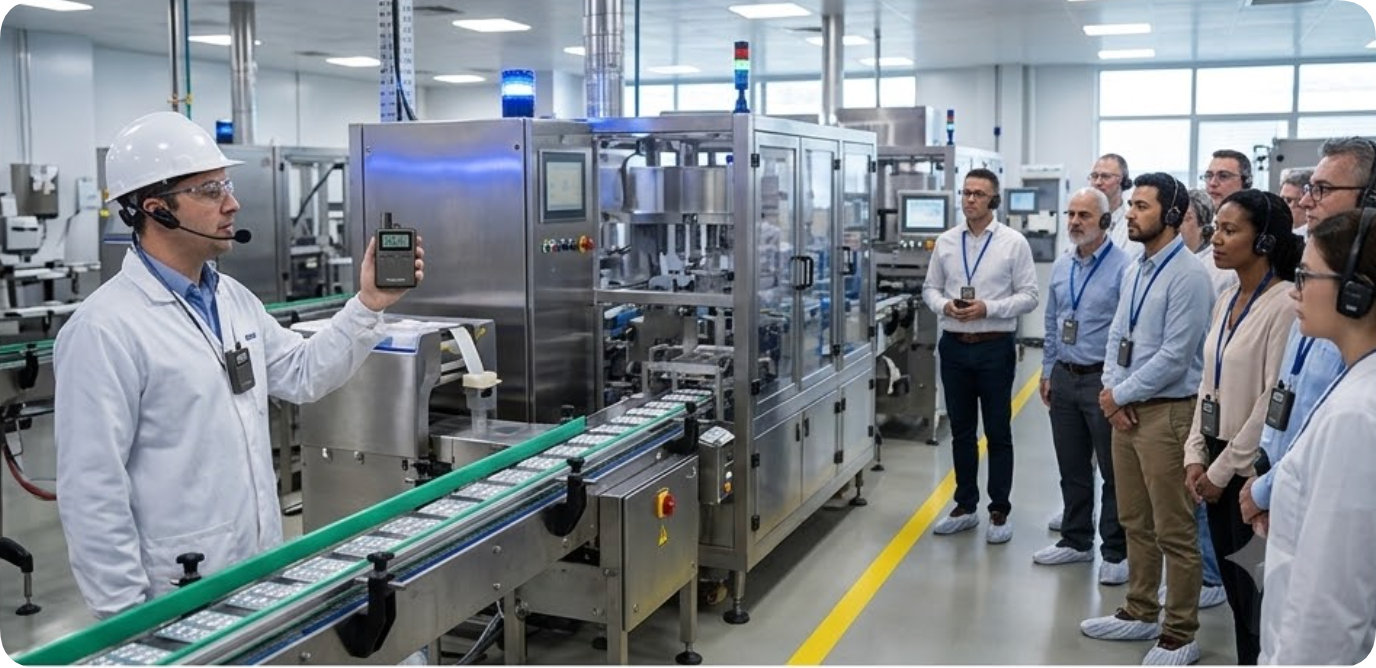
For standard pharma factory tours that accommodate 15 to 20 visitors at once, the RC2402 offers the best balance of battery life, weight, and ease of use. At 60 grams, it’s slightly heavier than the other models, but the trade-off is a robust 12-hour battery life and a larger, more intuitive control interface. The transmitter features a clear LCD screen that shows channel and battery status, making it easy for the guide to manage the tour without fumbling. The RC2402 is perfect for visiting packaging lines, filling stations, and warehouse areas where the group needs to stay together but still hear every word over conveyor noise. Deployment is simple: charge all units, set the transmitter to a specific channel, and have each receiver scan to that channel. I recommend labeling each receiver with a number for quick distribution. This model is part of the broader wireless tour guide system series, which includes multiple configurations for different group sizes. In my experience, the RC2402 handles the toughest production floor environments without skipping a beat.
Comparison Table: RC2501 vs RC2468 vs RC2402
| Model | Weight | Battery Life | Protection Level | Best Scenario |
|---|---|---|---|---|
| RC2501 | 48 g | 8 hours | IPX4 (splash resistant) | Indoor silent tours, cleanrooms, labs |
| RC2468 | 38 g | 8 hours | IPX5 (water resistant) | Outdoor campus tours, mixed terrain |
| RC2402 | 60 g | 12 hours | IPX4 (splash resistant) | Medium group tours, noisy production areas |
Frequently Asked Questions (FAQ)
Q: Why is the RC2501 recommended for indoor pharmaceutical cleanroom and laboratory tours?
A: The RC2501 integrates the transmitter directly into an ultra-lightweight headset (48g), allowing silent, discreet communication through cleanroom glass and sterile corridors without disturbing delicate laboratory processes.
Q: How does the RC2402 perform in noisy manufacturing and packaging floor environments?
A: Built for medium to large visitor groups (15-20 people), the RC2402 features an intuitive LCD screen, clear channel selection, and a robust 12-hour battery life to deliver uninterrupted audio over heavy conveyor and machinery noise.
How to Choose the Right Model for Your Pharma Factory Tour
Selecting the best wireless tour guide system depends on three key factors: the tour environment, group size, and duration. For indoor tours that require absolute silence—such as walking through sterile filling rooms or R&D labs—the RC2501 is unmatched because its integrated transmitter eliminates the need for a separate microphone. If your tour includes outdoor sections like campus walkways or solar panel installations, the RC2468’s ultra-light weight and water resistance make it the most practical choice. For larger groups visiting noisy production floors, the RC2402’s extended battery life and clear display give the guide full control without interruption. I always advise pharma facility managers to test the system in their actual environment before committing to a bulk order. Walk the tour route with a single transmitter and a few receivers to check for dead zones or interference from heavy machinery. Most issues can be resolved by repositioning the transmitter or selecting a different channel. If you’re still unsure, I recommend starting with the RC2468 as a versatile first purchase—it handles most scenarios well and can be expanded later with additional receivers. The key is matching the hardware to your specific workflow, not the other way around.
Final Thoughts and Next Steps
Deploying a wireless tour guide system in a pharmaceutical factory doesn’t have to be complicated. With the right model and a simple installation plan, you can provide every visitor with clear, uninterrupted audio while maintaining the strict hygiene and quiet standards your facility requires. I’ve seen these systems turn chaotic, noisy tours into organized, educational experiences that leave a lasting impression on clients and inspectors alike. To dive deeper into the technical specifications and see real-world deployment photos, I encourage you to explore our dedicated pharma factory tour solutions page. If you have questions about which model fits your specific layout or group size, our team is ready to help you configure a system that works from day one. Don’t hesitate to reach out—your next tour could be the smoothest one yet.