A leading China factory specializing in Wireless Tour Guide Systems, Church Audio Guides, and Translation Headphones with premium OEM/ODM solutions.

Tel:+86 18922879583

Email:tiger.wang@richitek.com

RC2468, RC2401 and RC2402: A Training Yard Counts Lessons Before It Buys Audio

An equestrian yard that budgets equipment the way it budgets feed does not start with feature lists. It starts with the ledger: how many lesson hours the school actually bills in a week, how many of those hours get diluted because the coach is repeating a correction for the riders at the back of the arena, and what a wasted minute costs when it is multiplied across a season. Viewed that way, a wireless coaching system is not a gadget purchase. It is a way of buying back instruction time that is currently being spent on volume, wind, and distance. The three systems in this article — the RC2468, the RC2401 and the RC2402 — sit in the value tier of the Richitek range, and the honest way to compare them is arithmetic, not adjectives.

Every figure below comes from the published specification table, and the table has been kept deliberately small: rows where all three systems post the identical number are stated once in the text and left out of the comparison, because a column of identical values only blurs the decision. Where the published data stops, the text says so plainly, because a purchase case built on unpublished numbers is not a case a yard can defend in its own accounts.

Counting Lessons, Not Features

The shared baseline first. All three systems transmit on the 2.4 GHz band at 2403 to 2483 MHz, all three carry 50 channels, all three are rated for 1 to 200 meters of transmission distance, and all three output 10 mW through a PLL-synthesized link. The transmitters are identical in weight at 59 g and identical in battery life at 10 hours. That uniformity matters for the buying decision: whichever system a yard picks, the coach's transmitter behaves the same, the arena coverage behaves the same, and the channel plan behaves the same. The money differences live entirely on the receiver side, where the three units part ways on battery life, weight, cell capacity, and charging hardware. Those four rows are where a lesson ledger finds its answer, and they are the subject of the rest of this article.

A Receiver Riders Forget They Are Wearing

The RC2468 receiver weighs 18 grams and is built as an ear-hook unit. That single published figure does more work in an equestrian yard than any range claim, because the receiver is worn by the rider, and the rider is working: posting at the trot, folding at the jump line, turning through a lateral exercise with a helmet strap already competing for space. A 50-gram unit on a lanyard drifts, swings and gets taken off; an 18-gram ear-hook tends to stay on, and a receiver that stays on is a receiver that carries instruction on every lap instead of half of them. The trade is published just as plainly: its 3.7V 300 mAh receiver cell is a third of the capacity fitted in the other two units, and the receiver is rated at approximately 8 hours per charge against 20 hours for its stablemates. The RC2468 transmitter runs 10 hours on a 3.7V 1500 mAh pack and charges over USB at 5V 1A, while the receivers come in black only, with multi-color transmitters available on volume orders. For a yard that runs one teaching block per day and recharges overnight, the 8-hour figure is not a limitation at all — it is the smallest, least intrusive receiver in the range at the lightest possible cost per unit.
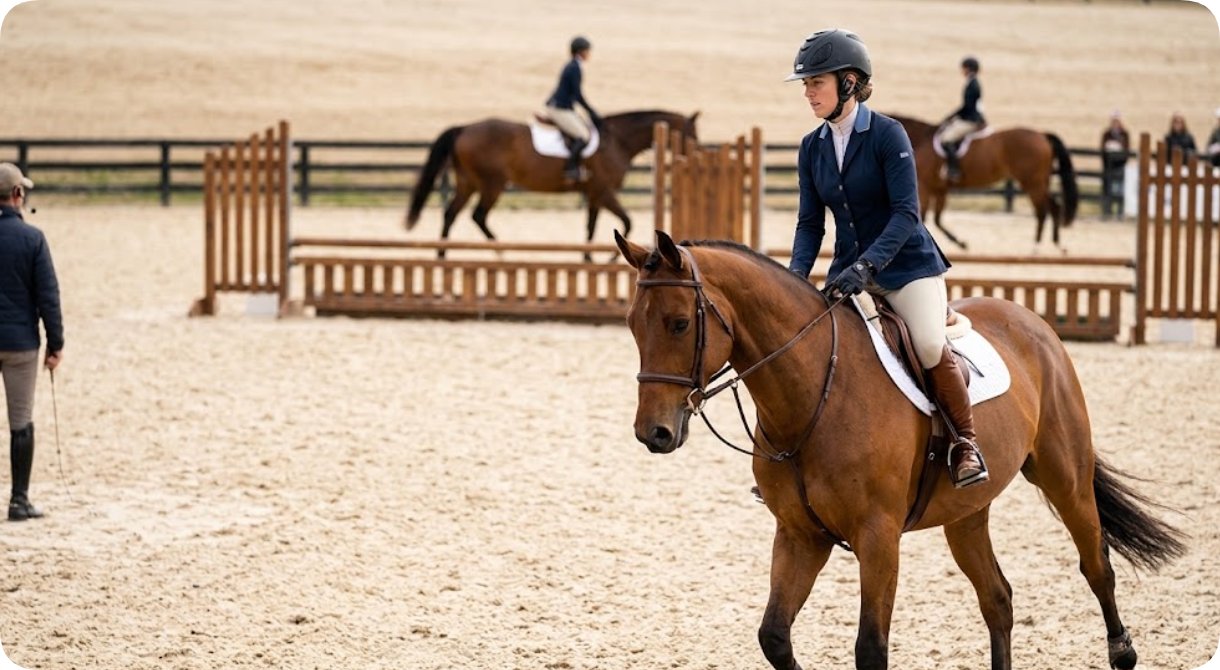
RC2468-equestrian_training

✅ The Standard Unit, Bought by the Crate

The RC2401 is the baseline 2.4G system of the range, and its specification reads like a purchasing department's checklist: 50 channels, a 20-hour receiver on a 3.7V 1000 mAh cell, a 50-gram receiver, a 10-hour transmitter, and DC-port charging. Nothing on the list is remarkable, and that is the point. A yard equipping a whole school — twelve receivers for a group lesson program, spares for the ones that end up in a grooming stall, replacements for the ones that ride away in a saddle bag — buys predictability. The 20-hour receiver figure is the one that earns its place in the ledger: a unit charged on Saturday evening still has charge for the Sunday block and the Monday morning set, which means the charging routine can live on a fixed weekly rhythm instead of depending on someone plugging in after every session. Multi-color options on both transmitters and receivers are available on volume orders, which sounds cosmetic until a yard color-codes fleets by instructor or by ring and stops losing track of whose unit is whose.
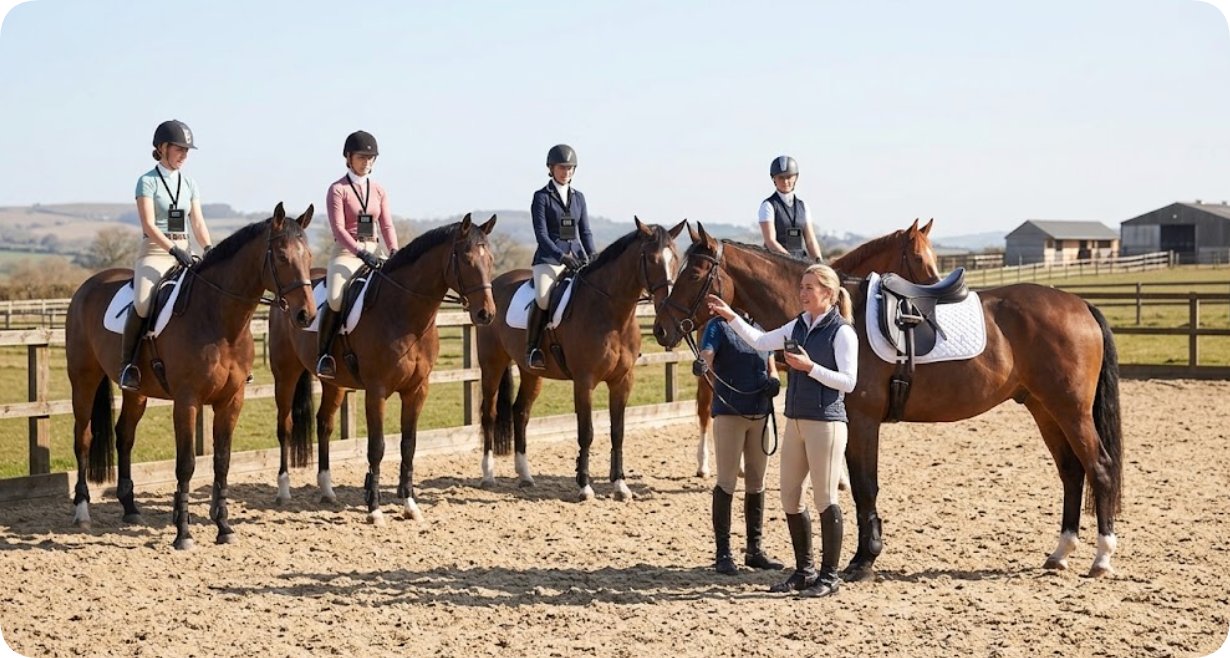
RC2401-equestrian_training

Where Two Catalog Rows Converge

The RC2402 deserves an honest paragraph, because the published table gives it almost the same numbers as the RC2401: the same 2.4 GHz band, the same 50 channels, the same 10 mW output over the same 1 to 200 meter PLL link, the same 10-hour transmitter and 20-hour, 3.7V 1000 mAh, 50-gram receiver, the same DC-port charging, and multi-color options on both ends for volume buyers. The catalog lists it as a basic 2.4G standard system for regular scenes, and the specification does not split it from the RC2401 on any electrical row. A yard comparing the two should therefore stop reading specifications and start reading quotations: unit price at the order quantity involved, lead time, and what the volume customization terms cover. In ROI arithmetic, two units with identical published hardware are the same machine at whatever price the invoice states, and pretending a difference exists where the table shows none is how equipment budgets get padded. Where a supplier quote separates them, that quote — not the spec sheet — is the number the ledger should carry.
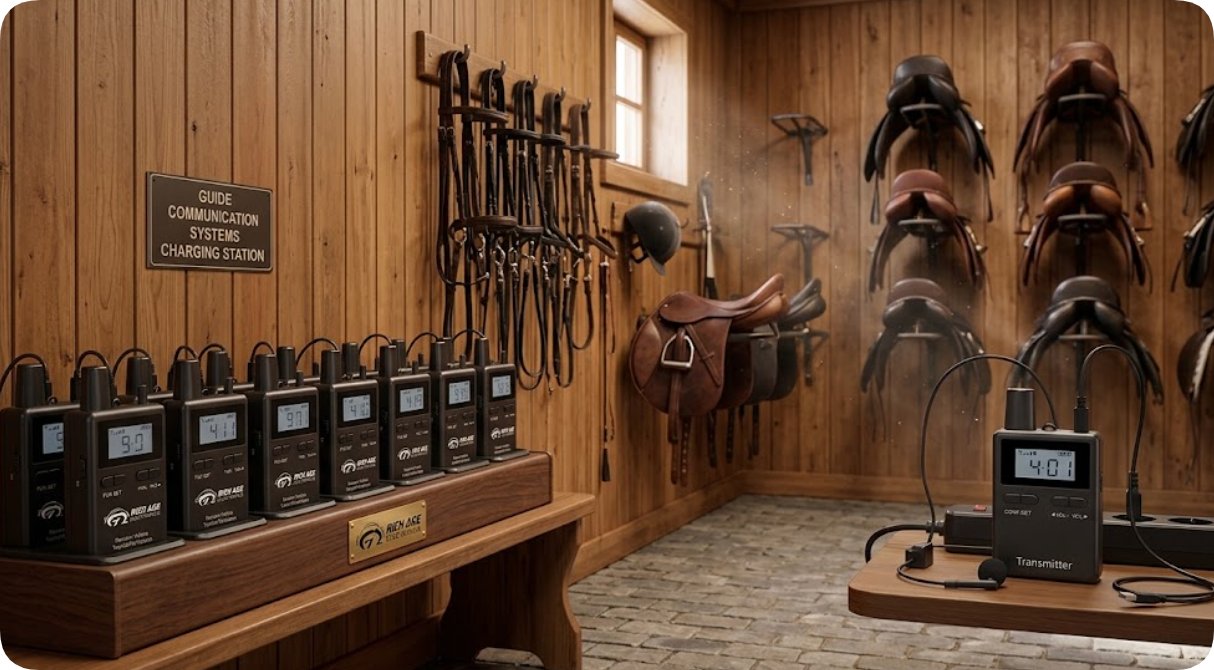
RC2402-equestrian_training

🔋 One Lesson Day, Two Battery Stories

Battery economics are where this trio genuinely splits, and the published numbers make the split exact. The RC2468 receiver runs approximately 8 hours from 3.7V 300 mAh; the RC2401 and RC2402 receivers run 20 hours from 3.7V 1000 mAh. For a yard billing one block of lessons per day, both stories end the same way — every receiver goes back on charge at night. The difference appears when the schedule stretches: a weekend clinic that runs a morning block, an afternoon block and an evening session pushes past the 8-hour mark on the RC2468, so the yard either rotates a charged spare set into service or accepts a mid-afternoon charge pause, while the 20-hour units simply continue. Charging hardware follows the same logic. The RC2468 charges over USB at 5V 1A, which means the same multi-port USB chargers a yard already owns can service a fleet, while the RC2401 and RC2402 use DC ports, which in practice means the chargers ship with the system and live in the tack room as dedicated hardware. Neither arrangement is free; one spends USB ports the facility already has, the other spends shelf space and a fixed charger count. The honest entry in the ledger is that receiver battery capacity is the single biggest comfort difference in this trio, and it is bought with grams: 18 grams and 8 hours, or 50 grams and 20 hours.

Four Yard Schedules, Four Fits

The same three systems sort differently depending on how the school's week is built, so it is worth walking four common schedules. A private-lesson yard running one-on-one or two-rider sessions fits the RC2468 cleanly: few receivers per day, short blocks, and a rider whose own comfort is the product being sold — an 18-gram ear-hook is invisible through a full flatwork set, and the nightly USB recharge matches a yard that already charges radios, cameras and clipper batteries at the same bench. A group-lesson academy running five or six riders per block and three or four blocks per day is the RC2401's home ground: 20-hour receivers survive the whole teaching day without a charging decision, the DC-port chargers sit in one fixed bay in the tack room, and the fleet discipline of returning every unit to the bay at close of business becomes the single habit the whole system runs on. A sales-and-trial operation, where prospective buyers ride horses with a receiver so they can hear the sales rider's comments, values the RC2468 differently — the ear-hook never fights a borrowed helmet, and a black-only receiver looks neutral on every customer. A weekend-clinic venue that hosts visiting instructors needs the 20-hour story most of all, because visiting coaches do not know the yard's charging routine, and a receiver that cannot reach the end of the day produces exactly the dead-air minute this whole purchase exists to remove. In all four schedules the transmitter side is a constant: 10 hours per charge, 59 grams in the hand, and a 200-meter radius that no school arena or outdoor ring will outrun.

What Each Seat Costs in Hardware

The table below carries only the rows where the three systems differ. Everything identical — band, channels, output power, distance, transmitter weight and battery life — has already been stated once and applies to all three equally.

RowRC2468RC2401RC2402
Receiver battery lifeApprox. 8 hours20 hours20 hours
Receiver weight18 g, ear-hook50 g50 g
Receiver battery3.7V 300 mAh3.7V 1000 mAh3.7V 1000 mAh
Charging portUSB, 5V 1ADC portDC port
Receiver color optionsBlack onlyMulti-color, volume ordersMulti-color, volume orders

Read as a purchasing decision, the table says the yard is really choosing between two receiver philosophies with the same electronics underneath: the lightest wearable in the range, or the longer-running standard unit. Transmitter-side figures — 59 g, 10 hours, 3.7V 1500 mAh — are identical across all three and are listed here once so nobody pays twice for the same transmitter. The frequency response is also common property: transmitters cover 50 Hz to 200 kHz and receivers 50 Hz to 12 kHz on all three units, so voice intelligibility at the walk, trot and canter does not separate them either.

Reading Your Own Lesson Ledger

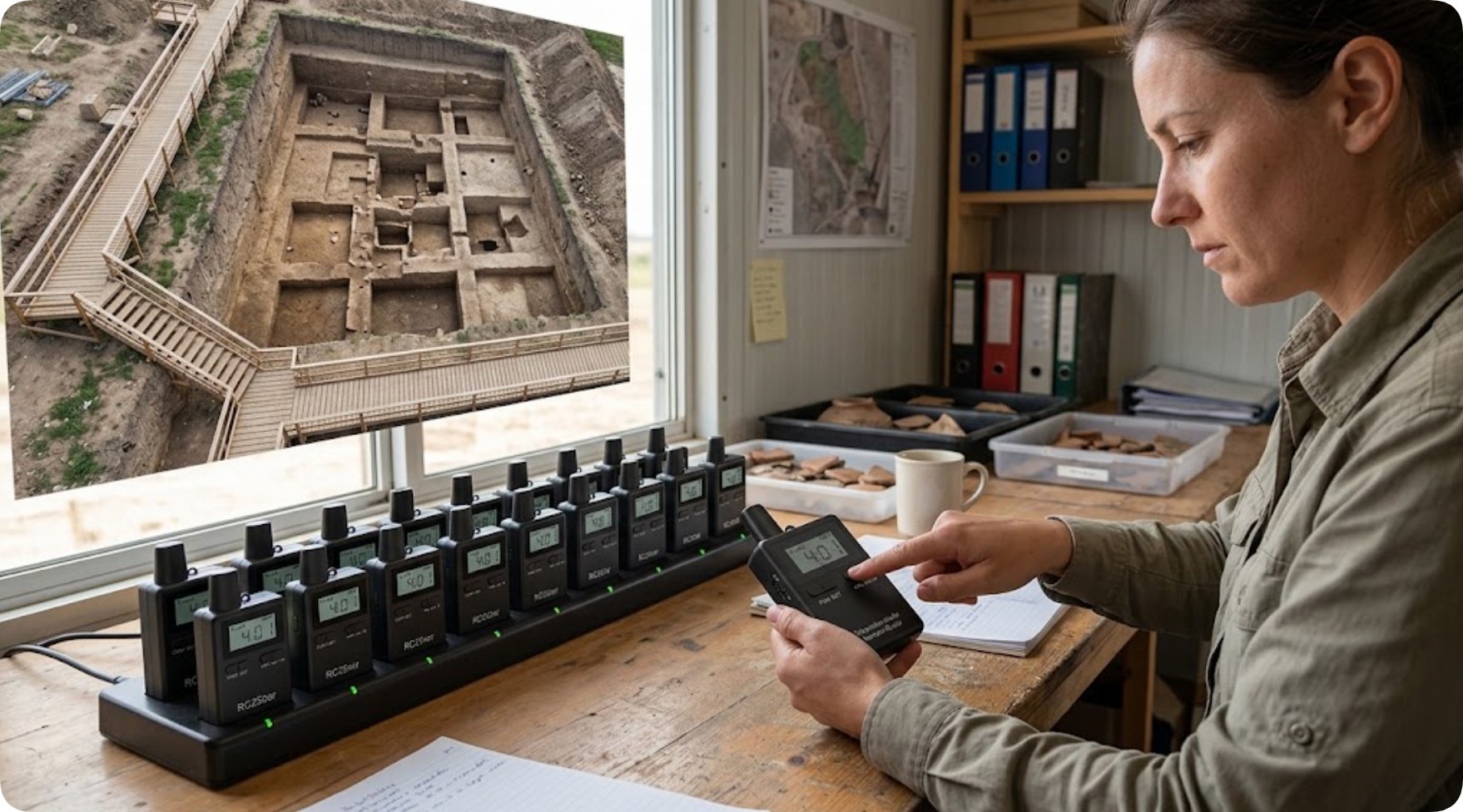
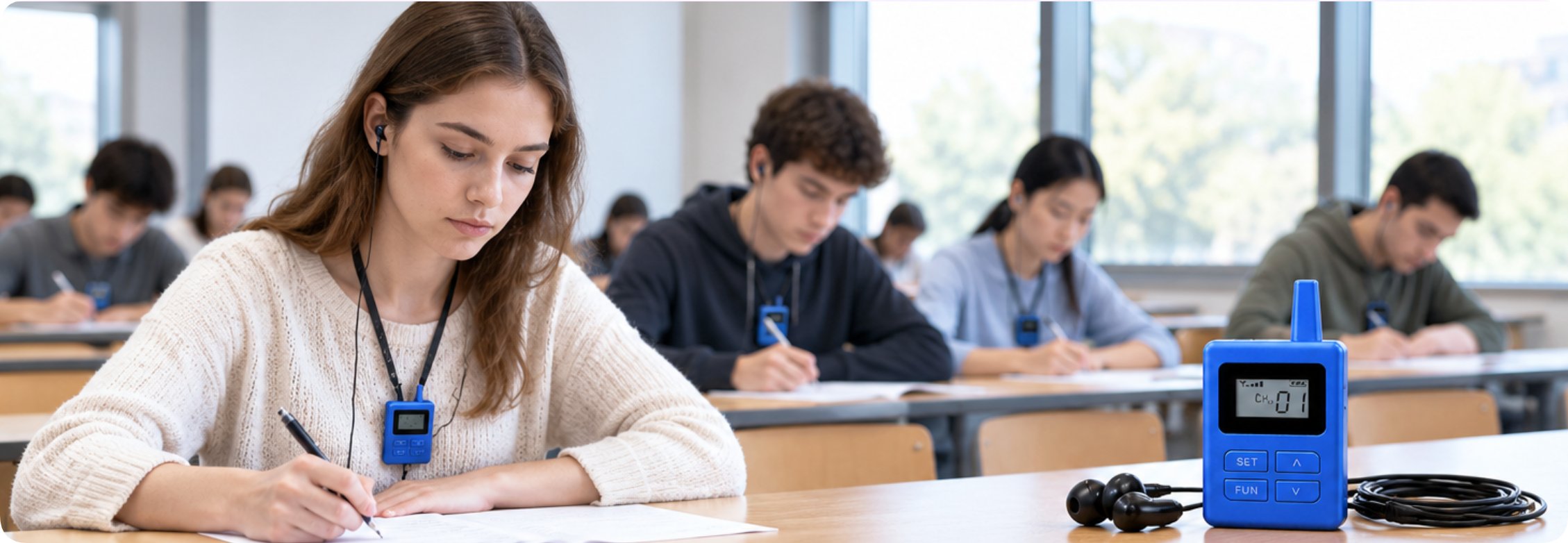
The arithmetic a yard should run takes three lines. First, wasted-instruction minutes: if a coach currently repeats every correction three times to cover eight riders and a receiver system cuts that to one pass, the recovered minutes convert directly into either shorter lessons or more riders per block, and either conversion is billable. Second, wear-through compliance: instruction that reaches the rider on every lap instead of when the lanyard swings close is worth more per unit than the invoice suggests, and the 18-gram ear-hook exists precisely for that line item. Third, charging logistics: 8-hour receivers mean a nightly routine and a spare-set policy for clinic days; 20-hour receivers mean a weekly routine and one less failure mode on back-to-back days. A worked sketch shows how small the numbers need to be before they matter: a school billing 24 lesson hours a week, with corrections repeated roughly twice per block, recovers something on the order of eight diluted minutes per day if every rider hears every pass the first time — and eight minutes per teaching day, sustained across a season, is the kind of sum that pays for a receiver fleet without any heroic assumptions. The precision of that sketch is deliberately rough; the point is that the inputs are the yard's own schedule, not a vendor's benchmark. Facilities weighing these three lines against the rest of the equestrian training audio range can compare configurations on the Richitek tour guide system line, and a quotation request should close the gap the specification table deliberately leaves open: unit price at fleet quantity, lead time, and volume customization terms.
Frequently Asked Questions

1. Is the RC2468's 8-hour receiver battery enough for a full teaching day?

The published rating is approximately 8 hours per charge. If the yard's teaching day fits inside that window and the receivers go back on charge overnight, the figure never becomes a constraint. It becomes one only on extended clinic days that run morning, afternoon and evening blocks, and the practical answer there is a rotating spare set, since USB charging at 5V 1A uses chargers the facility most likely already owns.

2. Why do the RC2401 and RC2402 look identical in the table?

Because on every published electrical row — band, 50 channels, 10 mW output, 1 to 200 meter PLL link, transmitter and receiver battery life, receiver weight and capacity, DC-port charging — the two systems post the same numbers. Both are catalogued as basic 2.4G standard systems. The comparison between them is decided by quotation terms and availability, not by hardware rows.

3. Does the 18-gram ear-hook design affect audio quality?

The published frequency response is the same across all three systems: transmitters at 50 Hz to 200 kHz and receivers at 50 Hz to 12 kHz, with the same 2.4 GHz PLL link behind them. The RC2468's difference is form factor and battery capacity, not the audio path, so voice intelligibility does not separate it from the 50-gram units.

4. Can all three systems run multiple groups in one arena?

Each system carries 50 channels on the 2403 to 2483 MHz band with a 1 to 200 meter range, so multiple coach-and-group sets can operate on separate channels. What the specification does not publish is a tested limit for simultaneous groups in a specific arena, so that number should come from a site trial rather than from any brochure claim.

5. What should a volume order ask for beyond the specification?

Three items: unit pricing at the actual fleet quantity, lead time for the order size, and the volume customization terms — the catalog notes multi-color options for both transmitters and receivers on the RC2401 and RC2402, and multi-color transmitters with black-only receivers on the RC2468. Color-coding a fleet by instructor or ring is a logistics decision that costs nothing at quotation time and saves search time every week after delivery.


2026年10月16日 11:29
ꄘ click: 12

RC2468, RC2401 and RC2402: A Training Yard Counts Lessons Before It Buys Audio

time: 2026年10月16日 click:12

An equestrian yard that budgets equipment the way it budgets feed does not start with feature lists. It starts with the ledger: how many lesson hours the school actually bills in a week, how many of those hours get diluted because the coach is repeating a correction for the riders at the back of the arena, and what a wasted minute costs when it is multiplied across a season. Viewed that way, a wireless coaching system is not a gadget purchase. It is a way of buying back instruction time that is currently being spent on volume, wind, and distance. The three systems in this article — the RC2468, the RC2401 and the RC2402 — sit in the value tier of the Richitek range, and the honest way to compare them is arithmetic, not adjectives.

Every figure below comes from the published specification table, and the table has been kept deliberately small: rows where all three systems post the identical number are stated once in the text and left out of the comparison, because a column of identical values only blurs the decision. Where the published data stops, the text says so plainly, because a purchase case built on unpublished numbers is not a case a yard can defend in its own accounts.

Counting Lessons, Not Features

The shared baseline first. All three systems transmit on the 2.4 GHz band at 2403 to 2483 MHz, all three carry 50 channels, all three are rated for 1 to 200 meters of transmission distance, and all three output 10 mW through a PLL-synthesized link. The transmitters are identical in weight at 59 g and identical in battery life at 10 hours. That uniformity matters for the buying decision: whichever system a yard picks, the coach's transmitter behaves the same, the arena coverage behaves the same, and the channel plan behaves the same. The money differences live entirely on the receiver side, where the three units part ways on battery life, weight, cell capacity, and charging hardware. Those four rows are where a lesson ledger finds its answer, and they are the subject of the rest of this article.

A Receiver Riders Forget They Are Wearing

The RC2468 receiver weighs 18 grams and is built as an ear-hook unit. That single published figure does more work in an equestrian yard than any range claim, because the receiver is worn by the rider, and the rider is working: posting at the trot, folding at the jump line, turning through a lateral exercise with a helmet strap already competing for space. A 50-gram unit on a lanyard drifts, swings and gets taken off; an 18-gram ear-hook tends to stay on, and a receiver that stays on is a receiver that carries instruction on every lap instead of half of them. The trade is published just as plainly: its 3.7V 300 mAh receiver cell is a third of the capacity fitted in the other two units, and the receiver is rated at approximately 8 hours per charge against 20 hours for its stablemates. The RC2468 transmitter runs 10 hours on a 3.7V 1500 mAh pack and charges over USB at 5V 1A, while the receivers come in black only, with multi-color transmitters available on volume orders. For a yard that runs one teaching block per day and recharges overnight, the 8-hour figure is not a limitation at all — it is the smallest, least intrusive receiver in the range at the lightest possible cost per unit.

RC2468-equestrian_training

✅ The Standard Unit, Bought by the Crate

The RC2401 is the baseline 2.4G system of the range, and its specification reads like a purchasing department's checklist: 50 channels, a 20-hour receiver on a 3.7V 1000 mAh cell, a 50-gram receiver, a 10-hour transmitter, and DC-port charging. Nothing on the list is remarkable, and that is the point. A yard equipping a whole school — twelve receivers for a group lesson program, spares for the ones that end up in a grooming stall, replacements for the ones that ride away in a saddle bag — buys predictability. The 20-hour receiver figure is the one that earns its place in the ledger: a unit charged on Saturday evening still has charge for the Sunday block and the Monday morning set, which means the charging routine can live on a fixed weekly rhythm instead of depending on someone plugging in after every session. Multi-color options on both transmitters and receivers are available on volume orders, which sounds cosmetic until a yard color-codes fleets by instructor or by ring and stops losing track of whose unit is whose.

RC2401-equestrian_training

Where Two Catalog Rows Converge

The RC2402 deserves an honest paragraph, because the published table gives it almost the same numbers as the RC2401: the same 2.4 GHz band, the same 50 channels, the same 10 mW output over the same 1 to 200 meter PLL link, the same 10-hour transmitter and 20-hour, 3.7V 1000 mAh, 50-gram receiver, the same DC-port charging, and multi-color options on both ends for volume buyers. The catalog lists it as a basic 2.4G standard system for regular scenes, and the specification does not split it from the RC2401 on any electrical row. A yard comparing the two should therefore stop reading specifications and start reading quotations: unit price at the order quantity involved, lead time, and what the volume customization terms cover. In ROI arithmetic, two units with identical published hardware are the same machine at whatever price the invoice states, and pretending a difference exists where the table shows none is how equipment budgets get padded. Where a supplier quote separates them, that quote — not the spec sheet — is the number the ledger should carry.

RC2402-equestrian_training

🔋 One Lesson Day, Two Battery Stories

Battery economics are where this trio genuinely splits, and the published numbers make the split exact. The RC2468 receiver runs approximately 8 hours from 3.7V 300 mAh; the RC2401 and RC2402 receivers run 20 hours from 3.7V 1000 mAh. For a yard billing one block of lessons per day, both stories end the same way — every receiver goes back on charge at night. The difference appears when the schedule stretches: a weekend clinic that runs a morning block, an afternoon block and an evening session pushes past the 8-hour mark on the RC2468, so the yard either rotates a charged spare set into service or accepts a mid-afternoon charge pause, while the 20-hour units simply continue. Charging hardware follows the same logic. The RC2468 charges over USB at 5V 1A, which means the same multi-port USB chargers a yard already owns can service a fleet, while the RC2401 and RC2402 use DC ports, which in practice means the chargers ship with the system and live in the tack room as dedicated hardware. Neither arrangement is free; one spends USB ports the facility already has, the other spends shelf space and a fixed charger count. The honest entry in the ledger is that receiver battery capacity is the single biggest comfort difference in this trio, and it is bought with grams: 18 grams and 8 hours, or 50 grams and 20 hours.

Four Yard Schedules, Four Fits

The same three systems sort differently depending on how the school's week is built, so it is worth walking four common schedules. A private-lesson yard running one-on-one or two-rider sessions fits the RC2468 cleanly: few receivers per day, short blocks, and a rider whose own comfort is the product being sold — an 18-gram ear-hook is invisible through a full flatwork set, and the nightly USB recharge matches a yard that already charges radios, cameras and clipper batteries at the same bench. A group-lesson academy running five or six riders per block and three or four blocks per day is the RC2401's home ground: 20-hour receivers survive the whole teaching day without a charging decision, the DC-port chargers sit in one fixed bay in the tack room, and the fleet discipline of returning every unit to the bay at close of business becomes the single habit the whole system runs on. A sales-and-trial operation, where prospective buyers ride horses with a receiver so they can hear the sales rider's comments, values the RC2468 differently — the ear-hook never fights a borrowed helmet, and a black-only receiver looks neutral on every customer. A weekend-clinic venue that hosts visiting instructors needs the 20-hour story most of all, because visiting coaches do not know the yard's charging routine, and a receiver that cannot reach the end of the day produces exactly the dead-air minute this whole purchase exists to remove. In all four schedules the transmitter side is a constant: 10 hours per charge, 59 grams in the hand, and a 200-meter radius that no school arena or outdoor ring will outrun.

What Each Seat Costs in Hardware

The table below carries only the rows where the three systems differ. Everything identical — band, channels, output power, distance, transmitter weight and battery life — has already been stated once and applies to all three equally.

RowRC2468RC2401RC2402
Receiver battery lifeApprox. 8 hours20 hours20 hours
Receiver weight18 g, ear-hook50 g50 g
Receiver battery3.7V 300 mAh3.7V 1000 mAh3.7V 1000 mAh
Charging portUSB, 5V 1ADC portDC port
Receiver color optionsBlack onlyMulti-color, volume ordersMulti-color, volume orders

Read as a purchasing decision, the table says the yard is really choosing between two receiver philosophies with the same electronics underneath: the lightest wearable in the range, or the longer-running standard unit. Transmitter-side figures — 59 g, 10 hours, 3.7V 1500 mAh — are identical across all three and are listed here once so nobody pays twice for the same transmitter. The frequency response is also common property: transmitters cover 50 Hz to 200 kHz and receivers 50 Hz to 12 kHz on all three units, so voice intelligibility at the walk, trot and canter does not separate them either.

Reading Your Own Lesson Ledger

The arithmetic a yard should run takes three lines. First, wasted-instruction minutes: if a coach currently repeats every correction three times to cover eight riders and a receiver system cuts that to one pass, the recovered minutes convert directly into either shorter lessons or more riders per block, and either conversion is billable. Second, wear-through compliance: instruction that reaches the rider on every lap instead of when the lanyard swings close is worth more per unit than the invoice suggests, and the 18-gram ear-hook exists precisely for that line item. Third, charging logistics: 8-hour receivers mean a nightly routine and a spare-set policy for clinic days; 20-hour receivers mean a weekly routine and one less failure mode on back-to-back days. A worked sketch shows how small the numbers need to be before they matter: a school billing 24 lesson hours a week, with corrections repeated roughly twice per block, recovers something on the order of eight diluted minutes per day if every rider hears every pass the first time — and eight minutes per teaching day, sustained across a season, is the kind of sum that pays for a receiver fleet without any heroic assumptions. The precision of that sketch is deliberately rough; the point is that the inputs are the yard's own schedule, not a vendor's benchmark. Facilities weighing these three lines against the rest of the equestrian training audio range can compare configurations on the Richitek tour guide system line, and a quotation request should close the gap the specification table deliberately leaves open: unit price at fleet quantity, lead time, and volume customization terms.
Frequently Asked Questions

1. Is the RC2468's 8-hour receiver battery enough for a full teaching day?

The published rating is approximately 8 hours per charge. If the yard's teaching day fits inside that window and the receivers go back on charge overnight, the figure never becomes a constraint. It becomes one only on extended clinic days that run morning, afternoon and evening blocks, and the practical answer there is a rotating spare set, since USB charging at 5V 1A uses chargers the facility most likely already owns.

2. Why do the RC2401 and RC2402 look identical in the table?

Because on every published electrical row — band, 50 channels, 10 mW output, 1 to 200 meter PLL link, transmitter and receiver battery life, receiver weight and capacity, DC-port charging — the two systems post the same numbers. Both are catalogued as basic 2.4G standard systems. The comparison between them is decided by quotation terms and availability, not by hardware rows.

3. Does the 18-gram ear-hook design affect audio quality?

The published frequency response is the same across all three systems: transmitters at 50 Hz to 200 kHz and receivers at 50 Hz to 12 kHz, with the same 2.4 GHz PLL link behind them. The RC2468's difference is form factor and battery capacity, not the audio path, so voice intelligibility does not separate it from the 50-gram units.

4. Can all three systems run multiple groups in one arena?

Each system carries 50 channels on the 2403 to 2483 MHz band with a 1 to 200 meter range, so multiple coach-and-group sets can operate on separate channels. What the specification does not publish is a tested limit for simultaneous groups in a specific arena, so that number should come from a site trial rather than from any brochure claim.

5. What should a volume order ask for beyond the specification?

Three items: unit pricing at the actual fleet quantity, lead time for the order size, and the volume customization terms — the catalog notes multi-color options for both transmitters and receivers on the RC2401 and RC2402, and multi-color transmitters with black-only receivers on the RC2468. Color-coding a fleet by instructor or ring is a logistics decision that costs nothing at quotation time and saves search time every week after delivery.


×

Contact us

email:
name:
subject:
content: