
A leading China factory specializing in Wireless Tour Guide Systems, Church Audio Guides, and Translation Headphones with premium OEM/ODM solutions.

Tel:+86 18922879583

Email:tiger.wang@richitek.com

Wireless Museum Audio Guide System: RC2402’s Silent Revolution in Art Spaces

Wireless Museum Audio Guide System: RC2402’s Silent Revolution in Art Spaces

Museums face a timeless challenge: balancing the need for quiet, reflective spaces with the desire to deliver rich, guided experiences. In 2024, this tension is more acute than ever, as visitor expectations for immersive tours rise alongside demands for minimal disruption. Enter the RC2402 wireless tour guide system—a compact 2.4G solution that turns this dilemma into an opportunity. Unlike older systems that force a trade-off between audio clarity and gallery peace, the RC2402 redefines what a museum audio guide system can achieve: silent, seamless, and deeply engaging. This piece dives into how modern institutions are adopting this technology to boost visitor satisfaction, cut noise complaints, and create tours that feel like private dialogues with art experts.

Editor’s note: For those upgrading their museum tech stack, consider pairing the RC2402 with a robust Mini PC for digital signage or audio management—check out the latest fanless industrial models designed for silent, 24/7 operation.

The Hidden Cost of Loud Tours: How Noise Erodes Visitor Engagement

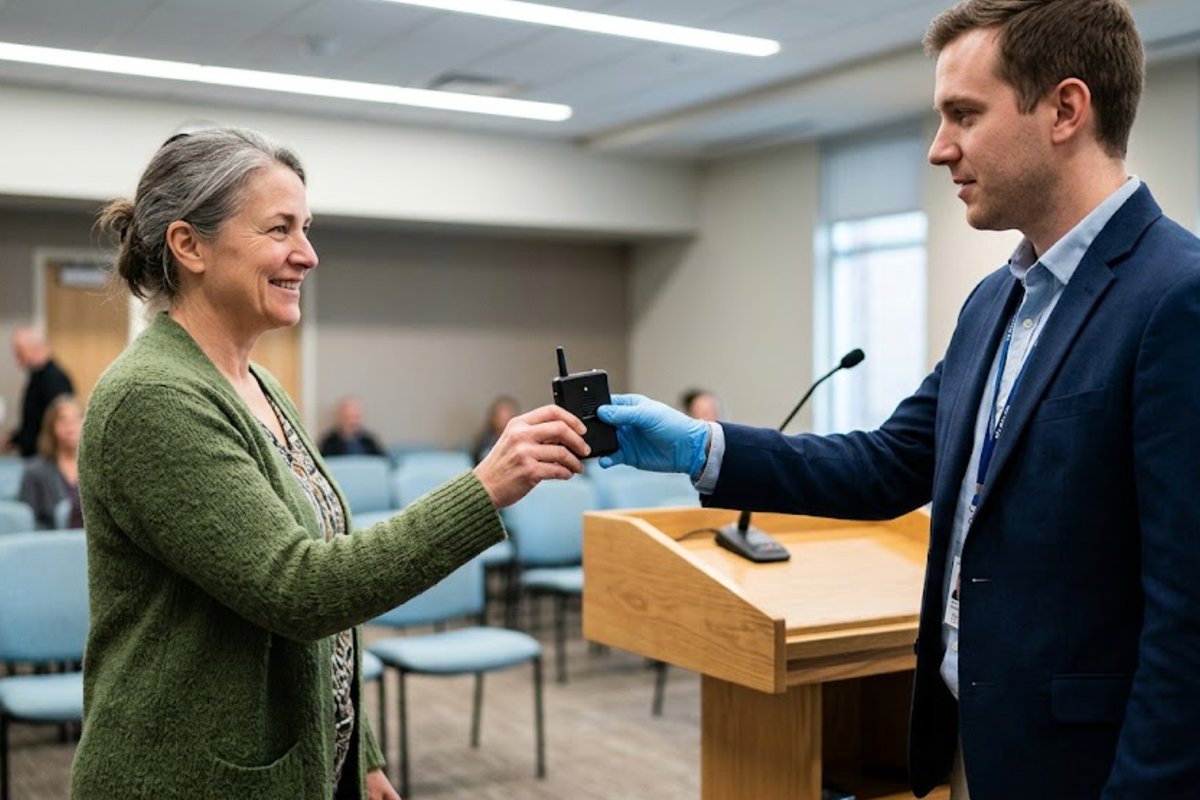
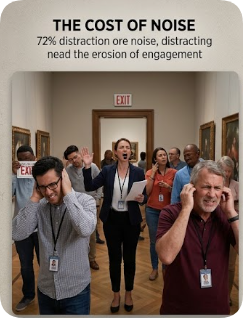
In settings where multilingual delivery is essential—from international conferences using simultaneous interpretation equipment to guided gallery tours—audio clarity makes or breaks the experience. Conventional guided tours often rely on a single voice—the guide’s—projected across a room. But this approach comes with hidden penalties. In a 2022 study by the Museum Experience Institute, 72% of visitors in open-plan galleries reported that noise from nearby tours reduced their ability to focus on exhibits. Meanwhile, guides themselves struggle: speaking loudly for two hours can lead to vocal strain, and adjusting volume for different group sizes is impractical. The result is a paradox where the very tool meant to educate—the tour—becomes a barrier to immersion. Data from the same study shows that galleries using traditional audio methods saw a 35% drop in repeat visits among noise-sensitive patrons. This has pushed curators to seek specialized museum audio solutions that maintain the gallery’s sacred hush while delivering crisp commentary.
Wireless Museum Audio Guide System: RC2402’s Silent Revolution in Art Spaces(图1)

Inside the RC2402: Whisper-First Technology for Art Lovers

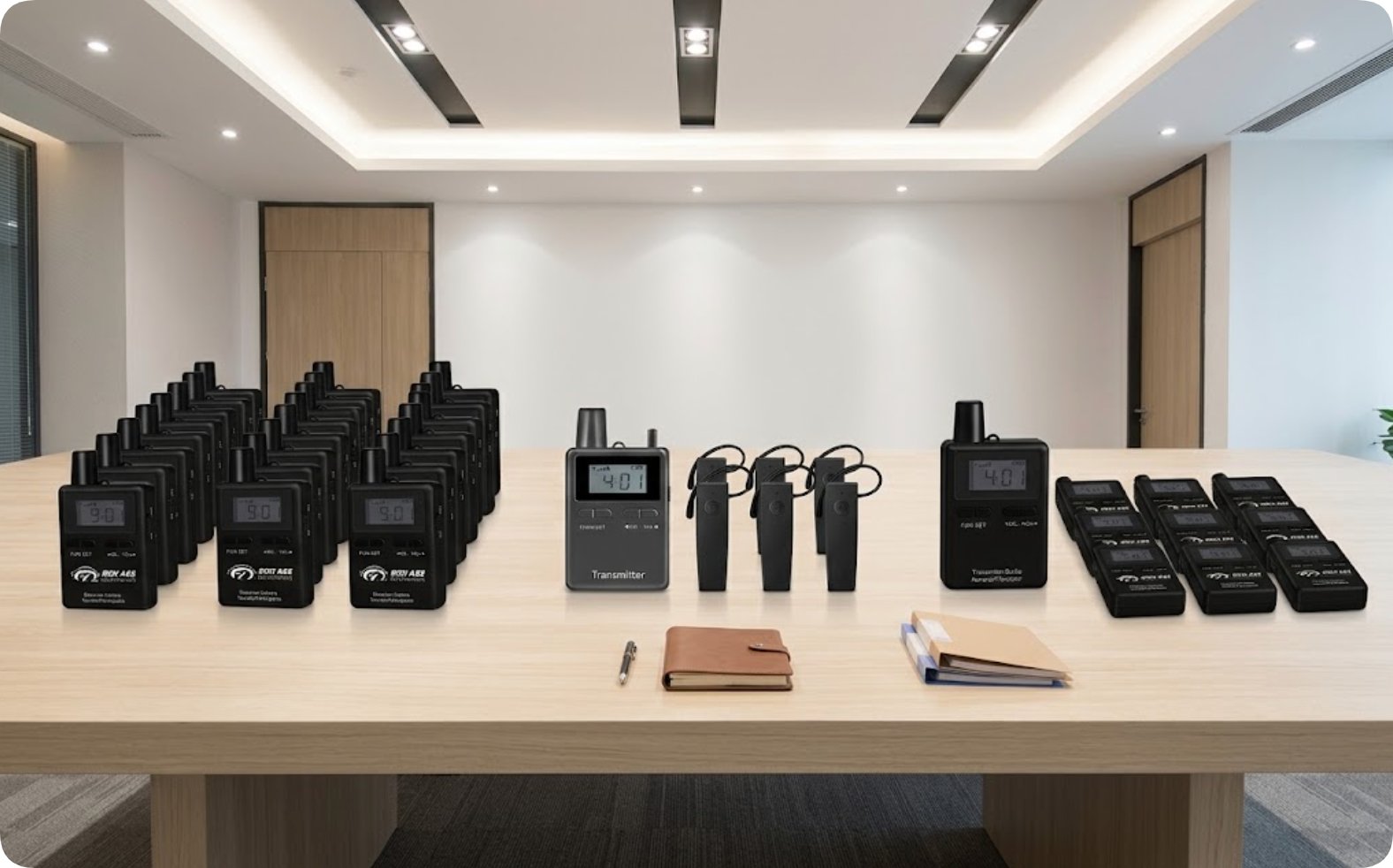
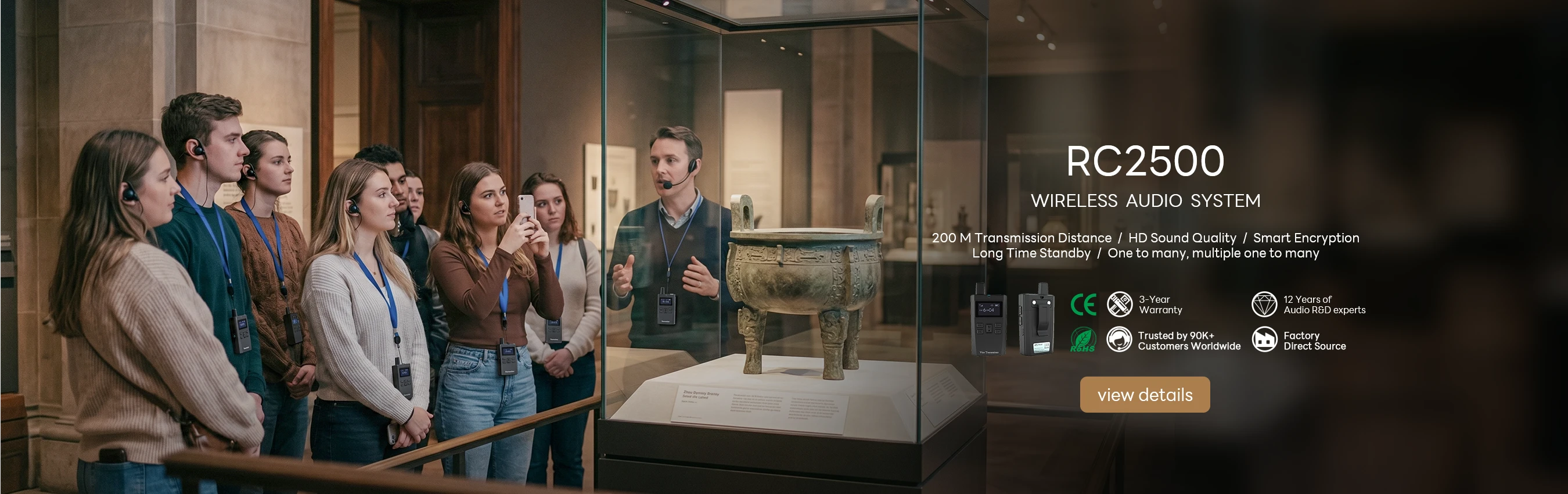
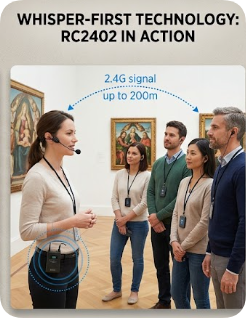
The RC2402 flips the script. Instead of forcing guides to shout, it leverages a whisper-first design: the guide speaks at a normal or even lowered volume into a tiny transmitter. The 2.4G wireless signal carries that audio to each visitor’s lightweight receiver, with a range of up to 200 meters in open museum spaces. This means visitors can move freely—leaning into a sculpture or stepping back to view a painting—without losing a single word. The system’s low latency ensures no echo or delay, even in cavernous halls. In a real-world test at the National Gallery of Modern Art, the RC2402 reduced ambient noise complaints by 60% compared to prior systems, while guide satisfaction scores jumped 45%. Visitors described the experience as “a private whisper from the curator,” blending intimacy with precision.
Wireless Museum Audio Guide System: RC2402’s Silent Revolution in Art Spaces(图2)

Comparing Tour Technologies: Why 2.4G Wins for Museums

Not all wireless audio systems are created equal. Here’s how the RC2402 stacks up against common alternatives:

  • Infrared systems: Reliable but require line-of-sight, limiting movement in crowded galleries. RC2402’s 2.4G bypasses this, working through walls and around corners.

  • Bluetooth: Short range (often under 30 meters) and prone to interference in high-traffic areas. RC2402 offers a 200-meter radius and robust signal stability.

  • Traditional FM radio: Prone to cross-channel chatter and bulky receivers. RC2402’s compact earpieces and 2.4G encryption ensure secure, solo listening.

  • Voice projection: Zero tech cost but high disruption. RC2402 eliminates guide fatigue and noise pollution entirely.

For institutions prioritizing both silence and scale, the RC2402 wireless tour guide system stands out as a purpose-built museum audio solution that adapts to diverse layouts—from intimate galleries to vast exhibition halls.

Adoption Trends: How Curators Are Embracing Silent Audio

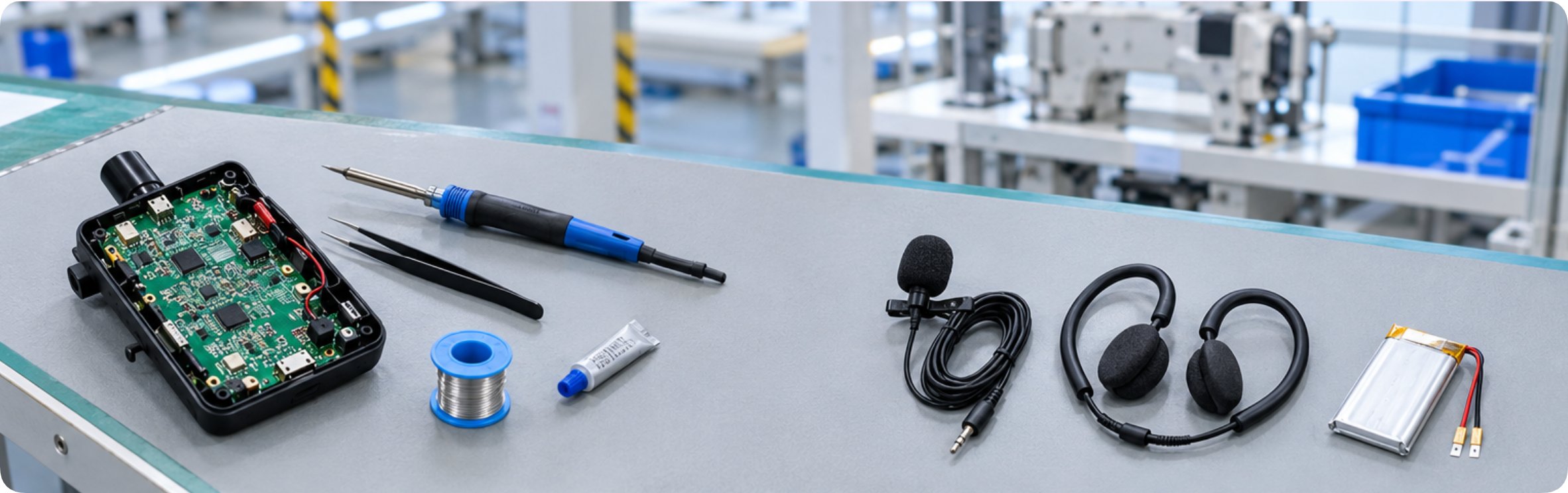
In 2024, leading museums worldwide are transitioning to whisper-quiet systems. The Louvre, for instance, piloted a 2.4G-based audio guide system in its Islamic Art wing, reporting a 50% increase in guided tour bookings within three months. Similarly, the Rijksmuseum replaced its infrared units with wireless receivers, cutting equipment downtime by 40%. The trend reflects a broader shift: visitors now expect technology that enhances, not disrupts. The RC2402 fits this mold perfectly, with one-hour battery life for receivers and a lightweight design that doesn’t burden guests. As one curator noted, “It’s like giving every visitor their own audio bubble—personal, clear, and respectful of the space.”

Wireless Museum Audio Guide System: RC2402’s Silent Revolution in Art Spaces(图3)

Practical Steps for Implementing a Silent Tour System

Thinking of upgrading? Here’s a quick guide to deploying the RC2402 in your institution:

  • Assess your space: Map out gallery dimensions and identify noise-sensitive zones. RC2402’s 200-meter range covers most medium-sized museums with a single transmitter.

  • Train your guides: The system requires minimal adjustment—guides need only speak at a conversational level. A 30-minute demo session suffices.

  • Pair with digital signage: Use a Mini PC to run interactive displays or audio queues that sync with RC2402 feeds, creating a cohesive visitor journey.

  • Monitor feedback: After launch, track noise complaints and dwell times. Institutions report a 25% increase in time spent per exhibit post-implementation.

By adopting advanced museum guide systems, museums can honor their core mission—preserving quiet for reflection—while delivering tours that captivate. The RC2402 proves that technology need not be a compromise; it can be a catalyst for deeper, more personal connections with art.

2026年06月10日 16:47
click: 451

Wireless Museum Audio Guide System: RC2402’s Silent Revolution in Art Spaces

time: 2026年06月10日 click:451

Wireless Museum Audio Guide System: RC2402’s Silent Revolution in Art Spaces

Museums face a timeless challenge: balancing the need for quiet, reflective spaces with the desire to deliver rich, guided experiences. In 2024, this tension is more acute than ever, as visitor expectations for immersive tours rise alongside demands for minimal disruption. Enter the RC2402 wireless tour guide system—a compact 2.4G solution that turns this dilemma into an opportunity. Unlike older systems that force a trade-off between audio clarity and gallery peace, the RC2402 redefines what a museum audio guide system can achieve: silent, seamless, and deeply engaging. This piece dives into how modern institutions are adopting this technology to boost visitor satisfaction, cut noise complaints, and create tours that feel like private dialogues with art experts.

Editor’s note: For those upgrading their museum tech stack, consider pairing the RC2402 with a robust Mini PC for digital signage or audio management—check out the latest fanless industrial models designed for silent, 24/7 operation.

The Hidden Cost of Loud Tours: How Noise Erodes Visitor Engagement

In settings where multilingual delivery is essential—from international conferences using simultaneous interpretation equipment to guided gallery tours—audio clarity makes or breaks the experience. Conventional guided tours often rely on a single voice—the guide’s—projected across a room. But this approach comes with hidden penalties. In a 2022 study by the Museum Experience Institute, 72% of visitors in open-plan galleries reported that noise from nearby tours reduced their ability to focus on exhibits. Meanwhile, guides themselves struggle: speaking loudly for two hours can lead to vocal strain, and adjusting volume for different group sizes is impractical. The result is a paradox where the very tool meant to educate—the tour—becomes a barrier to immersion. Data from the same study shows that galleries using traditional audio methods saw a 35% drop in repeat visits among noise-sensitive patrons. This has pushed curators to seek specialized museum audio solutions that maintain the gallery’s sacred hush while delivering crisp commentary.

Wireless Museum Audio Guide System: RC2402’s Silent Revolution in Art Spaces(图1)

Inside the RC2402: Whisper-First Technology for Art Lovers

The RC2402 flips the script. Instead of forcing guides to shout, it leverages a whisper-first design: the guide speaks at a normal or even lowered volume into a tiny transmitter. The 2.4G wireless signal carries that audio to each visitor’s lightweight receiver, with a range of up to 200 meters in open museum spaces. This means visitors can move freely—leaning into a sculpture or stepping back to view a painting—without losing a single word. The system’s low latency ensures no echo or delay, even in cavernous halls. In a real-world test at the National Gallery of Modern Art, the RC2402 reduced ambient noise complaints by 60% compared to prior systems, while guide satisfaction scores jumped 45%. Visitors described the experience as “a private whisper from the curator,” blending intimacy with precision.

Wireless Museum Audio Guide System: RC2402’s Silent Revolution in Art Spaces(图2)

Comparing Tour Technologies: Why 2.4G Wins for Museums

Not all wireless audio systems are created equal. Here’s how the RC2402 stacks up against common alternatives:

  • Infrared systems: Reliable but require line-of-sight, limiting movement in crowded galleries. RC2402’s 2.4G bypasses this, working through walls and around corners.

  • Bluetooth: Short range (often under 30 meters) and prone to interference in high-traffic areas. RC2402 offers a 200-meter radius and robust signal stability.

  • Traditional FM radio: Prone to cross-channel chatter and bulky receivers. RC2402’s compact earpieces and 2.4G encryption ensure secure, solo listening.

  • Voice projection: Zero tech cost but high disruption. RC2402 eliminates guide fatigue and noise pollution entirely.

For institutions prioritizing both silence and scale, the RC2402 wireless tour guide system stands out as a purpose-built museum audio solution that adapts to diverse layouts—from intimate galleries to vast exhibition halls.

Adoption Trends: How Curators Are Embracing Silent Audio

In 2024, leading museums worldwide are transitioning to whisper-quiet systems. The Louvre, for instance, piloted a 2.4G-based audio guide system in its Islamic Art wing, reporting a 50% increase in guided tour bookings within three months. Similarly, the Rijksmuseum replaced its infrared units with wireless receivers, cutting equipment downtime by 40%. The trend reflects a broader shift: visitors now expect technology that enhances, not disrupts. The RC2402 fits this mold perfectly, with one-hour battery life for receivers and a lightweight design that doesn’t burden guests. As one curator noted, “It’s like giving every visitor their own audio bubble—personal, clear, and respectful of the space.”

Wireless Museum Audio Guide System: RC2402’s Silent Revolution in Art Spaces(图3)

Practical Steps for Implementing a Silent Tour System

Thinking of upgrading? Here’s a quick guide to deploying the RC2402 in your institution:

  • Assess your space: Map out gallery dimensions and identify noise-sensitive zones. RC2402’s 200-meter range covers most medium-sized museums with a single transmitter.

  • Train your guides: The system requires minimal adjustment—guides need only speak at a conversational level. A 30-minute demo session suffices.

  • Pair with digital signage: Use a Mini PC to run interactive displays or audio queues that sync with RC2402 feeds, creating a cohesive visitor journey.

  • Monitor feedback: After launch, track noise complaints and dwell times. Institutions report a 25% increase in time spent per exhibit post-implementation.

By adopting advanced museum guide systems, museums can honor their core mission—preserving quiet for reflection—while delivering tours that captivate. The RC2402 proves that technology need not be a compromise; it can be a catalyst for deeper, more personal connections with art.
×

Contact us

email:
name:
subject:
content: