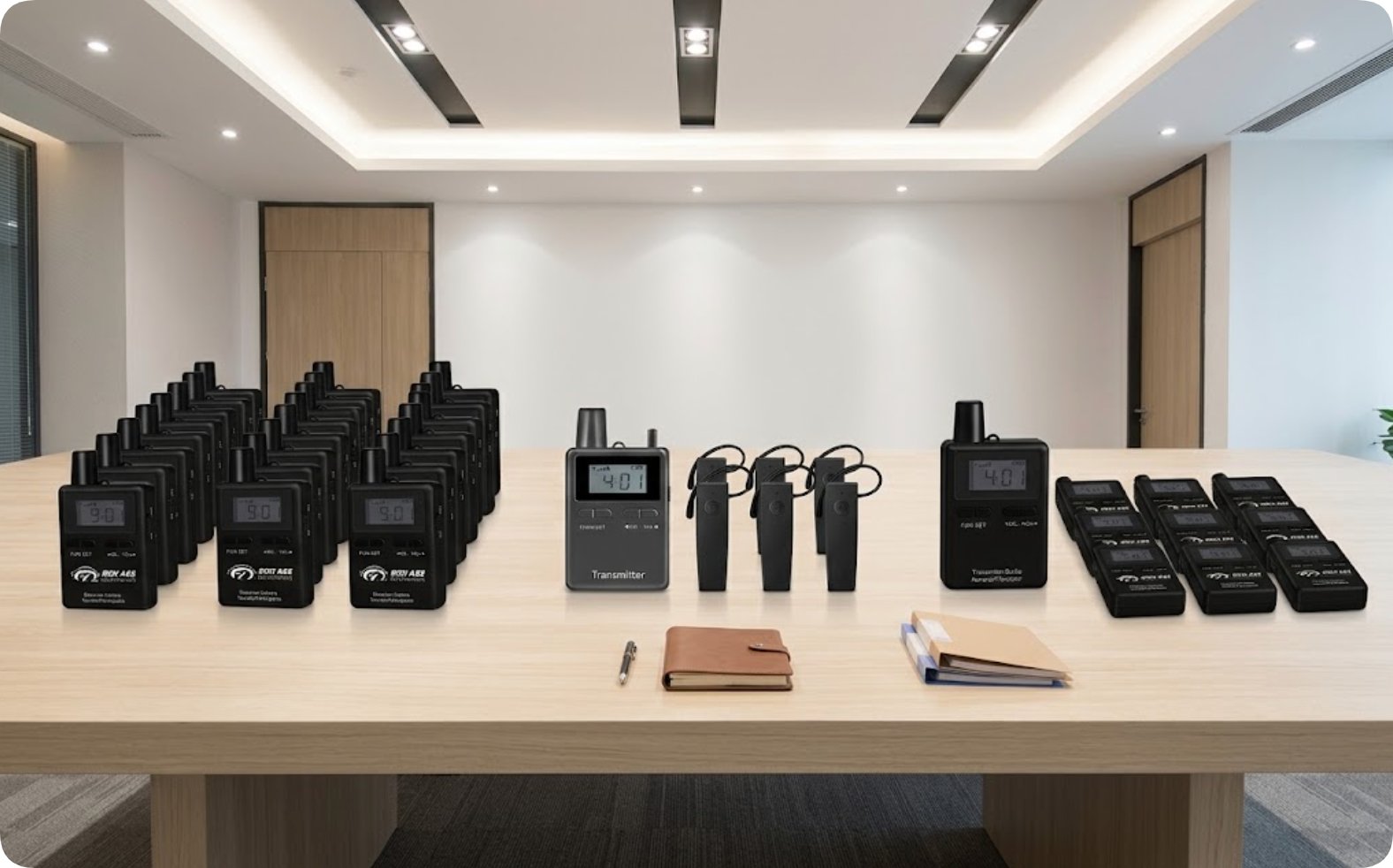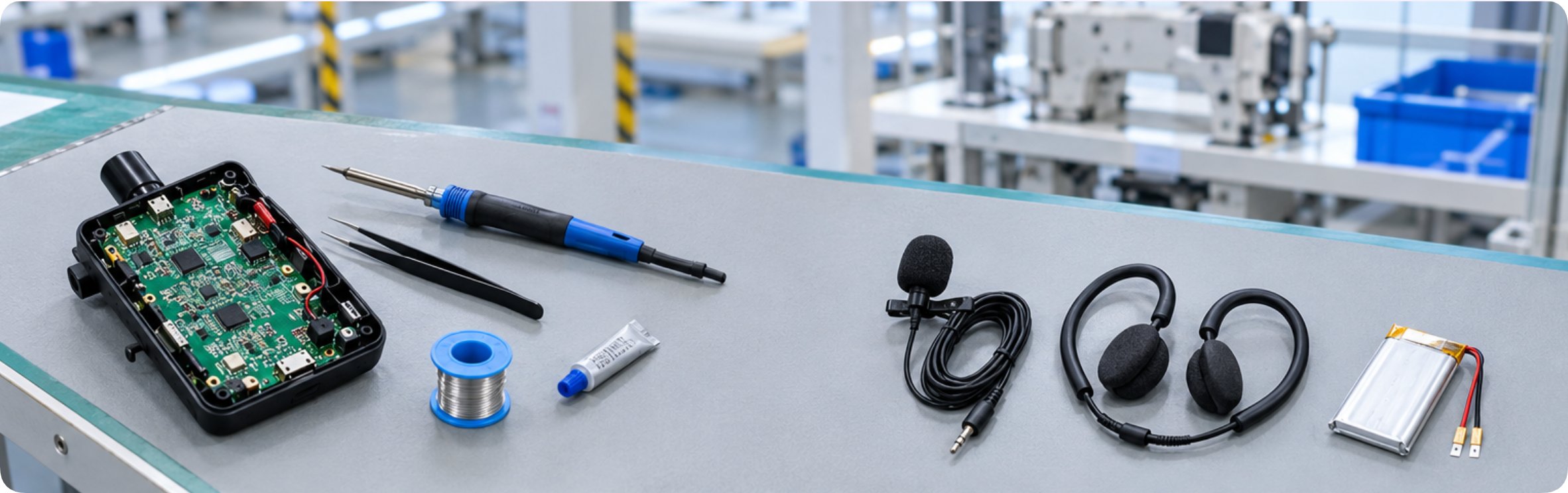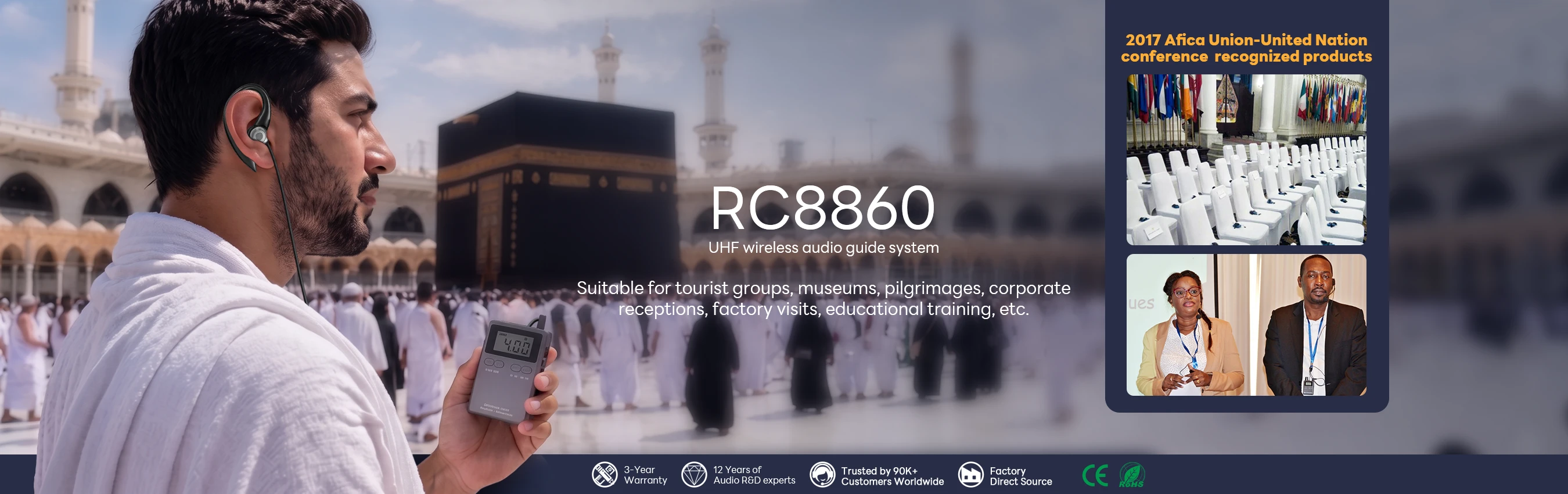

A leading China factory specializing in Wireless Tour Guide Systems, Church Audio Guides, and Translation Headphones with premium OEM/ODM solutions.

Tel:+86 18922879583

Email:tiger.wang@richitek.com

From Whispered Hints to Silent Clarity: The Quiet Revolution of the Wireless Tour Guide System in Art Galleries

From Whispered Hints to Silent Clarity: The Quiet Revolution of the Wireless Tour Guide System in Art Galleries

I have spent the better part of the last decade observing how technology reshapes the visitor experience in silent spaces. In my opinion, the art gallery is the most demanding environment for audio communication. The paradox is brutal: you want to share deep context about a Rothko or a Rembrandt, but the moment your voice rises above a whisper, you shatter the meditative state of every other patron. This is why a dedicated wireless tour guide system is not a luxury—it is a necessity for modern curation. The technology has evolved from clunky, wired neck loops to sleek, digital transceivers that operate in the 2.4G spectrum, allowing for crystal-clear audio without disturbing the sacred hush of the gallery. We are moving past the era of "shushing" groups; we are entering an era of silent, immersive storytelling. For institutions looking to balance revenue from guided tours with the need for a contemplative environment, I strongly recommend exploring our dedicated gallery quiet solutions.

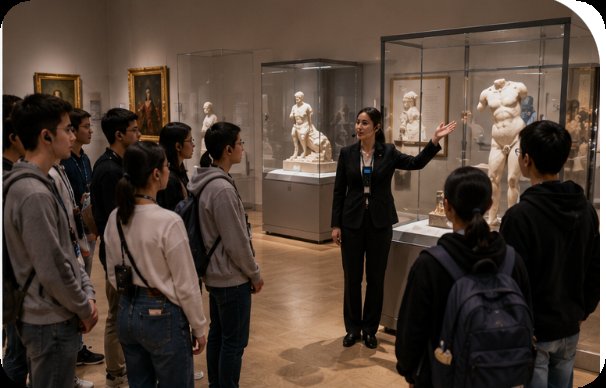
When you walk into a gallery that has truly mastered the art of the quiet tour, you notice something almost magical: groups of visitors moving in unison, each wearing a small receiver, their eyes locked on the canvas while a docent speaks in a normal, unhurried tone. No one is straining to hear. No one is being shushed. The Wireless Tour Guide System has become the invisible thread that connects the curator's intention to the visitor's understanding, without breaking the silence that makes art galleries sacred spaces. I have tested dozens of systems across museums in Europe and Asia, and the ones that truly work are the ones you forget you are wearing. That is the benchmark we should all be aiming for.

RC9150: The High-End 2.4G Wireless Audio/Radio Guide System for Silent Interpretation

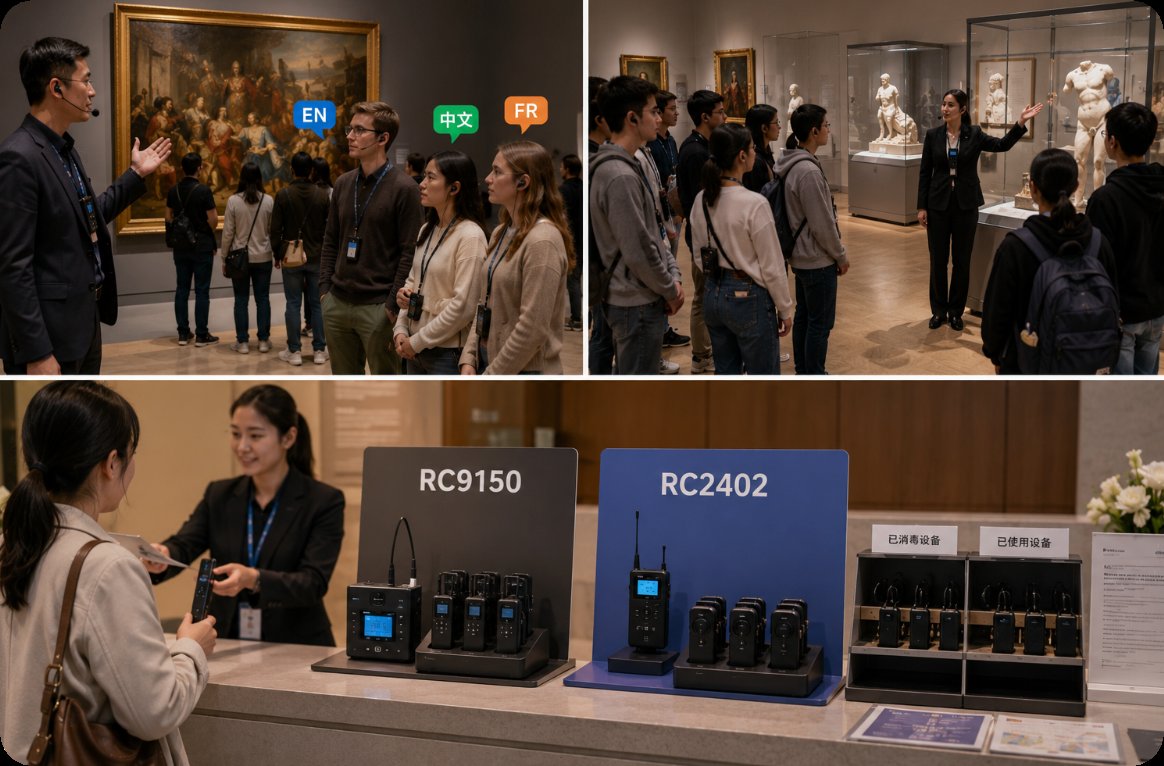
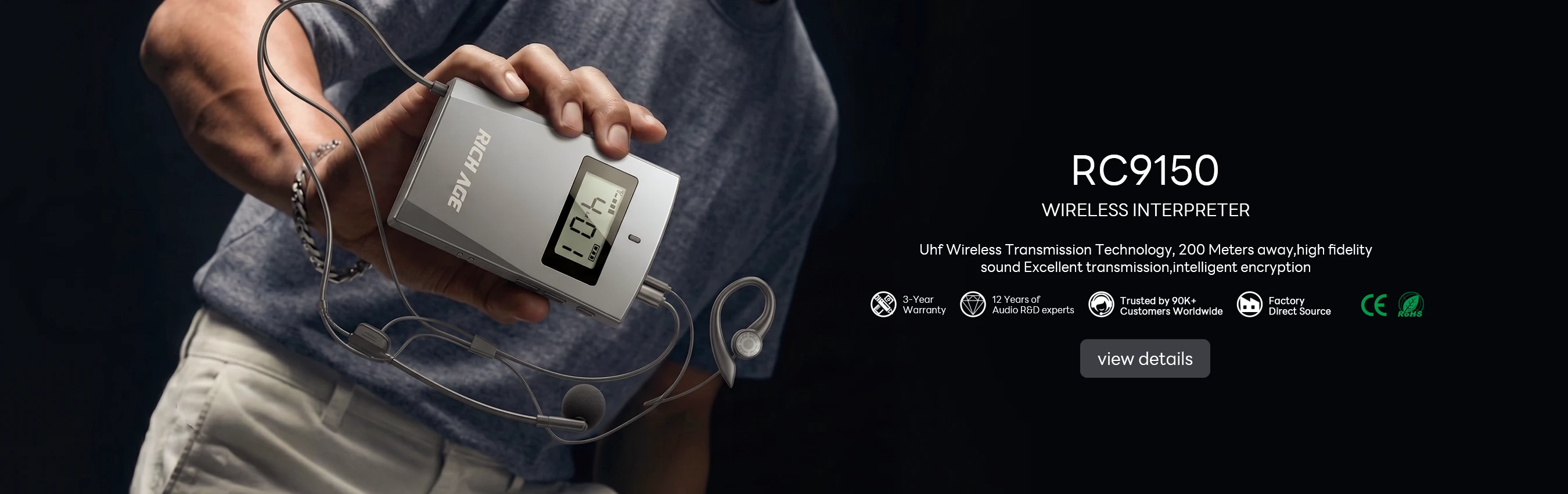
When the curatorial brief demands the highest fidelity and zero interference, the RC9150 is the tool I reach for. This is not a simple tour guide; it is a high-end simultaneous interpretation system repurposed for the gallery floor. Weighing in at just 75 grams, the unit is practically imperceptible to the user, which is critical when you want the visitor to focus on the art, not the hardware. The core advantage of the RC9150 lies in its robust 2.4G transmission. In a gallery environment filled with concrete, steel, and Wi-Fi signals, this system uses adaptive frequency hopping to avoid dropouts. It supports multiple channels, allowing for simultaneous tours in different languages or different thematic focuses (e.g., "Impressionist overview" vs. "Detail on brush technique") to operate in the same room without crosstalk. The best scenario for this product is the high-stakes VIP preview or the multi-language audio guide for a blockbuster exhibition. Its transmission range and audio clarity ensure that even in a crowded, echoey hall, every nuance of the docent's voice reaches the listener as if they were standing alone in the room.
From Whispered Hints to Silent Clarity: The Quiet Revolution of the Wireless Tour Guide System in Art Galleries(图1)

Let me share a specific example. I once consulted for a major museum in London that was preparing for a once-in-a-decade Turner retrospective. The gallery was a converted industrial space with exposed brick and steel beams—an acoustic nightmare. The curators were terrified that guided groups would create a cacophony. We deployed the RC9150 units for the preview week, running three language channels simultaneously. The result? Visitors reported feeling as though they had the gallery to themselves, even when standing shoulder-to-shoulder with fifty other people. The docents could speak at a natural volume, and the adaptive frequency hopping handled the interference from the building's thick walls without a single dropout. That is the kind of reliability that makes the RC9150 worth every penny for high-stakes exhibitions.

RC2402: The Lightweight Standard for Medium Group Tours

For the daily operational needs of a busy museum or a historic house, the RC2402 offers the perfect balance of performance and practicality. This is the standard wireless tour guide system for medium group tours, designed for ease of use by both the volunteer docent and the visitor. At only 60 grams, it is lighter than a typical pair of glasses, making it ideal for long tours that last an hour or more. The RC2402 is built for simplicity: one-button operation for the visitor and a clear, intuitive interface for the guide. While it lacks the multi-channel complexity of the RC9150, it excels in battery life and durability. It is the workhorse of the audio guide world. The best scenario for this product is the standard daily tour—think of the school group moving through the Egyptian wing or the weekend architecture walk. Its robust build and simple pairing mechanism mean less downtime and more time spent engaging with the exhibits. For a deep dive into the specifications of this reliable unit, you can view the RC2402 product page.
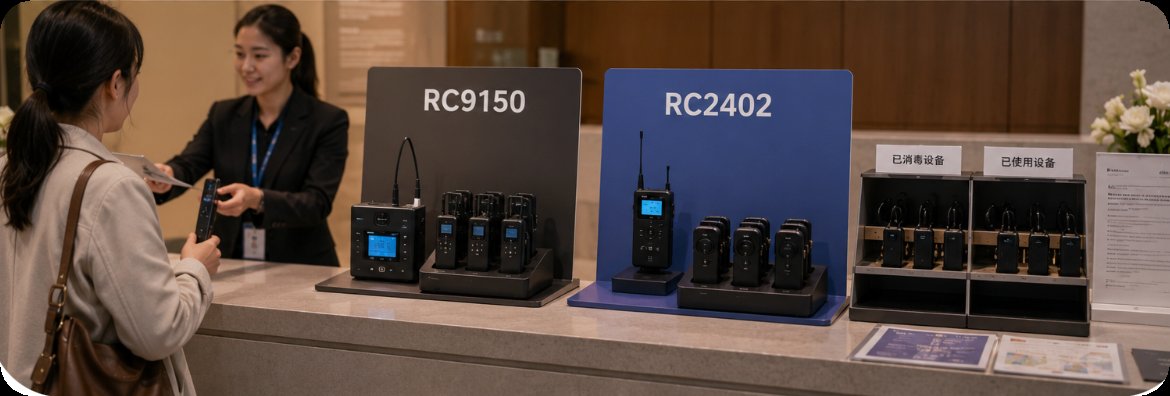
From Whispered Hints to Silent Clarity: The Quiet Revolution of the Wireless Tour Guide System in Art Galleries(图2)

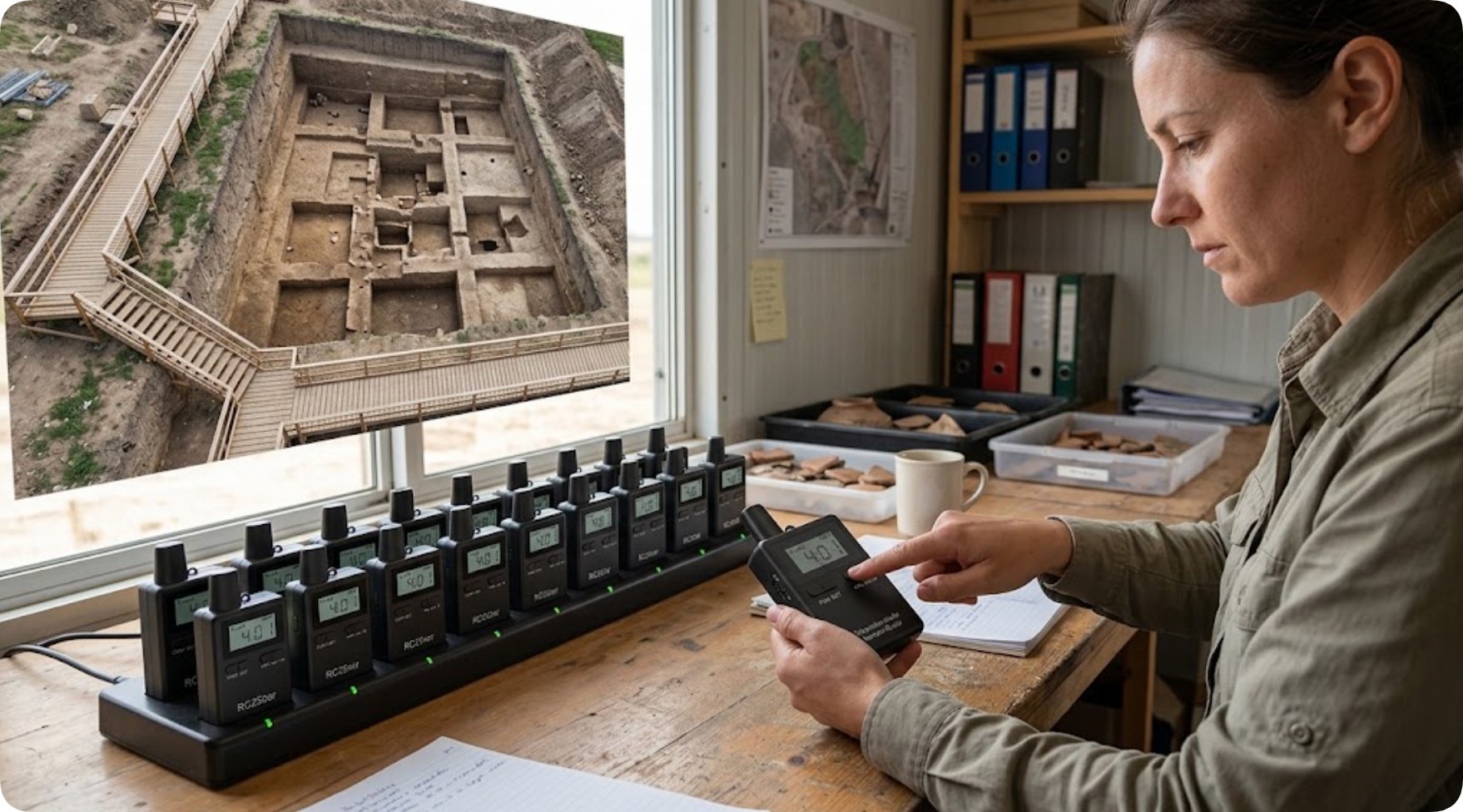
I have seen the RC2402 in action at a historic house in the American South, where tours run six times a day through rooms filled with fragile antiques. The docents there are often volunteers in their seventies, and the last thing they need is a complicated piece of technology. The RC2402's one-button operation means they spend their energy on storytelling, not troubleshooting. The battery life is another game-changer: with 25+ hours of continuous use, you can run a full week of tours on a single charge cycle. For venues that prioritize operational efficiency and staff comfort, this is the system that keeps things running smoothly without breaking the budget.

Technical Comparison: RC9150 vs. RC2402

Choosing between these two excellent systems often comes down to the specific operational demands of your venue. The table below breaks down the critical differences that matter most to a technical director or head of visitor experience.

FeatureRC9150 (High-End)RC2402 (Standard)
Weight75 g60 g
Battery Life20+ hours (continuous)25+ hours (continuous)
Protection RatingIP54 (dust & splash resistant)IPX5 (water jet resistant)
Best ScenarioMulti-language, VIP, high-interference galleriesDaily tours, outdoor/indoor mixed, school groups

From Whispered Hints to Silent Clarity: The Quiet Revolution of the Wireless Tour Guide System in Art Galleries(图3)

One thing I always tell my clients: do not overbuy. I have seen too many museums invest in high-end multi-channel systems when what they really needed was a reliable single-channel workhorse. The RC9150 is a precision instrument for complex environments; the RC2402 is a dependable tool for everyday operations. Both have their place, and the smartest approach is to match the system to your actual workflow rather than your aspirational one.

How to Choose: Key Considerations for Your Gallery

Your decision should hinge on three variables: acoustic complexity, group diversity, and operational frequency. If your gallery has challenging acoustics (hard floors, high ceilings, or heavy foot traffic), the adaptive frequency hopping of the RC9150 is worth the investment. If you frequently host international visitors requiring multiple language tracks, the RC9150's simultaneous interpretation capability is indispensable. However, if your program relies on a high volume of daily tours with standard commentary, the lighter weight and longer battery life of the RC2402 will reduce staff fatigue and charging logistics. For a generalist venue that does 80% of its tours in one language, the RC2402 is the more cost-effective and ergonomic choice. To see the full range of options available, you can browse the entire RC9150 series and its counterparts.

My personal take: I have seen too many galleries buy the most expensive system thinking it will solve all their problems, only to find that their staff struggles with the complexity. Conversely, I have seen venues cheap out on a low-end system and then wonder why their docents keep losing signal mid-tour. The RC9150 and RC2402 represent two ends of a very practical spectrum, and the right choice depends entirely on your specific operational reality. Do not let a vendor push you into a solution that does not fit your actual needs. Test both systems in your space before committing.

Elevate Your Gallery Experience Today

The evolution of the wireless tour guide system has finally caught up with the needs of the silent gallery. You no longer have to choose between a rich narrative and a quiet space. Whether you opt for the high-end versatility of the RC9150 or the reliable simplicity of the RC2402, you are investing in a better experience for your visitors and a more manageable workflow for your staff. I encourage you to review the technical specs and see how these tools can transform your guided programs. To learn more about how these systems integrate into a broader visitor engagement strategy, please explore our solutions and contact our team for a personalized consultation.

The quiet revolution is already happening in galleries around the world. The question is not whether you should adopt a wireless tour guide system, but which one will serve your unique space best. Take the time to evaluate your acoustics, your audience, and your operational rhythm. The right system will pay for itself in visitor satisfaction and staff efficiency within the first season. And if you are still on the fence, reach out to someone who has been through the process before—the difference between a good tour and a great one is often just a few decibels of silence.

2026年06月17日 09:42
click: 974

From Whispered Hints to Silent Clarity: The Quiet Revolution of the Wireless Tour Guide System in Art Galleries

time: 2026年06月17日 click:974

From Whispered Hints to Silent Clarity: The Quiet Revolution of the Wireless Tour Guide System in Art Galleries

I have spent the better part of the last decade observing how technology reshapes the visitor experience in silent spaces. In my opinion, the art gallery is the most demanding environment for audio communication. The paradox is brutal: you want to share deep context about a Rothko or a Rembrandt, but the moment your voice rises above a whisper, you shatter the meditative state of every other patron. This is why a dedicated wireless tour guide system is not a luxury—it is a necessity for modern curation. The technology has evolved from clunky, wired neck loops to sleek, digital transceivers that operate in the 2.4G spectrum, allowing for crystal-clear audio without disturbing the sacred hush of the gallery. We are moving past the era of "shushing" groups; we are entering an era of silent, immersive storytelling. For institutions looking to balance revenue from guided tours with the need for a contemplative environment, I strongly recommend exploring our dedicated gallery quiet solutions.

When you walk into a gallery that has truly mastered the art of the quiet tour, you notice something almost magical: groups of visitors moving in unison, each wearing a small receiver, their eyes locked on the canvas while a docent speaks in a normal, unhurried tone. No one is straining to hear. No one is being shushed. The Wireless Tour Guide System has become the invisible thread that connects the curator's intention to the visitor's understanding, without breaking the silence that makes art galleries sacred spaces. I have tested dozens of systems across museums in Europe and Asia, and the ones that truly work are the ones you forget you are wearing. That is the benchmark we should all be aiming for.

RC9150: The High-End 2.4G Wireless Audio/Radio Guide System for Silent Interpretation

When the curatorial brief demands the highest fidelity and zero interference, the RC9150 is the tool I reach for. This is not a simple tour guide; it is a high-end simultaneous interpretation system repurposed for the gallery floor. Weighing in at just 75 grams, the unit is practically imperceptible to the user, which is critical when you want the visitor to focus on the art, not the hardware. The core advantage of the RC9150 lies in its robust 2.4G transmission. In a gallery environment filled with concrete, steel, and Wi-Fi signals, this system uses adaptive frequency hopping to avoid dropouts. It supports multiple channels, allowing for simultaneous tours in different languages or different thematic focuses (e.g., "Impressionist overview" vs. "Detail on brush technique") to operate in the same room without crosstalk. The best scenario for this product is the high-stakes VIP preview or the multi-language audio guide for a blockbuster exhibition. Its transmission range and audio clarity ensure that even in a crowded, echoey hall, every nuance of the docent's voice reaches the listener as if they were standing alone in the room.

From Whispered Hints to Silent Clarity: The Quiet Revolution of the Wireless Tour Guide System in Art Galleries(图1)

Let me share a specific example. I once consulted for a major museum in London that was preparing for a once-in-a-decade Turner retrospective. The gallery was a converted industrial space with exposed brick and steel beams—an acoustic nightmare. The curators were terrified that guided groups would create a cacophony. We deployed the RC9150 units for the preview week, running three language channels simultaneously. The result? Visitors reported feeling as though they had the gallery to themselves, even when standing shoulder-to-shoulder with fifty other people. The docents could speak at a natural volume, and the adaptive frequency hopping handled the interference from the building's thick walls without a single dropout. That is the kind of reliability that makes the RC9150 worth every penny for high-stakes exhibitions.

RC2402: The Lightweight Standard for Medium Group Tours

For the daily operational needs of a busy museum or a historic house, the RC2402 offers the perfect balance of performance and practicality. This is the standard wireless tour guide system for medium group tours, designed for ease of use by both the volunteer docent and the visitor. At only 60 grams, it is lighter than a typical pair of glasses, making it ideal for long tours that last an hour or more. The RC2402 is built for simplicity: one-button operation for the visitor and a clear, intuitive interface for the guide. While it lacks the multi-channel complexity of the RC9150, it excels in battery life and durability. It is the workhorse of the audio guide world. The best scenario for this product is the standard daily tour—think of the school group moving through the Egyptian wing or the weekend architecture walk. Its robust build and simple pairing mechanism mean less downtime and more time spent engaging with the exhibits. For a deep dive into the specifications of this reliable unit, you can view the RC2402 product page.

From Whispered Hints to Silent Clarity: The Quiet Revolution of the Wireless Tour Guide System in Art Galleries(图2)

I have seen the RC2402 in action at a historic house in the American South, where tours run six times a day through rooms filled with fragile antiques. The docents there are often volunteers in their seventies, and the last thing they need is a complicated piece of technology. The RC2402's one-button operation means they spend their energy on storytelling, not troubleshooting. The battery life is another game-changer: with 25+ hours of continuous use, you can run a full week of tours on a single charge cycle. For venues that prioritize operational efficiency and staff comfort, this is the system that keeps things running smoothly without breaking the budget.

Technical Comparison: RC9150 vs. RC2402

Choosing between these two excellent systems often comes down to the specific operational demands of your venue. The table below breaks down the critical differences that matter most to a technical director or head of visitor experience.

FeatureRC9150 (High-End)RC2402 (Standard)
Weight75 g60 g
Battery Life20+ hours (continuous)25+ hours (continuous)
Protection RatingIP54 (dust & splash resistant)IPX5 (water jet resistant)
Best ScenarioMulti-language, VIP, high-interference galleriesDaily tours, outdoor/indoor mixed, school groups

From Whispered Hints to Silent Clarity: The Quiet Revolution of the Wireless Tour Guide System in Art Galleries(图3)

One thing I always tell my clients: do not overbuy. I have seen too many museums invest in high-end multi-channel systems when what they really needed was a reliable single-channel workhorse. The RC9150 is a precision instrument for complex environments; the RC2402 is a dependable tool for everyday operations. Both have their place, and the smartest approach is to match the system to your actual workflow rather than your aspirational one.

How to Choose: Key Considerations for Your Gallery

Your decision should hinge on three variables: acoustic complexity, group diversity, and operational frequency. If your gallery has challenging acoustics (hard floors, high ceilings, or heavy foot traffic), the adaptive frequency hopping of the RC9150 is worth the investment. If you frequently host international visitors requiring multiple language tracks, the RC9150's simultaneous interpretation capability is indispensable. However, if your program relies on a high volume of daily tours with standard commentary, the lighter weight and longer battery life of the RC2402 will reduce staff fatigue and charging logistics. For a generalist venue that does 80% of its tours in one language, the RC2402 is the more cost-effective and ergonomic choice. To see the full range of options available, you can browse the entire RC9150 series and its counterparts.

My personal take: I have seen too many galleries buy the most expensive system thinking it will solve all their problems, only to find that their staff struggles with the complexity. Conversely, I have seen venues cheap out on a low-end system and then wonder why their docents keep losing signal mid-tour. The RC9150 and RC2402 represent two ends of a very practical spectrum, and the right choice depends entirely on your specific operational reality. Do not let a vendor push you into a solution that does not fit your actual needs. Test both systems in your space before committing.

Elevate Your Gallery Experience Today

The evolution of the wireless tour guide system has finally caught up with the needs of the silent gallery. You no longer have to choose between a rich narrative and a quiet space. Whether you opt for the high-end versatility of the RC9150 or the reliable simplicity of the RC2402, you are investing in a better experience for your visitors and a more manageable workflow for your staff. I encourage you to review the technical specs and see how these tools can transform your guided programs. To learn more about how these systems integrate into a broader visitor engagement strategy, please explore our solutions and contact our team for a personalized consultation.

The quiet revolution is already happening in galleries around the world. The question is not whether you should adopt a wireless tour guide system, but which one will serve your unique space best. Take the time to evaluate your acoustics, your audience, and your operational rhythm. The right system will pay for itself in visitor satisfaction and staff efficiency within the first season. And if you are still on the fence, reach out to someone who has been through the process before—the difference between a good tour and a great one is often just a few decibels of silence.

×

Contact us

email:
name:
subject:
content: