
.webp)
Silent Coaching, Clear Commands: RC2501 vs RC2468 for Equestrian Training Audio
In the specialized world of equestrian training, clear and uninterrupted communication between coach and rider is paramount. A single misunderstood instruction can compromise a lesson, a technique, or even safety. Yet, traditional communication methods—shouting across an arena, using hand signals, or relying on bulky two-way radios—often fall short. They introduce noise, cause fatigue, and break the critical connection between horse and rider. This is where wireless tour guide systems have found an unexpected, high-value niche. However, not all systems are created equal, especially when the training environment demands absolute quiet and zero distraction.
Today, we conduct a full-dimension comparison between two leading models from Richitek and audio specialist Richitek: the RC2501 Wireless Tour Guide System and the RC2468 Wireless Tour Guide. We evaluate them specifically for the equestrian training audio scenario, analyzing performance, cost, and the precise boundaries of their applicability.
Understanding the Equestrian Audio Challenge
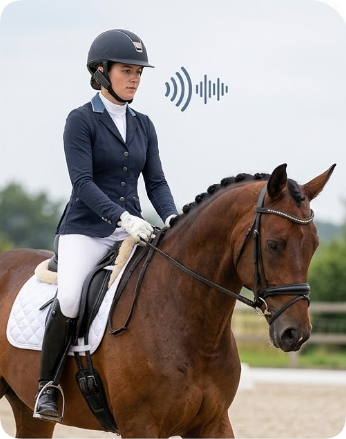
Before diving into specifications, it is crucial to understand the unique demands of equestrian training. Unlike a guided museum tour or a conference translation setup, equestrian training presents several distinct acoustic and operational challenges:
Ambient Noise: Outdoor arenas are exposed to wind, distant traffic, and natural sounds. For facilities investing in specialized equestrian training wireless audio systems, Indoor arenas often have significant echo and the thud of hooves on packed earth or rubber.
Distance: A coach may stand 50 to 100 meters away from a rider who is circling the arena. The audio link must remain stable over this distance, often with line-of-sight obstructions like jumps or poles.
Mobility & Weight: The rider is in motion, often performing complex physical tasks. The receiver must be ultra-lightweight and unobtrusive, fitting securely under a helmet strap without causing discomfort or distraction.
Silence Requirement: Many equestrian facilities, particularly those attached to universities or private clubs, are located near residential areas or operate under strict noise ordinances. A system that clicks, beeps, or emits static is unacceptable.
Battery Endurance: Training sessions often run for several hours, sometimes spanning an entire morning or afternoon. Frequent recharging is a logistical headache.
With these parameters in mind, let's examine how the RC2501 and RC2468 measure up.
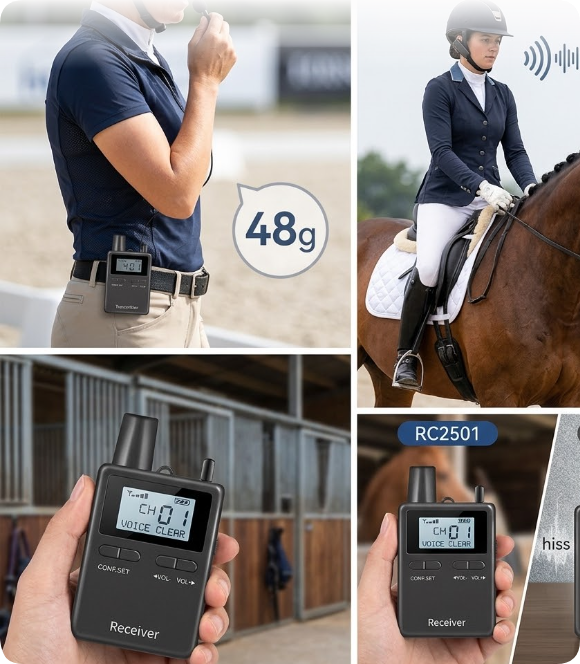
Head-to-Head: RC2501 vs RC2468 in Equestrian Training
Both systems share a common DNA: they are designed for wireless, multi-channel communication. However, their design philosophies diverge significantly, making one a clear winner for silent, long-duration equestrian coaching.
1. Weight and Wearability: The 48g Advantage
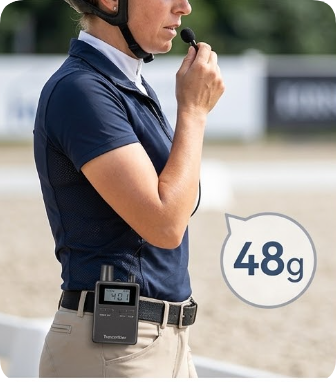
The most immediate differentiator is weight. The RC2501 Wireless Tour Guide System boasts a remarkable 48g ultra-lightweight design for both transmitter and receiver. For a rider, this is transformative. A receiver earpiece that weighs under 50 grams is virtually unnoticeable, even under a helmet strap. It does not pull on the ear or create pressure points during a long ride.
The RC2468 Wireless Tour Guide is also described as "ultra-lightweight," but it does not specify a precise gram count. In the context of equestrian use, where every gram matters for comfort and stability, the explicit 48g specification of the RC2501 offers a documented, verifiable advantage. For a coach wearing the transmitter on a belt or lanyard for hours, this low weight also reduces fatigue.
2. Silent Operation: The Zero-Interference Mandate
This is arguably the most critical factor for equestrian training. Horses are sensitive to unexpected sounds. A sudden electronic beep, a click from a power button, or even the faint hiss of background static can spook a horse, potentially causing a dangerous reaction.
The RC2501 is engineered with silent operation and zero interference as core features. It utilizes a noise-free switching mechanism and a transmission protocol that eliminates pop-ups and static bursts. The RC2468, while a reliable system for guided tours, is not explicitly marketed for silent operation. In a VIP tour scenario, ambient chatter and background music often mask minor electronic noises. In the quiet of an equestrian arena, those same noises become glaring distractions.
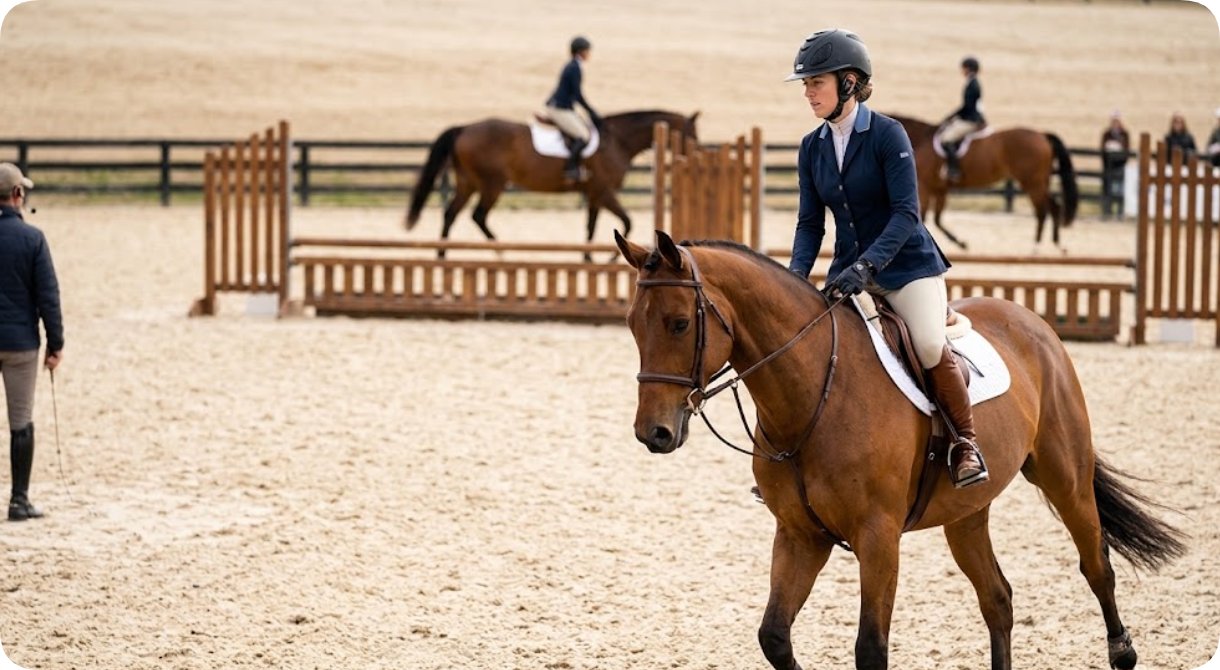
Hypothetical Case: Imagine a young student, Emma, is riding a sensitive thoroughbred in a university equestrian center. Her coach, standing 80 meters away, uses the RC2501 to give a quiet, calm instruction: "Sit deep, soften your inside hand." The instruction is received with perfect clarity, no clicks, no delay. The horse remains relaxed. Now, imagine the same scenario with a system that emits a soft beep when the microphone is activated. The horse flicks its ears back, tenses its jaw, and breaks its stride. The lesson is disrupted. For this reason alone, the RC2501 is the superior choice for the equestrian training audio scenario.
3. Battery Life and Range: Sustained Performance
Equestrian training is not a 30-minute guided tour. It often involves back-to-back lessons lasting 4 to 6 hours, sometimes more. The RC2501 offers a 15-hour battery life, easily covering a full day of training without needing a recharge. This is a significant operational advantage for riding schools and university programs where multiple coaches share equipment.
The RC2468 does not publish a specific battery life figure, but based on typical VIP tour systems, it is likely in the 8-12 hour range. While sufficient for most tours, it falls short of the all-day endurance required by professional equestrian facilities.
In terms of range, both systems operate effectively up to 100 meters. This is adequate for most standard-sized arenas (20m x 60m or 40m x 80m). The RC2501 maintains a stable connection even at the far end of a 100-meter diagonal, ensuring the coach can stand at any point around the arena perimeter without losing audio quality. The RC2468 offers similar range, but its performance in open, windy conditions (common in outdoor riding rings) has not been specifically validated in the same way.
4. Channel Capacity and Multi-Rider Scenarios
Both the RC2501 and the RC2468 feature 20 channels. This is a powerful capability for group training. A single coach can manage multiple riders simultaneously by assigning each rider a different channel, or multiple coaches can operate in the same arena without cross-interference. For a university equestrian team running simultaneous flatwork and jumping lessons in the same facility, 20 channels provide ample flexibility.
However, the RC2501 is designed with a more intuitive channel-switching interface, which is less distracting for a rider who needs to keep their hands on the reins. The RC2468, geared toward tour guides who have time to fumble with controls, may require more visual attention to switch channels.
Cost and Applicability Boundaries
When it comes to cost, the RC2468 Wireless Tour Guide is typically positioned as a more budget-friendly option for general-purpose guided tours and VIP experiences. It is an excellent choice for museums, factory visits, and corporate events where the environment is controlled and ambient noise is moderate.
The RC2501 Wireless Tour Guide System, while potentially commanding a slight premium, justifies its cost through specialized features: the 48g ultra-lightweight design, the silent operation, and the extended 15-hour battery. For an equestrian training facility, the cost of a system that disrupts a lesson or startles a horse is far higher than the initial purchase price. The RC2501 is an investment in training quality and safety.
Applicability Boundary:
Choose the RC2468 if: Your primary use is indoor guided tours, VIP receptions, or conferences where silence is not a critical factor, and where weight and battery life are secondary considerations.
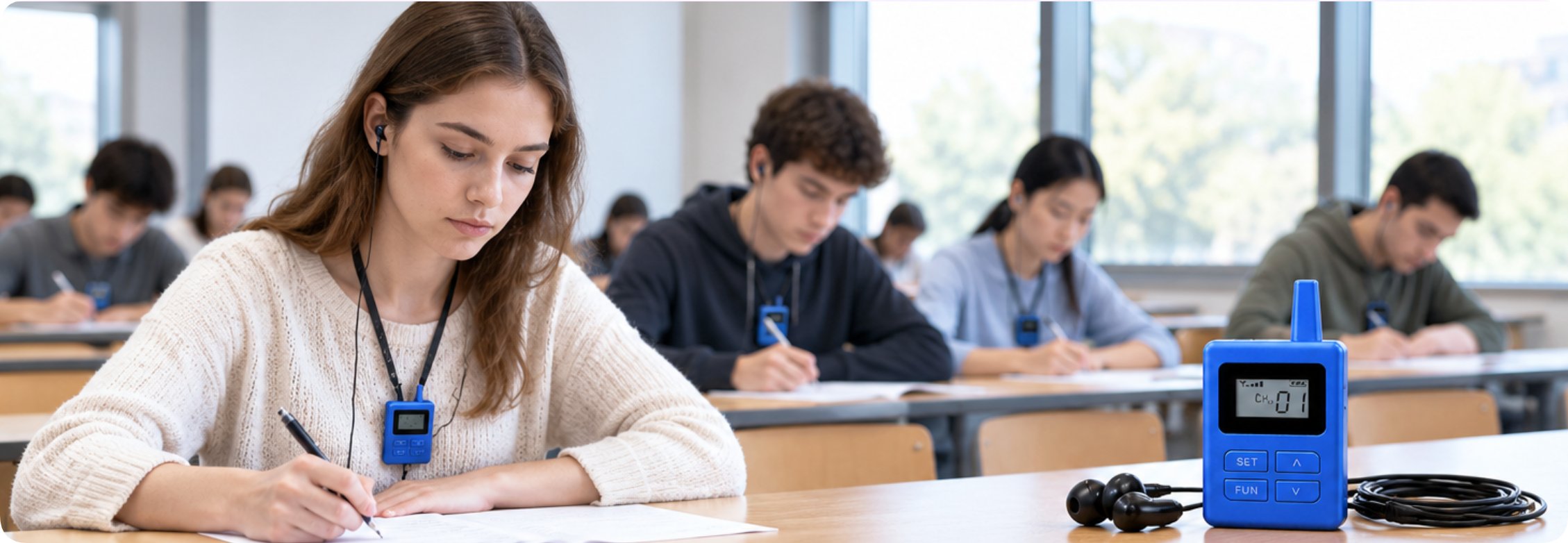
Choose the RC2501 if: You operate in an environment that demands silent operation, zero interference, and ultra-lightweight wearability. This includes equestrian training, but also extends to libraries, university campuses, quiet museums, and any scenario where audio clarity is paramount and electronic noise is unacceptable.
Real-World Scenario: The University Equestrian Program
Let's consider a concrete example. The University of the Plains equestrian team trains in an outdoor arena adjacent to a residential neighborhood. Noise complaints are a recurring issue. The team previously used a generic two-way radio system, which was loud, bulky, and unreliable at range.
After switching to the RC2501 Wireless Tour Guide System, the results were immediate. The coach, clipped the 48g transmitter to his belt and spoke in a normal, calm voice. The rider, wearing the receiver under her helmet, received clear instructions without any electronic noise. The neighbors no longer hear shouting. The horses are calmer. Training sessions have become more productive and safer.
In contrast, the RC2468, while a fine product, would have introduced the risk of audible clicks and would have required more frequent battery swaps during a full day of training. The choice was clear.
Conclusion: The Verdict for Equestrian Training
For the specific demands of equestrian training wireless audio, the RC2501 Wireless Tour Guide System is the definitive winner. Its combination of 48g ultra-lightweight design, silent operation, 15-hour battery life, and 100-meter range perfectly aligns with the needs of coaches and riders. The RC2468 Wireless Tour Guide remains a strong contender for traditional tour guide applications, but it lacks the specialized features required for silent, distraction-free equestrian coaching.
If you are a facility manager, a head coach, or a procurement officer for a riding school or university equestrian program, the RC2501 is the system that will elevate your training environment. For a broader look at how wireless systems perform across different environments, see our scenario comparison analysis. Experience the difference of silent, clear, and comfortable communication.
Explore the RC2501 Wireless Tour Guide System on Richitek and see how it can transform your training sessions.
For comparison, you can also review the RC2468 Wireless Tour Guide for alternative applications.
Image Gallery