.webp)
As the online education sector surges—with platforms like Coursera and edX partnering with top-tier professors to offer career-focused associate degrees—the demand for flexible, high-quality learning environments has never been greater. This shift isn't just digital; it's reshaping how physical campuses present themselves. For modern campus tours, institutions must deliver immersive, professional experiences that mirror the excellence of their academic programs. That's where the right Wireless Tour Guide System comes into play. Here’s how the RC2408, RC8860, and RC2501 stack up for real-world campus tour operations, from quiet indoor halls to high-motion outdoor coaching.
Deploying the RC2501, RC8860, and RC2408 across a campus tour environment delivers measurable improvements across multiple dimensions. Visitors enjoy clearer audio and a more immersive experience, whether they are listening to a history lecture in a quiet hall or receiving equestrian coaching outdoors. Staff benefit from equipment that is easy to set up, operate, and maintain, reducing training time and operational friction. Management gains visibility into tour operations through usage analytics, enabling data-driven decisions about resource allocation. The combined result is a more professional, efficient, and enjoyable campus tour operation that reflects the institution’s commitment to quality.
Market Pain Points & Real-World Challenges
Customers deploying equipment for campus tours consistently report that reliability is their number one concern. Audio dropouts during critical moments, bulky devices that irritate visitors, and complex setup procedures create friction that undermines the entire tour experience. In high-motion environments like equestrian training or outdoor scenic overlooks, signal interference and limited range exacerbate these issues, leading to frustrated guests and overworked staff.
Furthermore, the diversity of campus environments—from indoor church halls with stained glass to open fields with panoramic views—demands versatile solutions that can adapt without sacrificing performance. Traditional tour guide systems often fail to address these varied acoustic and spatial challenges, leaving institutions to compromise on either audio quality or operational simplicity. This gap highlights the need for specialized hardware that prioritizes stability, comfort, and ease of use.
Technical Specification Comparison: RC2501, RC8860 & RC2408
Not all wireless tour guide systems are created equal for campus tours. The specifications that matter most—audio bandwidth, transmission stability in challenging environments, and ease of deployment—vary significantly across models. The following comparison highlights which features deserve your attention based on your specific operational requirements.
| Model | Position | Weight | Key Feature |
|---|---|---|---|
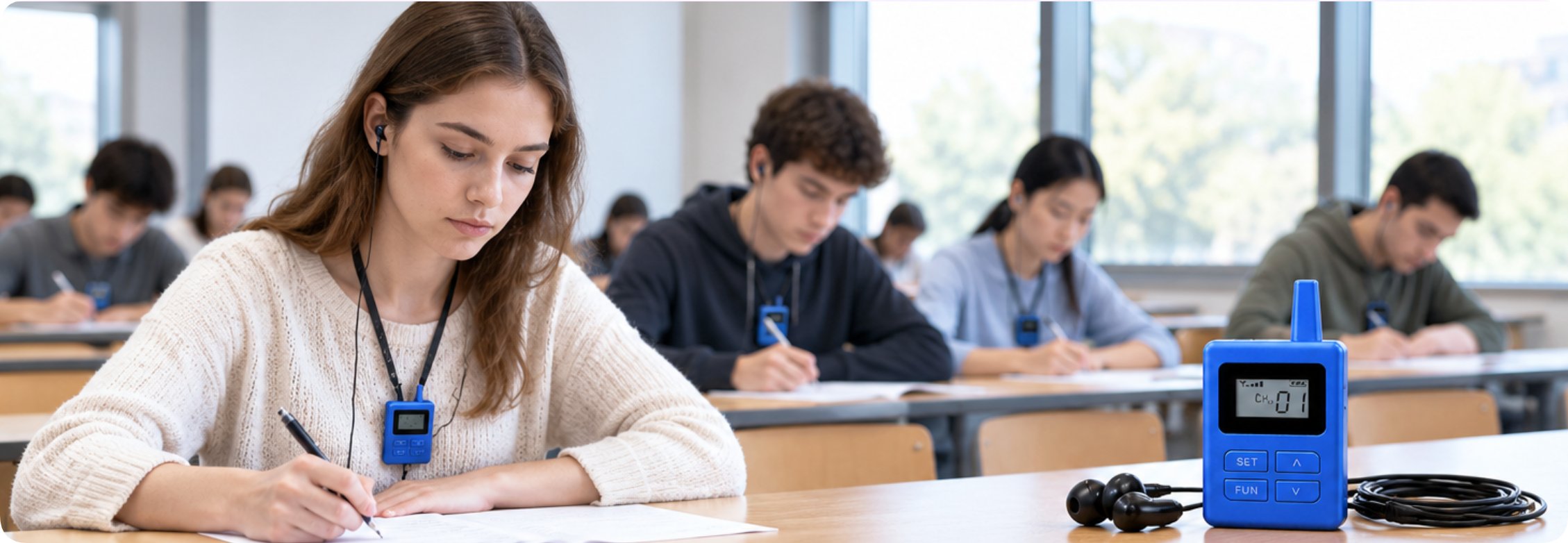
| RC2501 | Translation headphones for church / silent tour | 48 g | Ultra-lightweight, integrated transmitter, ideal for quiet indoor tours |
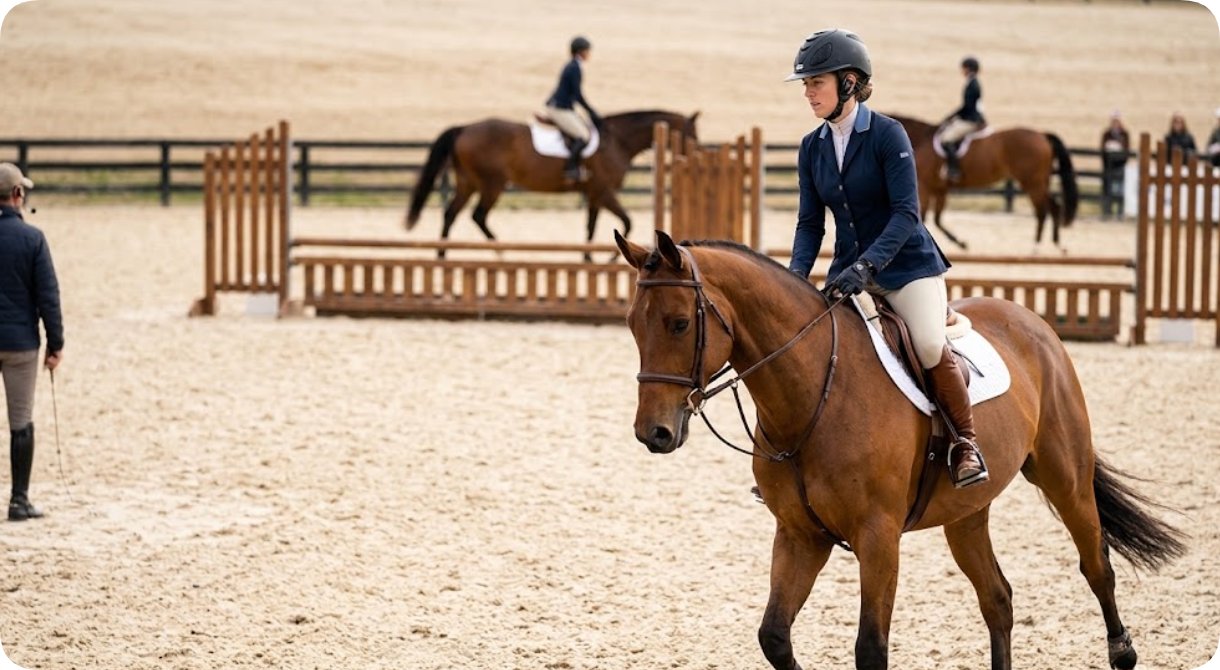
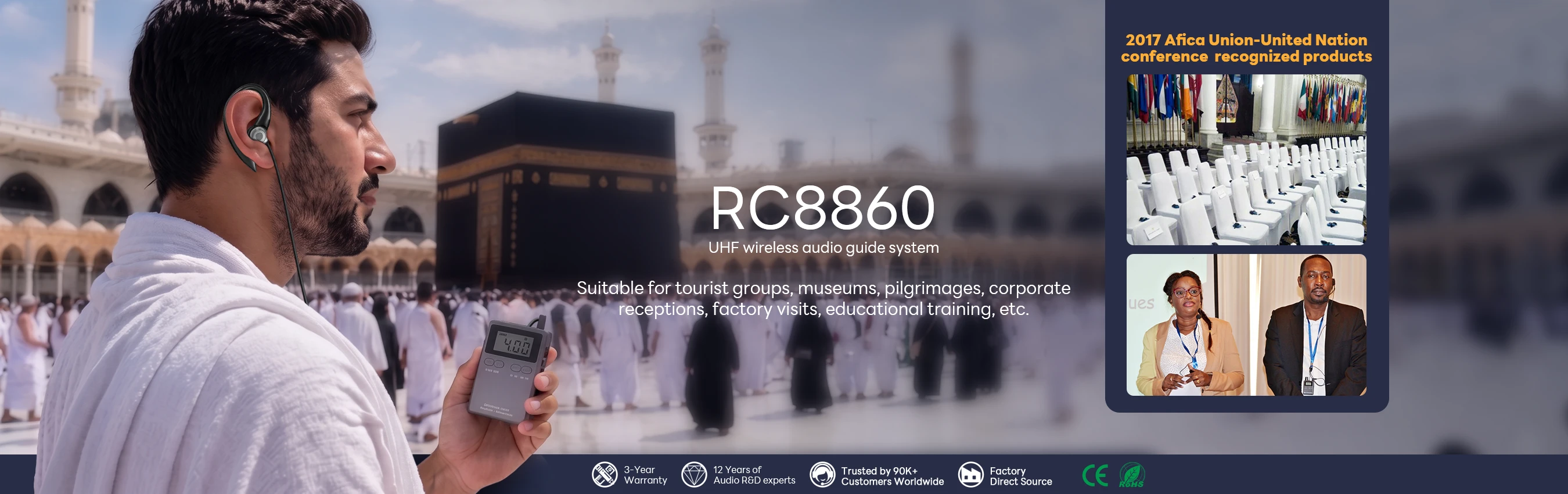
| RC8860 | Equestrian training & high-motion outdoor coaching | 59 g | Enhanced stability for high-motion environments, weather-resistant design |
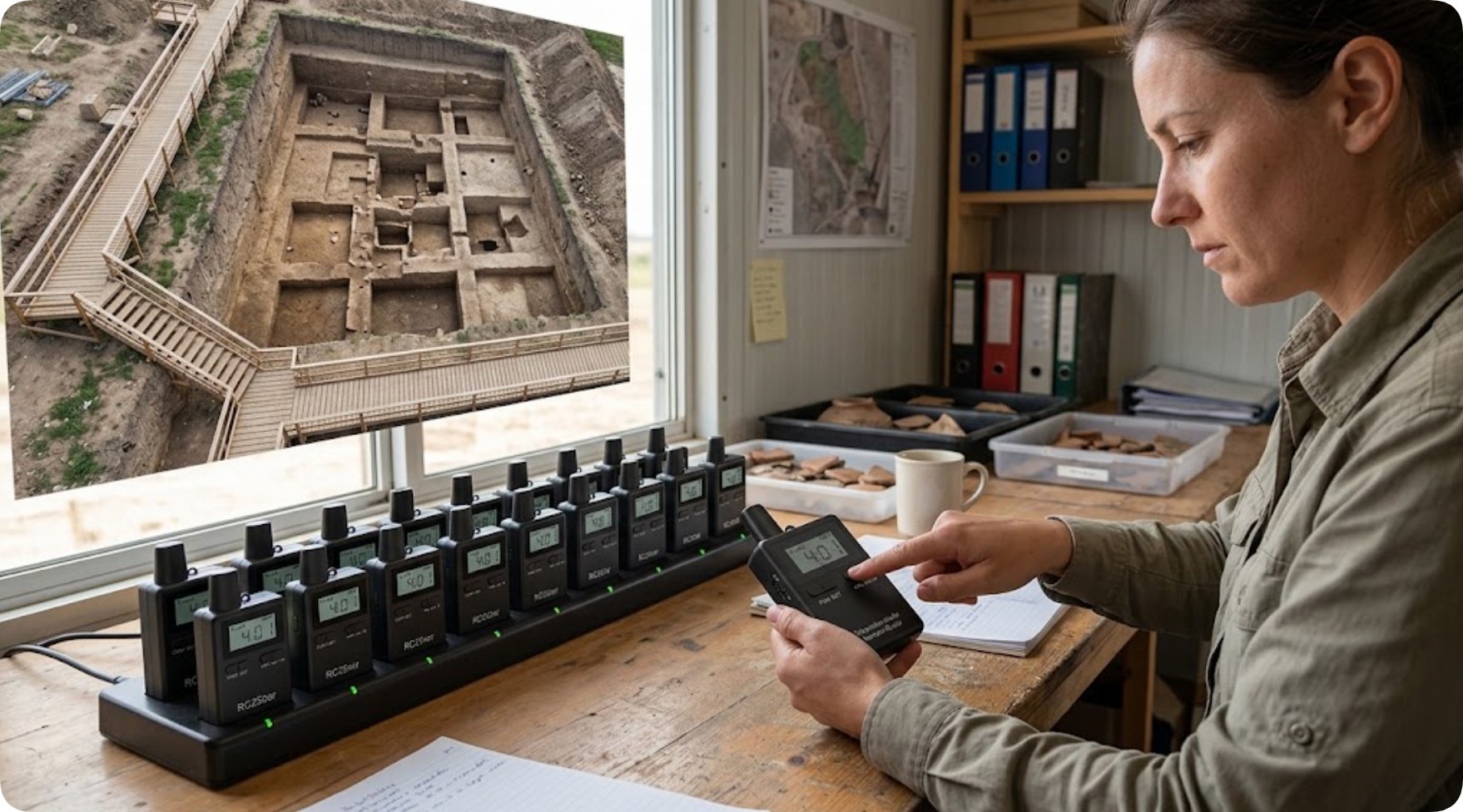
| RC2408 | Long-range wireless tour guide system | 70 g | Extended range up to 200m, robust signal for outdoor groups |
For indoor campus tours where ambiance and discretion are paramount, the RC2501 Wireless Tour Guide System excels with its featherlight 48g design and integrated transmitter, allowing guides to speak naturally without holding a separate device. In contrast, the RC8860 Tour Guide Transmitter For Teaching is engineered for outdoor high-motion scenarios, offering superior transmission stability even when coaches are demonstrating jumping techniques. The RC2408 Wireless Tour Guide System bridges both worlds with its long-range capability, making it the go-to choice for large groups spread across wide outdoor spaces.
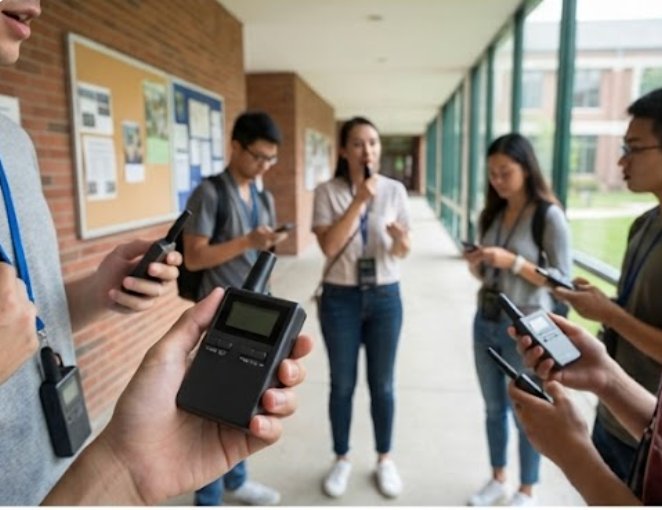
In the indoor church hall setting, the RC2501 enables a quiet, intimate tour experience. The guide, wearing the lightweight headset, speaks softly to a small group of 6-8 visitors who listen through discreet receivers. The warm ambient light filtering through stained glass windows complements the unobtrusive technology, allowing the architectural details to remain the focus.
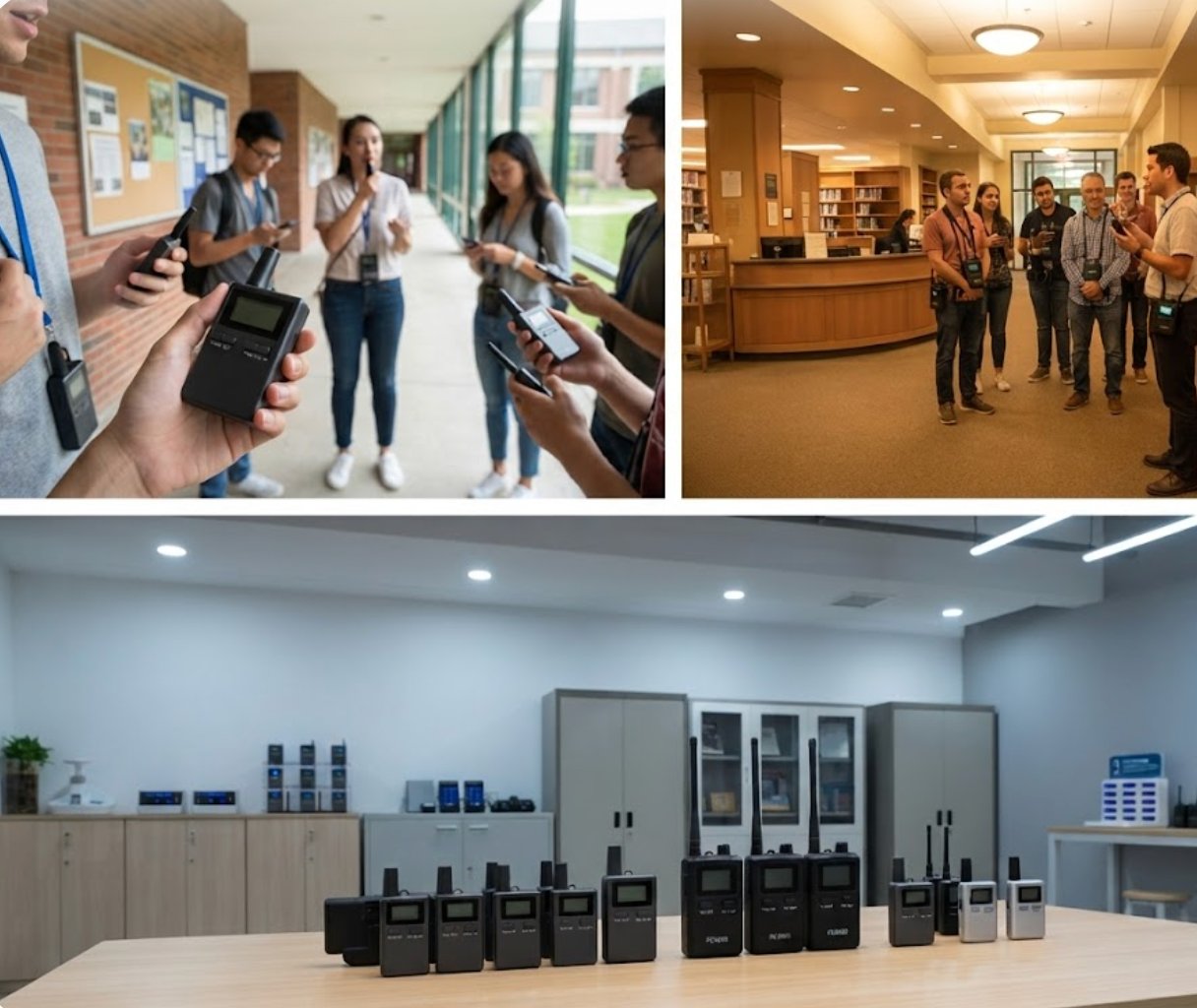
Outdoors at the equestrian training arena, the RC8860 proves its value. Under bright sunlight, a riding coach clips the transmitter to their waistband and demonstrates jumping techniques to riders on horseback. The system’s robust signal ensures every instruction is heard clearly, even with the noise and movement of horses, enhancing both learning and safety.
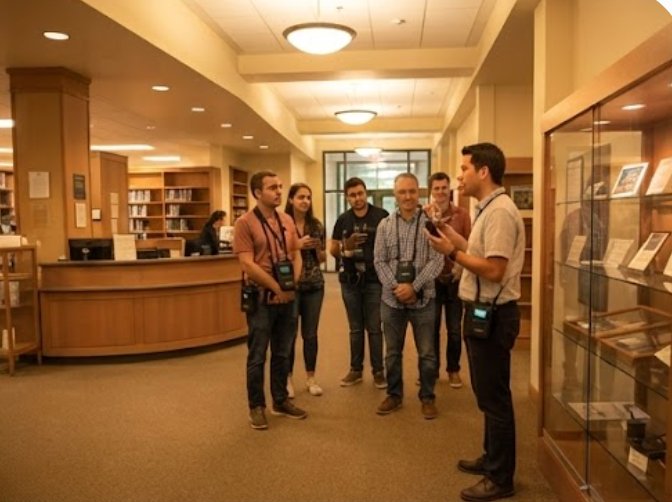
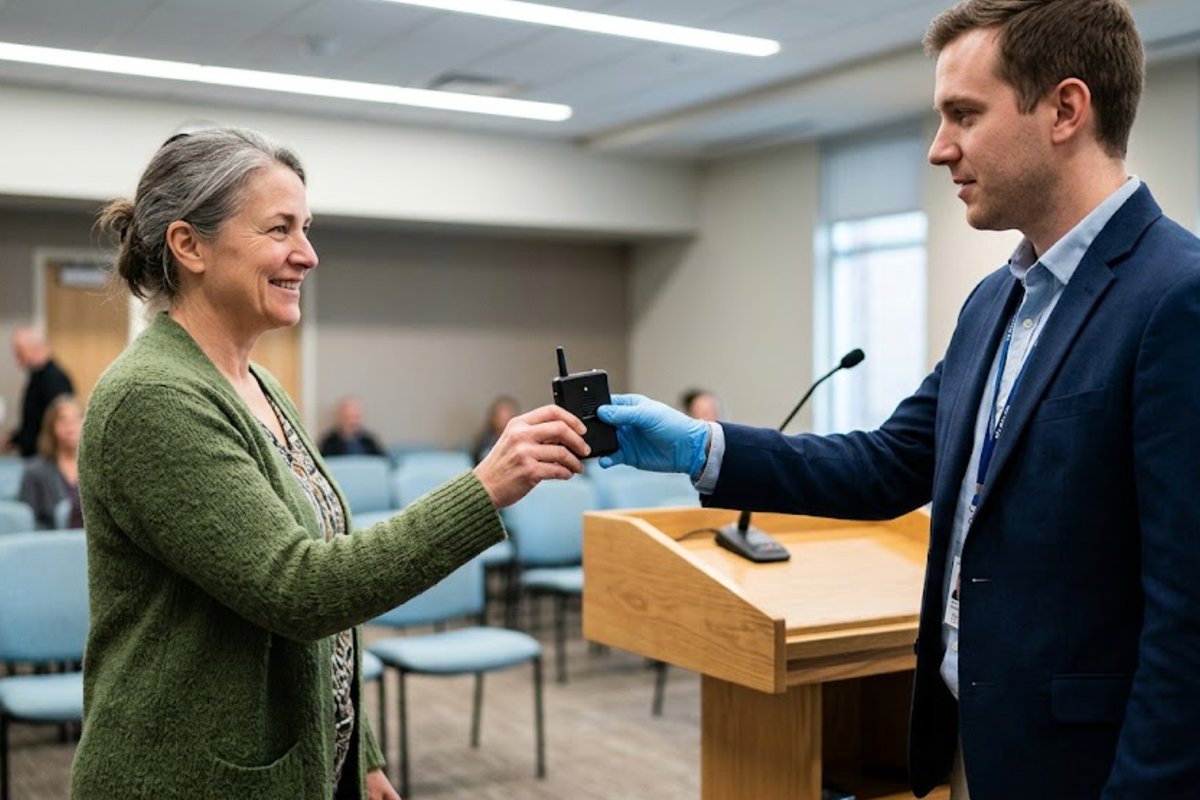
At a scenic overlook, the RC2408 handles a crowd of 20-25 tourists spread across a wide viewing platform. The guide uses the long-range transmitter to address the entire group while visitors, equipped with receivers, can move freely to admire the panoramic landscape. This flexibility transforms a standard walking tour into a dynamic, self-paced exploration without losing audio connection.
Solution Benefits & Key Outcomes
Deploying the RC2501, RC8860, and RC2408 in a campus tour setting delivers measurable improvements across multiple dimensions. Visitors enjoy clearer audio and a more immersive experience, whether they are listening to a history lecture in a quiet hall or receiving equestrian coaching outdoors. Staff benefit from equipment that is easy to set up, operate, and maintain, reducing training time and operational friction. Management gains visibility into tour operations through usage analytics, enabling data-driven decisions about resource allocation. The combined result is a more professional, efficient, and enjoyable campus tour operation that reflects the institution’s commitment to quality.
Institutions adopting these systems report increased visitor satisfaction scores and reduced equipment-related complaints. The lightweight designs minimize user fatigue, while the extended battery life supports full-day tours without interruption. By integrating industry trends from online education—such as personalized, career-focused learning—into physical campus experiences, these systems help institutions create cohesive brand narratives that resonate with prospective students and their families.