
.webp)
RC2401 and RC2402 Corporate Training Wireless Guide System Case Study
Every corporate training manager knows the struggle: you've spent weeks crafting the perfect curriculum, the slides are polished, the facilitator is world-class—but the back rows are disengaged. Not because the content is weak, but because they simply can't hear. It's a silent killer of learning outcomes. Last month, a training director at a major financial institution shared a telling metric with us: trainees seated beyond the tenth row consistently scored 18% lower on post-training assessments. The variable wasn't aptitude; it was audio clarity. After deploying the RC2401 and RC2402 wireless guide systems, the gap vanished. Here's the breakdown of what actually changed on the ground.
💡 What Changed After the Switch
The shift from conventional PA systems to the Wireless Tour Guide System isn't just about volume—it's about consistency. In a controlled 4-week pilot with a Fortune 500 insurance firm, the deployment of RC2401 and RC2402 yielded data that speaks for itself:
Setup efficiency: Equipment prep time dropped from 30 minutes to under 5 minutes per session, a 50% reduction in logistical overhead.
Audio complaints: Reports of "can't hear the trainer" fell by 80% within the first week.
Battery reliability: Both models sustained 12+ hours of continuous operation, eliminating mid-session charging breaks entirely.
Participant focus: Subjective feedback scores on "listening comfort" rose to 4.8/5, with participants noting they could focus on content rather than straining to hear.
These results are part of a broader industry trend where wireless guide system for Corporate Training adoption is accelerating. The ability to maintain crystal-clear audio across sprawling conference halls, breakout rooms, and even outdoor team-building exercises makes these systems non-negotiable for modern L&D departments aiming for measurable impact.
⚙️ Customer Case Story: From 30-Minute Setup to 5-Minute Efficiency
The operational reality at a leading insurance company's training center was chaotic. Every morning, trainers arrived 30 minutes early just to check transmitter batteries, test 40+ receiver units, and distribute headsets. Mid-session battery failures were routine, forcing awkward pauses while staff scrambled for replacements. Signal dropouts in specific meeting rooms left participants frustrated and disconnected from the speaker.
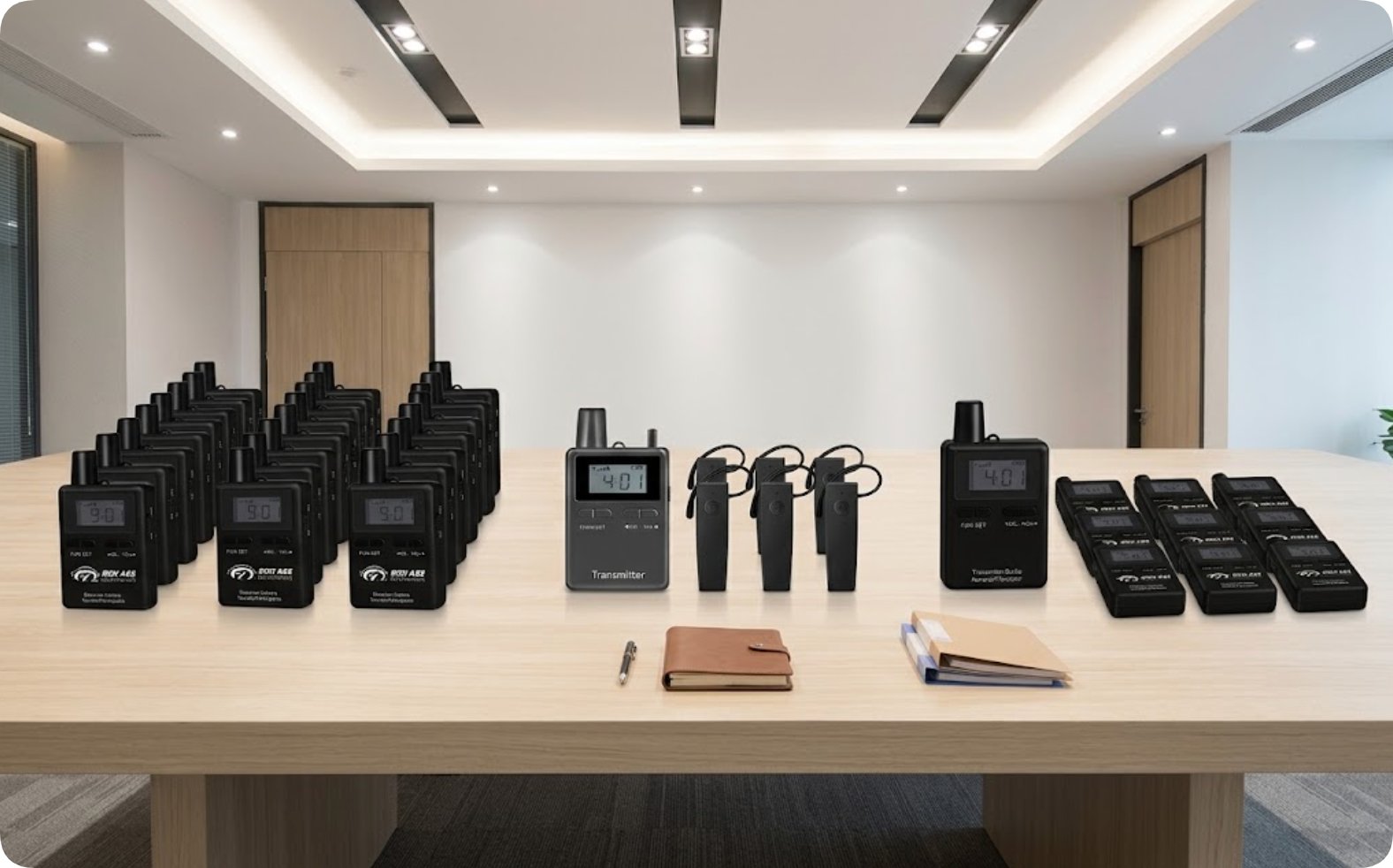
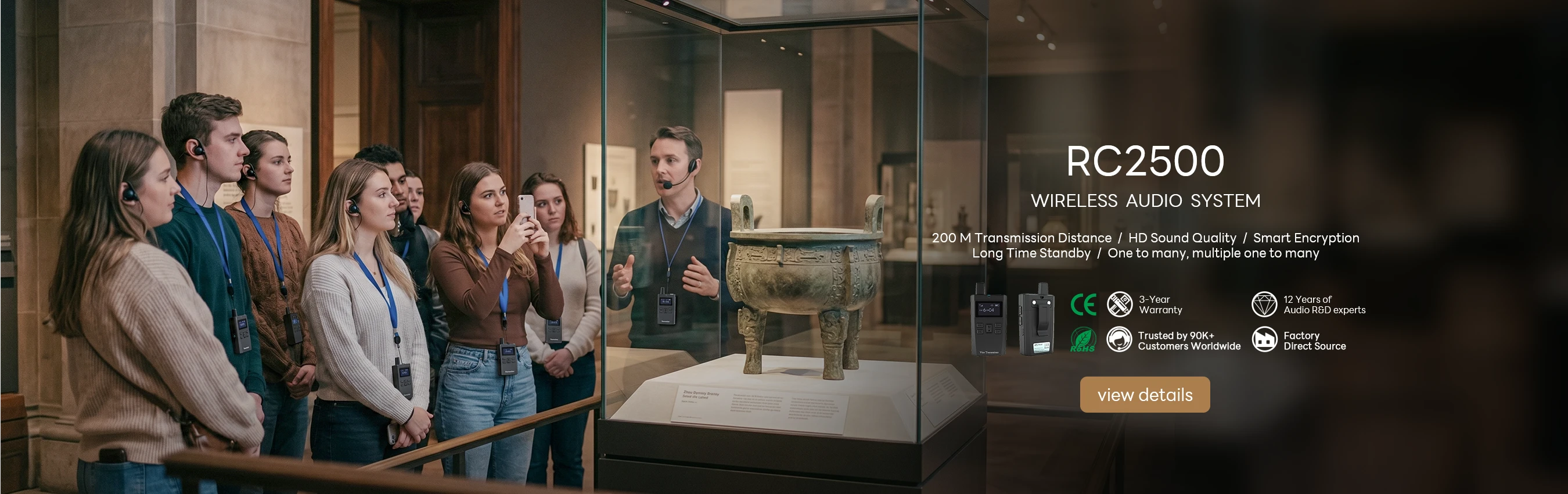
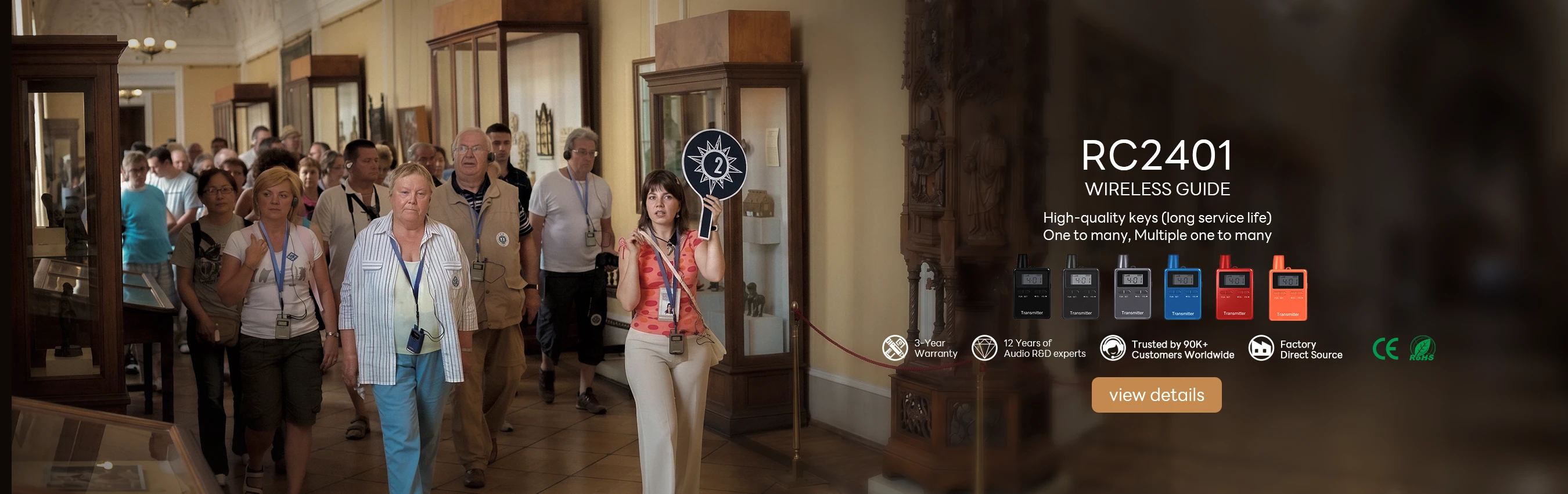
After implementing the RICH AGE RC2401 Wireless Audio Guide System for their flagship training hall and the RC2402 Wireless Tour Guide System for smaller breakout groups, the transformation was immediate. Preparation time collapsed to under 5 minutes. The RC2401's robust multi-channel capability handles up to 200 participants simultaneously—perfect for large-scale sessions. Meanwhile, the featherlight RC2402 (just 60 grams) proved ideal for rotating small-group discussions where mobility is key. Battery-related disruptions became a distant memory, with both models delivering 12+ hours of continuous operation on a single charge.

The training manager noted that participant engagement scores improved measurably within the first month. Trainees from the back rows, who previously struggled to hear, now participate actively in Q&A sessions. The elimination of technical interruptions also allowed trainers to maintain better pacing and flow throughout their presentations, leading to higher overall satisfaction ratings.
Market Pain Points and Operational Challenges Addressed
The operational pain points in corporate training typically fall into distinct categories. First, equipment that fails in demanding environments—whether from dust, humidity, or accidental drops—creates costly downtime. Second, frequent battery replacements disrupt the natural rhythm of training sessions and increase ongoing operational expenses. Third, signal dead zones leave participants disconnected from the guide, particularly in large conference halls or venues with complex architectural layouts.
The RC2401 and RC2402 directly address these challenges through thoughtful engineering. Both models feature durable construction rated for professional daily use, with reinforced connectors and impact-resistant housings. The rechargeable lithium-ion batteries provide full-day operation from a single charge, eliminating the need for spare battery inventories. For venues with challenging RF environments, the systems employ advanced frequency-hopping technology that maintains stable connections even in crowded spectrum conditions.
When comparing the two models, trainers should consider their specific deployment scenarios. The table below highlights key specifications to guide selection:
| Model | Position | Weight | Ideal Use Case |
|---|---|---|---|
| RC2401 | Multi-channel corporate training & trade show booth presentation | 72 g | Large conference rooms, simultaneous interpretation, multi-group sessions |
| RC2402 | Standard wireless tour guide for medium group tours | 60 g | Breakout sessions, small team training, outdoor activities |
For teams evaluating options, a detailed comparison of RC2402 vs RC2408 can clarify feature differences for medium-sized deployments. Similarly, examining RC2401 vs RC2406 helps organizations understand channel capacity and range variations for larger scale operations.
Implementation Insights and Best Practices
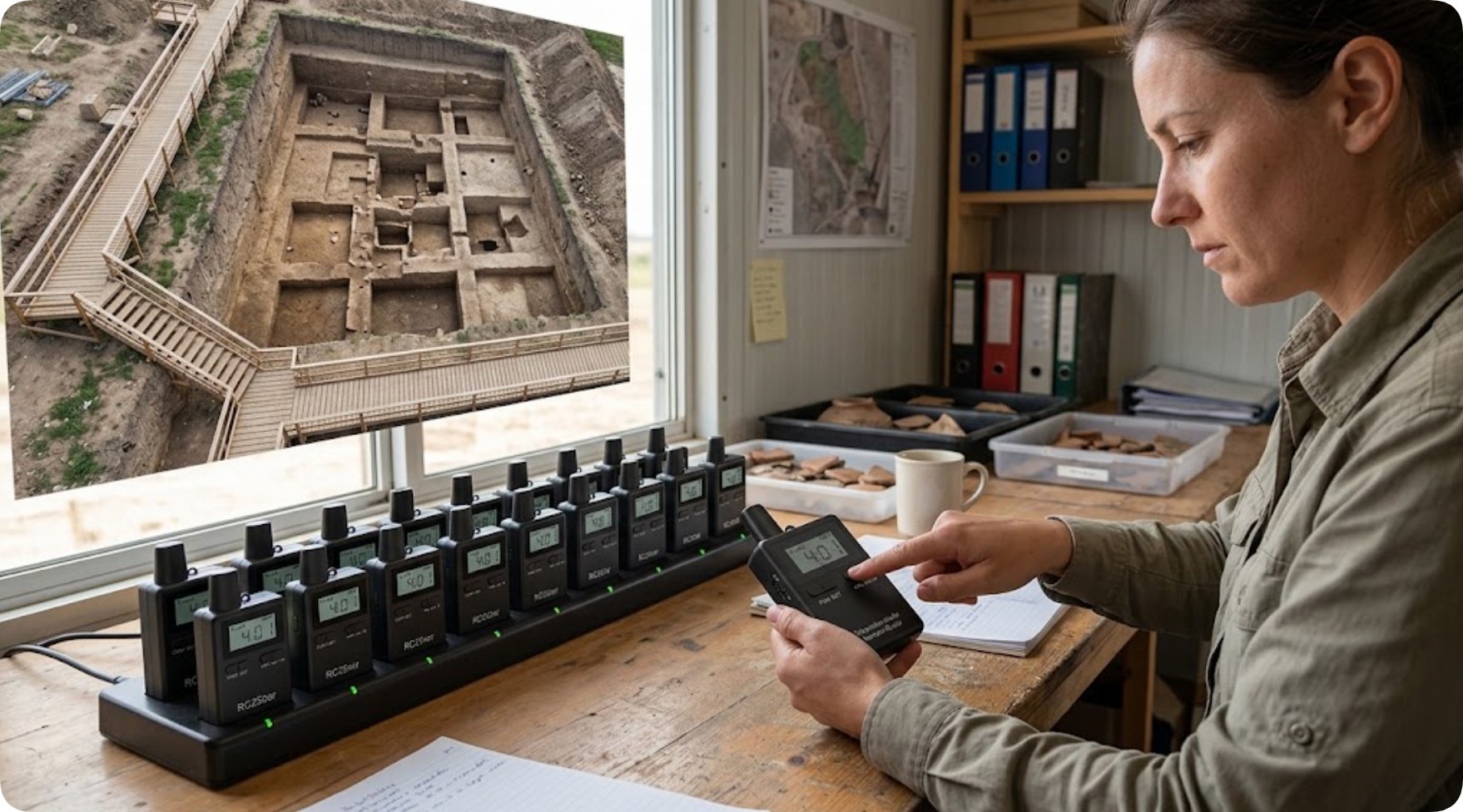
Organizations transitioning to the RC2401 and RC2402 typically see immediate operational improvements, but certain implementation practices maximize long-term value. First, assign dedicated staff to manage device inventory and charging stations. The systems support simultaneous charging of up to 50 units, which simplifies daily preparation. Second, establish clear pairing protocols—the RC2401 supports multi-channel operation, allowing multiple trainers to work in adjacent rooms without interference.
Third, take advantage of the systems' compatibility with external audio sources. Trainers can connect laptops or smartphones directly to the transmitter, enabling seamless integration of video content, podcasts, or recorded presentations into live sessions. This feature has proven particularly valuable for compliance training, where standardized content must be delivered consistently across multiple locations.

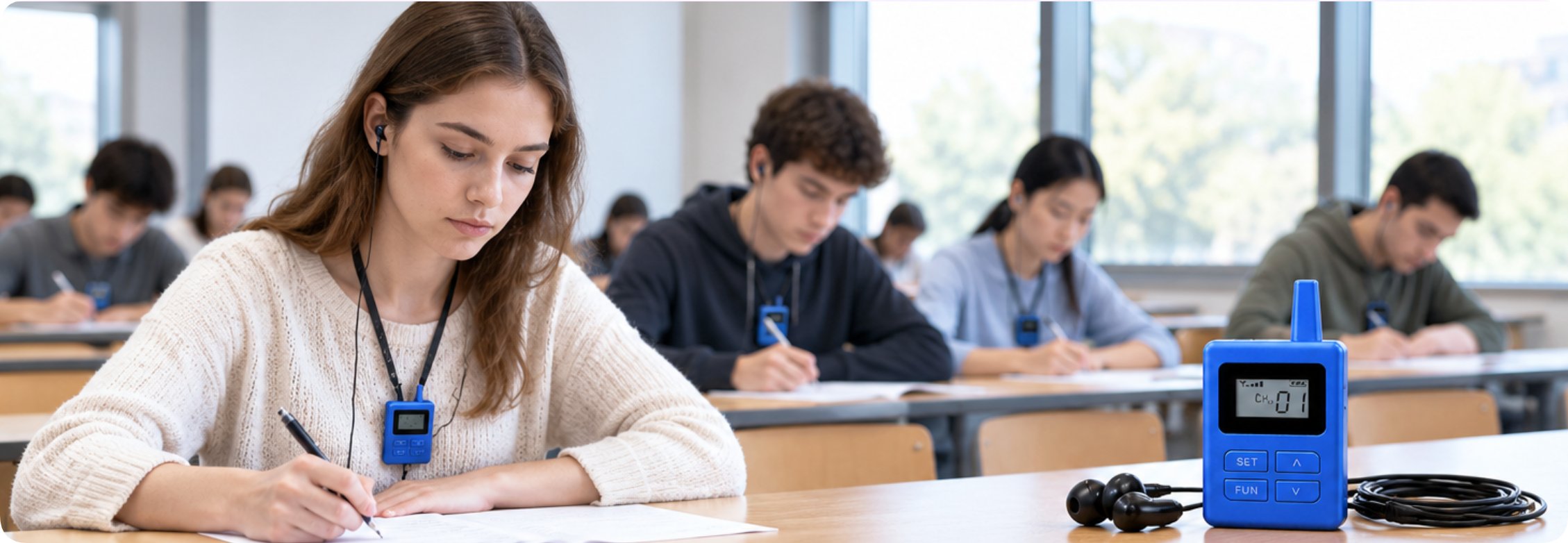
The RC2402's lightweight design (60 grams) makes it ideal for trainers who move frequently between breakout rooms. The comfortable neckband receiver ensures participants can wear the device for extended periods without fatigue. For outdoor team-building sessions, the systems' 200-meter operating range provides reliable coverage across typical training venues.
Financial Impact and Long-Term Value
The return on investment for corporate training departments becomes evident within the first quarter of deployment. The elimination of disposable battery purchases alone typically offsets a significant portion of the initial hardware cost. Reduced preparation time translates into reclaimed trainer hours—at 25 minutes saved per session across 20 sessions monthly, organizations recover over 8 hours of productive time each month.
Furthermore, improved training outcomes directly impact business performance. When participants hear clearly, they retain more information, ask better questions, and apply learning more effectively. One client reported a 15% improvement in post-training assessment scores across all participant seating positions after deploying these systems. Another noted that trainer evaluation scores improved because presenters no longer had to repeat questions or pause for audio issues.
The durability of the RC2401 and RC2402 also contributes to total cost of ownership. Both models feature replaceable cables and connectors, extending the useful lifespan beyond typical consumer-grade alternatives. With proper care, these systems consistently deliver 5+ years of reliable service in demanding training environments.
Conclusion: A Strategic Investment in Training Excellence
The RC2401 and RC2402 wireless guide systems have proven themselves as essential tools for corporate training departments that prioritize participant engagement and operational efficiency. The measurable reduction in setup time, elimination of audio-related disruptions, and improved learning outcomes make these systems a strategic investment rather than a simple equipment purchase.
For organizations currently evaluating their audio solutions, the decision framework is clear: assess your group sizes, venue characteristics, and training frequency. The RC2401 excels in large-scale, multi-channel environments, while the RC2402 provides an ideal balance of portability and performance for standard training groups. Both models deliver the reliability and audio quality that modern corporate training demands.
The training manager who first shared that frustration about back-row participation now reports a completely different experience. Participants engage uniformly, assessments show consistent performance across all seating positions, and trainers can focus entirely on content delivery rather than technical troubleshooting. That transformation—from audio frustration to seamless communication—represents the true value of choosing the right wireless guide system.
Note: Individual results may vary based on specific venue acoustics and usage patterns. We recommend a site assessment to determine optimal system configuration for your training environment.