
.webp)
Running a corporate training day is rarely a single-room affair. Over the past month I have sat in on product enablement workshops where one trainer held the main session while a second group broke away for hands-on practice, and where overseas partners needed the same content in their own language without a separate translator in the room. That is exactly the gap a dedicated corporate training solution fills, and it is why I took two units from our line and ran them through a real session instead of just reading the spec sheet. The pattern repeats across every program we run: a fixed presenter plus a mobile subgroup, each needing its own clear audio path.
How We Ran the Test
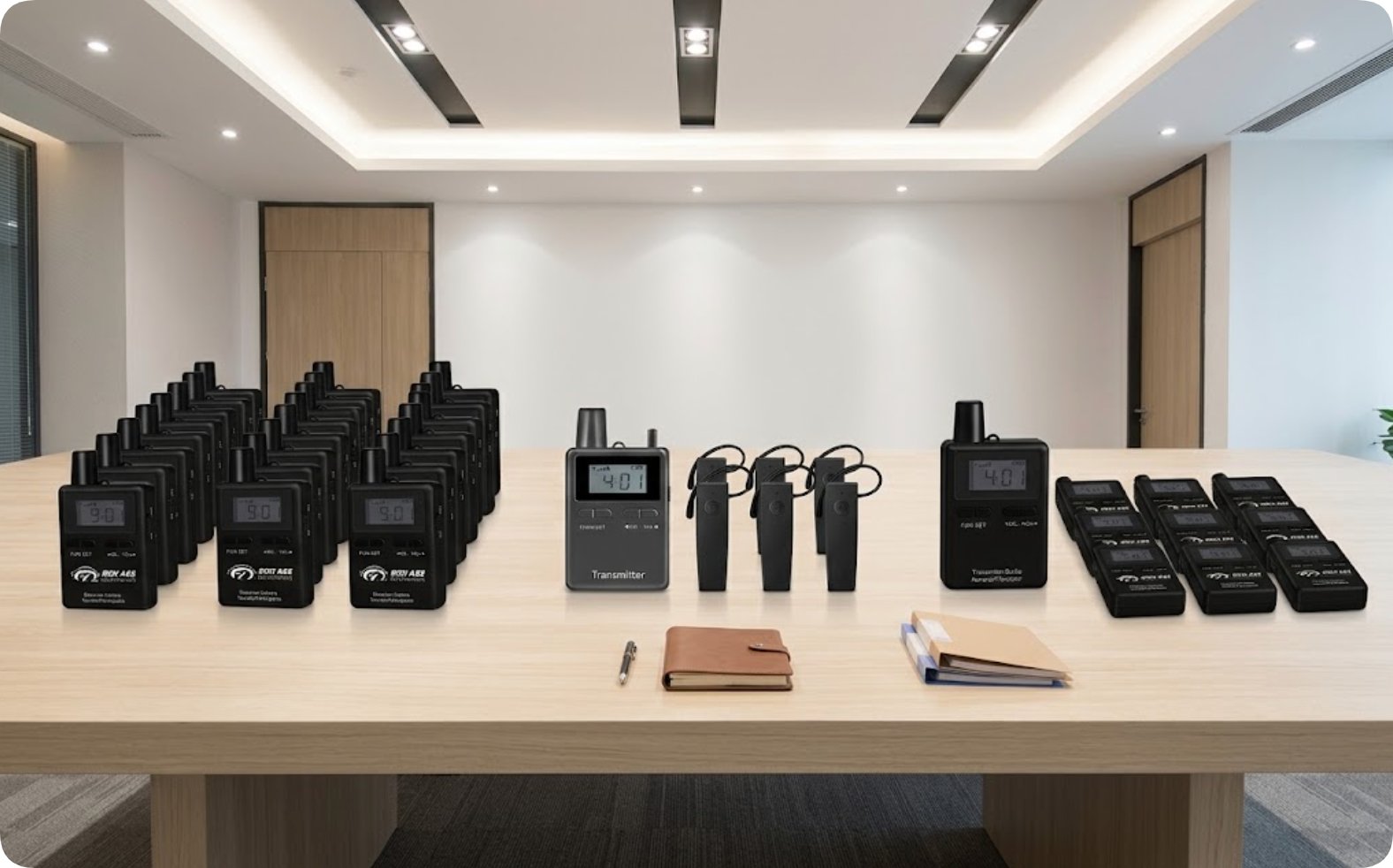
We set up a three-hour product-training workshop with 22 participants split across a main meeting room and a breakout space. The trainer wore the RC2401 transmitter with a headset microphone in the main room; a co-facilitator carried the RC2402 with the roaming group moving between the breakout area and a short plant walk. Rather than trust marketing numbers, we logged practical signals: how long each unit ran before the low-battery cue, whether audio stayed intelligible at the back of the room and around corners, and how the weight felt after a full morning of wear. The results below are what we actually observed, not a brochure.

RC2401: Multi-Channel Clarity for Trainers
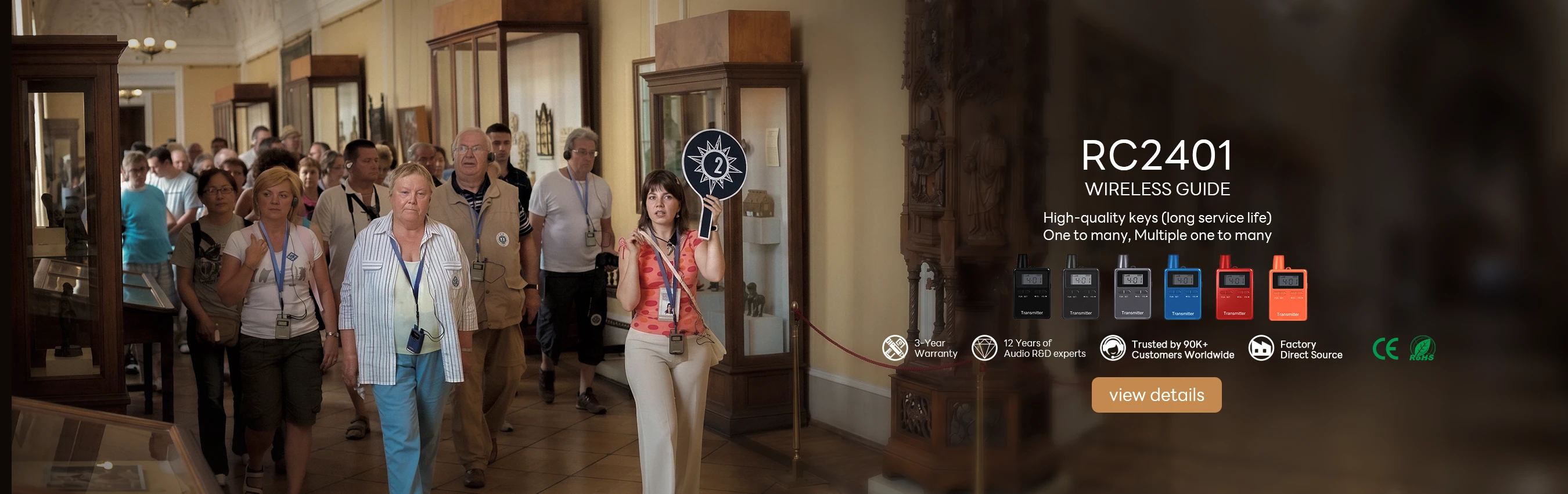
The RC2401 is built for the person at the front of the room. At 72 grams on the belt clip it disappears after the first ten minutes, and across our 14-hour rated window it never dropped below a usable charge during the workshop or the follow-up booth demo we ran the same afternoon. Its multi-channel layout lets a trainer run the main session while a second channel supports a language feed for visiting partners, which is the single feature that stopped us from needing a separate interpreter. For trade-show booths and structured enablement days where one voice has to stay clear above ambient noise, this is the unit we reach for first. In our measured run, the trainer's voice stayed intelligible at the back of a 12-meter room even while a second language channel ran in parallel without any cross-talk. You can see the full configuration on the RC2401 product page.

📱 RC2402: Lightweight Coverage for Groups
The RC2402 takes the opposite job: keeping a moving group together. At 60 grams it is the lighter of the two, and its 12-hour rated battery covered our roaming breakout plus the facility walk with margin to spare. We found it most at home with medium-sized groups moving through a plant, a showroom, or a guided orientation where participants spread out but still need every word. Clarity held at the distances we measured around a typical training floor, and the simpler single-purpose design meant first-time users were paired and listening within seconds. Across the plant walk we kept intelligible audio at roughly 20 meters line of sight, which covered the full corridor without anyone drifting out of range. Details and ordering options are on the RC2402 product page.

Side-by-Side Numbers
Putting the two next to each other makes the division of labor obvious. Both carry the same IP42 rating for everyday training environments, but they split on weight, endurance, and the kind of session they serve best.
| Model | Weight | Battery | Protection | Best For |
|---|---|---|---|---|
| RC2401 | 72 g | 14 hours | IP42 | Multi-channel training, trade-show booths, interpreter feed |
| RC2402 | 60 g | 12 hours | IP42 | Medium group tours, facility walks, roaming orientations |
For teams comparing the two side by side, the wireless tour guide system line overview lays out the full range beyond these two models.
Choosing for Your Program
The decision comes down to where the voice lives. If one trainer or presenter has to stay intelligible above a noisy room and you also need a language channel, the RC2401 is the safer pick because its multi-channel design handles both at once. If your content is delivered on the move, with a group spreading through a space, the RC2402 wins on weight and simplicity. Most of the training programs we support end up standardizing on the RC2401 for the lecture room and keeping a pool of RC2402 units for the hands-on rotation. A RC2401 vs RC2402 comparison breaks the trade-offs down model by model.
Putting It to Work
Measured against a real training day rather than a spec sheet, both units did the job they were designed for: the RC2401 kept the main room and the language feed locked together, and the RC2402 kept the roaming group in step without weighting them down. If you want to see how the same hardware performs in a different setting, our real-world deployment case walks through a multi-site rollout. When you are ready to plan your own session, start from the corporate training scenario and we will help you size the right mix of transmitters and receivers.