
.webp)
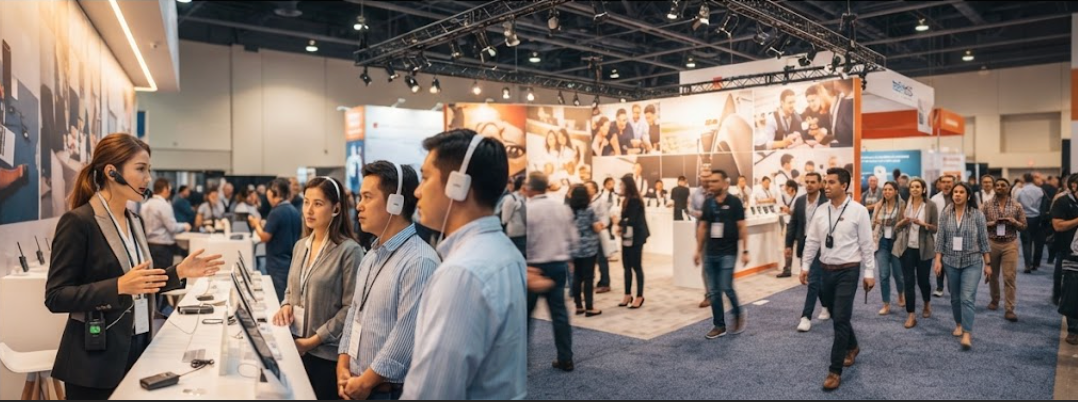
I was standing at a client's booth during a regional manufacturing expo when the problem became impossible to ignore. The demonstrator was raising his voice over the hall noise, visitors were drifting to the quieter competitor two rows down, and the sales lead later admitted they had no idea how many people actually heard the pitch. A trade show is the most expensive hour a marketing team buys all year, and yet the message was leaking out through the air. That is the moment I reach for a dedicated exhibition tradeshow solution, because the hardware turns a shouting match into a private channel that follows the listener out of the noise.
When the Demo Crowd Stopped Listening
The booth measured about nine square meters and sat between a compressor supplier and a live welding demo, so the ambient level never dropped below a constant hum. The team was running a looped product presentation every twenty minutes, but without a clear audio path the gathered crowd thinned within the first minute. The brief we got was simple: keep the people who stopped at the booth actually listening, and let the presenter move instead of being pinned to a lectern. Two constraints shaped the answer. First, the unit had to be light enough that a presenter could wear it for eight hours without a second thought. Second, it had to cut through the hall without blasting the neighbors.
RC2401 Keeps the Presentation On Track
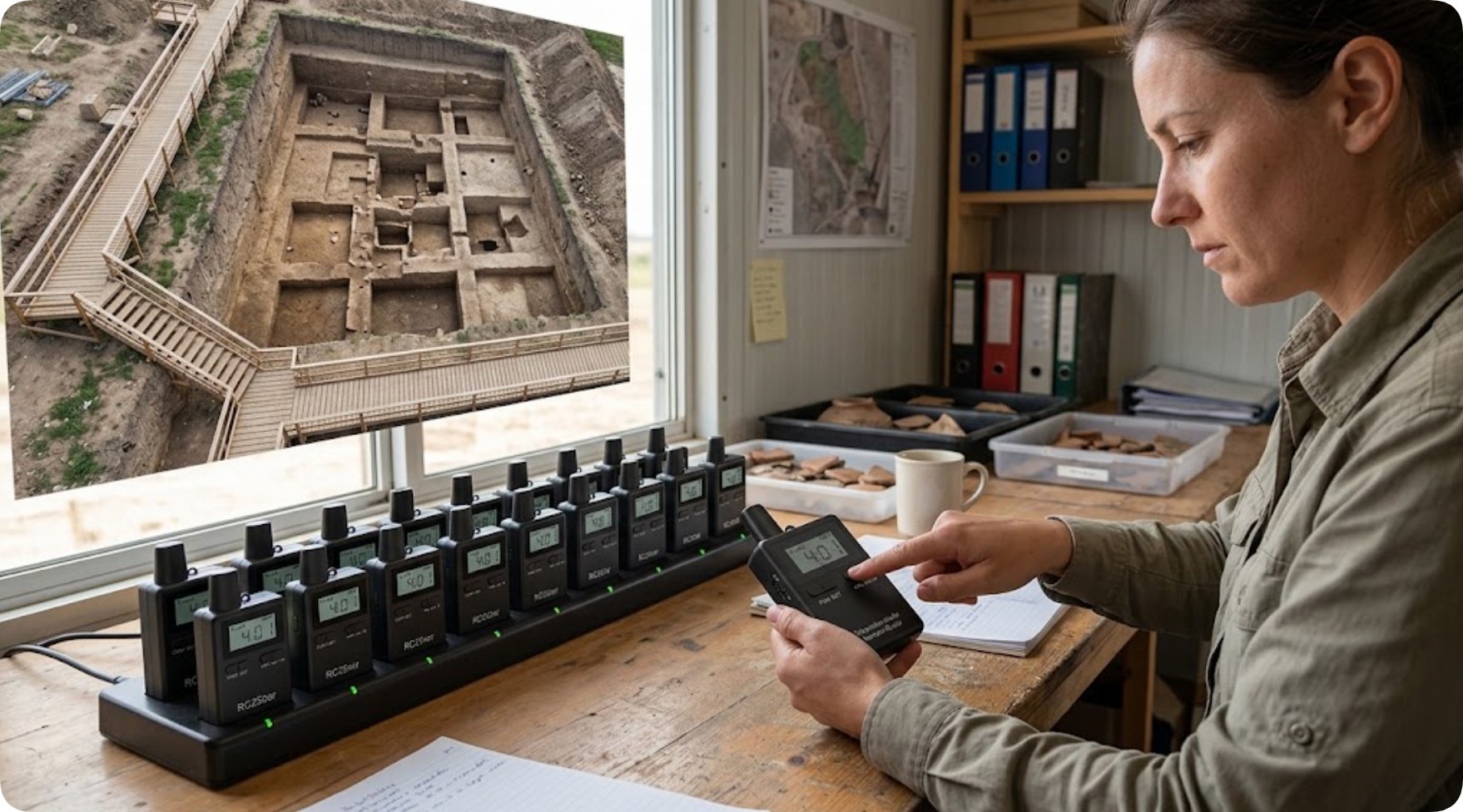
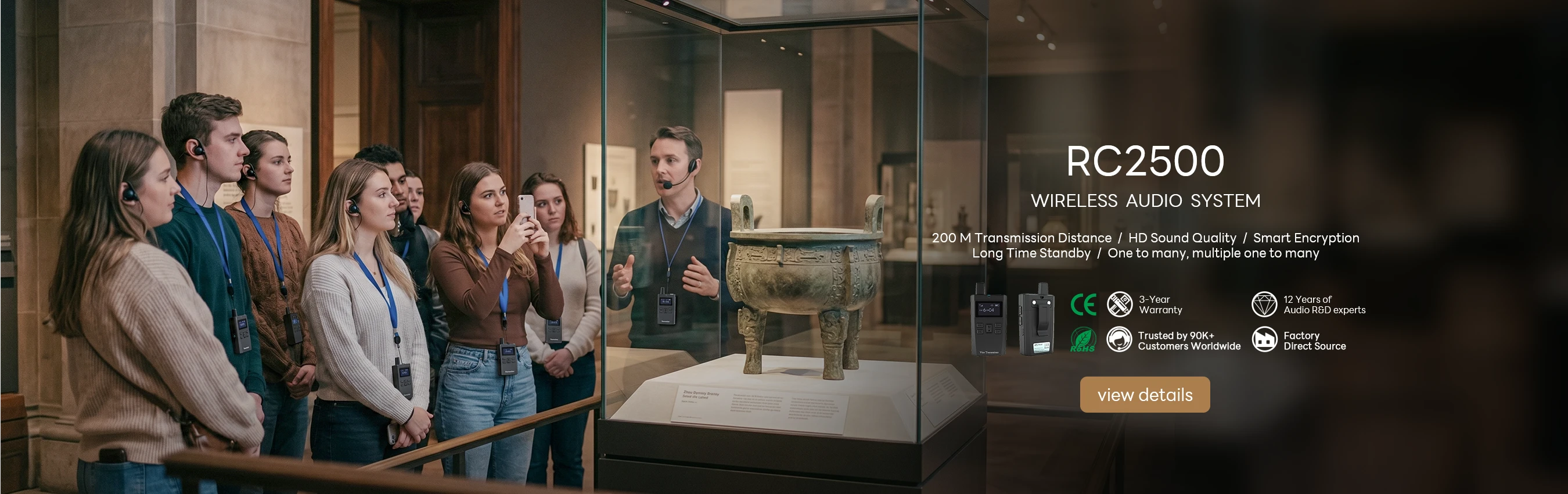
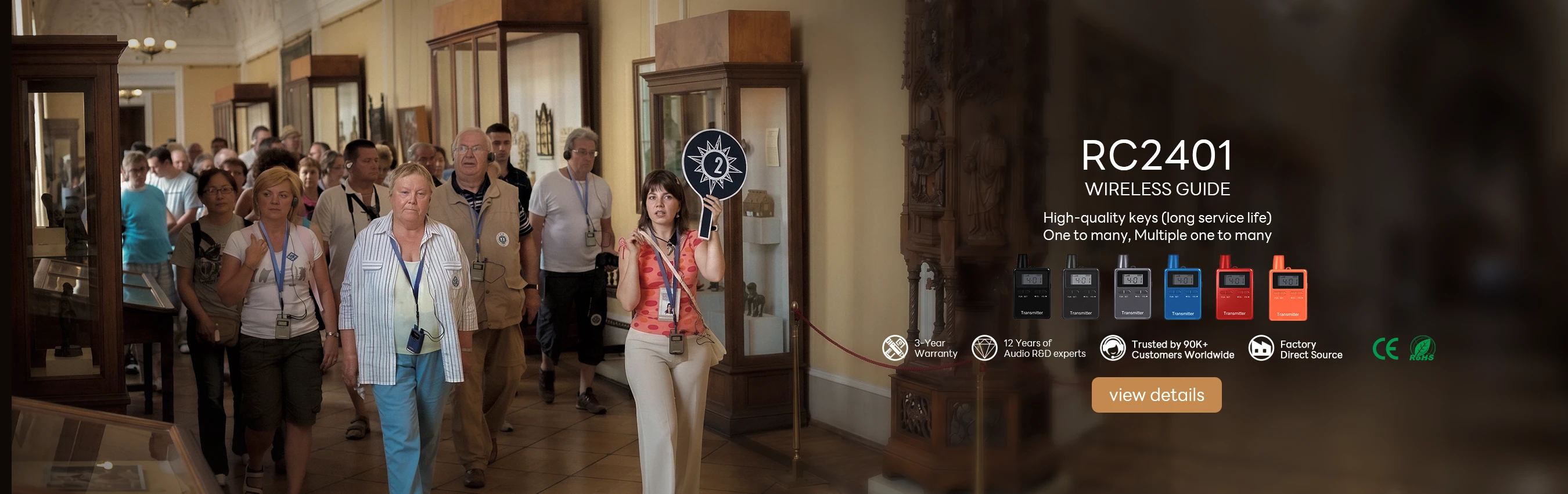
The RC2401 became the presenter's tool for the booth demo. Built on the global 2.4GHz ISM band at 2403 to 2483MHz, it opens 50 independent channels and locks each one with PLL frequency control, so the transmitter and the receiver stay on a private path even when a dozen other booths are broadcasting. The transmitter runs more than 10 hours of continuous operation and the receiver pulls over 20 hours of standby and playback, which comfortably covers a two-day show on a single charge. At 72 grams the presenter forgets it is clipped on. The signal reaches 200 meters in open area and pushes through concrete walls and machine halls, so a visitor who steps back to read a spec sheet still hears the line. For a booth where one person delivers a repeatable pitch, this is the unit that keeps the crowd from walking.

RC2406 Handles Three Languages at Once
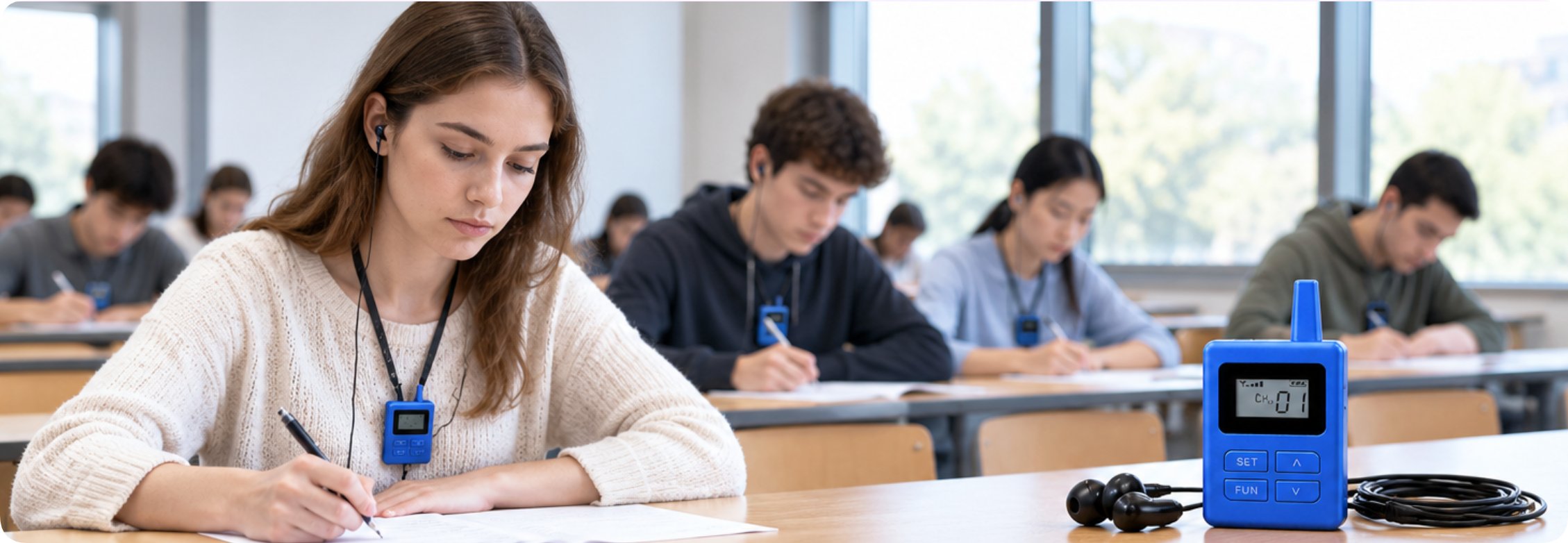
The RC2406 solved a different part of the same show. On the second day the client ran guided walkabouts for overseas buyers, and three language groups needed to move through the floor together without cross-talk. The RC2406 runs 80 interference-free channels on the same 2.4GHz band with PLL anti-interference technology, so three guides can each take a language and never step on each other. A 1500mAh lithium cell carries a full-day cycle, the body is sealed to IPX4 splash resistant, and at 65 grams it is the lightest of the pair. The 200-meter range means a guide can lead a group from the booth to a live demo station and keep every receiver locked. When the audience speaks more than one language, this is the unit that keeps the message private per group.

Running Both Units on One Floor
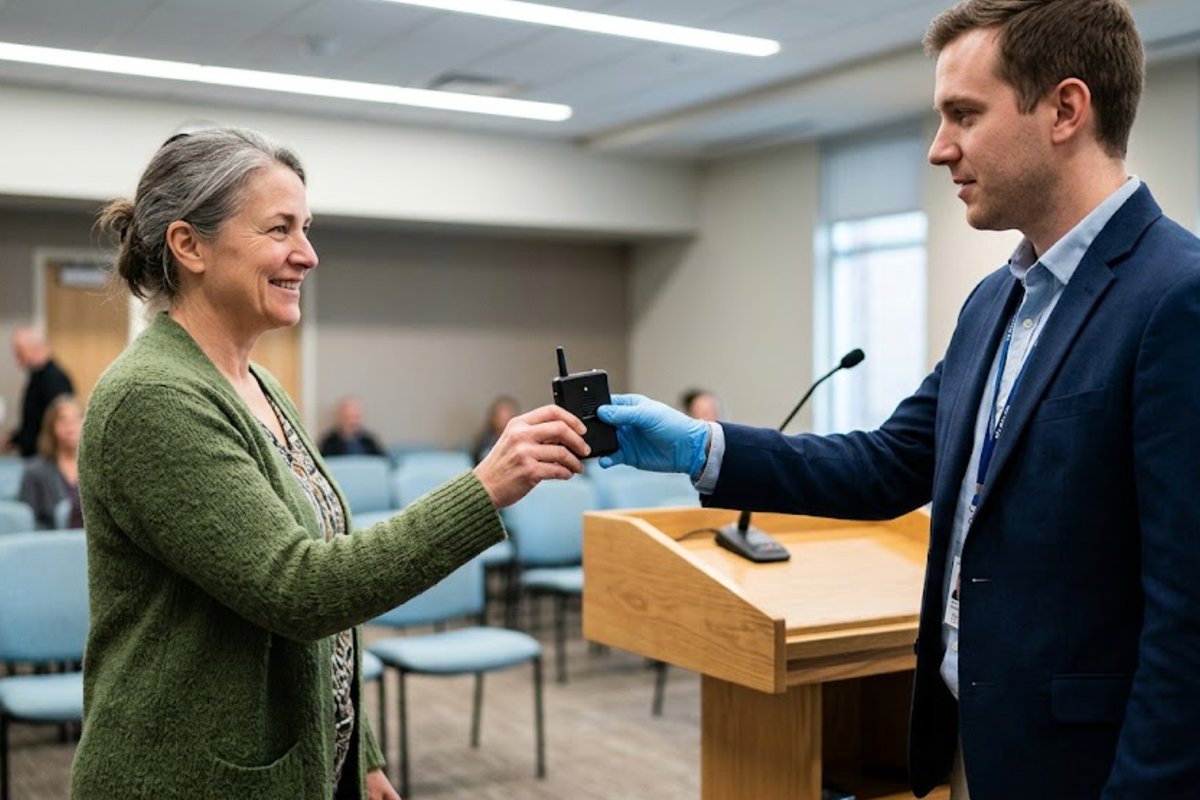
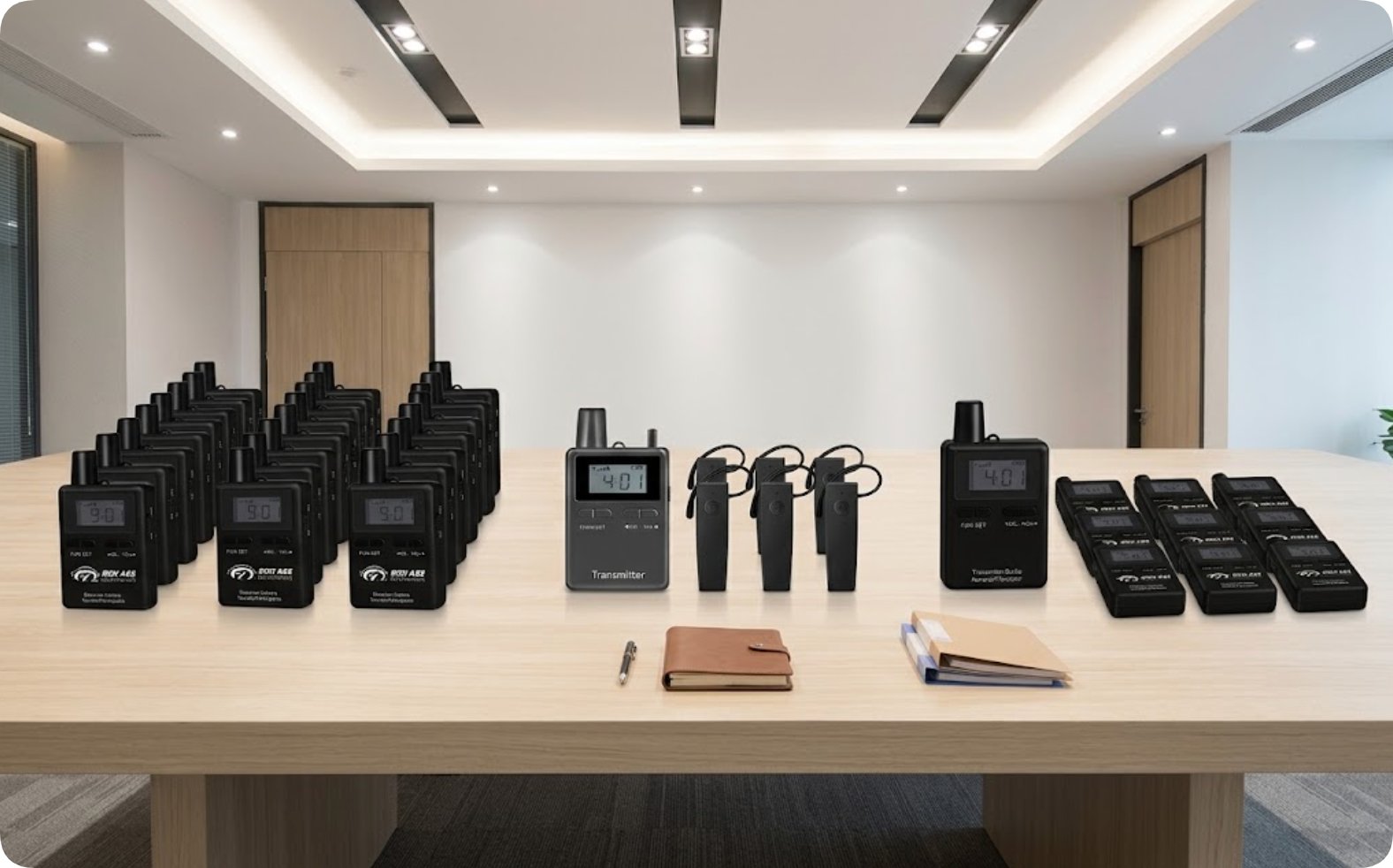
The deployment that worked paired the two instead of picking one. The RC2401 stayed at the booth as the fixed demo channel, while RC2406 units went out with the guides for the walkabouts. Because both sit on the 2.4GHz ISM band with PLL channel control, the show coordinator planned the channel map in advance and the two systems never collided. Receivers were handed out at the entrance, sanitized between users, and the presenters swapped batteries at the close of day one with margin to spare. The key was treating the audio like any other piece of booth infrastructure: assigned, tested, and mapped before the doors opened.
The Numbers After the Event
The client measured what mattered to them. Dwell time at the booth rose because the presenter no longer lost the front row to the hall noise, and the walkabout groups stayed intact instead of fragmenting at the first loud exhibit. The sales team counted a cleaner handoff of qualified visitors because the pitch was consistent across every loop and every language. None of that showed up as a spec line, but it is exactly the return a trade show spend is supposed to buy. Below is the side-by-side that the coordinator used to decide the split.
| Model | Band | Channels | Range | Battery | Weight | Best For |
|---|---|---|---|---|---|---|
| RC2401 | 2.4GHz 2403-2483MHz | 50 (PLL) | 200m open area | 10h TX / 20h RX | 72g | Booth demo, single presenter |
| RC2406 | 2.4GHz 2403-2483MHz | 80 (PLL anti-interference) | 200m open area | 1500mAh, full-day | 65g, IPX4 | Multi-language guided groups |
🎪 Choosing the Right Unit for Your Stand
Pick the RC2401 when the value is one consistent voice at a fixed point, a demo loop that has to land the same way every twenty minutes, and a presenter who is on the floor all day. Pick the RC2406 when the floor splits into language groups that need to move, when three guides run at once, and when splash resistance and the lightest weight matter. For most shows the honest answer is both, mapped to channels before the doors open. Our RC tour guide series covers the full range, and the RC2401 versus RC2406 breakdown shows where each one pulls ahead on a real stand.
If your next expo still loses half its booth crowd to the hall noise, send us your booth layout, show length, and the languages you expect on the floor. We will map the channel plan and tell you whether the RC2401, the RC2406, or a paired set turns your most expensive hour into a conversation people actually hear, with no guesswork about which unit carries which group. For more field reports and setup notes, explore our solutions across trade show and factory tour deployments.