
A leading China factory specializing in Wireless Tour Guide Systems, Church Audio Guides, and Translation Headphones with premium OEM/ODM solutions.

Tel:+86 18922879583

Email:tiger.wang@richitek.com

Campus Tour Technology Evolution: Choosing the Right Wireless Tour Guide System

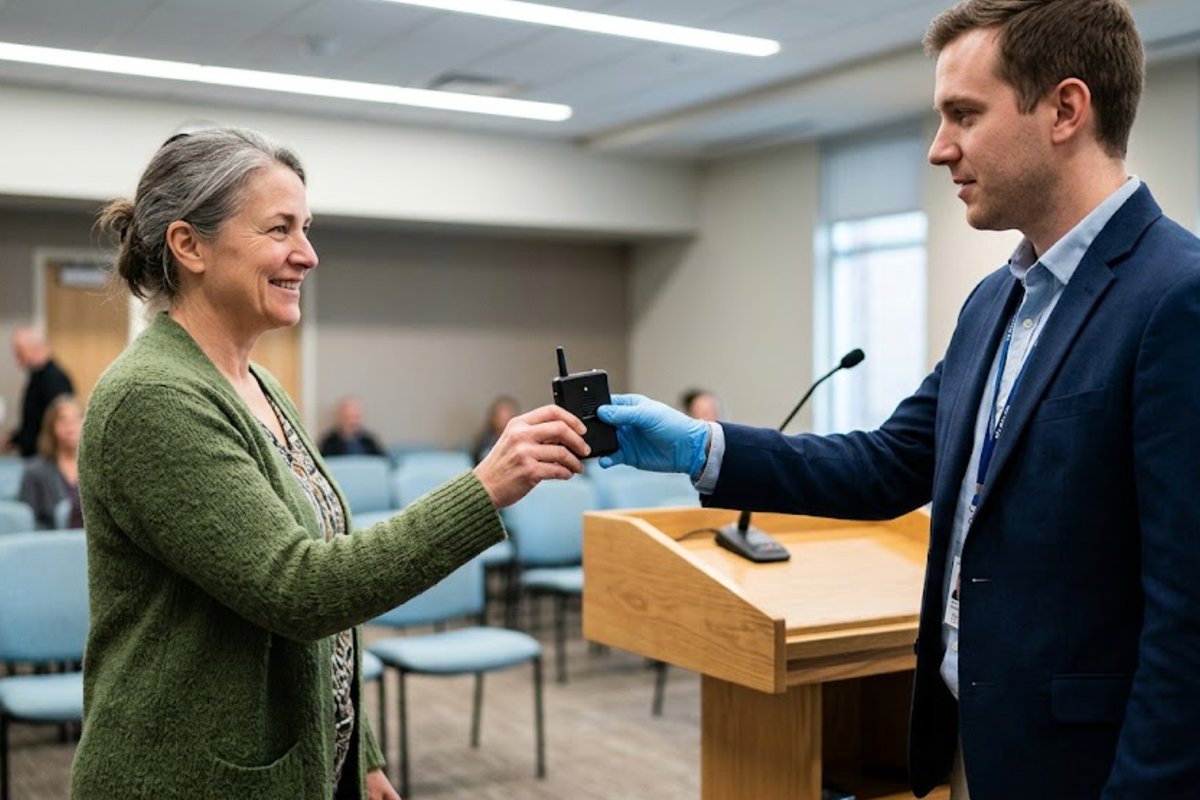
Every semester, our team fields the same question from university visitor centers: how do we keep a growing crowd of prospective students and their families together without shouting across a packed lecture hall? I have watched campus open days fall apart when a guide tries to project over hallway noise, losing half the group at the first staircase. The fix is not a louder voice. It is better audio hardware that has quietly improved over the last decade, and the gap between older gear and what ships today is wider than most admissions teams expect.

For institutions planning recurring events, we usually point them to our dedicated campus tour solutions before anything else, because the right plan matters as much as the right device when you are moving thirty people between buildings.

📈 From Whisper to Broadcast: A Short History

Walk onto any campus in the early 2000s and you would see the same setup: a guide with a bullhorn, or a wired microphone passed hand to hand. Both failed the moment a group stepped outside. The first real shift came with dedicated radio frequency units that let a transmitter talk to dozens of silent receivers at once. That removed the shouting, but early hardware was heavy, the channels overlapped, and battery life rarely survived a full afternoon of back-to-back tours.

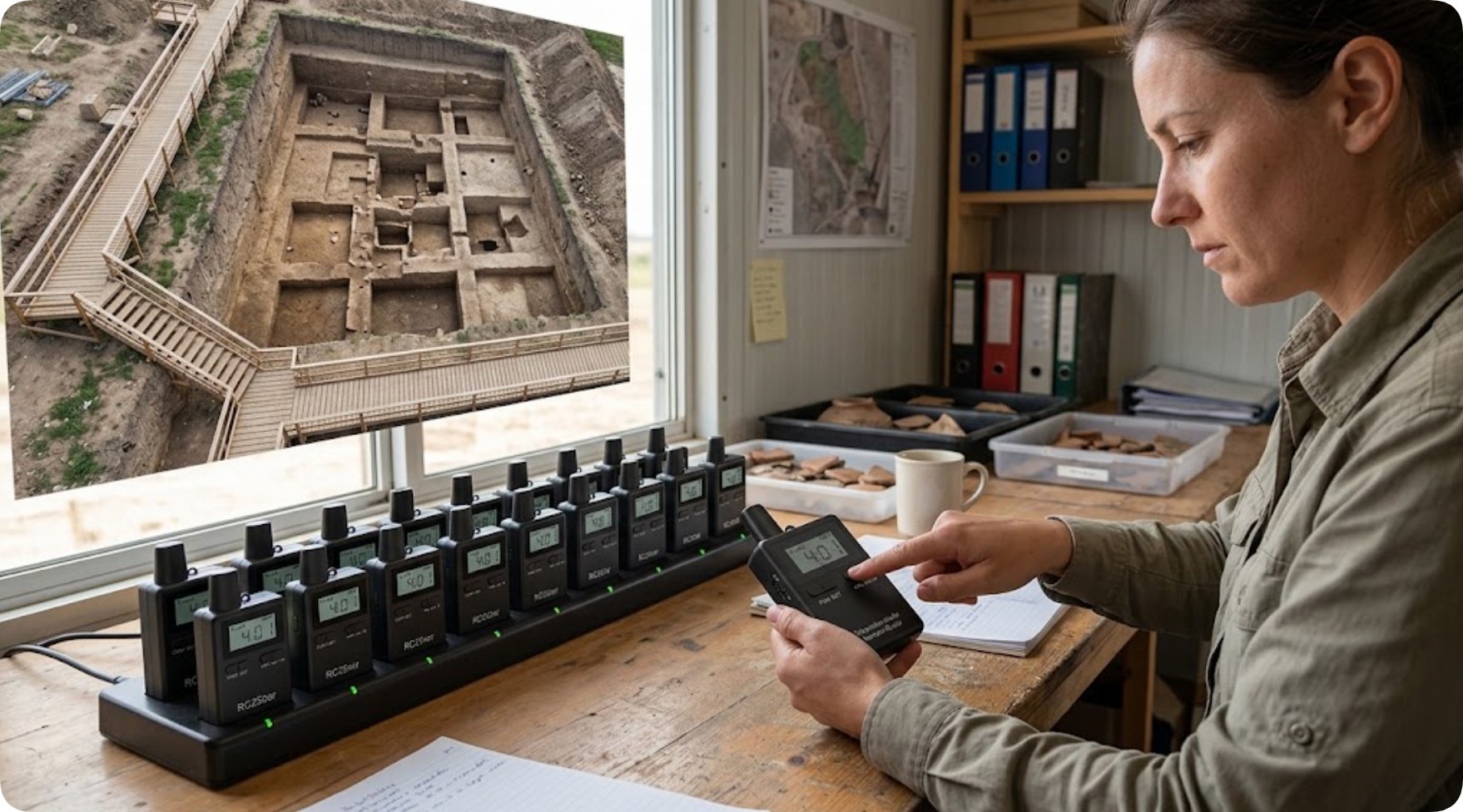
The second shift is the one campuses feel today. Modern units pair lightweight receivers with cleaner frequency handling, so a guide can speak at a normal volume and every visitor hears it clearly whether they are in a quiet library reading room or standing on an open quad in the wind. Two device families now cover almost every campus situation, and knowing which one fits your route is the difference between a smooth visit and a frustrated crowd.

Campus Tour Technology Evolution: Choosing the Right Wireless Tour Guide System(图1)

Silent Headphone Approach for Indoor Visits

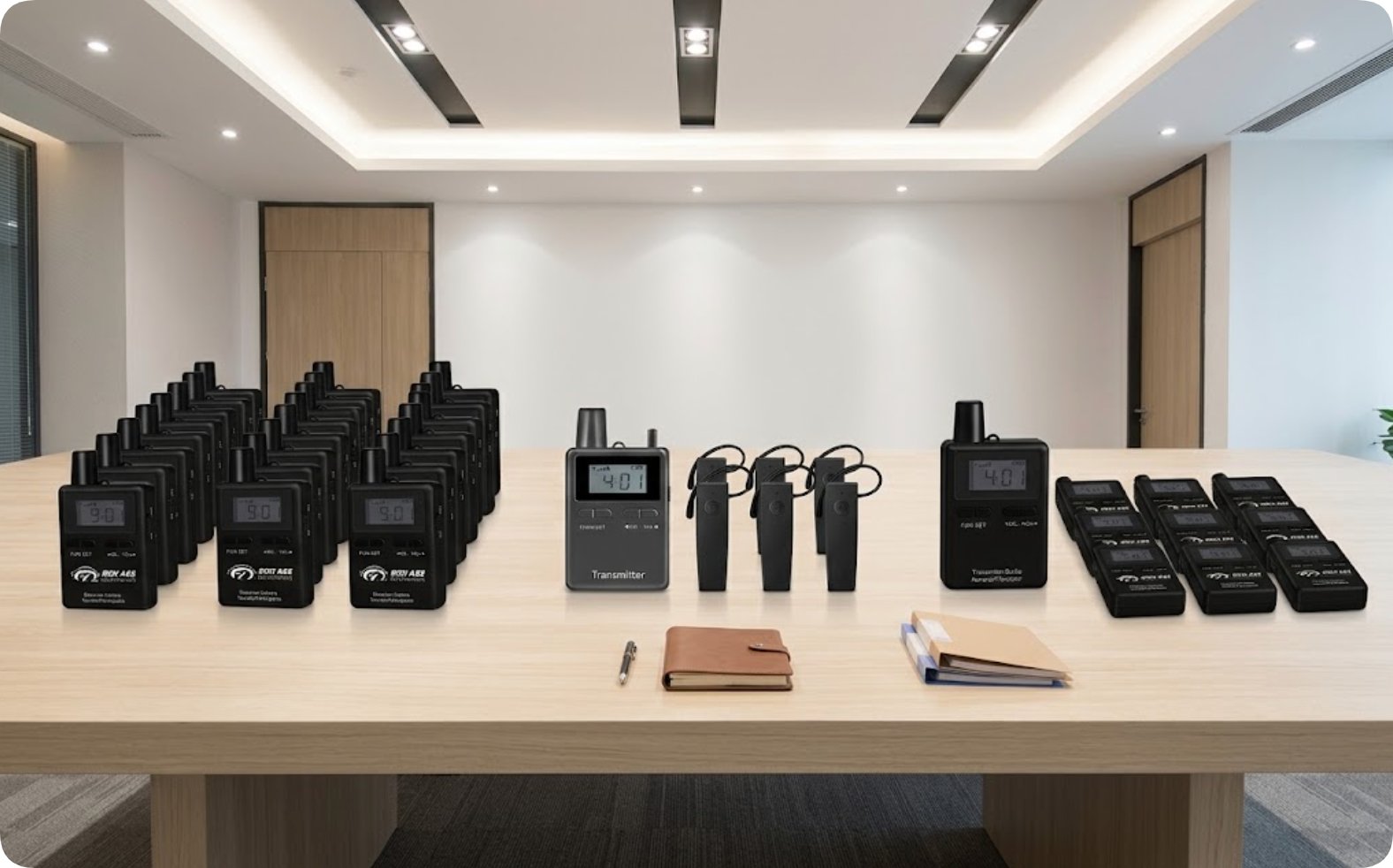
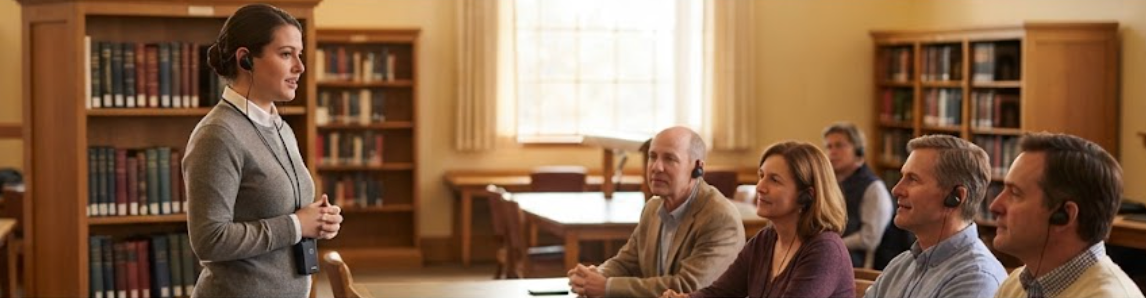
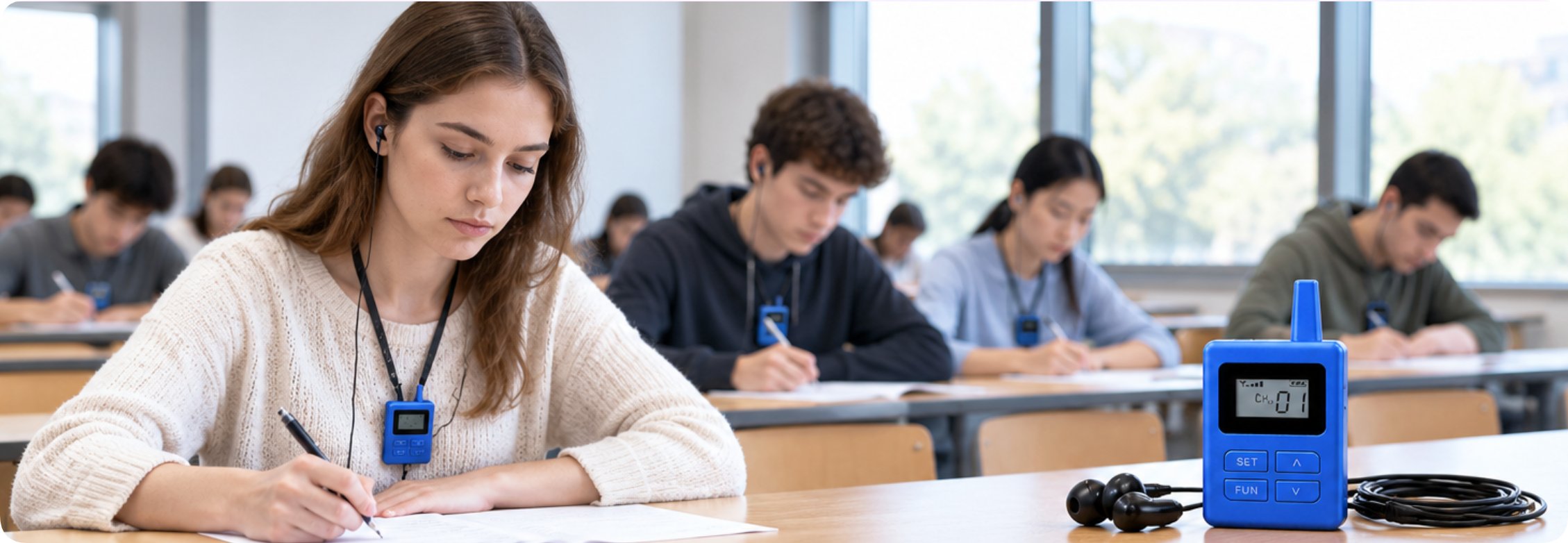
The RC2501 wireless tour guide headset is built for the parts of a campus tour that happen behind doors. At just 48 grams, it disappears into a visitor's pocket between stops, and its silent delivery model means a guide can walk a group through a working laboratory, an archive, or a recital hall without disturbing anyone outside the circle. Ten hours of battery covers a full day of recurring sessions on a single charge, and the IP20 rating is perfectly suited to climate-controlled interiors.

I recommend RC2501 whenever the route is indoor-heavy and the group stays close: admissions briefings, department open houses, and donor walks through historic buildings. The discreet form factor also reads as professional rather than touristy, which matters when you are showing off a research facility to a prospective partner rather than herding a bus tour.
Campus Tour Technology Evolution: Choosing the Right Wireless Tour Guide System(图2)

⚡ Long Range Coverage Across Open Ground

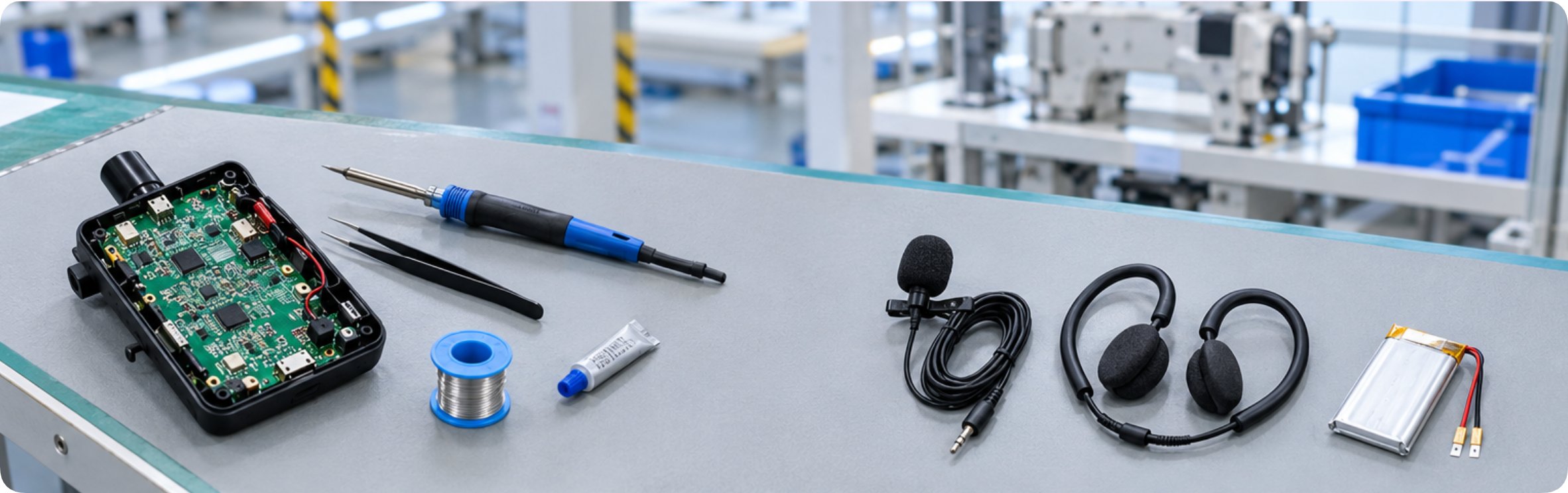
Step outside and the calculus changes. Wind, distance, and competing noise from nearby courtyards all work against a small transmitter, which is exactly where the RC2408 long-range system earns its place. At 70 grams it is still light enough to clip on and forget, but its extended transmission reach keeps a spread-out group of twenty or more on the same page across a wide lawn or between distant faculties. Fourteen hours of battery and an IP42 rating handle dust and light rain, so a sudden shower does not end the tour.

I reach for RC2408 on large open-day circuits, engineering campus loops, and any route that mixes outdoor plazas with quick indoor duck-ins. The longer range means a guide can lead from the front instead of hovering in the middle of the crowd, which keeps the group moving and looks far more natural to passing students.

Campus Tour Technology Evolution: Choosing the Right Wireless Tour Guide System(图3)

Specification Comparison at a Glance

ModelWeightBattery LifeProtectionBest Fit
RC250148 g10 hoursIP20Indoor silent tours, small close groups
RC240870 g14 hoursIP42Outdoor long-range, larger spread groups

Matching Devices to Group Size

The honest answer to "which one" is rarely a single device. Most campuses run a mixed route, and the smart move is to match the unit to the segment: silent headsets for the indoor portions, long-range units for the outdoor stretches. Our complete wireless tour guide lineup lets a visitor center standardize on one supplier, train student ambassadors on a single workflow, and swap models per stop without learning a new interface each time.

As a rule of thumb, keep RC2501 for groups under roughly twelve people in quiet spaces, and switch to RC2408 once the crowd grows or the route opens up. Admissions teams that plan both intimate department visits and hundred-strong open days usually stock both, and the per-stop handoff is quick enough that visitors never notice the change.

🔮 Plan Your Next Group Walk

Good campus storytelling is mostly logistics: the right words, delivered clearly, at the right moment in the right room. The technology has finally caught up to that idea, and picking between a silent indoor headset and a long-range outdoor system is now a five-minute decision instead of a semester-long headache. If you are mapping next term's visit calendar, start from the route and work backward to the hardware.

When you are ready to build a plan that fits your buildings, explore our solutions for education and see how other institutions structured their recurring tours. A short call with our team will tell you exactly which combination keeps your next group together from the first hello to the closing Q and A.

2026年08月28日 10:09
click: 852

Campus Tour Technology Evolution: Choosing the Right Wireless Tour Guide System

time: 2026年08月28日 click:852

Every semester, our team fields the same question from university visitor centers: how do we keep a growing crowd of prospective students and their families together without shouting across a packed lecture hall? I have watched campus open days fall apart when a guide tries to project over hallway noise, losing half the group at the first staircase. The fix is not a louder voice. It is better audio hardware that has quietly improved over the last decade, and the gap between older gear and what ships today is wider than most admissions teams expect.

For institutions planning recurring events, we usually point them to our dedicated campus tour solutions before anything else, because the right plan matters as much as the right device when you are moving thirty people between buildings.

📈 From Whisper to Broadcast: A Short History

Walk onto any campus in the early 2000s and you would see the same setup: a guide with a bullhorn, or a wired microphone passed hand to hand. Both failed the moment a group stepped outside. The first real shift came with dedicated radio frequency units that let a transmitter talk to dozens of silent receivers at once. That removed the shouting, but early hardware was heavy, the channels overlapped, and battery life rarely survived a full afternoon of back-to-back tours.

The second shift is the one campuses feel today. Modern units pair lightweight receivers with cleaner frequency handling, so a guide can speak at a normal volume and every visitor hears it clearly whether they are in a quiet library reading room or standing on an open quad in the wind. Two device families now cover almost every campus situation, and knowing which one fits your route is the difference between a smooth visit and a frustrated crowd.

Campus Tour Technology Evolution: Choosing the Right Wireless Tour Guide System(图1)

Silent Headphone Approach for Indoor Visits

The RC2501 wireless tour guide headset is built for the parts of a campus tour that happen behind doors. At just 48 grams, it disappears into a visitor's pocket between stops, and its silent delivery model means a guide can walk a group through a working laboratory, an archive, or a recital hall without disturbing anyone outside the circle. Ten hours of battery covers a full day of recurring sessions on a single charge, and the IP20 rating is perfectly suited to climate-controlled interiors.

I recommend RC2501 whenever the route is indoor-heavy and the group stays close: admissions briefings, department open houses, and donor walks through historic buildings. The discreet form factor also reads as professional rather than touristy, which matters when you are showing off a research facility to a prospective partner rather than herding a bus tour.

Campus Tour Technology Evolution: Choosing the Right Wireless Tour Guide System(图2)

⚡ Long Range Coverage Across Open Ground

Step outside and the calculus changes. Wind, distance, and competing noise from nearby courtyards all work against a small transmitter, which is exactly where the RC2408 long-range system earns its place. At 70 grams it is still light enough to clip on and forget, but its extended transmission reach keeps a spread-out group of twenty or more on the same page across a wide lawn or between distant faculties. Fourteen hours of battery and an IP42 rating handle dust and light rain, so a sudden shower does not end the tour.

I reach for RC2408 on large open-day circuits, engineering campus loops, and any route that mixes outdoor plazas with quick indoor duck-ins. The longer range means a guide can lead from the front instead of hovering in the middle of the crowd, which keeps the group moving and looks far more natural to passing students.

Campus Tour Technology Evolution: Choosing the Right Wireless Tour Guide System(图3)

Specification Comparison at a Glance

ModelWeightBattery LifeProtectionBest Fit
RC250148 g10 hoursIP20Indoor silent tours, small close groups
RC240870 g14 hoursIP42Outdoor long-range, larger spread groups

Matching Devices to Group Size

The honest answer to "which one" is rarely a single device. Most campuses run a mixed route, and the smart move is to match the unit to the segment: silent headsets for the indoor portions, long-range units for the outdoor stretches. Our complete wireless tour guide lineup lets a visitor center standardize on one supplier, train student ambassadors on a single workflow, and swap models per stop without learning a new interface each time.

As a rule of thumb, keep RC2501 for groups under roughly twelve people in quiet spaces, and switch to RC2408 once the crowd grows or the route opens up. Admissions teams that plan both intimate department visits and hundred-strong open days usually stock both, and the per-stop handoff is quick enough that visitors never notice the change.

🔮 Plan Your Next Group Walk

Good campus storytelling is mostly logistics: the right words, delivered clearly, at the right moment in the right room. The technology has finally caught up to that idea, and picking between a silent indoor headset and a long-range outdoor system is now a five-minute decision instead of a semester-long headache. If you are mapping next term's visit calendar, start from the route and work backward to the hardware.

When you are ready to build a plan that fits your buildings, explore our solutions for education and see how other institutions structured their recurring tours. A short call with our team will tell you exactly which combination keeps your next group together from the first hello to the closing Q and A.
×

Contact us

email:
name:
subject:
content: