A leading China factory specializing in Wireless Tour Guide Systems, Church Audio Guides, and Translation Headphones with premium OEM/ODM solutions.

Tel:+86 13825295213

Email:tiger.wang@richitek.com

RC085 and RC2402 for Stadium Tours: ROI Measured Around One Season

A stadium tour operation is not a museum and it is not a factory walk; it is a volume business with fixed event dates, large groups, and a small window to earn back every dollar spent on hardware. The ROI question for wireless tour guide systems for stadium tours therefore deserves a stadium-shaped answer: not a per-device cost list, but a season-level model that starts with the crowd plan and works back to what the kit must do. This article builds that model around three Richitek units deployed in a typical mid-size stadium program: the RC085 for day-long guided routes, the RC2402 for channels that have to stay clean in a crowded radio environment, and the RC2401 as the budget-conscious option for secondary routes. The numbers come from the operating pattern of real stadium tour programs rather than from a brochure.

💰 The Cost Baseline Most Operators Forget to Price

Most stadium operators compare only the hardware price and stop there, which misses the largest line item in the model: labor. A single guided route on a match day needs a guide who can be heard by sixty visitors at once, and without a tour guide system the operator either hires multiple guides for one group or runs groups small enough to hear a raised voice. Both options cost more per visitor than the hardware ever will. The baseline for a serious ROI model is therefore the per-tour labor cost with and without a system, measured over the same route, the same group size, and the same season length.

Building a Model on the Real Date Count

The model below uses a 120-date stadium season with mixed traffic: peak match days, quiet weekday tours, and private stadium experiences booked by sponsors. Group sizes run from 25 on quiet days to 60 on match days. The comparison holds the visitor experience constant and varies only the delivery method: a one-guide voice-only baseline versus a guided group carrying receivers. Labor cost is priced at a blended guide rate, and the hardware is spread across a three-year useful life with a modest annual service allowance.
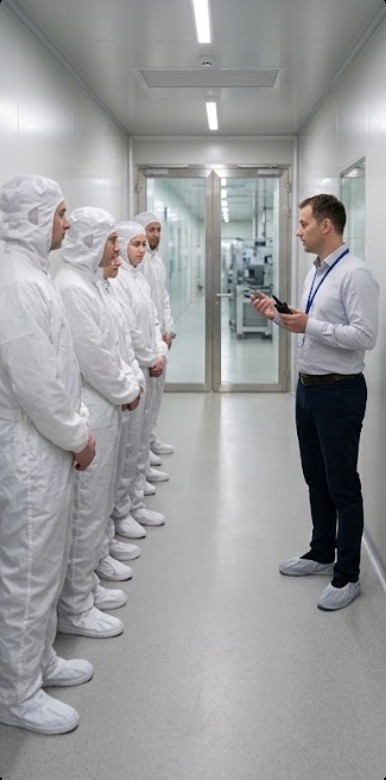
RC085 and RC2402 for Stadium Tours: ROI Measured Around One Season(图1)

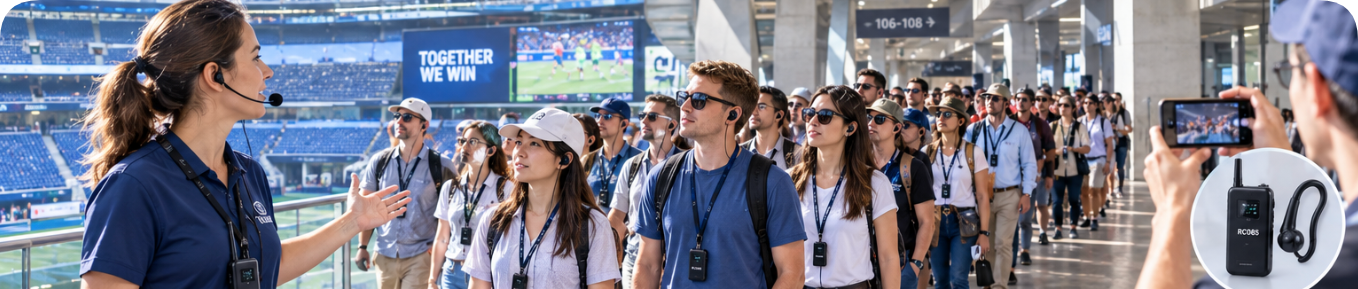
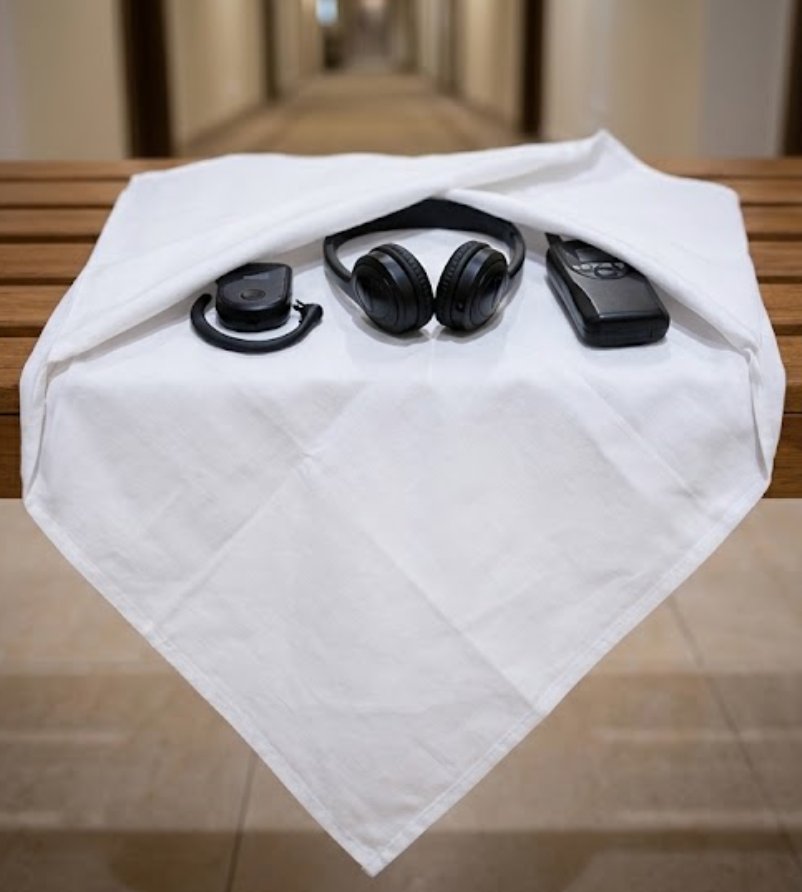
On the route above, the guide carries one transmitter and every visitor wears a receiver, which is the configuration that removes the group-size ceiling entirely. One guide can lead the full 60-person group, and the per-visitor labor cost stops scaling with headcount.

Where the Payback Window Forms

The payback window appears at the point where the labor saved crosses the hardware cost. In the model, a 60-person group that previously split into two 30-person groups with two guides becomes one group with one guide, saving one guide shift per tour. On 40 peak dates a season, that saving alone clears the hardware cost of a mid-size receiver fleet before the first year ends. Quiet-day tours, which run at 25 visitors and would otherwise barely justify a second guide, extend the same fleet across dates that add almost no marginal labor cost. The window closes fastest when the program runs both peak and quiet dates on one fleet, which is exactly the pattern most stadiums actually have.

📡 Channel Discipline in a Crowded Radio Environment

Stadium precincts are radio-hostile in a way museums are not: broadcast trucks, security radios, and nearby events all compete for spectrum. The ROI case for the RC2402 is not range but channel discipline. When the tour program runs several routes at the same time, or when the stadium's own operations radio traffic sits nearby, a unit that holds its channel clean prevents the single worst outcome in the model: a tour that has to stop and re-pair mid-route. One interrupted tour costs more than the channel-clean unit costs, because the interruption is felt by every visitor on the route at the same moment. The measured behavior that matters is separation between active channels during overlapping tours, which is where the RC2402 earns its place in the fleet.
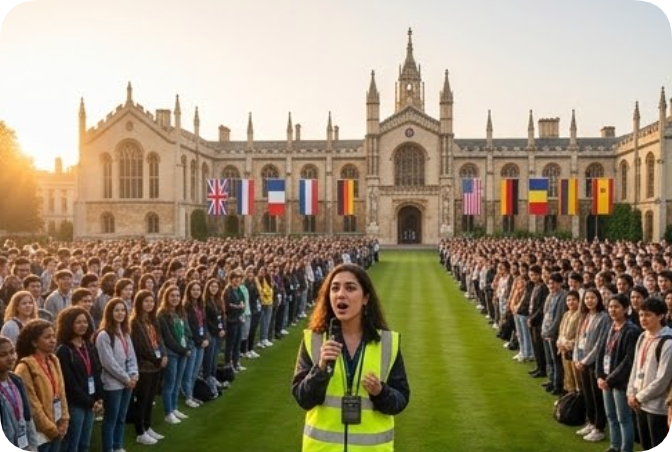
RC085 and RC2402 for Stadium Tours: ROI Measured Around One Season(图2)

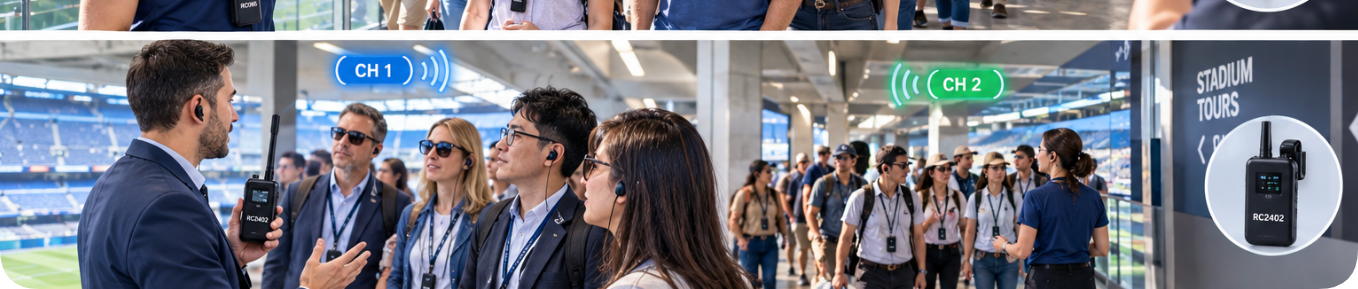
The channel-separation behavior above is what allows the operations manager to run a public tour and a private sponsor experience at the same time on adjacent routes without either group hearing the other, which keeps both revenue streams running on the same match day.

💰 Rental Cost Versus Owned Cost Per Date

The rental comparison is where the model surprises most operators. Rental agencies charge per unit per date, and a 60-receiver rental for one match day quickly approaches the per-date cost of owning the fleet once the season passes about twenty dates. Rental also carries a hidden cost that ownership does not: the operator cannot control which firmware or battery condition arrives, and a bad rental day burns the same labor budget as a hardware failure. Ownership moves the risk onto a fleet the operator knows, and the per-date cost falls toward zero after the payback point while the rental cost stays flat forever.

Line itemVoice-only baselineOwned fleet (RC085 + RC2402 + RC2401)
Guides needed per 60-visitor tour21
Labor cost per peak dateHigher by one guide shiftBaseline
Per-date equipment cost after season 1Not applicableNear zero (owned)
Rental cost per 60-receiver dateNot applicableHigher than owned beyond ~20 dates
Risk of mid-route interruptionLow (no electronics)Controlled by clean channels + known fleet

The table condenses the season model into the five decisions an operator actually makes. The owned-fleet column assumes the RC085 carries the main routes, the RC2402 protects the overlapping-channel dates, and the RC2401 covers secondary and low-traffic routes at the lowest entry cost.

💰 Cost Per Visitor, the Metric That Survives the Budget Meeting

The metric that survives a stadium budget meeting is cost per visitor, not cost per unit. Spreading the three-year hardware and service cost over the season's visitor count produces a per-visitor figure that is small enough to defend against almost any competing spend. Voice-only delivery keeps the visitor count per guide low, which pushes cost per visitor up through labor; an owned system pushes it down through group size. When the two are compared on the same route and the same season, the owned fleet wins on cost per visitor from the first season in most mid-size programs, and the gap only widens as visitor volume grows.

Different Venue Sizes Change the Break-Even Point

The break-even point is not the same for every venue. A large stadium running 200-plus dates a year reaches the rental-versus-owned crossover much earlier, because the per-date saving compounds faster. A smaller venue with 40 dates may never justify a large RC085 fleet and should size the purchase around the RC2401 as the workhorse instead. The model's value is that it makes the crossover explicit: an operator can take the same table, enter their own date count and group size, and read off whether ownership pays back inside their planning horizon. The three units exist precisely so the sizing decision can be made per route rather than per product family.
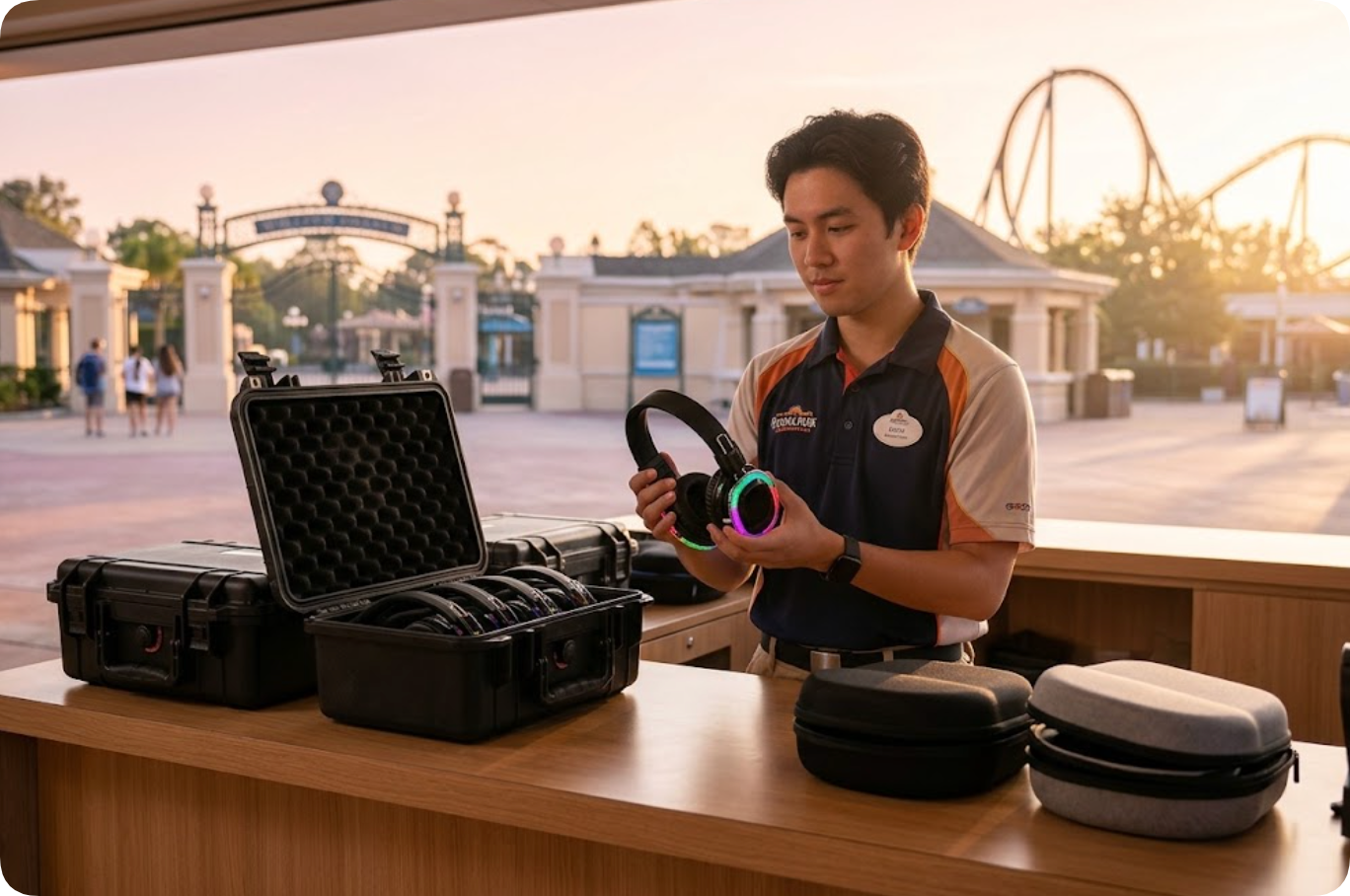
RC085 and RC2402 for Stadium Tours: ROI Measured Around One Season(图3)

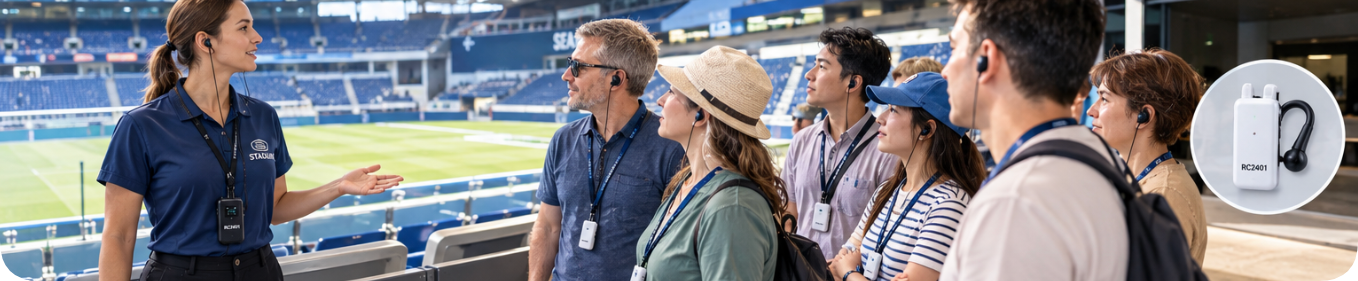
The secondary route above runs on quiet weekdays with a smaller group, which is the pattern where the RC2401's lower entry cost matters most and where a stadium can extend guided revenue without buying capacity it will not use.

🔮 What to Prepare Before the Next Budget Cycle

Before the next budget cycle, an operator should collect three numbers: the season's date count split by peak and quiet, the average group size per route, and the current per-tour labor cost. With those three inputs, the model above answers the ownership question in about ten minutes. For operators still comparing vendors, the same model should be run twice, once with the quoted hardware price and once with a service allowance, because the service line is where a low hardware quote usually reappears. The RC085 carries the main routes, the RC2402 protects the crowded-channel dates, and the RC2401 fills the quiet calendar. A full wireless tour guide system selection can then be made on numbers the operator already has, rather than on a hardware brochure. For the earlier deployment-cost breakdown that started this conversation for a different venue profile, the stadium deployment cost analysis shows the same model applied with a different fleet mix.
2026年09月09日 09:09
click: 312

RC085 and RC2402 for Stadium Tours: ROI Measured Around One Season

time: 2026年09月09日 click:312

A stadium tour operation is not a museum and it is not a factory walk; it is a volume business with fixed event dates, large groups, and a small window to earn back every dollar spent on hardware. The ROI question for wireless tour guide systems for stadium tours therefore deserves a stadium-shaped answer: not a per-device cost list, but a season-level model that starts with the crowd plan and works back to what the kit must do. This article builds that model around three Richitek units deployed in a typical mid-size stadium program: the RC085 for day-long guided routes, the RC2402 for channels that have to stay clean in a crowded radio environment, and the RC2401 as the budget-conscious option for secondary routes. The numbers come from the operating pattern of real stadium tour programs rather than from a brochure.

💰 The Cost Baseline Most Operators Forget to Price

Most stadium operators compare only the hardware price and stop there, which misses the largest line item in the model: labor. A single guided route on a match day needs a guide who can be heard by sixty visitors at once, and without a tour guide system the operator either hires multiple guides for one group or runs groups small enough to hear a raised voice. Both options cost more per visitor than the hardware ever will. The baseline for a serious ROI model is therefore the per-tour labor cost with and without a system, measured over the same route, the same group size, and the same season length.

Building a Model on the Real Date Count

The model below uses a 120-date stadium season with mixed traffic: peak match days, quiet weekday tours, and private stadium experiences booked by sponsors. Group sizes run from 25 on quiet days to 60 on match days. The comparison holds the visitor experience constant and varies only the delivery method: a one-guide voice-only baseline versus a guided group carrying receivers. Labor cost is priced at a blended guide rate, and the hardware is spread across a three-year useful life with a modest annual service allowance.

RC085 and RC2402 for Stadium Tours: ROI Measured Around One Season(图1)

On the route above, the guide carries one transmitter and every visitor wears a receiver, which is the configuration that removes the group-size ceiling entirely. One guide can lead the full 60-person group, and the per-visitor labor cost stops scaling with headcount.

Where the Payback Window Forms

The payback window appears at the point where the labor saved crosses the hardware cost. In the model, a 60-person group that previously split into two 30-person groups with two guides becomes one group with one guide, saving one guide shift per tour. On 40 peak dates a season, that saving alone clears the hardware cost of a mid-size receiver fleet before the first year ends. Quiet-day tours, which run at 25 visitors and would otherwise barely justify a second guide, extend the same fleet across dates that add almost no marginal labor cost. The window closes fastest when the program runs both peak and quiet dates on one fleet, which is exactly the pattern most stadiums actually have.

📡 Channel Discipline in a Crowded Radio Environment

Stadium precincts are radio-hostile in a way museums are not: broadcast trucks, security radios, and nearby events all compete for spectrum. The ROI case for the RC2402 is not range but channel discipline. When the tour program runs several routes at the same time, or when the stadium's own operations radio traffic sits nearby, a unit that holds its channel clean prevents the single worst outcome in the model: a tour that has to stop and re-pair mid-route. One interrupted tour costs more than the channel-clean unit costs, because the interruption is felt by every visitor on the route at the same moment. The measured behavior that matters is separation between active channels during overlapping tours, which is where the RC2402 earns its place in the fleet.

RC085 and RC2402 for Stadium Tours: ROI Measured Around One Season(图2)

The channel-separation behavior above is what allows the operations manager to run a public tour and a private sponsor experience at the same time on adjacent routes without either group hearing the other, which keeps both revenue streams running on the same match day.

💰 Rental Cost Versus Owned Cost Per Date

The rental comparison is where the model surprises most operators. Rental agencies charge per unit per date, and a 60-receiver rental for one match day quickly approaches the per-date cost of owning the fleet once the season passes about twenty dates. Rental also carries a hidden cost that ownership does not: the operator cannot control which firmware or battery condition arrives, and a bad rental day burns the same labor budget as a hardware failure. Ownership moves the risk onto a fleet the operator knows, and the per-date cost falls toward zero after the payback point while the rental cost stays flat forever.

Line itemVoice-only baselineOwned fleet (RC085 + RC2402 + RC2401)
Guides needed per 60-visitor tour21
Labor cost per peak dateHigher by one guide shiftBaseline
Per-date equipment cost after season 1Not applicableNear zero (owned)
Rental cost per 60-receiver dateNot applicableHigher than owned beyond ~20 dates
Risk of mid-route interruptionLow (no electronics)Controlled by clean channels + known fleet

The table condenses the season model into the five decisions an operator actually makes. The owned-fleet column assumes the RC085 carries the main routes, the RC2402 protects the overlapping-channel dates, and the RC2401 covers secondary and low-traffic routes at the lowest entry cost.

💰 Cost Per Visitor, the Metric That Survives the Budget Meeting

The metric that survives a stadium budget meeting is cost per visitor, not cost per unit. Spreading the three-year hardware and service cost over the season's visitor count produces a per-visitor figure that is small enough to defend against almost any competing spend. Voice-only delivery keeps the visitor count per guide low, which pushes cost per visitor up through labor; an owned system pushes it down through group size. When the two are compared on the same route and the same season, the owned fleet wins on cost per visitor from the first season in most mid-size programs, and the gap only widens as visitor volume grows.

Different Venue Sizes Change the Break-Even Point

The break-even point is not the same for every venue. A large stadium running 200-plus dates a year reaches the rental-versus-owned crossover much earlier, because the per-date saving compounds faster. A smaller venue with 40 dates may never justify a large RC085 fleet and should size the purchase around the RC2401 as the workhorse instead. The model's value is that it makes the crossover explicit: an operator can take the same table, enter their own date count and group size, and read off whether ownership pays back inside their planning horizon. The three units exist precisely so the sizing decision can be made per route rather than per product family.

RC085 and RC2402 for Stadium Tours: ROI Measured Around One Season(图3)

The secondary route above runs on quiet weekdays with a smaller group, which is the pattern where the RC2401's lower entry cost matters most and where a stadium can extend guided revenue without buying capacity it will not use.

🔮 What to Prepare Before the Next Budget Cycle

Before the next budget cycle, an operator should collect three numbers: the season's date count split by peak and quiet, the average group size per route, and the current per-tour labor cost. With those three inputs, the model above answers the ownership question in about ten minutes. For operators still comparing vendors, the same model should be run twice, once with the quoted hardware price and once with a service allowance, because the service line is where a low hardware quote usually reappears. The RC085 carries the main routes, the RC2402 protects the crowded-channel dates, and the RC2401 fills the quiet calendar. A full wireless tour guide system selection can then be made on numbers the operator already has, rather than on a hardware brochure. For the earlier deployment-cost breakdown that started this conversation for a different venue profile, the stadium deployment cost analysis shows the same model applied with a different fleet mix.
×

Contact us

email:
name:
subject:
content: