
A car plant is a difficult place to install a tour system, and almost none of the difficulty is about the hardware. The route crosses a live production line, the noise floor changes every few metres, and the visitor path has to be agreed with people whose priority is output, not tours. I have installed enough of these to know that the sequence matters more than the equipment list. This is the walkthrough we use, told through the three units that ended up carrying it: the RC9150 in the loud sections, the RC2468 on the roaming guides, and the RC2406 managing the channel plan.
🚗 Where the Route Meets the Line
Start with the route, not the kit. Walk the intended path at a normal production moment and mark three things: where the noise rises, where the group has to stop, and where the line managers will not tolerate anyone standing. That last category decides more than people expect, because a viewing position that looks perfect on a plan often sits in a forklift route. Only once the route is fixed does it make sense to choose equipment, which is why most plant tours end up with factory tour wireless guide solutions specified per zone rather than bought as one bulk order.
🔊 Surveying Noise Before Choosing Positions

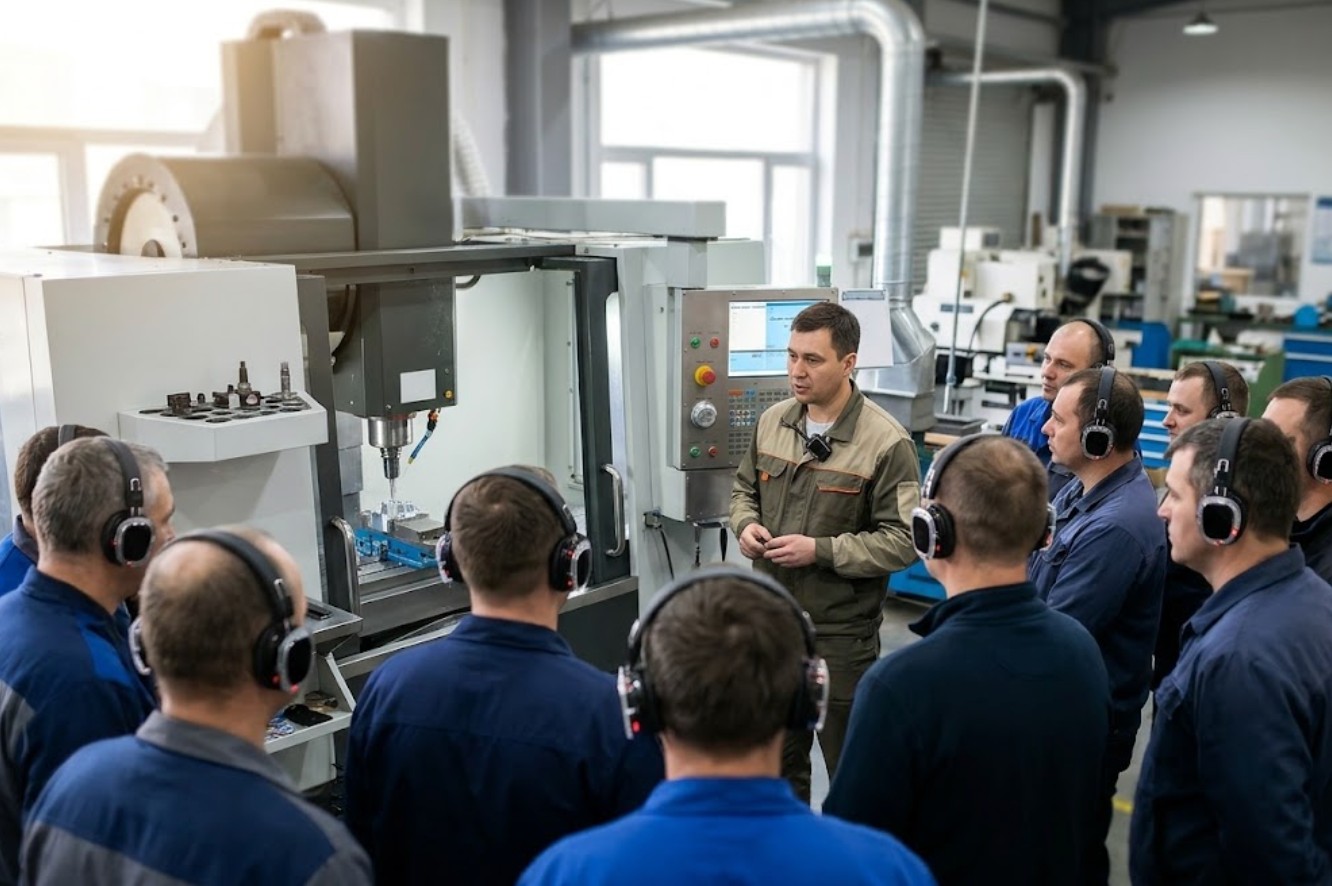
The single most useful afternoon spent on one of these jobs was a noise survey with a phone meter, walking the route and noting where the level changed. Press areas, welding cells, and the end of the line each behave differently, and a guide who shouts in one section will be inaudible in the next. The RC9150 went into the loudest fixed positions because its behaviour at close range is clean enough that a guide can speak normally beside a press rather than over it. The survey also revealed two spots we simply removed from the route, which was the cheapest fix available.
⚙️ 🪝 Mounting Points That Survive a Shift
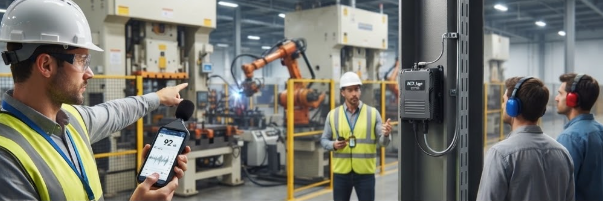
Mounting in a plant is a maintenance question. Anything fixed has to survive vibration, and anything carried has to survive a guide who is also holding a radio and gesturing at machinery. We fixed the fixed kit to structural steel rather than to machine guards, and we gave roaming hosts the RC2468 because at this weight it stops being something a guide notices after the first hour. The practical test we now apply is simple: if a host takes it off during a break and leaves it on a bench, it is the wrong unit for that role.
🗣️ Briefing Zones for Group Handovers
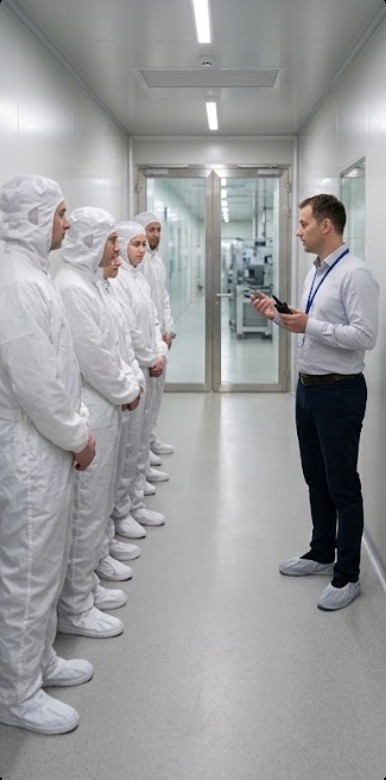
Every plant tour has a point where one guide hands a group to another, and handovers are where audio goes wrong. The fix is a designated briefing zone with a fixed transmitter position, so the incoming guide starts from a known point rather than from wherever they happened to be standing. It costs nothing, it removes the most common complaint, and it gives new hosts a routine they can learn in a single shadow shift. Mark the zone on the floor if the plant will allow it, because a painted mark settles arguments faster than a briefing note.
💾 🔋 Charging and Storage at the End of the Day
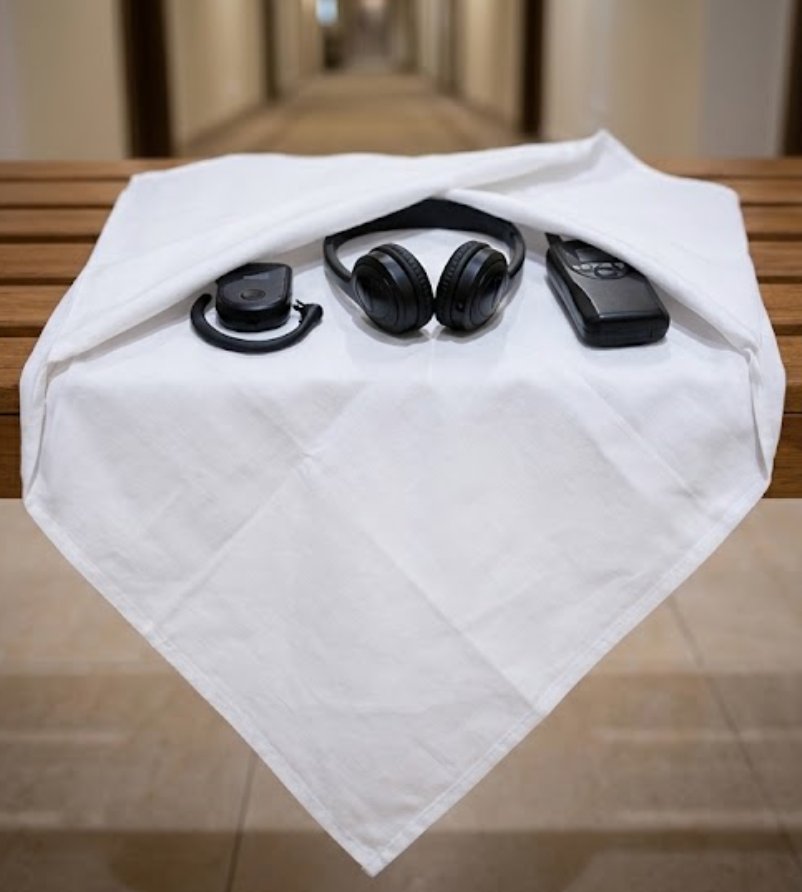
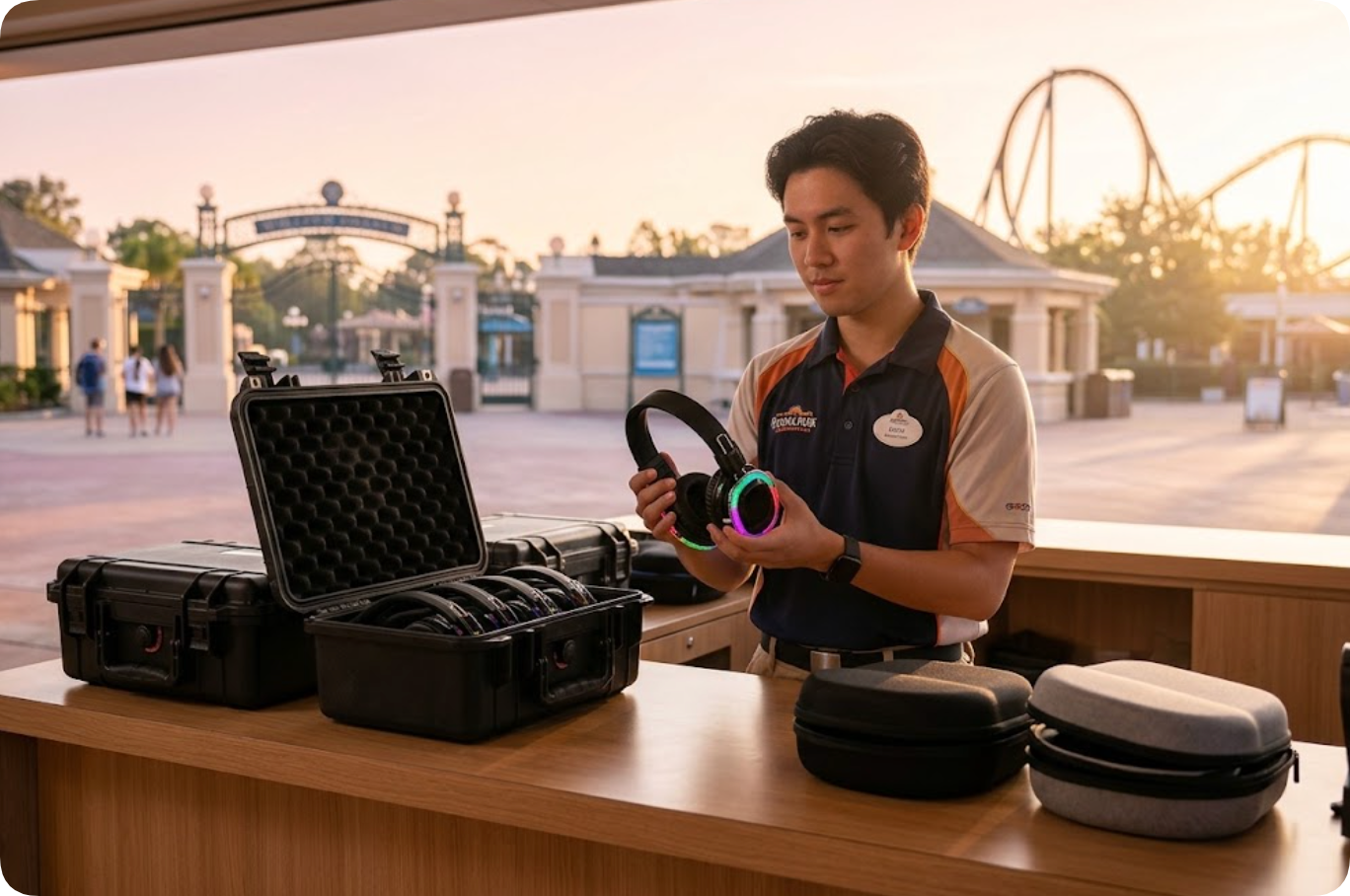
Charging is where installations quietly fail over months rather than days. The pattern that works is a single labelled store near the route start, a unit per slot, and a rule that nothing goes back in the store uncharged. Receivers that come back flat get tagged rather than returned to the pool, so the same unit does not fail twice in a week. It is unglamorous, and it is the difference between a system that is still working in year two and one that has slowly degraded into a box of partly charged spares.
📡 Channel Plan Across Three Zones
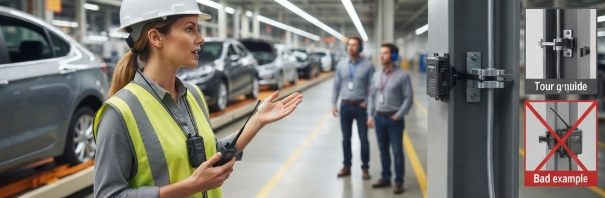
The channel plan is the part that makes a multi-zone tour feel deliberate rather than improvised. We allocated one channel per zone, documented it, and put the plan on the back of the host card. Where two groups ran at once, the RC2406 carried both without bleed, which is the whole reason for specifying an eighty-channel platform rather than a handful of shared channels. The rule that came out of it was that no zone should ever borrow another zone's channel, because the first exception becomes the permanent habit.
📋 Sign-Off Checklist for the Line Manager
Sign-off belongs to the line manager, not to the project team, and it should be a short document rather than a presentation. It lists the fixed positions, the zone channels, the store location, and who to call. It also records the two spots removed from the route, because somebody will propose putting them back within a year. A single page on the wall of the store beats a PDF nobody opens, and it is what makes the installation supportable by people who were not there when it went in.
| Step | What to do | Common mistake | How to verify |
|---|---|---|---|
| Route survey | Walk it at a live production moment | Surveying on a quiet day | Mark noise, stops, and no-go spots |
| Noise survey | Meter the route section by section | Assuming one level throughout | Guide speaks normally in each section |
| Mounting | Fix to steel, not to guards | Bolting to machine panels | Still tight after a full shift |
| Handovers | Designated briefing zone | Handing over wherever hosts meet | New host can run it after one shadow shift |
💡 Running a Pilot Before Full Rollout
Finish with a pilot rather than a launch. Run two tours a day for a week with a host who is willing to say what broke, keep a notepad at the store, and only then order the rest of the kit. Every plant tour I have seen succeed did this, and every one that struggled skipped it. If you are planning one now, browse the wireless tour guide system range and match units to zones rather than to headcount, then read how a car plant tour was deployed in practice for the version of this plan once it has been running for a season.