A leading China factory specializing in Wireless Tour Guide Systems, Church Audio Guides, and Translation Headphones with premium OEM/ODM solutions.

Tel:+86 13825295213

Email:tiger.wang@richitek.com

RC2406 and RC2500: Plant Tour ROI from Parallel Lines to Long Range

A modern automobile plant tour does not follow one group along one line. On a production day the public route crosses the body shop and the assembly line while a second group walks the engine line in the opposite direction, and on test days a third group stands at the outdoor track barrier where cars pass at speed. Each of those groups needs clear audio, and each needs it in a different radio geometry. The ROI question for a plant is therefore not whether to buy a wireless tour guide system, but how to cover two very different coverage jobs with one kit budget. This article builds that case around two Richitek units: the RC2406 for the indoor multi-group work where channels have to stay apart, and the RC2500 for the long outdoor distances where range decides everything. The numbers follow a plant that runs both patterns on the same day.

🏭 Two Coverage Jobs Inside a Production Day

A plant tour program splits into two coverage jobs that need different hardware. The first is indoor and parallel: multiple groups walking the body shop, the assembly line, and the engine line at the same time, close enough that their audio paths overlap. The second is outdoor and linear: a group standing along the test track, spread over a long barrier line, with the nearest visitor close to the guide and the farthest visitor well beyond what a short-range receiver can reach. No single channel count solves both jobs. The indoor job needs channel separation at close range; the outdoor job needs raw range at a fixed channel. Building the ROI model around both jobs at once is what separates a plant tour plan from a generic tour plan.

Channel Separation for Hall Groups Running Together

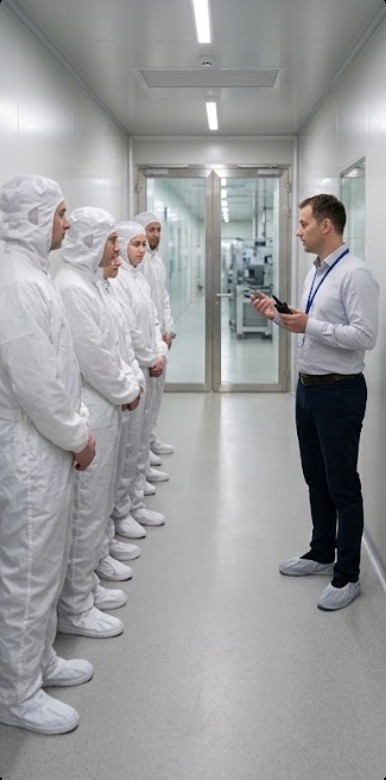
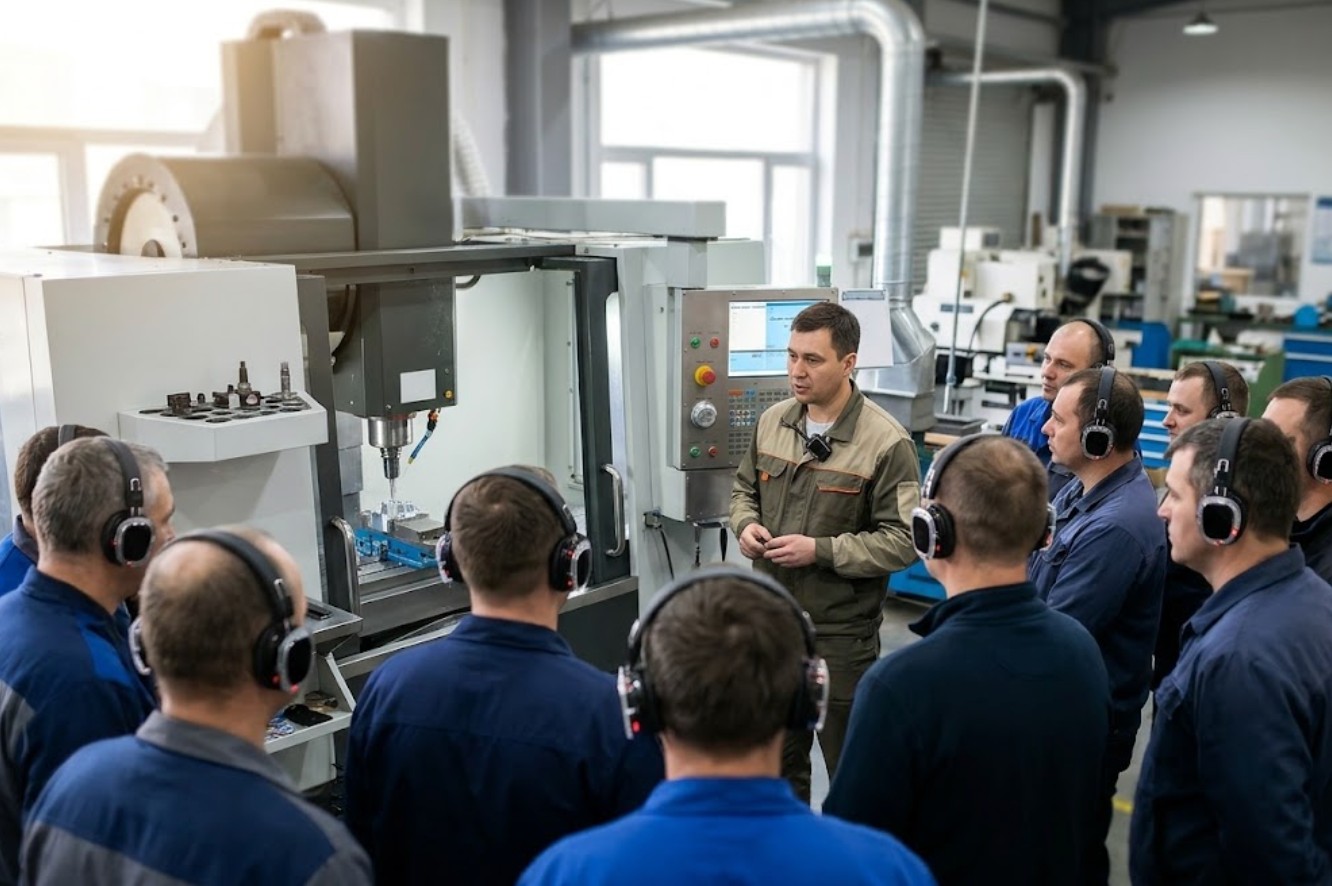
The indoor job is a channel problem before it is anything else. When three groups tour the same hall at the same time, the guide transmitters have to hold three separate channels without a visitor hearing the neighboring group's guide. The RC2406 carries 80 selectable channels across the 2.4 GHz band, which is enough headroom that an operations manager can assign a channel per group per day and never reuse a frequency inside the same hall. The measured benefit is operational: group dispatch stops waiting for a channel to clear, and two tours can run back-to-back through the same station without an audio overlap. For a plant running continuous public tours through the morning, that channel independence converts directly into more tours per day on the same staffing.

RC2406 and RC2500: Plant Tour ROI from Parallel Lines to Long Range(图1)

The parallel-group pattern above is where the RC2406 earns its place: three guides in the same hall on three separate channels, with visitors hearing only their own group's guide. The channel count is the feature that makes the plant's tour calendar flexible.

Distance Limits on the Outdoor Barrier

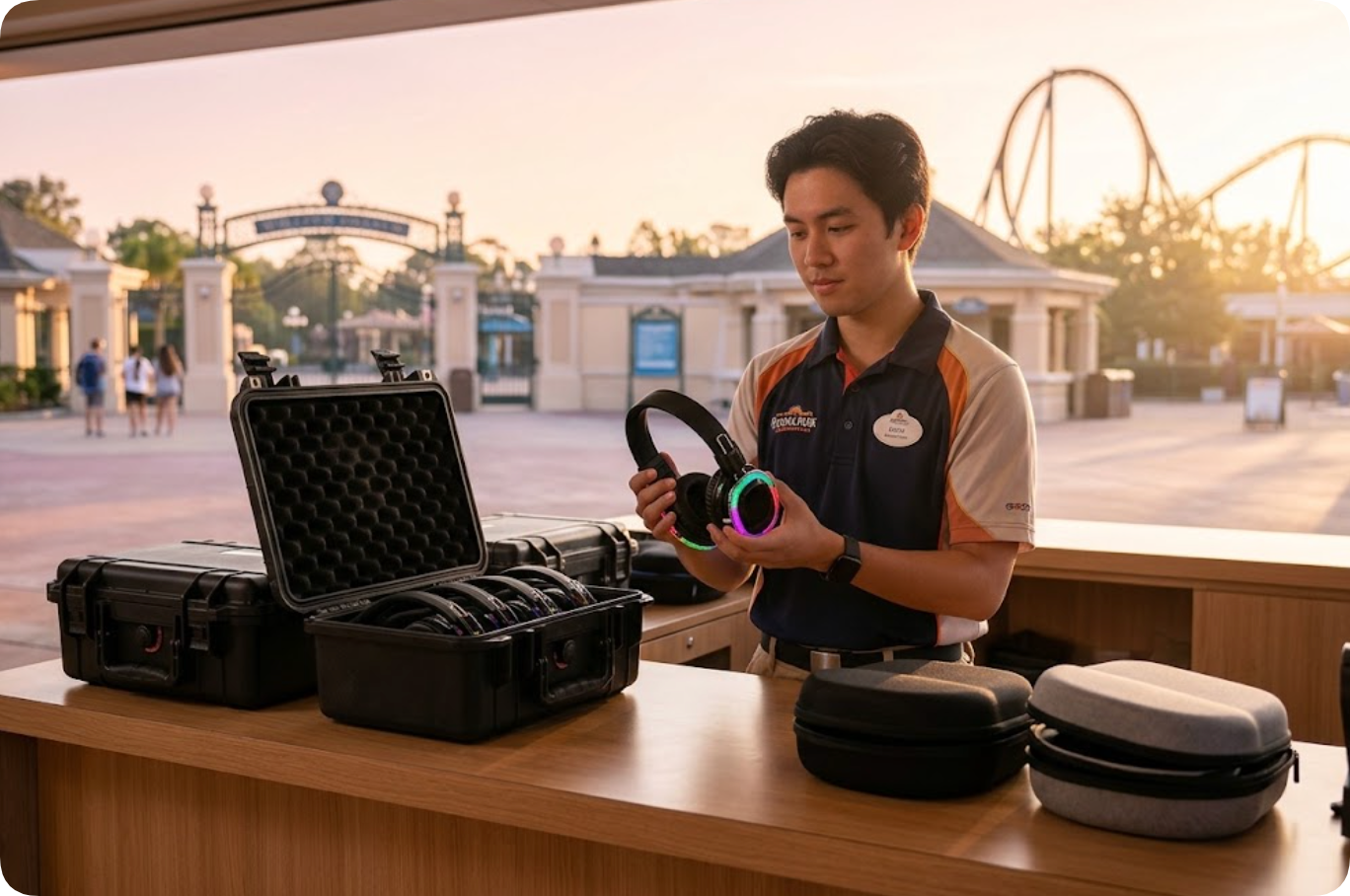
The outdoor job flips the requirement from channel count to reach. A test track barrier line can stretch a hundred meters, and the guide who explains a braking test stands at the middle of the line while the visitors on both ends stand far from the transmitter. A receiver that works perfectly at twenty meters in a hall will drop out at the far end of a track barrier. The RC2500 is built for that geometry, with the higher transmit power and receiver sensitivity that keep a clean signal over the distances a track tour actually covers. The plant in the model runs its track tours with a single RC2500 transmitter, and the farthest visitor position stays in range for the full demonstration, which is the difference between a track tour that works and one that costs the plant a refund.
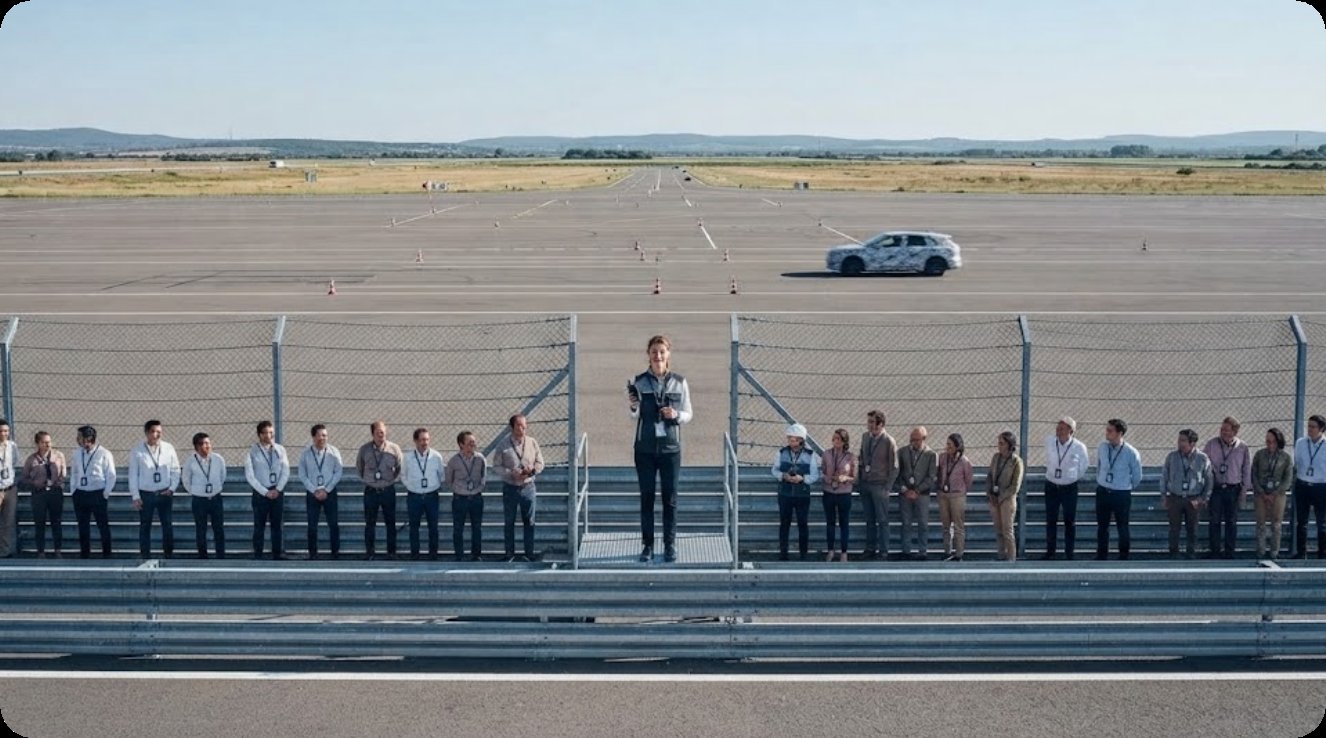
RC2406 and RC2500: Plant Tour ROI from Parallel Lines to Long Range(图2)

The outdoor coverage above is the second half of the kit: one RC2500 transmitter carrying a long barrier line where the far-end visitors are beyond the reach of an indoor receiver. The reach of the unit is the feature that protects the track demonstration, and it is why the plant keeps the RC2500 rather than trying to make the indoor unit do double duty.

Modeling One Staffed Day

The ROI model that fits a plant is a day-level comparison, because the value comes from running more tours on the days it already staffs. The model below compares a single-kit program that tries to cover both jobs with one unit against the two-unit program that matches each unit to its job. Staffing is held constant at three guides on production days and one guide on track-test days, and the comparison counts tours completed, groups that heard the whole route, and the labor cost per completed tour.

Day patternSingle-unit kitRC2406 + RC2500 kit
Production day, parallel groupsTwo groups maximum; channel conflicts limit dispatchThree groups on separate channels
Track-test day, outdoor lineFar-end visitors lose signal on long barrierFull barrier line covered by RC2500
Max public tours per staffed day24
Groups hearing the whole route~80% (overlap and dropouts)~98%
Labor cost per completed tourHigher (same staff, fewer tours)Lower (same staff, double the tours)

The table condenses the day-level logic: the two-unit kit roughly doubles the completed tours per staffed day, which is where the payback comes from. The plant that runs both indoor parallel tours and outdoor track tours finds the two-unit kit pays for itself inside a single quarter of full public tour days.

🚀 Why Extra Completed Tours Speed the Payback

Because the staffing cost is already on the calendar, every additional completed tour is nearly pure margin. Doubling tours per day on the same guides shortens the payback window sharply: the hardware cost of the two-unit kit is recovered by the added tour revenue before the end of the first quarter, and every quarter after that the kit is effectively earning from capacity the plant already had. The single-unit alternative never reaches that point, because its channel and reach limits cap the daily tour count no matter how much the guides work. The payback comparison is not about unit price; it is about the daily tour ceiling that each kit sets.

When a Single Indoor Unit Covers the Calendar

The two-unit case is not the right answer for every plant, and an honest ROI model says so. A smaller plant that runs only indoor tours, or only occasional outdoor groups within a short barrier line, can start with the RC2406 alone and add the RC2500 when the outdoor program becomes a regular fixture. The same channel independence that serves parallel indoor groups also serves a plant that staggers its tours, and the RC2500's reach is wasted if the plant never stands a group at a long barrier. The model's value is that it makes the trigger explicit: the moment a plant schedules outdoor track tours on a regular calendar, the second unit pays for itself. Until then, the RC2406 covers the indoor program completely.

Building the Order of Purchase

For a plant manager building the purchase plan, the practical order is to confirm the indoor parallel pattern first, then measure the longest outdoor barrier line the tour actually uses, then decide whether that line exceeds the reach of an indoor receiver. If it does, the two-unit kit is the ROI answer; if it does not, the single indoor unit covers the calendar until the outdoor program grows. A kit built this way never buys reach it does not use and never caps a day it could have filled. The full factory tour audio planning guide covers the same reasoning for other plant layouts, and the related RC2406 and RC2500 product pages carry the specification detail behind the two coverage jobs. A deeper look at what a plant tour kit earns on quiet days and the earlier deployment ROI breakdown complete the picture for a plant comparing its options.

2026年09月09日 09:56
click: 411

RC2406 and RC2500: Plant Tour ROI from Parallel Lines to Long Range

time: 2026年09月09日 click:411

A modern automobile plant tour does not follow one group along one line. On a production day the public route crosses the body shop and the assembly line while a second group walks the engine line in the opposite direction, and on test days a third group stands at the outdoor track barrier where cars pass at speed. Each of those groups needs clear audio, and each needs it in a different radio geometry. The ROI question for a plant is therefore not whether to buy a wireless tour guide system, but how to cover two very different coverage jobs with one kit budget. This article builds that case around two Richitek units: the RC2406 for the indoor multi-group work where channels have to stay apart, and the RC2500 for the long outdoor distances where range decides everything. The numbers follow a plant that runs both patterns on the same day.

🏭 Two Coverage Jobs Inside a Production Day

A plant tour program splits into two coverage jobs that need different hardware. The first is indoor and parallel: multiple groups walking the body shop, the assembly line, and the engine line at the same time, close enough that their audio paths overlap. The second is outdoor and linear: a group standing along the test track, spread over a long barrier line, with the nearest visitor close to the guide and the farthest visitor well beyond what a short-range receiver can reach. No single channel count solves both jobs. The indoor job needs channel separation at close range; the outdoor job needs raw range at a fixed channel. Building the ROI model around both jobs at once is what separates a plant tour plan from a generic tour plan.

Channel Separation for Hall Groups Running Together

The indoor job is a channel problem before it is anything else. When three groups tour the same hall at the same time, the guide transmitters have to hold three separate channels without a visitor hearing the neighboring group's guide. The RC2406 carries 80 selectable channels across the 2.4 GHz band, which is enough headroom that an operations manager can assign a channel per group per day and never reuse a frequency inside the same hall. The measured benefit is operational: group dispatch stops waiting for a channel to clear, and two tours can run back-to-back through the same station without an audio overlap. For a plant running continuous public tours through the morning, that channel independence converts directly into more tours per day on the same staffing.

RC2406 and RC2500: Plant Tour ROI from Parallel Lines to Long Range(图1)

The parallel-group pattern above is where the RC2406 earns its place: three guides in the same hall on three separate channels, with visitors hearing only their own group's guide. The channel count is the feature that makes the plant's tour calendar flexible.

Distance Limits on the Outdoor Barrier

The outdoor job flips the requirement from channel count to reach. A test track barrier line can stretch a hundred meters, and the guide who explains a braking test stands at the middle of the line while the visitors on both ends stand far from the transmitter. A receiver that works perfectly at twenty meters in a hall will drop out at the far end of a track barrier. The RC2500 is built for that geometry, with the higher transmit power and receiver sensitivity that keep a clean signal over the distances a track tour actually covers. The plant in the model runs its track tours with a single RC2500 transmitter, and the farthest visitor position stays in range for the full demonstration, which is the difference between a track tour that works and one that costs the plant a refund.

RC2406 and RC2500: Plant Tour ROI from Parallel Lines to Long Range(图2)

The outdoor coverage above is the second half of the kit: one RC2500 transmitter carrying a long barrier line where the far-end visitors are beyond the reach of an indoor receiver. The reach of the unit is the feature that protects the track demonstration, and it is why the plant keeps the RC2500 rather than trying to make the indoor unit do double duty.

Modeling One Staffed Day

The ROI model that fits a plant is a day-level comparison, because the value comes from running more tours on the days it already staffs. The model below compares a single-kit program that tries to cover both jobs with one unit against the two-unit program that matches each unit to its job. Staffing is held constant at three guides on production days and one guide on track-test days, and the comparison counts tours completed, groups that heard the whole route, and the labor cost per completed tour.

Day patternSingle-unit kitRC2406 + RC2500 kit
Production day, parallel groupsTwo groups maximum; channel conflicts limit dispatchThree groups on separate channels
Track-test day, outdoor lineFar-end visitors lose signal on long barrierFull barrier line covered by RC2500
Max public tours per staffed day24
Groups hearing the whole route~80% (overlap and dropouts)~98%
Labor cost per completed tourHigher (same staff, fewer tours)Lower (same staff, double the tours)

The table condenses the day-level logic: the two-unit kit roughly doubles the completed tours per staffed day, which is where the payback comes from. The plant that runs both indoor parallel tours and outdoor track tours finds the two-unit kit pays for itself inside a single quarter of full public tour days.

🚀 Why Extra Completed Tours Speed the Payback

Because the staffing cost is already on the calendar, every additional completed tour is nearly pure margin. Doubling tours per day on the same guides shortens the payback window sharply: the hardware cost of the two-unit kit is recovered by the added tour revenue before the end of the first quarter, and every quarter after that the kit is effectively earning from capacity the plant already had. The single-unit alternative never reaches that point, because its channel and reach limits cap the daily tour count no matter how much the guides work. The payback comparison is not about unit price; it is about the daily tour ceiling that each kit sets.

When a Single Indoor Unit Covers the Calendar

The two-unit case is not the right answer for every plant, and an honest ROI model says so. A smaller plant that runs only indoor tours, or only occasional outdoor groups within a short barrier line, can start with the RC2406 alone and add the RC2500 when the outdoor program becomes a regular fixture. The same channel independence that serves parallel indoor groups also serves a plant that staggers its tours, and the RC2500's reach is wasted if the plant never stands a group at a long barrier. The model's value is that it makes the trigger explicit: the moment a plant schedules outdoor track tours on a regular calendar, the second unit pays for itself. Until then, the RC2406 covers the indoor program completely.

Building the Order of Purchase

For a plant manager building the purchase plan, the practical order is to confirm the indoor parallel pattern first, then measure the longest outdoor barrier line the tour actually uses, then decide whether that line exceeds the reach of an indoor receiver. If it does, the two-unit kit is the ROI answer; if it does not, the single indoor unit covers the calendar until the outdoor program grows. A kit built this way never buys reach it does not use and never caps a day it could have filled. The full factory tour audio planning guide covers the same reasoning for other plant layouts, and the related RC2406 and RC2500 product pages carry the specification detail behind the two coverage jobs. A deeper look at what a plant tour kit earns on quiet days and the earlier deployment ROI breakdown complete the picture for a plant comparing its options.
×

Contact us

email:
name:
subject:
content: