
A leading China factory specializing in Wireless Tour Guide Systems, Church Audio Guides, and Translation Headphones with premium OEM/ODM solutions.

Tel:+86 13825295213

Email:tiger.wang@richitek.com

RC2500 and RC9150: A University Open Day Case Study

University open days are the hardest tours we support, and the ones where a quiet failure costs the most. A museum visitor who misses a sentence misses a sentence. A family at the back of a group of sixty on a windy path who cannot hear for four hours does not come back in September. This is one admissions team's open day, what broke the first time, and the three pieces of hardware that carried the next six. You can read more about how we plan campus tours generally, but this is what it looked like on the ground.

💡 🎓 Why the Campus Route Is Harder Than It Looks

A campus route is not a museum route with grass instead of floors. Distance comes first: a museum keeps a group in one room, while a campus walk moves continuously and the back of the line trails thirty or forty metres behind. Noise comes second, from wind, ring-road traffic, maintenance crews, and a hundred other conversations at once. Group size comes third, at forty to eighty per slot rather than a museum's twelve. Duration comes fourth, because an open day runs nine until four with the same transmitters live throughout.

Together they mean the system has to hold range, separate channels, and last a full day, outdoors, all at the same time. Most visitor audio is built for indoor rooms and fails on at least one of the four.

🚪 The First Hour at the Gate

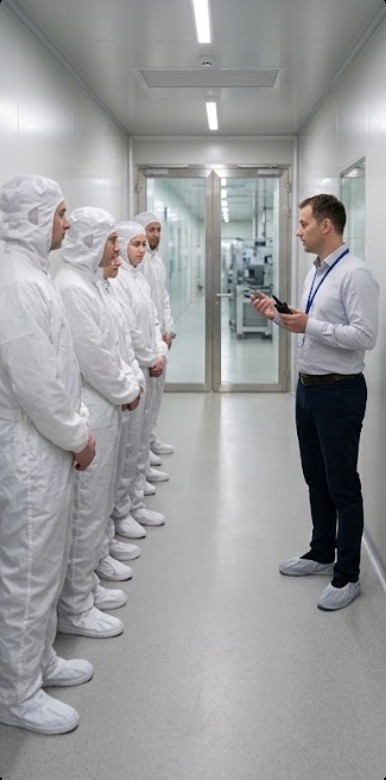
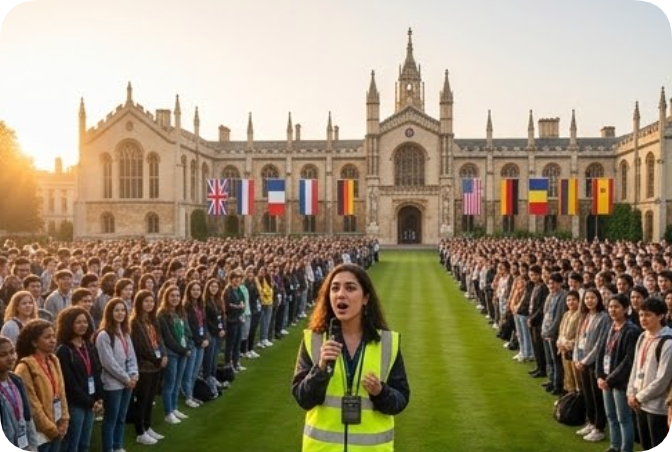
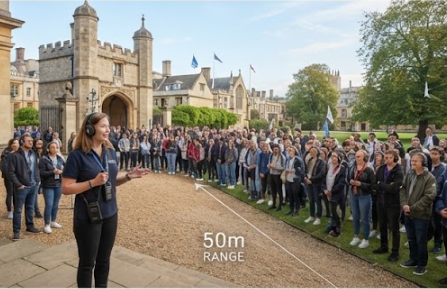
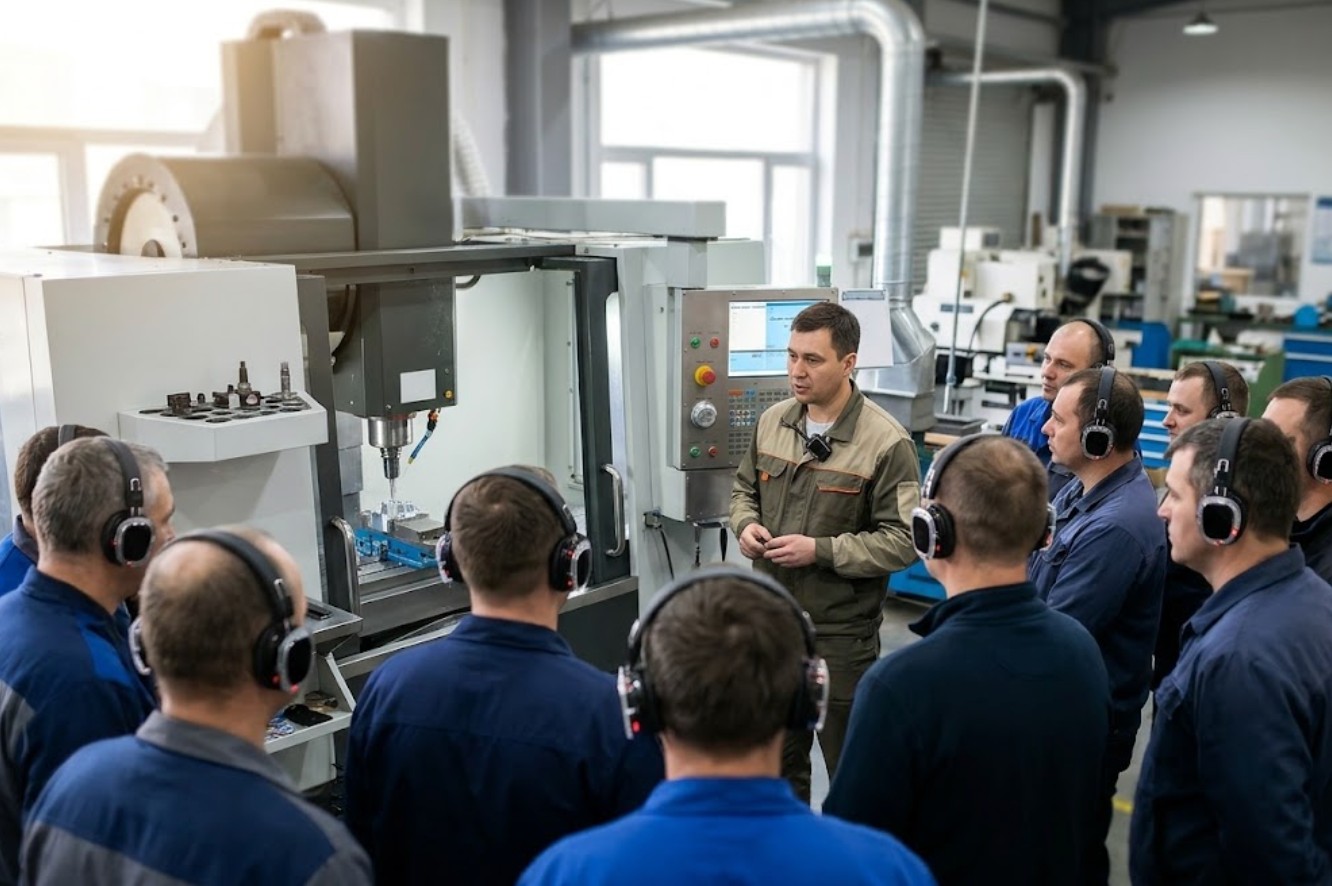
The first hour went worst in the trial run. Admissions had been using a handheld megaphone, which gets attention and says nothing. Families kept arriving for twenty minutes, and by the time the walk started the group straggled over fifty metres of path.

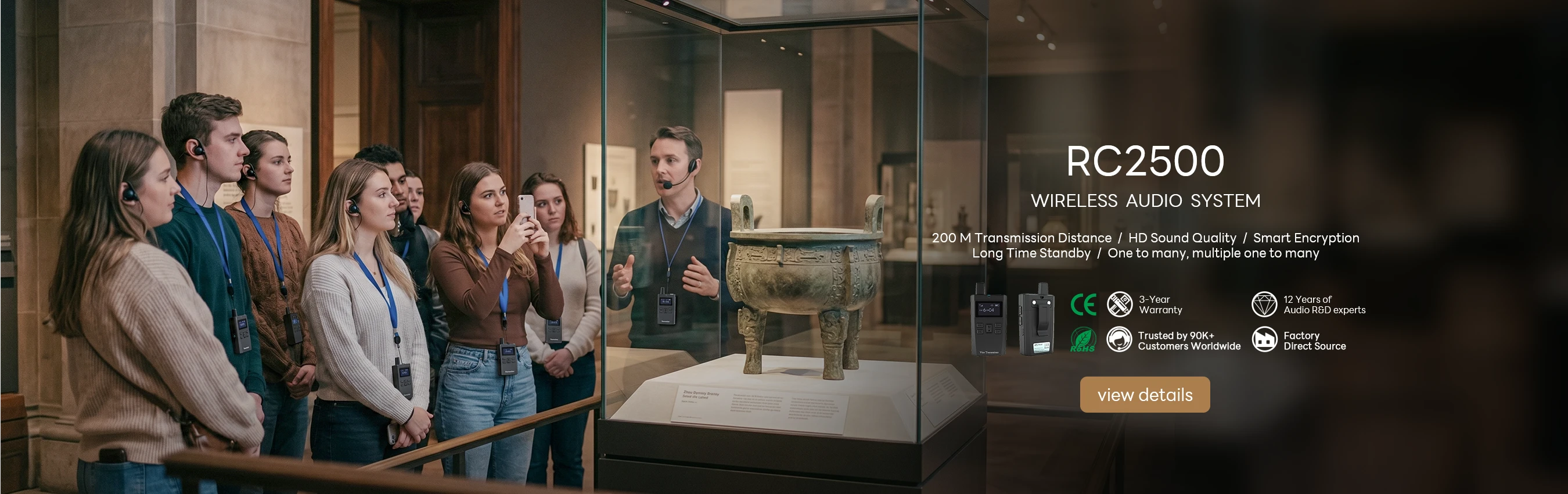
The fix was range. The RC2500 covers the whole straggle, so the family at the back hears the welcome talk at the same level as the family at the front. What changed was not audio quality at the front. It was that admissions stopped having to wait for latecomers, and the guide stopped saying everything twice.
RC2500 and RC9150: A University Open Day Case Study(图1)

The second gain was less obvious. Because she no longer had to project, the guide could talk at a normal volume all morning. Under the megaphone she had no voice left by the third slot.

🏛️ Splitting Sixty Families Across Four Buildings

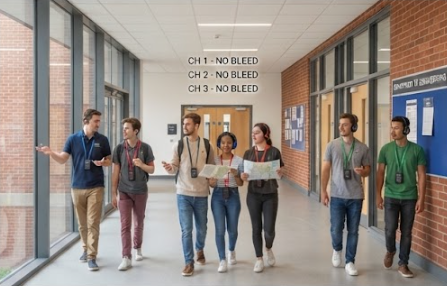
The second failure was structural. Sixty families all want to see the faculty they applied to, at their own pace. Admissions split into three groups, which worked for the people and broke the audio, because the groups kept crossing in the same corridors.

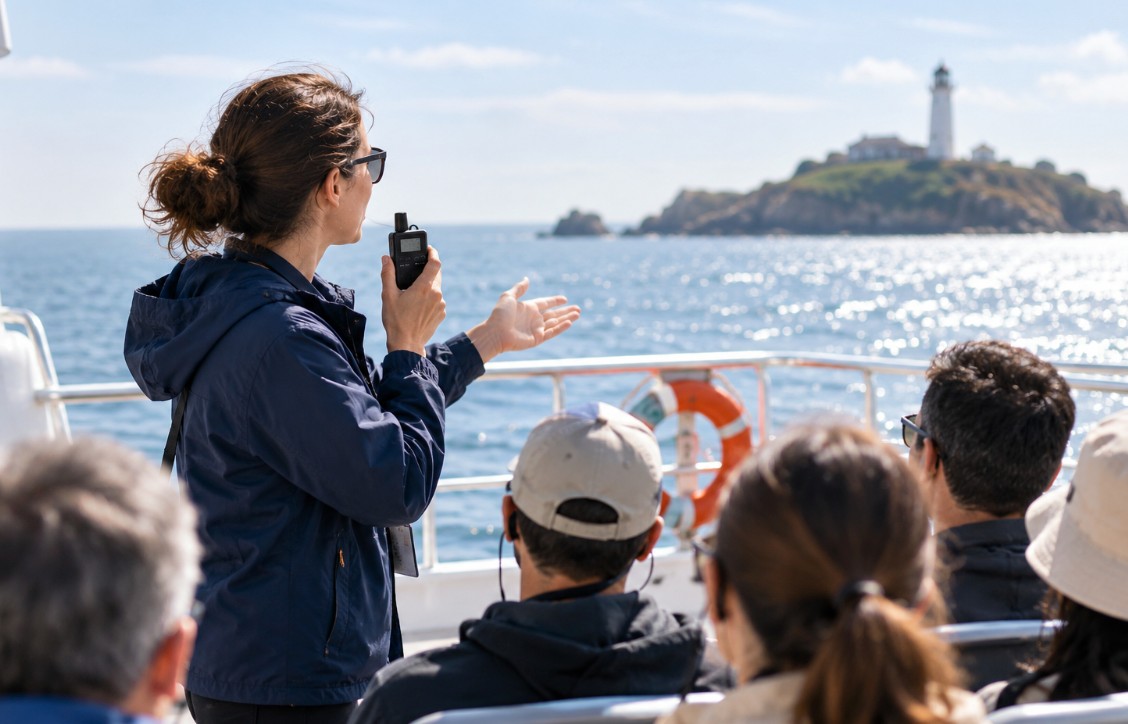
The answer was channel separation plus a transmitter light enough to forget. The RC2468 runs on a lanyard, so a guide walking four hours has both hands free for doors, maps, and prospectuses. Each group sits on its own channel, so three guides can talk at once in one corridor without bleeding together.
RC2500 and RC9150: A University Open Day Case Study(图2)

The routing rule is worth copying. Groups leave on a four-minute stagger and take the buildings in a different order, so no two share a room, and they only cross in corridors where three separate channels are enough.

⚡ 🌳 Keeping Together Over Wide Ground

The sports fields are the worst section on almost every campus route. It is a straight open walk of two hundred metres with nothing to bounce off, wind across it, and a bus road on one side. Groups spread out here because there is nothing to cluster around.

Range is the only answer on open ground. This is where the RC2500 earns its place a second time. On the trial run, the last twenty metres of the group heard nothing across the fields and missed the entire sports scholarship explanation, which is one of the things families came to ask about.

The rule they use now is that the guide stops, turns, and counts before crossing any open section. It did not happen before, because a guide who cannot hear the back of the line cannot tell a listening group from a polite one.

🔋 🔋 Afternoon Power and the Long Tail

Battery life was the failure nobody predicted. The trial used equipment rated for eight hours, which should have covered a nine-to-four day. It did not, because of the pattern rather than the rating: guides left transmitters switched on between slots, and by two in the afternoon the third slot began on a unit that had been live since nine.

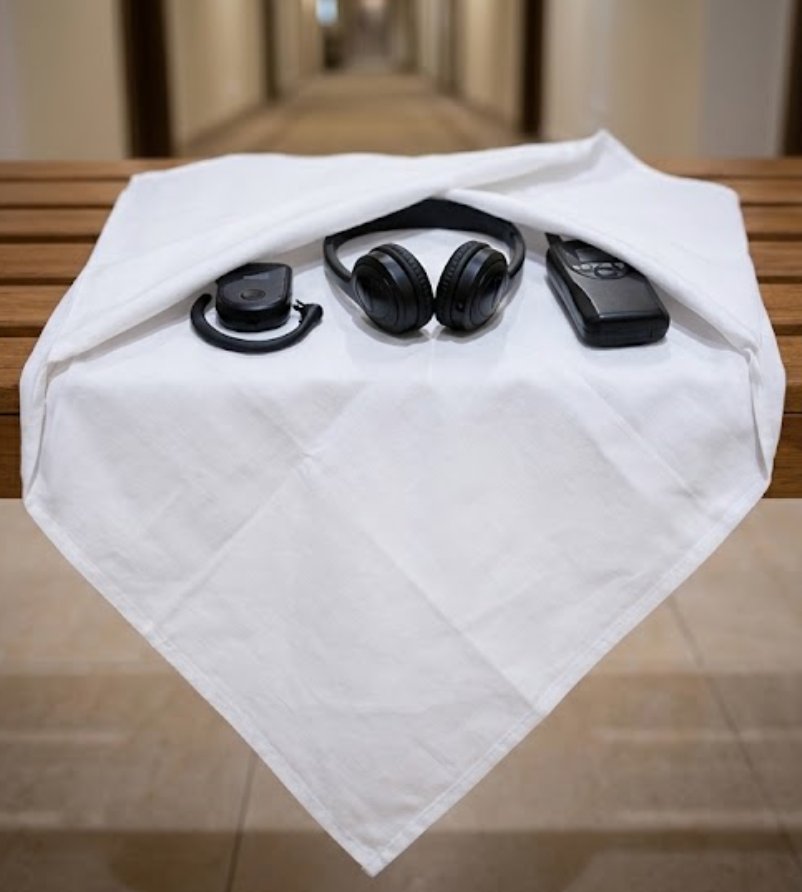
The RC9150 is built for the long day rather than the long session and holds up under exactly this pattern. But the hardware was half the fix.
RC2500 and RC9150: A University Open Day Case Study(图3)

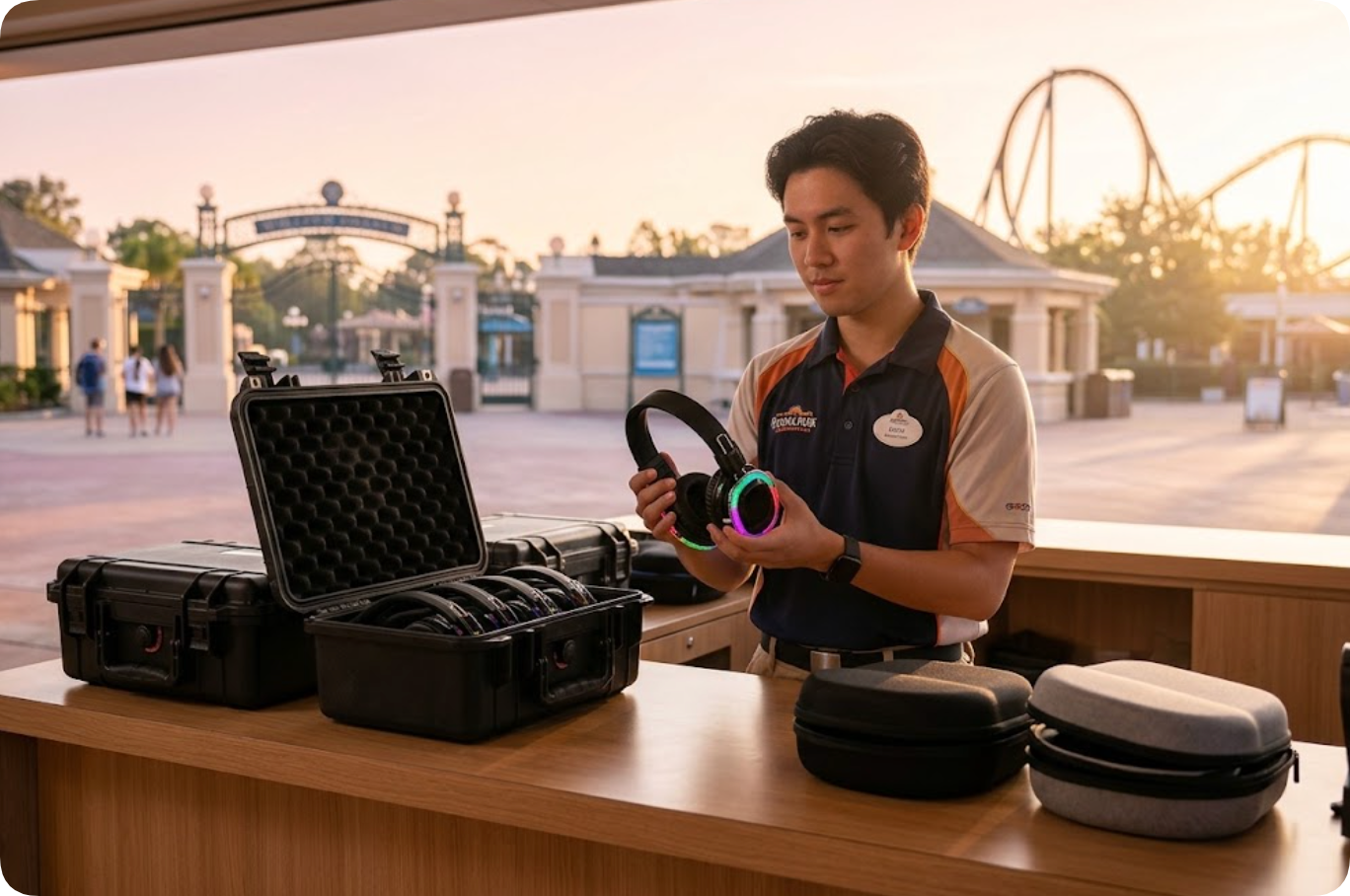
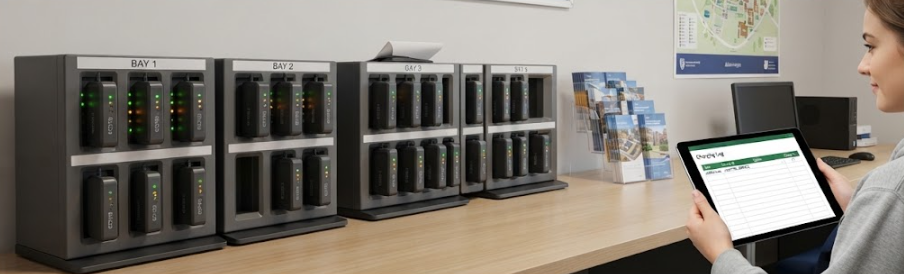
Every transmitter now returns to a numbered rack slot at lunch, whether or not it needs it. The student helper on the register ticks the log, so a weak unit shows up before the afternoon rather than during it.

🗺️ 📊 What the Visitor Survey Returned

Admissions had run the same short survey for two years, so there was a baseline. The trial was the March open day with the megaphone. The comparison below is June, same route, same number of slots.

QuestionMarch (trial)June (deployed)
Could hear the guide throughout41%94%
Could hear during the outdoor sections22%89%
Understood the scholarship explanation38%91%
Complaints logged about audio121
Guide voice strain reported3 of 3 guides0 of 3 guides
Group stayed within 10 m of the guideSometimesAlways

The outdoor row is the one to read. Twenty-two per cent means four families in five heard nothing across the fields, and the fields are where the scholarship talk happened. The single June complaint was a hearing-aid user who wanted a neck loop, since closed with an adapter.

🔮 🧭 What We Changed for the Next Intake

Three things changed between March and June, and a fourth after. Hardware came first: range for the open sections, channel separation for concurrent groups, battery capacity for the full day. Routing came second, with the stagger and the rotating building order. Discipline came third, with the lunchtime rack check and the log.

The fourth is the one worth flagging. They bought spare receivers. In March a dead receiver meant a family sharing one between two for the rest of the day. In June they carried eight spares to the gate and used two. Spares are cheap against the cost of a family spending four hours hearing half of it.

Any wireless tour guide system for a campus has to answer all four original problems at once, and most visitor audio answers two. That is the whole specification, and it is worth writing down before anyone looks at a product list.

🔍 ✅ The Checklist We Now Issue

For the next intake cycle this is the handover given to student helpers, and it is short enough to be used rather than filed. Check transmitters at the rack before the first slot, not during it. Stagger departures by four minutes and rotate the building order. Turn and count before every open section. Return everything to a numbered slot at lunch and tick the log. Carry eight spare receivers to the gate. Ask at the halfway point whether anyone is struggling to hear, because the ones who are will not volunteer it.

That last point took longest to learn. Visitors do not complain about audio during a tour. They go home and do not apply. Asking directly is the only reliable way to find out, and the cheapest thing on the list.

If you are running a similar route and want the longer version across different campus layouts, there is a campus tour comparison across layouts that goes into the routing side in more detail.
2026年09月08日 12:15
click: 741
no data

RC2500 and RC9150: A University Open Day Case Study

time: 2026年09月08日 click:741

University open days are the hardest tours we support, and the ones where a quiet failure costs the most. A museum visitor who misses a sentence misses a sentence. A family at the back of a group of sixty on a windy path who cannot hear for four hours does not come back in September. This is one admissions team's open day, what broke the first time, and the three pieces of hardware that carried the next six. You can read more about how we plan campus tours generally, but this is what it looked like on the ground.

💡 🎓 Why the Campus Route Is Harder Than It Looks

A campus route is not a museum route with grass instead of floors. Distance comes first: a museum keeps a group in one room, while a campus walk moves continuously and the back of the line trails thirty or forty metres behind. Noise comes second, from wind, ring-road traffic, maintenance crews, and a hundred other conversations at once. Group size comes third, at forty to eighty per slot rather than a museum's twelve. Duration comes fourth, because an open day runs nine until four with the same transmitters live throughout.

Together they mean the system has to hold range, separate channels, and last a full day, outdoors, all at the same time. Most visitor audio is built for indoor rooms and fails on at least one of the four.

🚪 The First Hour at the Gate

The first hour went worst in the trial run. Admissions had been using a handheld megaphone, which gets attention and says nothing. Families kept arriving for twenty minutes, and by the time the walk started the group straggled over fifty metres of path.

The fix was range. The RC2500 covers the whole straggle, so the family at the back hears the welcome talk at the same level as the family at the front. What changed was not audio quality at the front. It was that admissions stopped having to wait for latecomers, and the guide stopped saying everything twice.

RC2500 and RC9150: A University Open Day Case Study(图1)

The second gain was less obvious. Because she no longer had to project, the guide could talk at a normal volume all morning. Under the megaphone she had no voice left by the third slot.

🏛️ Splitting Sixty Families Across Four Buildings

The second failure was structural. Sixty families all want to see the faculty they applied to, at their own pace. Admissions split into three groups, which worked for the people and broke the audio, because the groups kept crossing in the same corridors.

The answer was channel separation plus a transmitter light enough to forget. The RC2468 runs on a lanyard, so a guide walking four hours has both hands free for doors, maps, and prospectuses. Each group sits on its own channel, so three guides can talk at once in one corridor without bleeding together.

RC2500 and RC9150: A University Open Day Case Study(图2)

The routing rule is worth copying. Groups leave on a four-minute stagger and take the buildings in a different order, so no two share a room, and they only cross in corridors where three separate channels are enough.

⚡ 🌳 Keeping Together Over Wide Ground

The sports fields are the worst section on almost every campus route. It is a straight open walk of two hundred metres with nothing to bounce off, wind across it, and a bus road on one side. Groups spread out here because there is nothing to cluster around.

Range is the only answer on open ground. This is where the RC2500 earns its place a second time. On the trial run, the last twenty metres of the group heard nothing across the fields and missed the entire sports scholarship explanation, which is one of the things families came to ask about.

The rule they use now is that the guide stops, turns, and counts before crossing any open section. It did not happen before, because a guide who cannot hear the back of the line cannot tell a listening group from a polite one.

🔋 🔋 Afternoon Power and the Long Tail

Battery life was the failure nobody predicted. The trial used equipment rated for eight hours, which should have covered a nine-to-four day. It did not, because of the pattern rather than the rating: guides left transmitters switched on between slots, and by two in the afternoon the third slot began on a unit that had been live since nine.

The RC9150 is built for the long day rather than the long session and holds up under exactly this pattern. But the hardware was half the fix.

RC2500 and RC9150: A University Open Day Case Study(图3)

Every transmitter now returns to a numbered rack slot at lunch, whether or not it needs it. The student helper on the register ticks the log, so a weak unit shows up before the afternoon rather than during it.

🗺️ 📊 What the Visitor Survey Returned

Admissions had run the same short survey for two years, so there was a baseline. The trial was the March open day with the megaphone. The comparison below is June, same route, same number of slots.

QuestionMarch (trial)June (deployed)
Could hear the guide throughout41%94%
Could hear during the outdoor sections22%89%
Understood the scholarship explanation38%91%
Complaints logged about audio121
Guide voice strain reported3 of 3 guides0 of 3 guides
Group stayed within 10 m of the guideSometimesAlways

The outdoor row is the one to read. Twenty-two per cent means four families in five heard nothing across the fields, and the fields are where the scholarship talk happened. The single June complaint was a hearing-aid user who wanted a neck loop, since closed with an adapter.

🔮 🧭 What We Changed for the Next Intake

Three things changed between March and June, and a fourth after. Hardware came first: range for the open sections, channel separation for concurrent groups, battery capacity for the full day. Routing came second, with the stagger and the rotating building order. Discipline came third, with the lunchtime rack check and the log.

The fourth is the one worth flagging. They bought spare receivers. In March a dead receiver meant a family sharing one between two for the rest of the day. In June they carried eight spares to the gate and used two. Spares are cheap against the cost of a family spending four hours hearing half of it.

Any wireless tour guide system for a campus has to answer all four original problems at once, and most visitor audio answers two. That is the whole specification, and it is worth writing down before anyone looks at a product list.

🔍 ✅ The Checklist We Now Issue

For the next intake cycle this is the handover given to student helpers, and it is short enough to be used rather than filed. Check transmitters at the rack before the first slot, not during it. Stagger departures by four minutes and rotate the building order. Turn and count before every open section. Return everything to a numbered slot at lunch and tick the log. Carry eight spare receivers to the gate. Ask at the halfway point whether anyone is struggling to hear, because the ones who are will not volunteer it.

That last point took longest to learn. Visitors do not complain about audio during a tour. They go home and do not apply. Asking directly is the only reliable way to find out, and the cheapest thing on the list.

If you are running a similar route and want the longer version across different campus layouts, there is a campus tour comparison across layouts that goes into the routing side in more detail.
no data
×

Contact us

email:
name:
subject:
content: