.webp)

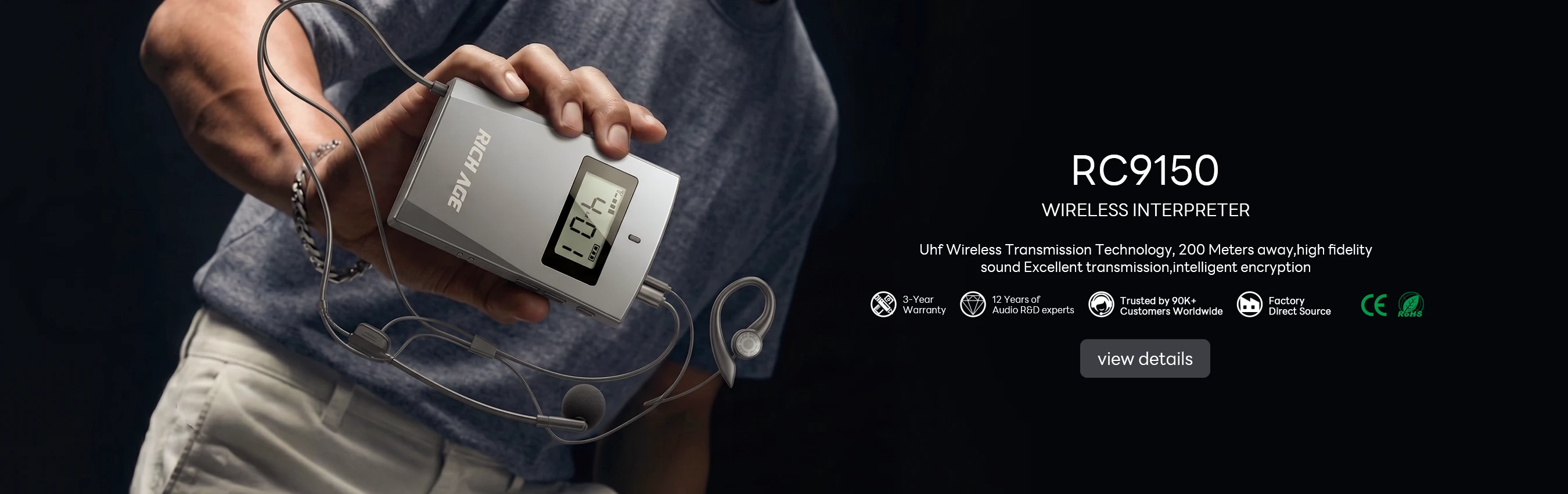
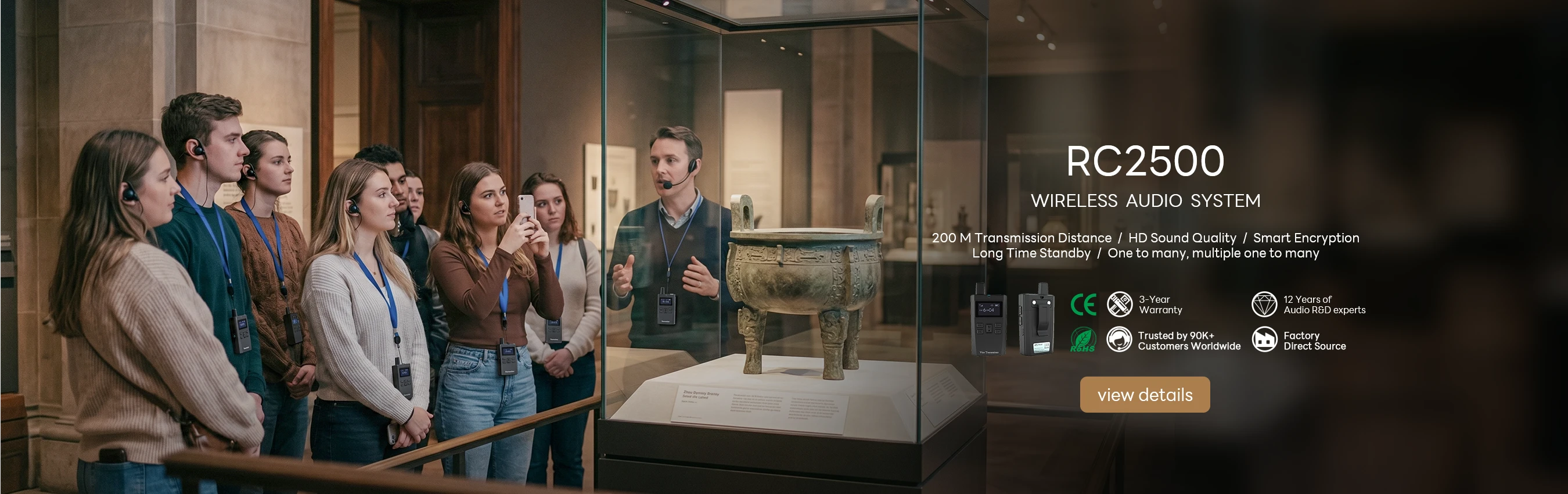
RC2408, RC2500 and RC2402: A Wireless Tour Guide System Checklist for Shore Excursions
I have been on both sides of this purchase. For three seasons I helped a Mediterranean excursion operator sign off on audio kit, and before that I spent a year on the receiving end, standing at the quay at 07:40 with a bag of receivers while a coach waited. Those two experiences do not feel like the same transaction. In the office the purchase is a document with columns. At the quay it is a count of working units and a departure time. Almost every argument I have watched about shore-excursion audio comes from treating those as one thing.
A shore excursion is not a museum tour that happens outside. The group is assembled twice, once on board and once ashore. It splits and re-splits as guests pick different options, the guide is often a local contractor rather than your own staff, and everything has to be closed out before all-aboard. If you are assembling the paperwork for a fleet-wide order, the city tour solutions page is a fair picture of what the hardware is expected to do. What follows is the list I would actually write down.
The Room Where the Checklist Is Written
The people who approve the order are rarely the people who carry it. That is the whole problem, and it does not go away with a better product. A procurement officer is asked to compare three quotations on price per unit, delivery date and warranty length, because those are the columns the form has. A guide is asked whether forty guests can hear one voice from the front of a walking group to the back, and whether the batteries will still be alive after a morning and an afternoon.
So the useful move is to build the checklist out of things both rooms can verify. Price per unit stays on the form. Next to it, add the number of working hours the receiver gives you, the number of independent groups the same venue can carry at once, and whether the radio band needs a licence in each country you call at. Those three lines are unusual on a tender, and they are the three that decide whether the kit survives its first season.
A Frequency Band Nobody Has to Register at the Border
An excursion programme is a border-crossing business. One week the calls are in Spain and Italy, the next in Greece and Croatia, and the guides you hire locally will have their own expectations about what is legal. A system that needs a licence or a registered frequency in every territory turns into a recurring administrative task that nobody in the office owns, and it will be quietly ignored by the third port.
All three units here work in the 2403-2483MHz band, which is the global 2.4GHz ISM range and is licence-free essentially everywhere your ships go. That is worth stating plainly in the paperwork, because it removes a whole category of question from the tender rather than answering it later. It also means the same fleet kit can be carried from ship to ship without a per-country review.
The Transmitter That Reaches a Group Spread Across a Viewpoint
The worst acoustic case on a shore excursion is not a noisy room. It is a scenic overlook where the group has fanned out along twenty metres of railing and the guide is describing something at the far end. The RC2408 is the unit I would put on that excursion. It carries eighty independent channels with one-key channel synchronisation, so several groups can be working the same site without any crosstalk, and it supports two-way communication, which matters when the local guide and the shore-side escort need to agree on a regroup point without shouting.
Published figures for it are a transmitter at 59g and a receiver at 50g, ten hours on the transmitter and twenty on the receiver, and a working range up to 200 metres. Those numbers are not the largest in this comparison, and for a spread-out walking group that is fine, because the receiving side is what guests actually wear for four hours. It is certified to CE and RoHS with a three-year warranty that covers the mainboard.
The Kit for a Port Day With Three Coaches Out at Once
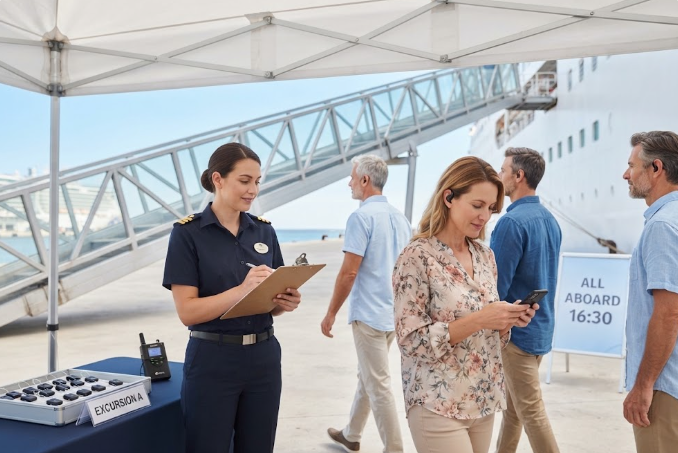
The commercial shape of a port day is that everybody leaves at once. Three coaches, three itineraries, one pier, and often two ships in the same morning. This is where channel count stops being a specification and becomes a scheduling constraint. The RC2500 offers fifty independent channels with PLL frequency synthesis, which is enough headroom to run several concurrent groups from one kit without a channel plan written on the back of an envelope.
It is also the one to pick when the day is long. The published battery life is twelve hours on the transmitter and forty on the receiver, which turns an awkward question, whether a receiver lasts a full port day plus the walk back, into a non-question. Transmission is 20mW, audio response is quoted at 20Hz-20kHz, and the operating range is stated as -15 to 50 degrees Celsius, which is the range an unshaded quay actually reaches in August. Certifications are CE, EMC, LVD, RED and RoHS.

The Light One Guests Forget They Are Wearing
Half of a shore excursion complaint is not about sound at all. It is about a guest who took the earpiece off at the first stop and never put it back on, because it pinched, or because the pairing ritual was one button too many. The RC2402 is built for that guest. One click of frequency synchronisation pairs a single transmitter with unlimited receivers, so a late arrival can be added at the coach door in seconds, and intelligent encryption keeps concurrent groups from bleeding into each other.
Its ten hours on the transmitter and twenty on the receiver will cover a standard half-day or single-site excursion comfortably. The design notes emphasise a light build and comfortable earpieces, and the page is explicit that custom logo printing, packaging and appearance work are available, which is the line to read if your guests will see the kit on a branded excursion.
Published Figures Compared
| Model | Positioning | Frequency band | Range | Battery (TX / RX) |
|---|---|---|---|---|
| RC2408 | Multi-group tours, two-way talkback | 2403-2483MHz (2.4GHz ISM) | Up to 200 m | 10h / 20h |
| RC2500 | High-power transmission, long port days | 2403-2483MHz (2.4GHz ISM) | Up to 200 m | 12h / 40h |
| RC2402 | Lightweight everyday guided touring | 2403-2483MHz (2.4GHz ISM) | Up to 200 m | 10h / 20h |
Two rows that a comparison table usually carries are missing here on purpose. Weight is quoted for the RC2408 alone, so putting a weight line beside three models would compare one real figure with two absences; the RC2408 is the smallest of the three at 59g on the transmitter. Channel count is published for the RC2408 at eighty and the RC2500 at fifty, but the RC2402 page does not state a figure, so I have left the row out rather than fill it in. If your tender document demands both columns, ask for them in writing before you shortlist, otherwise you will be scoring two models on data and one on silence. The full model line, including units this comparison does not cover, sits on the wireless tour guide system range page.
Two Ways a Kit Fails in Its First Season
The first failure is charging. A kit that arrives with a case and no plan for where forty receivers spend the night will be flat by the second morning, and no battery figure on a datasheet prevents that. Whatever you buy, the order should name the number of charging positions and who is responsible for them at each port. Twelve hours of transmitter life is generous until you discover that nobody plugged anything in overnight.
The second failure is the spare ratio. Groups on shore excursions are irregular in a way that museum groups are not, because guests join and leave at every stop. A ratio that works for a fixed tour of thirty will run short on a coach that picks up late joiners at the second stop. Buy the receivers as a pool with a stated spare count, and treat the guide's transmitter as the single point that must not fail, since a dead receiver costs one guest's morning and a dead transmitter costs the excursion.
What the Guide Checks Before the Coach Leaves
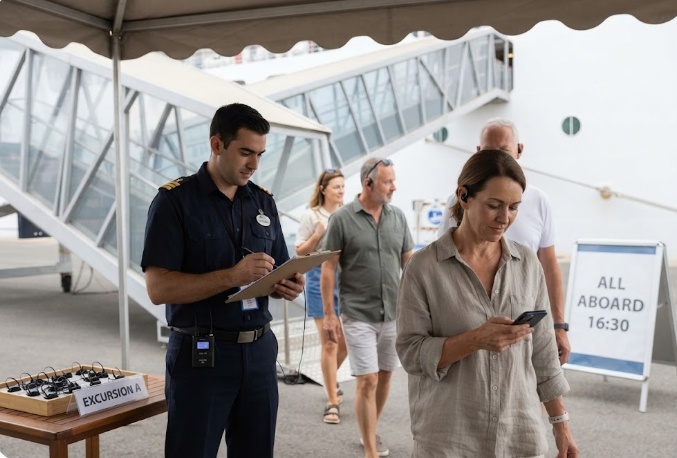
Back to the quay at 07:40. The list that matters then is four lines long: every receiver on, every receiver on a different channel from the coach beside you, batteries above half, and the spare bag inside the coach rather than in the hold. A system that makes those four checks fast is doing more for your excursion programme than any single datasheet advantage, and that is the standard I would hold the tender to.
If you are buying for a fleet and the excursions carry your brand, the kit itself can carry it too; there is a short description of logo printing, packaging and appearance work on the OEM and ODM services page. Send us your port list and your typical group sizes and we will tell you which of the three fits, and which one you can skip.