
A leading China factory specializing in Wireless Tour Guide Systems, Church Audio Guides, and Translation Headphones with premium OEM/ODM solutions.

Tel:+86 18922879583

Email:tiger.wang@richitek.com

RC2501, RC2406 and a 2.8-Inch Audio Guide: Language Groups That Pay Their Own Way

Hajj season compresses an entire year of demand into a few weeks, and the operators who profit through it share one habit: they treat every tongue on the roster as a separate product, not as a translation afterthought. A group that hears the ritual guidance in Bahasa Indonesia books again. A group handed a receiver hissing with crosstalk from the Urdu party walking beside it does not. The arithmetic is blunt — each additional language group is a departure that can be sold, priced, and staffed — but the equipment side of that arithmetic is where most operators guess. This breakdown follows three devices through a season that runs roughly forty thousand pilgrim movements: the wireless systems built for Hajj and Umrah groups set the framework, and three very different machines carry three very different revenue lines.

Guide with a belt transmitter addressing separate language clusters of pilgrims in a stone courtyard

💡 Why One More Tongue on the Roster Is One More Departure Sold

Start with the revenue side, because it decides everything downstream. A Makkah operator running four simultaneous walking departures — Arabic, Bahasa, Urdu and French — sells four guide contracts per slot. Drop French because the old belt-pack fleet cannot keep the fourth channel clean, and the loss is not one rental fee; it is the hotel transfer package bundled with it, the second guide's day rate that disappears, and the referral that never forms. Operators who run this arithmetic for the first time usually discover that the marginal cost of carrying an extra language group — one transmitter, a crate of receivers, one charged case — is a fraction of the marginal revenue it unlocks. That gap is the entire business case for the fleet described below.

The Equipment Ledger Behind a Multilingual Hajj Season

Three machines divide the work, and none of them plays the same role. One live transmitter carries the Arabic commentary, where voice clarity against courtyard noise decides whether first-time pilgrims follow the ritual sequence correctly. A channel-banked live system handles the rotating language departures, because its channel capacity is what lets several interpreters broadcast at once without cleaning up each other's signal. And a stored-audio player with a numeric keypad runs the self-paced corridor wing, where recorded tracks in sixteen languages replace live staffing entirely. Each earns its slot differently, which is why a single blended ROI number would hide more than it reveals.

What the Spec Sheet Actually Says

Everything in the table below is taken from the published product pages; where a figure is not published, the cell says so rather than estimating.

ItemRC2501RC24062.8-Inch Audio Guide
ClassLive 2.4G transmitter systemLive 2.4G transmitter systemStored-audio player with keypad
Channel / capacityMulti-group independent transmission, crosstalk eliminated (channel count not published)80 channels, PLL anti-interference16 languages, up to 9999 audio files, 2GB memory
RangeUp to 200 m open area, holds through obstaclesUp to 200 m open areaNot applicable — playback, not radio
BatteryNot published1500 mAh lithium, full-day continuous use18 hours per full charge
Charging portNot publishedDC portMicro USB
Receiver weightPocket format, 86 × 50 × 19 mm50 gNot published
Audio pathSmart noise-canceling microphone, English-optimized transmissionClear voice optimized for guidingNumber-input playback (0–9), earphones included
Warranty3 years, mainboard covered (headset, mic, battery excluded)Not published1 year, accessories excluded; defect rate under 1%

Two published figures do most of the strategic work here. The RC2406's eighty channels mean a fleet sized for four language groups still has headroom for twenty more departures before capacity forces a second purchase wave. And the handheld player's sixteen-language file bank means the self-paced wing serves sixteen nationalities without a single live interpreter — the closest thing in the kit to pure margin.

📡 Transmitter Duty Across Three Parallel Circles

On a normal season morning, the courtyard runs three circles at once. The Arabic circle holds the courtyard proper, and the RC2501 wireless tour guide system sits clipped to the lead guide's belt, its noise-canceling microphone doing audible work: pilgrims at the back of a two-hundred-meter spread report hearing the ritual cues without the echo bounce that made last season's equipment feel unreachable. The Bahasa and Urdu circles orbit the outer colonnade on separate RC2406 channels, and the isolation between them is the quiet achievement — interpreters stop waiting for gaps in each other's narration, which shortens each circuit by minutes and lets the schedule absorb a late bus without cutting a stop. Operators who have run crosstalk-prone fleets know what that wait costs: a guide talking over another guide forces both groups to slow down, and a slowed circle is a departure that overshoots its hotel return window.

Receiver Simplicity for First-Time Pilgrims

The demographic fact of Hajj season is that most users touch the equipment once in their lives. Training budget therefore buys nothing durable, and the only workable design is one that needs no explanation. The RC2406 80-channel tour guide system's one-click pairing does that work on the live side: a steward powers a receiver, it finds the group's channel, and the visitor hears narration without touching a second control. The published 50 g weight matters more than it reads — older pilgrims wearing the unit under ihram garments for hours report no pressure points, which removes the single most common complaint fielded at collection desks last season. The DC charging port is not elegant, but multi-bank chargers for barrel-pin formats are cheap, standardized, and already stocked by every rental house in the city, which shortens the operator's own procurement path. Collection desks run the same simplicity backward: receivers drop into numbered slots, a steward scans for the units that did not come home, and the missing-device conversation happens at the gate while the group is still standing there, not by phone the next morning.

The Self-Guided Wing Runs Itself

Not every stop needs a live voice. The tunnel connector between two zones — the stretch where crowds compress and live guiding becomes unsafe — is exactly where the 2.8-inch semi-auto digital audio guide earns its keep. Visitors key the two-digit exhibit number printed on the wall plate, and the track plays in the visitor's own tongue from a bank of sixteen. The published numbers that matter operationally: eighteen hours of battery, which survives a double shift without a swap; 9999 file capacity, which means the operator records all sixteen languages for every stop once, before the season, and never touches it again; and the 0–9 keypad, which pilgrims old enough to remember dialing a telephone master in under five seconds. The complimentary earphones remove one accessory decision from procurement, and the hygienic covers the operator buys separately remain the only recurring consumable on this revenue line.
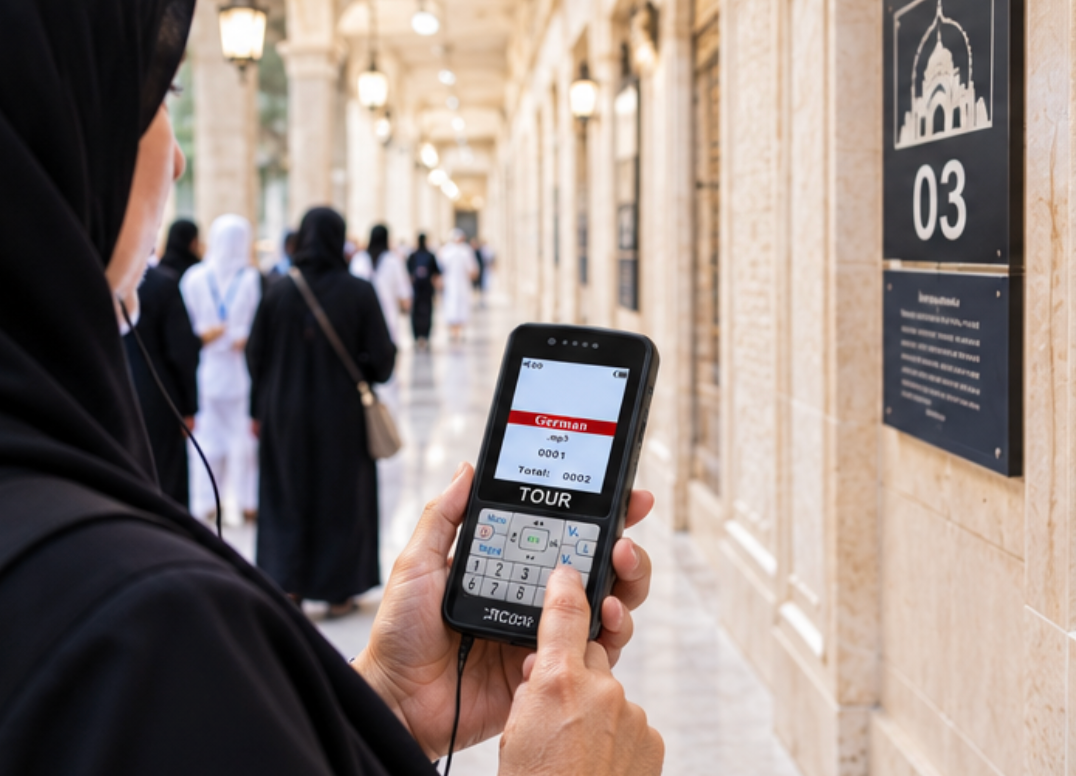
Pilgrim keying an exhibit number on a handheld audio guide player beside a numbered wall plate

Counting the Season in Language Groups, Not Devices

Blended fleet math flatters the wrong purchases. Counted per revenue line, the season reads differently. The Arabic live circle runs on the RC2501's clarity premium — the guide's contract explicitly cites comprehension at distance as the reason the fleet was renewed. Each rotating interpreter departure on the RC2406 books at the standard group rate, and with eighty channels available, the operator's constraint is not equipment but interpreter supply, a far cheaper ceiling to press against. The self-paced wing, running on stored audio, carries the highest contribution margin in the operation because its only costs are depreciation and the electricity to recharge it. Crews weighing these devices against wider product families — the full wireless tour guide range lists the siblings — should compare them by revenue line, not by unit price.

The end-of-season review at this operator produced a simple ordering. First: another crate of RC2406 receivers, because channel headroom is the cheapest capacity in the fleet and the marginal receiver enables a whole departure, not just a seat. Second: recording sessions for the stored-audio bank, because each new language added to the sixteen existing ones opens the self-paced wing to another nationality at near-zero marginal cost. Third — and deliberately last — another live transmitter, because the RC2501's multi-group architecture already isolates the circles that exist, and adding commentary streams before interpreter supply catches up would strand the hardware. Operators planning against next season's calendar can explore the deployment patterns behind this ordering, though the arithmetic above is the part that should be done before any quotation is requested.
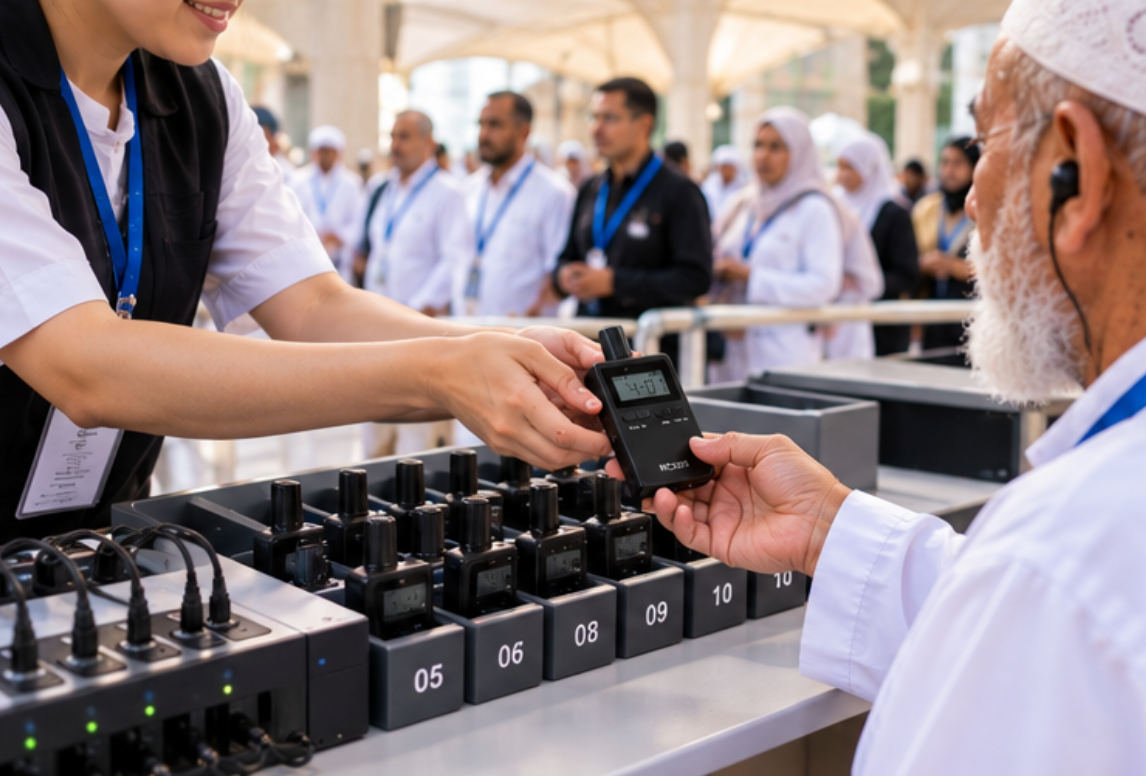

Staff member handing a lightweight receiver to an elderly pilgrim at a numbered handout desk

Frequently Asked Questions

1. The RC2501 page does not list a channel count — how do we know it supports several groups?

The published architecture is described as multi-group independent transmission with complete crosstalk elimination, which is the property that matters for running parallel circles; the specific channel number is not published, so this article does not state one. Buyers who need a hard channel figure should request it directly from the factory before ordering, and size the RC2406's published eighty channels for the rotating-language duty where the count is documented.

2. Can one RC2406 channel bank really serve twenty-plus language groups?

The published figure is eighty channels with PLL anti-interference, so the radio capacity exists for far more groups than any single operator runs. The practical ceiling is interpreter supply and receiver stock, not spectrum — which is why the end-of-season review above orders receivers before transmitters. Each channel is a departure slot in waiting; filling it costs an interpreter, not new engineering.

3. Is the 2.8-inch player suitable for elderly pilgrims?

The interaction is a printed two-digit number and a 0-9 keypad, which field feedback this season found mastered in seconds by visitors across all age groups. The eighteen-hour battery removes mid-route charging anxiety, the earphones ship in the box, and because playback is stored audio there is no channel selection and no signal dead zone to troubleshoot — the failure modes that most often confuse first-time users of radio equipment.

4. How does the three-year warranty on the RC2501 change the cost case?

The published terms cover the mainboard for three years, excluding the headset, microphone and battery, which are the wearable parts by design. For a Hajj operator whose season concentrates wear into a few intense weeks, mainboard coverage across three seasons removes the replacement risk that used to sit entirely on the operator's books. The 2.8-inch player's one-year term with a published defect rate under one percent plays the same role on the self-guided line.


2026年10月27日 09:29
ꄘ click: 12

Get the spec sheet, MOQ and a factory-direct quote

Tell us the venue, the group size and how many languages you need. An engineer at our Shenzhen factory replies within one business day with the matching model, a written quote, lead time and the CE / RoHS / ISO 9001 documents.

Talk to an engineer WhatsApp +86 189 2287 9583

Prefer email? tiger.wang@richitek.com  |  OEM / ODM, custom tooling and neutral packaging available  |  send the enquiry through our contact page

Shenzhen Rich Age Electronics Co., Ltd. (Richitek) - manufacturing wireless tour guide systems, church translation headsets and museum audio guide equipment since 2007.

RC2501, RC2406 and a 2.8-Inch Audio Guide: Language Groups That Pay Their Own Way

time: 2026年10月27日 click:12

Hajj season compresses an entire year of demand into a few weeks, and the operators who profit through it share one habit: they treat every tongue on the roster as a separate product, not as a translation afterthought. A group that hears the ritual guidance in Bahasa Indonesia books again. A group handed a receiver hissing with crosstalk from the Urdu party walking beside it does not. The arithmetic is blunt — each additional language group is a departure that can be sold, priced, and staffed — but the equipment side of that arithmetic is where most operators guess. This breakdown follows three devices through a season that runs roughly forty thousand pilgrim movements: the wireless systems built for Hajj and Umrah groups set the framework, and three very different machines carry three very different revenue lines.

Guide with a belt transmitter addressing separate language clusters of pilgrims in a stone courtyard

💡 Why One More Tongue on the Roster Is One More Departure Sold

Start with the revenue side, because it decides everything downstream. A Makkah operator running four simultaneous walking departures — Arabic, Bahasa, Urdu and French — sells four guide contracts per slot. Drop French because the old belt-pack fleet cannot keep the fourth channel clean, and the loss is not one rental fee; it is the hotel transfer package bundled with it, the second guide's day rate that disappears, and the referral that never forms. Operators who run this arithmetic for the first time usually discover that the marginal cost of carrying an extra language group — one transmitter, a crate of receivers, one charged case — is a fraction of the marginal revenue it unlocks. That gap is the entire business case for the fleet described below.

The Equipment Ledger Behind a Multilingual Hajj Season

Three machines divide the work, and none of them plays the same role. One live transmitter carries the Arabic commentary, where voice clarity against courtyard noise decides whether first-time pilgrims follow the ritual sequence correctly. A channel-banked live system handles the rotating language departures, because its channel capacity is what lets several interpreters broadcast at once without cleaning up each other's signal. And a stored-audio player with a numeric keypad runs the self-paced corridor wing, where recorded tracks in sixteen languages replace live staffing entirely. Each earns its slot differently, which is why a single blended ROI number would hide more than it reveals.

What the Spec Sheet Actually Says

Everything in the table below is taken from the published product pages; where a figure is not published, the cell says so rather than estimating.

ItemRC2501RC24062.8-Inch Audio Guide
ClassLive 2.4G transmitter systemLive 2.4G transmitter systemStored-audio player with keypad
Channel / capacityMulti-group independent transmission, crosstalk eliminated (channel count not published)80 channels, PLL anti-interference16 languages, up to 9999 audio files, 2GB memory
RangeUp to 200 m open area, holds through obstaclesUp to 200 m open areaNot applicable — playback, not radio
BatteryNot published1500 mAh lithium, full-day continuous use18 hours per full charge
Charging portNot publishedDC portMicro USB
Receiver weightPocket format, 86 × 50 × 19 mm50 gNot published
Audio pathSmart noise-canceling microphone, English-optimized transmissionClear voice optimized for guidingNumber-input playback (0–9), earphones included
Warranty3 years, mainboard covered (headset, mic, battery excluded)Not published1 year, accessories excluded; defect rate under 1%

Two published figures do most of the strategic work here. The RC2406's eighty channels mean a fleet sized for four language groups still has headroom for twenty more departures before capacity forces a second purchase wave. And the handheld player's sixteen-language file bank means the self-paced wing serves sixteen nationalities without a single live interpreter — the closest thing in the kit to pure margin.

📡 Transmitter Duty Across Three Parallel Circles

On a normal season morning, the courtyard runs three circles at once. The Arabic circle holds the courtyard proper, and the RC2501 wireless tour guide system sits clipped to the lead guide's belt, its noise-canceling microphone doing audible work: pilgrims at the back of a two-hundred-meter spread report hearing the ritual cues without the echo bounce that made last season's equipment feel unreachable. The Bahasa and Urdu circles orbit the outer colonnade on separate RC2406 channels, and the isolation between them is the quiet achievement — interpreters stop waiting for gaps in each other's narration, which shortens each circuit by minutes and lets the schedule absorb a late bus without cutting a stop. Operators who have run crosstalk-prone fleets know what that wait costs: a guide talking over another guide forces both groups to slow down, and a slowed circle is a departure that overshoots its hotel return window.

Receiver Simplicity for First-Time Pilgrims

The demographic fact of Hajj season is that most users touch the equipment once in their lives. Training budget therefore buys nothing durable, and the only workable design is one that needs no explanation. The RC2406 80-channel tour guide system's one-click pairing does that work on the live side: a steward powers a receiver, it finds the group's channel, and the visitor hears narration without touching a second control. The published 50 g weight matters more than it reads — older pilgrims wearing the unit under ihram garments for hours report no pressure points, which removes the single most common complaint fielded at collection desks last season. The DC charging port is not elegant, but multi-bank chargers for barrel-pin formats are cheap, standardized, and already stocked by every rental house in the city, which shortens the operator's own procurement path. Collection desks run the same simplicity backward: receivers drop into numbered slots, a steward scans for the units that did not come home, and the missing-device conversation happens at the gate while the group is still standing there, not by phone the next morning.

The Self-Guided Wing Runs Itself

Not every stop needs a live voice. The tunnel connector between two zones — the stretch where crowds compress and live guiding becomes unsafe — is exactly where the 2.8-inch semi-auto digital audio guide earns its keep. Visitors key the two-digit exhibit number printed on the wall plate, and the track plays in the visitor's own tongue from a bank of sixteen. The published numbers that matter operationally: eighteen hours of battery, which survives a double shift without a swap; 9999 file capacity, which means the operator records all sixteen languages for every stop once, before the season, and never touches it again; and the 0–9 keypad, which pilgrims old enough to remember dialing a telephone master in under five seconds. The complimentary earphones remove one accessory decision from procurement, and the hygienic covers the operator buys separately remain the only recurring consumable on this revenue line.

Pilgrim keying an exhibit number on a handheld audio guide player beside a numbered wall plate

Counting the Season in Language Groups, Not Devices

Blended fleet math flatters the wrong purchases. Counted per revenue line, the season reads differently. The Arabic live circle runs on the RC2501's clarity premium — the guide's contract explicitly cites comprehension at distance as the reason the fleet was renewed. Each rotating interpreter departure on the RC2406 books at the standard group rate, and with eighty channels available, the operator's constraint is not equipment but interpreter supply, a far cheaper ceiling to press against. The self-paced wing, running on stored audio, carries the highest contribution margin in the operation because its only costs are depreciation and the electricity to recharge it. Crews weighing these devices against wider product families — the full wireless tour guide range lists the siblings — should compare them by revenue line, not by unit price.

The end-of-season review at this operator produced a simple ordering. First: another crate of RC2406 receivers, because channel headroom is the cheapest capacity in the fleet and the marginal receiver enables a whole departure, not just a seat. Second: recording sessions for the stored-audio bank, because each new language added to the sixteen existing ones opens the self-paced wing to another nationality at near-zero marginal cost. Third — and deliberately last — another live transmitter, because the RC2501's multi-group architecture already isolates the circles that exist, and adding commentary streams before interpreter supply catches up would strand the hardware. Operators planning against next season's calendar can explore the deployment patterns behind this ordering, though the arithmetic above is the part that should be done before any quotation is requested.

Staff member handing a lightweight receiver to an elderly pilgrim at a numbered handout desk

Frequently Asked Questions

1. The RC2501 page does not list a channel count — how do we know it supports several groups?

The published architecture is described as multi-group independent transmission with complete crosstalk elimination, which is the property that matters for running parallel circles; the specific channel number is not published, so this article does not state one. Buyers who need a hard channel figure should request it directly from the factory before ordering, and size the RC2406's published eighty channels for the rotating-language duty where the count is documented.

2. Can one RC2406 channel bank really serve twenty-plus language groups?

The published figure is eighty channels with PLL anti-interference, so the radio capacity exists for far more groups than any single operator runs. The practical ceiling is interpreter supply and receiver stock, not spectrum — which is why the end-of-season review above orders receivers before transmitters. Each channel is a departure slot in waiting; filling it costs an interpreter, not new engineering.

3. Is the 2.8-inch player suitable for elderly pilgrims?

The interaction is a printed two-digit number and a 0-9 keypad, which field feedback this season found mastered in seconds by visitors across all age groups. The eighteen-hour battery removes mid-route charging anxiety, the earphones ship in the box, and because playback is stored audio there is no channel selection and no signal dead zone to troubleshoot — the failure modes that most often confuse first-time users of radio equipment.

4. How does the three-year warranty on the RC2501 change the cost case?

The published terms cover the mainboard for three years, excluding the headset, microphone and battery, which are the wearable parts by design. For a Hajj operator whose season concentrates wear into a few intense weeks, mainboard coverage across three seasons removes the replacement risk that used to sit entirely on the operator's books. The 2.8-inch player's one-year term with a published defect rate under one percent plays the same role on the self-guided line.


Get the spec sheet, MOQ and a factory-direct quote

Tell us the venue, the group size and how many languages you need. An engineer at our Shenzhen factory replies within one business day with the matching model, a written quote, lead time and the CE / RoHS / ISO 9001 documents.

Talk to an engineer WhatsApp +86 189 2287 9583

Prefer email? tiger.wang@richitek.com  |  OEM / ODM, custom tooling and neutral packaging available  |  send the enquiry through our contact page

Shenzhen Rich Age Electronics Co., Ltd. (Richitek) - manufacturing wireless tour guide systems, church translation headsets and museum audio guide equipment since 2007.

×

Contact us

email:
name:
subject:
content: