.webp)

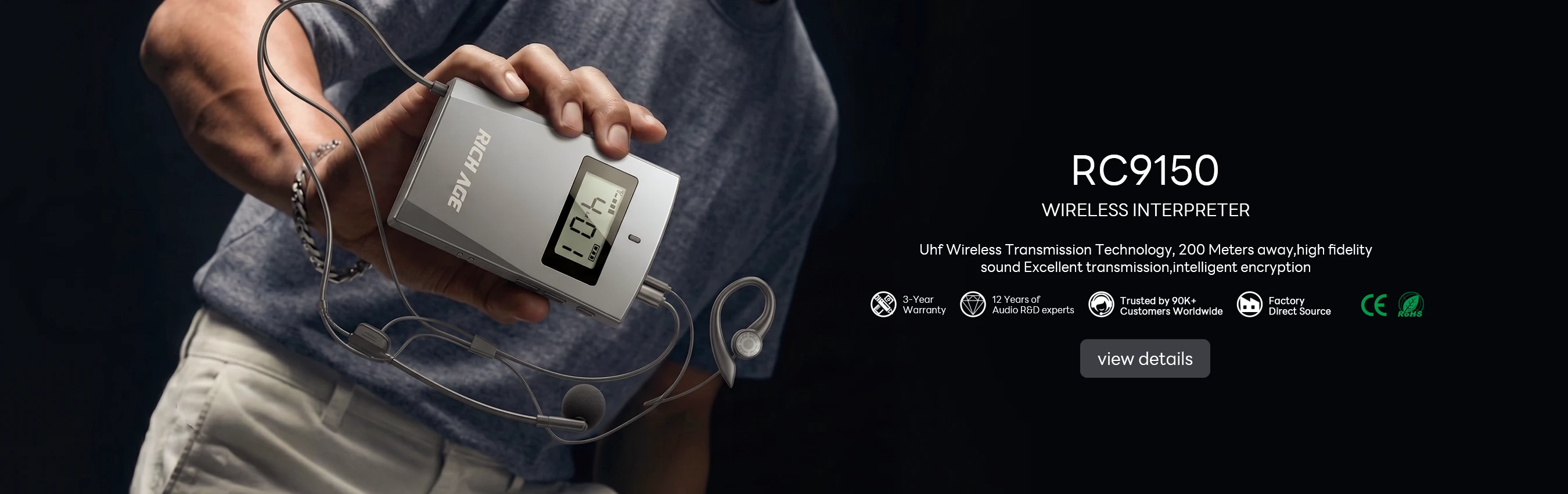
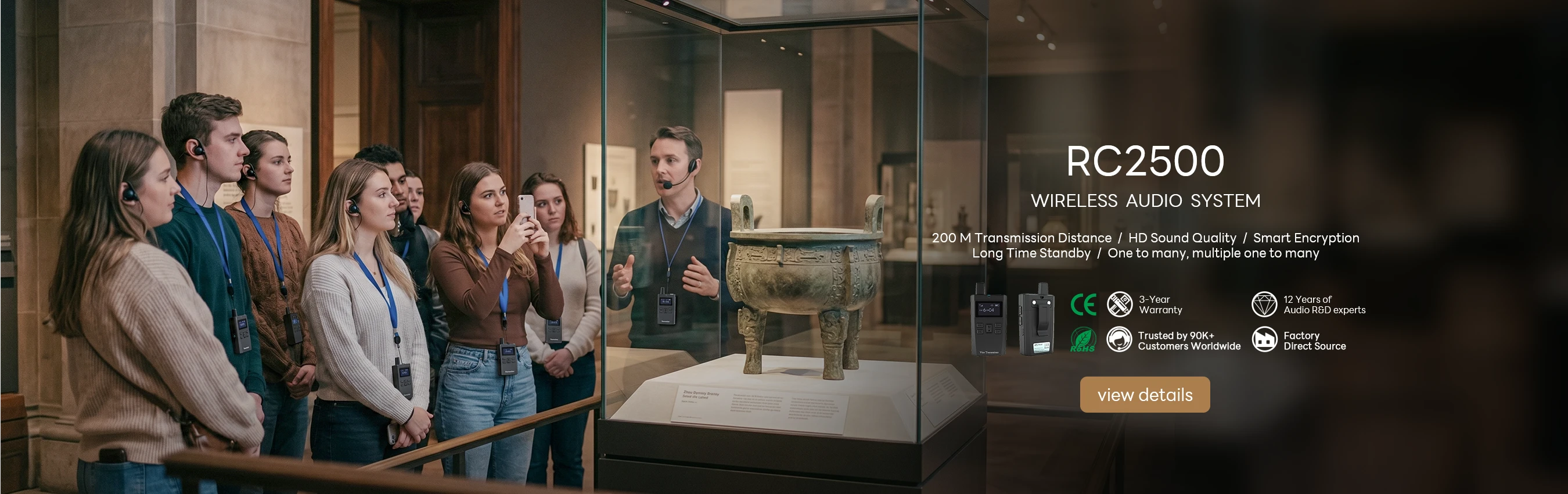
A zoo is rarely one venue. It is a row of buildings with different acoustics, different ticket economics and very different crowd behaviour: a dark night house, a windy safari loop, a walk-through aviary, a membership desk renewing hundreds of annual passes at the gate. A single audio kit specification rarely fits all of them, and buying one box for everything is how equipment budgets quietly leak.
This article sorts the spend the way an operations manager actually walks the grounds: building by building, then by the calendar that drives each one. Three kits anchor the comparison — the RC2468, the RC8860 and the RC2500 — each matched to the route where its specification earns money back rather than sitting in a charging cupboard.
🔋 Start With the Buildings That Charge Extra
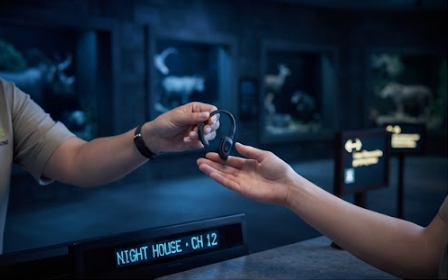
Most collections can name two or three buildings where interpretation directly supports an upsell: the night house, the reptile house, the aquarium tunnel. These rooms run guided slots back to back, and every minute a group waits for equipment is a minute the next slot slips. The hardware decision here is throughput: one transmitter per guide, one receiver per guest, plus a spare ratio the front desk can actually track. Units that pair slowly or cross channels turn a five-minute turnaround into fifteen, and at peak that gap is the difference between six sellable slots a day and five. Rank these buildings first in the budget, because a kit that fails here is visible at the ticket desk within a week.
Quiet Rooms Reward an Ear-Hook Receiver
The night house is the strictest room on the grounds: low light, hushed commentary, visitors standing close enough to hear each other breathe. The RC2468 receiver was shaped for exactly this room. At 18g in an ear-hook form, a guest forgets the unit within a minute, and there is no handheld shape to fidget with or set down on a rail and leave behind. Its 2.4G band carries 50 channels, so two school groups can overlap inside the same building without crossing audio. The honest trade-off sits in the battery: receiver life is rated at 8h approx., so the charging cadence is nightly, and the Micro USB 5V/1A port means an overnight rack handles it without drama. In a room this hushed, the weight saving is the feature that sells the ticket upgrade.
The UHF Case for the Outdoor Loop
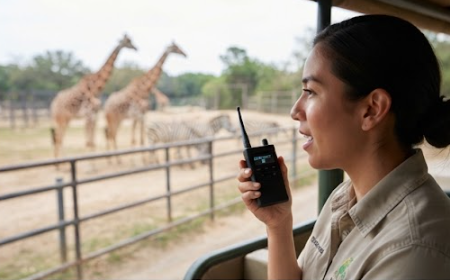
The safari loop inverts every constraint: open air, diesel vehicles, metal fencing and a crowd that keeps moving. Indoors, a 2.4G band is comfortable; across a drive-through section with steel barriers and staff radios, interference is what guests actually hear. The RC8860 answers with an 860-870 MHz UHF band, a frequency block that shrugs off the crowded 2.4G environment, and its 20 channels are enough when the loop is split into zones with one guide each. Battery figures hold for a full rotation day: 10h on the transmitter and 20h on the receiver. At 59g and 50g respectively, neither unit burdens a guest on a two-hour circuit. The colour range — black, iron grey, silver grey, red, orange and blue — lets each zone colour-code its kits, which cuts mix-ups at handover and the replacement orders that follow them.
🔋 One Charge Covers the Membership Calendar
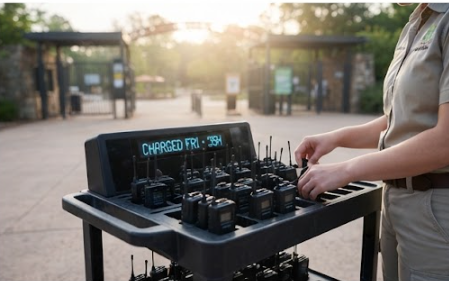
Membership operations are the quiet profit centre of many zoos: early-entry mornings, donor evenings, school holiday programmes, all staffed by the same education team. The RC2500 is the unit that survives that calendar. Transmitter life runs 15h and receiver life reaches 35+h on a 3.7V 1800mAh cell, with standby rated at 35+h, so a kit charged on Friday covers a weekend of back-to-back events without a mid-day rack visit. Type-C charging means the carts and cables already used elsewhere in the park fit as they are. The one-key functions — sync, mute and power-off — matter most at the membership desk, where volunteers turn kits around between groups and cannot troubleshoot a pairing screen. At 104g per unit it is the heaviest of the three, a trade most adults stop noticing once the commentary is worth following.
Reading the Numbers Across Three Kits
Specification sheets decide budgets faster than brochures, so the table below lines the three up on the fields a zoo buyer actually negotiates around. All three hold a 1-200m working range; transmitter endurance and transmitter weight appear in the sections above, so they are not repeated as rows.
| Specification | RC2468 | RC8860 | RC2500 |
|---|---|---|---|
| Frequency band | 2403-2483 MHz (2.4G) | 860-870 MHz (UHF) | 2403-2483 MHz (2.4G) |
| Channels | 50 | 20 | 50 |
| Receiver battery life | 8h approx. | 20h | 35+h |
| Receiver weight | 18g, ear-hook | 50g | 104g |
| Charging port | USB | DC port | Type-C |
Which Kit Follows Which Route
Budgets hold up better when the assignment is written down before the season opens. The grid below is the version this comparison supports: each route gets the kit whose constraints it actually clears, and the purchasing order follows the same lines.
| Route | Constraint that decides | Kit that fits |
|---|---|---|
| Night house and reptile rooms | Silence, plus a receiver guests forget they wear | RC2468 |
| Safari loop and drive-through sections | Interference from vehicles, radios and fencing | RC8860 |
| Membership mornings and donor evenings | Back-to-back events with no mid-day charge | RC2500 |
A mixed fleet is not an admission of complexity. It is usually the cheapest way to cover a collection, because each unit type is bought in the volume its route needs rather than in one fleet-wide block.
What Returns to the Operating Fund
The return shows up in four ordinary places. Fewer repeated briefings, because a guide with a clear channel stops losing stragglers at every turn. Faster turnarounds between slots, which converts directly into sellable sessions at peak. Lower replacement orders, because an 18g ear-hook unit gets handed back at the door and colour-coded zones end the arguments over whose receiver went missing. And a lighter charging routine, since a nightly rack covers the ear-hook fleet while a Friday top-up covers the long-standby units. Membership renewals close the loop: a donor evening where every guest hears the talk without straining is the kind of detail that shows up in next year's pass count.
Questions to Settle Before the First Delivery
Whichever way the budget splits, settle four things with the supplier first: the spare ratio per building, the rack layout for each port type, the zone colour assignments, and who re-pairs kits between slots. The wireless tour guide system range covers all three kits discussed here, the city tour audio solutions page maps the same hardware to open-air routes, and solutions by venue collects the planning notes worth reading before the first order.