
A leading China factory specializing in Wireless Tour Guide Systems, Church Audio Guides, and Translation Headphones with premium OEM/ODM solutions.

Tel:+86 18922879583

Email:tiger.wang@richitek.com

What an Unfixed Outdoor Route Owes You Between Events

What an Unfixed Outdoor Route Owes You Between Events

A guided route that shifts every week does not fail in one dramatic moment. It fails slowly, in the gap between one event and the next. Grass fields, beach paths, forest loops and heritage outskirts rarely offer a fixed power outlet, a fixed storage locker or a fixed route. The kit travels by van, sits in a warm boot overnight, and reappears three days later somewhere else entirely.

What accumulates in that gap is not wear of the dramatic kind. It is a series of small jobs postponed, each one cheap on the day it is skipped and each one more expensive by the time it is noticed. Planners who run outdoor and non-standard venues tend to recognise the pattern long before they can name it.

The Bill Lands on Three Parts the Warranty Leaves Out

Every one of the three units discussed here carries the same three-year warranty, and every one of them carries the same exclusion line: the mainboard is covered, while the headset, the microphone and the battery are not. That single sentence tells you where the maintenance work actually lives. The circuit board rarely fails on a route that moves. The three parts sitting outside the cover are the ones that absorb rain, sweat, sun cream, dust and partial charges.

So the question is not whether the equipment is reliable. It is whether the small jobs those three parts need are being done in the window between events, when nobody is watching.

Debt behaves differently from damage in one specific way. It is invisible on the day it is created and obvious on the day it is collected. A damp unit returned to its case overnight produces no alarm, no error message and no complaint from the group. The consequence arrives a fortnight later at a different venue, in front of a different audience, and is usually blamed on the hardware rather than on the gap that allowed it to build up.

Debt One: The Twenty Minutes Nobody Wants After a Long Walk

The RC8860 is the unit most exposed to open ground. It runs on a single UHF band between 860 and 870 MHz, carries 20 PLL-synthesised channels, and reaches up to 200 metres across an open field. Its transmitter holds a 1500mAh cell rated for ten hours of continuous talk time, while the 50g receiver carries 1000mAh for twenty hours of use. The splash rating is modest and explicitly stated: IPX4, which covers light rain and spills.

The debt here is the twenty minutes at the end of the day. A unit that goes back into the case still damp, with fine grit in the microphone mesh and sun cream on the ear piece, does not stop working that evening. It stops working properly a fortnight later, when the mesh has hardened and the sensitivity has quietly dropped. Wiping takes less time than the argument about why the guide sounds distant.
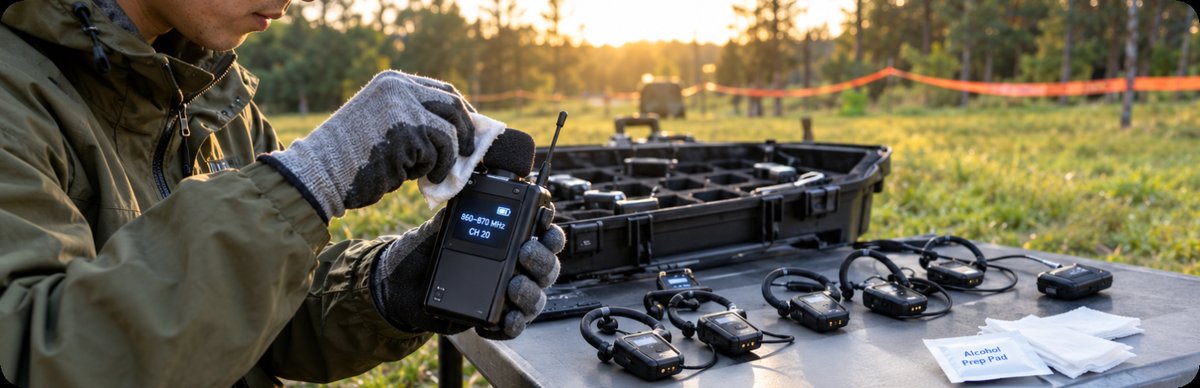
RC8860-outdoor_non_typical

🔋 Debt Two: Heading Out on a Half Charge From a Temporary Supply

The RC2402 sits in the middle of the range: 2.4 GHz operation, 50 channels, a 1500mAh transmitter cell rated for ten hours, and a 1000mAh receiver cell rated for twenty. On a permanent site these numbers are generous. On ground powered by a generator, a vehicle inverter or whatever socket the groundskeeper can spare, they are only as good as the last charge cycle.

Half charges are the quietest form of debt on this list. Nothing looks wrong. The unit switches on, the first hour of the event runs perfectly, and the shortfall only surfaces later as a useful window that never quite returns to what the specification promised. The practical fix is to judge readiness by a full cell rather than by hours spent on the charger, and to treat a partial top-up as unfinished business.
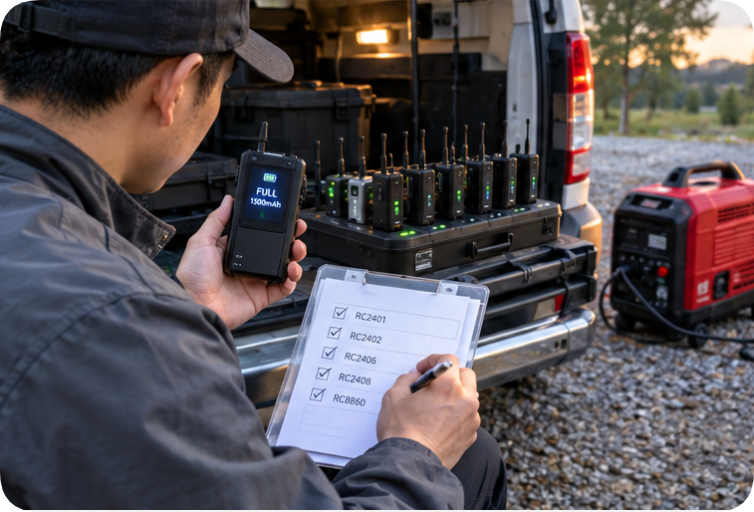
RC2402-outdoor_non_typical

Debt Three: A Channel Note Nobody Wrote Down

The RC085 offers the widest choice of the three. It transmits on 470 to 510 MHz UHF, carries 100 channels, and supports both a one-way broadcast mode and a two-way mode where the group can answer back. It also weighs more than the others, with a 65g transmitter and a 60g receiver, and it is the only unit here with a small LCD panel.

Choice is where this model accumulates debt. With a hundred channels available, the odds of overlapping a neighbouring group rise, and the remedy is trivial: note the channel used, note the venue, and keep the note in the case. A site hosting two events in the same week will otherwise repeat the same interference twice, and the second time it looks like a hardware fault rather than a paperwork omission.
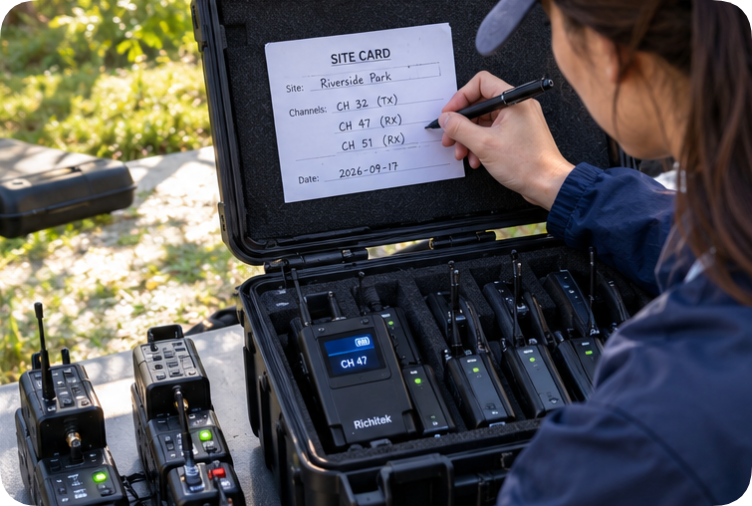
RC085-outdoor_non_typical

Debt Four: The Case That Comes Back One Receiver Short

Counting is the least glamorous job on the list and the only one that is genuinely hard to recover from once the van has left. Because these routes have no fixed locker, everything lives in transit cases, and a receiver that quietly stays in someone's jacket is not discovered until the next event is already being set up. The data needed for a quick check is already published: receivers weigh 50g on the RC8860 and the RC2402, and 60g on the RC085. Weighing the returned case against the expected count is faster than counting heads at the end of a long walk.

Two habits make the count reliable. The first is a weight check rather than a head count, because a loaded case has a predictable mass and a gap of one receiver is measurable. The second is to run it at the vehicle rather than inside the venue, while the group is still dispersing and nobody has driven away. A unit recovered from a car park is an inconvenience; the same unit discovered after a two-hour journey home becomes a purchase order.

Where the Three Units Sit on the Same Five Lines

ItemRC8860RC2402RC085
Frequency band860-870 MHz UHF2403-2483 MHz470-510 MHz UHF
Channels2050100
Transmitter cell1500mAh, 10h talk time1500mAh, 10h talk time1200mAh, 12h talk time
Receiver cell1000mAh, 20h use1000mAh, 20h use1000mAh, 20h use
Charging portDC portDC portUSB

Read the table with the four debts in mind and the pattern becomes obvious. The RC085 is the most forgiving on talk time and the most demanding on discipline, because a hundred channels stay tidy only if somebody writes them down. The RC8860 concentrates its exposure in the field, where wet and gritty conditions meet a splash rating rather than a submersible one. The RC2402 sits between them, which is precisely why a half charge on a temporary supply is easier to overlook on that model than on either neighbour.

The Ten Minutes That Clears the Book

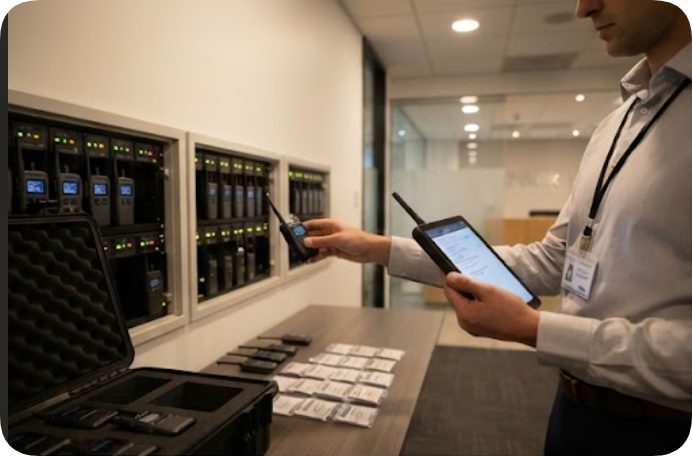
None of this needs a workshop. What it needs is a fixed order of work that happens before the case is closed. Wipe the ear pieces and microphone mesh while the units are still warm from use, when residue comes away easily. Put every unit on charge until the cell reports full, not until the shift ends. Write the channel and the venue on the card that lives inside the lid. Weigh the case before it goes into the van. Ten minutes, four actions, and the next event starts from a clean position rather than from a quiet deficit.

Teams that standardise the routine across a fleet usually find that the wider tour guide range stays predictable for years, because the parts the warranty excludes are the parts somebody is actually looking after. If you are still choosing between bands before you choose between habits, the side-by-side comparisons cover the frequency question in more detail.

2026年09月22日 09:55
click: 14

What an Unfixed Outdoor Route Owes You Between Events

time: 2026年09月22日 click:14

What an Unfixed Outdoor Route Owes You Between Events

A guided route that shifts every week does not fail in one dramatic moment. It fails slowly, in the gap between one event and the next. Grass fields, beach paths, forest loops and heritage outskirts rarely offer a fixed power outlet, a fixed storage locker or a fixed route. The kit travels by van, sits in a warm boot overnight, and reappears three days later somewhere else entirely.

What accumulates in that gap is not wear of the dramatic kind. It is a series of small jobs postponed, each one cheap on the day it is skipped and each one more expensive by the time it is noticed. Planners who run outdoor and non-standard venues tend to recognise the pattern long before they can name it.

The Bill Lands on Three Parts the Warranty Leaves Out

Every one of the three units discussed here carries the same three-year warranty, and every one of them carries the same exclusion line: the mainboard is covered, while the headset, the microphone and the battery are not. That single sentence tells you where the maintenance work actually lives. The circuit board rarely fails on a route that moves. The three parts sitting outside the cover are the ones that absorb rain, sweat, sun cream, dust and partial charges.

So the question is not whether the equipment is reliable. It is whether the small jobs those three parts need are being done in the window between events, when nobody is watching.

Debt behaves differently from damage in one specific way. It is invisible on the day it is created and obvious on the day it is collected. A damp unit returned to its case overnight produces no alarm, no error message and no complaint from the group. The consequence arrives a fortnight later at a different venue, in front of a different audience, and is usually blamed on the hardware rather than on the gap that allowed it to build up.

Debt One: The Twenty Minutes Nobody Wants After a Long Walk

The RC8860 is the unit most exposed to open ground. It runs on a single UHF band between 860 and 870 MHz, carries 20 PLL-synthesised channels, and reaches up to 200 metres across an open field. Its transmitter holds a 1500mAh cell rated for ten hours of continuous talk time, while the 50g receiver carries 1000mAh for twenty hours of use. The splash rating is modest and explicitly stated: IPX4, which covers light rain and spills.

The debt here is the twenty minutes at the end of the day. A unit that goes back into the case still damp, with fine grit in the microphone mesh and sun cream on the ear piece, does not stop working that evening. It stops working properly a fortnight later, when the mesh has hardened and the sensitivity has quietly dropped. Wiping takes less time than the argument about why the guide sounds distant.

RC8860-outdoor_non_typical

🔋 Debt Two: Heading Out on a Half Charge From a Temporary Supply

The RC2402 sits in the middle of the range: 2.4 GHz operation, 50 channels, a 1500mAh transmitter cell rated for ten hours, and a 1000mAh receiver cell rated for twenty. On a permanent site these numbers are generous. On ground powered by a generator, a vehicle inverter or whatever socket the groundskeeper can spare, they are only as good as the last charge cycle.

Half charges are the quietest form of debt on this list. Nothing looks wrong. The unit switches on, the first hour of the event runs perfectly, and the shortfall only surfaces later as a useful window that never quite returns to what the specification promised. The practical fix is to judge readiness by a full cell rather than by hours spent on the charger, and to treat a partial top-up as unfinished business.

RC2402-outdoor_non_typical

Debt Three: A Channel Note Nobody Wrote Down

The RC085 offers the widest choice of the three. It transmits on 470 to 510 MHz UHF, carries 100 channels, and supports both a one-way broadcast mode and a two-way mode where the group can answer back. It also weighs more than the others, with a 65g transmitter and a 60g receiver, and it is the only unit here with a small LCD panel.

Choice is where this model accumulates debt. With a hundred channels available, the odds of overlapping a neighbouring group rise, and the remedy is trivial: note the channel used, note the venue, and keep the note in the case. A site hosting two events in the same week will otherwise repeat the same interference twice, and the second time it looks like a hardware fault rather than a paperwork omission.

RC085-outdoor_non_typical

Debt Four: The Case That Comes Back One Receiver Short

Counting is the least glamorous job on the list and the only one that is genuinely hard to recover from once the van has left. Because these routes have no fixed locker, everything lives in transit cases, and a receiver that quietly stays in someone's jacket is not discovered until the next event is already being set up. The data needed for a quick check is already published: receivers weigh 50g on the RC8860 and the RC2402, and 60g on the RC085. Weighing the returned case against the expected count is faster than counting heads at the end of a long walk.

Two habits make the count reliable. The first is a weight check rather than a head count, because a loaded case has a predictable mass and a gap of one receiver is measurable. The second is to run it at the vehicle rather than inside the venue, while the group is still dispersing and nobody has driven away. A unit recovered from a car park is an inconvenience; the same unit discovered after a two-hour journey home becomes a purchase order.

Where the Three Units Sit on the Same Five Lines

ItemRC8860RC2402RC085
Frequency band860-870 MHz UHF2403-2483 MHz470-510 MHz UHF
Channels2050100
Transmitter cell1500mAh, 10h talk time1500mAh, 10h talk time1200mAh, 12h talk time
Receiver cell1000mAh, 20h use1000mAh, 20h use1000mAh, 20h use
Charging portDC portDC portUSB

Read the table with the four debts in mind and the pattern becomes obvious. The RC085 is the most forgiving on talk time and the most demanding on discipline, because a hundred channels stay tidy only if somebody writes them down. The RC8860 concentrates its exposure in the field, where wet and gritty conditions meet a splash rating rather than a submersible one. The RC2402 sits between them, which is precisely why a half charge on a temporary supply is easier to overlook on that model than on either neighbour.

The Ten Minutes That Clears the Book

None of this needs a workshop. What it needs is a fixed order of work that happens before the case is closed. Wipe the ear pieces and microphone mesh while the units are still warm from use, when residue comes away easily. Put every unit on charge until the cell reports full, not until the shift ends. Write the channel and the venue on the card that lives inside the lid. Weigh the case before it goes into the van. Ten minutes, four actions, and the next event starts from a clean position rather than from a quiet deficit.

Teams that standardise the routine across a fleet usually find that the wider tour guide range stays predictable for years, because the parts the warranty excludes are the parts somebody is actually looking after. If you are still choosing between bands before you choose between habits, the side-by-side comparisons cover the frequency question in more detail.
×

Contact us

email:
name:
subject:
content: