
A leading China factory specializing in Wireless Tour Guide Systems, Church Audio Guides, and Translation Headphones with premium OEM/ODM solutions.

Tel:+86 18922879583

Email:tiger.wang@richitek.com

RC2406 and RC9150: A Museum Order Written Around Where the Next Language Lives

A museum order is signed on a calm afternoon. The language list is printed, the room counts agreed, and the quantity column looks final. Then a temporary exhibition arrives with captions in a language nobody planned for, a sponsor from a new market asks for a version of their own, or a sister site adds one more. The building has not changed. The order has.

For anyone assembling a museum wireless audio solution, the useful question is not how many languages the venue runs today but what one more will cost tomorrow. That is settled neither by brand nor by the figure printed largest in a brochure, but by where the language physically sits inside the kit.

🗺️ Two Ways a Spoken Commentary Reaches a Visitor

In the first arrangement the commentary is carried. A transmitter holds the audio and puts it out on a radio channel; the unit in the visitor's hand is a tuner that contains no commentary at all. Change the language and the receiver does not care, because it was never holding one; it only has to know which channel to sit on.

In the second arrangement the commentary is stored. There is no radio link and no transmitter in the chain. The recording lives on the handset itself and the visitor selects it with a keypad. That device is not a tuner but the carrier: the language is not something the system tunes to but something the system is made of.

The Route That Puts the Commentary on a Carrier

The RC9150 is the carried arrangement with the widest ceiling: the 2.4 GHz band between 2403 and 2483 MHz, 100 channels, ten milliwatts of output, PLL frequency synthesis, fifteen hours on the transmitter and thirty-five or more on the receiver, both packs rated 3.7V 1800mAh, charged over Type-C, and 97.5g in the hand at each end.
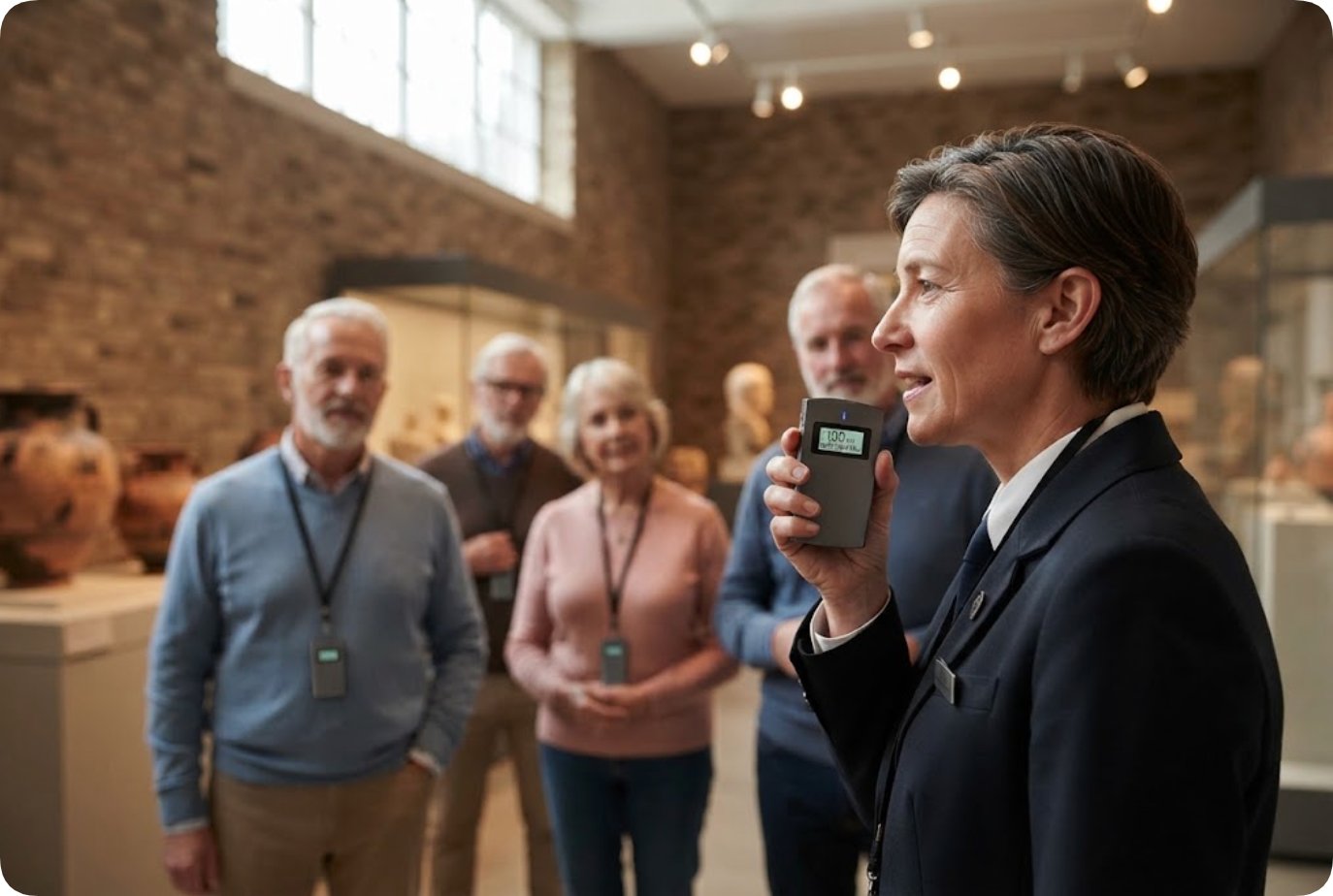
RC9150-museum_multilingual

A second option on the same logic is the RC2406, working the identical way with a lower ceiling: the same band, 80 channels, ten milliwatts, ten hours on the transmitter and twenty on the receiver, a 3.7V 1500mAh transmitter pack against a 1000mAh receiver, and a 50g handset charged from a DC port. The RC9150 buys endurance and channel headroom; the RC2406 buys the same architecture for buildings that never run many languages at once.

The number that decides everything here is the channel count: on a radio system a language occupies a channel. One hundred channels on the RC9150 and eighty on the RC2406 are not a technical footnote; they are the language budget, and the receivers the museum already owns can be pointed at any of them.

The Route That Puts the Commentary on the Handset

The 2.8-Inch Semi-Auto Digital Audio Guide carries no radio link at all. The visitor punches an exhibit number on a 0-9 keypad and the matching commentary plays. What makes it work is capacity on board: sixteen languages and up to 9999 audio files in 2 GB of built-in memory, eighteen hours per charge over Micro USB, earphones included, and units tested individually before shipping.
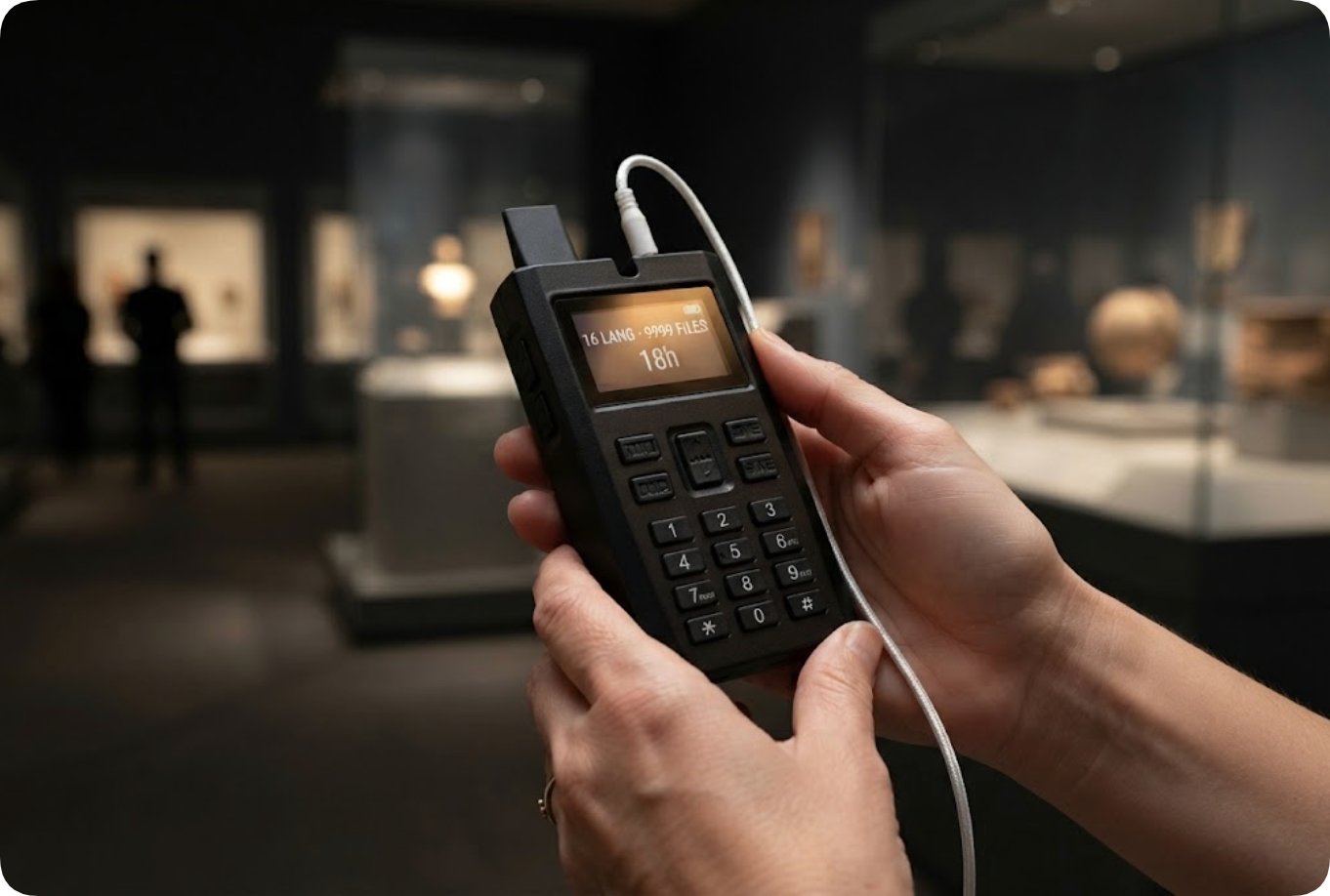
2.8-Inch-Semi-Auto-Digital-Audio-Guide-museum_multilingual

The advantages are genuine: a visitor needs no guide and no briefing, and the museum needs no transmitter and no frequency decision. The cost is structural - every language has to exist on the machines people are holding, so the fleet is not a container for languages but the language library.

What the Quantity Column Is Really Counting

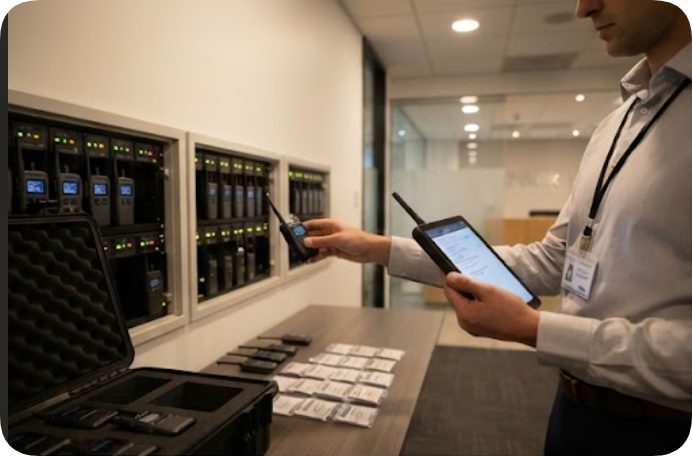
On the carried route the quantity column counts receivers, and receivers are language-neutral, so one figure covers every language the venue will run. The language-bearing item is the transmitter, and a venue needs only as many of those as languages running at the same time. Three languages in rotation with one group each means three transmitters and one receiver pool; a fourth does not change the pool.

On the stored route the same column counts machines that each belong to a language set, so a modest visitor figure can multiply into a much larger order. Two museums with identical footfall can write orders of very different size and both be correct, because the column header means something different in each.

The Morning a New Language Arrives

On the carried route the new language needs a channel and a transmitter sitting on it. The receivers already in the cabinet tune to that channel; nothing is replaced and no second set of machines is bought. The work is administrative: confirm the channel is free, run the check, and write the channel list down so the next session does not re-tune from scratch.
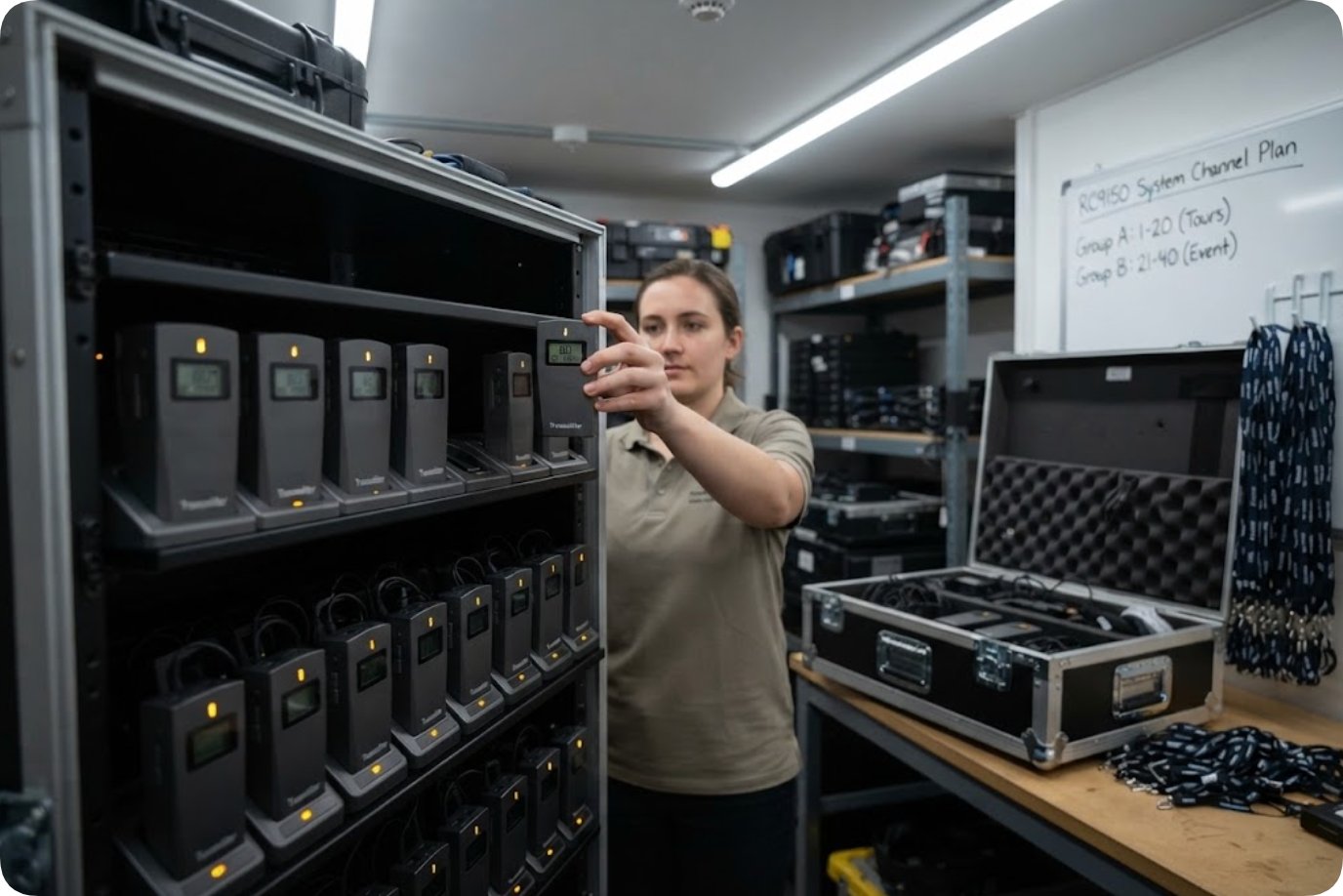
RC2406-museum_multilingual

On the stored route the new language has to be on the machine before the visitor arrives. Physically there is room for it, since sixteen languages and 9999 files is a generous ceiling, so the work is a reload across the fleet in a window when no group is waiting. The alternative is a second set of handsets, and that option quietly doubles the storage footprint, the charging load and the labelling work in the handout room.

Reading the Specification Before the Number Is Fixed

Three lines settle which route an order is on. The first is whether the commentary is carried or stored, usually obvious from whether the page lists a frequency band at all. The second is the channel count on the radio side, because that figure is the language budget and not a piece of engineering trivia. The third is receiver runtime against a real session, since a handset that runs flat during a tour costs more than any difference on a data sheet.

What the order turns onCarried route (RC9150, RC2406)Stored route (2.8-Inch guide)
Where the language physically sitsA channel on the transmitterAudio files inside the handset
What one more language costsA channel and a transmitterMore handsets, or a fleet reload
What the quantity column countsReceivers, which are language-neutralMachines, each tied to a language set
What the venue stores and chargesOne receiver pool, plus transmittersOne machine set per language
Where the ceiling shows upChannel count and receiver enduranceOn-board languages and stored files
What happens at the handout deskSame routine whatever the languageRoutine splits by language set

A radio system and a point-and-play player share no comparable numeric fields; forcing them into one grid would produce numbers that look comparable and are not.

The Two Orders Side by Side

Set the published figures side by side and the split becomes concrete. One unit publishes a frequency band and a channel count; the other publishes neither, because it has neither. One publishes eighteen hours from an on-board battery; the other publishes fifteen on its transmitter and thirty-five or more on its receiver - two different questions being answered.

Published figureRC9150RC24062.8-Inch Semi-Auto Digital Audio Guide
Frequency band2403-2483 MHz2403-2483 MHzNot applicable - no radio link
Channels10080Not applicable
Language or file capacityOne channel per languageOne channel per language16 languages, 9999 files
On-board memoryNot publishedNot published2 GB
Transmitter battery life15h10hNo transmitter
Receiver battery life35+h20h18h per charge
Charging portType-CDC portMicro USB
Warranty3 years, mainboard only3 years, mainboard only1 year, accessories excluded

Two entries deserve a note. The three-year term on the radio units covers the mainboard and leaves headset, microphone and battery outside it, which matters where a receiver passes through hundreds of hands a week; the player carries a one-year term excluding accessories. Read either as a measure of how the manufacturer expects the product to be used, not as a warranty comparison. For the wider picture across the range of wireless tour guide systems, the series comparison puts the channel counts and runtimes of every model on one page.

What to Settle Before the Order Sheet Is Written

Three questions are worth answering in writing before the quantity column is filled in, because each changes the figure rather than the wording. How many languages run at the same time on the busiest morning, as opposed to how many exist across the year? How long is the longest single session, from first handout to last return? And who owns the growth problem when a language is added - the shelf that holds transmitters, or the cabinet that holds handsets?

A venue that can answer those three will not be surprised by a fourth language arriving early. Start from the hardware instead, and the same list produces an order that looks complete and fails at the first temporary exhibition. The language list is the one item on a museum specification that is certain to change; writing the order around where the language sits keeps that change small.

2026年09月23日 09:05
click: 12

RC2406 and RC9150: A Museum Order Written Around Where the Next Language Lives

time: 2026年09月23日 click:12

A museum order is signed on a calm afternoon. The language list is printed, the room counts agreed, and the quantity column looks final. Then a temporary exhibition arrives with captions in a language nobody planned for, a sponsor from a new market asks for a version of their own, or a sister site adds one more. The building has not changed. The order has.

For anyone assembling a museum wireless audio solution, the useful question is not how many languages the venue runs today but what one more will cost tomorrow. That is settled neither by brand nor by the figure printed largest in a brochure, but by where the language physically sits inside the kit.

🗺️ Two Ways a Spoken Commentary Reaches a Visitor

In the first arrangement the commentary is carried. A transmitter holds the audio and puts it out on a radio channel; the unit in the visitor's hand is a tuner that contains no commentary at all. Change the language and the receiver does not care, because it was never holding one; it only has to know which channel to sit on.

In the second arrangement the commentary is stored. There is no radio link and no transmitter in the chain. The recording lives on the handset itself and the visitor selects it with a keypad. That device is not a tuner but the carrier: the language is not something the system tunes to but something the system is made of.

The Route That Puts the Commentary on a Carrier

The RC9150 is the carried arrangement with the widest ceiling: the 2.4 GHz band between 2403 and 2483 MHz, 100 channels, ten milliwatts of output, PLL frequency synthesis, fifteen hours on the transmitter and thirty-five or more on the receiver, both packs rated 3.7V 1800mAh, charged over Type-C, and 97.5g in the hand at each end.

RC9150-museum_multilingual

A second option on the same logic is the RC2406, working the identical way with a lower ceiling: the same band, 80 channels, ten milliwatts, ten hours on the transmitter and twenty on the receiver, a 3.7V 1500mAh transmitter pack against a 1000mAh receiver, and a 50g handset charged from a DC port. The RC9150 buys endurance and channel headroom; the RC2406 buys the same architecture for buildings that never run many languages at once.

The number that decides everything here is the channel count: on a radio system a language occupies a channel. One hundred channels on the RC9150 and eighty on the RC2406 are not a technical footnote; they are the language budget, and the receivers the museum already owns can be pointed at any of them.

The Route That Puts the Commentary on the Handset

The 2.8-Inch Semi-Auto Digital Audio Guide carries no radio link at all. The visitor punches an exhibit number on a 0-9 keypad and the matching commentary plays. What makes it work is capacity on board: sixteen languages and up to 9999 audio files in 2 GB of built-in memory, eighteen hours per charge over Micro USB, earphones included, and units tested individually before shipping.

2.8-Inch-Semi-Auto-Digital-Audio-Guide-museum_multilingual

The advantages are genuine: a visitor needs no guide and no briefing, and the museum needs no transmitter and no frequency decision. The cost is structural - every language has to exist on the machines people are holding, so the fleet is not a container for languages but the language library.

What the Quantity Column Is Really Counting

On the carried route the quantity column counts receivers, and receivers are language-neutral, so one figure covers every language the venue will run. The language-bearing item is the transmitter, and a venue needs only as many of those as languages running at the same time. Three languages in rotation with one group each means three transmitters and one receiver pool; a fourth does not change the pool.

On the stored route the same column counts machines that each belong to a language set, so a modest visitor figure can multiply into a much larger order. Two museums with identical footfall can write orders of very different size and both be correct, because the column header means something different in each.

The Morning a New Language Arrives

On the carried route the new language needs a channel and a transmitter sitting on it. The receivers already in the cabinet tune to that channel; nothing is replaced and no second set of machines is bought. The work is administrative: confirm the channel is free, run the check, and write the channel list down so the next session does not re-tune from scratch.

RC2406-museum_multilingual

On the stored route the new language has to be on the machine before the visitor arrives. Physically there is room for it, since sixteen languages and 9999 files is a generous ceiling, so the work is a reload across the fleet in a window when no group is waiting. The alternative is a second set of handsets, and that option quietly doubles the storage footprint, the charging load and the labelling work in the handout room.

Reading the Specification Before the Number Is Fixed

Three lines settle which route an order is on. The first is whether the commentary is carried or stored, usually obvious from whether the page lists a frequency band at all. The second is the channel count on the radio side, because that figure is the language budget and not a piece of engineering trivia. The third is receiver runtime against a real session, since a handset that runs flat during a tour costs more than any difference on a data sheet.

What the order turns onCarried route (RC9150, RC2406)Stored route (2.8-Inch guide)
Where the language physically sitsA channel on the transmitterAudio files inside the handset
What one more language costsA channel and a transmitterMore handsets, or a fleet reload
What the quantity column countsReceivers, which are language-neutralMachines, each tied to a language set
What the venue stores and chargesOne receiver pool, plus transmittersOne machine set per language
Where the ceiling shows upChannel count and receiver enduranceOn-board languages and stored files
What happens at the handout deskSame routine whatever the languageRoutine splits by language set

A radio system and a point-and-play player share no comparable numeric fields; forcing them into one grid would produce numbers that look comparable and are not.

The Two Orders Side by Side

Set the published figures side by side and the split becomes concrete. One unit publishes a frequency band and a channel count; the other publishes neither, because it has neither. One publishes eighteen hours from an on-board battery; the other publishes fifteen on its transmitter and thirty-five or more on its receiver - two different questions being answered.

Published figureRC9150RC24062.8-Inch Semi-Auto Digital Audio Guide
Frequency band2403-2483 MHz2403-2483 MHzNot applicable - no radio link
Channels10080Not applicable
Language or file capacityOne channel per languageOne channel per language16 languages, 9999 files
On-board memoryNot publishedNot published2 GB
Transmitter battery life15h10hNo transmitter
Receiver battery life35+h20h18h per charge
Charging portType-CDC portMicro USB
Warranty3 years, mainboard only3 years, mainboard only1 year, accessories excluded

Two entries deserve a note. The three-year term on the radio units covers the mainboard and leaves headset, microphone and battery outside it, which matters where a receiver passes through hundreds of hands a week; the player carries a one-year term excluding accessories. Read either as a measure of how the manufacturer expects the product to be used, not as a warranty comparison. For the wider picture across the range of wireless tour guide systems, the series comparison puts the channel counts and runtimes of every model on one page.

What to Settle Before the Order Sheet Is Written

Three questions are worth answering in writing before the quantity column is filled in, because each changes the figure rather than the wording. How many languages run at the same time on the busiest morning, as opposed to how many exist across the year? How long is the longest single session, from first handout to last return? And who owns the growth problem when a language is added - the shelf that holds transmitters, or the cabinet that holds handsets?

A venue that can answer those three will not be surprised by a fourth language arriving early. Start from the hardware instead, and the same list produces an order that looks complete and fails at the first temporary exhibition. The language list is the one item on a museum specification that is certain to change; writing the order around where the language sits keeps that change small.

×

Contact us

email:
name:
subject:
content: