
.webp)
RC2468, RC2406 and RC2408: Custody of a Winery Kit, From Case to Charger
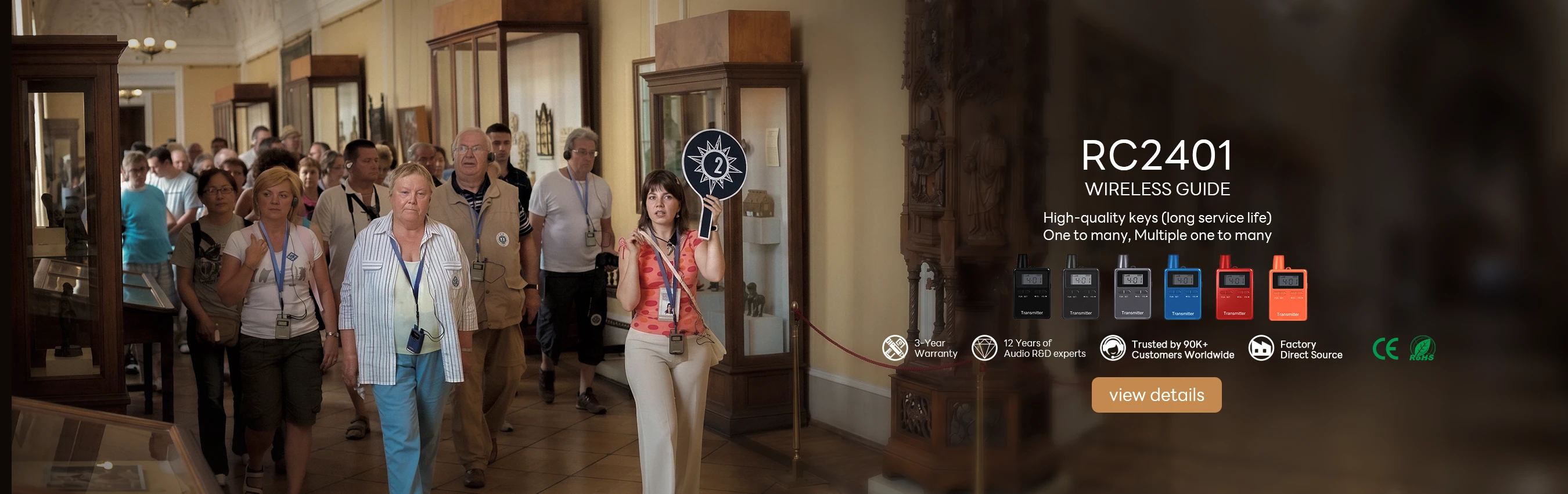
A winery visit is not a one-off event with a start and a finish. Through the picking season a single estate can run tasting groups, cellar walks and tank hall tours on the same afternoon, and then do it all again the following morning with the same twenty receivers. That repetition is what makes deployment on a working estate a different problem from deployment at a conference. Nobody is impressed on day one, because day one is easy. What decides whether the audio works in October is whether every handset came back to the same place on the evening before. Our guided tours across working sites are set up around that assumption rather than around a single launch.
So the useful way to plan a winery kit is to stop thinking about installation as a moment and start thinking about custody as a chain. A receiver passes through four pairs of hands before it is used again: out of the case, onto a visitor, across the head of whoever is speaking, and back into the charger. Each link has its own physical room in a winery, and each room imposes a condition that the others do not. Get the chain wrong at any link and the symptom appears two days later, which is exactly when it is hardest to trace. This is also why a plan written as a list of steps disappoints on a working estate. Steps describe what one person does in order; a chain describes what happens to one receiver between leaving the shelf and returning to it. Only the second version survives a change of guide, a late coach, or a second group arriving while the first is still underground.
💡 Why the Second Day Is the Real Test
A single event can be carried by attention. Somebody stands at the door with a checklist, counts out the receivers, walks the floor during the tour and collects everything at the end. It works because the whole thing is a one-off and everyone involved knows it. A site that repeats the exercise four times a week cannot run on attention, because attention is the first thing that slips when a group arrives twenty minutes late and the next one is already parking. What carries a repeating venue is predictability, and predictability is a property of where things live rather than of how careful the staff are.
💾 The Storage Question Nobody Asks in Week One
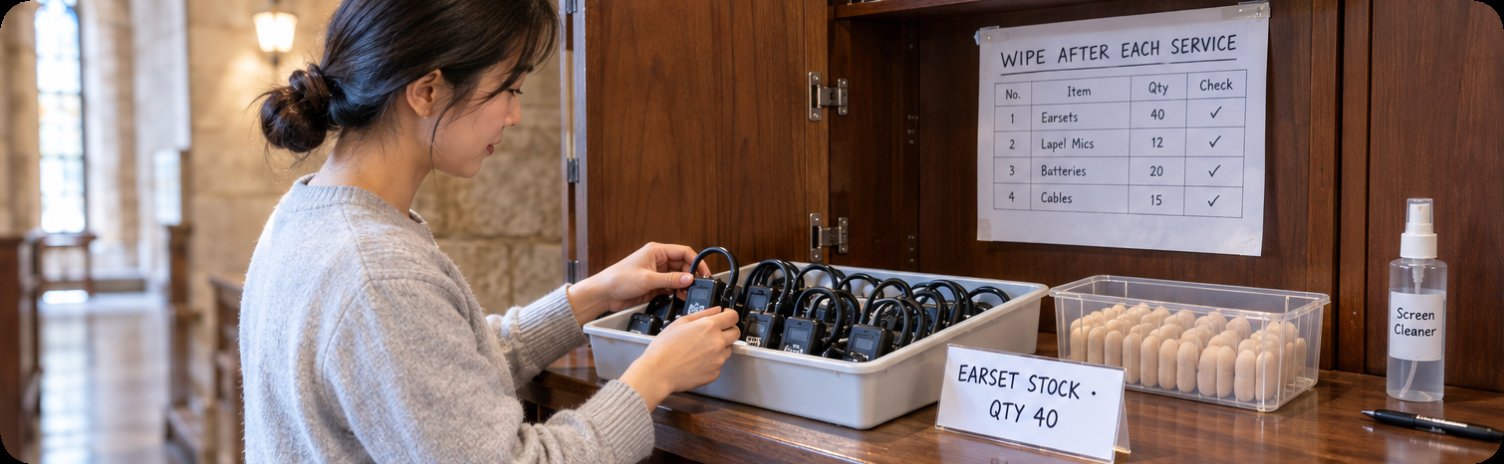
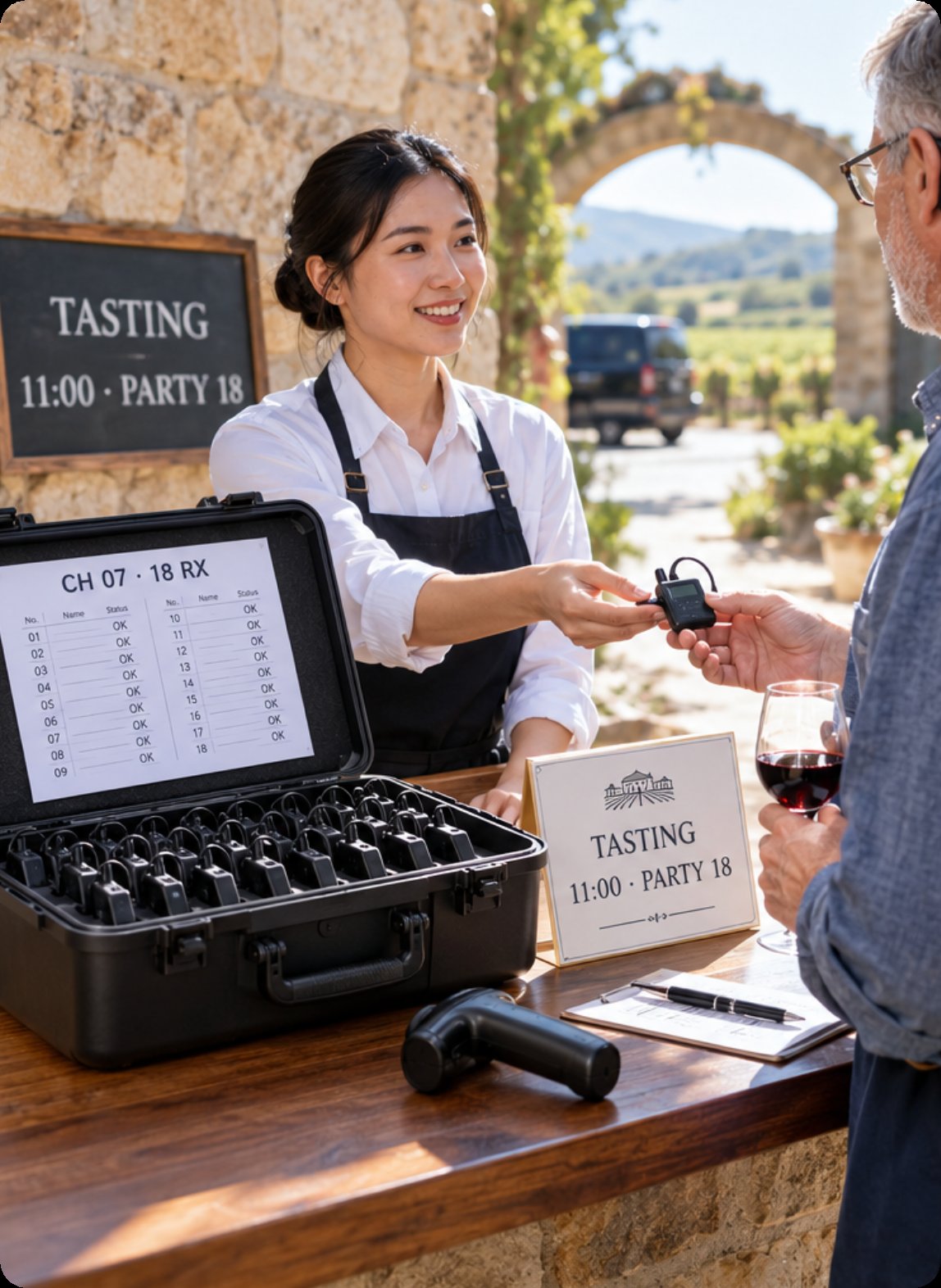
The room the case sleeps in matters more on a winery than on most sites, because the obvious room is usually the wrong one. Cellars hold a steady low temperature and a humidity that stays high all year, which is ideal for barrels and unkind to anything with a charging contact inside it. Contamination on a charging pin does not announce itself; it shows up as a receiver that takes a full evening to reach half charge. The practical answer is to keep storage and charging in the same dry room upstairs and to accept the walk, because splitting them means the kit is carried twice a day and checked once.
Getting Receivers Onto Ears Before the Gate Opens
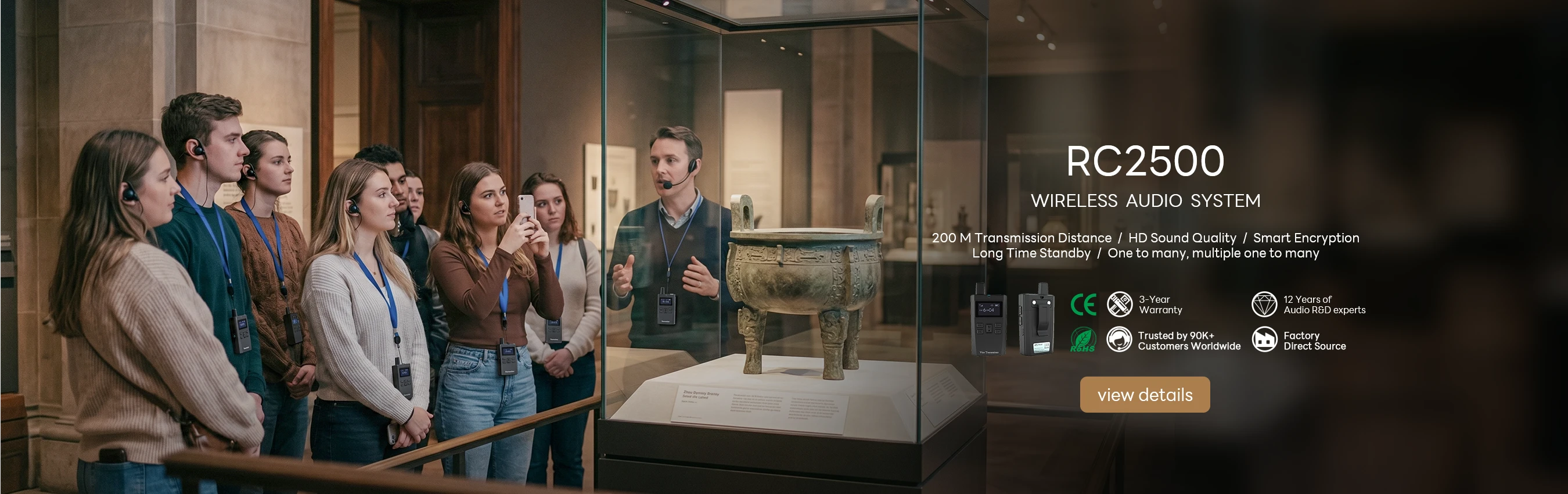
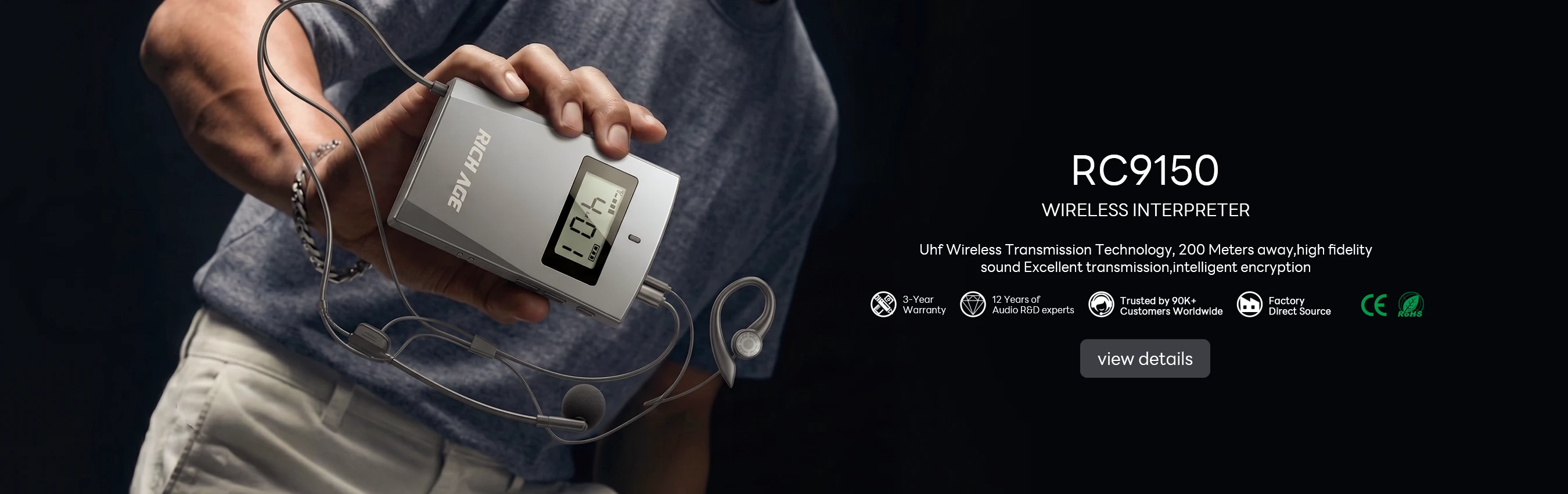
Handout speed is decided long before the first guest arrives, and it is decided by weight rather than by procedure. The ultra-light 2.4G tour guide system puts an 18g ear-hook receiver in the hand of a visitor who has never seen one, and most of them have it seated correctly without help. That matters when guests trickle in over half an hour rather than arriving as a coach party, because a self-service tray at the tasting room door costs no staff time at all. Set the tray at the room where the group actually forms up, not at the estate gate, and the queue that ruins a first impression never happens.
Where the Speaker Stands in a Tank Hall
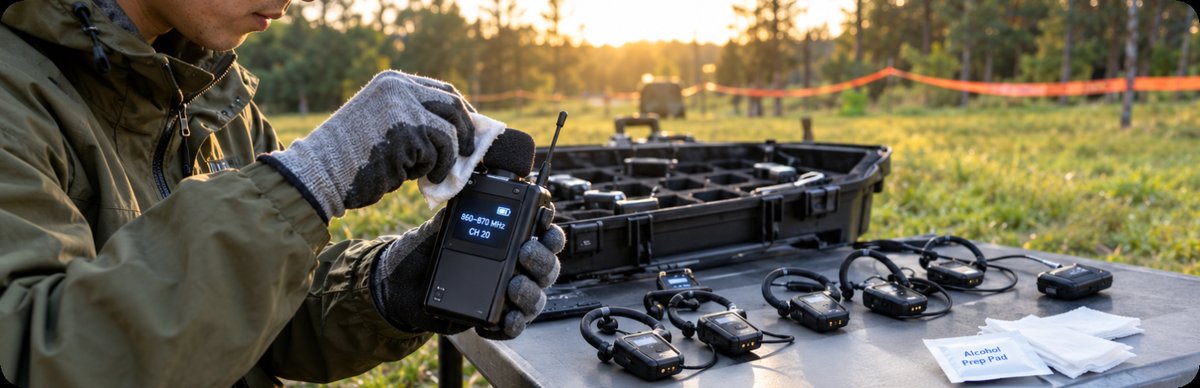
Tank halls are the hardest room on the estate to make predictable, and it has nothing to do with how far the signal has to travel. The walls are stainless steel, the floors are sealed concrete, and somewhere behind the group a pump or a press is running. That combination reflects a radio signal in ways a rectangular room does not, so a position that worked perfectly in the barrel cellar can behave differently twenty metres away. This is where the 80 channels on the 80-channel 2.4G audio guide earn their place, but only if the channels are actually assigned. Eighty available channels and one default channel are the same installation.

Putting Everything Back Without Mixing Cables
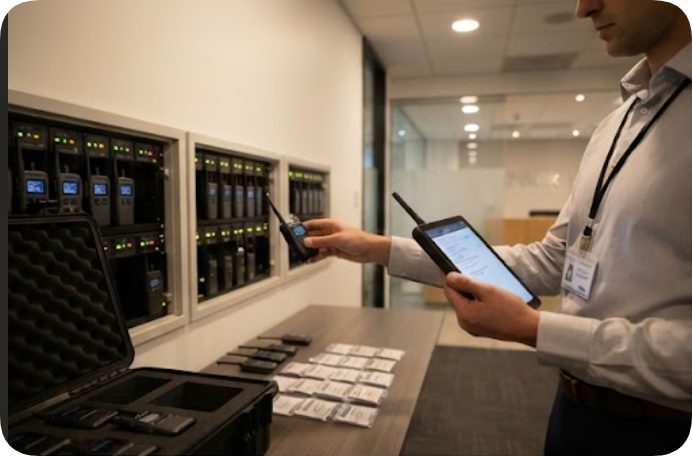
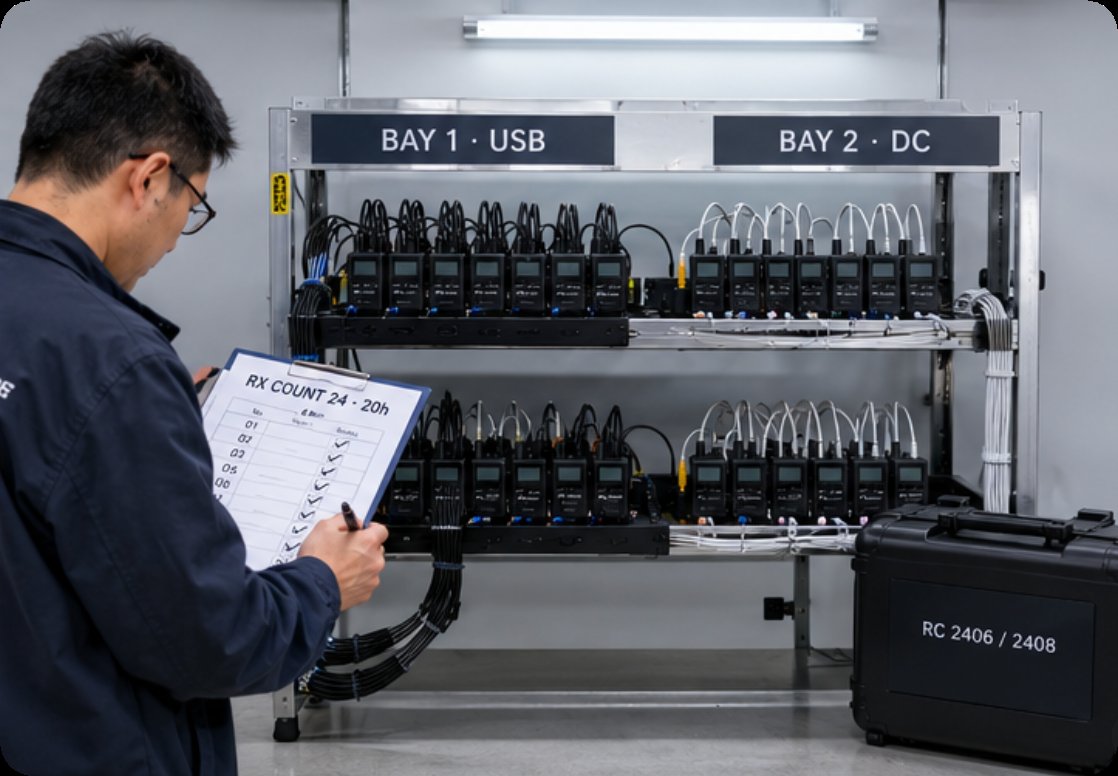
The last link in the chain is the one that gets the least supervision, and the cable drawer is where a winery kit quietly degrades. The three units do not charge the same way. The RC2468 receiver takes a Micro USB connection, while the wireless tour guide system sharing the rack with it charges from a DC port. Two connector types in one drawer means somebody reaches for the wrong lead at the end of a long day, and a receiver that was plugged in and never charging is indistinguishable from one that was forgotten. Separate the bays by connector type and the evening check takes a glance instead of an inspection.
The Three Units Side by Side on Paper
| Parameter | RC2468 | RC2406 | RC2408 |
|---|---|---|---|
| Frequency band | 2403-2483 MHz | 2403-2483 MHz | 2403-2483 MHz |
| Channels | 50 | 80 | 80 |
| Transmitter battery life | 10h | 10h | 10h |
| Receiver battery life | 8h approx. | 20h | 20h |
| Receiver weight | 18g ear-hook | 50g | 50g |
| Charging port | USB | DC Port | DC Port |
| Working range | 1-200m | 1-200m | 1-200m |
Two of these columns look almost identical, and that is deliberate rather than accidental. The RC2406 and the RC2408 share a channel count, a battery figure and a body weight, so choosing between them is not a specification exercise at all. It comes down to which room in the winery each one will be standing in and how long it has to hold a charge across a working day. Fields the sheets treat differently stay out of the grid on purpose: the RC2406 page carries an IPX4 splash rating while the RC2408 page lists CE and RoHS compliance and a three-year warranty. One figure in the grid repays a second look. The RC2468 receiver has the lightest body of the three and the shortest battery figure, which is a trade the handset makes on purpose rather than a shortcoming. An ear-hook light enough to forget is also the one that needs an afternoon top-up, so on a day with two groups back to back that interval belongs in the schedule.
What Breaks First When Nobody Owns the Rack
Four actions hold the chain together, and each one needs a name attached to it: who opens the case, who runs the handout tray, who carries the kit through the tour, and who closes the charging bay. Three of those get done because they happen while guests are watching. The fourth happens after the last car has left the car park, in a room with the lights half off, and it is the one that fails first. A kit that loses a receiver in October almost never loses it during a tour. It loses it because nobody was named as the person who counts the rack before locking up.
Questions to Settle Before the First Group
Four answers are worth writing down before the season starts, and none of them require equipment to change. Is the storage room dry enough to leave charging contacts in for months at a time? Does the handout tray live where groups actually assemble, or where deliveries arrive? Is there a channel plan on paper for the tank hall, or only a plan in somebody's memory? Are the charging bays separated by connector type? Settle those and the kit behaves the same on the fiftieth visit as it did on the first. Browse our wireless tour guide system range or explore our solutions for other site layouts.